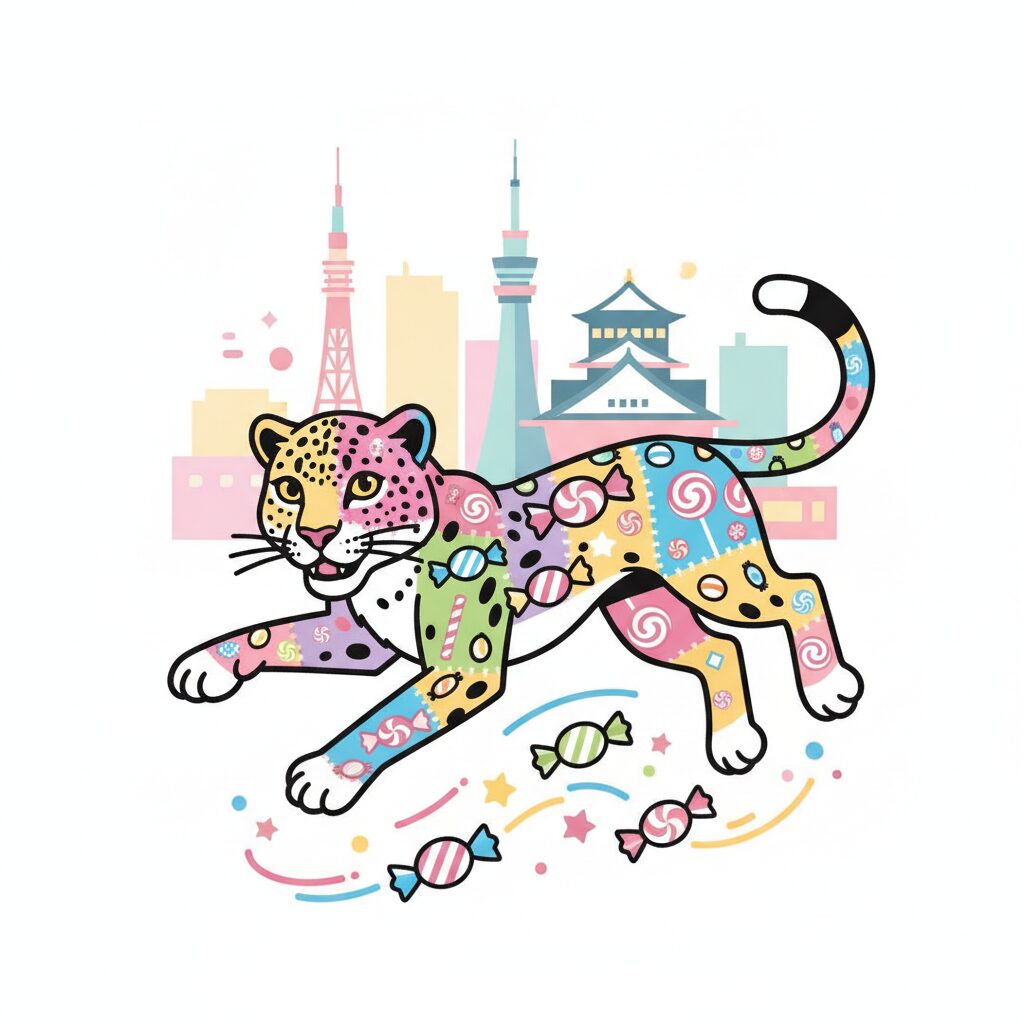
Step off the Shinkansen at Shin-Osaka Station, and you might feel like you’ve been teleported. The air hits different. The language flows with a musical, almost bouncy rhythm you don’t hear in Tokyo. And somewhere in the back of your mind, an image flickers to life—a vision you’ve cobbled together from TV shows, anime, and travel blogs. It’s the Osaka Obachan. She’s a force of nature, decked out in blindingly bright leopard print, her perm as solid as a helmet. Her handbag isn’t just a bag; it’s a mobile convenience store, stocked with a seemingly endless supply of hard candies, which she distributes with the cheerful command, “Ame-chan, taberu?”—Want a candy? She’s loud, she’s direct, and she’s probably haggling over the price of daikon radish with the ferocity of a Wall Street trader.
As a Tokyo native, I grew up with this image. The Osaka Obachan was a caricature, a lovable but slightly intimidating mascot for Japan’s second city. She represented everything Tokyo wasn’t: uninhibited, audacious, and gloriously unconcerned with subtlety. My first few trips to Osaka for work felt like a safari, where I was half-expecting to spot this legendary creature in her natural habitat, perhaps a bustling shotengai shopping arcade. The truth, as it often is, turned out to be far more nuanced, more human, and infinitely more interesting. The stereotype isn’t entirely false, but it’s a two-dimensional sketch of a three-dimensional reality. It’s a symbol, and like all symbols, it’s packed with a cultural code that needs deciphering. To understand the Osaka Obachan is to understand the soul of Osaka itself—its history, its humor, and its unapologetic love for human connection. So, let’s peel back the layers of leopard print and get to the heart of what this iconic figure truly represents for anyone trying to build a life in this vibrant city.
While the cultural quirks of Osaka continue to charm visitors, international hotel investment is emerging as a key force behind the city’s robust post-pandemic revival.
The Anatomy of a Stereotype: Breaking Down the Obachan Legend
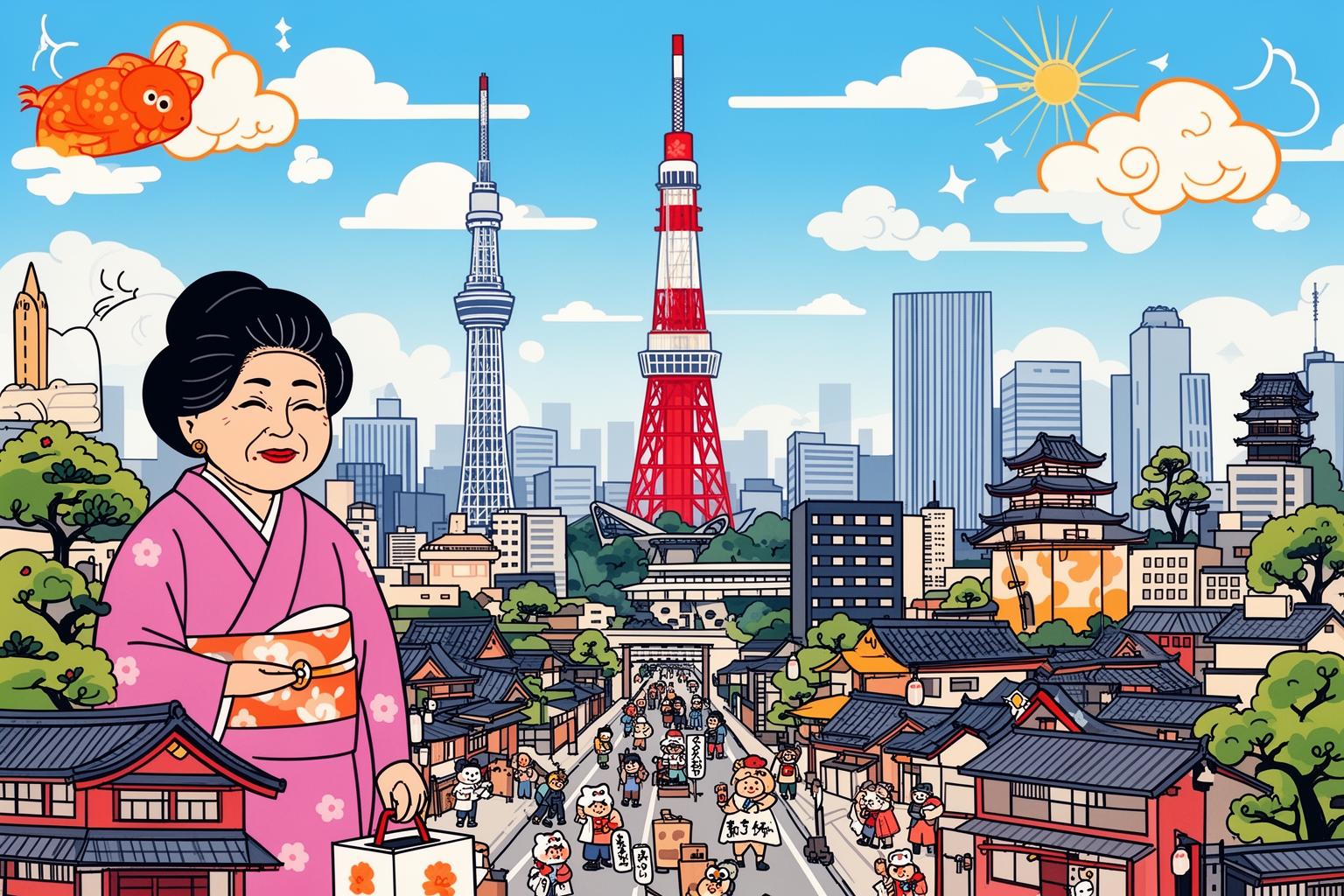
Before we can grasp the reality, we must first respectfully analyze the caricature. The Osaka Obachan stereotype rests on several strong, recurring foundations. Each one, though exaggerated, is rooted in Osaka’s unique culture—a culture shaped by commerce and community. These traits are not mere random quirks; they represent an underlying life philosophy that sharply contrasts with Tokyo’s reserved formalism.
The Leopard Print Uniform
Let’s begin with the most obvious aspect: fashion. Animal prints, bold patterns (gara), and vivid colors make up the supposed uniform. In Tokyo, the unspoken dress code usually favors muted, refined neutrals—navy, beige, grey. The intent is to blend in, projecting harmony and subtle elegance. Wearing a full leopard-print blouse on the Yamanote Line would be seen as a bold statement, attracting sideways glances and quiet judgment.
In Osaka, however, that same blouse is simply a blouse. The fondness for hade, or flashy style, isn’t about poor taste; it’s a confident declaration of presence. Historically, Osaka was Japan’s merchant capital. Its people built wealth through trade, not samurai codes or imperial bureaucracy. This cultivated a practical, assertive, and individualistic spirit. To succeed, you had to stand out and be remembered. That spirit endures today. The leopard print is more than clothing; it’s armor and advertisement. It says, “I am here. I’m not afraid to be noticed. I have personality, and I make no apologies.” It’s a celebration of individuality in a country that often emphasizes the collective. An Osaka Obachan isn’t following a trend; she’s displaying her confidence.
The Candy Connection: “Ame-chan” Culture
Next is the well-known ame-chan. The suffix “-chan” is a diminutive, a term of affection usually reserved for children, pets, or close companions. Calling candy ame-chan immediately turns it from a simple sweet into a small, personal gesture. When an obachan offers one, she’s not just trying to get rid of extra sweets.
This gesture is fundamental to Osaka’s style of communication. It acts as social lubrication. In Tokyo, striking up a conversation with a stranger on the train is unusual. Here, a wall of polite, invisible silence separates passengers. In Osaka, that wall is much more permeable. Offering an ame-chan pierces that barrier. It’s a conversation starter, an icebreaker, a sign that says, “We’re sharing this space, this moment. Let’s connect.” It’s especially common around children. A crying toddler on a Tokyo bus might provoke annoyed glares; in Osaka, he’s more likely to be given candy by a nearby obachan. This act helps reduce tension and fosters a sense of shared responsibility. It costs little but creates a brief, genuine human connection, reflecting Osaka’s community-oriented mindset.
The Volume and Directness: Why So Loud?
The third pillar is the communication style—often seen as loud, direct, and brutally honest. Osaka-ben, the local dialect, has a more expressive, musical tone than standard Japanese. Public conversations occur at a volume that may feel intrusive to visitors from quieter cities. Again, this traces back to the merchant culture.
In business, clarity and efficiency are paramount. Beating around the bush—a hallmark of formal Japanese communication (tatemae)—was detrimental to commerce. You needed to be straightforward, negotiate clearly, and build rapport quickly. This has evolved into a social preference for directness. What a Tokyoite might consider blunt or even rude, an Osakan perceives as honest and sincere. They’re not being aggressive; they’re being open. They strive to close emotional distance by stripping away unnecessary formalities. Although this can be startling at first, once you adjust, you realize it stems from a genuine desire to connect authentically, without the masks common elsewhere in Japan.
Beyond the Caricature: The Obachan as a Social Force
Once you look beyond the leopard print and the candy, the true role of the obachan in Osaka’s social fabric becomes clear. She is more than just a colorful character; she is a cornerstone of the community, an unofficial caretaker of the neighborhood’s well-being. Her so-called quirks are actually the tools she uses to maintain social cohesion.
Guardians of the Neighborhood
In the sprawling, anonymous neighborhoods of Tokyo, it’s possible to live for years without knowing your neighbors’ names. In contrast, in the close-knit communities of Osaka, especially in the older districts and shotengai, the obachan serves as the central nervous system. She knows who is new to the block, whose kids attend elementary school, and which elderly residents live alone. Her daily walks, shopping trips, and street corner chats are far from idle pastimes—they are a form of information gathering. It’s a low-tech social network that ensures no one slips through the cracks.
If Mrs. Tanaka hasn’t taken out her garbage for two days, an obachan will be the first to notice and knock on her door to check if she’s okay. If a child is lingering after school, an obachan will inquire about the whereabouts of his mother. This might seem intrusive to an outsider used to Western notions of privacy, but here it defines a functioning community. They are the keepers of local knowledge and first responders to small, everyday crises. Through simple, direct, human observation, they enforce unspoken rules and uphold a baseline of safety and order.
The Art of the Bargain: A Masterclass in Communication
Watch an obachan shop for groceries at a traditional market like Kuromon Ichiba—it’s pure theater. The act of haggling, or neuchi, is about more than saving 50 yen on a bundle of spinach. It is a vital social ritual. It’s a game of wits, a friendly contest between shopkeeper and customer. There’s a familiar script: the feigned shock at the initial price, the playful complaint about quality, the counter-offer, and the final, reluctant-but-smiling agreement.
This interaction is a performance that reaffirms the relationship between buyer and seller. It is a conversation that builds a bond impossible to form with a self-checkout machine in a supermarket. Through this daily haggling, the obachan isn’t just buying food; she’s engaging with the local economy, reinforcing community ties, and preserving the tradition of face-to-face commerce. For her, the price is not merely a number—it’s the starting point of negotiation and relationship-building.
Unfiltered Advice and Meddling: A Double-Edged Sword
Of course, this strong community focus has a downside. The directness and shared sense of responsibility can easily veer into what feels like meddling. The same obachan who checks on her elderly neighbor might also feel entirely justified in commenting on your life choices. Foreign residents, and even young Japanese people, are often surprised by unsolicited advice.
Remarks like, “You’re getting a bit chubby, aren’t you?” or “Still not married? You’re not getting any younger!” are common. This is perhaps the hardest aspect of obachan culture to accept. From their perspective, the intentions are rarely malicious. They come from a place of sincere, if awkward, concern. In their worldview, caring means being honest, even if the truth is uncomfortable. It’s a form of tough love. They apply the same straightforward, problem-solving approach of a merchant to social situations. When they see a “problem” (you’re single, you look tired, your baby isn’t dressed warmly enough), they offer a direct “solution” or observation. Learning to navigate these interactions—to accept the good intention, smile, and gently move on—is an essential survival skill for living in Osaka.
The Modern Obachan: Is the Stereotype Fading?
It’s a fair question. As Japan modernizes and society evolves, is the classic, leopard-print-wearing obachan becoming a fading figure? The answer is nuanced. While the visual stereotype is certainly less common than before, the underlying spirit remains remarkably resilient.
Generational Shifts and Changing Cityscapes
The women now in their 70s and 80s grew up in a very different Japan. They experienced the post-war economic boom, a period of tremendous energy and ambition, especially in industrial centers like Osaka. Their fashion reflected that rapid growth and newfound confidence. Their daughters and granddaughters, raised in a more stable and globalized Japan, have different influences. They are more likely to shop at Uniqlo than at a small boutique in a shotengai.
In addition, the urban landscape is transforming. The rise of large supermarkets and chain stores has weakened the traditional shopping arcades where obachan culture once thrived. With more people living in high-rise apartments and communicating through social media, opportunities for the spontaneous, face-to-face community engagement that obachan excel at are fading. Life is growing more convenient, yet also more anonymous.
The Enduring Spirit: What Remains
Still, it would be wrong to say the obachan spirit has vanished. Although the look may be changing, the core values she embodies are deeply embedded in Osaka’s DNA. The leopard print might be replaced by a stylish jacket, but the confidence and refusal to be invisible persist. Physical candies may be offered less often, but the desire to connect with strangers through small acts of kindness endures.
The true legacy of the obachan is not a fashion trend; it’s an attitude. It’s the deeply held belief that people matter more than rules, that direct communication is preferable to polite pretense, and that a touch of humor and humanity can resolve most problems. You see this spirit in the young shopkeeper who throws in an extra croquette for free (omake). You feel it in the lively, friendly atmosphere of a standing bar in Tenma, where strangers chat like old friends. You experience it when you’re lost, and three different people stop to help, debating the best way to get you to your destination. The form has changed, but the function—the relentless drive to build and maintain human connections—is alive and well.
Living with the Legend: A Foreigner’s Guide to the Real Osaka Obachan
So, as a foreigner building a life here, how do you move beyond the stereotype to truly understand the reality? It’s about shifting your perspective and learning to interpret the cultural subtext.
How to Interpret, Not Just Observe
Your aim should be to become an active interpreter of Osaka culture, rather than just a passive observer. When an older woman offers you a piece of candy, don’t merely see it as a random act. Recognize it for what it truly is: an invitation. Accept it with a smile and a clear “Okini!” (Osaka-ben for “thank you”). This small exchange acknowledges and honors their effort to connect.
When you hear a loud, passionate conversation, resist the urge to interpret it as an argument. Listen for the underlying rhythm, the laughter, the back-and-forth energy. Most of the time, you’re witnessing a lively, robust social interaction, not conflict. When you encounter that famous directness, take a moment. Try to separate the words from the intention. The person commenting on your thin coat in winter isn’t criticizing your fashion sense; they are genuinely concerned you might catch cold. Responding with a simple, “Thank you for your concern, I’m okay!” shows you understand the caring intent underneath.
The Tokyo-Osaka Divide in Action
For anyone who has spent time in Tokyo, the contrast is a valuable learning tool. In Tokyo, social currency is built on restraint, on not imposing on others, on maintaining respectful distance. In Osaka, social currency is built on engagement, on closing that distance, on showing you care through direct interaction. A Tokyo obasan is more likely to express kindness with a quiet, subtle gesture. An Osaka obachan will show it by approaching you directly and getting involved. Neither way is inherently better, but they are fundamentally different social operating systems. Understanding which one is at play is key to avoiding cultural misunderstandings.
The Truth Behind the Myth
Ultimately, the leopard-print, candy-giving obachan is less an individual and more an archetype. She embodies Osaka’s most cherished values: pragmatism (jitsuri), humanity (ninjo), and humor (warai). She symbolizes a city that has always been a bit of an underdog, a bit of a rebel, and fiercely proud of it.
She is not a myth to be debunked, but a legend to be understood. She teaches that community isn’t just a buzzword, but an active, everyday practice. She shows that kindness doesn’t have to be quiet, and that honesty, even when a bit blunt, is a form of respect. The caricature is a gateway. Once you pass through it, you discover not just one type of person, but a whole city full of individuals who carry a piece of her spirit. Learning to recognize that spirit—in all its loud, generous, and unapologetic glory—is the true key to feeling at home in Osaka.