
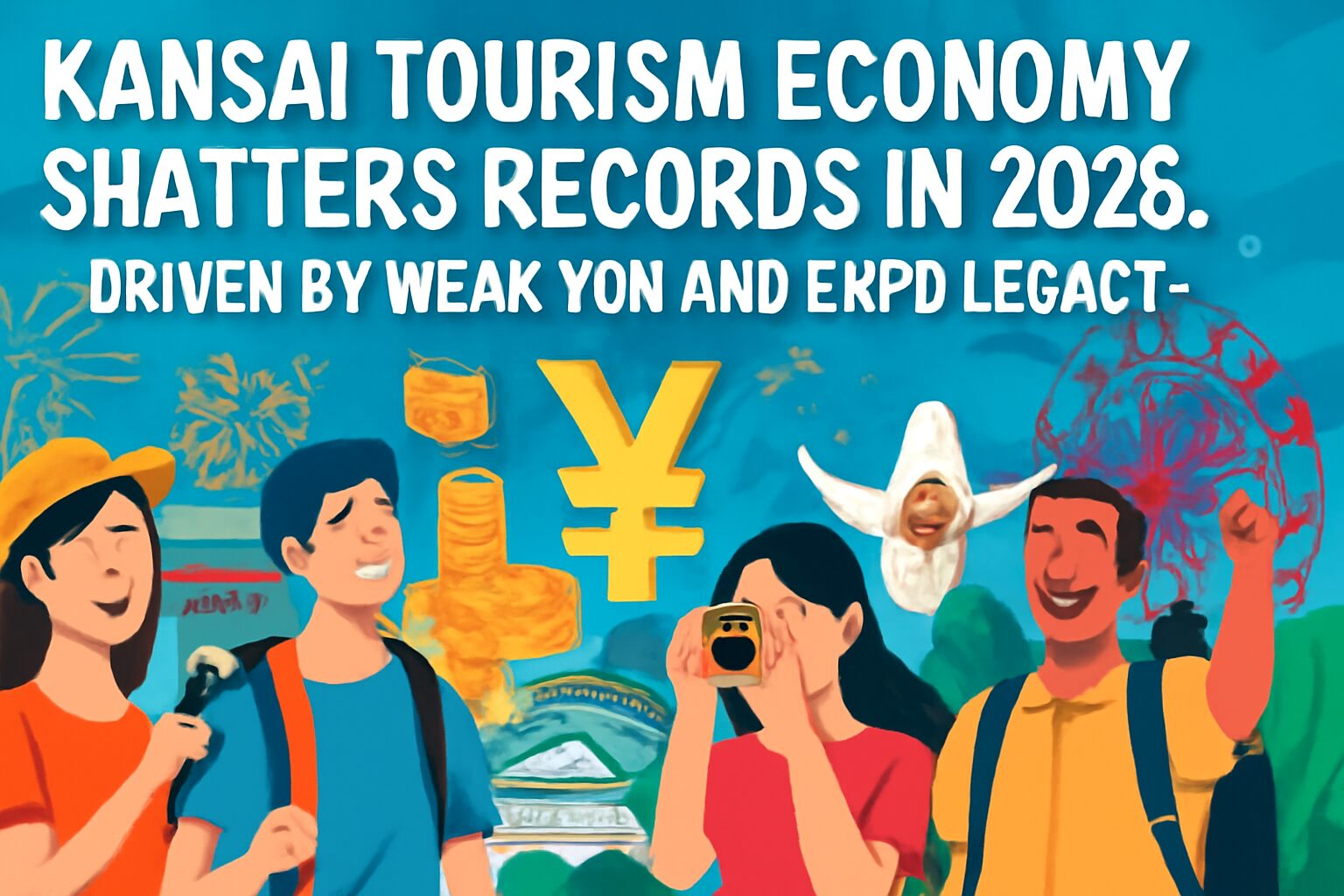
Here at Osakaa, we have been closely monitoring the rapid transformation of the local travel landscape. As we move into the second half of 2026, the Kansai region’s tourism economy is experiencing an extraordinary and historic boom. Shattering pre-pandemic records, the latest economic data highlights a golden era for local travel, hospitality, and retail sectors, firmly establishing Kansai as one of the world’s premier travel destinations.
Historic Spending Growth in the First Quarter
The most striking evidence of this tourism renaissance lies in the numbers. During the first quarter of 2026, international visitor spending in the Kansai region reached an unprecedented 580 billion yen. This staggering figure represents a massive 30% increase compared to the previous benchmark year of 2019.
Rather than a simple return to pre-pandemic normalcy, this surge indicates a fundamental expansion of the local tourism market. Tourists are not only arriving in greater numbers but are also spending significantly more during their stays, injecting vital capital directly into the local economy.
The Dual Engines of Growth: Currency and Legacy
This remarkable economic performance is being fueled by two distinct but complementary factors.
The first is the persistently weak yen, which has drastically amplified the purchasing power of international visitors. Travelers from North America, Europe, and neighboring Asian countries are finding that their travel budgets stretch further than ever before. This favorable exchange rate is encouraging visitors to upgrade their accommodations, extend their trips, and spend heavily on luxury goods, traditional crafts, and high-end dining experiences across the region.
The second critical factor is the lasting global spotlight generated by last year’s 2025 Osaka-Kansai Expo. The Expo successfully introduced millions of international viewers and attendees to the cultural depth and technological innovations of the Kansai region. Rather than fading after the closing ceremonies, the momentum from the Expo has transitioned into a powerful legacy. Global awareness of Osaka, Kyoto, and Kobe is currently at an all-time high, translating the temporary mega-event into sustained, long-term tourism demand.
Urban Revitalization Across the Kansai Hub
The ripple effects of this 580 billion yen spending spree are visible on the streets. Here in Osaka, the retail and hospitality sectors are undergoing a massive revitalization. Department stores in Umeda and luxury boutiques along Shinsaibashi are reporting record-breaking tax-free sales, while hotels across the city are experiencing sustained high occupancy rates well into the summer months.
Neighboring cities are sharing in this prosperity. Kyoto’s traditional ryokans and artisan districts are seeing a resurgence of high-spending cultural tourists, while Kobe’s waterfront and culinary scenes are drawing crowds eager to capitalize on the favorable exchange rates for premium experiences like Kobe beef dining.
Looking Ahead: Managing the Boom and Future Impacts
As we look toward the end of 2026 and into 2027, the future of Kansai’s tourism economy appears exceptionally bright, though it brings new challenges. The primary focus for local governments and the hospitality industry will be sustainable capacity management.
With spending up 30% and visitor numbers showing no signs of slowing down, the region is accelerating infrastructural upgrades and promoting off-the-beaten-path destinations within Kansai to prevent overcrowding in major hubs. We can expect to see increased investments in smart tourism technologies, multilingual AI hospitality services, and aggressive marketing of secondary cities in neighboring prefectures like Nara and Wakayama.
For now, the 2026 tourism boom stands as a monumental success story for Osaka and the greater Kansai area. The region has not only recovered but evolved, leveraging international economic conditions and the triumphant legacy of the Expo to build a stronger, more dynamic tourism economy than ever before.








