
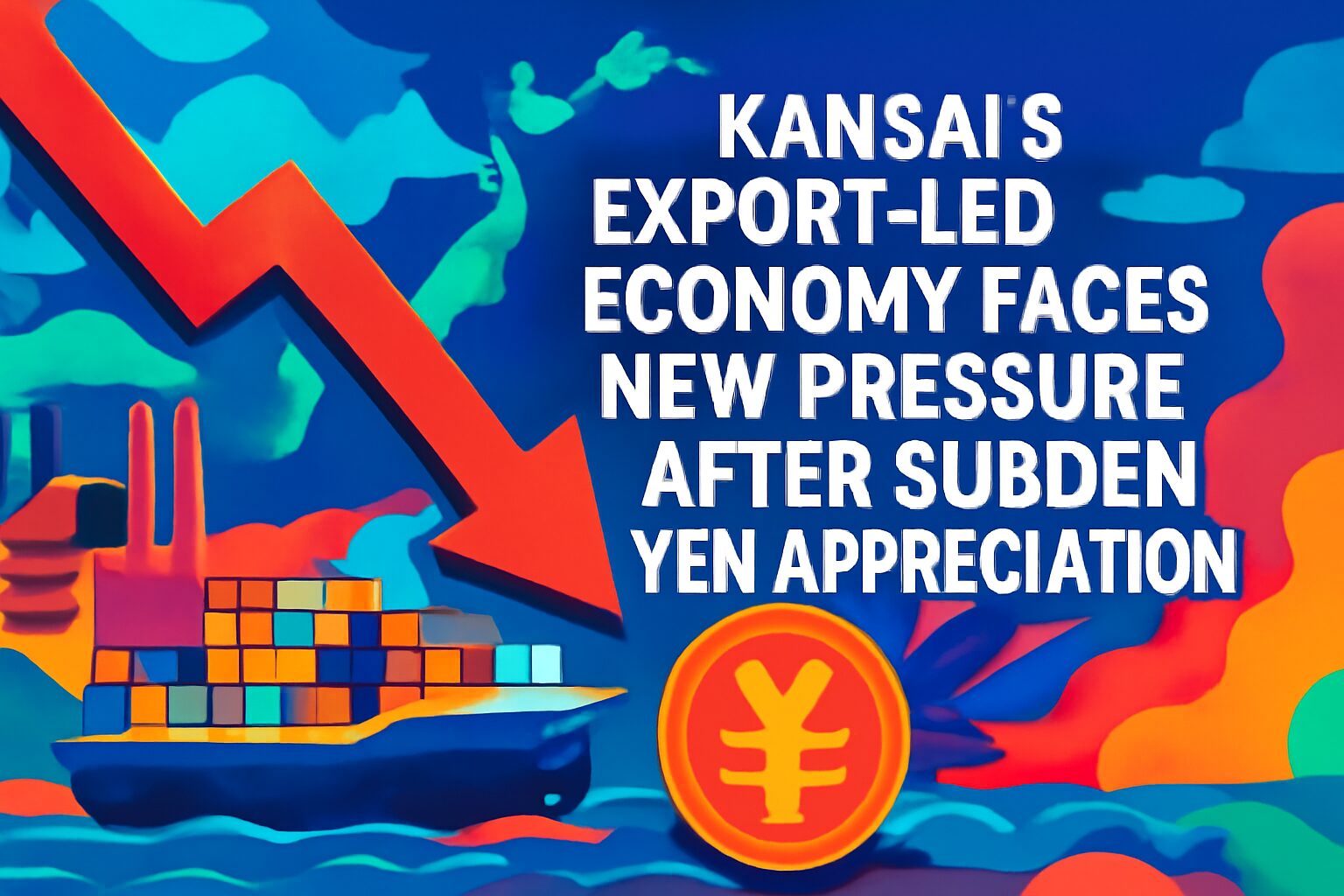
The Kansai region has long thrived as a powerhouse of Japanese manufacturing and a booming destination for global travelers. However, a decisive, coordinated yen-buying intervention by Washington and Tokyo in early August 2026 has abruptly shifted the financial landscape, creating immediate headwinds for the local economy.
Coordinated Intervention Sparks a Currency Reversal
After months of navigating a historically weak yen, which at one point plummeted to a 40-year low of approximately 164 against the U.S. dollar, the recent joint action by U.S. and Japanese authorities caused a sharp appreciation of the Japanese currency. Within days, the exchange rate was aggressively pulled back into the 156 to 158 range. While this rare bilateral move was designed to stabilize global liquidity and curb soaring import costs, it has introduced abrupt challenges for regions heavily reliant on foreign income.
Headwinds for Industrial Powerhouses
For major economic hubs across Osaka, Kyoto, and Kobe, the impact is already being felt. The Kansai area is home to leading automotive manufacturers, electronics giants, and specialized component suppliers. Over the past few years, the remarkably weak yen acted as a financial buffer, inflating repatriated profits and boosting the global price competitiveness of Kansai-manufactured goods.
With the sudden currency appreciation, these export-led industries are facing diminished margins. Corporate earnings outlooks for the latter half of the 2026 fiscal year are currently under cautious review. If the yen continues its upward trajectory, regional economic growth could be noticeably tempered. This shift has the potential to impact local employment rates and force companies to scale back or delay future capital investment plans.
Ripple Effects on the Tourism Sector
As a platform dedicated to Kansai travel news, Osakaa closely monitors how macroeconomic shifts affect the local hospitality landscape. Up until this month, the weak-yen trend has been the primary engine fueling an unprecedented tourism boom across the region. International visitors capitalized on favorable exchange rates to spend heavily on accommodations, dining, and shopping.
The sudden strengthening of the yen changes this dynamic. A stronger currency means that foreign tourists will find their travel budgets stretched thinner than before. Consequently, the local hospitality sector may see a deceleration in spending per visitor, particularly affecting duty-free sales and luxury experiences. Hotels and local businesses that expanded aggressively to meet the booming demand must now strategize for a more price-sensitive demographic in the coming months.
Looking Ahead: Balancing the Economic Scales
Despite the immediate pressure on exporters and the travel sector, the yen’s appreciation carries potential long-term benefits for the Kansai region. A stronger currency relieves the severe cost pressures on imported energy, raw materials, and food supplies. For local residents and domestic-facing businesses, this could translate to stabilized prices and a gradual easing of inflation.
The ultimate trajectory of Kansai’s economy in late 2026 will depend on how quickly regional enterprises can adapt to this new normal. While the era of effortlessly inflated export profits and hyper-cheap tourism may be pausing, the underlying strength of Kansai’s manufacturing innovation and its enduring cultural appeal suggest the region will navigate this transition with resilience.








