Japan. The name itself conjures a universe of images: neon-drenched cityscapes, serene temples shrouded in mist, a culture of profound depth and mesmerizing contradictions. For those of us who feel the pull to not just visit, but to live here, the map often narrows to two colossal gravitational centers: Tokyo and Osaka. They are the twin suns of the Japanese archipelago, each radiating a distinct energy, a different promise. Tokyo, the polished, hyper-modern capital, the seat of government and global finance, a city that feels like it’s living five minutes in the future. And then there’s Osaka, the rebellious, warm-hearted merchant city, Japan’s kitchen, a place where the soul of the nation feels a little louder, a little more laid-back, and a lot more direct.
Choosing between them is less about deciding which is superior and more about a deeper, more personal question: which city’s rhythm matches your own? As a photographer who has spent years trying to capture the essence of Japan through a lens, I’ve learned that cities, like people, have their own unique cadence. Tokyo’s is a precise, high-frequency hum of ambition and endless possibility. Osaka’s is a soulful, syncopated beat, a bassline of human connection, laughter, and incredible food. This isn’t just a guide to the practical differences; it’s an exploration of their distinct atmospheres, a deep dive into the feeling of putting down roots in two of the world’s most dynamic urban landscapes. Before we journey into the heart of this comparison, let’s ground ourselves in the city that often wins hearts with its unpretentious charm. Here is the vibrant hub of Osaka, a starting point for a life less ordinary.
To truly understand Osaka’s unpretentious charm, you can start by exploring its legendary food culture, where even the city’s power brokers are devoted to the miso ramen at Ramen King.
The Vibe Check: Energy, People, and the Pace of Life
Before discussing rent or train lines, let’s focus on the air you breathe. The intangible atmosphere of a city ultimately shapes your daily experience, infusing every interaction, commute, and quiet moment with its character. In Japan, the contrast between the atmospheres of its two largest metropolitan areas is striking and intriguing.
Tokyo’s Electric Pulse
Stepping into Tokyo is like plugging directly into the core of modern Japan. There’s a tangible hum of energy vibrating through the streets, a sense of vast scale and constant forward momentum. It’s a city of sleek surfaces, flawless efficiency, and a refined anonymity. Shibuya Crossing perfectly illustrates this—a masterfully choreographed dance of humanity where you become part of a vast moving spectacle, yet remain completely yourself. This feeling isn’t necessarily lonely; for many, it’s liberating. It offers the freedom to be whoever you wish, to chase any niche passion, and to blend seamlessly into a crowd of millions.
The people of Tokyo, often labeled as reserved, are better seen as experts in managing public space. There is an unspoken agreement, a social contract that enables so many individuals to coexist peacefully in such dense surroundings. Conversations are measured, interactions polite and professional, and the principle of tatemae—the public facade one presents—is strongly upheld. This makes the city incredibly smooth and frictionless to navigate. Trains are not just punctual; they arrive down to the second. Service goes beyond good—it’s an art form. This pursuit of perfection crafts a city both visually stunning and functionally impeccable. Yet for some, it may feel somewhat sterile. Building deep, spontaneous connections can take time. Social circles often form around work or highly specific interests, requiring effort to find your community.
Tokyo’s energy is one of ambition. You sense it in the sharp suits of Marunouchi’s business district, the creative hustle of Shimokitazawa’s vintage shops, and the intellectual buzz of Jinbocho’s bookstores. It’s a city that demands your best and pushes you to keep pace with its relentless tempo. For those who thrive in that environment, energized by being at the epicenter of Japan’s economic and cultural life, Tokyo is utterly intoxicating.
Osaka’s Human Rhythm
If Tokyo is a precisely tuned orchestra, Osaka is a vibrant jazz ensemble. It’s improvisational, a bit louder, and fueled by the raw, unfiltered spirit of its people. The difference is audible the moment you step off the Shinkansen at Shin-Osaka. The dialect is more melodic and expressive, laughter freer, and the overall volume of life raised by several notches. Osaka proudly wears its heart on its sleeve, where the divide between tatemae and honne (one’s true feelings) feels refreshingly narrow.
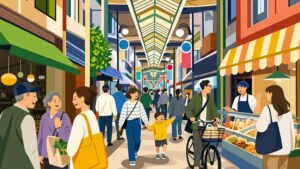
This is the city of kuidaore, famously meaning “eat until you drop,” but it represents more than a love of food; it embodies a life philosophy. It’s about savoring the moment, indulging in pleasure, and sharing joy with others. This spirit weaves through the city’s social fabric. Strangers might start a conversation while you wait for your takoyaki. The shopkeeper in the shotengai (covered shopping arcade) won’t just sell you vegetables; they’ll ask about your day and offer unsolicited yet often insightful advice. Osakans are known for their directness and sharp humor. The manzai comedy tradition—a style of stand-up—isn’t confined to the stage; its witty banter and playful teasing rhythms shape everyday conversations. This can surprise those used to more reserved communication, but many foreigners find it a warm, welcoming bridge.
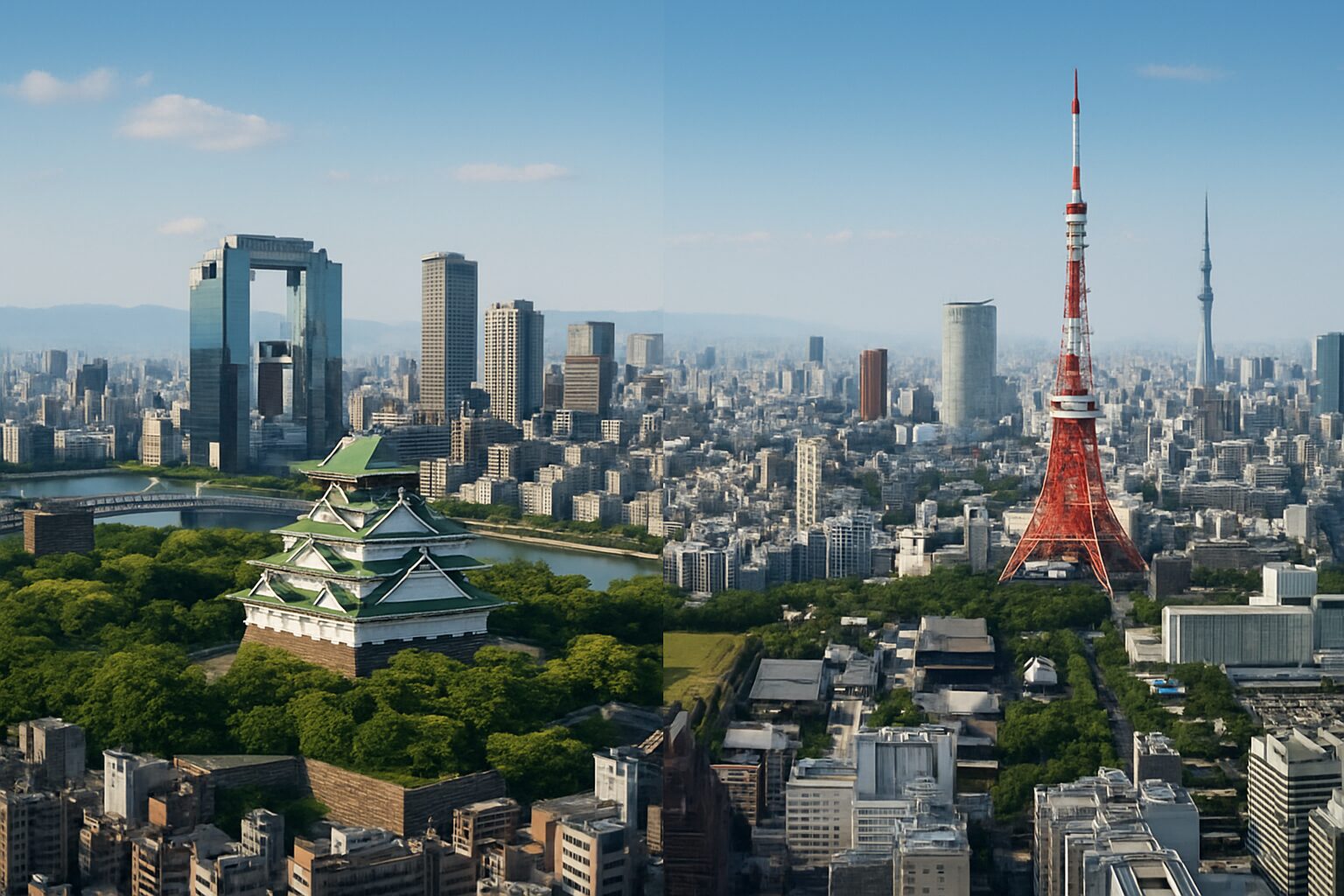
The city’s aesthetic mirrors its character. While Umeda has skyscrapers rivaling Tokyo’s, the true spirit of Osaka lies in its sprawling, maze-like neighborhoods like Namba and Shinsaibashi, and the retro-futuristic charm of Shinsekai. It’s grittier, less polished, but full of personality at every turn. It’s a city built on a human scale, inviting exploration through its alleys and discovery of tiny, family-run restaurants that have served generations. The vibe here is not abstract ambition but practical, merchant-class hustle, blended with a deep desire to savor the rewards of hard work. It’s a city that works diligently but, perhaps more importantly, knows how to enjoy itself fully.
The Concrete Jungle vs. The Urban Village: A Deep Dive into the Cost of Living
This factor is often the most crucial consideration for anyone contemplating a move. It’s not merely about the figures on a spreadsheet; it’s about the quality of life those figures enable. The financial realities of living in Tokyo versus Osaka will fundamentally influence your lifestyle, affecting everything from the size of your apartment to how often you go out at night.
The Tokyo Premium: Rent and Real Estate
There’s no sugarcoating it: Tokyo ranks among the most expensive cities worldwide to live in, with housing as the primary cost driver. The “Tokyo premium” is real, impacting every aspect of your home search. Let’s explore what this means in practice. In popular central wards like Shibuya, Shinjuku, Minato, or Chiyoda, a small, modern one-bedroom apartment (a 1LDK) can easily command rents starting at ¥150,000 and going well beyond ¥250,000 per month. Even farther out in desirable residential areas like Setagaya or Meguro, competition remains fierce and prices high for decent spaces.
The process itself can be intimidating. Demand is so intense that sought-after apartments often get snapped up within hours of listing. You must have your documents ready, your guarantor secured, and be prepared to make an immediate decision. Moreover, upfront costs in Tokyo can be staggering. It’s common to pay the first month’s rent, a security deposit (often one month’s rent), “key money” or reikin (a non-refundable gift to the landlord, often one or two months’ rent), a guarantor company fee, and an agency fee. This can total five or six times the monthly rent—a staggering amount before you even receive your keys.
This market reality means many Tokyo residents, especially newcomers, live in very compact spaces. The “one-room mansion” (studio apartment) is a familiar reality. Residents learn to live vertically, appreciate clever storage, and treat their local neighborhood as an extension of their living room. While larger or more affordable places can be found an hour or more outside the city center, one must then consider the costs—both financial and time-wise—of a long daily commute.
Osaka’s Accessible Affordability
This is where Osaka truly stands out as a compelling alternative. The city offers a much lower cost of entry into Japanese urban life without compromising convenience or excitement. The difference in the rental market is immediately noticeable. A comparable 1LDK apartment in prime Osaka areas like Chuo-ku (near Namba or Shinsaibashi) or Kita-ku (around Umeda) might rent for ¥80,000 to ¥130,000—a potential savings of 40-50% compared to a similar location in Tokyo.
What’s more, that money usually gets you more space. Apartments in Osaka are more likely to feature a separate kitchen, larger living areas, or more generous storage. Moving slightly outward to equally convenient and lively neighborhoods like Tennoji, Fukushima, or anywhere along the main Midosuji subway line only enhances the value proposition. Spacious, modern apartments become affordable where, in Tokyo, you’d be limited to a tiny studio in a far suburb.
Upfront costs, though still significant, tend to be lower as well. The practice of paying “key money” is less common in Osaka and the broader Kansai region. While security deposits and agency fees remain standard, the absence of a hefty reikin can save you a considerable sum at the start. The rental market feels less frantic, allowing you more time to find a place that truly feels like home. This financial breathing room is transformative. It means more disposable income for enjoying Osaka’s famed food scene, weekend travel, or hobbies. It lowers baseline financial stress, letting you focus on building a life rather than just covering rent.
Daily Bread and Circuses: Groceries, Dining, and Entertainment
Savings in Osaka extend well beyond rent. The everyday cost of living is noticeably lower across the board. At the local supermarket, your yen stretches further, especially for fresh produce, meat, and fish sourced from nearby waters. Yet the most notable difference lies in dining out and entertainment, the heartbeat of Osaka’s culture.
Tokyo boasts the most Michelin-starred restaurants worldwide, a heaven for high-end dining—but those experiences come with a hefty price tag. Osaka’s culinary scene, while home to fantastic fine dining as well, is famously built around B-kyu gurume—literally “B-class gourmet.” This is not a criticism but a celebration of cheap, delicious, and unpretentious food. A hearty, soul-warming bowl of ramen might cost ¥1,000-¥1,200 at a trendy Tokyo spot, while an excellent bowl in Osaka can often be had for ¥700-¥800. A night out in Dotonbori might include takoyaki (octopus balls), okonomiyaki (savory pancakes), and kushikatsu (deep-fried skewers) with a few beers for less than the price of a single main at a mid-range Tokyo restaurant.
Entertainment follows a similar trend. Tokyo draws the biggest international music acts and blockbuster exhibitions, but tickets tend to be expensive and sell out quickly. Osaka’s thriving live music scene, centered in places like Amerikamura, offers more accessible ticket prices and a more intimate, grassroots atmosphere. A cocktail at a stylish Ginza bar might cost ¥2,500, whereas a highball at a friendly tachinomi (standing bar) in Osaka’s Tenma district could be ¥400. This affordability isn’t about being cheap; it’s about accessibility—allowing you to say “yes” more often: yes to exploring new restaurants, yes to spontaneous nights out with friends, and yes to fully engaging in the city’s vibrant social life.
The Career Crossroads: Work Culture and Opportunities
Your career plays a significant role in shaping your identity and daily life, and the professional environments of Tokyo and Osaka reflect their unique economic histories and cultural backgrounds. The opportunities available, work pace, and networking approaches vary in subtle yet important ways.
Tokyo: The Corporate Giant
Tokyo is undeniably Japan’s economic powerhouse and one of the world’s leading financial hubs. If you work in international finance, law, technology, marketing, or media, Tokyo offers the majority of career opportunities. Almost all major multinational corporations have their Japan or Asia-Pacific headquarters there. The dense concentration of companies creates a vibrant and competitive job market with a wide range of possibilities.
The tech start-up scene is particularly active in neighborhoods like Shibuya and Roppongi. Venture capital is more accessible, and numerous networking events, seminars, and meetups take place nearly every evening. For those ambitious individuals aiming to ascend the corporate ladder or launch innovative ventures, Tokyo provides the ideal platform and ecosystem.
That said, this comes with Tokyo’s infamous work culture. Although it is gradually evolving, expectations of long hours, unwavering dedication, and after-work drinking sessions (nomikai) with colleagues remain strong. The pressure can be intense. The “salaryman” image of the exhausted commuter on the last train home is a reality grounded in the city’s work-hard mentality. The professional environment tends to be more formal and hierarchical. Building a network often demands a strategic and patient approach. Still, for those who thrive in this high-pressure setting, the career rewards and prestige of working at the heart of Japanese business are unmatched.
Osaka: The Merchant City
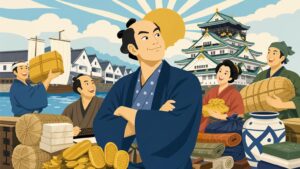
Osaka’s business identity is deeply tied to its history as Japan’s merchant capital. This heritage has fostered a work culture often described as more pragmatic, down-to-earth, and results-focused. While Tokyo hosts the corporate headquarters, Osaka and the wider Kansai region are industrial centers with strong sectors in manufacturing, pharmaceuticals, electronics (where Panasonic and Sharp originated), and international trade, supported by the nearby port of Kobe.
The business atmosphere in Osaka can feel like a refreshing change. There is generally less emphasis on strict formality and more on cultivating genuine relationships. Osakans are known as sharp but fair negotiators, using direct communication that often cuts through the ambiguity common in Japanese business. Although the pace is still demanding, it tends to be more balanced. There is a prevailing notion that work is important but ultimately a means to enjoy a good life, good food, and quality time with family and friends.
Though the job market for foreigners may be smaller than Tokyo’s, it remains strong. Opportunities exist particularly in manufacturing, logistics, IT, and English teaching. For entrepreneurs, lower start-up costs and supportive local government policies make Osaka an appealing base. The city is also home to major Japanese companies such as Nintendo (in nearby Kyoto), Capcom, and Takeda Pharmaceutical. Networking often occurs naturally in more casual settings. The professional world in Osaka feels less like a vast corporate machine and more like a community of connected businesses, both large and small.
Getting Around and Getting Away: Transportation and Travel
A city’s livability is closely tied to how easy it is to move around within it and, equally important, to get out of it. In this regard, the choice between Tokyo’s vast complexity and Osaka’s streamlined convenience ultimately comes down to personal preference.
Tokyo’s Labyrinthine Network
Tokyo’s public transportation system is a marvel of engineering and a tribute to human ingenuity. It is an extensive, multi-layered network of Japan Railways (JR) lines, two separate subway systems (Tokyo Metro and Toei), and numerous private railway lines reaching far into the suburbs. The system is astonishingly efficient, clean, and punctual, allowing travel from anywhere to anywhere with remarkable speed. Most areas of the city are within a 5-10 minute walk of at least one station, often several.
However, the system’s greatest asset is also its biggest challenge: its overwhelming complexity. Navigating massive hub stations like Shinjuku (the busiest in the world) or Tokyo Station can be daunting even for seasoned locals. Transfers often require long underground walks, and determining the most efficient route can feel like solving a complicated puzzle. The daily commute, especially during rush hour, is notorious for being brutal. Being packed so tightly on a train that you can barely move is a quintessential, if uncomfortable, Tokyo experience. The mental effort required to constantly navigate this intricate network can be exhausting, but the reward is unparalleled access to every corner of a vast, multifaceted metropolis.
Osaka’s Accessible Hub
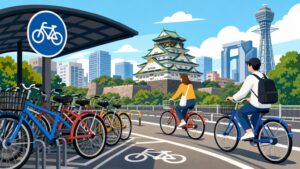
Osaka’s transit network feels like a simpler, more user-friendly version of Tokyo’s. The city’s layout is more straightforward, centered mainly around the north-south axis of the Midosuji subway line. This single line serves as the city’s lifeline, connecting the two major hubs: Umeda (in the north, often called Kita) and Namba (in the south, or Minami). Living near the Midosuji line gives you easy access to nearly everything the city offers. The JR Osaka Loop Line circles the city center much like Tokyo’s Yamanote Line, but on a more manageable scale. The entire system feels more human-sized.
While stations can be busy, they rarely reach the overwhelming enormity of their Tokyo counterparts. Rush hour is crowded but typically less intense than Tokyo’s infamous crush. For most daily travel, the system is intuitive and easy to master. This simplicity lowers daily stress and makes the city feel highly manageable. You spend less time route planning and more time enjoying your destination. From a photographer’s viewpoint, this ease of movement encourages spontaneous exploration. You can hop on a train at a moment’s notice and be in a completely different, fascinating neighborhood within minutes—without the logistical headache.
The Weekend Escape Hatch
This is perhaps one of Osaka’s greatest advantages. Its location in the heart of the Kansai region makes it an unbeatable base for exploring Japan’s cultural and historical heart. The ancient capital of Kyoto, with thousands of temples and tranquil gardens, is only a 30-minute train ride away. The former capital Nara, known for its giant Buddha and freely roaming sacred deer, is about 45 minutes distant. The stylish, cosmopolitan port city of Kobe, nestled between mountains and sea, is just 20 minutes away. You could have breakfast in Osaka, hike the Rokko mountains above Kobe for lunch, and enjoy a traditional dinner in Kyoto.
Beyond these major cities, easy access extends to the hot spring town of Arima, Himeji Castle, the spiritual mountain of Koyasan, and the beautiful beaches of Wakayama. The sheer variety and proximity of world-class destinations make weekend travel effortless and incredibly rewarding. Living in Osaka means you’re not just residing in one city; you’re at the center of a rich cultural tapestry.
Tokyo offers its own getaways as well, including the seaside town of Kamakura, the hot springs of Hakone, and the scenic beauty of Nikko. However, these destinations are generally farther away, often requiring 90 minutes to two hours or more of travel, and tend to be significantly more crowded, especially on weekends, serving the entire Tokyo metropolitan population of over 37 million. Escaping Tokyo’s urban sprawl demands more planning and a greater tolerance for crowds, whereas from Osaka, it feels like a natural extension of your backyard.
A Feast for the Senses: Food, Art, and Culture
While both cities serve as cultural epicenters, they express their creative energies in distinct ways, from the cuisine on your plate to the artworks displayed in galleries.
Tokyo’s Global Gastronomy
Tokyo’s culinary scene is characterized by its quest for perfection, its variety, and its status as a global trendsetter. It’s a city where a simple ramen shop may spend decades refining a single bowl of broth, and where top chefs specializing in French, Italian, and Chinese cuisines open restaurants to challenge themselves in one of the world’s most discerning markets. The focus often lies on refinement, ingredient quality, and exquisite presentation. Whether it’s the fresh sushi at the Toyosu Fish Market or the delicate artistry of a multi-course kaiseki meal in a Ginza establishment, dining in Tokyo can be a sublime, almost intellectual experience.
The city also serves as a playground for novelty and niche passions. You can find themed cafes catering to almost any interest, from hedgehogs to robots to 2D characters. Here, food intersects with fashion and pop culture, shaping an ever-evolving culinary landscape. For those seeking the absolute forefront of gastronomy and the chance to savor top-tier dishes from around the world, Tokyo remains unmatched.
Osaka: Japan’s Kitchen (Tenka no Daidokoro)
Osaka’s nickname, Tenka no Daidokoro (The Nation’s Kitchen), dates back to the Edo period, when the city was a central hub for the rice trade. Today, it reflects a food culture that prioritizes hearty satisfaction over haute cuisine. The essence of Osaka’s cuisine is robust, flavorful, and communal. It’s about gathering around a sizzling teppan grill for okonomiyaki, sharing piping hot takoyaki on a street corner, or dipping kushikatsu skewers into a communal pot of sauce (with a strict no double-dipping rule!).
This food culture mirrors the city’s personality: unpretentious, generous, and meant to be enjoyed with enthusiasm. The Dotonbori district, with its dazzling neon lights and giant mechanical crabs, epitomizes this food-centric spirit. However, the true charm lies in the countless shotengai and the Kuromon Ichiba Market, where vendors have honed their recipes over generations. Food in Osaka is a social catalyst, a reason to come together, and a source of intense local pride. It’s less about quiet admiration and more about loud, joyful indulgence.
The Cultural Canvas
Tokyo stands as Japan’s foremost stage for high culture. It boasts world-class institutions such as the Tokyo National Museum in Ueno Park, the futuristic Mori Art Museum atop Roppongi Hills, and the National Art Center. The city hosts major international symphony orchestras, traveling blockbuster art exhibitions, and the biannual Tokyo Fashion Week. One night you might attend a traditional Kabuki play, and the next experience an experimental electronic music festival. Tokyo’s cultural offerings are vast, varied, and of the highest caliber.
In contrast, Osaka’s culture feels more grassroots and communal. Its most renowned cultural export is comedy. The Namba Grand Kagetsu theater is the revered home of the yoshimoto comedy troupe, and the spirit of manzai comedy permeates the city. Osaka is also the historic center of Bunraku, a mesmerizing form of traditional puppet theater. The city’s art and music scenes are vibrant but possess a more independent, underground vibe. You’re more likely to discover an extraordinary indie band playing in a small Americana club or find a brilliant emerging artist in a tiny gallery in Nakazakicho. Culture in Osaka feels less like a spectacle to be watched and more like an experience to actively engage in.
The Final Verdict: Which City Sings Your Song?
The decision between Tokyo and Osaka isn’t about good versus bad. It’s a choice between two distinct, equally valid, and richly rewarding ways to experience life in Japan. Ultimately, it depends on your personality, priorities, and the kind of life you want to create.
Choose Tokyo if…
You are ambitious and drawn to being at the heart of it all. You thrive on the dynamic energy of a true global megacity. Your career lies in fields like finance, tech, or international media, and you seek access to the broadest range of opportunities. You value efficiency, sophistication, and the constant novelty offered by a city of this scale. You enjoy high fashion, innovative cuisine, and world-class museums. You appreciate the anonymity that a vast city provides and are comfortable taking the initiative to build your own social networks. You see the higher cost of living as a reasonable trade-off for unmatched access and potential.
Choose Osaka if…
You value human connection, warmth, and a slower pace of life. You want your money to stretch further, allowing for larger living spaces and more disposable income. You believe food is one of life’s greatest and most accessible joys. You prefer a direct, humorous style of communication and want to feel part of a tight-knit local community. You dream of weekends spent exploring the ancient temples of Kyoto, the mountains of Kobe, and the rich history of the Kansai region. You seek a city with a vibrant soul, a place that might be a bit rough around the edges but beats with a huge, warm heart.
In the end, there’s no wrong choice. Both Tokyo and Osaka offer a deep immersion into one of the world’s most fascinating cultures. Perhaps the best advice is to listen carefully—the high-speed hum of the Yamanote Line or the lively laughter echoing through an Osaka shotengai. One will feel like home, one will play your tune. All that’s left is to choose which rhythm you want to dance to.