To truly understand Osaka, one must first understand its stomach. This is not a city of quiet contemplation or reserved ceremony; it is a city of thunderous laughter, of boisterous commerce, and above all, of an insatiable, all-consuming passion for food. This philosophy is captured in a single, glorious word: kuidaore. It translates, rather bluntly, to ‘eat until you drop’ or ‘eat yourself into ruin,’ but this literal meaning belies a deeper truth. Kuidaore is the city’s lifeblood, a cultural declaration that life’s greatest pleasure is a belly full of delicious things, shared with gusto. It is the spirit that fills the air with the scent of grilling octopus and sweet soy sauce, a spirit born from centuries of being Japan’s commercial engine room, its tenka no daidokoro—the Nation’s Kitchen. Here, food is not merely sustenance; it is identity. It is loud, it is proud, and it is served right there on the street, sizzling, steaming, and ready to be devoured. This stands in stark, delicious contrast to its eastern rival, Tokyo. Where Tokyo’s culinary scene often whispers of refinement from behind the muted curtain of a nondescript doorway, Osaka’s shouts its virtues from a thousand neon-lit stalls, inviting you into a grand, chaotic, and utterly unforgettable feast. The twin hearts of this magnificent beast are Dotonbori, the glittering, theatrical stage for nighttime indulgence, and Kuromon Market, the city’s sprawling, fresh-from-the-sea pantry. Together, they offer not just a meal, but an immersion into the very soul of Kansai culture. Prepare yourself for a journey down these hallowed culinary pathways, where every skewer, every savory pancake, and every octopus ball tells a story of this vibrant, unapologetic city.
This vibrant, unapologetic city’s soul is perhaps best experienced not just on the street, but in the intimate, chef-driven world of Osaka’s kappo cuisine.
The Soul of Osaka: Understanding Kuidaore and the Merchant Spirit
To stroll through the food-filled streets of Osaka is to journey through living history. The city’s reputation as Japan’s culinary capital is no recent marketing ploy; it is a heritage shaped by commerce during the Edo period (1603-1868). While Edo (now Tokyo) served as the seat of the shogun and samurai class—a center of strict hierarchy and political power—Osaka thrived as the dynamic hub of the nation’s economy. It was here that rice from across Japan was collected, stored, and traded in what became the world’s first modern futures exchange. This vast accumulation of wealth and goods earned Osaka the nickname tenka no daidokoro, or ‘the nation’s kitchen.’ A whole ecosystem of merchants, laborers, and financiers prospered, giving rise to a unique culture. Unlike the samurai, bound by rigid codes of conduct and loyalty, Osaka’s merchants relied on their wit, ambition, and financial savvy. This practical, results-driven mindset cultivated a culture that prized substance over style and quality at a fair price. They worked hard and, in return, sought to enjoy the rewards of their efforts. The most immediate and satisfying way to do this was through food and drink—this is the origin of kuidaore. It served as a means for the merchant class to showcase their prosperity and celebrate life in a tangible, joyful way. Luxuries like fine kimonos and elaborate tea ceremonies belonged to the aristocracy; for the average Osakan, true indulgence was a perfectly grilled eel, a dish of fresh sashimi, or a cup of fine sake from the nearby Nada district. Understanding this historical background is essential to grasp the fundamental distinctions between the food cultures of Osaka and Tokyo. Tokyo’s culinary traditions were influenced by the tastes of the daimyo and their samurai retainers, resulting in highly refined, elegantly presented dishes such as classic Edomae sushi and formal kaiseki meals, often savored in serene, exclusive environments. In contrast, Osaka’s cuisine was created for the people. It needed to be quick, hearty, affordable, and above all, incredibly tasty. It was meant to be eaten on the move, in bustling markets, or packed into tiny eateries. This is why dishes like takoyaki, okonomiyaki, and kushikatsu have become the city’s culinary ambassadors—democratic foods accessible to all. The merchant spirit also fostered a particularly discerning taste among the locals. Osakans are famously particular about their food, with a deep respect for ingredient quality, especially the subtle, savory base of a good dashi (stock). This broth, usually prepared from kombu (kelp) and katsuobushi (bonito flakes), is the foundation of Kansai cuisine, and its excellence can make or break a dish. The merchants’ trade networks ensured a steady supply of premium kelp from Hokkaido and other necessary ingredients, enabling chefs to refine this crucial culinary element. This dedication to quality, paired with a demand for value, created a fiercely competitive atmosphere where only the best eateries and stalls survived. The outcome is today’s vibrant street food scene: a lively, energetic world where excellence is expected, and a delicious meal is always just a few steps away.
Dotonbori After Dark: A Neon-Soaked Symphony of Flavor
As dusk descends over Osaka, Dotonbori stirs to life. The awakening begins slowly, with the setting sun reflecting softly on the calm canal waters. Then, almost suddenly, the whole district bursts into a vibrant display of light, sound, and movement. This place is more than just a dining spot; it’s a grand, immersive theater of cuisine. Giant animatronic crabs wave their claws, a massive octopus clings to a shopfront, and the iconic Glico Running Man perpetually races toward a victory that forever eludes him. The air, heavy with humidity and excitement, fills with the intoxicating scents of sizzling batter, caramelizing sauce, and a faint salty hint from the nearby water. It overwhelms the senses in the most delightful way, showcasing Osaka’s boisterous, lively spirit in full, unfiltered glory. Moving through the bustling promenade is a dance—a rhythmic shuffle of locals, tourists, and salarymen all drawn by the alluring call of street food. Vendors here are more than just cooks; they are performers, shouting greetings that add a gravelly percussion to the street’s symphony, their hands moving with a speed and precision bordering on artistry. Visiting Dotonbori means surrendering to this beautiful chaos, allowing your senses to guide you from one stall to the next on a blissful, calorie-rich pilgrimage.
The Takoyaki Ballet
At the core of the Dotonbori experience lies its most famous delight: takoyaki. These are not merely octopus balls; they are a culinary art form. Watching them being crafted is a captivating performance. Chefs stand before massive cast-iron pans filled with dozens of rounded molds. With practiced flair, they pour a dashi-infused batter into the molds, which sizzles and spills over the edges. Then, each molten sphere receives a tender piece of octopus (tako), a sprinkle of pickled red ginger (beni shoga), and a scattering of crispy tempura bits (tenkasu). The real magic begins with the turning. Equipped with two small metal picks, the chefs move with the grace of dancers, flicking their wrists in a blur. They skillfully separate the batter and, through a series of swift, rhythmic twists, shape perfect spheres. The process is a nonstop ballet of batter and steel, ensuring a crisp, golden-brown outside while the inside stays soft and almost molten. A typical serving of six or eight balls arrives in a small, boat-shaped paper dish. The final touch is the toppings—a generous drizzle of dark, sweet-and-savory takoyaki sauce, a lattice of creamy Japanese mayonnaise, a sprinkle of green laver (aonori), and a liberal handful of delicate bonito flakes (katsuobushi) that flutter and dance in the steam as if alive. The first bite is a moment both cautious and revelatory: a satisfyingly light crunch gives way, releasing a rush of steam and an intensely savory, molten core. The chewy octopus contrasts perfectly with the creamy batter. This single bite embodies the heart of Osaka: bold, comforting, and completely irresistible.
Okonomiyaki: The Soul on a Griddle
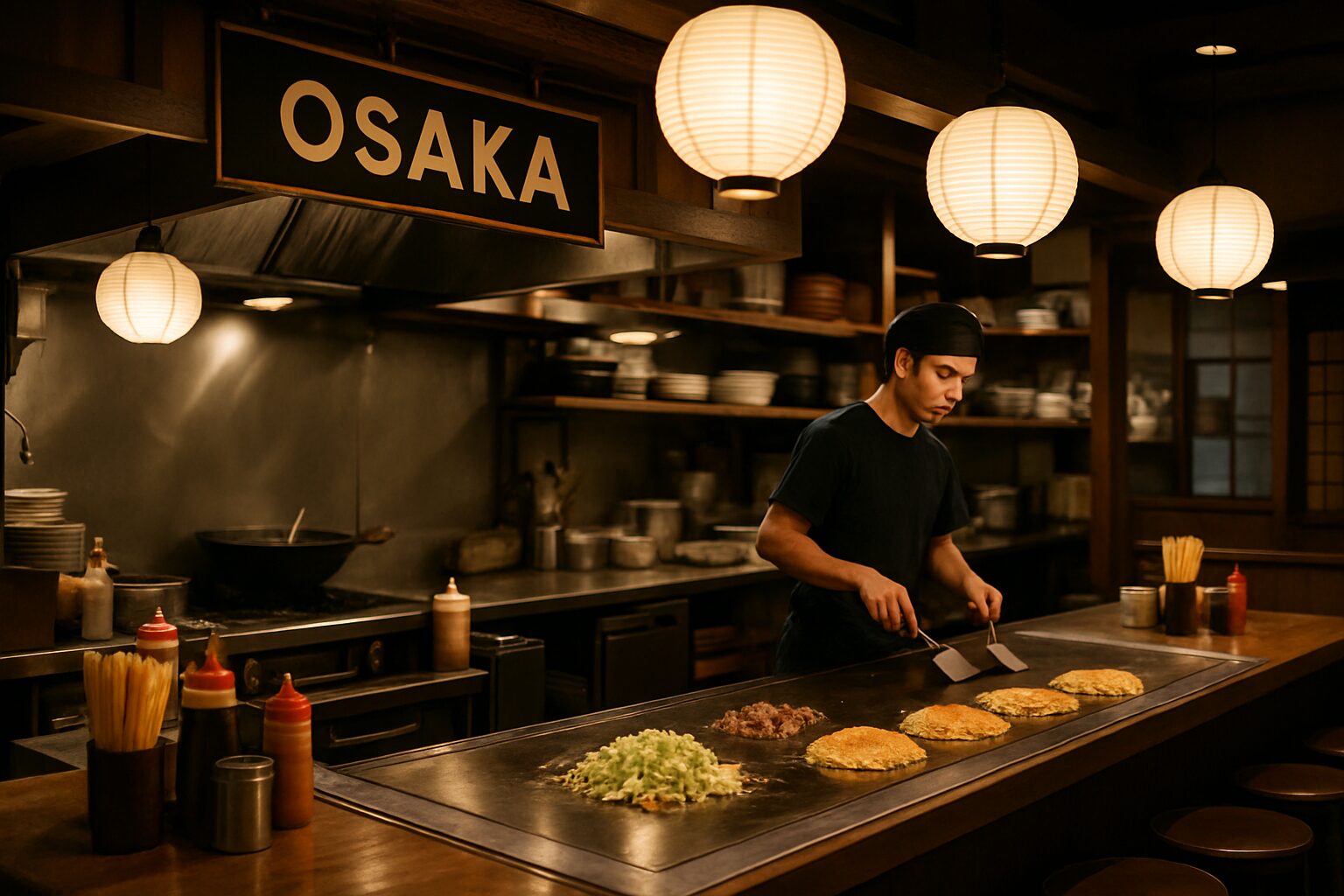
If takoyaki is the city’s signature snack, okonomiyaki is its hearty, soulful meal. The name itself reflects the dish’s inclusive spirit: okonomi means ‘what you like,’ and yaki means ‘grilled.’ Essentially, it’s a savory pancake that you can customize endlessly. While Hiroshima offers its famous layered style, Osaka’s version is a glorious, harmonious jumble. A batter made of flour, grated yam, dashi, and egg blends with heaps of finely shredded cabbage and your choice of fillings. The classic topping is thin pork belly slices, though squid, shrimp, or even cheese are popular alternatives. The mixture is poured onto a massive, flat teppan griddle, where it is skillfully shaped into a thick, round pancake. Watching it cook teaches patience and transformation: the cabbage softens and sweetens, the batter firms, and the pork crisps irresistibly on top. Once fully cooked, it is served on a plate or, in many traditional places, kept warm on a small griddle built into the table. Like takoyaki, the finishing dressings are essential. A thick, sweet, tangy okonomiyaki sauce—reminiscent of Japanese barbecue sauce—is brushed over the top, followed by a generous squeeze of Japanese mayonnaise, a dusting of aonori, and a flurry of dancing bonito flakes. Okonomiyaki is far more than a pancake; it’s a complete, satisfying meal—warm, comforting, and packed with layers of flavor and texture: the crunch of cabbage, richness of pork, and savory umami of sauce and dashi. It perfectly expresses Osaka’s straightforward, hearty, and deeply gratifying food culture.
Kushikatsu: The Golden Rule of Frying
Venture away from Dotonbori’s bustling main streets into the grittier, traditional lanes of areas like Shinsekai, and you’ll discover the spiritual home of kushikatsu. This is Osaka’s take on tapas, its quintessential working-class fare. The concept is simple: various meats, seafood, and vegetables are skewered (kushi), coated in a light batter and fine panko breadcrumbs, and deep-fried (katsu) to a golden, crispy perfection. The variety is vast, including staples like beef, pork loin, chicken, and shrimp alongside more adventurous options like quail eggs, lotus root, shiitake mushrooms, asparagus, cheese, and even ginkgo nuts. The skewers arrive piping hot, often presented on a communal metal tray. Central to the kushikatsu experience is the dipping sauce. Each table has a stainless-steel container filled with a thin, dark, sweet-savory sauce. Here lies an unbreakable, sacred rule of kushikatsu: NO DOUBLE DIPPING. This is not a mere suggestion but a firm law. Because the sauce container is communal, dipping your skewer once is acceptable, but biting and then dipping the same skewer again is a serious breach of hygiene and etiquette, earning stern looks from both staff and fellow diners. Should you need more sauce after the first dip, use the complimentary wedges of raw cabbage at the table. These serve as edible spoons, letting you scoop sauce without contaminating the shared pot. Beyond etiquette, kushikatsu is pure comfort food. The panko crust is light and shatteringly crisp, locking in the moisture and flavor inside. It’s a social dish best enjoyed with a cold beer or highball, ordering a few skewers at a time and savoring the simple, honest pleasure of perfectly fried delights.
Kuromon Ichiba Market: The Nation’s Kitchen in Action
If Dotonbori is the dazzling front-of-house theater of Osaka’s food scene, then Kuromon Ichiba Market serves as its bustling backstage kitchen. Stretching 600 meters under a covered arcade, Kuromon has been supplying the city’s chefs and residents for over a century. The atmosphere contrasts sharply with the neon-lit festivities of Dotonbori. This is a place of business—a working market infused with a strong sense of purpose and pride. The energy here is high, but it is the energy of commerce, not entertainment. The air is alive with vendors’ calls, the fresh, briny scent of the sea, the rich aroma of grilling eel, and the sweet fragrance of impeccably ripe fruit. Though it has become a popular tourist spot, Kuromon has retained its soul. Local restaurateurs are still seen carefully inspecting fish, while neighborhood grandmothers haggle over pickles. The market’s nickname directly reflects Osaka’s historical title: known as “the nation’s kitchen,” here the term refers to the raw, pristine ingredients themselves. It is a feast for the eyes long before it becomes one for the palate. Stalls brim with a dazzling variety of produce from both sea and land, each item displayed with a reverence that reveals a deep respect for quality.
The Seafood Spectacle
The undisputed highlight of Kuromon Market is its seafood, showcasing the abundant marine bounty surrounding Japan. Vendors present their offerings with the precision of jewelers. Glistening blocks of tuna (maguro) range from the deep ruby red of lean akami to the pale, marbled pink of fatty otoro. Giant crab legs, as thick as a man’s arm, rest on ice beside trays of plump, vibrant scallops and spiny sea urchins cracked open to reveal bright orange, creamy treasures within. What sets Kuromon apart is its interactivity—it’s not a museum of fish, but a live buffet. Many stalls operate on a ‘buy-and-eat’ basis. You can point to a colossal oyster, and the vendor will shuck it on the spot, serving it with a wedge of lemon or a splash of ponzu sauce. Giant prawns or beautiful scallops still in their shells can be grilled right before your eyes, filling the air with intoxicating aromas of butter, soy sauce, and caramelized seafood. A special treat is fresh uni (sea urchin) served in its own spiky shell, delivering a pure, briny, sweet, and creamily melting taste of the ocean. For a heartier meal, many vendors serve platters of freshly sliced sashimi or small bowls of rice topped generously with assorted fish, known as kaisendon. Savoring a piece of otoro here—so fresh it seems to dissolve into rich, fatty bliss on your tongue—is a transcendent experience and a testament to the market’s dedication to quality.
Beyond the Ocean’s Bounty
While seafood is the main attraction, Kuromon offers much more. The market is a microcosm of Japanese cuisine as a whole. Butchers proudly showcase the highest grades of wagyu, including the legendary Kobe beef. The ‘buy-and-eat’ culture continues here: you can purchase skewers of marbled beef grilled to a perfect medium-rare on a hot plate before you, seasoned simply with salt and pepper. Each bite is a heavenly morsel, the rich, beefy fat melting instantly on your tongue. Further along, stalls specialize in grilled eel (unagi), charcoal-grilled and basted repeatedly with a dark, sweet soy-based sauce until the skin crisps and the flesh becomes tender and smoky. The aroma alone is irresistible. Some vendors also offer fugu, the infamous pufferfish. While tourists may hesitate, these stalls demonstrate high culinary skill, as only licensed chefs are legally allowed to prepare the fish by carefully removing its toxic parts. Watching the chefs’ precision is a spectacle in itself. Beyond the main draws, specialists abound. Shops sell dozens of varieties of tsukemono (Japanese pickles), from bright yellow pickled daikon to sharp, salty umeboshi plums. Fruit stalls display produce that resembles art more than food: perfectly round melons, flawless white strawberries costing several dollars each, and bunches of grapes where every berry is the size of a small plum. Kuromon Market invites you to graze, to wander, and to marvel. The best time to visit is late morning, around 10 or 11 AM, when stalls are fully stocked and before the lunchtime crowds arrive. Come with an empty stomach and an open mind—you will leave with a profound appreciation for the quality and care that define Japanese cuisine.
The Tokyo Counterpoint: A Tale of Refinement and Reservation
Comparing Osaka’s street food scene with Tokyo’s isn’t about choosing a winner, but rather celebrating the rich diversity within Japan’s culinary culture. If Osaka offers a lively, chaotic, and concentrated burst of flavors, Tokyo presents a more sprawling, specialized, and often reserved experience. Unlike Osaka’s Dotonbori, with its dense and energetic street food hub, Tokyo’s street food culture is dispersed across various neighborhoods, each often focusing on specific types of food. The philosophies behind the scenes differ: in Osaka, engaging with the vendor—the friendly chatter and theatrical cooking—is part of the charm. In Tokyo, transactions tend to be more efficient and centered on the product itself, reflecting immense pride in craftsmanship or kodawari, the relentless pursuit of perfection in a single craft. This is evident in stalls that have specialized in one item for generations. For example, Tsukiji Outer Market, often compared to Kuromon, is an outstanding destination for fresh seafood but offers a distinct experience. While there are street foods like grilled scallops, fresh oysters, and the famed tamagoyaki (sweet rolled omelet) on a stick, much of the business caters to small, high-end sushi counters and sit-down restaurants. The atmosphere feels more orderly and less like the ‘grab-and-go’ grazing culture found at Kuromon. Ameya Yokocho, a bustling market near Ueno Park, is perhaps Tokyo’s closest counterpart to Osaka’s chaotic vibe. Originating from a post-war black market, it maintains a gritty and eclectic spirit, offering everything from fresh fish and produce to clothing and cosmetics. Its vibrant food scene includes yakitori stalls, fruit on a stick, and various snacks, but with a more international flair and lacking the singular focus on Kansai soul food that defines Dotonbori. Then there are the more intimate, neighborhood-style street food experiences, like Yanaka Ginza, a beautifully preserved shotengai (shopping street) with a nostalgic Showa-era atmosphere. Here, locals pick up simple street foods such as freshly fried menchi-katsu (minced meat cutlet) from a butcher shop or a basic korokke (croquette). It’s a charming and authentic experience, but quieter and more local than city-wide celebrations. Lastly, there is the trend-driven street food scene found in places like Harajuku’s Takeshita Street, where food meets fashion. Here, you’ll encounter giant rainbow-colored candy floss, elaborate dessert crepes, and long fried potatoes. It’s fun, photogenic, and hugely popular among younger crowds, focusing on novelty and visual appeal rather than the deep-rooted, historical culinary traditions that underpin Osaka’s scene. Tokyo’s street food offers an exciting journey of discovery but requires a treasure map approach, hunting down specific items in distinct neighborhoods, while Osaka lays out a glorious banquet inviting the world to feast.
Beyond the Big Two: Finding Osaka’s Hidden Culinary Alleys
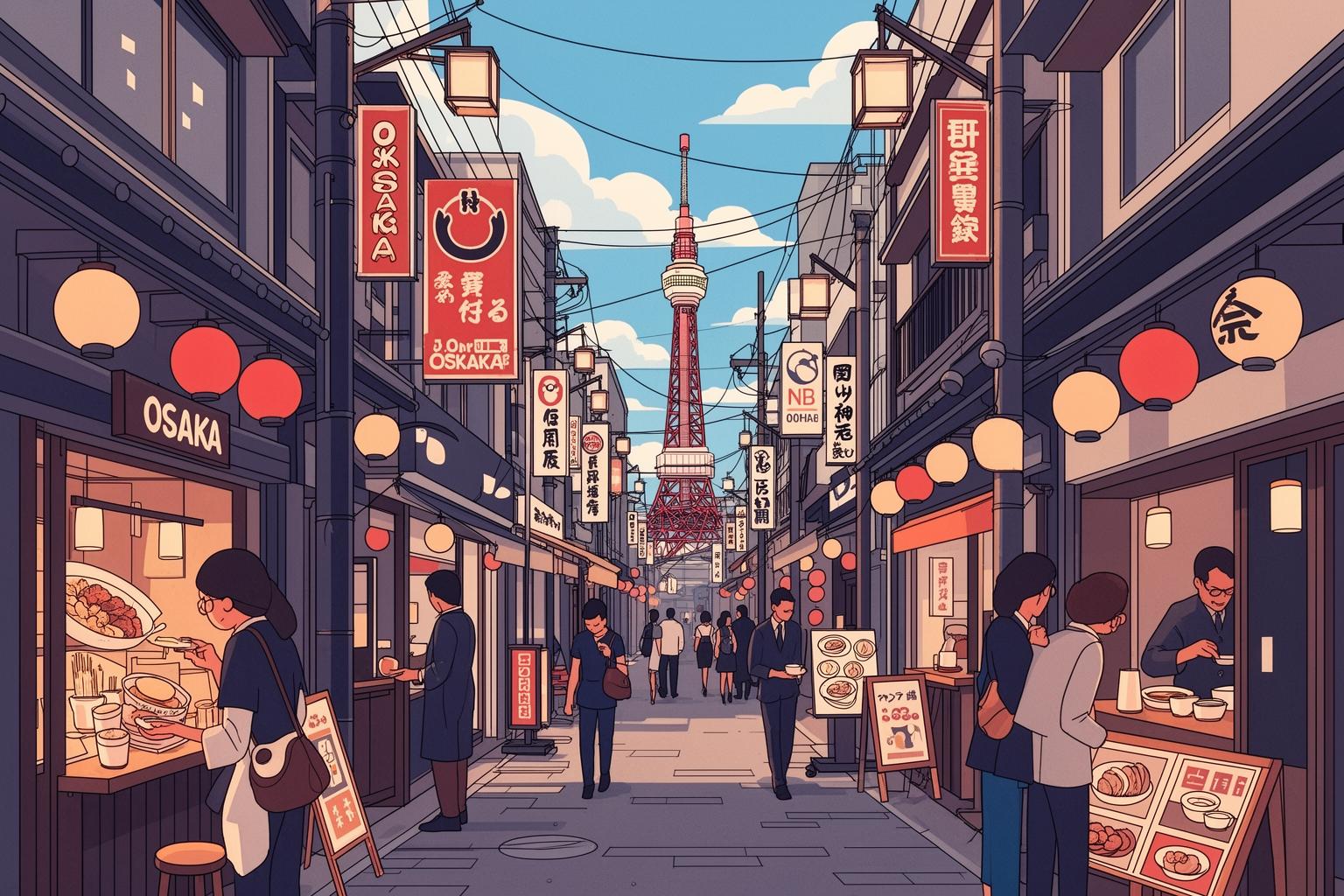
While Dotonbori and Kuromon Market are the undisputed giants of Osaka’s food scene, the true essence of kuidaore also flourishes in the city’s lesser-known alleys and neighborhoods. Venturing beyond the main tourist spots reveals a more local, and arguably more genuine, side of the city’s culinary spirit. One such neighborhood is Shinsekai, situated south of Namba. Entering Shinsekai feels like stepping back in time. Dominated by the iconic Tsutenkaku Tower, the area was developed before the war and still exudes a charmingly gritty, retro-futuristic vibe. This is the undeniable heartland of kushikatsu. The streets are filled with dozens of kushikatsu eateries, their vibrant signs and lanterns inviting you inside. The atmosphere is lively, straightforward, and friendly. You’ll sit at simple counters, order skewers by the batch, and share the communal sauce pot (remembering the golden rule!) with local workers and families. Enjoying kushikatsu here, paired with a cold beer, feels like taking part in a beloved local tradition. For a different kind of experience, head to Tenjinbashisuji Shotengai. As Japan’s longest covered shopping arcade, stretching over 2.6 kilometers, it offers an intriguing look into the daily lives of Osakans. This is not a tourist spot but a vibrant, bustling commercial lifeline. Walking its impressive length, you’ll discover countless small food stalls and shops serving mainly locals. The takoyaki here may not come from a famous chain but from a small, family-owned stand that’s been around for decades. You can enjoy delicious, freshly made korokke for less than a dollar and visit tiny shops selling traditional Japanese sweets. It’s a place for a leisurely stroll, people-watching, and uncovering the simple, everyday foods that sustain the city. For those seeking a more modern yet equally authentic atmosphere, the area known as Ura Namba is a must-see. Literally “Back Namba,” this maze of narrow alleys and hidden paths behind the main Namba stations is packed with small, innovative eateries and standing bars (tachinomi). This is where young chefs experiment and office workers relax after a long day. You’ll find everything from exquisite Italian-Japanese fusion restaurants seating just six people to bustling standing bars serving craft beer and creative small plates. The energy is contagious, the food outstanding, and the prices very reasonable. Exploring Ura Namba feels like being let in on a local secret—a chance to experience the modern, vibrant core of Osaka’s food scene.
A Practical Guide for the Aspiring Kuidaore Connoisseur
Embarking on a culinary adventure in Osaka is an exciting experience, and having a bit of local knowledge can make it even more enjoyable. First, be ready for crowds, especially in Dotonbori and Kuromon Market. The best way to get around is to go with the flow—don’t rush; instead, match the local pace, which is surprisingly swift yet mindful of personal space. Patience is essential, particularly when waiting in line at popular stalls. The queue itself is part of the experience, reflecting the quality of the food ahead. Although Japan is increasingly modern, street food and markets still primarily operate on cash. Many small vendors don’t accept credit cards, so carrying a good amount of yen, especially smaller bills and coins, is crucial for smooth transactions. One of the most important cultural tips concerns eating etiquette: it’s generally seen as rude to walk while eating in Japan because it looks messy and disrespectful. When you purchase street food, the proper etiquette is to stand to the side of the stall or find a designated eating area to enjoy your meal, showing respect to the vendor, the food, and those around you. After finishing, make sure to dispose of your trash properly. Though public trash bins may be rare, vendors usually provide a place at their stall to discard items like paper boats or skewers. A few words of Japanese go a long way. While many vendors in tourist spots use some English signage, learning simple phrases will be appreciated: “Sumimasen” (Excuse me) to get attention, “Kore o kudasai” (This one, please) while pointing, and “Arigato gozaimasu” (Thank you very much) are essential. Offering a sincere “Oishii!” (Delicious!) after your first bite will almost always earn a warm smile. Osakans are famous for their friendliness, and a small effort to speak their language helps build connections. Lastly, timing matters: visit Kuromon Market in the late morning to early afternoon to experience it at its busiest, while Dotonbori truly comes alive in the evening when the neon lights flicker on. By keeping these simple tips in mind, you can navigate Osaka’s vibrant food scene with the confidence and respect of a seasoned local.
The Unforgettable Taste of Osaka’s Spirit
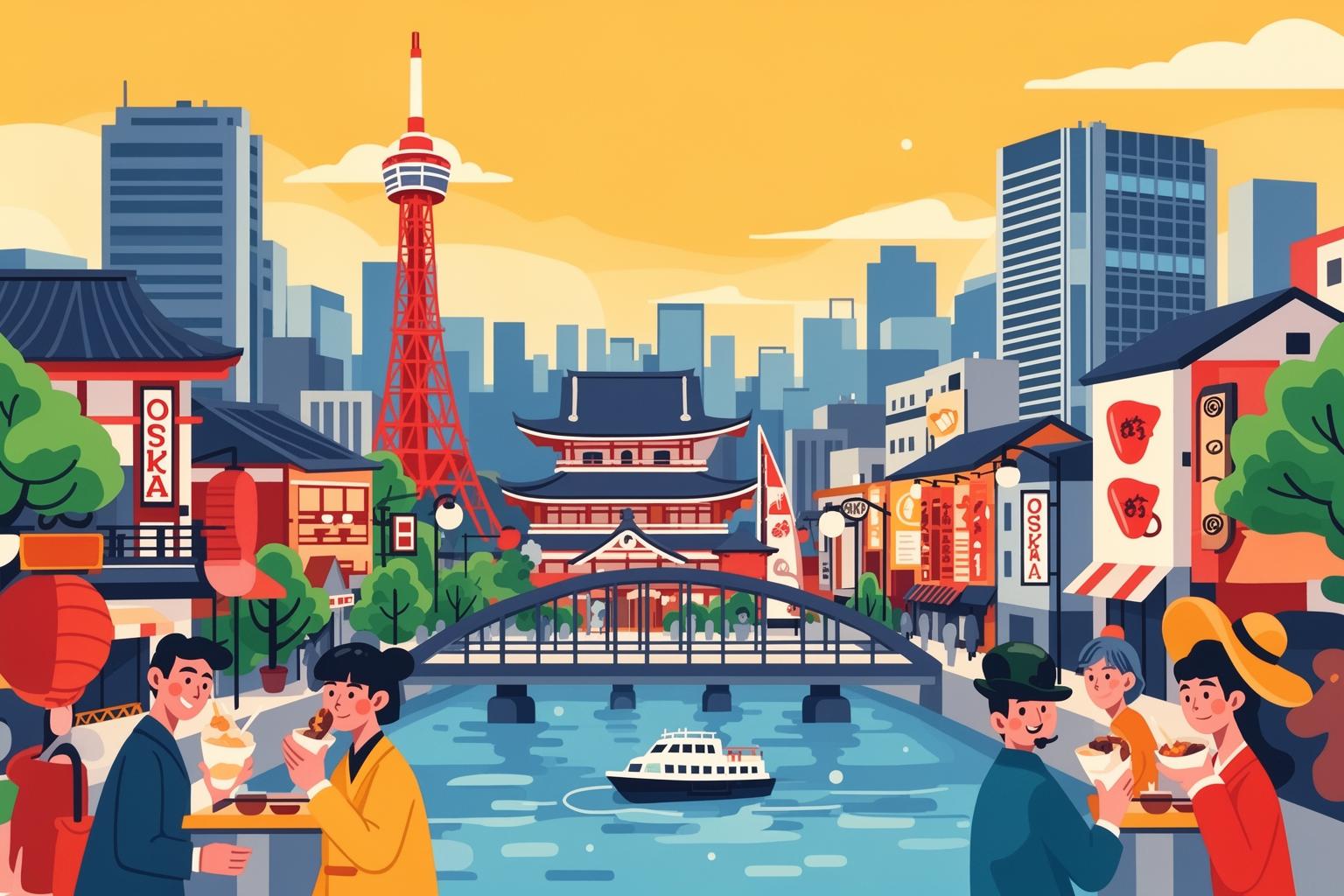
To eat in Osaka is to do more than merely satisfy hunger. It means engaging in a vibrant, living culture intricately woven into the city’s essence. The sizzle of batter on a hot griddle, the sharp aroma of pickled ginger, the sweet and savory scent of grilling sauce—these are the sounds and smells of Osaka’s spirit. From the dazzling, theatrical energy of Dotonbori to the pristine, ingredient-driven passion of Kuromon Market, the city offers a culinary adventure as diverse as it is delicious. This culture was born not in the austere courts of shoguns, but in the bustling, pragmatic world of merchants who demanded quality, value, and above all, flavor. This heritage lives on today in every perfectly crisp skewer of kushikatsu and every molten ball of takoyaki. It’s a joyful, communal, and unapologetically bold approach to food that offers a vibrant contrast to Tokyo’s refined elegance, highlighting the incredible regional diversity that makes Japan endlessly fascinating. So, come to Osaka with an empty stomach and an adventurous spirit. Let the essence of kuidaore be your guide. Join the locals in line, point to what looks appealing, and prepare to eat until you simply cannot eat any more. In doing so, you will discover that the taste of Osaka is the taste of life itself—served hot, fresh, and with plenty of heart.