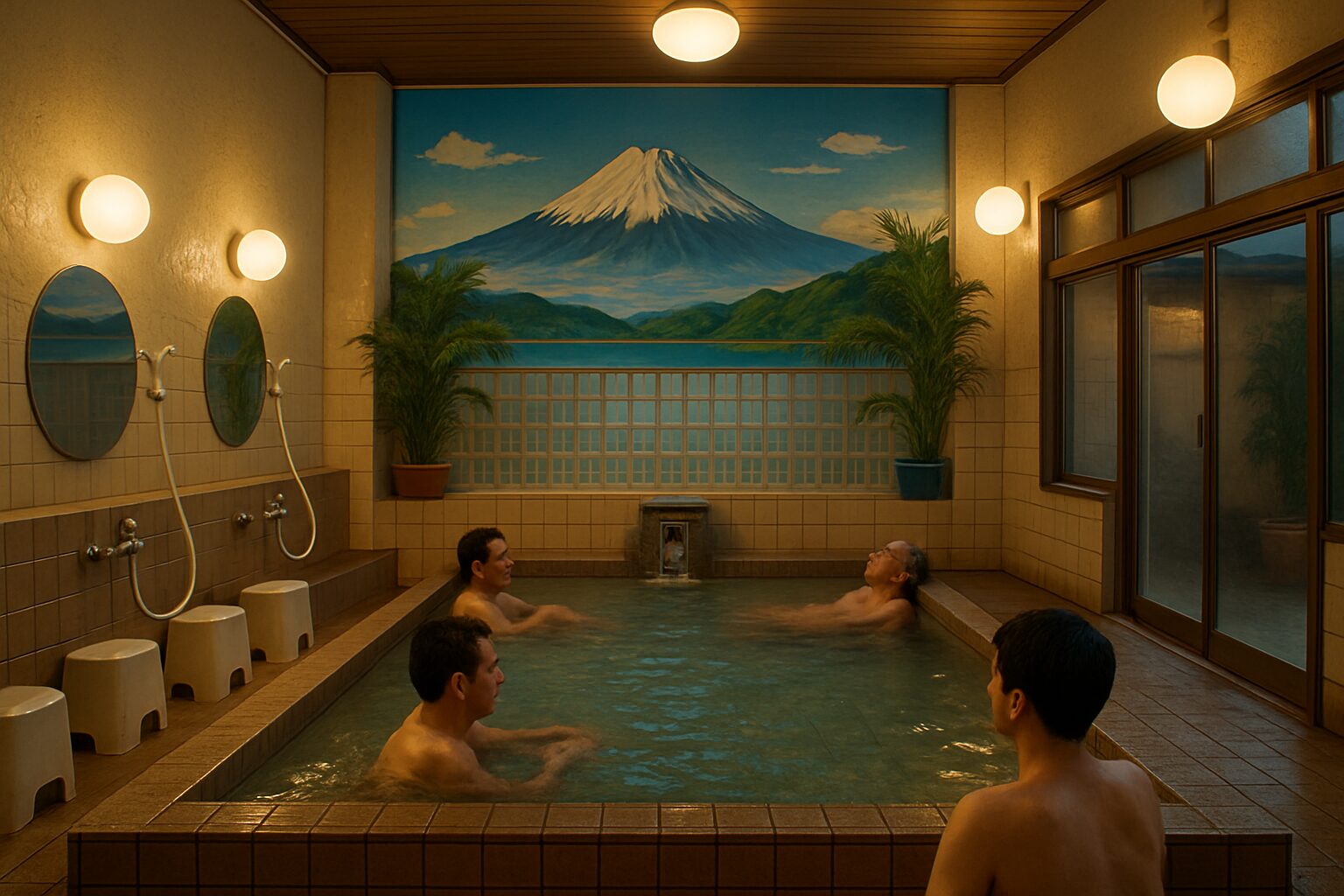
The air shifts the moment you pass through the sliding wooden doors. It’s a physical change, a curtain of humidity thick with the clean scent of soap, mineral-rich water, and the faint, sweet perfume of heated cedar. The chaotic symphony of Osaka’s streets—the chime of a passing tram, the energetic calls of shopkeepers, the distant rumble of the subway—fades into a gentle hum. Here, in the heart of the city’s labyrinthine residential districts, you find the sentō, the public bathhouse. This is not merely a place to get clean; it is a sanctuary, a community living room, and a living museum of a culture that has revered the ritual of bathing for centuries. In a metropolis defined by its relentless forward momentum, the sentō is a cherished anchor to a more deliberate, communal way of life. It’s where the day’s grime, both literal and metaphorical, is washed away, leaving a sense of profound renewal that connects you directly to the soul of this vibrant city. For anyone seeking to understand the authentic, unfiltered rhythm of Osakan life, the journey begins here, under the gentle steam and the watchful gaze of a painted Mount Fuji.
To fully experience the city’s vibrant rhythm, consider exploring Osaka’s dynamic nightlife after your visit to the sentō.
Echoes of History in Steam and Tile
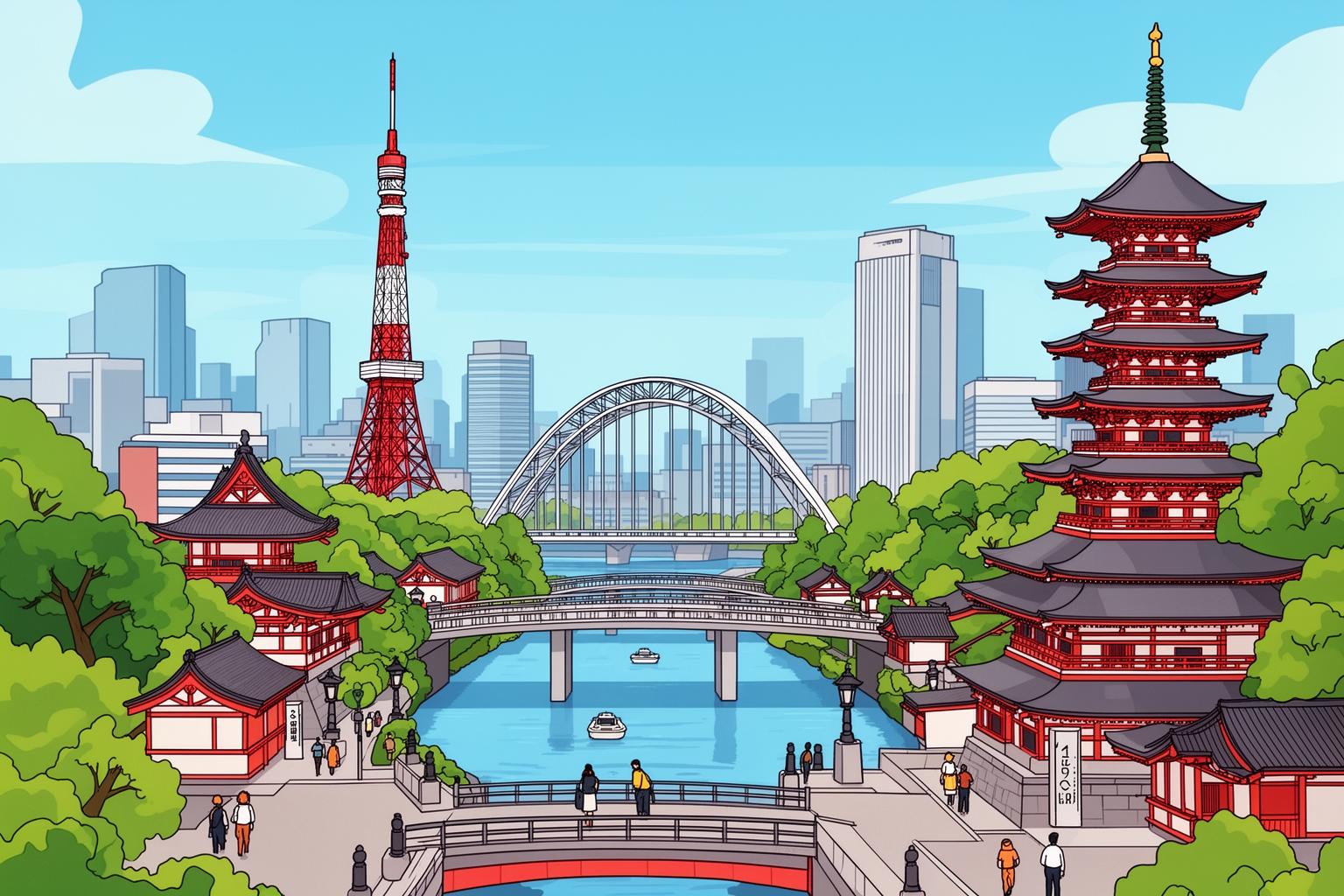
Entering an Osakan sentō means immersing oneself in a rich current of history. The tradition of public bathing in Japan is ancient, rooted in Buddhist purification rituals brought from the mainland. Monasteries often included bathhouses called yuya, which were sometimes opened to the public as an act of charity. However, it was during the Edo Period (1603-1868), a time of unprecedented peace and flourishing urban culture, that the sentō truly blossomed as a secular institution. In densely populated cities like Edo (Tokyo) and Osaka, private bathing facilities were rare in homes. The sentō became an indispensable daily necessity, as vital as the local market or shrine. It served as the great equalizer, a place where samurai, merchants, and artisans alike shed their clothes—and with them, the rigid social hierarchies of the outside world. This concept, known as hadaka no tsukiai or “naked communion,” is central to the sentō’s cultural essence. It nurtures a unique form of interaction, free from pretense and status, allowing for open, sincere social engagement that is uncommon in a society that highly values formality.
As Japan’s great merchant capital, Osaka developed a unique sentō culture. The city’s practical and sociable spirit found a natural home in the bathhouse. It became the neighborhood hub for exchanging information, where business deals were informally made, local gossip circulated, and community ties were strengthened amid the warm, steamy atmosphere. The architecture of these bathhouses also took on a distinctive style. Many older sentō in Osaka boast a grand, temple-like entrance with an imposing karahafu, an ornate, undulating gable marking a place of significance. This was not merely decorative; it proudly asserted the bathhouse’s important role in the community. Inside, the layout was standardized for both efficiency and comfort: high vaulted ceilings allowed steam to escape, tiled floors made cleaning easy, and large murals—often depicting Mount Fuji—offered bathers a feeling of expansive tranquility within the urban confines.
The post-war era marked another important phase. As Japan rapidly rebuilt, the sentō remained a comforting constant, symbolizing resilience and normalcy. It was a warm, bright refuge for those in temporary or damaged housing. The mid-20th century was the sentō’s golden age, with thousands operating across Osaka alone. Yet the rise of modern apartments equipped with private baths led to a gradual decline. Still, the sentō did not vanish. It evolved. While many traditional neighborhood bathhouses have sadly closed, many others survived by focusing on their distinctive appeal: spacious tubs, a social atmosphere, and the pure, unmatched pleasure of a deep, proper soak no small home bathtub can replicate. Additionally, the industry advanced with the emergence of “super sentō,” larger, modern complexes offering a vast range of baths, saunas, restaurants, and massage services, transforming bathing into a full-day leisure experience. This blend of ancient and modern, traditional and innovative, is quintessentially Osaka.
The Ritual: A Step-by-Step Immersion
For those unfamiliar, the idea of visiting a sentō can seem intimidating. The etiquette is unspoken, and the process resembles a choreographed dance that locals execute with ease. But don’t worry; the ritual is straightforward, logical, and grounded in principles of hygiene and mutual respect. Learning it is your gateway to experiencing one of Japan’s most rewarding cultural traditions.
Your adventure begins at the entrance, the genkan. Here, you’ll find rows of small lockers for your shoes. Remove your footwear and place it inside, taking the wooden key with you. This act represents leaving behind the dirt and concerns of the outside world. Next, head to the reception area. In a traditional sentō, this might be the bandai, a raised, throne-like platform from which the owner, often an elderly lady, watches over both the men’s and women’s changing rooms. It’s a classic element reflecting the bathhouse’s history as a family-run business. In more modern establishments, you’ll encounter a standard counter or a ticket vending machine. The fee is usually quite modest—a small price for an hour of relaxation. Here, you can also rent or purchase any forgotten items: a small washing towel, a larger bath towel for drying, soap, or shampoo. It’s completely acceptable to arrive empty-handed.
After paying, select the correct entrance. Look for the noren—short, split curtains hanging in the doorways. They will be marked with the kanji for man (男, otoko) and woman (女, onna), and are almost always color-coded, typically blue for men and red for women. Passing through the noren is the final step, a passage into a space of shared intimacy.
You will now be in the changing room, the datsuijo. This clean, dry area usually features tatami mats or polished wooden floors. Find an empty locker or a wicker basket for your clothing. The etiquette here is simple: you must undress completely. Bathing suits are not allowed in a sentō. Though this might feel awkward at first, it is customary, and no one will be paying you any mind. Modesty is preserved using the small washing towel, which can cover you as you move from the changing room to the bathing area. This small towel is your most essential item, and we will explore its many uses later.
The Art of Washing: The Foundation of the Experience
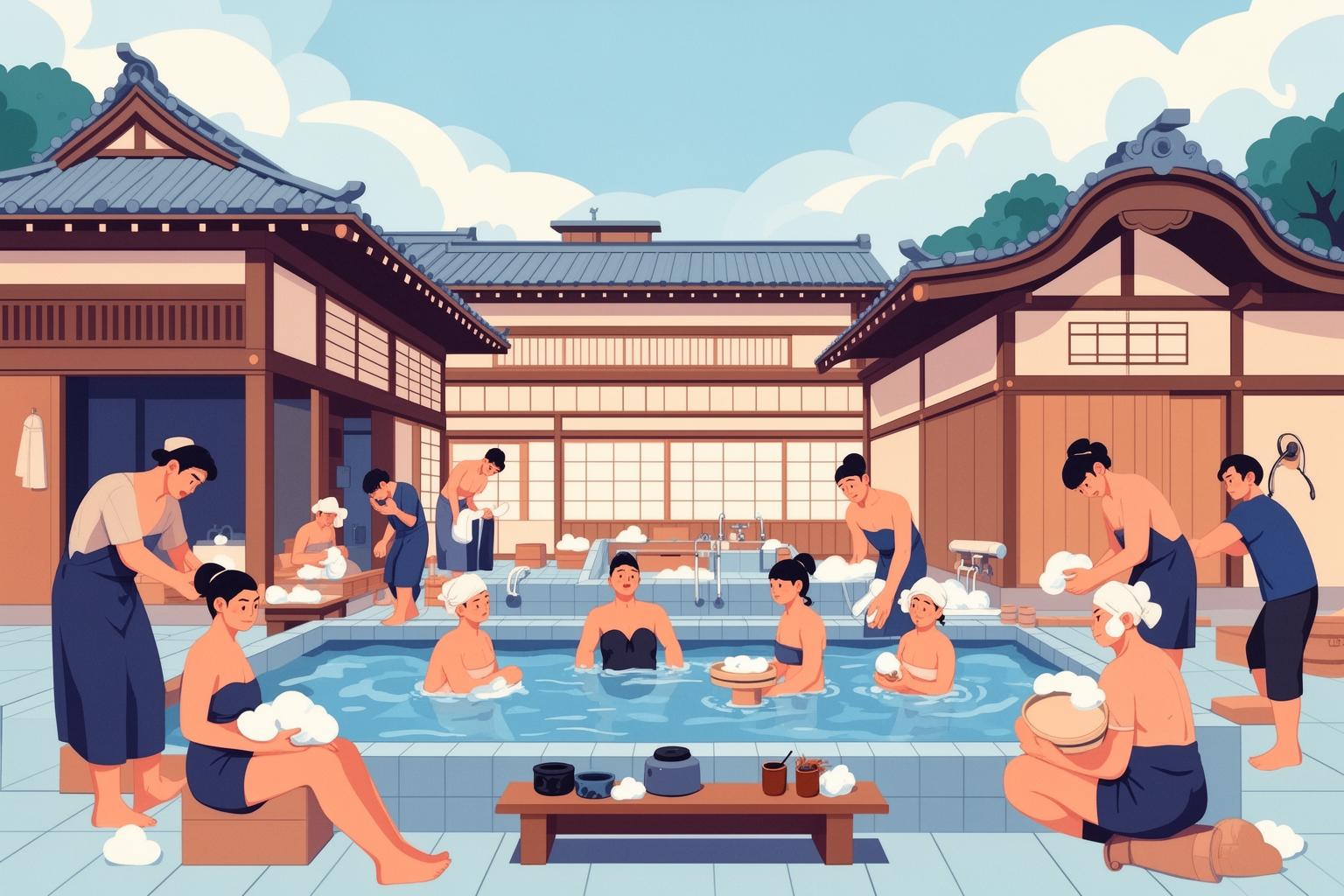
Before you even consider sinking into the blissful warmth of the baths, you must wash first. This is the single most crucial rule of the sentō. The large tubs are meant for soaking and relaxing, not for cleaning. Entering the bath with a soapy or unwashed body is a serious breach of etiquette. The bathing area, or arai-ba, features rows of individual washing stations. Each station includes a low plastic or wooden stool, a faucet with hot and cold taps, a shower head on a flexible hose, and a bucket. Take a stool and a bucket, find an available spot, and sit down. Sitting is important; it prevents splashing your neighbors. Use the bucket to mix water to your preferred temperature or simply use the shower head. Now, wash yourself thoroughly from head to toe. Lather up with soap, shampoo your hair, and rinse completely. You should be spotless before moving on.
Before entering the main tubs, there is one last small ritual: the kakeyu. Using your bucket, scoop water from the edge of the bath you plan to enter and pour it over your lower body. This helps your body acclimate to the water temperature and serves as a final rinse—a gesture of respect for the shared water. It is a subtle but meaningful act, a quiet acknowledgment of entering a communal space.
Now, finally, you are ready for the main event. Slide into the water slowly and gracefully. Avoid jumping or splashing. Find a comfortable spot and let out a gentle sigh of contentment—it’s an almost involuntary, universal response. The water in Osakan sentō tends to be hotter than what Westerners are used to, typically between 40 and 44 degrees Celsius (104-111°F). It may feel intense at first, but your body will soon adapt, and a deep, penetrating warmth will begin to soothe your muscles and calm your mind. Watch the other bathers. They are the embodiment of tranquility, some with their eyes closed, others gazing thoughtfully at the mural on the wall. The atmosphere is one of shared, quiet reflection.
Navigating the Tubs and Post-Bath Bliss
Most sentō provide a variety of baths (yubune) to explore. The main tub is typically a simple, large pool of hot water. But be sure to look around for others. You might come across a denki buro, or electric bath. Note: this tub has a low-voltage electric current running between two plates. Bathers sit between them and feel a tingling, muscle-stimulating sensation. It’s an acquired taste, though some swear by its therapeutic benefits. Approach it with caution! Another common feature is the kusuri-yu, or medicinal bath. The water is infused with herbs, minerals, or seasonal ingredients such as yuzu citrus in winter or iris roots in spring. These baths are not only fragrant but are also believed to offer various health benefits.
Jet baths, or jetto basu, are also favored, providing a powerful hydro-massage for your back and legs. You might also find a cold plunge pool, the mizuburo. The contrast between the hot tubs and the icy cold plunge is invigorating and is said to boost circulation and tighten the skin. The cycle of hot bath, cold plunge, and rest is a key part of the experience for many seasoned bathers, especially when combined with a sauna visit, if available.
Remember the small towel? Its role is essential. While in the bathing area, it should never touch the bathwater for hygiene reasons. Most people either place it on their head (which also helps prevent dizziness from the heat) or set it aside by the tub. It is mainly for washing your body at the washing station and for a preliminary drying before you return to the changing room.
When you feel completely soaked and relaxed, it’s time to exit. As you leave the bathing area and enter the datsuijo, use your small, damp towel to wipe off as much water as possible from your body. The aim is to avoid dripping water all over the dry floor of the changing room. This is an important etiquette point that shows consideration for others. Once in the changing room, you can use your large, dry bath towel to finish drying. Take your time; this post-bath period is part of the ritual.
The feeling after a sentō visit is one of deep cleanliness and relaxation, known in Japanese as sappari. Your skin is glowing, your muscles are relaxed, and your mind is clear. Many changing rooms offer amenities like cotton swabs, hair dryers, and body lotion. There is often a classic, old-fashioned scale to weigh yourself. A common and loved post-bath tradition is to rehydrate. Look for the vending machines. Classic choices include a cold glass bottle of milk (coffee-flavored is a favorite) or a crisp beer. Sitting on a bench in the changing room, still wrapped in a towel, and enjoying a cold drink provides the perfect end to the experience. It is a moment of pure, simple pleasure, often shared with a quiet nod to a fellow bather. It is in these small, shared moments that the true spirit of the sentō lives.
Finding Your Sentō and Embracing the Culture
Discovering a traditional sentō in Osaka can be an adventure itself. Often hidden away on quiet side streets, their presence is marked only by a tall, slender chimney (entotsu) rising above the rooftops. Some are architectural treasures, with weathered wooden facades and tiled roofs that tell stories of days gone by. Others have a more modern, utilitarian feel. Part of the enjoyment comes from exploring and finding a local favorite. Don’t hesitate to wander. Look for the distinctive noren curtains and the symbol for hot water, ゆ (yu), the universal sign for a bathhouse in Japan.
The best time to visit is usually late afternoon or early evening, when the neighborhood livens up as people stop by on their way home from work to wash away the day. The atmosphere becomes more social, offering a true sense of the sentō as a community hub. You may see elderly residents who have frequented the same bathhouse for decades, young families teaching children the bathing ritual, and local workers unwinding after a long day. The gentle murmur of conversations and children’s laughter form the authentic soundtrack of neighborhood life.
For first-timers, it can be helpful to go with a friend familiar with the process. However, visiting alone can also be a wonderful experience, allowing for quiet reflection. Staff and other patrons are generally understanding toward foreigners. A smile and polite nod go a long way. If unsure about something, simply observe what others do. The etiquette becomes intuitive once you grasp its purpose. The key points are to wash thoroughly before entering the tubs, keep your towel out of the bathwater, and dry off before returning to the changing room. Following these simple principles will earn you a warm welcome and respect.
Beyond the bath itself, the sentō offers a unique glimpse into Japanese aesthetics. Notice the details: intricate tile work that ranges from simple geometric designs to elaborate mosaics depicting koi fish or mythical creatures. Look up at the high ceiling, designed for ventilation but often boasting its own architectural beauty. And, of course, there is the mural. While the iconic Mount Fuji is more typical in the Kanto region, many Osakan sentō feature beautiful paintings of Japanese landscapes, historical scenes, or local landmarks. These murals, created by a dwindling number of specialized artists, are a treasured part of the sentō’s identity, offering a focal point for meditation and a “view” from the bath that transports you far from the urban surroundings.
More Than a Bath: A Legacy of Well-Being
In today’s hyper-connected world, the sentō offers a rare and valuable gift: a place to unplug. There are no phones, no screens, no distractions—only the soothing warmth of the water, the quiet presence of others, and the chance to be fully present. It represents a form of active mindfulness, a ritual that calms the nervous system and clears the mind. While the physical benefits—improved circulation, relaxed muscles, detoxified skin—are well-known, the mental and spiritual rewards are equally significant.
The sentō stands as a testament to the enduring strength of community. In an era of growing isolation, it provides a tangible space for people to come together, engage, and sustain social connections. It is a site of intergenerational bonding, where grandparents and grandchildren can share an experience that transcends words and time. For a foreigner living in Osaka, it offers one of the most direct and intimate ways to connect with local culture. It breaks down barriers and fosters a feeling of belonging. Sharing a bath means sharing a moment of vulnerability and trust—in doing so, you stop being a tourist or outsider and become, if only briefly, a part of the neighborhood’s fabric.
So, I encourage you to be bold. Pack a small bag with a towel and some soap, or come empty-handed with just a few hundred yen in your pocket. Look for that tall chimney, pull aside the noren curtain, and step inside. Leave the bustling, vibrant city of Osaka outside. Let the warm, mineral-rich water surround you. Listen to the soft murmur of conversations and the flowing water’s sound. Take in the painted scenery on the walls and let your thoughts wander. In the modest neighborhood sentō, you’ll find that the simple act of bathing can become a profound journey—a journey into the heart of a culture, a community, and a deeper connection with your own well-being.