
As someone who spends a good deal of time tracing lonely paths up mountainsides, I’ve come to understand solitude. There’s a rhythm to it, a quiet conversation with yourself and the wind. But there’s another, equally vital rhythm I crave when I descend back into the neon-lit canyons of the city: the beat of human connection. In Osaka, a city that pulses with a fierce and friendly energy, the best place to find that beat is not in a sprawling nightclub or a hushed, formal restaurant. It’s in the beautiful, chaotic, and wonderfully intimate world of the tachinomi, the standing bar. Forget everything you think you know about a typical bar experience. This isn’t about claiming a corner table and nursing a drink for hours. This is about fluidity, immediacy, and community, all packed into a space often no bigger than a generous living room. A tachinomi is a portal, a place where you stand shoulder-to-shoulder with strangers, sharing delicious, inexpensive food and drink, and for a fleeting moment, sharing a piece of your day. It’s where the city’s heart, its famous spirit of kuidaore—eating and drinking until you drop—is most vibrantly on display. For the solo traveler, these establishments are more than just a place for a quick bite; they are an invitation. The physical closeness breaks down social barriers, turning a crowd of individuals into a temporary, convivial collective. It’s a space designed for easy entry and easy exit, where the simple act of ordering a beer can blossom into a conversation, a shared laugh, and a memory of genuine Osakan hospitality. This guide is your map and your compass to navigating this thrilling social landscape. It’s about finding the courage to step through that sliding door or parted noren curtain and discover the symphony of life that awaits inside. Welcome to the vertical world of Osaka’s tachinomi, where the best connections are made on your feet.
Just as the tachinomi offers a unique rhythm of connection, you can discover another facet of the city’s daily pulse by exploring the traditional kissaten and their morning service culture.
The Philosophy of Standing

Why stand? In a world that values comfort, cushioned seats, and personal space, the idea of a standing-only bar might seem counterintuitive, perhaps even somewhat harsh. But dismissing the tachinomi on these grounds overlooks its profound, unspoken philosophy. Standing is not a drawback; it is the defining characteristic, the very force that drives the unique social dynamics within these walls. It serves as a great equalizer. When everyone is standing, there are no hierarchies based on who scored the best booth. A CEO stands beside a construction worker, a student beside a retiree. This shared, slightly unstable posture creates an immediate, subconscious sense of camaraderie. You are all, quite literally, in it together. This physical stance promotes a mental and social fluidity that is impossible to achieve when seated. Conversations flow as freely as the draft beer. People shift, move, and regroup naturally. A chat might ignite with the person on your left about the enticing aroma of their grilled squid, and moments later you can turn to your right to clink glasses with a group celebrating a small work victory. The space is dynamic, constantly reshaping itself like a living organism. There is an impermanence to it that is deeply appealing. You are not tied to one spot for the entire evening. This encourages a culture of bar-hopping, or hashigozake, enabling you to experience the unique character of several establishments in a single night.
The history of the tachinomi is intertwined with Japan’s urban development. Its origins trace back to the Edo period, where simple stands served sake and snacks to busy laborers, merchants, and samurai on the move. They were pit stops designed for efficiency and affordability. This spirit continues in modern Osaka, a city built on commerce and pragmatism. The tachinomi perfectly embodies this ethos: quick turnover, low overhead, and maximum social interaction within a small footprint. This historical background shapes the very energy of the place. It’s not about lingering; it’s about engaging. The act of standing keeps energy levels high. There is a subtle but tangible buzz in a good tachinomi that you won’t find in a dimly lit, seated lounge. It’s a forward-leaning posture, both physically and metaphorically. It urges you to be present, to be aware of your surroundings, and to be open to the serendipity of the moment. It transforms the simple act of eating and drinking into an active, participatory experience. So when you enter a tachinomi, don’t see it as a hardship. See it as shedding the armor of a static, seated world. You are stepping into a flowing river of conversation and connection, and the best way to navigate it is to stay on your feet, ready for whatever the current brings your way.
Navigating the Tachinomi Landscape: A Tour of Osaka’s Hubs
Osaka is far from a monolith; it’s an expansive mosaic of neighborhoods, each boasting its own unique character. The tachinomi scene perfectly captures this diversity. Exploring different districts reveals a distinct flavor of standing bar culture, ranging from gritty and authentic to sleek and modern. Your solo adventure can lead you through a remarkable variety of atmospheres, all contained within the city’s vast urban sprawl. Familiarizing yourself with these key areas is the first step toward crafting your ideal tachinomi experience, allowing you to align the vibe of each neighborhood with your mood for the evening. Whether you’re drawn to the vibrant buzz of a central entertainment district or the quiet charm of a local favorite, Osaka has a standing bar waiting for you.
Tenma: The Labyrinth of Joy
Step off the train at Tenma Station, and you’re instantly immersed in the heart of one of Japan’s most exhilarating food and drink scenes. Tenma is more than just a neighborhood; it’s a sensory overload in the best sense. Centered around the Tenjinbashisuji Shotengai—Japan’s longest covered shopping arcade—the area is a sprawling, chaotic maze of tiny alleyways, each packed with an extraordinary density of eateries and bars. This is the unquestioned epicenter of tachinomi culture in Osaka. The atmosphere here is electric, a steady hum of sizzling grills, clinking glasses, and lively chatter spilling out from open storefronts. As you roam, your nose will guide you: the sweet, smoky scent of yakitori, the savory aroma of dashi broth simmering in an oden pot, the sharp, fresh smell of sashimi being sliced. Here, the astonishing variety within the tachinomi concept becomes vividly apparent. You’ll encounter highly specialized spots, like a tiny counter dedicated solely to exquisite tempura, served piece by delicate piece straight from the fryer. Nearby, a sake specialist may showcase dozens of bottles from obscure breweries, with a master guiding you through a tasting journey. Then there are bustling, all-purpose tachinomi, their counters piled with a colorful array of prepared dishes known as osozai, where you simply point at whatever looks good. For first-timers, Tenma can be overwhelming, but its magic lies in that very density. The best approach is to embrace the chaos. Wander freely, peek into doorways, gauge the energy, and if a place feels inviting, dive right in. The crowd in Tenma is a vibrant mix of local residents, young adults enjoying a night out, and knowledgeable foodies who know this is where the real culinary action happens. The sheer variety lets you build your own progressive dinner, having one drink and one dish at a sushi stand, moving on for a skewer and a beer at another, and finishing with a glass of wine at a modern spot. Tenma is a playground for the palate and an ideal training ground for aspiring tachinomi enthusiasts.
Namba & Ura Namba: The Electric Heartbeat
If Tenma is an organic, sprawling maze, Namba is a concentrated burst of neon-fueled energy. As one of Osaka’s two major city centers, Namba is loud, bright, and endlessly entertaining. While the main streets are lined with large restaurants and famous landmarks like the Glico Running Man sign, the real tachinomi gems hide in the backstreets, an area affectionately called Ura Namba, or “Back Namba.” This is where the district’s heartbeat is strongest. The alleys behind the Namba Grand Kagetsu Theater and around the Misono Building form a maze of incredible standing bars, each with its own character. The vibe here is noticeably younger and perhaps a bit rowdier than other areas. It’s a favorite spot for pre-concert drinks, post-shopping snacks, and late-night celebrations. The visual atmosphere is key to the Ura Namba experience. Red lanterns sway overhead, steam rises from food stalls, and hand-painted signs compete for your attention. It feels like stepping onto the set of a movie portraying a futuristic yet nostalgic urban Japan. The tachinomi here often blend modern concepts with classics. You might find a standing bar specializing in Italian-inspired tapas or a Spanish-style venue serving cava and cured ham. Still, the Osakan staples reign supreme. This is prime territory for kushi-katsu, Osaka’s famous deep-fried skewers. Many tachinomi here dedicate themselves to this dish, offering dozens of varieties from lotus root and shiitake mushrooms to pork belly and shrimp. The communal pot of dipping sauce on the counter—and the cardinal “no double-dipping” rule—is a shared ritual that instantly connects you with fellow patrons. Thanks to its central location, Namba draws a lively mix of tourists and locals, creating a welcoming atmosphere for solo travelers from abroad. The infectious energy and sheer joy of the place make it easy to strike up a conversation with the person standing next to you, who is likely just as caught up in the thrilling vibe.
Kyobashi: The Salaryman’s Sanctuary
For an immersion into the heart of everyday Osaka, head east to Kyobashi. This busy transit hub, where multiple train lines intersect, is less polished than Umeda and less hectic than Namba. It carries a gritty, unpretentious charm that’s genuinely appealing. The area around the station serves as a refuge for office workers—the numerous salarymen and office ladies who pour out of nearby buildings after work, seeking affordable, tasty, and comforting food. The tachinomi in Kyobashi act as their sanctuaries. Here, standing bars aren’t a novelty but a daily necessity, a liminal zone between the demands of the office and home life. The atmosphere is grounded and unmistakably local. You’ll encounter fewer tourists and more regulars who’ve been loyal patrons for years. Conversations hum quietly with shop talk, sports debates, and easy camaraderie. Don’t be daunted by the local feel; this is where you can witness the authentic, unfiltered culture of Osaka. The bars often mirror this straightforward attitude. Some might be little more than a simple counter beneath the train tracks, with the rhythmic clatter of passing trains as an unexpected soundtrack. The food is hearty, classic, and incredibly affordable. Think rich, slow-cooked doteyaki (beef sinew stew with miso), fresh sashimi platters, and simply grilled fish. This is comfort food designed to soothe the spirit after a long day. Visiting a tachinomi in Kyobashi as a solo traveler is both an act of observation and participation. While breaking into conversations may take a moment, a smile and polite nod often suffice. The owners, or taisho, are usually seasoned veterans who have seen it all; showing genuine interest in their food can earn you a warm welcome. Kyobashi offers a window into the real working heart of Osaka—a city that works hard and, through its tachinomi, knows how to unwind even harder.
Umeda & Kitashinchi: The Polished and the Hidden
Umeda, Osaka’s other main city center, showcases a more polished and contemporary side of tachinomi culture. Surrounding the vast Osaka and Umeda Stations, this area features gleaming skyscrapers, luxury department stores, and sophisticated entertainment complexes. The standing bars here often mirror their upscale surroundings. You’ll find them tucked into the labyrinthine basements of department stores (depachika), serving as chic pit stops for shoppers. They also appear in underground malls connecting various train stations, offering quick, quality meals for commuters. And they’re present in modern developments like Grand Front Osaka, where tachinomi may feature craft beer taps and menus with global influences. The vibe is generally more subdued and professional than in Tenma or Namba. The design tends to be sleeker, the lighting more deliberate, and the clientele a mix of office workers, shoppers, and people waiting for their Shinkansen. Although it lacks the raw, chaotic energy of other districts, Umeda delivers convenience and quality in abundance. It’s a great choice for solo travelers looking to ease into the tachinomi scene in a more structured, predictable setting. Just a short walk south of Umeda lies Kitashinchi, Osaka’s premier upscale entertainment district. This area is home to exclusive clubs, hostess bars, and Michelin-starred restaurants. Although it may seem an unlikely place for standing bars, tachinomi thrive here in a more refined form. A Kitashinchi tachinomi might specialize in premium sake, fine wines, or champagne, paired with gourmet appetizers. The prices are higher, but so are the quality of service and ingredients. Visiting a standing bar here offers a different experience—less boisterous fun, more quiet appreciation. It’s a place to savor a rare single malt or expertly crafted dish while rubbing shoulders with the city’s business elite. For solo travelers, Umeda and Kitashinchi demonstrate the incredible versatility of the tachinomi concept, proving that standing can be gritty, casual, or sophisticated—all depending on the neighborhood you choose to explore.
The Unspoken Code: Tachinomi Etiquette for the Solo Adventurer
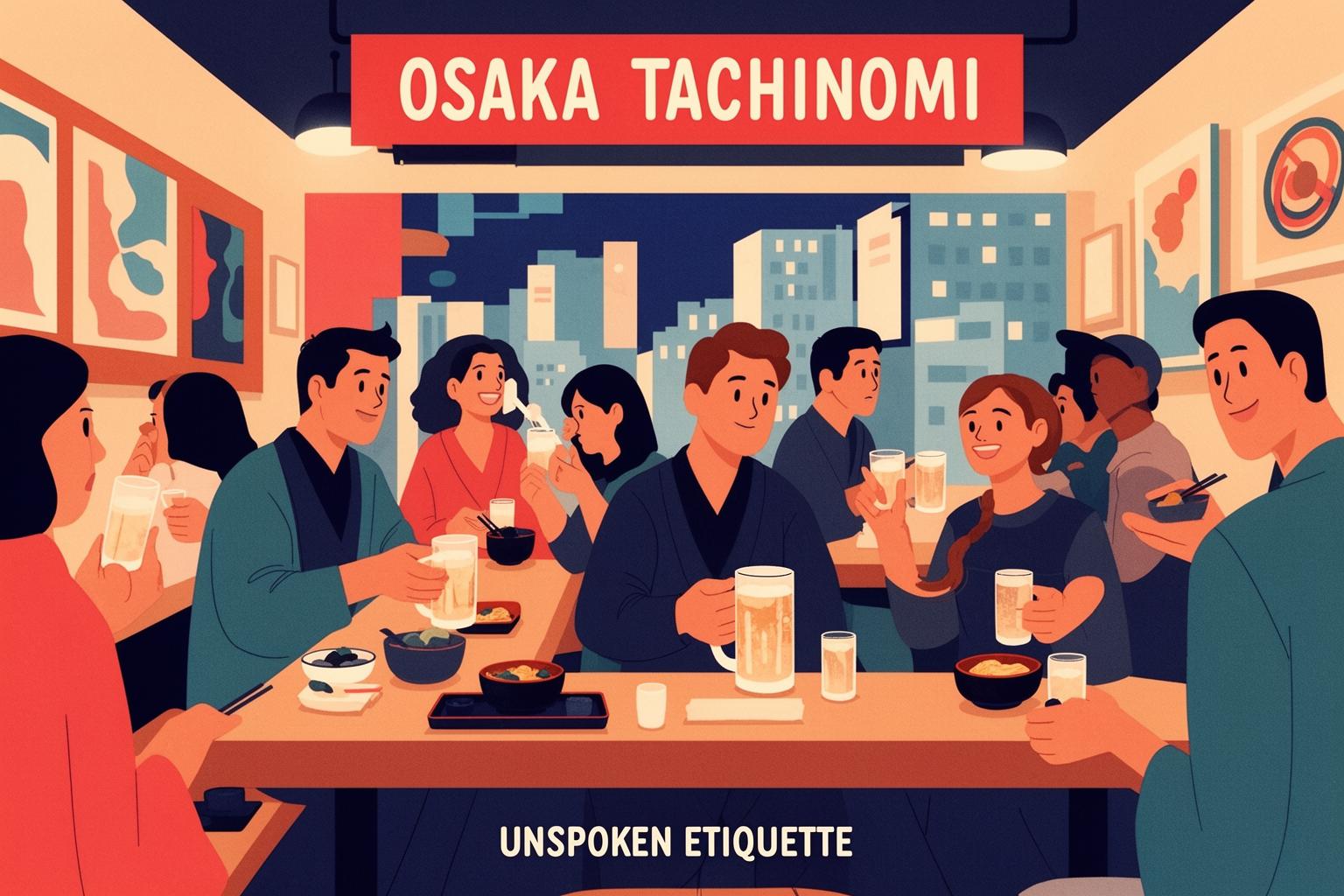
Entering a crowded, lively tachinomi for the first time can feel intimidating. The space is cramped, the language unfamiliar, and everyone seems to belong to a secret club governed by invisible rules. But don’t worry. The etiquette of the tachinomi is simpler than it looks, based on mutual respect, spatial awareness, and a shared appreciation for good food and drink. Learning a few key points of manners will not only help you feel more at ease but also show the staff and fellow patrons that you’re a polite participant, increasing the chances they’ll welcome you into their temporary community. This isn’t about strict rules; it’s about understanding the rhythm and moving smoothly within it.
Making Your Entrance
Your tachinomi experience begins the moment you slide open the door or push aside the noren curtain. The first rule is to be conscious of space. These places are often tiny, and every inch counts. Before coming in, take a moment to peek inside and size up the scene. Is there a small gap by the counter? If it’s packed tight, you may need to wait briefly outside or try another spot. Once you enter, the most important thing is to make eye contact with the staff, usually the owner or head chef, called the taisho. A simple nod and a quiet “Haitte mo ii desu ka?” (May I come in?) or even just a finger gesture to show you’re alone works perfectly. The taisho will then guide you to an available spot. When seated at the counter, make yourself compact. Hang your bag on a hook underneath if there is one, or place it neatly at your feet. Avoid spreading out your belongings. The aim is to occupy your vertical space efficiently, respecting the personal bubbles of those beside you. This basic spatial courtesy is the first and most essential sign of respect in the world of tachinomi.
The Art of Ordering
Ordering methods may vary between places, but some systems are common. The most traditional is cash-on-delivery, known as kyasshu on. You put your money in a small tray on the counter, and the staff deducts the cost of each item as you order, returning change to the tray. This system lets customers leave whenever they want without a formal checkout. Other bars might open a tab for you, payable at the end. Some modern or busy places use a ticket system, where you buy tickets from a vending machine near the entrance and hand those to staff in exchange for food and drink. If uncertain, just watch nearby patrons for a moment. To start, it’s always safe to order a drink. “Toriaezu, nama biiru,” (A draft beer, for now) is a classic opener. Other favorites include the highball (haiboru), a refreshing mix of whisky and soda, or a chuhai, a shochu highball available in various fruit flavors like lemon, grapefruit, or ume (plum). For those feeling adventurous, asking for nihonshu (sake) is an excellent choice. If unsure what to pick, simply ask for a recommendation: “Osusume wa nan desu ka?” The food menu might be displayed on the wall in beautiful but sometimes hard-to-read Japanese calligraphy. This adds to the experience. Don’t hesitate to point at a neighbor’s plate and ask, “Sumimasen, are wa nan desu ka?” (Excuse me, what is that?). Most are happy to share their favorites. Look out for tachinomi staples. Doteyaki is a rich, savory stew of beef sinew slow-cooked in miso and mirin, a signature dish from Osaka. Kushi-katsu are deep-fried skewers of meat, vegetables, and seafood; remember the golden rule of never dipping your skewer more than once into the communal sauce pot. Oden is a comforting winter dish with ingredients like daikon radish, tofu, and fish cakes simmered in delicate dashi broth. Many places also offer fresh sashimi or simple grilled dishes (yakimono). Begin with one or two small dishes. The custom is to order in small waves rather than all at once, allowing you to pace your meal and your evening.
The Currency of Connection: How to Start a Conversation
This is the core challenge for the solo traveler: turning proximity into connection. The charm of the tachinomi is that its atmosphere helps facilitate this. The shared space and sensory experiences naturally invite conversation. The easiest way to start is by commenting positively on the food. If your neighbor is eating something that looks delicious, a simple “Oishisou desu ne!” (That looks tasty!) can break the ice. Asking for a recommendation is another great approach. Turning to someone next to you and saying, “Koko de nani ga oishii desu ka?” (What’s good here?) not only earns you great advice but also flatters them by valuing their opinion. The taisho is often a key social figure, conducting the flow of the bar. Engaging with them is a smart move. Compliment the food (“Kore, meccha oishii desu!” – This is super delicious!), or inquire about a particular sake bottle. This can often draw others into the chat. The universal gesture of a toast is your strongest tool. If you make eye contact with someone, simply raise your glass, nod slightly, and say “Kanpai!” (Cheers!). It’s a simple, friendly gesture that requires no further commitment but opens the door to one. It’s also important to sense the mood, or kuuki wo yomu. If someone seems focused, quiet, or engaged in conversation, respect their space. The aim isn’t to force chats with everyone but to be open to naturally occurring ones. Remember the Japanese idea of ichigo ichie, meaning “one time, one meeting.” Every encounter in a tachinomi is unique and fleeting. Appreciate it as it comes, whether it’s a deep conversation about travel or simply sharing a smile over a tasty skewer. Don’t expect to make lifelong friends every visit. Approach with an open heart, and you’ll be surprised by the small, meaningful connections that find you.
The Graceful Exit
A smooth exit is as important as a good entrance. Because the tachinomi experience is fluid, there’s no need for a grand farewell. When you’re ready to leave, catch the taisho’s eye and say, “O-kaikei onegaishimasu” (The bill, please) or “O-kanjo onegaishimasu.” If you’ve been paying as you go, simply finish your last bite or sip. As you leave, it’s customary and appreciated to offer thanks. “Gochisousama deshita” is the standard phrase for “Thank you for the meal.” You can add “Oishikatta desu” (It was delicious) for extra warmth. Be sure to gather your belongings and make your way out as carefully as you came in, avoiding bumping into anyone. A final nod to the taisho and perhaps to new acquaintances at the counter is a perfect way to close your visit, leaving the door open for your next tachinomi adventure.
A Deeper Dive: Specialized Tachinomi and Modern Trends
The classic image of a tachinomi—a simple counter serving beer, sake, and grilled skewers—is timeless and essential. Yet, the world of standing bars is far from static. It represents a dynamic and evolving culture, continuously reinventing itself to meet new tastes and trends. For the adventurous solo traveler eager to see beyond the basics, Osaka offers an exciting array of specialized and modern tachinomi. These venues preserve the core values of the standing bar—intimacy, affordability, and quality—while tailoring them to distinct niches, offering unique and memorable experiences. Exploring these specialized establishments showcases the remarkable versatility of the tachinomi format and its ability to adapt and flourish in the 21st century.
The Sake Savant’s Stand
For those wishing to delve into the profound and intricate world of Japanese sake, or nihonshu, specialized sake tachinomi are unparalleled. These venues are more than just bars; they are sanctuaries of rice wine, curated by passionate proprietors often deeply connected with breweries throughout Japan. Instead of a mere handful of house sakes, you’ll find a menu featuring dozens, sometimes hundreds, of different bottles. This list might be organized by region, rice polishing ratio, or flavor profile (from dry and crisp to sweet and fragrant). While this can feel overwhelming, the true value lies in the staff’s expertise. Don’t hesitate to describe your preferences—whether you like something light and floral or rich and full-bodied. They will act as your personal sommelier, presenting a small glass of something suited to your taste and often sharing the story behind the brewery or particular bottle. These bars offer both education and enjoyment, serving as guided tours through Japan’s national beverage. They frequently pair exquisite food with sake, ranging from delicate sashimi to rich, fermented delicacies known as chinmi. For the solo traveler, these bars provide a wonderful opportunity to learn and engage in meaningful conversations about a shared passion with staff and fellow patrons alike.
The Wine and Bistro Bar
The standing bar format’s success has inspired chefs and restaurateurs with a more global outlook to embrace it enthusiastically. Throughout Osaka, an increasing number of standing bars resemble Parisian bistros or Spanish tapas bars more than traditional Japanese izakaya. Often called tachinomi-bar, these venues blend Japanese intimacy with European flavors. The drink menu features a carefully curated selection of Old and New World wines, frequently offered by the glass at very reasonable prices. The food menu complements this, with dishes such as pâté de campagne, assorted cheeses, ajillo, and freshly shucked oysters. What sets these places apart is how they maintain the spirit of the tachinomi—compact spaces, convivial atmospheres, and a focus on high-quality, small-portion dishes. This delightful cultural fusion allows you to enjoy a glass of Burgundy and a plate of charcuterie with the same casual, communal energy as a cup of sake paired with doteyaki. These bars are particularly popular among a younger, cosmopolitan crowd, providing a slightly different yet equally rewarding social experience.
The Craft Beer Corner
Japan’s craft beer scene has boomed in recent years, with tachinomi becoming one of its prime showcases. Across Osaka, you’ll find standing bars devoted to beers from small, independent Japanese breweries. These craft beer tachinomi diverge sharply from typical lager-focused bars. Here, a rotating selection of taps pours everything from hazy IPAs and rich stouts to delicate pilsners and inventive fruit-infused ales. The staff are often beer enthusiasts themselves, eager to discuss tasting notes for the latest from a Nagano brewery or a new release from a local Osaka brewpub. These bars attract a diverse crowd, including many expatriates and international visitors, making language barriers minimal. The shared appreciation for beer instantly creates connections, and conversations often start simply by asking what someone is drinking and their thoughts on it. This segment of the tachinomi world is relaxed, modern, and incredibly friendly—perfect for solo travelers seeking a taste of contemporary Japanese culture.
Themed and Quirky Spots
Finally, there is the ever-charming category of truly unique and quirky tachinomi. Osakans are celebrated for their creativity and humor, which shines brightly in their standing bars. You might come across a tachinomi specializing solely in canned goods (kanzume), with walls lined by hundreds of types of tinned fish, meats, and vegetables from around the globe, all expertly prepared by the staff. Others may double as bookstores or vintage record shops, allowing you to browse while you sip. Some have hyper-specific themes—like a bar devoted to a particular baseball team or one that exclusively plays music from a certain decade. These establishments reflect the passion of their owners and offer one-of-a-kind experiences. Often beloved local hangouts, stepping inside makes you not just a customer but a participant in the owner’s unique vision. These quirky spots are ideal for solo travelers who have already explored the classics and are seeking a story to tell—a truly unforgettable night in the endless urban adventure that is Osaka.
Practical Field Notes for the Urban Explorer

With a grasp of tachinomi culture and the city’s key neighborhoods in mind, you’re nearly set to begin your adventure. Yet, a few practical pointers can help make your journey smoother, more enjoyable, and free from minor logistical snags. Consider this your final gear check before hitting the trail. These notes are crafted to boost your confidence in any situation, from timing your visit just right to handling the bill like a seasoned regular. With these details at hand, you can focus less on logistics and more on savoring the magic of the experience.
Timing is Everything
The vibe inside a tachinomi shifts significantly depending on the time of day. Most spots open in the late afternoon, around 4 or 5 PM. Arriving early can be a smart move, especially for first-timers. The bar will be quieter, offering more space and a chance to chat with the taisho before the main crowd arrives. It’s also an ideal time to get a good look at the selection of prepared food on the counter. Peak hours usually run from 6 PM to 9 PM, when the after-work crowd floods in. This is when the bar is at its liveliest and most crowded—a thrilling but potentially intense experience. If you want to dive fully into the social scene, this is prime time. Later in the evening, the crowd may thin somewhat, though the energy stays high. Many Japanese drinkers use tachinomi for a zero-jikai, or “zeroth party”—a quick drink and bite before moving on to a more formal, seated dinner or party. Others use it for a ni-jikai (second party) or san-jikai (third party) after their main event. Knowing these rhythms can help you choose the experience that suits you best.
Budgeting Your Adventure
One of the most appealing aspects of tachinomi culture is its affordability. This is casual, fast dining at its best, allowing you to have a great time without overspending. A draft beer or chuhai usually costs between 300 and 500 yen. A glass of sake might be priced from 400 to 800 yen, depending on quality. Food portions are typically small and priced accordingly, often ranging from 200 to 600 yen per plate. This pricing encourages trying a variety of dishes. A popular concept here is senbero, which means “getting tipsy for 1,000 yen.” Though a bit tight in some places, it’s often possible to enjoy two or three drinks plus a couple of small plates for around 1,500 to 2,000 yen. Carrying cash is advisable, as many smaller or more traditional tachinomi do not take credit cards. Having a mix of coins and small bills is especially useful due to the cash-on-delivery system. This affordability fuels the bar-hopping culture—you can visit two or three spots in one evening for less than the cost of a single meal at a sit-down restaurant.
What to Wear
There’s no formal dress code for tachinomi, but practicality is key. The top rule is to wear comfortable shoes—standing long periods means you don’t want sore feet cutting your night short. Aside from that, casual clothes work just fine. You’ll see everything from business suits to jeans and t-shirts. The biggest consideration, again, is space. Avoid lugging a large backpack or bulky coats if possible. If you have a big coat, take it off once inside and fold it neatly over your arm. A small bag that can hang on a hook or be kept safely at your feet is ideal. Think slim and efficient. This not only maximizes your comfort but also respects the limited room shared by everyone.
Language Barriers? No Problem.
For many solo travelers, language can be the biggest source of anxiety. Yet in the tachinomi world, it’s less of a barrier than you might expect. Your best tools are a positive attitude, a friendly smile, and readiness to use non-verbal cues. Pointing is perfectly acceptable and universally understood—point at the menu, a dish on the counter, or a bottle behind the bar. Staff are skilled at reading these gestures. Learning a few key phrases will go a long way and is much appreciated: “Sumimasen” (Excuse me/sorry) to get attention, “Kore, onegaishimasu” (This one, please) when pointing, and of course, “Arigatou gozaimasu” (Thank you very much) and “Gochisousama deshita” (Thank you for the meal). Don’t worry about perfect pronunciation; effort is what matters. You’ll find most people, staff and patrons alike, are patient and often delighted by international visitors. Many will be curious about where you’re from and your impressions of Japan. A translation app on your phone can help with more complex questions, but usually, simple words, gestures, and good humor suffice to create a warm, connected experience.
As the night grows deeper and lanterns cast their warm glow on Osaka’s narrow streets, you’ll realize that a tachinomi is more than just a spot to eat and drink. It’s a microcosm of the city itself—lively, unpretentious, and thoroughly human. Standing at the counter, you become part of the city’s living tapestry. Each clink of a glass, every burst of laughter, and each shared plate of food weaves into that fabric. As a hiker, I know the deep satisfaction of reaching a summit and looking out over a vast landscape, feeling simultaneously small and connected to something vast. In a way, a rewarding night in an Osaka tachinomi sparks a similar feeling. It takes a small act of courage to step into the unfamiliar, to push past initial uncertainty. But the reward is a glimpse into the heart of a culture, a fleeting sense of belonging in a city of millions. You may not recall every word of every conversation, but you will remember the camaraderie, the flavors, and the warmth of a shared “Kanpai!” These moments transform a solo trip into a journey of connection. The bar is set, drinks are chilled, and a city of new friends awaits. All you need to do is step inside and stand tall.