Welcome to the rhythm of real Osaka. Forget the neon glare of Dotonbori for a moment, peel back the polished veneer of Umeda’s department stores, and step into a place that beats with the city’s true, unfiltered heart. We’re talking about Juso, a district that hums with a raw, electric energy, a place where the past isn’t just preserved in a museum—it’s alive, breathing, and grilling yakitori on a street corner. For the traveler, it’s a curiosity. For the aspiring resident, it’s a revelation. Juso is the vibrant, gritty, and astonishingly affordable soul of Osaka, nestled right on the banks of the Yodo River, just a three-minute train ride from the city’s main transport hub. It’s a neighborhood of contradictions: old-world Showa-era charm clashing with the relentless pace of modern life, smoky alleyway bars standing just minutes from serene riverside paths. This isn’t the picture-perfect Japan you see on postcards; this is the Japan you experience with all five senses. It’s a place where you don’t just live in Osaka, you become part of it. For anyone looking to understand the real cost, both financially and culturally, of setting up a life in this incredible city, Juso isn’t just a starting point—it’s the main event. It represents a lifestyle choice, a conscious decision to trade glossy facades for genuine community, and high rents for a wealth of authentic experiences. This guide is your deep dive into the cost of living in Juso, but it’s also an exploration of the value you get in return, a value that can’t be measured in yen alone. It’s about finding your footing in a place that feels like it was built for living, not just for visiting.
To truly taste the soul of this neighborhood, you must try its signature dish, negiyaki, a local culinary treasure that goes beyond the famous okonomiyaki.
The Vibe: What Juso Actually Feels Like
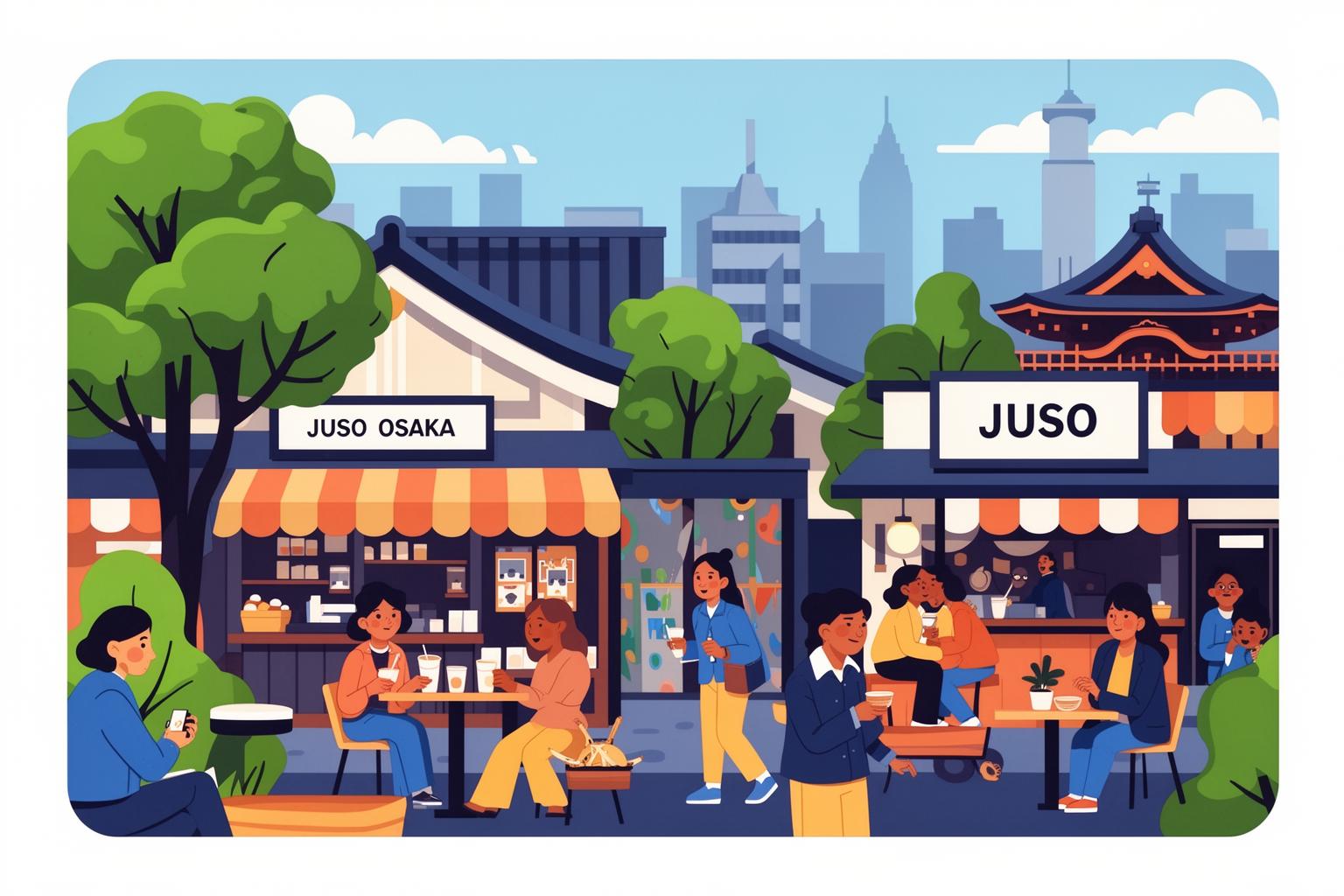
Step off the Hankyu train at Juso Station, and you’re instantly immersed in a vibrant urban symphony that feels distinctly different from the polished, tourist-friendly districts elsewhere. Juso doesn’t put on a facade; it simply exists. The air itself seems imbued with stories, carrying a blend of savory aromas rising from countless tiny kitchens—the sweet, smoky scent of yakitori grilling over coals, the rich, comforting fragrance of dashi broth simmering in a ramen shop, and the faint, sugary sweetness from a traditional confectionery. This sensory mosaic is accompanied by the sounds of the city: the steady clatter of trains arriving and departing, the lively, almost chaotic jingle of a pachinko parlor, the murmur of conversations in the thick, expressive Kansai dialect, and the warm calls of shopkeepers greeting their regular customers. It’s a living, breathing soundscape that tells you you’re in a place rich with history and soul.
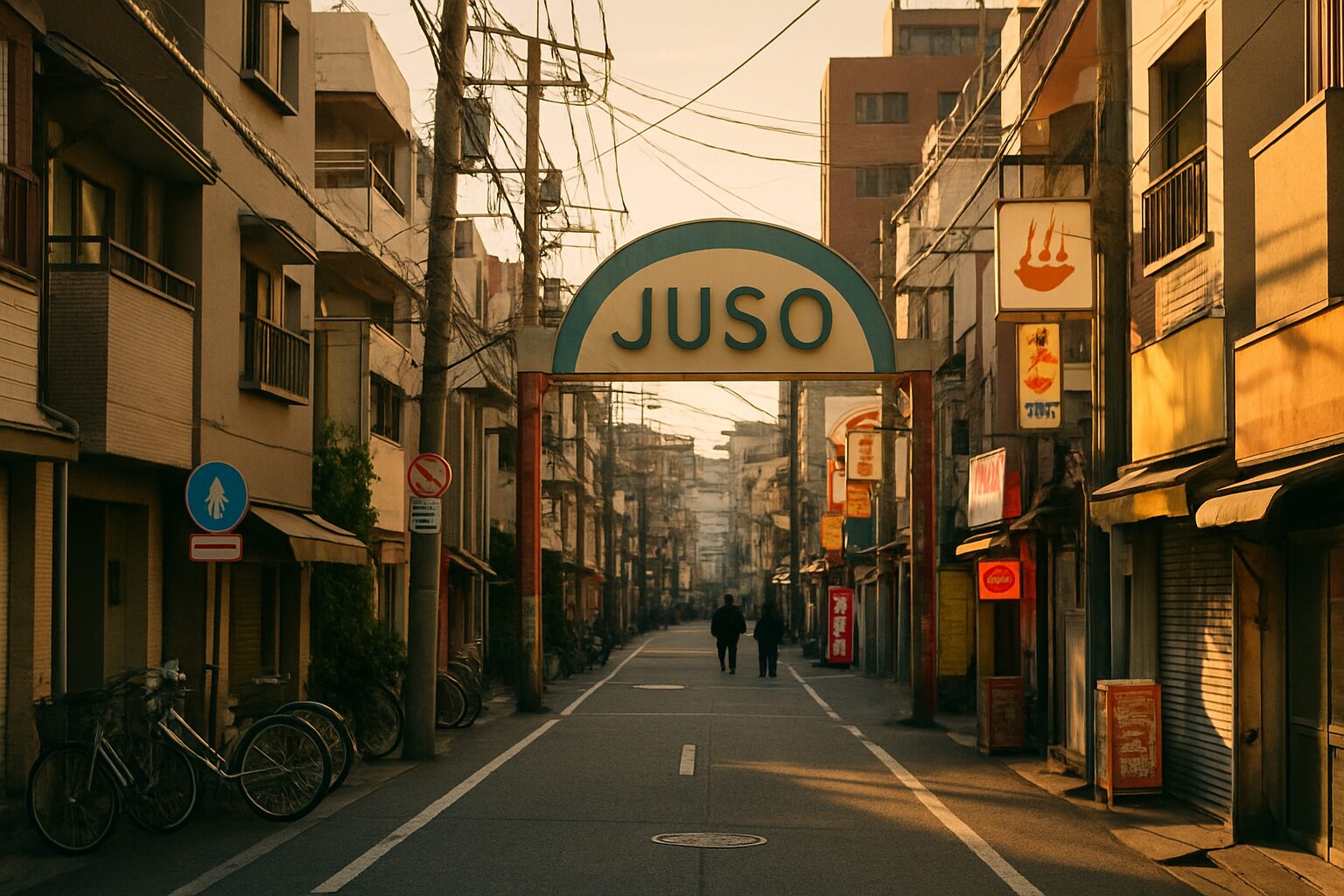
The station itself serves as a dividing line, marking two distinct yet interconnected realms. To the west lies the area Juso is most famous—or perhaps infamous—for. This is where narrow, winding alleyways form a maze of pre-war and post-war buildings, seeming like a time capsule. Here, the legendary “shonben yokocho” (an affectionately crude term meaning “piss alley”) thrives. It’s a dense network of tiny izakayas, tachinomi (standing bars), and eateries, many seating only a handful of patrons at once. Lanterns cast a warm, inviting glow, illuminating doorways into worlds all their own. By evening, these alleys come alive with salarymen loosening their ties after a long day, groups of friends sharing laughter over cheap beer and grilled skewers, and longtime regulars who have frequented these spots for decades. The atmosphere is convivial, intimate, and unapologetically local. There’s a certain gritty charm—a sense that you’ve stumbled upon a secret world hidden in plain sight.
Cross to the east side of the station, and the vibe shifts. Still bustling, it feels more open and focused on everyday life. The Juso Friendly Market, a classic covered shopping arcade or shotengai, lies before you. This is the neighborhood’s shared pantry and living room. Sunlight filters through the translucent roof, dappling polished floors and colorful fresh produce displays. Here, local residents—young mothers with children, elderly couples running errands, students grabbing quick snacks—go about their routines. The shotengai is a microcosm of Japanese community life. Family-run shops handed down through generations include a fishmonger expertly slicing sashimi, a butcher who knows customers by name, a tofu shop producing fresh goods each morning, and a pickle vendor offering a dazzling selection of tsukemono. It’s a world apart from impersonal supermarkets. It’s about relationships, trust, and the steady rhythm of daily commerce. The energy here is less about nightlife and more about the comforting pulse of a community caring for its own.
The people of Juso represent a true cross-section of Osaka society. You’ll spot sharply dressed office workers hurrying to catch trains to Umeda, nearby university students hunting for an affordable, filling lunch, and longtime residents moving with the unhurried grace of those familiar with every crack in the pavement. There’s an approachability here, a lack of pretense characteristic of Osaka but heightened in Juso. People are direct, friendly, and often curious. Don’t be surprised if a shop owner strikes up a conversation or a fellow patron at a standing bar offers a recommendation. This captures Juso’s essence: despite its size and closeness to the city center, it retains the spirit of a small town where people are connected, history is palpable, and life is lived loudly, with all its beautiful, messy, and delicious imperfections.
Breaking Down the Cost of Living: The Juso Advantage
Juso’s reputation as an affordable haven is not just a rumor; it’s the core reality that shapes life in this district. For anyone considering a move to Osaka, the costs can be intimidating, especially in central wards where convenience demands a steep price. Juso turns this notion upside down. It provides unmatched convenience precisely because it’s affordable, enabling residents to save significantly on major expenses—housing, food, and transportation—without giving up access to the best the Kansai region offers. This is not about living cheaply in a remote, inconvenient suburb; it’s about living wisely and fully in the center of the action, just without the financial burden. Let’s break down the actual, tangible costs and explore how Juso offers tremendous value at every turn.
Housing: Your Affordable Sanctuary
Housing is, for most people, the largest monthly expense, and this is where Juso’s financial advantages are most evident. The contrast with its glamorous neighbor, Umeda, is striking. In Umeda or nearby Fukushima, a standard one-room (1R) or one-kitchen (1K) apartment, usually around 20-25 square meters, can command rent of ¥75,000 to ¥100,000 per month or more for newer buildings with modern features. Just one station away in Juso, the scene changes drastically. For a similar-sized apartment, rents typically range from ¥40,000 to ¥60,000. This difference is substantial—it means saving hundreds of dollars each month, money that can be redirected toward travel, hobbies, savings, or enjoying the local dining culture.
Housing options in Juso are diverse, reflecting its long history. Many older, character-rich buildings called apaato—often two-story wooden or light-steel-frame structures—offer the lowest rents. These may lack some modern conveniences like auto-locking doors or elevators, and insulation may be less than ideal, but they provide fully functional and highly affordable entry points to the rental market. For those seeking more comfort, numerous manshon (modern condominium-style buildings) are scattered throughout the area. These reinforced concrete buildings offer better soundproofing, modern kitchens and bathrooms, and enhanced security. Even a modern 1K or slightly larger one-bedroom (1LDK) in a Juso manshon often costs less than an older apaato in more central districts.
When you begin your apartment search, it’s important to understand the unique Japanese rental system and its upfront costs. Beyond the first month’s rent, you’ll usually need to pay a shikikin (security deposit), often equivalent to one or two months’ rent and refundable minus repair costs. More uniquely, there is reikin (key money), a non-refundable payment to the landlord, also typically one or two months’ rent. Along with agency fees and insurance, the initial move-in costs can be high. However, lower base rents in Juso mean these upfront costs are significantly less. Moreover, in Juso’s competitive rental market, it’s increasingly common to find apartments with no reikin or even no shikikin, making the initial financial hurdle easier. Local real estate agents near both the east and west exits of Juso Station are invaluable resources, with deep area knowledge to help you find a place that suits your budget and lifestyle, whether you prefer lively central streets or quieter residential areas near the river.
Groceries and Daily Shopping: The Charm of the Shotengai
One of the most consistent ways you’ll save living in Juso is on your daily groceries. The heart of this affordability is the Juso Friendly Market, the local shotengai. This is where the community shops—a superb example of budget-friendly, high-quality living. Forget the polished, plastic-wrapped produce typical of expensive department store food halls. Here, food connects directly and personally to its source. You can buy vegetables directly from vendors who may have sourced them from nearby farms, their hands still dusted with soil. Prices are incredibly low—a bag of spinach, onions, or cabbage can often be had for just a few hundred yen, far less than at high-end supermarkets. The key is seasonality; vendors sell what’s fresh and abundant, keeping prices low. Shopping here teaches you to eat with the seasons, a foundational principle of Japanese cuisine.
The shotengai offers more than just vegetables. There are specialty shops everywhere. The local butcher sells fresh cuts at prices that beat big chains and will gladly advise on preparation. Fishmongers display the day’s catch in gleaming stalls. Dedicated tofu shops sell fresh varieties made that morning. Delis offer croquettes, tempura, and other prepared foods (souzai) for just pennies, perfect for quick and cheap dinners. The whole experience is a far cry from the sterile anonymity of supermarket shopping; it’s a social, interactive way to connect with your food and neighborhood.
For one-stop shopping, Juso also has several large supermarkets like Santen and other local chains, perfect for pantry staples, dairy, and international ingredients. These stores offer competitive prices that reflect the local demographic. Savvy shoppers learn when bento boxes and prepared foods are discounted in the evening, scoring hearty meals for very little. Scattered throughout are many 100-yen shops, such as Daiso and Can Do, plus drugstores like Matsumoto Kiyoshi, selling everything from cleaning supplies to snacks at rock-bottom prices. In Juso, you never have to travel far or spend much to get all your daily essentials.
Dining Out and Entertainment: A Feast on Every Budget
If everyday living in Juso is affordable, dining out and entertainment here are absolute paradises. The neighborhood boasts a remarkable density of options catering to every taste and, importantly, every budget. Cooking at home is often a choice rather than a necessity because eating out is just as cheap—if not cheaper—and infinitely more diverse. It’s a playground for budget-conscious food lovers.
Juso’s izakaya scene is legendary. The alleys west of the station are packed with them—from lively chain establishments to tiny one-person bars tucked away down stairs. You can enjoy a draft beer for just a few hundred yen and a plate of yakitori for a little more. The culture of senbero—getting pleasantly drunk for 1,000 yen (about $10)—is not just possible here; it defines local life. You can hop from place to place, sampling their specialties. Even cheaper are the tachinomi, or standing bars—a foundation of Osaka’s drinking culture—where you stand at the counter, order food and drinks directly from the staff, and pay as you go. Fast, cheap, and social, they’re a great way to meet locals.
Juso is also famed for negiyaki, a savory pancake similar to okonomiyaki but packed with green onions instead of cabbage. Several renowned shops specialize in this local delicacy, allowing you to watch chefs expertly prepare it on large iron griddles. Beyond that, options abound: ramen shops each with secret broths offer satisfying meals under ¥1,000; there are udon and soba shops, curry houses, gyoza specialists, and even some surprisingly good international eateries. Fierce competition keeps quality high and prices low.
Entertainment in Juso aligns with this affordability. The district includes a well-known adult entertainment zone, but it is geographically contained and easily avoidable. For mainstream entertainment, you can visit the Seventh Art Theater, a beloved local cinema focusing on independent and international films, offering a more curated experience than giant multiplexes. Pachinko parlors—classic Japanese pastimes—are available but can become costly if unchecked. Many residents find the best entertainment simply wandering the streets, absorbing the atmosphere, and discovering favorite bars or restaurants. In Juso, memorable nights out don’t require a fat wallet, just an adventurous spirit.
Transportation: An Unmatched Hub
Juso’s greatest asset—and what firmly establishes it as one of Osaka’s best places to live—is its transportation network. Juso Station isn’t just a local stop; it’s a major hub for the private Hankyu Railway. Three main Hankyu lines—the Kobe, Kyoto, and Takarazuka Lines—all converge here, transforming commuting and leisure travel. From Juso, reaching Osaka’s business and shopping heart, Umeda, takes about three to five minutes on an express train, costing just ¥160. This proximity means you enjoy all the benefits of being near the city center without soaring rent prices.
But convenience goes well beyond Umeda. Fancy a day trip to the stylish port city of Kobe? The Hankyu Kobe Line will get you to Kobe-Sannomiya Station in 25–30 minutes. Visit Kyoto’s ancient temples and gardens? The Hankyu Kyoto Line delivers you to Karasuma or Kawaramachi Stations in under 40 minutes. You can explore Takarazuka’s hot springs or scenic Hozugawa River just as easily. Living in Juso essentially places the entire Keihanshin metropolitan region (Osaka-Kobe-Kyoto) at your doorstep. Such access usually comes with astronomical costs, yet Juso offers it at a fraction of the price.
For daily commuters, savings add up. Monthly commuter passes (teiki) from Juso to Umeda are very inexpensive, and many Japanese companies subsidize these costs for employees. Beyond trains, Juso is highly walkable and bike-friendly. The flat terrain and grid-like streets make getting around simple. A bicycle is an excellent investment here—you can cycle to Umeda in 15–20 minutes or enjoy leisure rides along the expansive Yodo River park just blocks away. The blend of world-class public transit and local accessibility makes travel from Juso effortless, efficient, and remarkably affordable.
Utilities and Other Expenses
Completing the budget picture are utilities and services. For a single resident in a typical one-room apartment, monthly costs for electricity, gas, and water generally range from ¥8,000 to ¥12,000, depending on season and usage. Gas varies the most since it heats water and cooks food. Internet providers are highly competitive in Japan, with many offering high-speed fiber optic plans for ¥4,000 to ¥6,000 monthly, often with attractive new customer deals. Mobile phone plans have also become much cheaper recently, with many low-cost carriers offering generous data packages for ¥2,000 to ¥3,000 per month.
A mandatory cost for all residents, including foreigners on long-term visas, is enrollment in the National Health Insurance (NHI) program. Premiums depend on your previous year’s income. For newcomers or those with modest earnings, premiums can be low, starting at a few thousand yen monthly. This insurance covers 70% of most medical expenses, providing an excellent and affordable safety net. When adding all these costs—rent, food, transportation, utilities, and insurance—it becomes clear that Juso offers a living standard and convenience level almost unmatched at this price anywhere in a major Japanese city. It truly embodies smart urban living.
A Deeper Dive: The Culture and History of Juso
To truly grasp Juso, you need to look beyond the numbers and explore the stories embedded in its streets. The neighborhood’s distinctive character is a direct result of its fascinating and often turbulent history. Its very name, 十三 (Juso), means “thirteenth” and is thought to have originated from its position as the thirteenth ferry crossing over the Yodo River on an ancient route between Osaka and Kyoto. This historical role as a crossing point has always defined Juso as a place of transit, where people and cultures intersect.
Juso’s modern identity was shaped in the aftermath of World War II. Like many parts of Osaka, it suffered heavy bombing during the war. In the post-war devastation, with the formal economy in shambles, Juso rose as a bustling yamiichi, or black market. This explains the dense, winding alleys and the vibrant, chaotic energy that remain today. These post-war markets were centers of survival and entrepreneurship, where people sold whatever they could find. This spirit of tough resilience and independent enterprise is deeply ingrained in the DNA of Juso’s small businesses. Many of the tiny bars and eateries that crowd the shonben yokocho trace their roots back to this era, giving the area an authentic, lived-in atmosphere that is hard to replicate.
One of the largest cultural events in Juso is the Yodogawa Fireworks Festival, held annually on the first Saturday of August. It is among the most spectacular fireworks displays in the Kansai region, attracting hundreds of thousands of spectators. The banks of the Yodo River in Juso turn into a huge gathering, with people laying out tarps well in advance to claim prime spots. The sky bursts with color and sound in a stunning display of pyrotechnic art. For Juso residents, this remarkable event unfolds right in their backyard. It is a magical evening that unites the whole community in a shared experience of summer wonder.
In recent years, Juso’s affordable living and somewhat edgy, bohemian vibe have drawn a creative crowd. The neighborhood hosts the Seventh Art Theater, a beloved venue for film enthusiasts, as well as small galleries and live music spots. This influx of artistic energy adds another dimension to Juso’s rich identity. It is a place where the gritty spirit of the Showa era meets contemporary artistic expression, crafting a dynamic and ever-evolving cultural scene. Living in Juso means being part of a living history, walking the same streets that have witnessed decades of change, resilience, and the enduring spirit of Osaka.
Living Like a Local: Tips and Tricks for Juso Life
Moving to Juso is one thing; truly flourishing there is another. To fully enjoy life in this distinctive district, it helps to adopt the local way of living. This involves immersing yourself in the community, tuning into its rhythms, and uncovering its hidden treasures. Here are some tips for evolving from a newcomer into a genuine Juso local.
First, get to know the shotengai. The Juso Friendly Market is more than just a spot to shop for groceries; it’s a vibrant social center. Take time to build connections with the vendors. Using a few simple Japanese phrases—a friendly “Konnichiwa” (hello) or “Arigato gozaimasu” (thank you)—can make a big difference. Ask the fishmonger what’s freshest that day (“Kyo no osusume wa nan desu ka?”). Let the butcher know what you plan to cook. Not only will they appreciate your effort, but they may also reward you with better service, little extras, and valuable cooking tips. Learn the daily routines: when the freshest tofu arrives, when the bakery has bread fresh from the oven, and when the souzai shops start marking down prices for the evening crowd.
Next, make the Yodo River your backyard. The wide, green banks of the Yodogawa are Juso’s greatest natural asset, providing a spacious public area that offers a welcome escape from the city’s density. Get a bicycle and explore the dedicated cycling paths stretching for miles in either direction. Go for a jog at sunrise as the city wakes up, or watch the sunset behind the Umeda skyline. In spring, the riverbanks offer a fantastic, less crowded spot for cherry blossom viewing parties. In summer, they’re ideal for a picnic or simply enjoying a cool breeze. The river is a place for exercise, relaxation, and reflection—a crucial element of the balanced lifestyle that Juso provides.
While it’s possible to get by in Osaka with limited Japanese, putting effort into learning the language will unlock a much richer experience in a local neighborhood like Juso. Many of the best and most authentic bars and restaurants are small, family-run establishments without English menus. Being able to read a basic menu or place a simple order will open up a whole new culinary world. More importantly, it demonstrates respect and genuine interest in the local culture, which will be warmly welcomed by the community.
Finally, be an adventurer. The greatest pleasures of Juso aren’t found in guidebooks. They come from exploring unfamiliar alleys, stepping into tiny, intriguing bars, or trying dishes you’ve never heard of. Let your curiosity lead you. Start a conversation with the person next to you at a tachinomi. Follow the aroma of grilled meat to its source. The neighborhood continually reveals new secrets to those willing to explore. Don’t be afraid to get a little lost; often in Juso, that’s how you find exactly where you’re meant to be. Regarding safety, it’s important to note that Juso has a designated adult entertainment district. However, this area is clearly defined and operates under its own rules. The residential areas of Juso are as safe as any neighborhood in Osaka, and Japan overall has a very low crime rate. Just use common sense as you would in any city, and you’ll discover Juso to be a welcoming and secure place to call home.
Why Juso Might Be Your Perfect Osaka Base
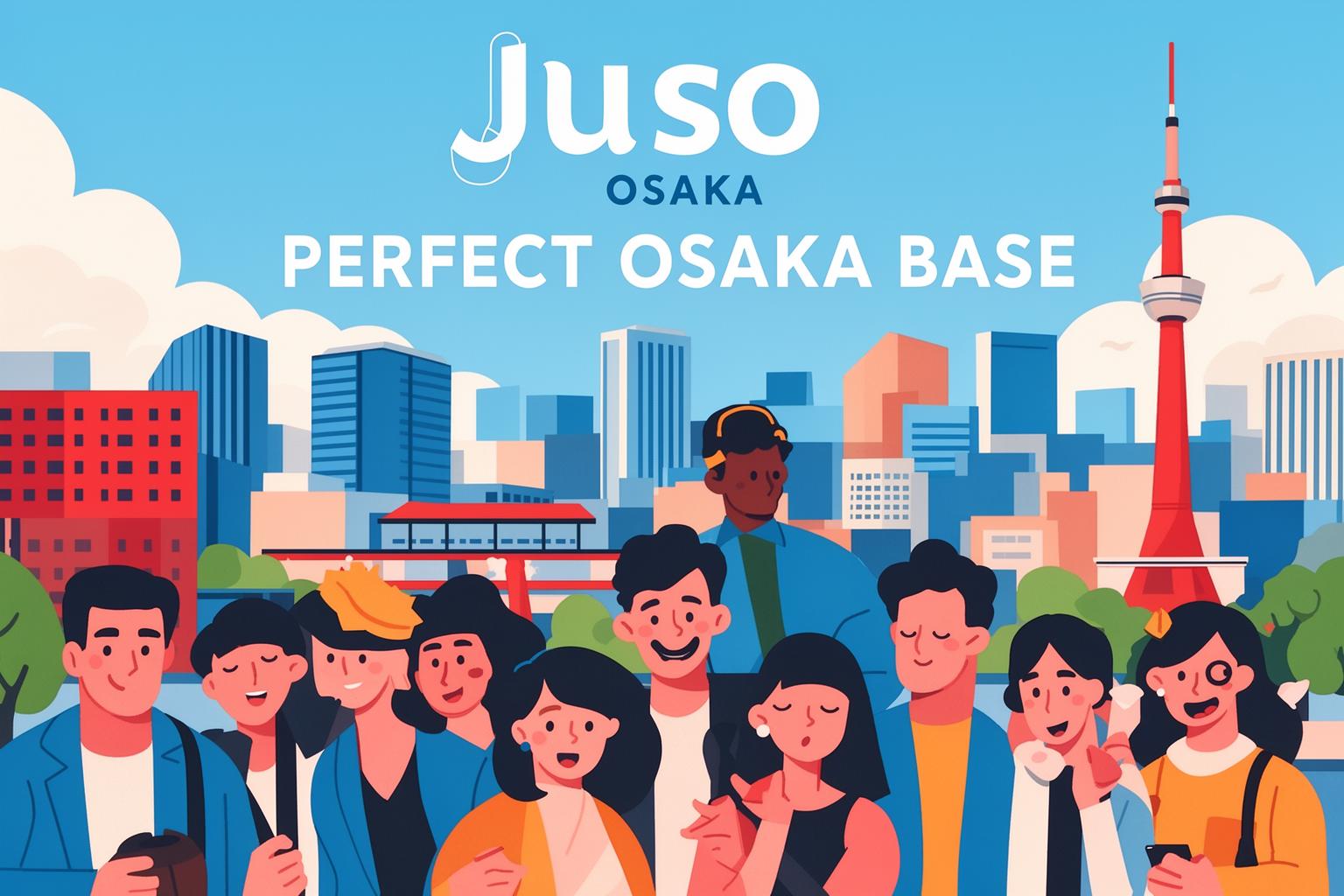
So, who is Juso meant for? It’s for the budget-conscious student or professional seeking to live in the heart of the city without being overwhelmed by rent. It’s for the cultural explorer eager for an authentic, unfiltered Japanese experience far from tourist crowds. It’s for the foodie wanting to immerse themselves in Osaka’s legendary culinary scene at its most grassroots level. It’s for the adventurer who sees their home as a launchpad to explore not only Osaka but the entire Kansai region with unmatched ease.
Juso offers a rare and powerful blend: extreme affordability, incredible convenience, and a rich, tangible sense of place. It’s a neighborhood that invites you to engage with it, uncover its secrets, and become part of its ongoing story. Living here is an education in the real Osaka—its resilience, warmth, humor, and love for good food and good company. It’s a place where saving money is not the goal itself, but a means to live a fuller, richer life. Here, you trade the polish and predictability of more manicured districts for something far more valuable: character, community, and connection.
It isn’t the sleek, futuristic Japan often imagined. It’s something better. It’s real—the clatter of life, the steam rising from a ramen bowl, shared laughter in a crowded bar, and the quiet beauty of a sunset over the Yodo River. It’s a place where you can build a life that is both practical and profound.
Choosing to live in Juso is a declaration that you want more than just a place to sleep. You want a place to live, to learn, and to belong. It’s a neighborhood that rewards curiosity and welcomes those who take the time to understand it. If you’re searching for the soul of Osaka, you won’t find it in guidebooks or glossy magazines. You’ll find it here—under the train tracks, down a smoky alleyway, in the heart of Juso.