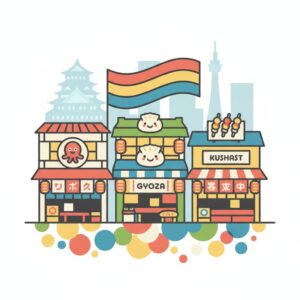
Welcome to Namba, the electric, beating heart of Osaka. It’s a place where colossal neon crabs cling to buildings, steam rises from takoyaki stalls at all hours, and the sheer, unadulterated energy of the city converges into a dazzling spectacle of light, sound, and flavor. For the traveler, Namba is a whirlwind tour of Osaka’s most iconic sights. But what about for the resident? What does it truly mean to carve out a life, to budget a daily existence, amidst this vibrant, chaotic, and utterly captivating urban landscape? This isn’t just about visiting; this is about living, breathing, and thriving in one of Japan’s most dynamic districts. Namba is more than the Glico Running Man sign and the crowded arcades of Dotonbori; it’s a tapestry of quiet residential streets nestled just behind the main thoroughfares, of generations-old restaurants sharing a wall with the latest fashion boutiques, and of a community that moves to a rhythm all its own. To understand the cost of living here is to understand the soul of the city itself—a place that prides itself on being brilliant, bold, and surprisingly budget-friendly. It’s where the high-octane thrill of city life meets the practical, down-to-earth spirit of Osaka. Let’s pull back the curtain on the flashing lights and explore the real cost, the real life, that awaits in Namba.
To truly understand the rhythm of this district, it helps to learn how locals navigate the iconic Dotonbori area.
The Foundation: Deconstructing Housing Costs in Namba
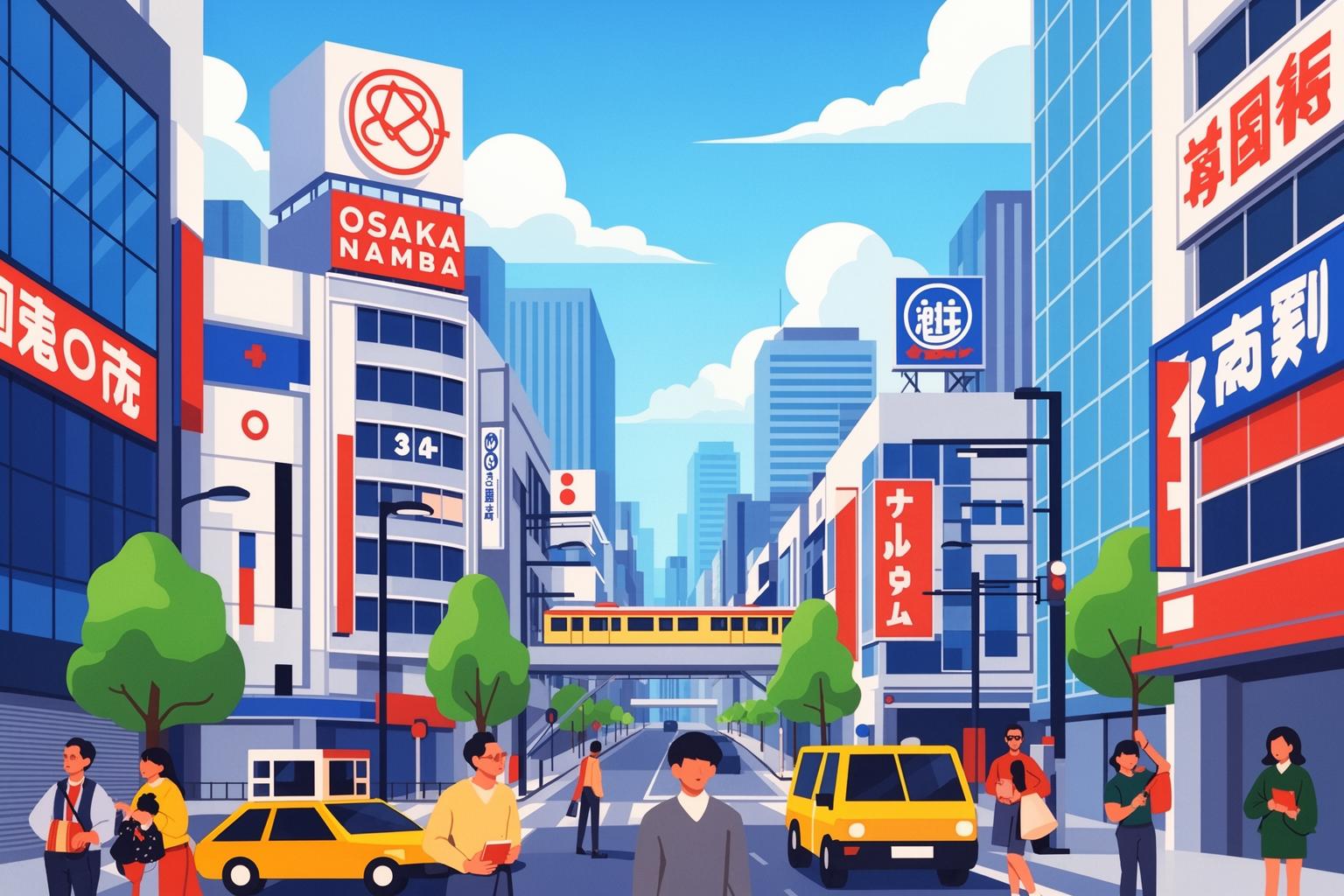
Your home is your sanctuary and the starting point for every urban adventure. In a central and highly desirable area like Namba, securing that sanctuary is the first and most crucial part of your budget planning. While central city living in Japan often conjures images of exorbitant rents, Osaka—and Namba in particular—boasts a surprisingly varied and affordable housing market. Familiarizing yourself with the unique terminology and fee structure of Japanese real estate is an essential first step toward finding your ideal home without overspending.
Decoding Japanese Apartment Layouts
Before beginning your search, you’ll come across a particular shorthand used to describe apartment layouts, replacing familiar terms like “studio” or “one-bedroom.” Instead, you’ll see combinations of numbers and letters such as 1K, 1DK, and 1LDK. Here’s the breakdown: the number indicates the count of separate bedrooms, while the letters explain the main living space. “K” stands for Kitchen, typically a compact, self-contained area. “DK” means Dining Kitchen, a slightly larger space that accommodates a small dining table. “LDK” represents Living Dining Kitchen, the most spacious layout, offering a combined area for cooking, dining, and relaxing, similar to a Western-style living room. A “1R,” or One Room apartment, is equivalent to a studio, where the kitchen area is integrated into the main living and sleeping space.
For singles just starting out, a 1K apartment often strikes the right balance between functionality and affordability. These units typically measure between 20 and 28 square meters and provide a clear division between the sleeping area and kitchen—a small but impactful upgrade over a 1R. For couples or those seeking more room for working from home or entertaining, a 1LDK, usually between 35 and 50 square meters, offers a genuine living room space, creating a more comfortable and versatile home.
Renting Costs in Namba
Let’s discuss the numbers. Namba’s biggest appeal is its convenience, which is reflected in the rent—but it’s far from the sky-high costs seen in central Tokyo. A standard 1K apartment within a 10 to 15-minute walk from main Namba stations (Nankai Namba, JR Namba, and subway stations) generally ranges from ¥60,000 to ¥85,000 per month. Prices vary according to the building’s age, specific amenities (such as auto-lock security, delivery boxes, or separate toilet and bath), and distance to the station. New buildings, referred to as “shin-chiku,” or recently renovated properties, command rents at the higher end of that range.
If you need more space, a 1LDK in the same area typically costs between ¥90,000 and ¥130,000 monthly. These are usually found in modern apartment complexes known as “mansions” in Japan, which offer superior soundproofing and facilities. For families or those wanting a dedicated second bedroom, a 2LDK might start at around ¥140,000 and increase significantly depending on size and luxury.
A key budgeting tip: location flexibility pays off. Expanding your search just one or two subway stops from the Namba core can uncover great bargains. Areas like Daikokucho to the south or Sakuragawa to the west remain highly convenient—often just a short walk or one stop away—and rents there can be 10-20% lower than immediate Namba. This means a slightly longer commute in exchange for substantial monthly savings, while exploring a more local, residential part of Osaka.
Upfront Costs: Beyond the Monthly Rent
For many newcomers, the biggest financial hurdle in the Japanese rental market isn’t the monthly rent—it’s the substantial upfront fees required to secure a lease. These one-time costs can total three to five times the monthly rent, so it’s crucial to be prepared. Let’s clarify these expenses.
The first is the security deposit, or shikikin. This refundable deposit is usually equal to one month’s rent and is held by the landlord to cover any damages or unpaid rent when you move out. Provided the apartment is left in good condition, most of this amount will be returned.
Next is the culturally unique key money, reikin. This is a non-refundable gratuity paid to the landlord as thanks for letting you rent their property. Originating from post-war housing shortages, it remains common—especially with private landlords—even though it’s becoming less prevalent. It’s typically equivalent to one month’s rent.
Then there’s the real estate agent’s commission, or chukai tesuryo. This fee is paid to the agency that assisted your search. By law, it’s capped at one month’s rent plus tax and is non-refundable.
Additionally, you will usually pay the first month’s rent upfront. You may also encounter fees for lock replacement (kagi koukan dai) and mandatory fire/renter’s insurance (kasai hoken). Many landlords require tenants to use a guarantor company (hoshou gaisha), which acts as a co-signer. The fee for this service is commonly 50% to 100% of one month’s rent for the first year, with a smaller annual renewal fee afterward. This system has largely replaced the traditional need for a Japanese relative or employer to co-sign, making it easier for foreigners to rent but adding another upfront cost.
For example, on a ¥70,000 monthly rent apartment, your move-in expenses might look like this: ¥70,000 (deposit) + ¥70,000 (key money) + ¥77,000 (agent fee with tax) + ¥70,000 (first month’s rent) + ¥50,000 (guarantor fee) + ¥20,000 (insurance and lock change) = an eye-opening ¥357,000. Although it’s a hefty sum, being prepared for these costs is essential to a smooth transition into your new home in Namba.
Powering Your Life: The Monthly Rhythm of Utilities
Once you have the keys to your new apartment, the next part of your budget involves the essential services that transform a space into a home: electricity, gas, water, and internet. These recurring monthly expenses are often overlooked but are crucial to your financial planning. In Japan, utilities are known for their reliability and efficiency, and understanding how they are billed will help you manage both your consumption and expenses effectively.
Electricity: The Seasonal Rise and Fall of Costs
Your electricity bill, or denki dai, is likely to be the most variable utility expense, largely influenced by the seasons. Japan’s summers are famously hot and humid, making the air conditioner your best friend from June to September. However, this comfort comes at a price. During these peak months, a single person living in a 1K apartment can expect their electricity bill to range between ¥5,000 and ¥8,000, or even higher if the AC runs constantly. In contrast, winters in Osaka are fairly mild, though you’ll still rely on your AC’s heating function or other electric heaters, which can raise bills to the ¥4,000 to ¥7,000 range. The transitional seasons of spring and autumn offer relief to your wallet, with electricity costs often dropping to a modest ¥2,000 to ¥3,500 per month.
When moving in, you’ll need to set up an account with the regional power company, which in Osaka is the Kansai Electric Power Company (KEPCO). The process is simple and can often be completed online or by phone. Most apartments are equipped with smart meters, so you’ll be billed monthly based on actual usage. Being mindful of your energy consumption—turning off lights when leaving a room, unplugging electronics when not in use, and using your AC’s timer and energy-saving modes—can noticeably reduce your monthly bill.
Gas: The Core of Domestic Comfort
Gas, or gasu dai, is mainly used for hot water (for showers and kitchen sinks) and cooking if you have a gas stove. In Japan, there are two main types of gas supply: city gas (toshi gasu) and liquefied petroleum gas (LP gas or propane). City gas, supplied by large companies like Osaka Gas, is piped directly into your building and is considerably cheaper. LP gas, delivered in tanks, is more common in older or remote buildings. When apartment hunting, it’s wise to check which type your building uses, as LP gas bills can be nearly double those of city gas for the same consumption.
Assuming your apartment uses city gas, your monthly bill will remain fairly stable, comprising a small base fee plus charges for your usage. For a single person, a typical gas bill ranges from ¥2,500 to ¥4,000, possibly rising slightly in winter when you take longer hot showers. Setting up gas service requires a technician to visit and open the main valve after a safety check, so it’s one of the first arrangements to make when moving in.
Water: A Reliable Constant
Your water bill, or suidou dai, is handled by the municipal waterworks bureau and is the most predictable utility cost. In Osaka, billing is bi-monthly, meaning you receive a bill every two months covering the prior two months’ usage. A single person can expect a bi-monthly bill around ¥3,000 to ¥4,500, which equals a manageable ¥1,500 to ¥2,250 per month. This cost covers both fresh water and sewage services. Because of its stability, some landlords—especially in older, smaller buildings—may include a fixed monthly water fee (e.g., ¥2,000) within the rent to simplify the process. When moving in, you just need to register with the local water bureau, usually via a form found in your apartment or online.
Staying Connected: Internet and Mobile Phones
Today, a reliable internet connection is a necessity, not a luxury. Japan offers some of the fastest, most reliable internet infrastructure globally, and Namba is especially well-covered. The most common option is fiber-optic home internet (hikari). Major providers like NTT, au, and SoftBank offer competitive plans, often bundled with mobile contracts for discounts. A high-speed fiber connection typically costs ¥4,000 to ¥6,000 per month, depending on the provider and building type (apartment plans tend to be cheaper than standalone houses). Note that setting up a new connection may involve an installation fee and take a few weeks, so it’s wise to apply as soon as your move-in date is set. Some modern apartments marketed as “internet-ready” may include the cost in the rent or have a designated provider, simplifying the setup.
For mobile phones, the market has expanded beyond the three traditional carriers (Docomo, au, SoftBank). Many Mobile Virtual Network Operators (MVNOs) like Rakuten Mobile, UQ Mobile, and Y!mobile offer highly competitive, affordable plans. MVNOs use the major carriers’ networks but provide more flexible, data-focused plans at a fraction of the cost. You can find plans with generous data allowances (e.g., 20GB) for ¥2,000 to ¥3,500 per month—a significant saving compared to the ¥7,000 to ¥10,000 typical of traditional plans. Most MVNOs operate online, making signup and account management easy and convenient for new residents.
The Flavor of Life: Budgeting for Food in Osaka’s Kitchen
Osaka is famously known as Tenka no Daidokoro, or “The Nation’s Kitchen,” and this reputation is well-deserved. The city’s identity is deeply intertwined with its rich food culture, a vibrant blend of flavors ranging from Michelin-starred kaiseki to simple, sizzling street foods. Living in Namba places you right at the heart of this culinary world. Navigating these delicious temptations while keeping to a budget is an essential skill for any resident. The secret is finding the perfect balance between cooking at home and enjoying the city’s outstanding dining options.
The Supermarket Symphony: Navigating Your Grocery Shopping
Your daily food budget begins at the supermarket. Namba and its surrounding neighborhoods are filled with various grocery stores, each suited to different preferences and price ranges. Getting to know their schedules and specialties is crucial. For your main weekly grocery run, large supermarkets like Life, located near Namba and in nearby areas such as Sakuragawa, are excellent choices. They provide a broad array of fresh produce, meats, fish, dairy, and pantry essentials at reasonable prices. A single person preparing most of their meals at home can expect to spend around ¥5,000 to ¥8,000 weekly, covering staples like rice, bread, eggs, milk, an assortment of vegetables, and proteins like chicken, pork, and fish.
For those looking to stretch their budget further, a visit to a Gyomu Super (Business Supermarket) is eye-opening. Originally serving restaurant businesses, these stores are open to the public and sell bulk items, frozen goods, and imported foods at remarkably low prices. It’s ideal for stocking up on pasta, sauces, spices, frozen vegetables, and meats. A quick trip to Gyomu Super once or twice a month for non-perishables can significantly cut overall food costs.
One of the most enjoyable aspects of Japanese supermarket culture is the evening discount ritual. About one to two hours before closing, staff place yellow or red discount stickers (waribiki) on perishable items such as pre-made bentos, sushi, salads, and fresh fish or meat. Discounts often start at 20% off and can go up to 50% or even han-gaku (half price) in the last hour. Timing your shopping to coincide with this period can yield fantastic deals, allowing you to enjoy high-quality meals at a fraction of the original price. It’s a daily treasure hunt perfected by savvy locals.
The Joy of Eating Out: From Quick Snacks to Memorable Meals
Living in Namba means being constantly surrounded by tempting food aromas. Resisting them completely is not only difficult but also means missing out on an essential part of the Osaka experience. The key is to eat out wisely. Osaka’s food culture thrives on the principle of kuidaore, loosely translating to “eat until you drop”—or more accurately, until you go broke. But that doesn’t have to happen.
Lunch is your best friend when seeking affordable dining. Many restaurants that offer expensive dinner courses feature a teishoku (set lunch) menu on weekdays at a much lower price. For ¥700 to ¥1,200, you can enjoy a fantastic, balanced meal typically including a main dish (such as grilled fish, tonkatsu, or karaage), rice, miso soup, and a small side of pickles. These lunch sets are staples of daily life for office workers and a great way to explore different cuisines without overspending.
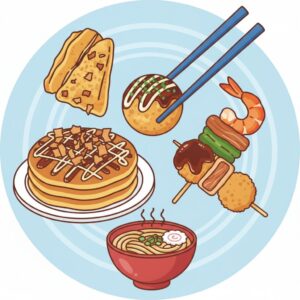
Namba is of course famous for its street food. A hot serving of six to eight takoyaki (octopus balls) costs about ¥500 to ¥700. A savory okonomiyaki (cabbage pancake) or a filling portion of yakisoba (fried noodles) from a stall in Dotonbori can make for an inexpensive and satisfying meal under ¥1,000. These aren’t mere snacks; they are hearty meals that capture the essence of Osaka’s food culture.
For dinner, options abound. You can find budget-friendly ramen shops, udon houses, and curry restaurants where a bowl typically costs less than ¥1,000. For a livelier evening, exploring izakaya (Japanese pubs) is a must. Although a full night of eating and drinking can add up, many izakayas offer happy hour specials or affordable small plates. A popular trend is tachinomi or standing bars, which provide cheap drinks and tasty small dishes, letting you enjoy yourself and leave for under ¥2,000.
By combining a weekly food plan that mixes home cooking with savvy supermarket shopping and a few carefully chosen meals out, you can fully embrace Osaka’s food culture. A reasonable monthly food budget for someone cooking about 70% of their meals at home would be around ¥30,000 to ¥45,000, allowing for nutritious home cooking alongside fun and spontaneous dining experiences.
Getting Around: Navigating the Veins of the City
Namba’s reputation as a top-tier residential area is solidified by its unmatched connectivity. It is more than just a station; it is a vast, multi-layered transportation hub where multiple railway and subway lines converge, enabling travel to virtually every corner of the Kansai region and beyond. Grasping this network is essential for navigating your daily commute, planning weekend getaways, and managing your travel expenses wisely. Although living in Namba means much of what you need is within walking distance, your transportation budget remains an important part of your monthly planning.
The Namba Hub: Countless Choices
There are actually four distinct yet interconnected stations bearing the “Namba” name: Nankai Namba Station, JR Namba Station, Osaka Metro Namba Station, and Kintetsu-Nippombashi Station (often considered part of the Namba complex). This concentration of transit options is what makes the area exceptionally convenient.
Osaka Metro Namba Station is the backbone of your daily routine, served by three key subway lines. The Midosuji Line (red) is the city’s main artery, running north to south and linking you to major hubs such as Umeda, Shinsaibashi, and Tennoji. The Yotsubashi Line (blue), running parallel to Midosuji, offers a slightly less crowded alternative for north-south travel. The Sennichimae Line (pink) runs east to west, providing easy access to neighborhoods like Tsuruhashi (Osaka’s Koreatown) and the trendy cafes of the Horie district.
A single subway trip within Osaka costs between ¥190 and ¥390 depending on distance. Using the subway daily can quickly add up, which is where a commuter pass, or teiki-ken, proves invaluable. This pass offers unlimited travel between your home and work or school stations for a set period (usually one, three, or six months) at a substantially reduced price compared to buying individual tickets. For instance, a one-month pass for a typical commute may cost between ¥5,000 and ¥8,000. A major advantage of a teiki-ken is that you can board or exit at any station along the designated route, perfect for errands or exploring new areas after work.
For everyday travel, an IC card like ICOCA (the Kansai version of Tokyo’s Suica or Pasmo) is essential. Simply tap it at ticket gates to have fares automatically deducted. You can recharge it at any station, and it’s also accepted on buses, at convenience stores, and many shops, making it an indispensable item in your wallet.
Beyond the City: Regional and National Connections
Nankai Namba Station serves as your gateway to the south. The Nankai Main Line takes you to Wakayama and, importantly, provides the fastest, most direct rail connection to Kansai International Airport (KIX) via the renowned “Rapi:t” limited express train. This is highly convenient for international travel or picking up visitors.
JR Namba Station connects you to the vast Japan Railways network, offering routes to Nara as well as linking to the Osaka Loop Line that encircles the city center.
Kintetsu-Nippombashi Station provides express trains to other major cities in Kansai, making weekend trips effortless. You can reach the ancient capital of Nara, famous for its bowing deer, in about 40 minutes, or the scenic city of Kobe in roughly the same time. Traveling to the spiritual heart of Kyoto from Namba is also straightforward, usually involving a simple transfer at Umeda Station and taking under an hour overall.
The Value of Walking and Cycling
While the train network is excellent, one of the greatest joys of living in Namba is its walkability. From your apartment, you can easily stroll to Shinsaibashi’s shopping arcades, Amerikamura’s vintage stores, Doguyasuji’s kitchenware paradise, and Den Den Town’s electronics district. This not only saves money but also lets you discover hidden alleys, tiny shrines, and unique local shops missed when traveling underground.
Another popular and affordable option is cycling. Osaka’s largely flat terrain makes it ideal for bikes. A simple, sturdy mamachari (mom’s chariot) bike can be bought new for around ¥15,000 or secondhand for much less. It’s great for grocery runs, exploring nearby neighborhoods, and getting daily exercise. Just remember to register your bike to prevent theft and follow parking regulations, as designated bicycle parking spots are common and necessary near stations and shopping areas.
For a single person commuting within the city, a reasonable monthly transportation budget—including a commuter pass and some occasional weekend trips—would be around ¥7,000 to ¥12,000. If you live close enough to walk or cycle to work, transportation costs can be much lower, freeing up your budget for other activities.
Staying Healthy and Secure: Insurance and Well-being

Navigating a new healthcare system can be one of the more challenging aspects of relocating to a new country. Luckily, Japan offers a comprehensive and accessible universal healthcare system that guarantees residents access to high-quality medical services at an affordable price. Understanding how it operates and budgeting accordingly is an essential part of your financial planning and overall peace of mind.
The National Health Insurance (NHI) System
As a resident of Japan, you are required to enroll in a public health insurance program. If you work for a company, you will most likely be enrolled in the Employees’ Health Insurance (Shakai Hoken), where premiums are shared between you and your employer and deducted directly from your paycheck. However, if you are a student, freelancer, or part-time worker, you will need to register yourself in the National Health Insurance (Kokumin Kenko Hoken, or NHI) at your local municipal or ward office.
Once enrolled, you will receive a health insurance card that must be presented at every hospital or clinic visit. The main advantage of the system is that you pay only 30% of the total cost of medical services and prescriptions at the time of treatment. The remaining 70% is covered by the insurance, significantly reducing the financial burden of healthcare and ensuring cost is not a major obstacle to seeking care.
NHI premiums are determined based on your income from the previous year in Japan. In your first year, if you have no prior income in the country, your premium will be set at the lowest base rate, which is usually quite modest—often around ¥2,000 to ¥3,000 per month. After the first year, your premium will be adjusted according to the income you declare. For those earning an average salary, monthly premiums generally range between ¥10,000 and ¥20,000. While this is a considerable monthly expense, it provides a solid safety net. Premium bills are mailed to you and can be paid at convenience stores or banks.
Accessing Medical Care in Namba
Namba and nearby neighborhoods are well-equipped with various clinics and hospitals. For common illnesses like a cold, minor injuries, or skin problems, your first option will usually be a local clinic (kurinikku). Many small, specialized clinics focus on areas such as internal medicine (naika), dermatology (hifuka), and orthopedics (seikei-geka). A typical consultation for a cold at an internal medicine clinic, including some prescribed medication, might cost you about ¥2,000 to ¥4,000 out-of-pocket (your 30% share). It’s advisable to research a few nearby clinics when you move in so you know where to go if you fall ill.
For more serious conditions or emergencies, larger hospitals such as Osaka City University Hospital or Nissei Hospital are accessible from Namba. Japan’s emergency number (119) connects you to ambulance services, which are free of charge. The quality of care is excellent, although finding English-speaking staff can occasionally be difficult, especially in smaller clinics. Learning some basic Japanese medical vocabulary or using a translation app on your phone can be very helpful.
Dental care is also covered under the NHI system with the same 30% co-payment, which is a major advantage compared to many other countries’ healthcare systems. A routine check-up and cleaning typically cost around ¥3,000 to ¥5,000. Basic procedures like fillings are also reasonably priced. However, more advanced cosmetic treatments or certain materials (such as ceramic crowns) may not be covered, and will require full out-of-pocket payment.
Including your NHI premium and setting aside funds for a couple of clinic visits each year, a practical monthly healthcare budget would be your calculated premium plus an additional ¥1,000 to ¥2,000 for unforeseen medical expenses.
The Spice of Life: Budgeting for Leisure and Entertainment
Living in Namba isn’t merely about meeting daily needs; it’s about embracing the vibrant lifestyle the area offers. Your budget should definitely include room for the experiences that make life in this lively district truly special. From top-tier shopping and distinct subcultures to traditional arts and lively nightlife, Namba presents a thrilling variety of entertainment options for every preference and budget.
Retail Therapy and Window Shopping
Namba is a dream destination for shoppers. Central to this is the Namba Parks complex, an architectural wonder featuring terraced gardens cascading down its façade, home to a broad selection of mid-to-high-end fashion brands, home goods, and a cinema. Just north of Namba Station, the Shinsaibashi-suji Shopping Arcade extends over 600 meters, a covered street filled with major department stores like Daimaru and Takashimaya, alongside fast-fashion outlets and small independent boutiques. Window shopping here is an engaging activity in itself—an enjoyable, cost-free way to spend an afternoon exploring the latest trends.
For those who prefer alternative or vintage styles, a short stroll west takes you to Amerikamura, or “Amemura,” Osaka’s counterpart to Tokyo’s Harajuku. This youth culture hotspot is packed with vintage shops, record stores, and quirky cafés. Digging through second-hand racks here can uncover unique fashion treasures at a fraction of the cost of new items. Shopping budgets are highly personal, but even a modest allocation of ¥5,000 to ¥10,000 a month can allow for occasional new wardrobe pieces or special souvenirs.
Nightlife, Culture, and Socializing
As evening falls, Namba’s atmosphere shifts but never dulls. The Dotonbori canal glows with neon reflections, and the nightlife options abound. A night out at an izakaya with friends, sharing plates and drinks, might cost between ¥3,000 and ¥5,000 per person. For a more affordable, local vibe, seek out the standing bars hidden in side streets, where a beer and a snack can be had for under ¥1,000.
Karaoke is a classic Japanese social pastime. Sessions at major chains like Big Echo or Jankara can be surprisingly affordable, especially on weekday afternoons. Pricing is usually per person, per half-hour, often as low as a few hundred yen plus the mandatory drink fee. Going with a group makes karaoke an economical and fun way to spend an evening.
For a cultural experience, the National Bunraku Theatre near Nippombashi offers a chance to see traditional Japanese puppet theater. While premium tickets can be pricey, single-act tickets (hitomaku-mi) are available at a much lower cost, providing accessible insight into this unique art form. Movie theaters like Toho Cinemas in Namba generally charge around ¥1,900 for tickets but offer discounts on certain days (such as “Ladies’ Day” or “First Day of the Month”), reducing prices to about ¥1,200.
Hobbies and Fitness
Staying active in Namba is simple. Many modern apartments feature small gyms, but if not, numerous fitness centers are available. Monthly memberships at gym chains such as Anytime Fitness or Gold’s Gym range from ¥7,000 to ¥10,000. For a budget-friendly alternative, municipal sports centers provide access to gyms and pools for a small per-visit fee, often just a few hundred yen.
Running, of course, is free. The nearby Naniwa Park offers a green space ideal for morning jogs, and exploring the city on foot is a great way to stay fit and discover new places. Setting aside a leisure budget isn’t a luxury—it’s an investment in your social life and well-being. Allocating ¥15,000 to ¥30,000 monthly for entertainment allows for a nice balance of social outings, cultural activities, and personal hobbies.
A Sample Monthly Budget: Putting It All Together
We’ve broken down the individual elements of the cost of living in Namba. Now, let’s combine this information into a few sample monthly budgets. These are estimates and will vary depending on your personal lifestyle, but they offer a realistic glimpse of what you can expect to spend each month.
The Savvy Student or Part-Time Worker
This budget emphasizes saving and value, focusing on home cooking and free or low-cost entertainment.
- Rent (1K near Daikokucho): ¥65,000
- Utilities (Electricity, Gas, Water): ¥9,000
- Communication (MVNO Phone & Internet): ¥6,000
- Food (Mainly home-cooked): ¥30,000
- Transportation (Commuter pass/bicycle): ¥7,000
- Health Insurance (NHI – first year rate): ¥3,000
- Leisure & Miscellaneous: ¥15,000
- Total Monthly Estimate: ¥135,000
The Young Professional
This budget provides for more comfort and convenience, featuring a more central apartment, more frequent dining out, and a bigger entertainment budget.
- Rent (1K/1DK in central Namba): ¥80,000
- Utilities (Higher usage): ¥11,000
- Communication (Phone & Internet): ¥7,000
- Food (Combination of cooking and dining out): ¥45,000
- Transportation (Commuter pass & occasional taxis): ¥10,000
- Health Insurance (NHI – income-based): ¥15,000
- Leisure & Miscellaneous (Gym, shopping, social): ¥30,000
- Total Monthly Estimate: ¥198,000
The Couple
This budget reflects shared expenses for a larger living space and an active social life, balancing home comfort with the lively energy of the city.
- Rent (1LDK/2DK in Namba area): ¥120,000
- Utilities (For two people): ¥16,000
- Communication (2 Phones & Internet): ¥10,000
- Food (Groceries and frequent dining out): ¥70,000
- Transportation (Two commuter passes/shared travel): ¥18,000
- Health Insurance (NHI for two): ¥25,000
- Leisure & Miscellaneous (Hobbies, travel, etc.): ¥40,000
- Total Monthly Estimate: ¥299,000
These examples show that although Namba is a prime urban center, living comfortably and enjoyably here is attainable and can be adapted to different income levels. The key lies in careful planning and adopting the cost-saving habits typical of the local culture.
Embracing the Namba Rhythm
To live in Namba is to immerse yourself in the crescendo of Osaka’s urban symphony. It means existing amid constant motion, dazzling lights, and boundless possibilities. Yet, as we’ve discovered, beneath the facade of extravagant excess lies a surprisingly practical and affordable place to call home. The cost of living here isn’t a fixed figure but a dynamic puzzle you get to solve. It’s about knowing when to indulge in an unforgettable meal in a lantern-lit alley and when to hunt for half-price sushi at the local supermarket. It’s about memorizing the subway map but choosing to walk just to experience the city from a fresh perspective. It’s about finding your quiet corner, your favorite cafe, your local shrine, amid the vibrant, beautiful noise.
Budgeting your life in Namba is more than mere accounting; it’s an engagement with the city itself. It’s how you learn your neighborhood’s rhythms, uncover its hidden treasures, and ultimately, weave your own story into its lively, ever-evolving tapestry. So come, dive in. The neon heart of Osaka awaits, and it’s more accessible than you ever imagined.