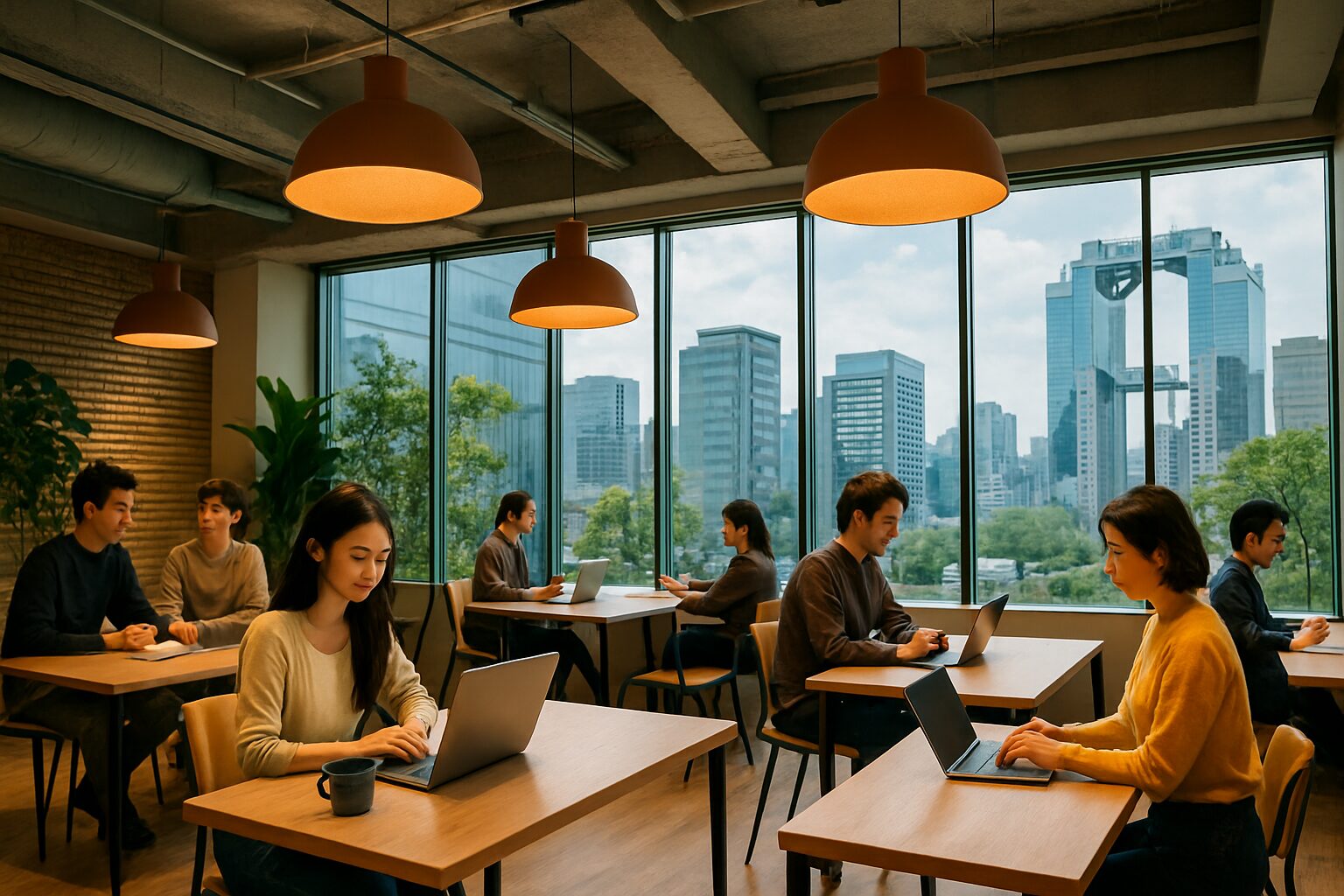
Welcome, globetrotters, digital nomads, and remote warriors, to the electric heart of Kansai: Osaka. This isn’t just a city of soul-stirring takoyaki, blinding neon rivers, and a dialect that sings with a rhythm all its own. In the hum of its subways and the buzz of its endless arcades, a new story is being written, one keystroke at a time. Osaka has quietly, yet confidently, blossomed into a haven for the modern professional, a place where the freedom of remote work collides with an urban energy that’s second to none. The era of being chained to a single desk is fading, and in its place, a vibrant ecosystem of coworking spaces has emerged, offering not just a desk and Wi-Fi, but a community, an inspiration, and a launchpad for your next big idea. This guide is your key to unlocking that world, a comprehensive journey down the city’s central artery, the Midosuji Line, from the corporate canyons of Umeda to the creative chaos of Namba. We’ll explore the spaces that define Osaka’s work culture, from sleek, high-rise hubs with panoramic views to cozy, community-focused nooks hidden in quiet backstreets. Whether you’re a freelancer seeking focus, a startup founder building an empire, or a student looking for a change of scenery, your perfect workspace is waiting. It’s time to plug in, power up, and discover where work and life don’t just coexist but dance together in the incredible city of Osaka. Let’s begin our journey through the concrete and glass jungle, finding the perfect spot to create, connect, and conquer.
After a productive day at your chosen coworking space, you might want to explore the city’s daily life, starting with a trip to an allergy-friendly supermarket in Osaka.
The Umeda Powerhouse: Where Business Meets Buzz

Umeda serves as Osaka’s northern gateway and its vibrant, bustling core of commerce and transit. Emerging from the intricate Osaka-Umeda Station complex is like stepping into a canyon of gleaming steel and shimmering glass. This is where the city dons its sharpest attire. The atmosphere hums with ambition, the pace is swift, and the energy feels both corporate and exhilaratingly cosmopolitan. The area boasts flagship department stores such as Hankyu and Daimaru, luxury hotels rising against the skyline, and headquarters of major Japanese corporations. The iconic Umeda Sky Building, with its floating garden observatory, stands as a symbol of the district’s architectural boldness. For remote professionals, Umeda provides a sense of being at the heart of it all. The coworking spaces here mirror this environment: polished, professional, and connected to the global business network. They cater to those who thrive on the fast tempo of a key commercial hub, who draw inspiration from the urban vibrancy, and who require a prestigious address to impress clients. It’s a place where a productive morning of focused work can seamlessly transition to a world-class lunch, a high-pressure client meeting, and an effortless train ride to anywhere in Japan.
One of the best-known names in this district is WeWork Hankyu Grand Building. True to the brand’s international acclaim, this space exemplifies modern office design. Imagine entering a vast, light-filled lounge with floor-to-ceiling windows framing panoramic city views. The design combines industrial chic with mid-century modern comfort, featuring sleek furnishings, vibrant artwork, and plenty of greenery that enlivens the workspace. The atmosphere buzzes with a diverse mix of professionals—from tech startups and creative agencies to satellite teams from global corporations. The steady hum of keyboards is complemented by the hiss of espresso machines and quiet, collaborative discussions. Amenities are top-notch: artisan coffee on tap, fruit-infused water, and the popular craft beer served in the afternoons for networking events or celebrating success. WeWork emphasizes community, hosting regular events ranging from professional workshops to casual happy hours, making it ideal for newcomers eager to build a professional network quickly. Accessibility is unmatched, with direct station connections making commutes smooth and weatherproof. It’s an environment that feels both luxurious and dynamic—designed to spark ambition and foster connections.
For those seeking a more traditional corporate image with global recognition, the Regus and Spaces networks offer several prime locations throughout Umeda. In contrast to WeWork’s community-focused approach, Regus caters primarily to established businesses and individual professionals needing quiet, fully serviced offices. Think private rooms with solid walls, professional reception services, and access to a worldwide network of business lounges. The ambiance is quieter, more formal, and geared toward maximum productivity. Spaces, under the same parent company, offers a middle ground with beautifully designed, creatively inspired spaces that maintain a high professional standard. Spaces Nakatsu, located within walking distance or one subway stop from Umeda’s center, provides a slightly more relaxed vibe while remaining extremely convenient. These options are ideal for lawyers, consultants, or professionals seeking distraction-free environments and traditional office infrastructure without long-term leases. Their virtual office services are also highly attractive, offering prestigious Umeda business addresses and mail handling, invaluable to freelancers and small businesses building their brand credibility.
Just beyond the immediate vicinity of the station lie hidden gems like Common Room COVO in Nakatsu. Although technically one stop north of Umeda on the Midosuji line, it feels worlds apart from the corporate rush. COVO cultivates a warm, almost scholarly ambiance. The interiors showcase natural wood and long communal tables reminiscent of a cozy, well-lit library. This space is designed for deep concentration. Ambient noise is minimal, seating is comfortable for extended work sessions, and its community comprises writers, researchers, developers, and solo entrepreneurs who value a peaceful, studious setting. They provide flexible plans, including hourly drop-in options, perfect for those needing a dedicated workspace occasionally or wanting to try it before committing. There’s a genuine sense of shared respect here—an unspoken agreement to maintain silence and help members enter a state of flow. It’s the perfect counterbalance to Umeda’s overwhelming scale: a quiet refuge where you can focus deeply and complete complex projects while savoring a cup of freshly brewed coffee in a thoughtfully crafted, calming environment.
The Creative Corridor: Honmachi and Shinsaibashi’s Hidden Gems
Traveling south from Umeda on the iconic red Midosuji subway line, the cityscape gradually transforms. Towering skyscrapers give way to a more human-scale urban fabric—a dense and captivating tapestry blending old and new. This central corridor includes the districts of Yodoyabashi, Honmachi, and Shinsaibashi. Honmachi has long been one of Osaka’s main business districts, yet its origins lie in the merchant culture of the Edo period. It feels more grounded than Umeda, hosting legacy businesses and wholesale textile merchants alongside modern office buildings. Just south of Honmachi, Shinsaibashi stands as the undisputed heart of Osaka’s retail and fashion scene, bursting with brand-name stores, independent boutiques, and the endless covered Shinsaibashi-suji shopping arcade. The coworking spaces in this central zone reflect this distinctive mix of commerce and creativity. They tend to be boutique, community-driven, and deeply embedded in the local fabric. Here you’ll find tech innovators, creative freelancers, and community builders shaping Osaka’s future of work, project by project. It’s perfect for those seeking a central location with a more nuanced, textured environment than the polished corporate feel of Umeda.
Perhaps the most emblematic space in this corridor is The DECK, located in Sakaisuji-Hommachi. This is more than a coworking space; it’s a full-fledged innovation hub. The DECK’s philosophy centers on making things—whether code, business plans, or physical prototypes. The open, airy layout floods the space with natural light, and the centerpiece is an impressive fabrication lab, a maker’s paradise equipped with 3D printers, laser cutters, and numerous other tools. This facility attracts a unique community of hardware startups, engineers, designers, and hobbyists, fostering a palpable atmosphere of invention and experimentation. The energy is collaborative and forward-looking. You’re just as likely to overhear discussions about venture capital as to see someone meticulously assembling a new gadget. The DECK is also a major nexus for local and international tech scenes, hosting a steady stream of events—from hackathons and tech meetups to workshops on programming and digital fabrication. For anyone in tech or those who thrive in a dynamic, project-oriented setting, The DECK offers unparalleled resources and community, providing not just a place to work but the tools and connections to bring ideas to life.
Another key institution in this area is Osakan Space, located in the heart of Honmachi. As one of the city’s original coworking spaces, it holds a special place within the local freelance community. Osakan Space emphasizes people over flashy design. Its atmosphere is warm, welcoming, and unpretentious—more like joining a friendly, established club. The community is a diverse mix of local Japanese freelancers—designers, writers, translators, developers—with a healthy contingent of international remote workers. It stands out as one of the best places in the city to genuinely connect with the local creative scene and practice Japanese in a supportive environment. The founder is deeply committed to fostering community, organizing regular events such as “Mokumoku-kai” (a uniquely Japanese gathering where people work silently on individual projects in a group) and social gatherings like potluck dinners. The layout is simple and functional, with communal tables and quiet corners encouraging both collaboration and focused work. If your aim is to integrate into Osaka’s local professional community and build lasting relationships, Osakan Space is an essential visit, exemplifying how the true value of a coworking space lies in the strength and generosity of its members.
For those seeking a more design-forward and flexible space, billage OSAKA in the Honmachi/Nagahoribashi area is an excellent choice. Its name reflects a dual focus: business and village, signaling a community-centered approach to work. The interior is modern and stylish, featuring thoughtful touches and a variety of work environments, from open-plan hot-desking areas to private booths for calls and concentration. What distinguishes billage is its emphasis on both coworking and co-learning. The space regularly hosts seminars, language exchange events, and skill-building workshops, attracting a dynamic, youthful crowd of students, recent graduates, and professionals focused on personal and career growth. This creates a vibrant, aspirational atmosphere where networking feels organic and learning is a shared pursuit. Their flexible pricing, including short-term drop-in plans, makes it accessible to all. It’s an ideal environment for those new to their careers or new to the city, offering countless opportunities to develop skills and connect with motivated, forward-thinking peers. It embodies the modern spirit of Osaka: ambitious, stylish, and deeply collaborative.
The Namba Nexus: Where Culture and Creation Collide

Travel further south, and you’ll find yourself in Namba—the exhilarating, chaotic, and endlessly entertaining heart of Osaka. If Umeda represents the city’s sophisticated brain, Namba is its wild, beating pulse. This is the Osaka you’ve seen in films and travel guides: the home of the iconic Glico Running Man, the giant mechanical crab of Kani Doraku, and the steam-filled streets of Dotonbori, where the aroma of okonomiyaki and takoyaki lingers in the air. Namba is a whirlwind of theaters, music venues, vibrant subcultures in Amerikamura, and the otaku haven of Den Den Town. It’s loud, alive, and unapologetically fun. Coworking spaces here are infused with this creative, kinetic energy, catering to a diverse crowd—from entertainment professionals and international travelers to tech enthusiasts and artists drawing inspiration from the urban spectacle outside. Working in Namba means tapping into the city’s cultural heartbeat. It’s suited for those who embrace sensory overload, believe creativity thrives in motion, and want their work-life balance to include instant access to some of the world’s best food and entertainment.
Perfectly positioned to channel this vibrancy is LIFORK Namba, located within the sleek Namba SkyO complex, directly above Nankai Namba Station. This spot is a game-changer for frequent flyers, as the Nankai line offers direct express service to Kansai International Airport (KIX). The space itself exemplifies modern sophistication, designed with a clean, minimalist style that creates a calm and focused oasis amid the lively streets below. The views from its windows are stunning, providing a unique outlook over the bustling Namba Parks shopping center and surrounding cityscape. LIFORK offers a variety of work environments, from quiet focus booths to open collaborative lounges, all furnished with high-quality ergonomic furniture. The atmosphere strikes a balance between professional and relaxed, attracting business travelers, local entrepreneurs, and corporate teams who appreciate design, convenience, and prestige. Being part of the Namba SkyO building also means having numerous dining and shopping options just an elevator ride away—a perfect blend of Namba’s unbeatable accessibility with a refined, productive workspace.
For night owls, time-zone travelers, and those whose creativity sparks after hours, BIZcomfort Namba Ebisu serves as a sanctuary. Its defining feature is 24/7 access, a rare and invaluable amenity in a city largely governed by conventional hours. This alone makes it ideal for developers collaborating with European teams, freelance writers racing deadlines, or anyone whose workflow defies the typical nine-to-five. The space itself prioritizes functionality and productivity over lavish design, offering a range of seating options—from silent rooms for deep focus to relaxed café-style lounges for lighter work. Conveniently located a short walk from Namba’s main hub and near Nipponbashi’s Den Den Town—Osaka’s version of Akihabara—it’s especially popular with those in tech, gaming, and anime industries. Membership plans tend to be more affordable than premium spaces, making BIZcomfort a practical and sustainable choice for freelancers and bootstrap startups. It acknowledges that productivity isn’t bound by time and provides a reliable, secure, always-open base to get work done on one’s own schedule.
Another enticing option that channels Namba’s creative spirit is ONthe UMEDA, which, despite its name, has a sister branch and similar ethos reflected in various smaller Namba spaces. The concept revolves around creating a ‘third place’ that’s neither home nor a traditional office—a space resembling a stylish, oversized living room or private library. These smaller, independent spots tucked in Namba’s backstreets, such as near Horie or Amerikamura, often boast an intimate, quirky vibe. You might come across a space housing vintage manga collections, another doubling as a mini art gallery, or one run by a DJ curating the perfect ambient soundtrack for a productive afternoon. These venues thrive on their distinct personality and tight-knit communities, perfect for artists, designers, writers, and anyone inspired by eclectic, character-filled environments. Discovering them often requires local insight or a willingness to explore side streets, but the payoff is a workspace that feels truly unique and evocative of Namba’s independent, artistic soul. They epitomize the grassroots energy of Osaka’s coworking scene, fueled by passion and a deep love for the city’s vibrant culture.
Beyond the Desk: Choosing the Right Space for Your Vibe
Choosing a coworking space involves far more than just securing a desk and a power outlet. It’s about discovering an environment that suits your work style, industry, personality, and professional ambitions. Osaka’s varied array of spaces, stretching from Umeda to Namba, ensures that the perfect fit is waiting for you. The key lies in understanding your own requirements and the distinct culture each space fosters. Are you aiming to grow a business and impress corporate clients, or do you need a quiet nook to write your novel? Do you thrive on social interaction and networking events, or do you require complete silence to achieve deep focus? Reflecting on these questions will guide you in navigating the choices and finding a place that feels less like a temporary office and more like a professional home.
For the driven corporate climber, the startup founder seeking venture capital, or the consultant wanting to project an image of success, Umeda district is the ideal environment. Locations such as WeWork Hankyu Grand Building and various Regus and Spaces branches are crafted to support high-level business activities. The value here goes well beyond the physical amenities. It’s about the prestige of the address, opportunities to network with established companies, and a seamless, professional experience for both you and your clients. The elegant interiors, impressive city views, and top-tier services create a setting where major deals feel achievable. Attending a networking event at WeWork might put you face-to-face with a key decision-maker from a multinational corporation, while hosting a meeting in a Regus conference room lends your enterprise credibility and stability. These spaces serve as strategic assets—tools to build trust and forge connections at the upper levels of the business world.
For the creative individual—a graphic designer, writer, filmmaker, or tech innovator—the perfect space likely emphasizes community, collaboration, and inspiration. The central corridor of Honmachi and Shinsaibashi is where you’ll find your community. Spaces like The DECK are creative playgrounds offering not only a supportive network but also physical resources for making things. The atmosphere is charged with the excitement of fresh ideas. Meanwhile, Osakan Space offers a unique type of creativity grounded in a nurturing, cross-disciplinary community. It’s a place where a web developer may provide guidance to a freelance translator over lunch, sparking unexpected collaborations. These spaces thrive on their human element. They recognize that creativity doesn’t flourish in isolation; it demands dialogue, shared experiences, and spontaneous inspiration drawn from being around other passionate, talented people. They focus less on corporate polish and more on genuine connection and collective growth.
Lastly, there is the focused freelancer or dedicated deep worker. For this professional, distractions are the primary enemy and productivity the ultimate goal. The ideal environment is a calm sanctuary where you can plug in your headphones and immerse yourself in work for hours. Common Room COVO in Nakatsu exemplifies this: designed for quiet concentration with a library-like ambiance. Similarly, BIZcomfort in Namba, open 24/7, supports working during peak productivity hours—even if that’s between 2 AM and 6 AM. These spaces honor the need for personal space and minimal interruptions, often featuring silent zones, private booths for calls, and infrastructure so reliable you never have to worry about it. Whether it’s a writer finishing a manuscript, a developer debugging complex code, or a student cramming for an important exam, these tranquil havens are invaluable. They offer the structure and quiet that can be challenging to find at home or in a busy café.
Practicalities and Etiquette: The Unwritten Rules of Japanese Coworking

Entering a Japanese coworking space for the first time can feel both familiar and subtly unique. While the core concept is universal, understanding the cultural nuances and unspoken etiquette is key to having a smooth and respectful experience. Paying attention to these small details not only makes your workday more enjoyable but also demonstrates respect for fellow members and helps you blend seamlessly into the community. From the booking process to handling phone calls, a bit of cultural awareness goes a long way in Japan’s shared workspace environment.
To begin, let’s cover the practical steps for getting started. Most spaces require online registration before your initial visit, even for a one-day drop-in, known as ‘ichiji riyō’ (一時利用). It’s advisable to check their websites ahead of time. While some cater well to foreigners with fully English websites, others might need you to rely on browser translation tools. For monthly memberships, a Japanese address or phone number may be requested, which can be challenging for newcomers, though many international-friendly spaces offer alternatives. Payments are usually made online by credit card. Upon arrival, the check-in process is generally straightforward. You may be given a keycard or QR code for entry. It’s a good idea to take a brief tour with the community manager to familiarize yourself with the layout—such as quiet zones, restrooms, and how to operate the coffee machine.
An essential part of etiquette is controlling noise levels, especially during phone calls. Japanese culture highly values not disturbing others, a principle that is heightened in shared workspaces. Almost every coworking space provides designated phone booths or small enclosed rooms for calls. Taking a long or loud call in the open-plan or silent areas is considered very rude. Even brief, quiet calls should be taken in designated spaces whenever possible. If you must answer at your desk, keep it short and speak softly. Likewise, conversations with colleagues should be kept at a low volume. The ambient sound in most Japanese coworking spaces is typically a gentle hum of typing, not loud chatter. Always carry headphones—for your concentration and to prevent your calls from disturbing others.
Food and drink policies are equally important to respect. Most spaces offer complimentary coffee, tea, and water, which is a wonderful perk. Bringing your own drinks is generally permitted. When it comes to food, there is almost always a specific kitchen or lounge area designated for eating. Eating at your desk—especially hot food or anything strongly scented like curry or heavily spiced dishes—is usually frowned upon. This is about respecting others’ sensory experience and maintaining a clean, professional environment. So, plan to take proper breaks in the designated areas for meals, which also presents a great chance to chat with other members.
Lastly, a note on networking. While community events encourage social interaction, everyday networking tends to be more subtle compared to Western cultures. A simple, friendly nod or a quiet ‘konnichiwa’ (hello) upon arrival is perfectly appropriate. A very common and handy phrase is ‘otsukaresama desu’ (お疲れ様です), which roughly means “Thank you for your hard work” or “You must be tired.” It’s a polite and thoughtful way to acknowledge someone when leaving or finishing for the day. Taking part in official events organized by the space is the best and most natural way to form deeper connections. Show genuine interest, listen attentively, and you’ll find the Japanese professional community to be exceptionally welcoming and supportive.
Expanding the Map: Noteworthy Spaces Just Outside the Main Axis
While the Umeda-to-Namba corridor along the Midosuji line serves as the backbone of Osaka’s coworking scene, the city’s dynamic energy and professional environment stretch well beyond this main route. To fully appreciate the variety of options available, it’s worthwhile to explore the distinctive hubs that have emerged in other key city districts. These neighborhoods offer diverse atmospheres, conveniences, and communities, and for many locals, having a workspace closer to home can greatly enhance quality of life. From the transportation hub of Shin-Osaka to the eastern center of Kyobashi and the rising southern district of Tennoji, excellent workspaces await discovery. Looking beyond the central spine unveils hidden gems that may perfectly suit your commute and work style.
Just north of Umeda is Shin-Osaka, a district dominated by one monumental piece of infrastructure: the Shin-Osaka Shinkansen Station. This serves as the gateway for Japan’s renowned bullet trains, connecting Osaka to Tokyo, Fukuoka, and destinations across the country. For professionals who frequently travel nationwide for business, having a workspace in Shin-Osaka is a strategic advantage. Coworking spaces such as Regus Shin-Osaka and Compass Offices Shin-Osaka cater precisely to this group. They provide a smooth transition from train to desk. Picture stepping off the Shinkansen after a Tokyo meeting and arriving at a professional office environment within minutes, ready to debrief with your team or send follow-up emails. These spaces are efficient, professional, and highly convenient, often featuring services like multilingual receptionists and premium meeting rooms ideal for impressing clients arriving by train. The atmosphere is fast-paced and business-oriented, a hub of continual motion and purpose.
East of Osaka Castle lies Kyobashi, another significant transportation nexus and a lively business and entertainment district with a more local, grounded vibe than Umeda. It plays a vital role as a junction for the JR Loop Line, the Keihan Line connecting to Kyoto, and the Nagahori Tsurumi-ryokuchi subway line. For residents in eastern Osaka or commuters from Kyoto or Nara, coworking spaces in Kyobashi offer great convenience. Places like BIZcomfort Kyobashi deliver modern, practical work environments at the heart of the activity. Working in Kyobashi provides a fresh perspective on Osaka—the area is filled with excellent, affordable eateries and bustling izakayas popular with local office workers, creating an authentic after-work experience. It stands as a practical, vibrant, and well-connected alternative to the city center, perfect for those who value efficiency and a neighborhood vibe.
Further south, the Tennoji and Abeno area has experienced a remarkable transformation over the last decade, centered around the towering Abeno Harukas, Japan’s tallest skyscraper. This district has become a key commercial hub for southern Osaka, blending the historic charm of Shitennoji Temple and Tennoji Park with sparkling new department stores and office towers. Coworking spaces here, including those within the Abeno Harukas building and nearby BIZcircle Tennoji, serve the rising number of professionals and businesses in the area. The community often includes local enterprises, creative professionals attracted by the area’s more relaxed pace, and shoppers taking a break. The stunning views from Abeno Harukas’s upper floors are a notable bonus, and the direct train links to Nara and Wakayama make it a convenient base for exploring the broader Kansai region. This district perfectly embodies Osaka’s unique blend of rich history and bold modern growth.
A Personal Reflection: Finding My Flow in Osaka’s Concrete Jungle

As an event planner based in Tokyo, my job frequently takes me across the country, and I have spent considerable time managing projects here in Osaka. At first, I approached the city with a Tokyoite’s mindset: head down, focused, moving with a certain metropolitan efficiency and urgency. I viewed coworking spaces as purely functional—a spot to get Wi-Fi and charge my devices between meetings. However, Osaka, with its wonderfully direct and friendly nature, soon showed me a different perspective. The city’s work culture has a unique rhythm, radiating warmth and openness that contrasts with Tokyo’s more formal and reserved demeanor. I realized that in Osaka, a coworking space isn’t merely an office-for-rent; it’s a vibrant community, reflecting the city’s character in miniature.
I recall a particularly demanding project that required a mix of creative fabrication and meticulous logistical planning. My typical approach in Tokyo would have been to hire separate vendors and coordinate remotely. But in Osaka, I discovered an alternative. I began my week at The DECK in Honmachi. I was amazed. I spent two days there, not only working on my laptop but also collaborating with staff and members. I needed to craft some unique, tech-enhanced props for the event and was able to use their 3D printers and receive guidance from a hardware developer sitting at the next table. The spirit of collaborative creation was contagious. There was no corporate stiffness, just a shared enthusiasm for making cool things.
Once the creative tasks were handled, I needed a quiet environment for the focused work of scheduling, budgeting, and liaising with numerous stakeholders. The constant hum of the maker space was no longer suitable. So, I took a short subway ride to Nakatsu and spent the day at Common Room COVO. The shift in atmosphere was immediate and striking. It felt like entering a calm, sunlit library. The silence was inviting, not sterile. Surrounded by others absorbed in their work, I effortlessly found my focus. I powered through spreadsheets and timelines, energized by excellent coffee and the quiet collective energy in the room. Here, I truly understood the value of selecting a workspace tailored to the task.
On the day before the event, I needed a prestigious and convenient spot in Umeda for a final briefing with a high-profile client. I reserved a meeting room at WeWork in the Hankyu Grand Building. The breathtaking city view from the 26th floor instantly set a confident and impressive tone. The professional setting and flawless service enabled me to conduct the meeting smoothly. My client, new to Osaka, was visibly impressed by the dynamic and polished environment. In just one week, I had used three distinct coworking spaces, each perfectly suited for a different project phase. It was eye-opening. I wasn’t just renting desks; I was curating my work environment, utilizing Osaka’s diverse coworking ecosystem to perform at my best. This experience taught me that in Osaka, your office can be as dynamic and multifaceted as the city itself.
Osaka effortlessly breaks down barriers, encouraging a more human-centered approach to business. It’s a city that reminds you behind every project and deadline, there are people. Finding the right coworking community here is not just a professional benefit; it’s a way to connect with the city’s remarkable spirit, discovering your own distinct rhythm within its vibrant, welcoming, and endlessly inspiring urban landscape. So, plug in, power up, and prepare to create your own Osaka story, one productive day at a time. The city is your office, and the possibilities are limitless.