
Welcome to Osaka, a city that thrums with a rhythm all its own. From the moment you step off the Shinkansen at Shin-Osaka or emerge from the subterranean maze of Umeda, you feel it. It’s in the sizzle of takoyaki on a Dotonbori grill, the boisterous laughter spilling from an izakaya, and the famously direct, yet warm, cadence of the local dialect. It’s a city that pulses with an unapologetic energy, a commercial heartland that has for centuries prided itself on doing things its own way. And perhaps nothing, nothing so simple and so profound, encapsulates this spirit more than the silent, swift, and unyielding choreography of its escalators. You might think a moving staircase is just a tool, a simple conveyance from a lower level to a higher one. But here in Osaka, it is a statement. It is a cultural declaration, a daily referendum on identity, and your first, most immediate lesson in the unwritten rules of this magnificent metropolis. As you approach the grooved metal steps, you’ll notice a human current, a flow as organized as a school of fish. And you will see that the current splits. One side stands still, a patient, vertical column. The other side is a channel for motion, for those in a hurry, for the city’s lifeblood to pump a little faster. But here, in the heart of the Kansai region, the universal law you thought you knew is turned on its head. In Osaka, you stand on the right.
Once you’ve mastered the escalator, you can dive deeper into the city’s unique rhythm by exploring other local customs, like the serene world of Osaka’s sento culture.
The Great Kansai Divide: A Tale of Two Cities
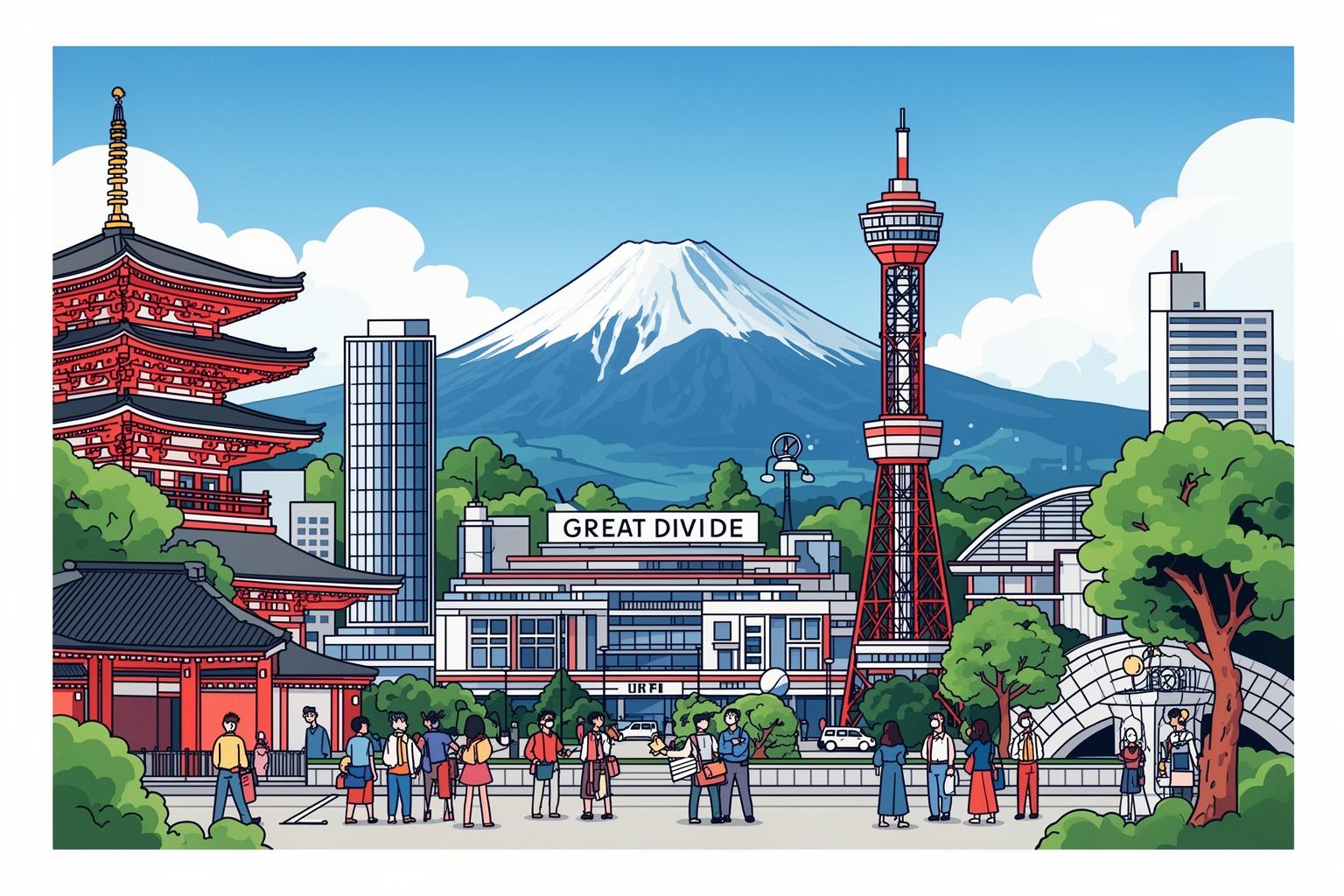
For any traveler who has spent even a day in Japan’s vast capital, Tokyo, the muscle memory is already ingrained. You step onto an escalator, shuffle to the left, and stand. The right side remains a sacred passage for the hurried, the late, and the swift. This rule is as fundamental to Tokyo life as the complex dance of its subway map. Standing on the right in Tokyo means becoming a gentle obstruction, a human stone in a smoothly flowing river, quickly feeling the unspoken pressure of commuters building up behind you. There is no malice—just a shared, silent agreement that this is how things are done. So, you arrive in Osaka, full of this newfound cultural knowledge, proud of your ability to navigate Japan’s subtle etiquette. You step onto the long escalator at Osaka Station, heading toward the Grand Front mall, and dutifully move to the left. Then it happens. A gentle tap on the shoulder. An “excuse me” whispered in Kansai-ben. Or more likely, just a palpable sense of friction—the realization that you are once again the stone in the river, but for the opposite reason. Here, the river flows on the left. The quiet, patient observers, those gazing at phones or watching passing advertisements, stand firmly on the right. This is the great escalator schism of Japan, a clear dividing line that splits the country in two. It’s Kanto versus Kansai, East versus West, played out millions of times daily on every moving staircase in the region. This isn’t just an Osaka phenomenon; it extends throughout the Kansai region, including Hyogo prefecture (home to Kobe) and Nara, though the lines blur further from the epicenter. In Kyoto, a city caught between its ancient imperial past and its modern tourist identity, escalator etiquette is a beautiful mess. Some escalators follow the Tokyo rule, others the Osaka rule, and many are chaotic free-for-alls. It becomes a game of observation, a moment-to-moment choice based on the crowd’s behavior ahead. But in Osaka, there is no ambiguity. The rule is absolute, an immediate marker of local versus visitor. To stand on the right is, however unconsciously, to acknowledge the city’s unique identity and its long-standing, friendly rivalry with the capital to the east. It’s a small act of rebellion, a declaration that while Tokyo may be the center of government and finance, Osaka commands its own rhythm.
Echoes of the Expo: A World’s Fair Legacy
So, why is this the case? How did such a stark difference arise? This question has intrigued sociologists, historians, and curious travelers for decades. Although there is no single, definitive answer, the most widely accepted explanation traces back to Osaka’s illustrious recent past: the 1970 Japan World Exposition. To grasp the strength of this theory, one must appreciate the significance of the Expo. It was not simply a fair; it marked Japan’s grand re-entry onto the global stage. Just twenty-five years after the destruction of World War II, Japan had risen from the ruins to become an economic giant. The Expo was a monumental celebration of this accomplishment, showcasing technology, culture, and a futuristic vision under the theme “Progress and Harmony for Mankind.” The iconic Tower of the Sun, created by artist Tarō Okamoto, became a national symbol, and for six months, the world converged on the hills of Senri, just outside Osaka. Over 64 million visitors attended, an impressive figure at the time, including many international guests from countries where traffic drives on the right side of the road. The leading theory suggests that Hankyu Railway, one of the major private railway companies serving the Osaka region and the primary transport to the Expo, deliberately chose to accommodate these international visitors. As a gesture of global hospitality, they reportedly launched a campaign encouraging passengers to stand on the right side of escalators, leaving the left side open for walking, mirroring the custom in the United States and much of Europe. The reasoning was straightforward: to make international guests feel welcome and keep the massive crowds moving smoothly. The Expo was an all-encompassing event that transformed the region’s infrastructure and collective mindset. It was a period of immense local pride, and the habits formed during this time of intense international focus have endured. What started as a temporary courtesy became a lasting feature of Kansai culture. While other parts of Japan, including Tokyo, maintained or adopted the London-style “stand on the left” custom, Osaka and its surrounding areas have held firmly to the Expo standard. It became their distinctive approach, a subtle yet persistent reminder of a time when the world’s attention was fixed on them, and they responded with their unique brand of practical hospitality.
The Samurai’s Path: Whispers from the Feudal Past
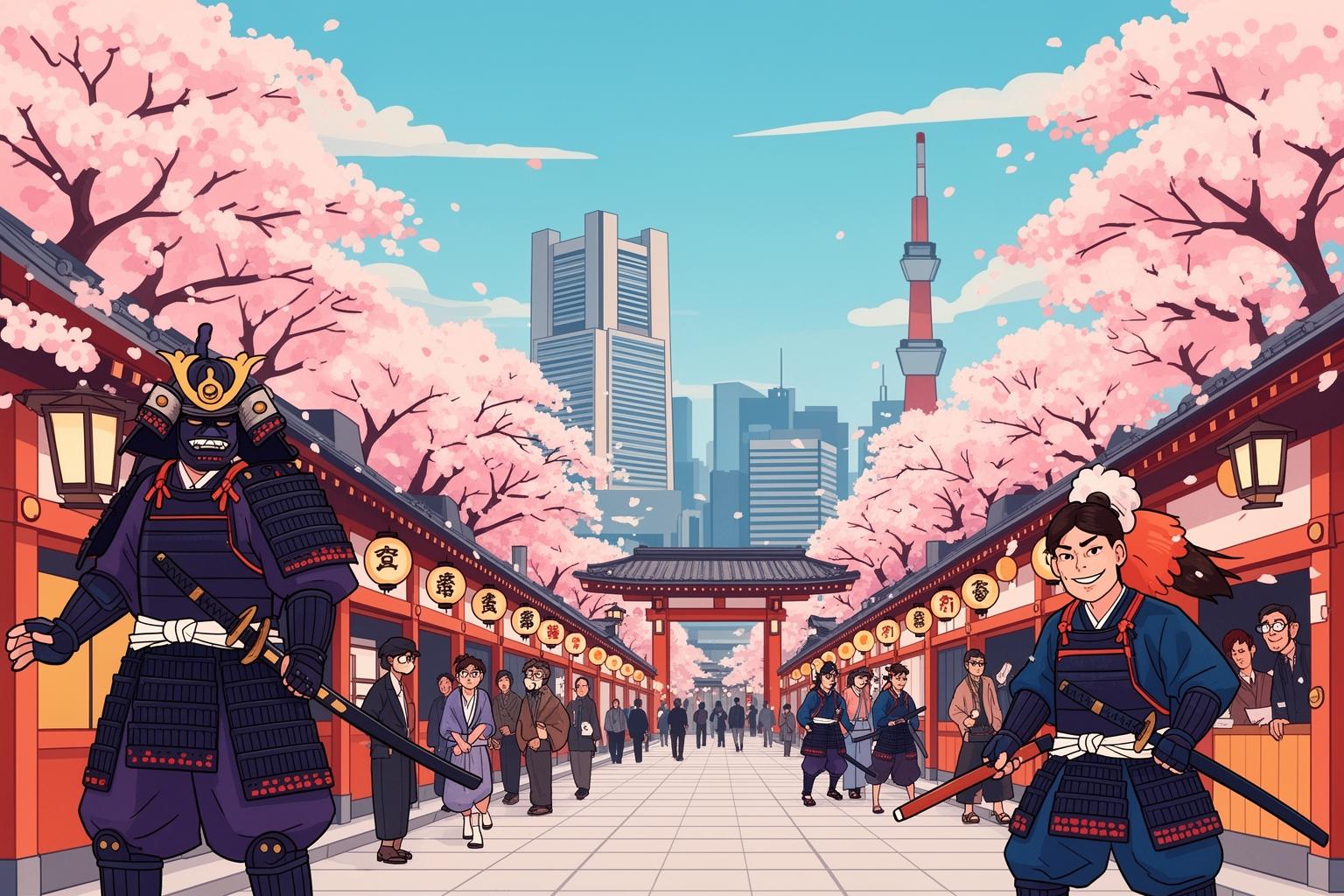
While the 1970 Expo theory is both compelling and practical, there is another, more romantic and ancient explanation woven into the fabric of Japanese history. This theory dates back to the samurai era, a time when the streets of Osaka were frequented by swordsmen, merchants, and daimyo. In feudal Japan, a samurai carried his katana—the essence of his warrior class—sheathed on his left hip. This placement was vital, as it allowed for a quick, smooth draw with the right hand. A right-handed swordsman needed an unobstructed space on his left side to draw his weapon without hindrance. Now, picture a narrow, crowded staircase or hallway within a castle, or a bustling street in a merchant district. If two samurai passed each other, the collision of their scabbards, or saya, could be seen as a serious insult, a challenge that might easily lead to a duel. To prevent such deadly misunderstandings, an unwritten rule is said to have emerged: when walking, samurai would keep to the left side of the road, ensuring their sword-side faced away from oncoming traffic, reducing the chance of a clash. However, when standing still—such as stepping aside for a procession—standing on the right kept their left side and precious sword protected against a wall or edge, while leaving their dominant right hand free, facing the open path. Advocates of this theory suggest that this deeply ingrained habit of keeping the left side clear for movement and action forms the cultural foundation behind Osaka’s escalator etiquette. But this raises a crucial question: if this was a samurai custom, why does it persist so strongly in Osaka, known for its merchant class, rather than in Tokyo, the former samurai capital of Edo? One possible explanation lies in Osaka’s pragmatic merchant culture. It is likely that this samurai-era custom of passage was simply a practical way to manage pedestrian flow, adopted by the general populace and retained because it worked. The merchants of Osaka, ever efficient, may have preserved this ancient spatial logic, which smoothly transitioned to modern escalator use. It’s a compelling, if difficult to verify, idea—that every time an Osakan commuter patiently stands on the right side of an escalator in the bustling Umeda underground, they are unknowingly embodying the spirit of a samurai trying to prevent his blade from clashing with a stranger’s.
The Merchant’s Hustle: A Pragmatic Pulse
Beyond grand historical theories, perhaps the most accurate explanation for Osaka’s right-side escalator rule lies deep within the spirit of the city itself. For centuries, Osaka was known as the “Tenka no Daidokoro,” or the “Nation’s Kitchen.” It served as the central hub for rice and other goods, a bustling port city where commerce reigned and efficiency was the key to survival. This history has shaped a unique local character, often described by terms like “sekkachi” (impatient or hurried) and “hakkiri” (direct and clear-speaking). There is a distinct brisk, no-nonsense energy in Osaka that can be felt in the rapid-fire exchanges of shopkeepers and the swift pace of pedestrians. In this light, the escalator rule is more than a historical quirk; it is a tool of profound urban efficiency. The rule establishes a clear and predictable system for a population that values speed. The left lane is for the “irachi,” another Kansai term for those who can’t stand still—people rushing to their train, meeting, or favorite okonomiyaki spot a few seconds faster. Meanwhile, the right side serves as a calm, stable lane for those with time to spare, for people carrying heavy shopping bags, or for tourists taking in the sights and sounds of the station. This pragmatism subtly contrasts with Tokyo’s social dynamics. While both cities excel in urban efficiency, Tokyo’s etiquette often feels grounded in a more formal, group-oriented harmony, aiming to maintain a smooth, uniform flow. Osaka’s approach feels more individualistic and utilitarian. The system accommodates two kinds of people simultaneously: the standers and the walkers. It’s a solution that says, “You do it your way, I’ll do it mine, and we’ll all get where we’re going.” This independent streak is a cornerstone of Osaka’s identity. It’s a city that has always forged its own path, often defining itself in contrast to Tokyo’s centralized power. Following a different escalator rule is a small, daily affirmation of this independence. It’s a quiet, collective expression of a regional identity that is fiercely proud and playfully defiant. It says, “We are not Tokyo. We are Osaka. And this is how we move.”
The Escalator as a Living Museum: Observation in the Urban Wild
To truly grasp this cultural quirk, you must become an urban anthropologist. Approach the city’s train stations and shopping centers as living museums, with escalators as the centerpiece exhibit. Find a good vantage point and simply watch the magic unfold. There are several prime spots for this distinct kind of people-watching. The first and most spectacular is the Umeda Station and Osaka Station City complex. This is less a train station and more a multi-layered urban universe, a maze of department stores, train lines, and underground passages. The sheer number of people flowing through is staggering. Position yourself near the grand escalators linking the main concourse to the Lucua and Grand Front shopping towers. Here, you’ll observe a perfectly functioning human highway, with a swift moving current on the left and a static column on the right—a beautiful testament to mass cooperation without a single word spoken. Another excellent location is Namba Station, the city’s southern gateway. The atmosphere here is slightly more chaotic, a blend of commuters, shoppers heading to the Shinsaibashi arcade, and tourists bound for the neon-lit wonderland of Dotonbori. The escalators connecting the Nankai line to the subway are a torrent of humanity, yet the right-standing rule remains firm, an organizing principle amid the joyful pandemonium. For a truly breathtaking experience, take a ride up the escalators at the Umeda Sky Building. Encased within two glass tubes that connect the building’s twin towers high above the city, these are among the most dramatic escalators in the world. As you ascend, suspended in mid-air with the cityscape sprawling below, you’ll notice the silent rule persists even here. It’s a surreal moment to realize this deeply local custom is being observed 150 meters above the ground. For first-time visitors, the advice is simple: don’t panic. Before stepping on, take a brief moment to observe the flow. Watch where the people in front of you stand, then join them. It’s a dance, and the music is the city’s ambient hum. You’ll learn the steps quickly, and in doing so, you’ll feel a small but satisfying sense of belonging, having uncovered one of the city’s most cherished secrets.
The Unspoken Etiquette: Beyond Left and Right
Mastering the art of standing on the right side is only the initial step. Like any deeply ingrained cultural practice, Osaka’s escalator etiquette includes a set of subtle, unspoken sub-rules that guide behavior and ensure smooth operation. For example, what should you do if you’re carrying a large suitcase? The cardinal mistake is placing your luggage on the left side, thereby blocking the walking lane. Proper etiquette dictates positioning your suitcase either directly in front of or behind you on the same step, or on the step above or below, keeping it within your personal vertical space on the right side. This preserves the fast lane’s integrity and shows consideration for other passengers. Similarly, when traveling with a friend or partner, the local custom is to stand in single file, one behind the other, on the right side. Although it might be tempting to stand side-by-side to continue your conversation, this is generally discouraged as it obstructs the entire width of the escalator. It’s a minor personal inconvenience in favor of collective efficiency. One of the most intriguing aspects of this phenomenon is its geographical permeability. While Osaka remains the undisputed epicenter of right-standing, the rule’s influence gradually diminishes with distance. As noted, Kyoto is a contested zone. With a large influx of tourists from across Japan and the world, and due to its proximity to both Kansai and Kanto regions, its escalator etiquette is a chaotic blend. Kyoto demands skillful code-switching. Kobe, a brief train ride from Osaka in Hyogo Prefecture, mostly follows the Osaka rule, reflecting its strong economic and cultural connections. All of this etiquette is communicated non-verbally. Until recently, you would hardly see any signs directing where to stand; it was simply internalized knowledge, a part of cultural software absorbed by osmosis. This dependence on unspoken understanding, or “anmoku no ryōkai,” is a hallmark of Japanese society. It involves reading the atmosphere, grasping the context, and responding appropriately without explicit guidance. The Osaka escalator custom stands as a clear, everyday example of this principle in practice.
The Winds of Change: A Modern Safety Dilemma
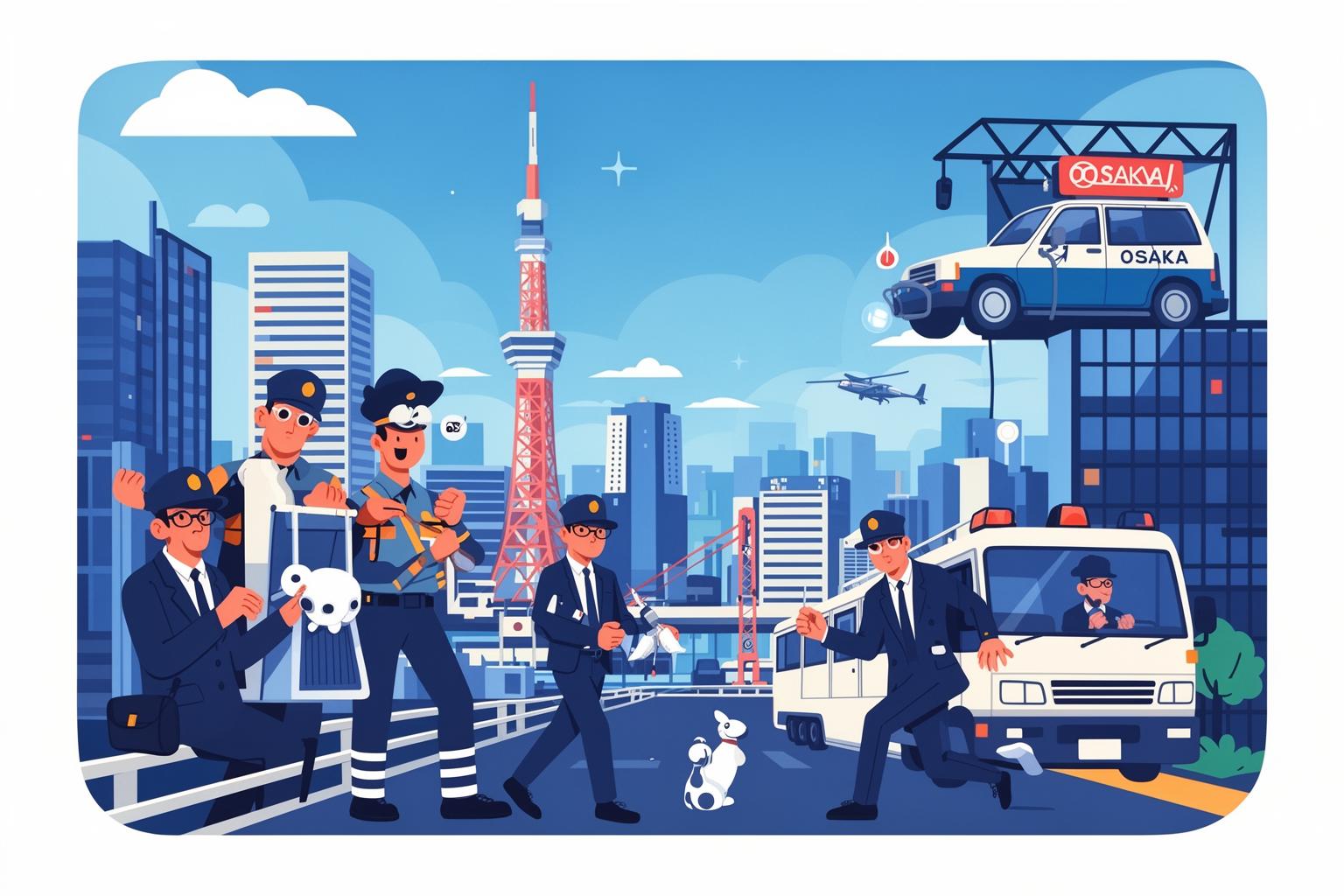
For decades, the great escalator divide was a stable and unchanging feature of the Japanese cultural landscape. It was a charming quirk, a topic of conversation, and a source of regional pride. However, recently, the winds of change have started to blow, driven by concerns for public safety and accessibility. Across Japan, railway companies and station operators have launched a nationwide campaign to discourage walking on escalators entirely. Now, you will see posters, hear station announcements, and even notice staff members holding signs that politely urge passengers to stand still, hold the handrail, and use both sides of the escalator. This campaign is based on two main reasons. The first and foremost is safety. Although it may seem counterintuitive, walking on an escalator greatly increases the risk of accidents. A misstep, sudden stop, or bump from another person can cause a fall that triggers a dangerous domino effect, toppling those behind. The Japan Elevator Association has reported hundreds of escalator accidents each year, many linked to walking or running. The second reason is accessibility. Leaving one side open for walkers poses a significant barrier for many individuals. The elderly, people with disabilities or mobility challenges, those with visual impairments, or individuals who feel unsteady often need to hold both handrails for stability. The steady flow of people rushing past them can be unsettling and hazardous, effectively making one side of the escalator unusable for those who require the most support. This new campaign has disrupted a long-standing cultural habit, creating intriguing social tension. In Tokyo, where the habit is less closely tied to regional pride, the “no-walking” rule is gradually gaining acceptance. But in Osaka, resistance is strong. For a city known for moving at its own pace and valuing efficiency, the idea of transforming the fast lane into a stationary one feels highly inefficient. It clashes with the “sekkachi” spirit. Many locals continue to ignore the signs, striding purposefully up the left side, demonstrating how deeply entrenched this behavior is. This ongoing tug-of-war perfectly illustrates culture in motion: a struggle between a deeply rooted, organic social custom and a top-down, logic-driven safety initiative. It remains uncertain which will ultimately prevail. Will Osaka’s fierce independence and emphasis on efficiency keep the left lane moving, or will widespread concerns about safety and accessibility eventually bring the city’s escalators to a uniform, two-sided standstill? The final chapter of the Osaka escalator story is still unfolding.
A Final Ascent: More Than Just a Rule
Ultimately, the simple decision of which side to stand on an escalator is far more than just a logistical choice. Here in Osaka, it carries a whisper of history, a glimpse of character, and a mark of identity. Whether stemming from the international spirit of the 1970 World Expo, the ancient prudence of the samurai, or the practical drive of the merchant class, the rule of standing on the right perfectly encapsulates the city itself. It is a small, everyday detail that reveals the grand story of a city that has always marched to its own rhythm—a city that is proud, pragmatic, and playfully unique within Japan. So, as you move through this vibrant metropolis, rising from its busy subways to its shining skyscrapers, remember this simple guideline. Step onto the escalator, shift to the right, and stand firm. Feel the city’s hurried energy rush past on your left. Take a moment to observe, to take in the sights and sounds, and to appreciate the quiet, elegant order of it all. You are not merely following a rule; you are engaging in a living tradition, taking your part in the distinct, continuous, and utterly fascinating rhythm of Osaka. It is an invitation to look beyond the surface, to notice the subtleties, and to uncover the rich cultural narratives hidden in the most delightfully ordinary corners of this extraordinary city.