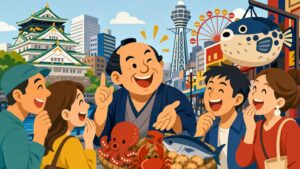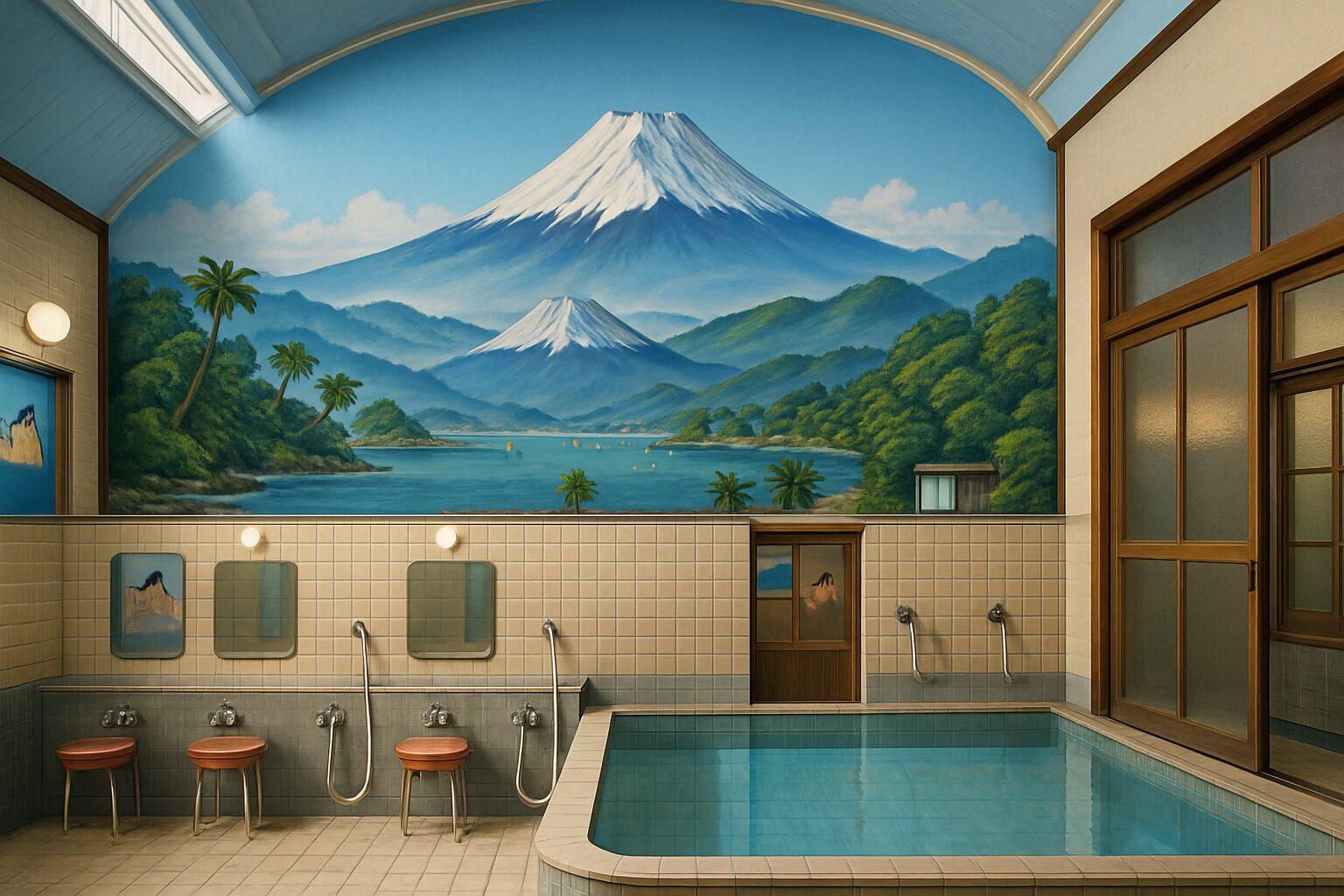
There’s a rhythm to Osaka that you won’t find in any guidebook. It’s not in the neon glow of Dotonbori or the historic grandeur of Osaka Castle. It’s a softer, warmer pulse, one that echoes in the tiled halls of the city’s neighborhood sentō, the humble public bathhouses that serve as the living, breathing heart of local communities. Forget the tourist-centric onsen resorts for a moment. The sentō is where the real magic happens. It’s a place not just for cleansing the body, but for soothing the soul, and for participating in a daily ritual that has connected generations of Osakans. It’s where grandfathers teach their grandsons the art of the perfect cold plunge, where neighbors catch up on the day’s gossip amidst clouds of steam, and where the weary salaryman finds a moment of quiet reprieve. Stepping into a sentō is stepping into the authentic, unfiltered social fabric of the city. It’s an invitation to shed not just your clothes, but your pretenses, and to connect with the city on its most intimate level. For any foreigner living in or exploring the deeper layers of Osaka, mastering the sentō is your key to unlocking a profound understanding of Japanese daily life. It’s more than a bath; it’s a cultural immersion, one warm, welcoming, and wonderfully human experience at a time.
For a deeper look at the daily rituals that define life in the city, explore our guide to Osaka’s neighborhood public bath culture.
The Symphony of Steam: Understanding the Sentō Atmosphere
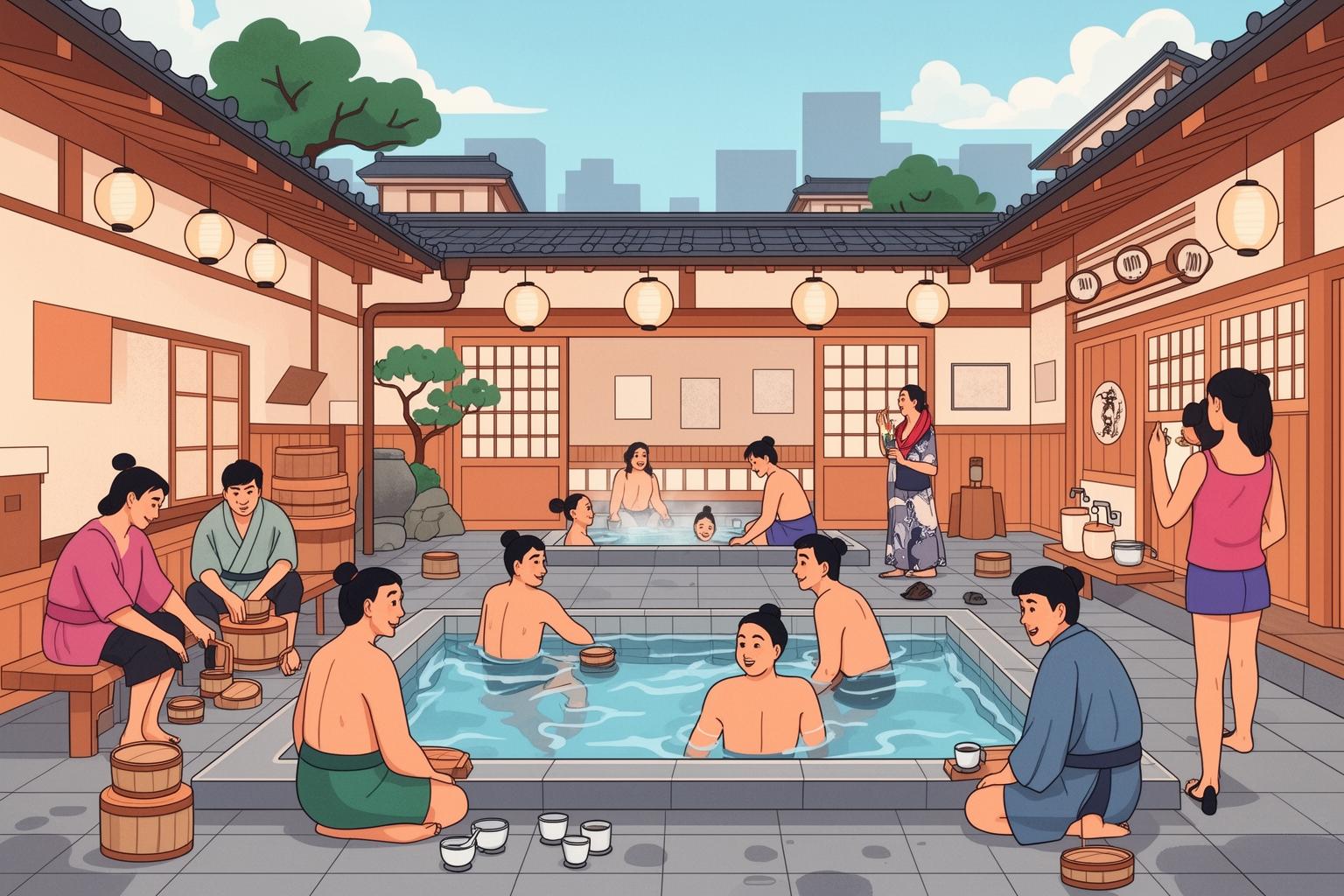
Stroll down a quiet residential street in neighborhoods like Tennoji, Fukushima, or further into the eastern suburbs, and you might notice it: a building with a tall, graceful chimney, often topped with a curved temple-style roof (`karahafu`). A soft blue or red curtain (`noren`) hangs in the entrance, marked with the distinctive calligraphic symbol for hot water: `ゆ` (yu). This is your entrance. Moving aside that curtain feels like stepping into another time. The air shifts instantly, thick with humidity and filled with the fresh scents of soap, hinoki wood, and an indistinct mineral aroma. The soundscape is a gentle blend: the rhythmic splash of water from wooden buckets, the steady sound of showers, low murmurs of conversation, and the satisfying clatter of locker keys against wooden tags. There’s an immediate feeling of shared openness and trust. Here, everyone stands equal. Stripped of daily armor in clothes and status, you become simply another person seeking warmth and cleanliness. The `bandai`, a raised platform where the attendant—often an elderly man or woman (`obāchan` or `ojīchan`)—sits, oversees the scene with a calm, watchful presence. They are the guardians of this sacred place, collecting the modest entrance fee (usually around 500 yen) and offering a warm nod that means, “Welcome, relax.” The atmosphere isn’t silent or reverent like a temple; it’s vibrant. It’s a `genki` space, humming with the quiet energy of the community. You’ll see toddlers gently scrubbed by their mothers, old friends laughing as they soak up to their necks, and solitary figures gazing into the distance, letting the heat dissolve their worries. It’s a place that feels deeply, fundamentally human.
More Than a Wash: Why the Sentō Endures
In an era when nearly every household in Japan is equipped with a modern bathroom, the continued existence of the sentō might seem surprising. However, its role has expanded far beyond simple hygiene. The sentō serves as a cornerstone of community well-being, acting as a “third place” that is neither home nor workplace. For many elderly individuals living alone, the daily visit to the sentō provides their primary social interaction—a crucial remedy for loneliness. It’s a space to check on each other, exchange stories, and sustain the bonds that hold neighborhoods together. Its appeal spans generations. For families, it is a bonding ritual; for young people, it offers an inexpensive, healthy way to unwind, delivering a far deeper relaxation than a quick shower at home. The variety and quality of the baths are key attractions. A tiny apartment bathtub can’t compare to a large, steaming cypress-wood tub, a bubbling jacuzzi that soothes tired muscles, or the refreshing shock of a denki-buro (electric bath). The sentō presents an affordable luxury, a mini-spa experience for the price of a cup of coffee. It also serves as a potent wellness tool. The practice of alternating between hot and cold baths (onrei-yoku) is thought to enhance circulation, boost metabolism, and strengthen the immune system. This ritual leaves you feeling not only clean but completely revitalized, with a tingling, vibrant sensation in your skin and deep calmness in your mind. This sensation, known as yu-agari—the post-bath glow—is what keeps patrons returning, night after night.
The Unspoken Dance: Your Step-by-Step Guide to Sentō Etiquette
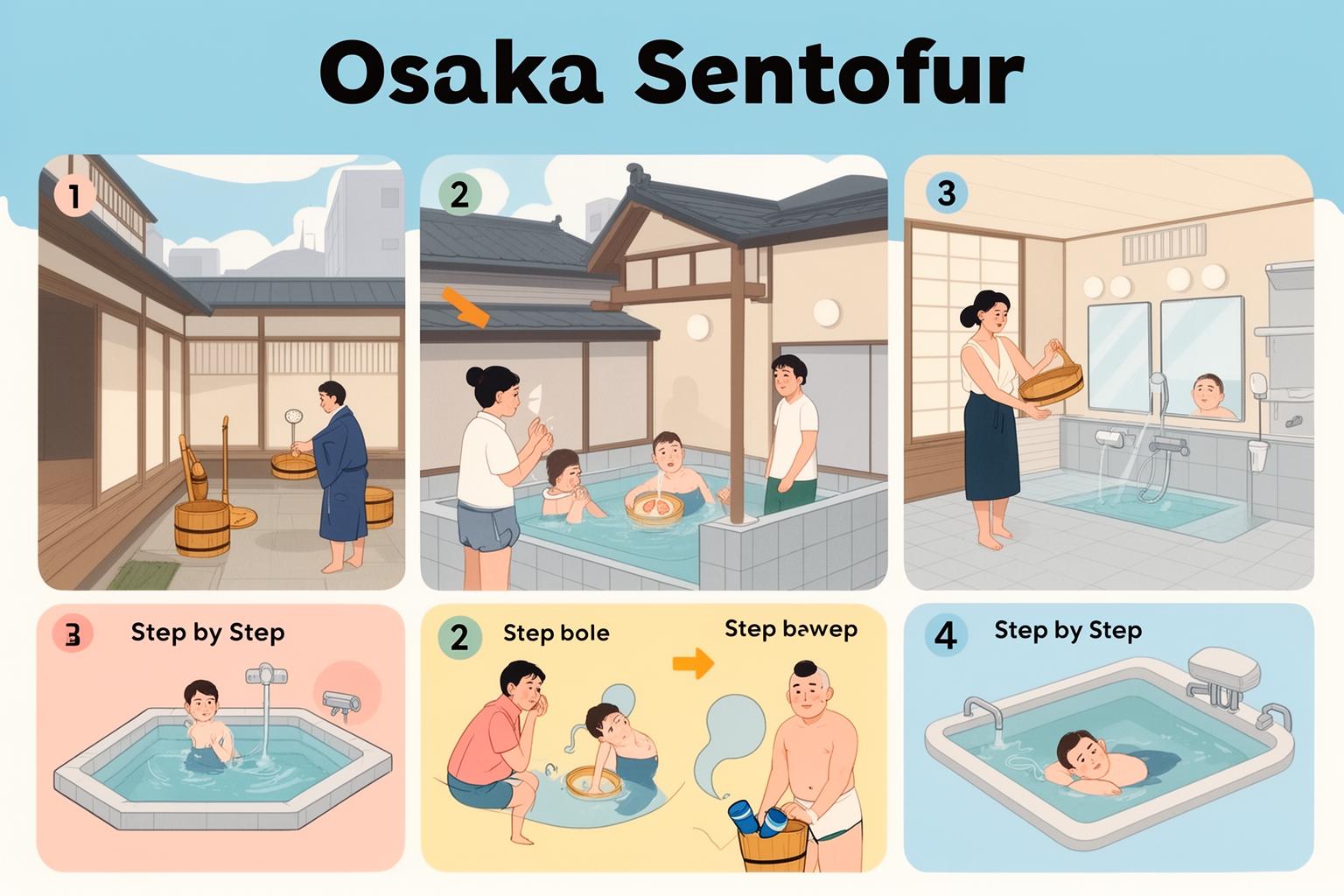
Navigating a sentō for the first time can be daunting, but the rules are straightforward and grounded in common sense and mutual respect. Think of it as a carefully choreographed dance—once you learn the moves, you’ll move confidently and gracefully, earning the quiet approval of the regulars. Let’s walk through the entire process, from the front door to the post-bath relaxation.
Step One: The Entrance and the `Bandai`
Your journey starts at the entrance. The first thing to do is remove your shoes. Look for the `getabako`, a wall lined with small shoe lockers. Place your shoes inside, take the wooden key, and be careful not to lose it. Head to the reception area, which may be a traditional `bandai` or a modern front desk. Here, you’ll pay the entrance fee. Many sentō now have vending machines (`kenbaiki`) for tickets. Find the button for a standard adult bath (`otona 大人`). You’ll also find options to purchase or rent towels, soap, shampoo, and even razors. It’s best to bring your own, but it’s reassuring to know everything you need is available on-site. Hand your ticket (and any rental tickets) to the attendant, who will direct you to the correct changing room: blue curtains marked with the character for man (`男 otoko`) or red curtains with the character for woman (`女 onna`). A simple nod and a quiet “`Ojama shimasu`” (excuse me for intruding) is a polite way to enter.
Step Two: The Changing Room (`Datsuijo`)
The changing room is a lively, communal space. Find an empty locker and a matching key, often worn on a wristband. Here, you will completely undress. Yes, completely. Swimwear is not allowed in a sentō. This might be the biggest cultural adjustment for newcomers, but rest assured, no one is staring. Modesty is respected, but nudity is not sexualized; it’s simply practical. You’ll notice people using a small towel, known as a “modesty towel,” to discreetly cover themselves while moving between the changing room and bathing area. This is perfectly acceptable. Place all your clothes and large bath towel in the locker. Only bring your small towel and toiletries (soap, shampoo, etc.) into the bathing area. Lock your locker, put the key on your wrist, take a deep breath—you’re ready for the main event.
Step Three: The Cardinal Rule – Washing Before Soaking
This is the most important rule of the sentō. You must wash your entire body thoroughly before even thinking about entering the tubs. The large baths are meant for communal soaking, not cleaning. Entering a tub while still dirty is the biggest faux pas you can make. Before anything else, you might perform a `kakeyu`—find a small basin near the bathing area entrance, fill it with warm water from a designated tap, and splash it over your body, starting with your feet and working upward. This helps your body adjust to the water temperature and serves as a symbolic rinse. After the `kakeyu`, go to one of the washing stations, called `arai-ba`. These usually have low faucets with removable shower heads, small plastic stools, and buckets. Do not stand while showering to avoid splashing others. Proper etiquette is to sit on the stool. Use the shower and bucket to lather with soap and shampoo and wash thoroughly from head to toe. Take your time—this is part of the ritual. Rinse off every sud carefully. When you’re spotless, you’re finally ready to enter the baths.
Step Four: The Art of Soaking
Now the fun begins. Sentō offer a variety of tubs, each with different temperatures and purposes. Enter the water slowly—no jumping or splashing. Find a comfortable spot and let the warmth envelop you. This is a time for quiet reflection. Remember that small towel? It must never go into the bathwater. The common practice is folding it neatly and placing it on your head, helping you blend in like a local. Alternatively, you can place it beside the tub. Let’s look at the common types of baths you’ll find in an Osaka sentō.
The Mainstays: `Atsu-yu` and `Nuru-yu`
Most sentō have at least two main baths. The `atsu-yu` (`熱湯`) is the hot bath, typically heated to an intense 42-44°C (108-111°F). It’s strong but excellent for relieving muscle tension. The `nuru-yu` (`ぬる湯`) is a lukewarm bath, usually around 38-40°C (100-104°F), ideal for longer, relaxed soaks. Start in the `nuru-yu` to acclimate before trying the `atsu-yu`.
The Unique Experience: `Denki-buro` (Electric Bath)
Ah, the `denki-buro` (`電気風呂`). This uniquely Japanese experience is unforgettable. This bath has low-voltage electrical currents running through the water between two metal plates. Sitting between them produces a tingling, pins-and-needles sensation pulsing through your muscles. Though sounds intimidating, it’s quite popular, especially among older patrons who praise its therapeutic effects for stiff shoulders and back pain. Approach gently, ease yourself in slowly, and avoid sudden movements. The sensation is strange, resembling a forced muscle massage. You’ll see veterans sitting calmly as the electricity makes their limbs twitch. It’s a fascinating spectacle and worth trying once just for the story.
The Power of Bubbles: Jet Baths and Jacuzzis
Almost every sentō features some form of `jetto basu` (jet bath). These range from powerful, targeted jets that act like a deep-tissue hydro-massage on your lower back to full-body jacuzzis creating soothing bubbles. Excellent for post-workout recovery or simply for the pleasure of bubbling waters, position yourself so the jets hit the right spots and feel your tension melt away.
The Ultimate Refreshment: `Mizu-buro` (Cold Plunge)
The `mizu-buro` (`水風呂`), or cold bath, is an essential part of the sentō ritual. Usually located near the sauna (if available), this bath is kept very cold, sometimes as low as 15°C (59°F). The tradition is to heat yourself in a hot tub or sauna, then quickly plunge into the cold water. The initial shock is sharp but followed by a rush of endorphins. This hot-and-cold therapy, known as `onrei-yoku`, closes pores, tightens skin, and leaves you feeling refreshed and energized. Before entering the `mizu-buro`, rinse off sweat using a nearby shower or by doing a quick `kakeyu`—this is important etiquette.
The Scented Soak: `Kusuri-yu` and `Rotenburo`
Many sentō offer a special `kusuri-yu` (`薬湯`), or medicinal bath, with water infused with herbs, minerals, or seasonal ingredients like yuzu citrus in winter or iris roots in early summer. These baths not only smell wonderful but are believed to provide health benefits. Some upscale neighborhood sentō may also feature a `rotenburo` (`露天風呂`), an outdoor bath. Soaking in warm water while feeling a cool breeze is one of life’s great pleasures. Looking up at the night sky from a steaming bath in the heart of a bustling city like Osaka is truly special and almost surreal.
A Note on Tattoos
Tattoos in Japanese bathing facilities carry complex cultural meanings, historically linked to the `yakuza` (organized crime). While many onsen resorts maintain strict no-tattoo rules, neighborhood sentō in cities like Osaka tend to be more relaxed. Generally, the more local and less tourist-oriented the sentō, the likelier they are to be lenient. You might see older men with traditional `irezumi` tattoos bathing without issue. Policies vary, however. If you have small tattoos, try covering them with waterproof bandages. For larger tattoos, check the sentō’s website (if available), look for signs at the entrance, or observe the atmosphere. In Osaka, you’ll usually be fine, but always remain mindful and respectful.
Step Five: The Exit Strategy
Once you’ve soaked to your satisfaction, it’s time to leave—but one final step remains before returning to the changing room. Don’t drip water all over the `datsuijo` floor. Use your small, damp towel to wipe off as much excess water from your body as possible before stepping out of the bathing area. This small act of consideration is very important for others. In the changing room, you can use your large, dry towel to finish drying off. Get dressed, and be sure to collect your shoes from the `getabako` on your way out.
The Afterglow: The Post-Bath Ritual
The sentō experience continues even after you get dressed, with post-bath relaxation being an essential part of the culture. Changing rooms often include amenities such as hair dryers (sometimes available for a small 20 yen fee), cotton swabs, and lotions. You’ll frequently find old-fashioned massage chairs that rumble and knead for 100 yen. The quintessential post-bath ritual, however, is enjoying a cold drink. Look for vintage refrigerators stocked with small glass bottles of milk—plain milk (`gyūnyū`), coffee-flavored milk (`kōhī gyūnyū`), and fruit-flavored milk (`furutsu gyūnyū`) making up the holy trinity. There’s something uniquely perfect about sipping a cold, sweet milk drink after a hot bath—it’s a taste that evokes pure Showa-era nostalgia. Many sentō lobbies also feature vending machines with beer, Pocari Sweat, and other beverages. You’ll see people relaxing on benches, fanning themselves, watching sumo wrestling or baseball on the television, and chatting with the attendant. This final moment completes the sentō experience: a slow, gentle transition back to the outside world, feeling completely refreshed and renewed.
Finding Your Local Gem
Osaka is home to hundreds of sentō, each offering its own distinctive charm. Some are sleek and modern, featuring carbonated baths and advanced saunas. Others are well-preserved gems from the mid-20th century, adorned with stunning tile murals, intricate wooden carvings, and a strong sense of history. The best way to discover one is simply to wander around. Stroll through residential neighborhoods and watch for the signature chimney and the `ゆ` symbol. Don’t hesitate to try a random sentō—the experience is almost always rewarding. Ask at your local guesthouse or a friendly shopkeeper for a recommendation; they’ll likely suggest their personal favorite. Embracing the neighborhood sentō means embracing the heart of Osaka. It’s a dedication to slowing down, being present, and engaging in the simple, beautiful rhythms of everyday life. So grab a small towel, a few hundred yen, and an open mind. Behind the `noren` curtain, a world of warmth, community, and deep relaxation awaits.