Welcome, fellow explorers of urban landscapes. My name is Megumi Hara, and as an event planner based in Tokyo, my life revolves around the intricate choreography of people and places. But today, I want to take you away from the capital, deep into the vibrant, pulsating heart of Kansai. We’re going underground, into the lifeblood of Osaka, a city that moves to a rhythm all its own. We are diving headfirst into the daily spectacle of the Midosuji Subway Line, specifically during its most intense, most defining hours: the morning and evening rush. This isn’t just about getting from point A to point B. Oh no. This is about experiencing a fundamental ritual of Osakan life, a shared, silent symphony performed by millions every single day. The Midosuji Line is more than mere infrastructure; it’s the city’s main artery, a crimson serpent winding its way beneath the surface, connecting the great northern hub of Umeda with the neon-drenched playground of Namba in the south. To ride it during rush hour is to feel the city breathe, to witness its incredible energy, its unspoken rules of conduct, and its relentless, forward momentum. It’s a microcosm of Osaka itself—efficient, a little bit chaotic, and humming with an undeniable human spirit. Forget the temples and castles for a moment; if you truly want to understand what makes this city tick, you have to join the flow. You have to descend the stairs, pass through the ticket gates, and become one with the current. This journey is an immersion, a cultural deep-dive that you won’t find in any guidebook. So take a deep breath, hold on tight, and let’s ride the crimson wave together.
After experiencing the city’s relentless energy on the Midosuji Line, you might find yourself craving a more tranquil exploration of Osaka’s daily life, such as navigating its diverse supermarkets for halal, vegan, and allergy-friendly groceries.
The Morning Symphony: 7:30 AM at Umeda Station
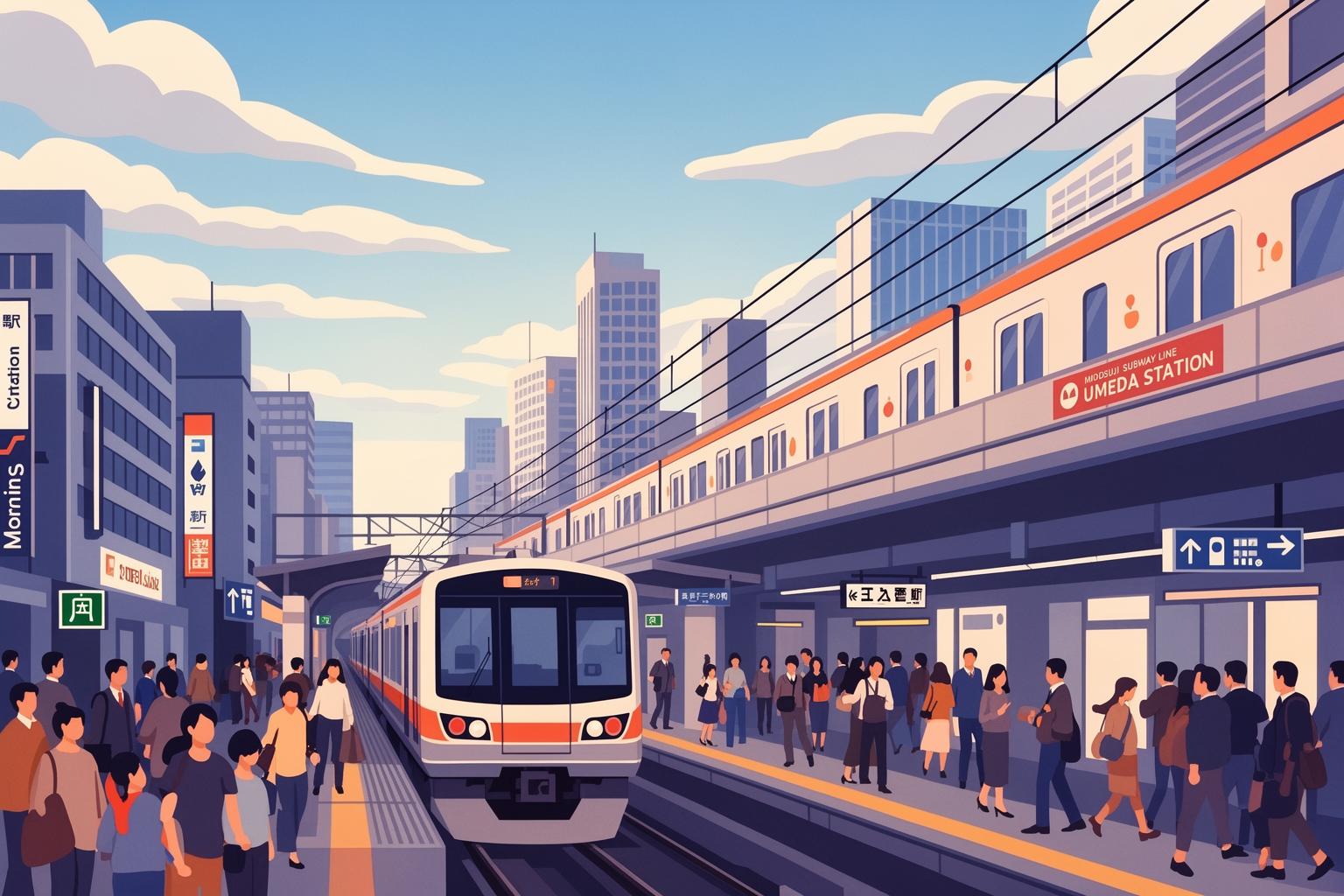
The day begins in a place best described as a concrete labyrinth, a multi-layered transit universe known as Umeda. This is more than just a station; it’s an expansive underground city. Here, the JR lines, the private Hankyu and Hanshin railways, and several subway lines intersect in a beautifully orchestrated chaos. At 7:30 AM, the show is in full swing. The first thing that overwhelms you is the sound. It’s not a noise storm, but a complex, layered symphony. There’s the rhythmic click-clack of thousands of leather-soled shoes on polished floors, resembling an unyielding, advancing army of professionals. Above this percussive base, the melodic jingles announce train arrivals, each line with its own distinct tune—the Midosuji Line’s being a cheerful, upbeat melody that contrasts with the intensity of what’s to come. Then come the disembodied voices of station announcements, calm and clear, calmly stating destinations and platform numbers in a soothing rhythm. The beeping of countless ticket gates adds a high-frequency counterpoint, each beep confirming another commuter joining the river of travelers.
The air is thick with purpose. It carries the faint, comforting aroma of brewing coffee from tiny station kiosks, mingled with the fresh-laundry scent from starched shirts of salarymen and a subtle hint of perfume from office ladies. The visual scene is equally overwhelming. Rivers of people move with a shared, unspoken understanding of the unwritten rules. They walk briskly, always sticking to the left side of the wide corridors, creating invisible lanes of traffic flowing with breathtaking efficiency. No one bumps into another. It’s a dance of avoidance, a collective awareness enabling thousands to navigate a confined space seamlessly. The crowd is a sea of dark suits and white shirts, the unofficial corporate uniform of Japan. Scattered among them are students in crisp school uniforms, their youthful chatter sharply contrasting with the focused silence of the adults. Then there are the tourists, noticeable by their large backpacks and the bewildered yet amazed expressions as they consult maps, temporarily becoming small, stationary islands amid the rushing human tide.
Following the clear, color-coded signs for the Midosuji Line—a comforting crimson red—you descend further. The platforms are long and wide, but feel impossibly crowded. People don’t cluster randomly; they form neat, orderly lines at exact spots on the platform, perfectly matching where the train doors will open. This is not a mere suggestion; it is an unbreakable social pact. Anticipation builds as the digital sign signals the train’s approach. A gust of wind sweeps through the tunnel, heralding the arrival of the beast. Then it appears: a flash of brilliant red, the Midosuji Line train, gliding into the station with a smooth, powerful hiss. The doors slide open, and the symphony hits its first crescendo. The moment to board has arrived.
The Crimson Serpent: Boarding the Beast
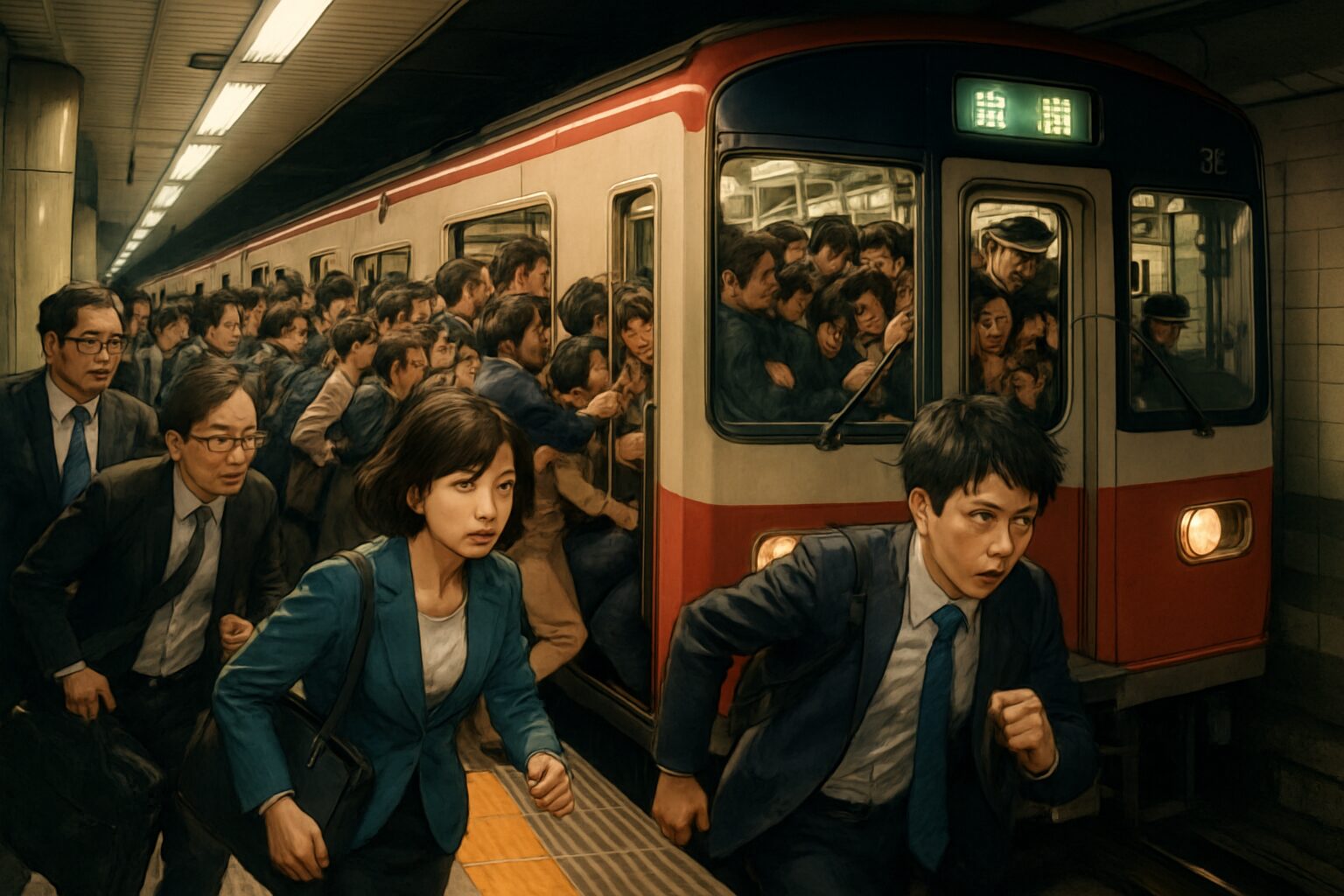
Boarding a rush-hour train on the Midosuji Line is an art, a blend of physics and social etiquette. As the doors open, a brief pause occurs. Passengers inside must first disembark, flowing out in a concentrated stream while the crowd on the platform parts like the Red Sea, forming a clear path for exit. It is a moment of spontaneous, unspoken cooperation. Once the last person has stepped off, the flow reverses. The lines on the platform start to advance—not in frantic pushing, but in a steady, relentless motion. Unlike the aggressive shoving often reported on Tokyo’s busiest lines, Osaka’s approach is a collective, full-body shuffle. You move with the crowd, becoming a single unit within a larger organism.
Your objective is to find any available space. You slip past those standing near the doors, softly murmuring “sumimasen” (excuse me), and head inward. Though the train appears completely packed from outside, it somehow manages to accommodate more passengers. You learn to shrink yourself, hold your bag in front or place it on the overhead rack if within reach. Shoulder-to-shoulder and back-to-back with strangers, there exists a peculiar sense of polite intimacy. No one makes eye contact; the unspoken rule is to retreat into your own mental bubble, a sanctuary when physical space is absent. The smartphone becomes the tool for maintaining sanity—nearly everyone is fixated on a glowing screen, reading news, playing games, or replying to messages. The train car is a moving library of silent focus.
The sensory experience inside is intense. The body heat of hundreds quickly warms the air-conditioned car. Outside noises fade away, replaced by the rhythmic clatter of the tracks and the soft hum of ventilation. The train becomes a sealed capsule, a temporary world with its own atmosphere and rules. Advertisements hang from the ceiling, promoting everything from canned coffee to English conversation schools, gently swaying with the train’s motion. Small digital screens above the doors show the next station in Japanese and English, providing reassuring guidance. As the train jerks forward and descends into the tunnel’s darkness, the window reflections reveal a hundred stoic faces, each absorbed in their own thoughts, partaking in this shared daily ritual. It is a moment of deep unity and profound solitude, simultaneously.
A Journey Through the Heart of Osaka
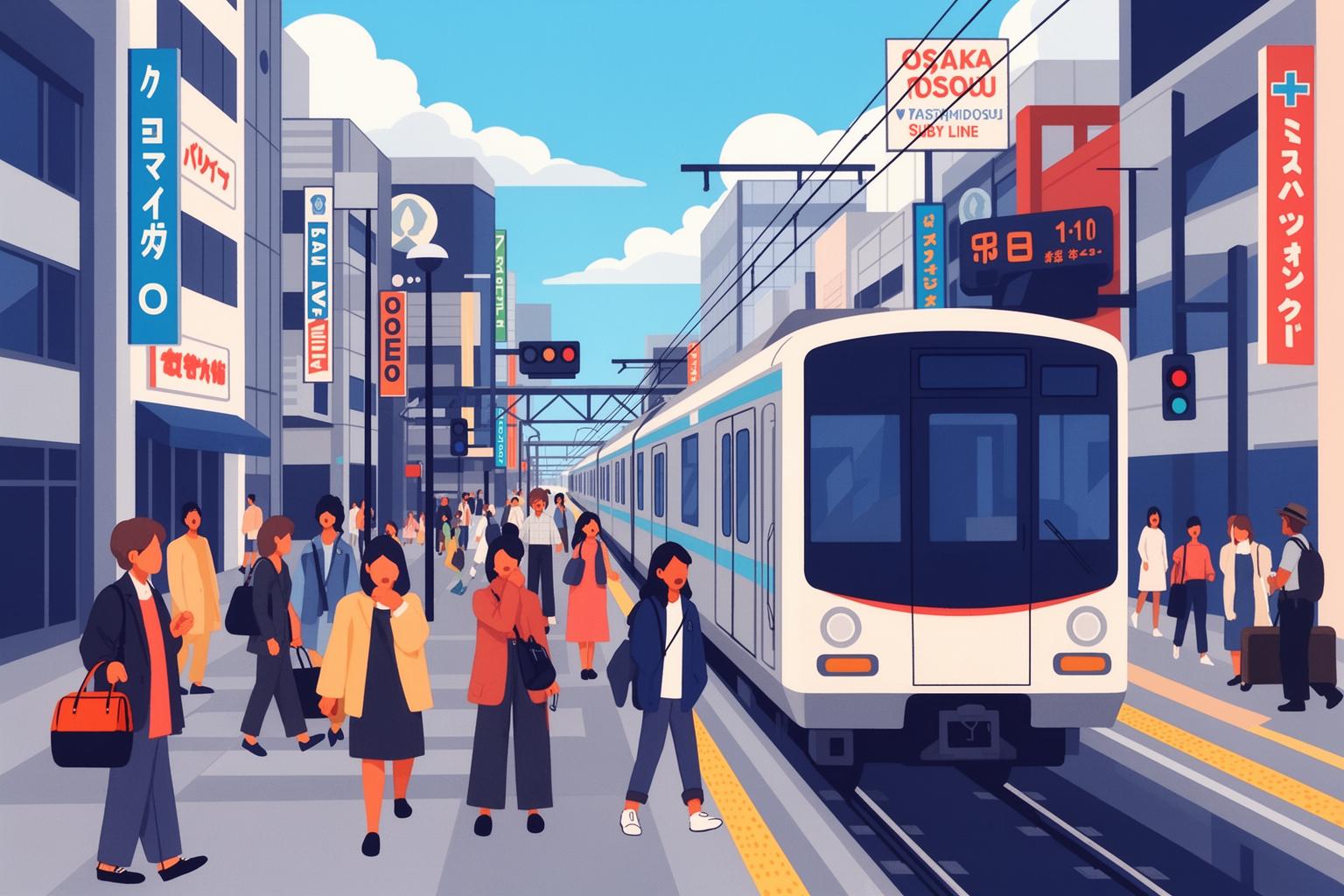
Traveling south on the Midosuji Line from Umeda offers a snapshot of Osaka itself. Each station reveals a distinct aspect of the city’s character, and you can sense the shifting vibe of the passengers as you move along. It’s a moving story of urban life.
The first stop after Umeda is Yodoyabashi. The name alone sounds dignified, and rightly so. This is Osaka’s traditional financial district. When the doors open, many dark-suited professionals exit with practiced precision, replaced by a new crowd, though the overall density eases slightly. Yodoyabashi station exudes a classic elegance, featuring beautiful chandeliers and architecture reminiscent of a bygone era. Situated on the banks of the Tosabori River, nearby landmarks include Osaka City Hall and the Bank of Japan. It stands as the hub of old money and corporate influence.
Next is Hommachi, the city’s central business district—a grid of office buildings and corporate headquarters. Even more commuters disembark here. Hommachi station serves as a major interchange, linking the Midosuji Line with the Chuo and Yotsubashi lines, making it a vital hub for workers. The atmosphere is strictly business. The surrounding shops and restaurants cater to the office crowd, featuring quick lunch spots and after-work izakayas. Stopping at Hommachi, you truly sense you’re in the heart of Osaka’s economy.
A few minutes later, the train arrives at Shinsaibashi, and the mood shifts dramatically. The corporate formality begins to dissolve. Shinsaibashi marks the entrance to Osaka’s premier shopping and fashion district. The passengers here are younger and more stylish. You notice more colorful clothing and creative hairstyles. Where once there was a sea of dark suits, now splashes of bright hues from retail workers, designers, and shoppers stand out. Shinsaibashi station feels modern and lively, mirroring the vibrant commerce above, with its endless covered shopping arcade, luxury boutiques, and the trendy Amerikamura area just a short walk away. The train, which had thinned during the business stops, fills up again, this time with the vibrant energy of leisure and consumption.
Finally, you reach Namba, the peak of the journey through central Osaka. Namba is the core of “Minami” (the South), the city’s main entertainment and nightlife district. The station is a sprawling, bustling complex connecting the subway, Nankai, and Kintetsu railways. When the doors open at Namba, it feels as if the entire city is boarding or disembarking. The energy is electric. Here, tourists, shoppers, theater-goers, and food lovers converge. The air hums with excitement—the neon glow of Dotonbori, comedy shows at the Namba Grand Kagetsu theater, and countless restaurants and bars. Passengers form a true melting pot: families bound for the aquarium, young people heading to concerts, travelers with suitcases catching the airport train on the Nankai line. Exiting the train at Namba is like being launched into the noisy, dazzling, and utterly intoxicating heart of Osaka.
The Unspoken Etiquette of the Osaka Commute
Navigating the Midosuji rush hour involves more than just physical endurance; it requires understanding a complex and deeply ingrained set of social norms. This unspoken etiquette enables the system to operate smoothly, transforming an otherwise stressful experience into a model of collective civility. Learning these rules will not only make your trip more comfortable but will also earn you the quiet respect of your fellow commuters.
First and foremost is the importance of silence, especially regarding mobile phones. Making or receiving calls on a crowded train is one of the greatest social blunders you can make. The train car is a public space, and your conversation is considered intrusive. Everyone is expected to set their phones to “manner mode” (silent mode), and signs reminding passengers of this are everywhere. Texting, browsing the internet, or playing games with the sound off is perfectly acceptable—in fact, it is a national commuting pastime. However, your voice should remain unheard. If a call is truly urgent, the accepted practice is to ignore it or send a quick text saying you will call back, then wait until you exit at your station.
Next is the management of personal belongings. In such a confined area where every inch counts, your bags are your responsibility. For those wearing backpacks, the standard practice is to take them off and hold them in front, place them by your feet, or put them on the overhead luggage rack. This simple gesture prevents accidentally bumping into others and creates a surprising amount of extra space. Similarly, large shopping bags or briefcases should be kept close and low, not protruding into the aisle. It’s all about minimizing your footprint and being considerate of those around you.
Eating and drinking are generally discouraged. While a quick, discreet sip of water or tea from a bottle is usually acceptable, unwrapping a sandwich or anything with a strong smell is a major no-no. The aromas can be overpowering in such a confined space. The goal is to be as unobtrusive as possible, which extends to your scent presence. The exception may be the Shinkansen (bullet train), but on a local subway, it’s best to wait until you reach your destination.
Finally, there is the matter of seating, especially the designated priority seats, often called “silver seats” due to their distinct color. These are reserved for the elderly, passengers with disabilities, pregnant women, and those with small children. While anyone can sit there when they are empty, it is a firm expectation that you give up your seat immediately if someone in need boards. In fact, many able-bodied young people avoid these seats entirely, even when vacant, as a sign of respect. This quiet consideration is a key aspect of Japanese public etiquette and is a beautiful sight to witness.
The Evening Crescendo: The Journey Home
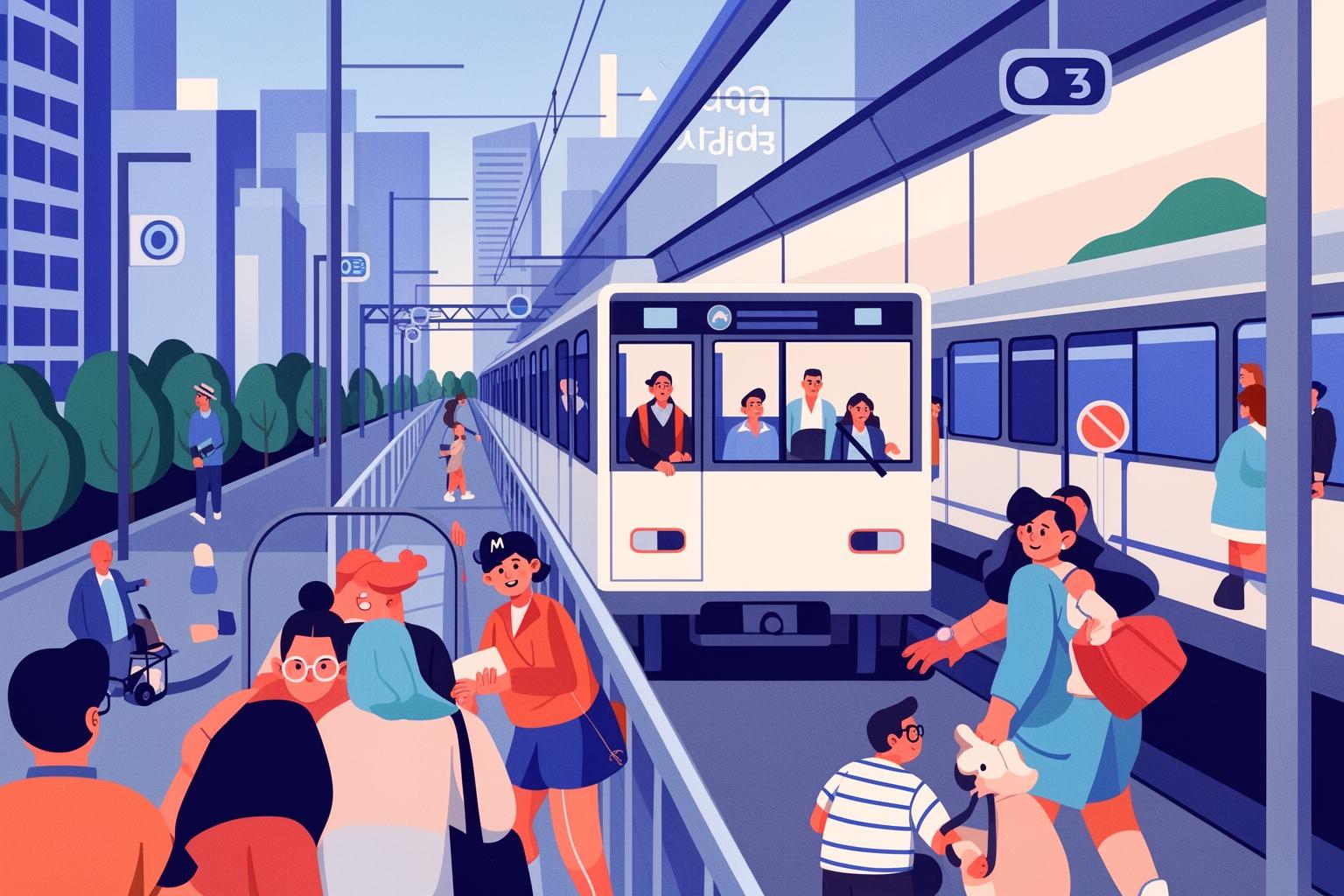
The evening rush hour, usually occurring between 5:30 PM and 7:30 PM, mirrors the morning commute but with a distinctly different atmosphere. Trains are equally crowded, and platform lines just as long, yet the collective mood has shifted. The sharp, focused energy of the morning gives way to a city-wide sigh of fatigue and release. The journey home serves as a decompression chamber for the city’s workforce.
Boarding the northbound train at Namba or Shinsaibashi in the evening places you among a crowd no longer simply traveling from home to work. Instead, they are moving from work to… everywhere else. Some are making the long trip back to homes in the northern suburbs, while others are just starting their night—meeting friends for dinner in Umeda, heading to an izakaya for drinks with colleagues, or shopping before returning home. The train becomes a vessel of transition, carrying people from their professional roles into their personal lives.
The sensory landscape inside the car shifts as well. The smell of morning coffee is replaced by the faint, appetizing aroma of food. Someone might be carrying a box of takoyaki or a bag from a department store food hall, its savory scent offering a tempting preview of dinner. The advertisements, once generic in the morning, now hold fresh relevance. Ads for beer and highballs seem to call out directly to weary salarymen, promising a cold, refreshing reward after a long day. Digital screens, aside from station information, might flash promotions for nearby restaurants or evening events.
The human element changes too. While many still retreat into their smartphones, the atmosphere feels a bit more relaxed. You might observe colleagues chatting quietly about their day or friends planning their weekend. The stoic expressions of the morning commute soften slightly at the edges. A shared feeling of accomplishment fills the air, having made it through another day. The journey no longer feels like a battle charge but more like a collective retreat.
As the train nears Umeda, the energy rises again. Umeda in the evening is a dazzling world of light, food, and entertainment. Disembarking here feels like stepping onto a stage. The station’s vast underground arcades buzz with life, filled with restaurants, bars, and shops thriving in the evening rush. The evening rush hour is not just an end; it’s also a beginning—an energizing current that sweeps the city’s population from their offices into the vibrant, welcoming embrace of Osaka at night.
Beyond the Rush: Midosuji on a Weekend
To genuinely appreciate the multifaceted character of the Midosuji Line, you need to experience it beyond the weekday rush. On a Saturday or Sunday, the crimson serpent undergoes a transformation. It sheds its corporate armor and adopts a more relaxed, festive guise. The line remains the city’s main artery, but instead of transporting workers to their offices, it now carries life, leisure, and laughter throughout the city.
The most noticeable change is the sound. The intense silence of weekday commutes is replaced by a lively hum of conversation. Families share their plans for the day, with children’s excited chatter adding a cheerful, bright layer to the soundscape. Couples sit side-by-side, chatting and laughing as they head to a movie in Namba or a shopping trip in Shinsaibashi. Groups of friends, dressed in their weekend finest, arrange their meeting points and debate lunch spots. The train car is no longer a quiet library; it’s a moving community lounge.
The passenger demographic shifts completely as well. The sea of dark suits disappears, replaced by a colorful array of casual attire. Families with strollers, tourists flipping through guidebooks in awe, and university students on their way to meet friends fill the cars. The pace slows down, more relaxed. People take their time boarding and exiting the train. There’s no urgency, no looming deadline. The journey itself becomes part of the weekend enjoyment, not merely a means to an end.
Each station’s role seems to change too. Umeda ceases to be just a business district and instead becomes an entrance to huge department stores like Hankyu and Daimaru, as well as the trendy shops at Grand Front Osaka. Shinsaibashi and Namba, already shopping hubs, see their vibrancy multiply tenfold, with passengers carrying shopping bags filling every car. Even Tennoji takes on a new character. While it serves as a busy commuter hub during the week, weekends transform it into the starting point for family outings to Tennoji Zoo, visits to the historic Shitennoji Temple, or trips up to the observation deck of the towering Abeno Harukas skyscraper. The Midosuji Line on weekends is a tribute to Osaka’s reputation as a city that works hard and plays harder. It offers a joyful, vibrant experience that highlights the city’s lively, energetic spirit.
A Lifeline Cast in Concrete and Steel: The Line’s Legacy
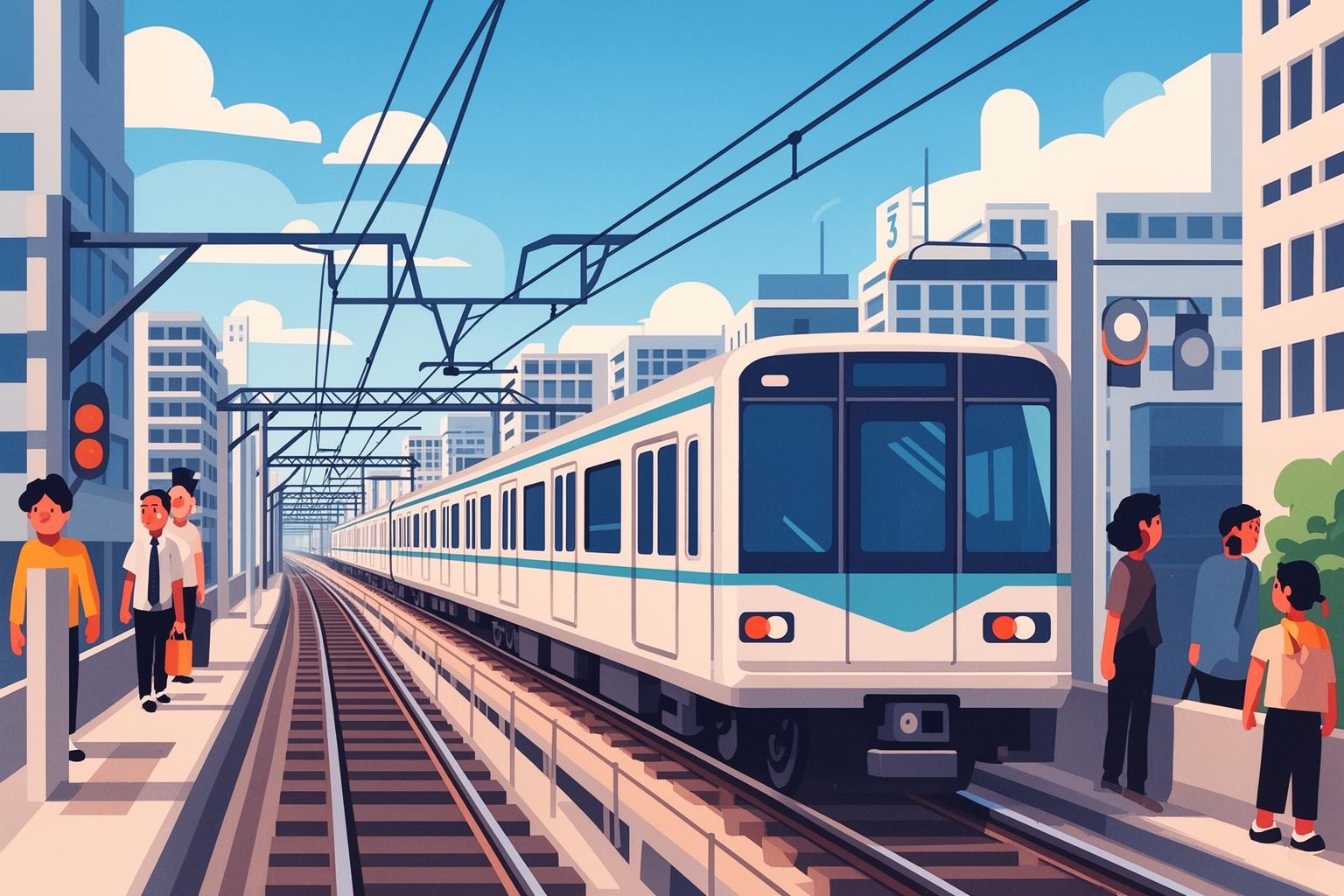
Riding the Midosuji Line is like traveling through history. This is not merely a subway line; it was Osaka’s first, a monumental project symbolizing the city’s ambition and modernity in the early 20th century. When it opened in 1933, the initial section connected Umeda to Shinsaibashi. It was a marvel of engineering and design, a bold statement from a city that viewed itself as a powerhouse of industry and culture—the so-called “Manchester of the Orient.”
The creators of the Midosuji Line aimed not only to build a functional transport system but also to create something beautiful and a source of pride for the citizens of “Great Osaka.” This vision remains evident today in the architecture of the original stations. Look up at the ceilings in Umeda, Yodoyabashi, or Shinsaibashi stations, and you’ll see magnificent high-vaulted arches supported by grand pillars. They evoke the grandeur of European cathedrals or classic American train depots. The generous use of tiling, elegant lighting fixtures, and the immense scale of these underground halls were designed to inspire awe and civic pride. Built to last, they stand as a testament to an era of remarkable optimism and forward-thinking urban planning.
The line’s name itself is deeply connected to the city above, running directly beneath Midosuji Avenue, Osaka’s grand central boulevard. This wide, stately street is famous for its stunning rows of ginkgo trees, which turn a brilliant shade of gold each autumn, creating a breathtaking canopy of color. There is a beautiful symmetry in this: as the golden leaves fall above, the crimson trains continue their ceaseless journey below in darkness. The subway line and the boulevard are two parts of one entity—a vital artery defining the layout and character of central Osaka. The Midosuji Line is more than just a convenience; it is living history, a foundational element of the city’s identity, whose rhythmic pulse has propelled Osaka forward for nearly a century.
Tips for the Intrepid Commuter
For a first-time visitor, diving into the Midosuji rush hour can seem a little intimidating. However, with a few essential tips, you can navigate it like an experienced local. Think of it as a game, where understanding the rules makes all the difference.
Timing is Crucial: This is the key rule. The morning rush hour typically peaks between 7:30 AM and 9:00 AM, while the evening rush is more spread out from 5:30 PM to 7:30 PM. If your schedule allows, try to travel just outside these times. Even shifting your trip by 30 minutes can mean the difference between being squeezed in like a sardine and having enough space to breathe. If you must travel during peak hours, be mentally ready for the crowd.
Get to Know the IC Card: Avoid the hassle of handling cash and tickets. Obtain an IC card such as ICOCA (the local Kansai version) or use your Suica or Pasmo from Tokyo. These rechargeable smart cards are your gateway to the city. Simply tap the card on the reader at the ticket gate to enter and tap again to exit. This makes the whole process smooth and quick, letting you blend seamlessly with local commuters.
Familiarize Yourself with Your Car and Exit: The trains are long, and stations are extensive. A bit of planning pays off. Before your trip, use an app like Google Maps to find out which train car is nearest to the stairs, escalator, or your desired exit at the destination station. This can save you from a long walk on crowded platforms. Also, during weekday peak hours, the Midosuji Line (like many others in Japan) offers women-only cars, clearly marked on both the platform and train, so keep an eye out for those signs.
Go with the Flow: The most important advice is to stay calm and move along with the crowd. Don’t resist the current. When walking through the station, keep to the left. When waiting for the train, line up in an orderly queue. Upon the train’s arrival, let passengers exit before boarding. Staying aware of your surroundings and following the lead of those around you will make the process surprisingly smooth and efficient. The system functions well because everyone adheres to the same unwritten rules.
The Rhythm of the City
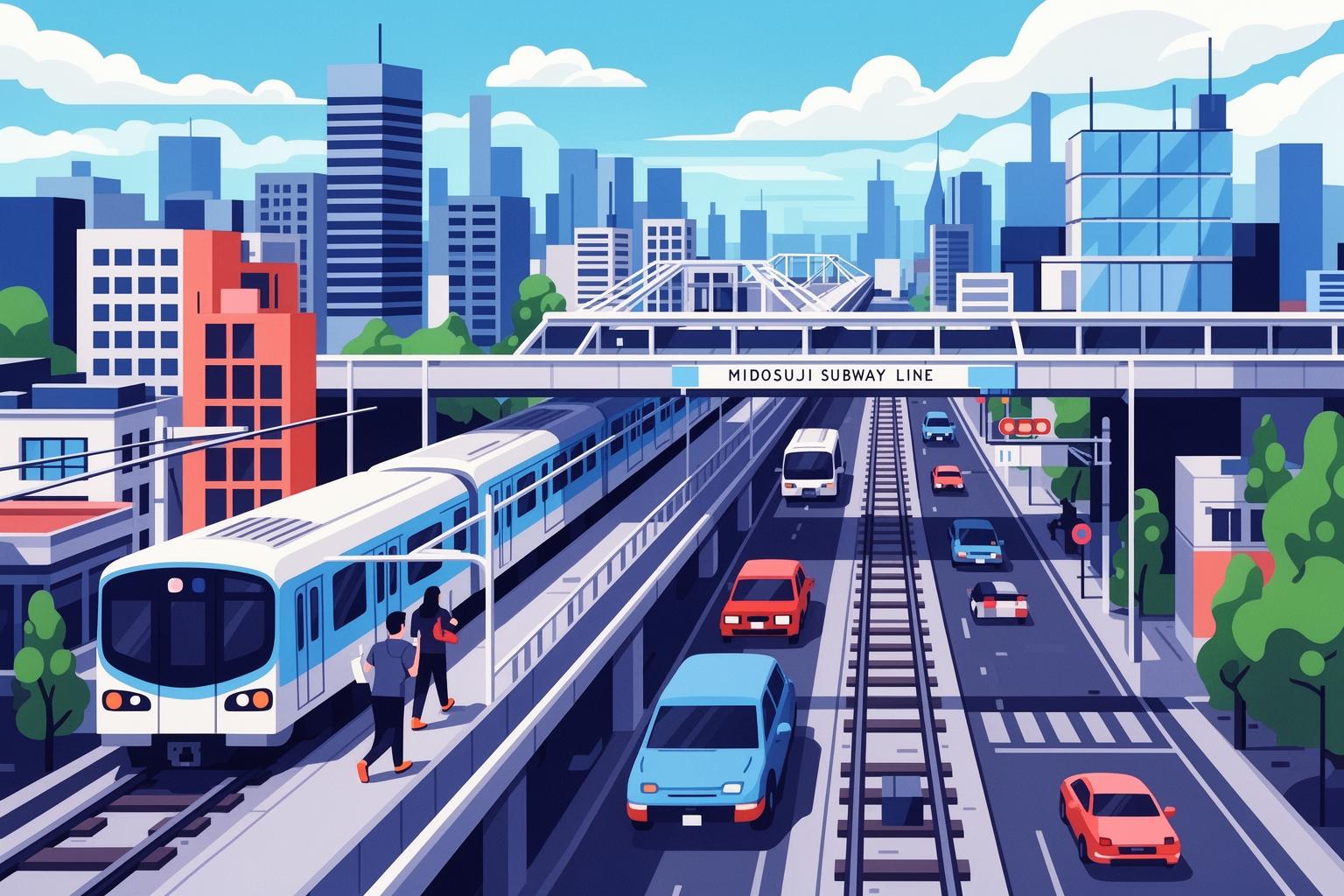
The Midosuji Line’s rush hour is more than a mere commute. It is a daily ballet, a stunning display of organized chaos and collective discipline. It represents the city’s heartbeat, both audible and visible. To experience it is to tap directly into the energy source of Osaka. In the morning, you sense the city’s ambition, its drive, and the collective energy of millions setting out to build, create, and innovate. In the evening, you feel its release, the shift from work to leisure, accompanied by the promise of delicious food and lively nightlife. Each journey tells a story, with the train cars serving as theaters where countless small, personal dramas unfold in shared silence. Though it may seem overwhelming at first, a closer look reveals profound beauty in its efficiency, quiet dignity among its participants, and a powerful rhythm that binds the entire metropolis together. So, next time you’re in Osaka, don’t just use the subway to get around. Ride it. Feel it. Become part of its relentless, rhythmic, and deeply human flow. It is, in its own way, one of the most genuine and memorable cultural experiences this remarkable city offers.