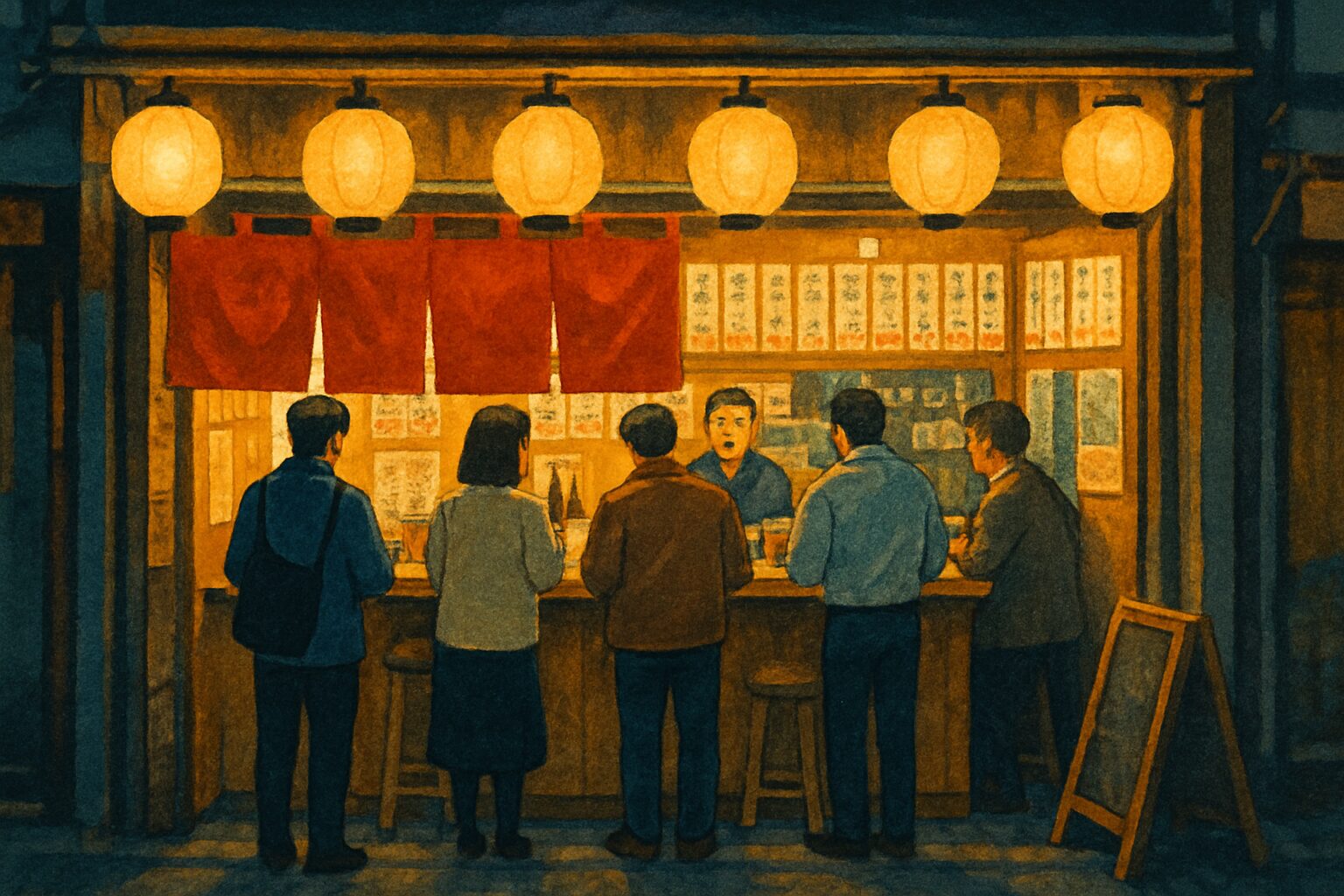
Step off the bustling, neon-drenched streets of Osaka, push aside a well-worn noren curtain, and you’ll find yourself in a world that feels both wonderfully chaotic and intimately welcoming. The air is thick with the savory smoke of grilled skewers and the sweet, malty aroma of draft beer. Laughter erupts in sharp bursts, punctuated by the rhythmic clinking of glasses and the steady hum of a dozen conversations packed into a space no bigger than a living room. There are no chairs. There are no tables in the traditional sense. There is only a long wooden counter, worn smooth by countless elbows, and a vibrant tapestry of people standing shoulder-to-shoulder, sharing stories, drinks, and a moment of genuine connection. This, my friends, is the soul of Osaka’s social scene: the tachinomi, or standing bar. It’s more than a place for a quick drink after work; it’s a cultural institution, a communal hearth where the city’s famously friendly spirit comes alive. For any foreigner looking to truly understand Osaka, to move beyond the tourist trails and connect with the real heartbeat of the city, the tachinomi is not just a destination—it’s an essential experience. It’s where barriers dissolve, where a shared plate of doteyaki can bridge any language gap, and where you’ll find that making friends in this incredible city is easier and more rewarding than you could ever imagine.
If you’re looking for another unique way to connect with locals through food, consider exploring the vibrant social dining scene in Osaka’s Tsuruhashi Koreatown.
The Heartbeat of Osaka’s Social Scene – What is a Tachinomi?
To truly grasp the essence of a tachinomi, you must first understand its philosophy. The word itself is beautifully simple: tachi (立つ) means to stand, and nomi (飲み) means to drink—a standing bar. But this literal translation only begins to hint at its cultural significance. The tachinomi is not a recent trend born from the desire for minimalist, trendy spaces. Its origins run deep within the fabric of Japanese urban life, especially from the Showa era (1926-1989), a time of rapid economic growth and societal transformation. These establishments emerged as straightforward, no-frills spots often clustered near train stations, created to serve salarymen (office workers) a quick, affordable drink and bite before their long commutes home. The standing format was purely practical: it maximized capacity in small, high-rent spaces and encouraged swift turnover. Patrons would come in, enjoy a drink or two, a few skewers, and then be on their way. It was efficient, economical, and perfectly suited to the fast-paced lifestyle of city workers.
However, what started as a practical solution evolved into a distinctive social ecosystem. The very act of standing, of foregoing the comfort and personal space offered by a chair and table, changes the social dynamic fundamentally. When seated, you are anchored. You occupy your own defined space, often facing only those you came with, with conversation confined to your group. In a tachinomi, you are fluid. You become part of a constantly shifting, organic collective. The absence of physical barriers encourages a breakdown of social barriers. Personal space naturally overlaps with the person beside you, making casual remarks or shared glances not intrusive but natural, even expected interactions. This is the magic of the tachinomi. Whether by design or chance, it promotes mingling. It cultivates a sense of fleeting community—a temporary camaraderie among strangers united by simple pleasures.
The atmosphere is a sensory symphony. Close your eyes, and you can almost conjure the scene: the hiss and sizzle from the grill behind the counter, where the taisho (master) deftly flips skewers of chicken and green onion; the low, rhythmic thud of a knife on a well-worn cutting board; the cheerful, almost singsong call of “Irasshaimase!” (Welcome!) as the noren curtain parts for a new guest. The air is a rich tapestry of scents—the deep, savory aroma of miso-stewed beef tendon (doteyaki), the fresh, sharp scent of grated daikon, the smoky perfume of grilled fish—all mingling with the yeasty notes of draft beer and the faint, sweet scent of sake. The visual landscape is equally captivating. Walls are often covered with handwritten menus on strips of yellowed paper, their calligraphy reflecting years of daily specials. Bottles of sake, shochu, and whiskey line the shelves like a library of libations. The counter itself serves as a stage, displaying glistening blocks of sashimi, vibrant piles of edamame, and enormous pots of simmering oden, their contents veiled in delicious steam. It’s a space that feels lived-in, authentic, and utterly unpretentious.
Cracking the Code: The Unwritten Rules of Tachinomi Etiquette
Entering this vibrant chaos for the first time can be daunting. The space feels crowded, the language unfamiliar, and everyone appears to know exactly what they’re doing. But don’t worry. The etiquette of the tachinomi is less about strict rules and more about a dance of communal courtesy. Mastering a few simple steps will not only help you feel more at ease but also show the locals that you respect the culture, opening the door to friendly interactions.
Your journey starts at the entrance. Take a moment to observe the scene. Unlike a sit-down restaurant, you don’t wait to be guided to a spot. You need to find your own small piece of counter space. Look for a gap between patrons. It might seem impossibly small, but you’ll be surprised how people naturally make room. As you approach a potential spot, make eye contact with the person you’ll be standing beside and offer a slight nod or a quiet “Sumimasen” (Excuse me). This simple gesture acknowledges their space and politely requests entry. If the bar is truly full, catch the eye of the staff and ask, “Haitte mo ii desu ka?” (Is it okay to come in?). They’ll either find a spot for you or let you know if it’s packed.
Once you’ve secured your spot, it’s time to order. This is often where newcomers hesitate. Don’t. The process is usually straightforward. Get the staff’s attention with a polite “Sumimasen” and a raised hand. Start with a drink. The usual opening phrase is “Toriaezu, nama hitotsu” (For now, one draft beer). This gives you time to glance over the menu and get your bearings. Menus are often entirely in Japanese and handwritten, which can be challenging. But see this as an opportunity, not a hurdle. Don’t hesitate to point at what the person next to you is having and say, “Are, kudasai” (That one, please). It’s a great icebreaker. You can also ask for recommendations: “Osusume wa nan desu ka?” (What do you recommend?). The staff and fellow customers are usually happy to guide you to the day’s best choices.
Payment methods vary, adding another layer to the experience. The most traditional is kyasshu-on (cash-on-delivery), where you place money in a small tray or bowl in front of you. Each time you order, staff take the exact amount and return the change. This keeps things simple and efficient. Other bars run a tab, with staff keeping a mental or written note of your orders to pay at the end. Some use a token system. Regardless of the method, one rule is golden: cash is king. While some modern tachinomi accept cards, most are cash-only. Always bring enough cash, including small bills and coins, to avoid awkward fumbling when paying.
Personal space is the final piece of the etiquette puzzle. In a packed tachinomi, it’s precious. Be mindful of your belongings. If you have a large bag or coat, find a designated hook or shelf, or tuck it neatly at your feet. Avoid spreading out. Your domain is the small patch of counter directly in front of you. When you need to move, do so carefully, with a quiet “Sumimasen” as you squeeze past. It’s a delicate dance of closeness and respect. You’re sharing an intimate space with strangers, and this shared vulnerability is what makes the tachinomi such a powerful social catalyst. When you’re ready to leave, catch the staff’s attention and say, “Okaikei onegaishimasu” (The bill, please). After paying, a heartfelt “Gochisousama deshita!” (Thank you for the meal!) is the perfect way to show gratitude to the staff. It’s a sign of respect that is always appreciated and remembered if you return, which, after your first successful tachinomi experience, you most certainly will.
The Art of Conversation: From Silent Sipping to Shared Stories
Here lies the true reward of the tachinomi experience: connection. In a world increasingly digital and disconnected, the tachinomi serves as a stronghold of face-to-face human interaction. But how do you move from being a quiet observer to an active participant, especially when a language barrier may loom? The key is understanding that in Osaka, the invitation to connect is almost always extended. The famously friendly and outgoing nature of Osakans, combined with the close quarters of a standing bar, creates the perfect setting for connection to flourish.
Proximity itself is your greatest asset. You don’t need a witty opening line or a grand gesture. Simple exchanges can easily develop into memorable conversations. Begin with your immediate surroundings. Spot someone enjoying an appealing dish? Lean in slightly and ask with a curious smile, “Sumimasen, sore wa nan desu ka? Oishii desu ka?” (Excuse me, what is that? Is it delicious?). This is a universally welcomed question. People love sharing their knowledge and favorite dishes. Often, they will not only tell you what it is but might even offer you a small taste. Accept graciously. This is the currency of the tachinomi—small acts of generosity that build instant rapport.
Requesting recommendations is another golden opportunity. Turn to the person beside you, gesture vaguely to the menu or sake bottles, and ask, “Nani ga oishii desu ka?” (What’s delicious here?). This shows humility and genuine interest in the local culture. You’re not just a tourist checking a box; you’re someone seeking a true experience. This openness is very endearing and often leads local regulars to take you under their wing, ordering for you and explaining the subtleties of each dish and drink. Suddenly, you’re no longer just a customer; you become a guest.
Embrace the unique spirit of Osaka. Unlike the more reserved atmosphere you might find in Tokyo, Osakans thrive on banter, humor, and friendly teasing. They enjoy a good laugh and are intensely curious. Expect questions such as “Doko kara kimashita ka?” (Where are you from?), “Nihon wa nagai desu ka?” (Have you been in Japan for a long time?), and “Nande Osaka ni?” (Why Osaka?). Respond with enthusiasm and a smile. Don’t worry about grammatical errors. Your effort to communicate in Japanese, however basic, will be met with warmth and encouragement. A simple vocabulary of food and drink words, combined with expressive gestures and a positive attitude, can carry you through the evening. If you have a translation app on your phone, don’t hesitate to use it. It can be a fun way to bridge more complex ideas and often brings shared laughter as you navigate machine translation quirks.
It’s also essential to be a good listener and observer. Pay attention to the flow of the bar. Notice how groups interact and how regulars banter with the taisho. If the person beside you appears quiet and absorbed in their drink, respect their space. But if they make eye contact, offer a nod, or seem open, seize the chance. The concept of ichi-go ichi-e (一期一会), meaning “one time, one meeting,” is deeply rooted in Japanese culture. It emphasizes that every encounter is unique and will never occur the same way again. The tachinomi is a living expression of this philosophy. The person you stand next to for an hour, sharing stories over beer and yakitori, you may never see again. This makes the moment precious, free from future expectations. It’s an opportunity to connect purely in the present, to share a small piece of your life with a stranger and, in doing so, feel a little less alone in a new city.
Navigating the Labyrinth: Where to Find Osaka’s Best Tachinomi Scenes
Osaka is a sprawling metropolis, with its tachinomi scattered like hidden gems throughout its lively neighborhoods. While you can find a standing bar on nearly every corner in the city, certain areas have become renowned for their density and quality of establishments. Exploring these districts is an adventure in itself—a delightful treasure hunt where each stop offers a new flavor and a different crowd.
Tenma: If there’s a spiritual home for tachinomi culture in Osaka, it’s undoubtedly Tenma. Located north of the city center, this area is a sprawling, intoxicating maze of covered shopping arcades (shotengai) and narrow alleys packed with an impressive concentration of bars and eateries. The energy here is electric. Begin your exploration near JR Tenma Station. The streets extending from the station, especially the long stretch of the Tenjinbashisuji Shotengai (the longest in Japan), are your prime hunting grounds. Here you’ll find everything from century-old sake bars with beautifully weathered wooden counters to modern, stylish standing spots serving craft beer and Spanish-inspired tapas. The area beneath the elevated train tracks is especially famous—a gritty, atmospheric corridor where the rumble of passing trains provides a percussive backdrop to your evening. Tenma is a realm of discovery. Wander without plans, follow the sound of laughter, and peek behind every noren curtain. You might uncover a tiny spot specializing in fresh-off-the-boat sashimi, a bustling bar devoted entirely to kushikatsu, or a quiet haven for sake enthusiasts. The crowd is a diverse mix of ages and backgrounds, making it an incredibly dynamic and welcoming place for a solo explorer.
Namba and Ura Namba: Head south to the neon-lit core of the city, Namba. While the main streets are dominated by flashy restaurants and tourist traps, the true charm lies in the backstreets, an area fondly called Ura Namba (Back Namba). This gritty, lively maze of alleys behind the Takashimaya department store and around the Sennichimae Doguyasuji Shotengai (kitchenware street) is a haven for tachinomi aficionados. The atmosphere here is a bit more chaotic and boisterous compared to Tenma. The bars have an older, more worn-in feel and a fiercely local character. This is where you’ll find classic Showa-era standing bars that have been serving the same honest, delicious food for decades. Look for spots specializing in Osaka soul food like doteyaki and kushikatsu. The Misono Building is a notable landmark—a somewhat surreal, multi-story building filled with tiny, quirky bars, many of them tachinomi. Ura Namba is loud, crowded, and unapologetically Osakan. It’s the perfect place to dive headfirst into the city’s vibrant nightlife culture.
Kyobashi: For a genuinely local, off-the-beaten-path experience, head east to Kyobashi. This major transit hub is a salaryman’s paradise, and its tachinomi scene reflects that. The area is a little rougher around the edges than Tenma and less touristy than Namba, offering a raw and authentic glimpse into the daily life of working Osakans. The standing bars cluster in a compact, atmospheric network of alleys near the station. They are often tiny, practical, and incredibly affordable. This is the spot to witness the post-work ritual at its purest: workers loosening their ties, ordering their usual beer and a few quick snacks, airing their grievances from the day, and sharing laughs with colleagues or the bar master. As a foreigner, you might stand out more here, often sparking even friendlier and more curious interactions. If you want to experience the unfiltered, everyday charm of Osaka’s drinking culture, Kyobashi is a must-visit.
Shinsekai: No guide to Osaka’s drinking culture would be complete without Shinsekai. This neighborhood, with its iconic Tsutenkaku Tower, feels like a time capsule from the mid-20th century. The atmosphere is nostalgic, a bit quirky, and utterly unique. Shinsekai reigns supreme as the kingdom of kushikatsu, the deep-fried skewers that are one of Osaka’s most famous culinary exports. Dozens of restaurants, many with standing-only sections, line the streets—each boasting its own secret batter recipe and house sauce. The cardinal rule here, loudly posted and reminded by staff, is “Nido-zuke kinshi!” (No double-dipping!). The communal pot of thin, savory sauce is shared by all, so you dip your skewer once, and only once. The tachinomi in Shinsekai are bright, raucous, and full of character, often populated by colorful local personalities. It’s a feast for the senses and an unforgettable cultural experience.
A Taste of the Tachinomi: Must-Try Drinks and Dishes
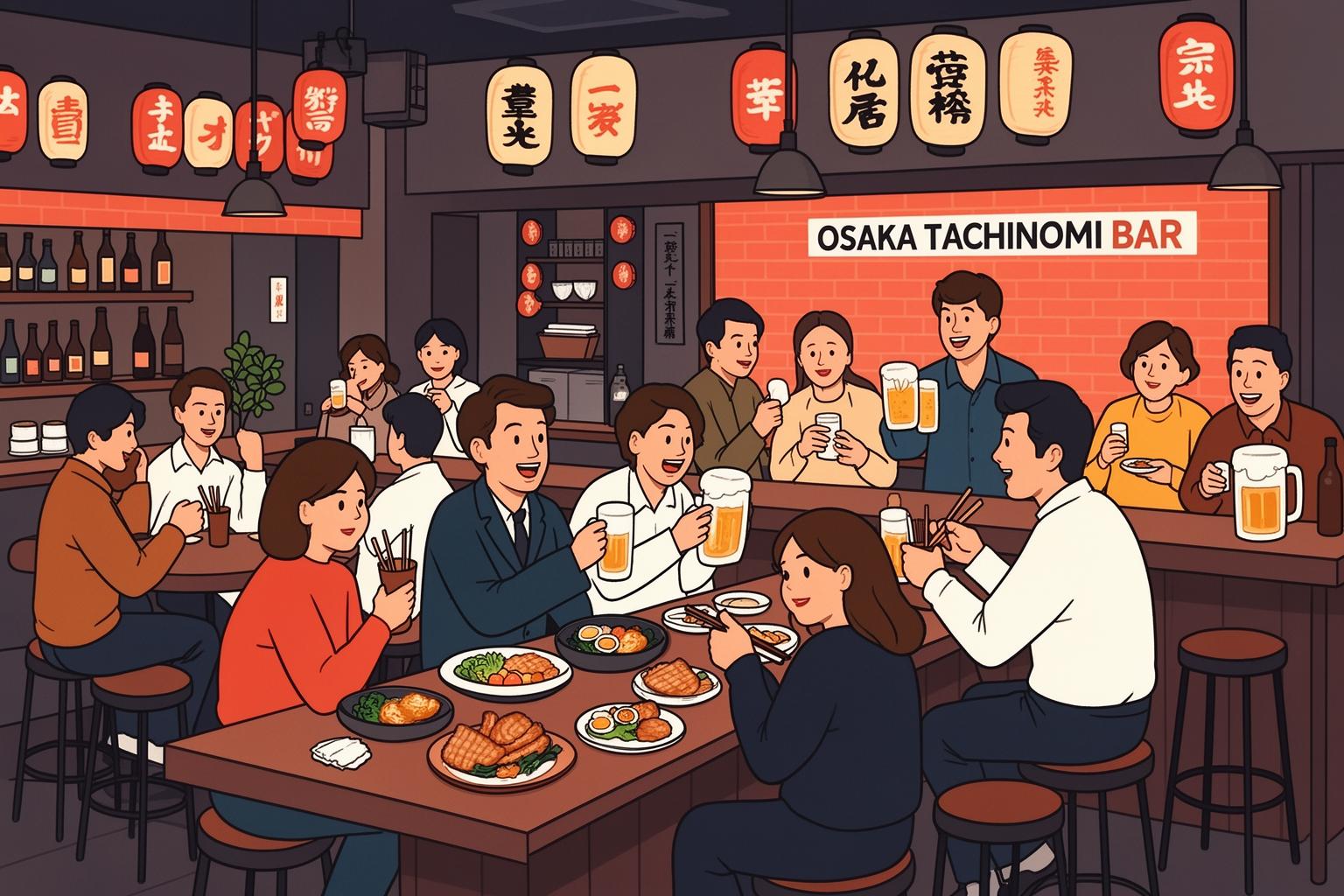
Beyond its social appeal, the tachinomi is a culinary destination. These bars serve as temples of simple, delicious, and affordable Japanese cuisine. The menus usually highlight a few specialties, prepared with precision and care. Knowing what to order can take your experience from good to sublime.
Let’s begin with drinks, the lifeblood of the tachinomi. The most common starter is the Nama Biru, a crisp, cold draft beer, typically from one of Japan’s major brewers like Asahi, Kirin, or Sapporo. There is a simple, profound pleasure in that first sip of a perfectly poured pint after a long day. Another popular choice is the Highball, a deceptively simple blend of Japanese whisky and super-carbonated soda water, served over ice in a tall glass. It’s refreshing, clean, and pairs wonderfully with the often-rich flavors of tachinomi food. For something a bit different, try a Chuhai (short for shochu highball). This is a mix of shochu (a Japanese distilled spirit), soda, and fruit flavorings. The classic is lemon chuhai, but you can find a wide range, from grapefruit and lime to more exotic flavors like yuzu or ume (Japanese plum). And, of course, there is Nihonshu, or sake. Many tachinomi pride themselves on their selection of local and regional sakes (jizake). Don’t be daunted by the options. Just tell the staff what kind of flavor profile you prefer (e.g., dry/karakuchi, sweet/amakuchi, fruity) and let them guide you. It’s a fantastic way to explore the rich and complex world of Japan’s national drink.
Moving on to the food, the solid foundation of any great tachinomi evening. One of the quintessential Osaka dishes you’ll find simmering in a large pot is Doteyaki. This is beef sinew slow-cooked for hours in a rich, sweet, and savory miso-based broth until it becomes meltingly tender. Served with a dollop of sharp Japanese mustard, it’s the ultimate comfort food and a perfect companion for a cold beer. Then there’s Kushikatsu, Osaka’s pride. These are skewers of various meats, seafood, and vegetables, coated in a light panko breadcrumb batter and deep-fried to golden perfection. From lotus root and shiitake mushrooms to pork belly and shrimp, the variety is endless. The ritual of dipping them into the communal sauce pot is an integral part of the experience.
In colder months, nothing outshines Oden. This is a one-pot dish where ingredients like daikon radish, hard-boiled eggs, konjac jelly, and fish cakes are gently simmered in a light, flavorful dashi broth. It’s warm, nourishing, and deeply satisfying. You simply point to what you want, and the master will retrieve them from the steaming pot for you. For something fresh and clean, look for sashimi. Many tachinomi, especially those in areas like Tenma, have excellent ties to local fish markets and offer incredibly fresh, high-quality raw fish at a fraction of the price you’d pay in a fancy restaurant. Lastly, don’t overlook simple, classic side dishes. A plate of bright green Edamame, a block of chilled Hiyayakko (cold tofu) topped with green onions and bonito flakes, or a scoop of Japanese Potato Salad make perfect palate cleansers and complements to your drinks. These small plates (kozara) are meant for sharing and grazing, allowing you to savor a wide variety of flavors throughout your evening.
From First-Timer to Regular: Tips for a Smooth Experience
Your initial ventures into the world of tachinomi will be a learning journey. To help ease that learning curve and turn you from a hesitant beginner into a confident visitor, keep a few important strategies in mind. First and foremost, embrace the value of going solo. Although it may seem counterintuitive, arriving alone is the best way to encourage new connections. A solo visitor is far more approachable than a couple or a group, signaling openness to interaction. It shows that you’re there not just to drink, but to soak in the atmosphere and potentially make new friends.
Timing can greatly influence your experience. The mood of a tachinomi shifts throughout the evening. Arrive early, around 5 or 6 PM on a weekday, and you’ll find yourself amid the post-work rush. The energy is lively, service is swift, and the crowd mostly comprises salarymen unwinding before heading home. This is a prime time for people-watching and experiencing the bar in its traditional role. Arrive later, around 8 or 9 PM, and the crowd may be younger, conversations more laid-back, and the ambiance suited to a longer, more leisurely visit. Weekends offer a different vibe altogether, often featuring a more diverse mix of shoppers, couples, and friends beginning their night out.
Always keep in mind that cash is king. Despite the rise of digital payments, tachinomi bars remain bastions of tradition. Arriving with a pocketful of 1000-yen bills and coins is not simply advisable; it’s essential. This makes payment smoother, whether you’re paying as you go or settling a tab, and shows respect for these small, frequently family-run establishments.
It’s also wise to pace yourself. Drinks at a tachinomi are famously affordable and easy to drink. It can be tempting to have one after another, but the aim is social lubrication, not getting drunk. Taking your time allows you to savor the flavors, enjoy the conversation, and stay a considerate and engaged member of the communal atmosphere. Lastly, learn to embrace the closeness. Don’t be discouraged by the lack of personal space. That intimacy is the heart of the tachinomi’s social charm. See it as an opportunity rather than a bother. A slight, accidental bump becomes a chance to say “Sumimasen” and share a smile. Passing a plate down the counter offers an excuse to interact with everyone nearby. Relax, be considerate of others, and let the gentle, friendly bustle of the standing bar work its magic.
Stepping into the Circle of Light
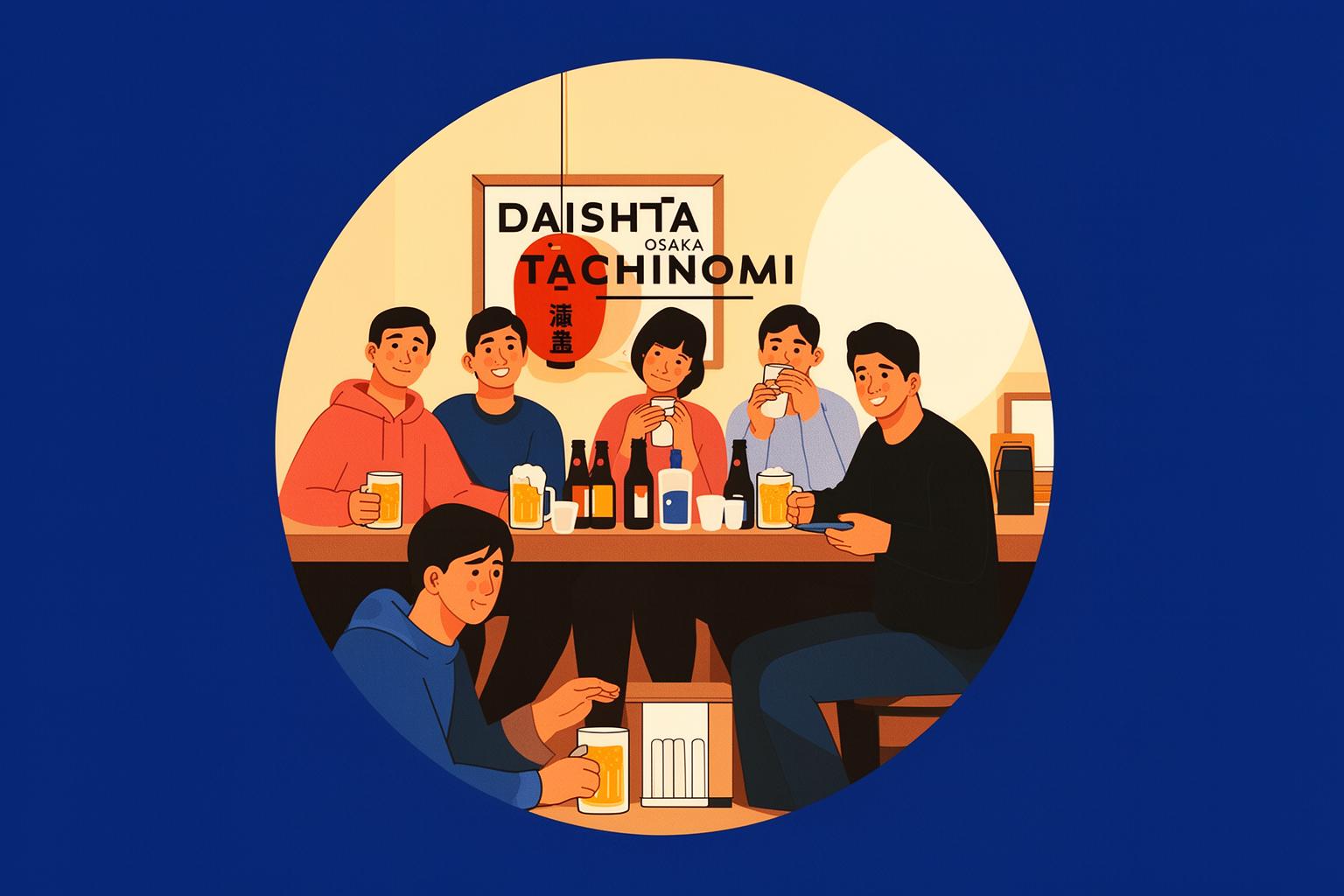
A tachinomi is far more than just the sum of its parts. It’s not merely a standing bar; it encapsulates the very essence of Osaka. It serves as a concentrated expression of the city’s renowned warmth, humor, and unpretentious spirit, offered night after night. It’s a living stage where the daily dramas and comedies unfold over inexpensive beer and grilled chicken hearts. Passing through the noren curtain is like stepping into a circle of light and warmth, leaving behind the anonymity of the big city, if only for an hour or two.
For a foreigner longing for a genuine connection, the tachinomi presents a rare and beautiful chance. It’s a place that breaks down social hierarchies and pretenses. Inside this standing bar, everyone stands equal—the company president, the construction worker, the student, and the curious traveler alike. All are simply people, sharing a counter, a drink, and a moment in time. Any initial hesitation will swiftly give way to the deep joy of laughter shared with a new acquaintance, the simple delight of discovering a new favorite dish, and the profound satisfaction of experiencing a truly local culture. So, take a chance. Wander down that narrow alley in Tenma, spot that glowing red lantern in Namba, and push aside the curtain. Your place at the counter awaits, with a city full of potential friends ready to raise a glass and say, “Kanpai!”