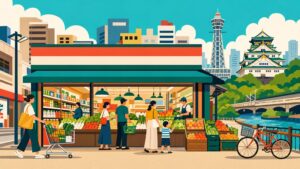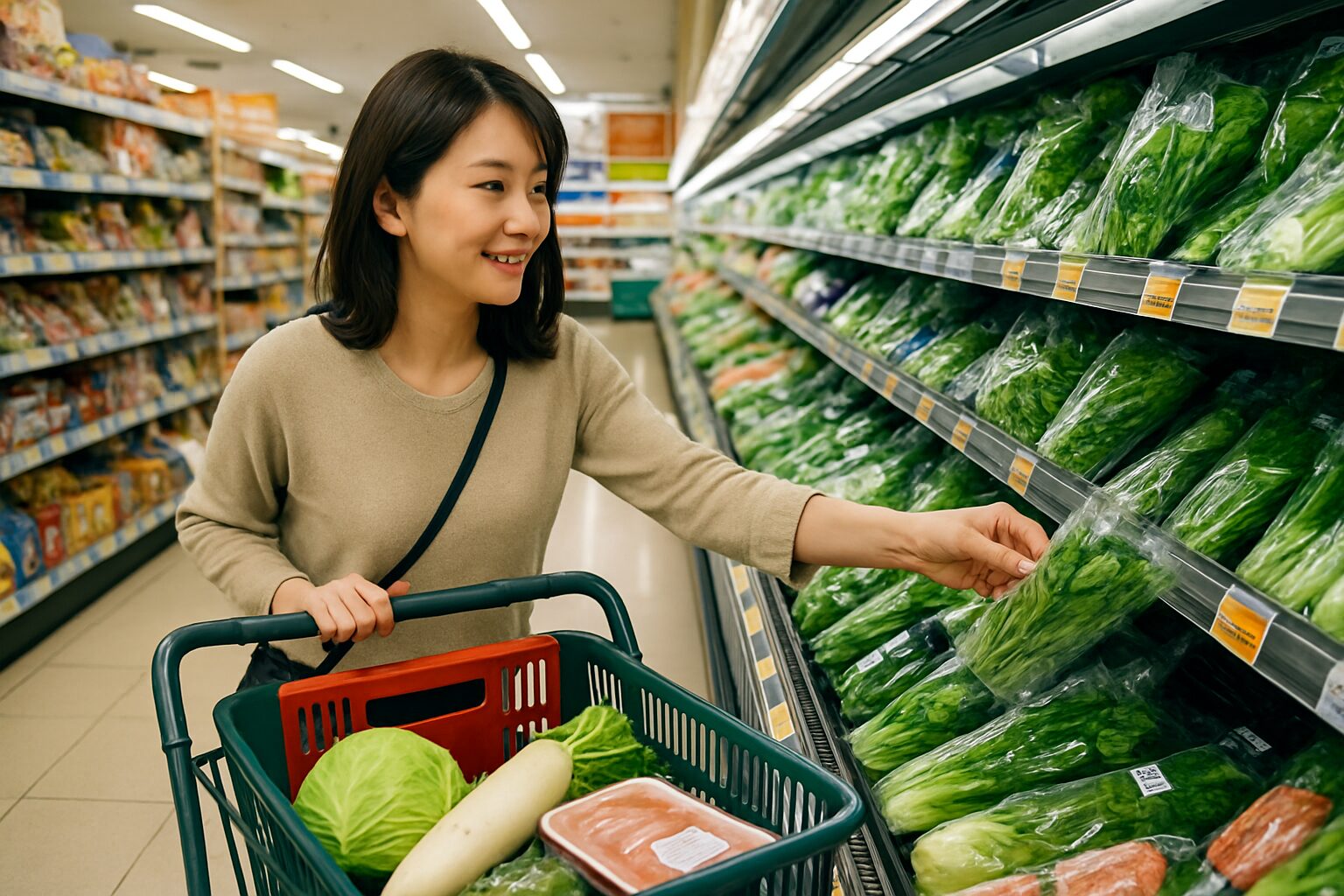
Welcome, fellow traveler, to the beating, culinary heart of Osaka. It’s a rhythm you’ll feel not in the grand temples or the soaring skyscrapers, but in the fluorescent-lit aisles of a local supermarket. To the uninitiated, the Japanese `supa` (スーパー) can be a sensory overload—a kaleidoscope of unfamiliar packaging, a symphony of cheerful store jingles and staff callouts, and a tidal wave of choices that seem both endless and esoteric. Yet, this is where the real life of the city unfolds. It’s where grandmothers in aprons inspect daikon radishes with the critical eye of a diamond merchant, where office workers dash in for a life-sustaining evening bento, and where the foundational elements of Japan’s world-renowned cuisine are laid bare for all to see. To master the local supermarket is to gain a key that unlocks a deeper, more authentic understanding of life in Osaka. It’s more than a chore; it’s a daily adventure, a delicious puzzle, and a direct line to the city’s soul. Here, we’ll demystify the experience, transforming you from a bewildered wanderer into a savvy shopper who can navigate the aisles with confidence, snag the best deals, and truly appreciate the theater of Japanese daily life.
After mastering the supermarket, you might want to experience another authentic slice of daily life by unwinding at a neighborhood sento.
The Symphony of the Supermarket: Decoding the Layout and Atmosphere
Entering a typical Japanese supermarket is an exercise in carefully orchestrated flow. The experience is intentionally designed, from the moment you pass through the sliding doors, to lead you on a coherent culinary journey. Unlike the vast, sometimes chaotic layouts of Western hypermarkets, the Japanese `supa` follows a well-established path. Your first encounter is almost always with the vibrant `yasai uriba`, the fruit and vegetable section. This isn’t just a heap of produce; it’s a curated display of seasonal beauty. In spring, the delicate fragrance of strawberries and the earthy mounds of `takenoko` (bamboo shoots) welcome you. Autumn presents a regal array of sweet potatoes, kabocha pumpkins, and gleaming persimmons. Presentation is paramount. Apples are often individually cushioned, peaches sport protective mesh jackets, and even simple onions are arranged in neat, pleasing pyramids. This attention to detail reflects the Japanese reverence for ingredients and their peak season, known as `shun` (旬). You might notice vegetables sold with dirt still clinging to them—rather than a sign of neglect, this indicates freshness, a guarantee the item was recently harvested.
From the fields, you move on to the sea. The `sengyo uriba`, or fresh fish section, is the heart of an island nation’s diet. The air is cooler here, filled with the clean, briny scent of the ocean. Here, you will encounter an impressive variety of marine life. Whole fish with clear, bright eyes rest on beds of ice, their species clearly labeled. There are trays of shimmering `sashimi`, sliced perfectly and ready to eat, often accompanied by a small sachet of soy sauce and a plastic packet of wasabi. You’ll see squid, octopus, clams, and prawns of all sizes. For home cooks, there are conveniently filleted portions, some pre-seasoned with miso or herbs, ready to grill or pan-fry. The fishmonger, often a skilled professional, may be expertly breaking down a large tuna or carefully arranging slices of salmon—a display of culinary craftsmanship unfolding before your eyes. This section bears witness to Japan’s profound connection to the ocean and seafood’s central role in its cuisine.
Next comes the `seiniku uriba`, the meat section. The most noticeable difference for a newcomer is the way the meat is sliced. While thick steaks and roasting joints are available, the majority is sliced paper-thin. These delicate sheets of beef and pork are intended for beloved communal dishes like `shabu-shabu` (hot pot) and `sukiyaki`. Different grades of meat are clearly labeled, from everyday cuts to the marbled, luxurious patterns of A5 Wagyu, a true national treasure. A common and cost-effective option is the `aibiki`, a mixture of ground beef and pork, which forms the base for many home-cooked dishes such as `hanbagu` (hamburger steaks) and savory meat sauces.
Perhaps the most exciting and uniquely Japanese area is the `sozai` or `delica` corner. This is the heart of convenience and a lifesaver for anyone too tired or busy to cook. It offers a dazzling array of prepared foods, both hot and cold. Golden-brown `korokke` (croquettes), crispy `tempura`, and juicy `karaage` (fried chicken) sit under heat lamps, their enticing aroma filling the air. Colorful bento boxes present nutritionally balanced and aesthetically pleasing meals, a universe of flavor for just a few hundred yen. You’ll find neatly arranged `onigiri` (rice balls) with various fillings, fresh salads, grilled fish, and numerous small side dishes (`okazu`) that can be combined to make a complete meal. This section is not only about convenience; it reflects a food culture that values variety, balance, and presentation—even in fast food.
As you move deeper into the store, you’ll navigate aisles featuring dairy, tofu, and noodles, followed by towering shelves stocked with dry goods—soy sauces, vinegars, miso pastes, and all the essential components of the Japanese pantry. The journey usually concludes with drinks, snacks, and the checkout, completing a circuit that parallels the preparation of a traditional meal, from fresh ingredients to pantry staples.
The Major Players: A Roster of Osaka’s Supermarket Chains
Osaka’s supermarket scene is a vibrant mosaic of chains, each boasting its own unique style, price range, and devoted customer base. Knowing the main players is crucial for shaping your personal shopping plan, whether you’re after bargains, gourmet ingredients, or just your weekly essentials.
The Everyday Staples: Standard Supermarket Chains
These supermarkets are the dependable backbone of grocery shopping, places most people visit multiple times a week. They strike a great balance between quality, variety, and price, serving as daily necessities for millions of Osaka residents.
Life (ライフ): If you think of a classic Japanese supermarket, Life is a strong candidate. It’s bright, clean, and extremely well-organized. You’ll find a solid array of fresh produce, meats, and seafood, alongside a wide selection of pantry essentials. Life is especially known for its outstanding `sozai` section and in-house bakery, which produces fresh bread and pastries throughout the day. Their private brands like “SMILE LIFE” offer budget-friendly basics, while “LIFE PREMIUM” targets higher-quality items. Their larger “Central Square” stores are even more spacious, often featuring organic produce or a small café. Life is the trusted companion you can rely on for good quality at reasonable prices.
AEON (イオン) / MaxValu (マックスバリュ): AEON is a retail giant in Japan, and its supermarkets reflect that scale. Often massive, multi-story facilities within AEON shopping malls, these stores provide a comprehensive one-stop shopping experience—from groceries to clothing to electronics. Their enormous size ensures a vast selection. Their house brand, TopValu, is broken into three tiers: green for budget-conscious shoppers, yellow for standard quality, and black for premium products that rival national brands. MaxValu is AEON’s neighborhood-focused supermarket, smaller but offering the same value and TopValu products. If variety is your top priority, AEON is your domain.
Mandai (万代): For an authentic Osaka vibe, Mandai stands out. The atmosphere is lively, a bit louder, and distinctly no-nonsense compared to more polished competitors. Known for consistent affordability, Mandai may have fewer imported products but excels in providing essentials for Japanese home cooking at very competitive prices. The aisles are narrower, displays more piled-high, adding to the local charm. Shopping at Mandai feels like being part of the neighborhood, amid locals who know where to find the best deals. It’s a genuine, unpretentious Osaka experience.
Izumiya (イズミヤ) / Hankyu Oasis (阪急オアシス): Japan’s powerful railway companies extend their influence into retail, and the Hankyu-Hanshin group exemplifies this. Hankyu Oasis is their upscale supermarket brand, typically located in affluent neighborhoods along the Hankyu railway lines. Here, the focus shifts from price to premium quality. The aisles are spacious, the lighting softer, and shelves stocked with high-end domestic products, artisanal cheeses, fine wines, and imported goods. It’s the place for special occasion dinners or rare European ingredients. Izumiya, their sister brand, offers a more standard, family-friendly supermarket experience similar to Life or AEON, catering reliably to local communities.
The Budget Champions: Where Every Yen Matters
For those on a tight budget or anyone who enjoys bargain hunting, Osaka’s discount supermarkets offer incredible deals and unique atmospheres.
Gyomu Super (業務スーパー): Meaning “Business Supermarket,” Gyomu Super is open to all customers. With a warehouse feel — concrete floors, tall steel shelves, and products often displayed in original cardboard boxes — it’s a value-driven haven. Their business model centers on bulk sizes, a huge frozen food selection, and direct importing. You’ll find kilogram bags of frozen vegetables, giant cooking oil bottles, and massive cheese blocks at a fraction of usual prices. It’s also a treasure trove for foreigners, offering a diverse mix of international ingredients—from halal meats and Southeast Asian spices to European pastries and American condiments. Gyomu Super isn’t about fancy displays, but pure, unbeatable value.
Super Tamade (スーパー玉出): Tamade is more than a supermarket—it’s an Osaka cultural icon. Impossible to miss, its exterior bursts with blinding neon lights, loud yellow and red signage, and a design that could be taken from a pachinko parlor. Inside, noisy jingles and chaotic handwritten signs herald unbelievable deals. Tamade is famous for its “1 yen sales,” where qualifying purchases allow items to be bought for a single yen. Prices on everything else are astoundingly low. While quality can sometimes be hit or miss, the experience is priceless. It’s a loud, frantic, and uniquely Osakan temple of thrift that every local should visit at least once for the spectacle alone.
Lamu (ラ・ムー) / DIO (ディオ): Part of the D-PRICE group, Lamu is a key player in the discount market, often found in suburban areas. These massive, hangar-like stores offer a no-frills shopping experience similar to Gyomu Super. They’re famous for their in-house deli, which serves extremely cheap bento boxes, takoyaki, and soft-serve ice cream, often priced around 100 yen. Many locations operate 24 hours, catering to night workers and early risers. They focus on rock-bottom prices across the board, making them favorites among large families and serious bargain hunters.
The Gourmet Havens: For Those with Discerning Tastes
When the occasion demands something truly special, Osaka provides a selection of high-end options where food is treated as an art form.
Depachika (デパ地下): These gleaming food basements beneath department stores like Hankyu, Hanshin, Daimaru, and Takashimaya are a foodie’s paradise. The atmosphere exudes refined elegance. Every item is impeccably displayed in glass cases. Here, you’ll find world-renowned patisseries, chocolatiers, traditional Japanese sweets (`wagashi`), and stalls offering exquisite bento and `sozai` far above supermarket standards. The air buzzes with polite vendor calls and free samples (`shishoku`), turning the depachika into a tasting tour. This isn’t the place for daily staples but perfect for beautiful gifts (`omiyage`), celebratory cakes, or luxurious meals to take home.
Ikari Supermarket (いかりスーパー): Originating from neighboring Hyogo prefecture, Ikari is the Rolls-Royce of supermarkets. With a limited number of locations in Osaka, it caters to customers who prioritize top quality above all else. The stores are serene, spacious, and staffed by impeccable employees. Ikari prides itself on sourcing the finest ingredients—prime meat cuts, rare vegetables, extensive imported wines and cheeses, and artisanal products. Their legendary customer service turns shopping into a calm, luxurious experience—a stark contrast to Tamade’s bustling energy.
Seijo Ishii (成城石井): Occupying a unique space, this chain blends the convenience of a local store with the curated selection of a gourmet deli. Often located inside or near major train stations, Seijo Ishii is ideal for grabbing something special on the way home. They offer a well-curated international wine, craft beer, imported snack, and high-end cheese selection. Their own range of prepared dishes and desserts is also outstanding. Compact but powerful, it brings a touch of gourmet living to busy urban commuters.
Mastering the Art of the Deal: Tips, Tricks, and Timing

Beyond selecting the right store, becoming a true supermarket samurai requires understanding the rhythm of discounts and promotions. The sticker price is just a suggestion, and with some knowledge, you can significantly lower your grocery bills.
The Golden Hour: The Magic of Discount Stickers
The most exciting part of Japanese supermarket shopping is the art of the `waribiki shiru` (割引シール), or discount sticker. As closing time nears, a quiet, polite race begins for the best markdowns on perishable items. This is a highly organized process. An employee appears with a pricing gun and begins the ritual of placing stickers on items that must be sold that day. It happens in waves. The first round, perhaps three to four hours before closing, might feature a modest 10% or 20% off sticker. An hour or two later, this can increase to 30%. The final, most coveted wave, usually during the last hour of business, brings out the prized red or yellow `hangaku` (半額) sticker, meaning 50% off. The items targeted for these discounts mainly come from the `sozai` section—bento boxes, tempura, salads, and `onigiri`—along with fresh `sashimi`, sushi, baked goods, and sometimes dairy or meat nearing their sell-by dates. Timing is everything. Arrive too early, and the best discounts haven’t appeared yet; arrive too late, and the shelves will be picked clean by other savvy shoppers. Learning the exact timing at your local supermarket is a rite of passage for any resident, turning your evening meal from a costly task into a triumphant, budget-friendly feast.
Points and Promotions: The Loyalty Game
Almost every supermarket chain in Japan offers a loyalty program, and it’s well worth signing up. The `pointo kaado` (ポイントカード) is usually free and easy to get at the customer service desk. With each purchase, you accumulate points, typically one point per 100 or 200 yen spent. These points can then be redeemed for discounts on future shopping trips. The real advantage, though, is in special promotion days. Many stores have days offering double, five, or even ten times the normal points. These often fall on specific dates (e.g., the 5th, 15th, and 25th) or designated days of the week. Planning larger shopping trips around these point-up days can result in significant long-term savings. Also, watch for the weekly `chirashi`, or advertising flyer. These come with newspapers or are available at the store entrance and list all the week’s special sales. Many stores now also send these deals directly to your phone via the LINE messaging app, making it easier than ever to track bargains.
Beyond the Sticker Price: Other Ways to Save
Smart shopping goes beyond timing your visits. Making savvy choices in the aisles can also save you a lot. Embrace private brands. As mentioned, AEON’s TopValu and Life’s SMILE LIFE offer products often identical in quality to name brands but at much lower prices. This is especially true for pantry staples like flour, sugar, oil, and pasta. Another key strategy is to shop seasonally. Buying fruits and vegetables when they’re in `shun` (in season) is not only cheaper but guarantees the best flavor. In summer, you’ll find great deals on tomatoes, cucumbers, and watermelon; in winter, daikon radish, napa cabbage, and citrus fruits will be at their peak and lowest price. Finally, for non-perishables and frequently used items, consider buying in bulk from stores like Gyomu Super. Stocking up on frozen goods, pasta, canned tomatoes, and spices from a discount leader can build a baseline of savings for your whole monthly budget.
Navigating the Aisles: A Cultural and Linguistic Guide
Even after selecting your store and planning your visit, the ultimate challenge lies in the product itself. A bit of linguistic and cultural insight will greatly enhance your confidence and knowledge as a shopper.
Decoding the Labels
You don’t have to be fluent in Japanese, but recognizing a few essential kanji characters can make shopping much easier. Watch for these on packaging:
- 国産 (kokusan): Made domestically. This label signals pride and often comes with a higher price, especially for produce and meat.
- 輸入 (yunyu): Imported. This appears on products like American beef, Norwegian salmon, or New Zealand kiwis.
- 消費期限 (shouhi kigen): Use-by date. Applies to highly perishable goods like raw meat, bento boxes, and fresh cream cakes. This is a strict deadline for safety, and the item should be consumed by this date.
- 賞味期限 (shoumi kigen): Best-before date. Used for more stable items such as snacks, canned goods, and condiments. Although safe to eat past this date, quality and flavor may have declined.
- 税抜 (zeinuki): Price before tax. Although law requires tax-inclusive prices to be most prominent, you might still find this on some shelf tags.
- 税込 (zeikomi): Price including tax. This is the final amount you will pay.
- お買い得 (okaidoku): Good value or special bargain. Often used to highlight sale items.
The Checkout Dance
The checkout experience in Japan exemplifies efficiency and politeness. First, place your shopping basket (`kago`) on the counter. The cashier will greet you cheerfully with “`Irasshaimase`” (Welcome). They then scan your items and, to the surprise of newcomers, transfer them into a different basket. Your original basket is left empty for the next customer. After announcing the total, the cashier waits patiently as you pay. Using the small tray for cash is considered good manners. When paying by card or digital app, you usually operate the terminal yourself. A key part of the exchange is the question: “`Fukuro wa go-riyou desu ka?`” (Will you be using a bag?). Since 2020, plastic bags have a small charge (typically 3 to 5 yen). Many locals bring their own reusable “eco bag” (`eko baggu`). If you need a bag, simply say “`onegaishimasu`” (please). Once you’ve paid, carry your basket to a separate bagging counter where you pack your own groceries. This system keeps the lines moving quickly and smoothly.
Supermarket Etiquette
Japanese supermarkets, much like Japanese society, follow an unspoken code that ensures a pleasant experience for all. While foreigners enjoy some flexibility, respecting local customs is always welcomed. Avoid handling fresh produce excessively. Unlike a busy outdoor market, these items should be treated gently. For potentially messy items like meat, fish, or tofu, use the small clear plastic bags provided nearby before placing them in your basket. Many supermarkets require a 100-yen coin deposit for shopping carts, returned when you bring the cart back to its designated spot. Above all, general politeness applies: be aware of your personal space, don’t block aisles, and a simple nod or “`arigatou`” to staff is greatly appreciated.
More Than Just Groceries: The Extended Supermarket Universe

The Japanese supermarket is often much more than a place to purchase food; it serves as a community hub and an anchor tenant within a broader ecosystem of daily life. It’s common to find a variety of other essential services clustered in or near the supermarket building itself. Small dry-cleaning counters, flower shops, independent bakeries, and even 100-yen shops frequently accompany it. This creates a convenient, multi-purpose destination where you can complete several errands in a single trip.
Often, the local supermarket is the main attraction of a `shotengai`, a traditional covered shopping arcade. These arcades are the lifeblood of many neighborhoods—pedestrian-friendly streets lined with small, independent shops selling everything from clothing and hardware to traditional sweets and tea. The supermarket draws daily foot traffic that supports these smaller family-run businesses. Exploring the `shotengai` connected to your local `supa` is a wonderful way to discover your neighborhood’s unique character and support local merchants. This symbiotic relationship shows how the supermarket is woven into the community’s fabric, serving not only as a commercial entity but also as a center of social and economic activity.
While less common in Osaka’s dense urban core, as you move toward the suburbs, you might encounter `chokubaijo` (直売所), or farmer’s direct sales outlets. These are sometimes small standalone shops or designated sections within a larger supermarket, offering produce sourced directly from local farms. Here you can find the freshest seasonal vegetables, often including unique local varieties not seen in large chains. It’s a wonderful way to connect with the local agricultural landscape and enjoy produce at its absolute peak.
Aisle by Aisle, A Deeper Discovery
Exploring Osaka’s supermarkets is truly an adventure in discovery. What initially feels like a daunting challenge—decoding unfamiliar labels and navigating strange aisles—slowly evolves into a comforting, even joyful, daily habit. You begin to mark the seasons not by the calendar but by the appearance of strawberries in the produce section. You learn to anticipate the patterns of discount stickers, turning your evening shopping into a thoughtful game. You find your favorite tofu brand, your go-to `sozai` shop, and the single chain that carries that special spice from your homeland. The local `supa` becomes your `supa`. It transforms from merely a store into a living, breathing part of your life in Osaka—a vibrant, ever-changing classroom teaching lessons about culture, community, and the simple, profound joy of a well-prepared meal. So grab your eco bag, step through those automatic doors, and dive into the adventure. The aisles are waiting.