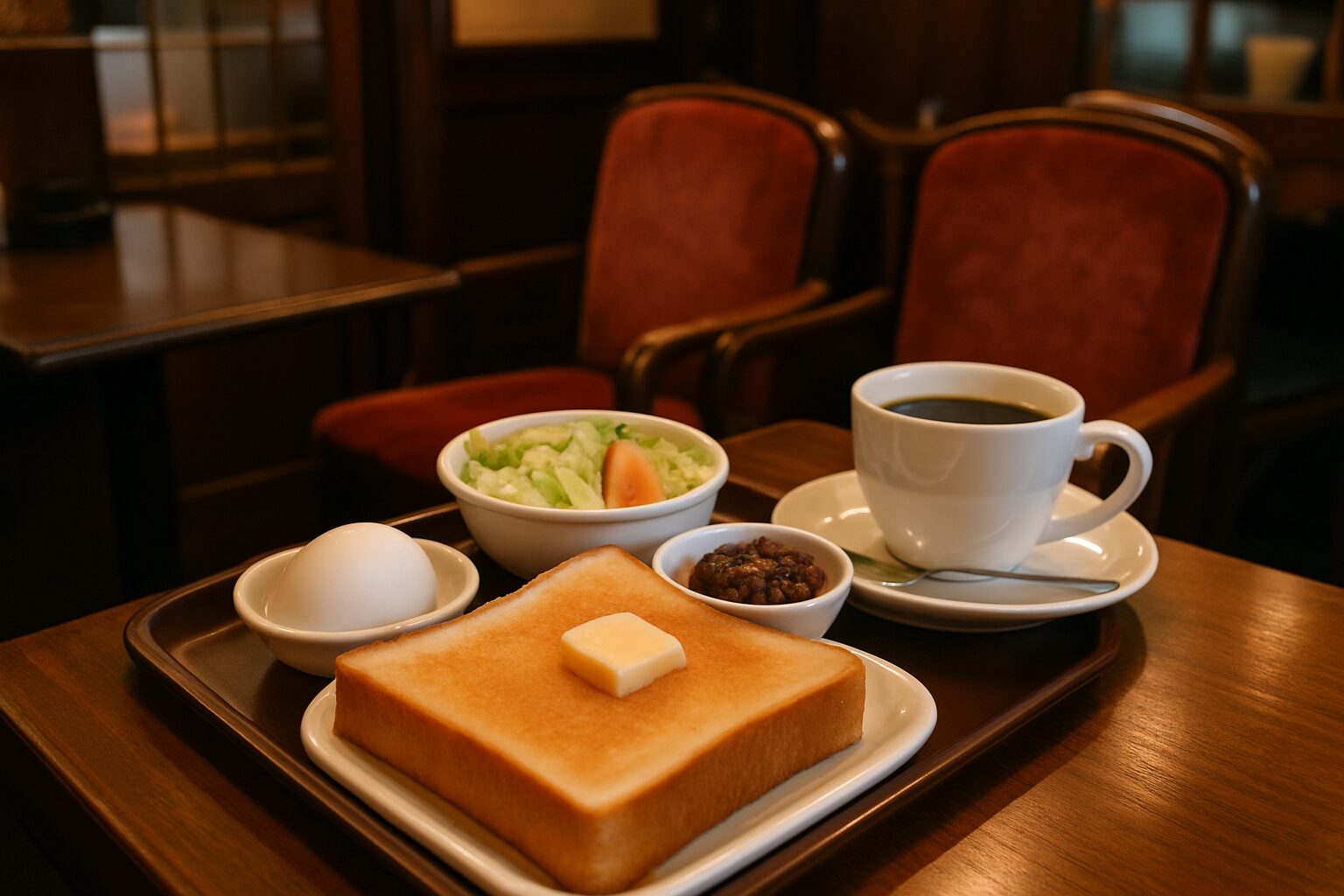
Before the neon of Dotonbori fully awakens, before the first express train rumbles into Umeda station, and long before the city’s famous appetite for takoyaki and okonomiyaki takes hold, Osaka begins its day with a quiet, sacred ritual. It’s a tradition steeped in the aroma of dark roast coffee, the soft texture of impossibly thick toast, and the gentle hum of a city waking up. This is the world of “Morning Service,” or mōningu sābisu as it’s known here, a cultural institution that’s more than just breakfast—it’s a window into the warm, generous heart of Osaka itself. Forget the hurried grab-and-go culture you might know; here, the morning is an invitation to slow down, to sit, and to savor. This ritual unfolds not in sleek, modern cafes, but in the city’s cherished kissaten, those precious, time-worn coffee houses that feel like living museums of a bygone era. Stepping into a kissaten is like stepping through a portal to the Showa period, a world of velvet booths, smoky air, dark wood paneling, and the quiet dignity of a coffee “master” who has dedicated a lifetime to the perfect brew. It’s here, in these wonderfully atmospheric dens, that Osaka’s true character reveals itself—a blend of no-nonsense value and profound, understated hospitality. The Morning Service is the quintessential expression of this spirit: for the modest price of a single cup of coffee, you receive a complimentary breakfast, typically a thick slice of toast, a hard-boiled egg, and perhaps a small salad. It’s a simple, honest-to-goodness deal that speaks volumes about a city that prides itself on taking care of its own. This isn’t just a meal; it’s a cultural cornerstone, a daily communion for salarymen strategizing before work, elderly couples reading the morning paper, and students fueling up for a day of classes. To understand Osaka, you must first understand its morning.
To truly appreciate the city’s dedication to its cherished daily rhythms, consider how this same spirit of community and ritual extends into the evening at a local neighborhood sentō.
The Sanctuary of Showa: Understanding the Kissaten
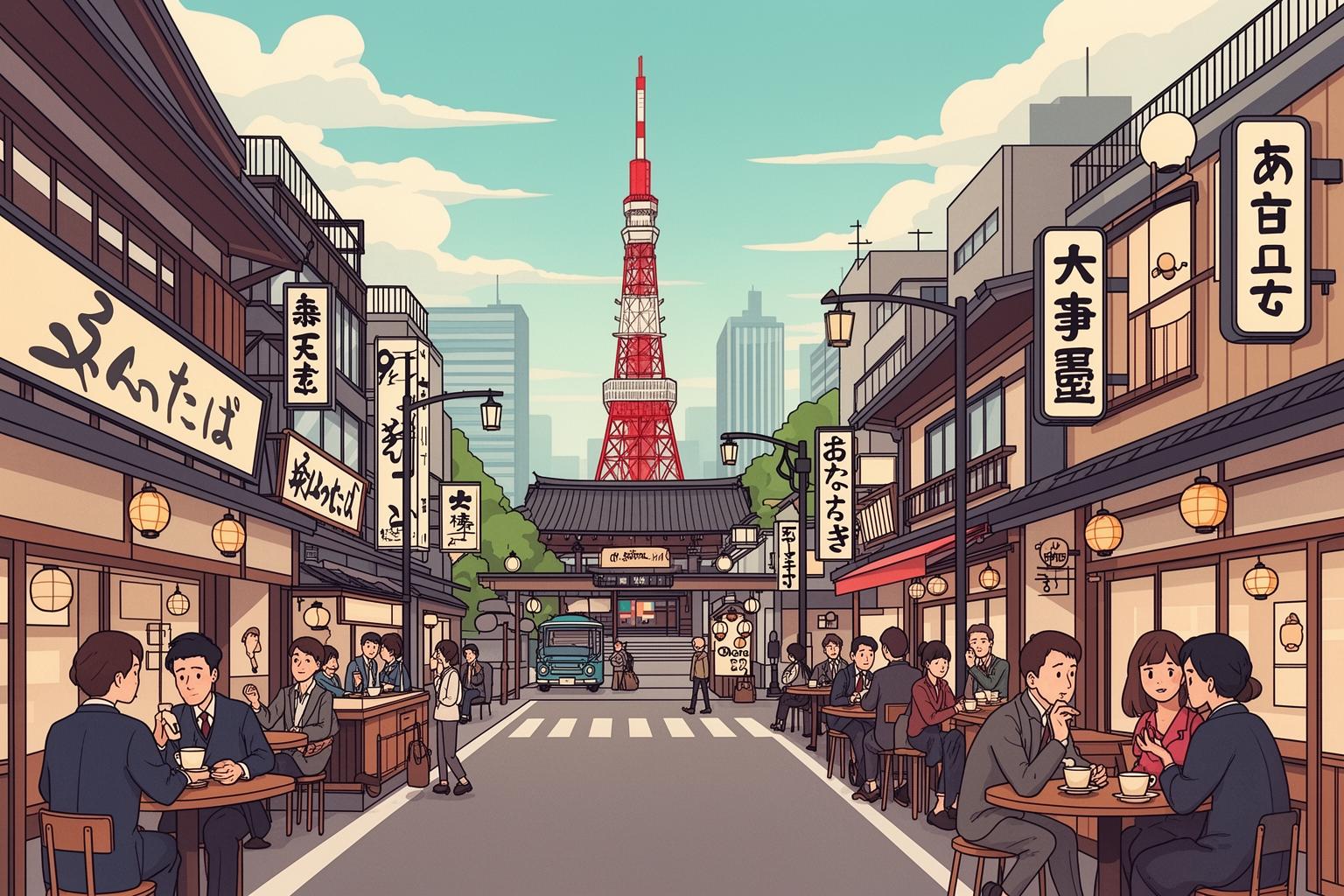
To fully appreciate the Morning Service, one must first understand its setting: the kissaten. These are not cafes in the modern sense. There is no minimalist decor, no hurried typing on laptops, nor transient pop music playing through the speakers. A kissaten serves as a sanctuary, a place where time seems to slow, held captive by the faint, sweet aroma of coffee and tobacco smoke that has seeped into the wallpaper over decades. The term kissaten (喫茶店) means “tea-drinking shop,” a modest title for an institution that played a crucial role in post-war Japanese society. They appeared during the Showa Era (1926-1989), a time of significant economic growth and cultural transformation, as refined spaces to savor coffee, listen to Western classical music or jazz, and enjoy quiet conversation. They were Japan’s original “third space,” separate from home and workplace, where artists, writers, intellectuals, and businesspeople could convene. Their aesthetic is a thoughtful, comforting blend of Western influences interpreted through a Japanese perspective. Picture stepping inside. The first sound is the soft chime of a bell above the door. Your eyes adjust to the dim, warm lighting, often cast by ornate Tiffany-style lamps hanging over each table. The furniture is heavy, sturdy, and built to endure—dark polished wood paired with chairs upholstered in worn velvet or burgundy leatherette. The air is rich with history. You might notice a grandfather clock ticking quietly in the corner, walls decorated with faded landscape paintings, and shelves filled with porcelain cups and saucers, each bearing a unique design.
At the core of every genuine kissaten is the “master” (masutā), the owner who acts as both conductor and craftsman of this intimate world. Usually a man of few words, the master stands behind the counter with a concentrated intensity bordering on meditation. He doesn’t just brew coffee; he performs it. Watch as he carefully measures the beans, heats the water to an exact temperature, and coaxingly draws the coffee through a flannel drip filter (neru dorippu) or a shining siphon brewer resembling an apparatus from a science lab. The siphon’s hissing and bubbling forms the kissaten’s signature soundtrack, a sound as comforting as rain on a tin roof. This craft is perfected over a lifetime, and the resulting coffee reflects that dedication—typically a deep, rich, low-acidity brew far removed from the lighter roasts found in modern cafes. The master sets the mood for the entire place. It is his personal vinyl record collection that governs the music choice, his meticulous attention to detail that ensures every table is flawlessly arranged, and his quiet, dignified demeanor that sustains the calm, respectful atmosphere. In a world of fleeting fads, the kissaten master stands as a pillar of consistency and tradition.
The Anatomy of a Perfect Morning: Deconstructing the Set
The charm of the Morning Service lies in its graceful simplicity and the remarkable value it offers. The essential idea is that the food is a “service” included in the price of your morning drink. Although there are many variations, the classic set features a trio of coffee, toast, and egg, each element refined to an impressive level. It provides a balanced, comforting, and deeply satisfying start to the day that feels both nostalgic and timeless.
The Coffee: The Heart of the Experience
The coffee is the centerpiece of the meal, the very reason to be there. Ordering is straightforward; you’ll usually ask for “hottō kōhī” (hot coffee) or perhaps “burando” (blend), the house specialty. What arrives at your table reflects the master’s expertise. The siphon method, a visual display of vapor pressure and gravity, creates a clean, aromatic, and exceptionally smooth cup. The flannel drip, a slower, more deliberate process, produces a coffee with a fuller body and a rich, rounded flavor. The beans are almost always dark roast, a preference stemming from an era when coffee was considered an exotic, luxurious import, best appreciated for its robust, bitter notes. It’s served in a thick, pre-warmed porcelain cup, often branded with the kissaten’s logo, accompanied by a small pitcher of fresh cream and a bowl of sugar cubes. This coffee isn’t meant to be gulped down; it’s a brew to be savored, its warmth gradually enveloping you as you settle into the morning’s pace. It’s the foundational component on which the entire Morning Service is built—a tribute to the Japanese dedication to mastering a single craft.
The Toast: A Tribute to Shokupan
Calling the bread served with Morning Service “toast” is a considerable understatement. This is atsugiri toast—an extra-thick slice of shokupan, Japanese milk bread. Shokupan is a baking marvel, with a pillowy, cloud-like interior and a gently sweet flavor. When toasted, its surface achieves a perfect golden-brown, providing a slight crispness that yields to an impossibly soft, fluffy center. The slice is often an inch thick or more, a generous piece that serves as the ideal canvas for a simple pat of high-quality butter melting into every nook. The toast is almost always scored with a crosshatch pattern before toasting, creating pockets that catch the melting butter. It arrives steaming, a comforting carbohydrate monument. While plain buttered toast is the classic, many kissaten offer delightful variations. You might encounter Ogura toast, a specialty especially famous in the neighboring city of Nagoya but beloved in Osaka as well, topped with a generous layer of sweet red bean paste (anko). The combination of the sweet, earthy beans and salty butter is revelatory. Other options might include egg salad toast, cinnamon sugar toast, or toast served with a side of marmalade. Whatever the topping, the true star is always the shokupan itself—a testament to how something so simple can be transformed into an art form.
The Supporting Cast: Egg and Extras
Rounding out the classic trio is the humble egg, most often a perfectly hard-boiled yude tamago. It typically arrives still warm in its shell, served in a small dish alongside a salt shaker. There’s a quiet, meditative ritual in gently tapping the shell, carefully peeling it away, and seasoning the warm, creamy yolk. It’s a simple, unpretentious source of protein that balances the meal beautifully. Some establishments may offer a delicate portion of scrambled eggs or a small fried egg instead, but the boiled egg remains the iconic standard. However, the generosity of Osaka’s Morning Service culture often goes further. Depending on the kissaten, your tray might also be accompanied by a few charming extras. A very common inclusion is a small salad, typically a mound of shredded cabbage and lettuce topped with a slice of tomato or cucumber, drizzled with a savory Japanese sesame or onion dressing. This adds a refreshing, crisp contrast to the richness of the toast and coffee. You might also find a tiny bowl of plain yogurt, sometimes with a dollop of fruit preserves, or a single perfect slice of orange or a few banana pieces. These thoughtful touches, these small acts of service, elevate the meal from a simple breakfast to an expression of omotenashi—Japan’s distinctive culture of wholehearted hospitality.
The Osaka Spirit: Value, Warmth, and Kuidaore
While Morning Service culture is found throughout Japan, it flourishes with a distinct vibrancy in Osaka. This city, founded on commerce, embodies a merchant spirit that values both a good deal and a full stomach. The local philosophy of kuidaore—to eat until you drop or go bankrupt—goes beyond mere indulgence; it expresses a deep, passionate appreciation for quality food at a reasonable price. The Morning Service perfectly captures this ethos. For about 400 to 600 yen, equivalent to the cost of a single coffee at a modern chain, you receive a complete, satisfying meal. It’s a bargain that feels almost unreal, a small daily act of defiance against the rising expenses of urban life. This emphasis on value creates a strong sense of loyalty between the kissaten and its customers. These interactions are far from anonymous; they are relationships nurtured through years of daily visits. The atmosphere of an Osaka kissaten reflects this. While there is a serious respect for the coffee-making craft, the social ambiance is often warmer and livelier than in other regions of Japan. You’ll hear the animated rhythm of the Osaka dialect, known for its directness and humor, as regulars chat with the owner or each other across the room. There’s a communal spirit here, a feeling that you are not merely a customer but a guest in someone’s home. The service is efficient yet never cold. It is a place where the true character of the city shines—pragmatic, generous, unpretentious, and brimming with life.
A Neighborhood Tour of Osaka’s Morning Rituals
Osaka is a sprawling city composed of distinct neighborhoods, each with its own unique character, and its kissaten culture is no exception. Discovering your ideal Morning Service experience often involves finding the neighborhood that best resonates with you. While these hidden gems can be found on almost any street, certain areas are especially abundant with classic spots.
Namba and Shinsaibashi: The Commercial Heartbeat
In the bustling southern hub of Minami, around Namba and the Shinsaibashi-suji shopping arcade, the kissaten act as essential oases of calm amid the commercial hustle. Often tucked away down side streets or on the second floors of older buildings, these places tend to be grander and more established. They serve shoppers taking a break and local business owners starting their day. The Morning Service here is a well-oiled routine, delivered with speed and precision. The atmosphere is a captivating blend of tranquility inside and vibrant energy just outside the door. You might sit in a cozy booth, sipping your coffee while watching the steady stream of people passing through the covered arcade below. These kissaten are lifelines for locals, offering a moment of respite before they dive back into the lively, noisy, and exciting core of the city.
Umeda and Kita: The Corporate Engine
To the north, in the Umeda business district, the kissaten adopt a somewhat more serious, professional tone. These serve as the morning headquarters for countless sararīman (office workers). The air here hums with quiet conversations about deals and deadlines. The decor tends to be slightly more polished, and the service even more discreet. Morning Service is more than just breakfast; it’s the fuel powering Japan’s economic engine. You’ll spot men in sharp suits reading the Nikkei financial newspaper, their briefcases resting by their chairs. These kissaten are frequently located in the basements of office buildings or within the sprawling underground shopping malls connecting various train stations. They excel in efficiency, delivering a high-quality, restorative experience to those on a tight schedule. It offers a glimpse into the disciplined rhythm of Japanese corporate life.
Shinsekai and Tennoji: A Portal to the Past
For a truly nostalgic experience, explore the area around Tsutenkaku Tower. Shinsekai is a district that feels wonderfully frozen in the mid-20th century, and its kissaten are authentic relics of that era. These are not retro-themed cafes—they simply are retro. Here, you’ll discover establishments that have changed very little since opening fifty or sixty years ago. The regular patrons tend to be older, the pace slower, and the connection to the Showa era palpable. The Morning Service may even be cheaper here, offering a simple, hearty meal served without any fuss. Sitting in a Shinsekai kissaten, surrounded by faded posters and vintage fixtures, feels like being on a movie set. It’s a deeply atmospheric journey back in time, providing a taste of the working-class spirit and gritty charm that defines this unique part of Osaka.
Nakazakicho: The Bohemian Twist
Just a short walk from Umeda’s modernity lies Nakazakicho, a delightful maze of narrow lanes and old wooden houses that survived wartime bombings. This neighborhood has become a haven for artists, designers, and independent thinkers, and its cafe scene reflects that creative energy. Here, you’ll find a new generation of kissaten that blend traditional aesthetics with a quirky, bohemian flair. These cafes might be housed in beautifully restored old homes (kominka), featuring mismatched vintage furniture, local artwork adorning the walls, and a more eclectic soundtrack. The Morning Service here may offer a creative twist—toast made from artisanal bread, coffee from single-origin beans, or a side of homemade granola. It’s a wonderful fusion of old and new, showcasing how the spirit of the kissaten is being preserved and reinterpreted by younger generations who cherish its authenticity and charm.
A First-Timer’s Guide to the Kissaten Experience

Visiting a traditional kissaten for the first time can feel somewhat intimidating, but the experience is truly rewarding. Here are some tips to help you smoothly enjoy your first Morning Service. First, timing is key. Morning Service is usually offered from the shop’s opening until around 11:00 AM, so arrive before then to enjoy the special set. Look for signs outside—often a simple chalkboard or a plastic food model in the window—displaying “モーニングセット” (Morning Set) and the price. Upon entering, staff will warmly greet you with “Irasshaimase!” (Welcome!). You can typically sit wherever you like. Don’t be surprised by the presence of cigarette smoke; many traditional kissaten still allow smoking, as it has long been part of their culture. Some larger shops may offer a non-smoking section (kinen seki), but smaller ones often do not, so it’s good to be prepared for this aspect of the ambiance. Ordering is simple: just say “Mōningu, onegaishimasu” (Morning Service, please). If there are various options (like sets A, B, or C), you can point to your choice on the menu. The staff will then bring you a glass of water and a warm, damp towel (oshibori) to clean your hands. After that, sit back and savor the relaxed atmosphere. This is a place to take your time—read a book, watch the barista at work, or simply enjoy a moment of peaceful reflection. When you’re ready to leave, take your bill (usually left on your table) to the cash register near the front. Many smaller, older kissaten accept cash only, so it’s wise to have yen ready. As you pay, saying “Gochisousama deshita” (a polite phrase meaning “thank you for the meal”) is a nice way to express your gratitude. This small gesture will be met with a warm smile, allowing you to briefly connect with the deep-rooted cultural spirit of this wonderful city.
More Than a Meal: The Enduring Legacy of Morning
The Morning Service at an Osaka kissaten is one of the most genuine and charming experiences a visitor can enjoy. It’s a tradition that has endured despite the relentless advance of modernity, surviving the arrival of global coffee chains and the shifting preferences of newer generations. It lasts because it offers something difficult to duplicate: a sense of place, a link to history, and a moment of sincere human warmth. It reflects the quiet confidence of a city that appreciates the value of a good cup of coffee, the simple delight of thick, warm toast, and the significance of beginning the day with an act of kindness. So, on your next morning in Osaka, pass by the familiar logos and seek out the modest, hand-painted sign of a local kissaten. Open the door, inhale the rich aroma of coffee and time, and take a seat. In doing so, you are not merely ordering breakfast; you are engaging with the living, breathing soul of Osaka. You are discovering a moment of calm in a city that never stops moving, and you realize that sometimes, the most meaningful cultural experiences occur before the day has truly started.