
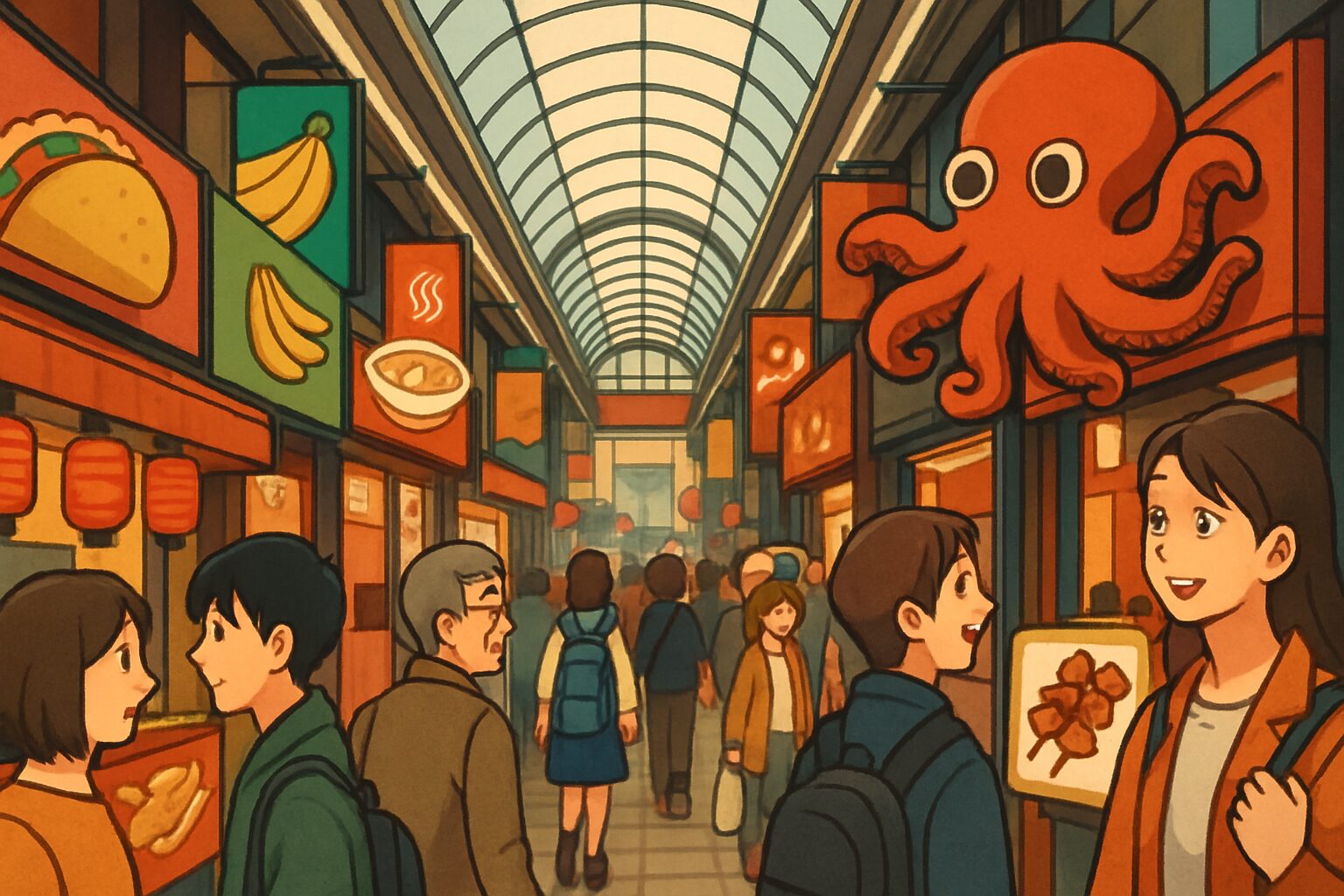
Step off the train, duck out of the blazing sun or the sudden downpour, and you find yourself in another world. A world under a long, translucent roof, buzzing with a rhythm that’s all its own. This, my friend, is the shotengai—the covered shopping arcade that serves as the veritable artery of any Osakan neighborhood. It’s more than just a place to buy your groceries. It’s a community’s living room, its kitchen, and its main thoroughfare, all rolled into one. As someone who spends a lot of time charting trails through mountains, I’ve come to see these arcades as urban hikes, each with its own unique terrain, landmarks, and local wildlife. They are pathways carved not by rivers, but by generations of daily life, connecting people to their needs and to each other. Here, the pulse of Osaka isn’t found in the gleaming skyscrapers of Umeda or the neon glow of Dotonbori, but in the friendly call of a shopkeeper, the sizzle of takoyaki on a grill, and the gentle rumble of a bicycle coasting down the polished concrete. It’s a place where tradition and modernity don’t just coexist; they haggle over the price of daikon radishes and share a laugh. This is where you come to understand the city, not as a tourist, but as a temporary local, one errand at a time. Forget the guidebooks for a moment. Let’s take a walk down the real main street of Osaka.
To truly live like a local, complement your shotengai stroll with the quintessential morning ritual of a classic Osaka kissaten.
The Symphony of the Arcade
Before you start breaking down a shotengai into its individual shops and offerings, you must first appreciate it as a whole sensory experience. It’s like a symphony, with every element playing a vital role. Your initial steps inside mark a transition. The quality of light shifts immediately. The harsh, direct sunlight of an Osaka summer filters through aged acrylic panels, casting a soft, even glow over everything beneath. On a rainy day, it becomes a sanctuary, with the rhythmic drumming of water on the roof providing a steady, comforting percussion. The acoustics change here. Sounds are contained, amplified, and blended into a unique hum. You’ll hear the sharp, enthusiastic calls of irasshaimase! (welcome!) from every storefront, a chorus that never quite aligns but weaves a tapestry of hospitality. Interspersed are shop announcements advertising the day’s specials—¥100 per tomato, fresh mackerel just in—a rapid-fire cadence that’s classic Osakan merchant-speak. The clang of a metal shutter being raised, the squeak of a granny’s shopping cart, the distant, hypnotic jingle-jangle of a pachinko parlor spilling out onto the street—all combine into the shotengai’s distinctive soundtrack.
Next comes the incredible mosaic of smells, perhaps the most powerful and evocative aspect of the arcade. It’s an ever-changing landscape of aromas that clearly marks your location. Passing the fishmonger, the clean, briny scent of the ocean hits you—the smell of fresh ice and saltwater. A few steps on, it’s replaced by the rich, earthy fragrance of roasted green tea from a specialty shop, where leaves spin in a humming machine. Suddenly, a sweet, smoky wave of unagi (eel) grilled over charcoal with a glossy soy glaze drifts from a small eatery. This yields to the comforting, savory steam of dashi broth rising from a standing-only udon noodle stall. You could navigate a shotengai blindfolded, following the scent of freshly baked melon-pan from the bakery, the sharp tang of pickles from the tsukemono stand, and the deep, greasy satisfaction of a croquette just pulled from the fryer at the butcher shop. Each aroma serves as a landmark, a signpost guiding you along this indoor trail from one delight to the next. It’s the smell of dinner being prepared, treats cooked, and a community nourishing itself. It’s utterly intoxicating and profoundly authentic.
The Longest Trail: Tenjinbashisuji Shotengai
When discussing shotengai in Osaka, you have to start with the champion. Tenjinbashisuji Shotengai is more than just an arcade; it’s a legend. Stretching an astonishing 2.6 kilometers, it holds the distinction of being the longest covered shopping street in Japan. Walking its full length is a pilgrimage, a journey through distinct neighborhoods and eras. It’s so extensive that it’s divided into seven sections, or chome, each with its own subtle character. Beginning near Tenjinbashi Bridge and ending close to Tenmangu Shrine, its route weaves history and commerce together. This is no casual stroll; it’s a half-day adventure best approached like a long-distance hike. You’ll need to pace yourself.
Starting in the first chome, nearest the shrine, the atmosphere feels a bit more polished, perhaps more traditional. Here, you might find shops selling refined Japanese sweets, handcrafted fans, or premium teas, catering to visitors of the nearby shrine. As you move northward, the vibe changes. The shops cater more to everyday life. You’ll pass greengrocers with produce stacked in precarious, beautiful pyramids. Family-run butcher shops greet customers by name and offer dinner recommendations. These stores form the fabric of the community. In the middle sections, around the third and fourth chome, the energy rises. This is where you find a high concentration of restaurants, izakayas, and standing bars. It’s a fantastic spot for lunch. Look out for tiny establishments with just a few counter seats, often specializing in one dish done perfectly—whether sushi, kushikatsu, or okonomiyaki. Prices here are surprisingly reasonable, reflecting the shotengai’s role serving the local working population, not just tourists.
One of Tenjinbashisuji’s greatest pleasures is its variety. A shop selling a hundred types of chopsticks might sit next to a Pachinko parlor, which itself neighbors a quiet, old-world kissaten (coffee shop) that hasn’t changed since the Showa era. You’ll find knife shops where craftsmen sharpen blades, kimono fabric stores with bolts of stunning silk, and ¥100 shops packed with every imaginable household gadget. Watch for the suspended decorations hanging from the arcade ceiling. These often change with the seasons, featuring massive, intricate models inspired by the nearby shrine or Osaka culture, adding to the festive, slightly surreal ambiance. A practical tip for exploring: don’t hesitate to take detours. The side streets branching off from the main arcade hide many treasures—tiny shrines, quiet residential alleys, and specialized shops. The journey through Tenjinbashisuji is about much more than the destination; it’s about the countless discoveries along the way. Wear your most comfortable shoes—you’re going to need them.
Osaka’s Kitchen: The Phenomenon of Kuromon Ichiba
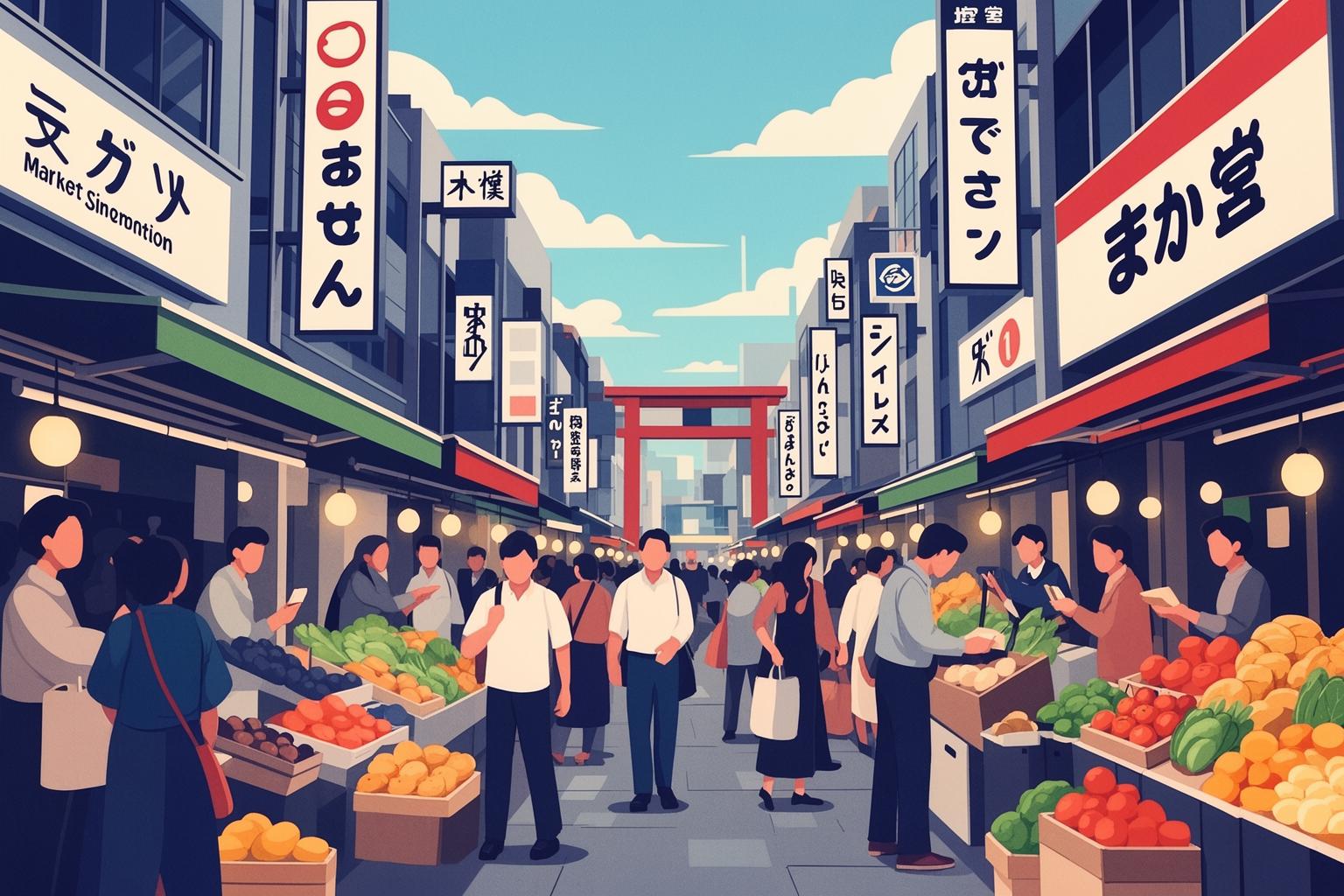
While Tenjinbashisuji serves as the quintessential neighborhood artery, Kuromon Ichiba Market offers a distinct, more specialized type of covered arcade. Affectionately known as Osaka no Daidokoro, or “Osaka’s Kitchen,” it has been the go-to place for generations of chefs, restaurateurs, and passionate home cooks seeking the finest ingredients. Situated near Nippombashi, its atmosphere is more intense, focused, and overwhelmingly food-centric. The energy here is less about casual errands and more about the exhilarating quest for freshness and flavor. Although it has become a popular tourist spot, its essence remains that of a working market.
The moment you enter Kuromon, the sights and aromas become immediately more concentrated. The aisles narrow, the crowds thicken, and the displays grow more extravagant. Fishmongers take center stage, expertly carving massive tuna, grilling glistening scallops the size of your fist to order, and showcasing tanks filled with live crabs and prawns. The lively call-and-response between vendors and customers is a performance in itself. But seafood is not the only highlight. Some shops focus exclusively on fugu (pufferfish), a delicacy that demands a licensed chef for preparation. Fruit stands offer impossibly perfect—and pricey—white strawberries or enormous square watermelons. Pickle vendors present dozens of varieties, ranging from fiery kimchi to subtly salt-cured vegetables. Butchers sell premium cuts of Kobe beef, its marbling resembling a masterpiece rather than mere meat.
What makes Kuromon particularly appealing to visitors is the culture of tabe-aruki, or eating while walking (though more accurately, standing just outside the shop). Many vendors have adapted by offering small, ready-to-eat portions of their specialties. You might enjoy a single grilled scallop brushed with soy sauce and butter, a few slices of the freshest uni (sea urchin) served on a shiso leaf, a cup of freshly squeezed juice, or a skewer of tender, marbled beef. It’s a progressive feast—a chance to sample the very best of Japanese produce and seafood in its simplest, purest form. A tip for first-timers: arrive early. The market is most vibrant in the morning when local chefs do their shopping. While the atmosphere is exciting, remember that this is a place of business. Stay aware of your surroundings, avoid blocking the narrow aisles, and watch for people hurriedly passing by with carts. Kuromon flows less like a gentle stream and more like a thrilling river rapid—a delicious, chaotic, and unforgettable dive into Osaka’s renowned culinary world.
Contrasting Worlds: From Shinsaibashi to the Truly Local Arcades
Not all shotengai are the same. They span a spectrum, ranging from world-renowned tourist attractions to quiet, hyper-local streets. Recognizing this diversity is essential to fully appreciating their role in the city. At one end of this range is Shinsaibashisuji, arguably Osaka’s most famous shopping arcade—a lively, modern, and often overwhelmingly crowded street connecting the Dotonbori area with the Shinsaibashi neighborhood. Walking through it offers a completely different experience compared to a place like Tenjinbashisuji. The shops are larger, showcasing international brands, huge drugstores, and trendy fashion boutiques. The ceiling is high and arched, the lighting bright and commercial, and the sound a mix of various languages with J-pop pouring out from storefronts. It certainly serves a purpose and is an impressive sight, but it lacks an intimate, neighborhood atmosphere. It’s more a venue for commercial transactions than community interactions. You visit here for a specific purchase, not for a chat with the local tofu maker.
Now, move away from the city center to a place like Senbayashi Shotengai. The contrast is striking. Senbayashi, located in the Asahi ward, is well-known among Osakans for one thing: its affordability. It is frequently celebrated as one of the best bargain spots in the city. The vibe is consistently down-to-earth and unpretentious. The shops are small, family-run businesses that have operated there for decades. You’ll find clothing stores with handwritten signs, tiny stalls selling homemade korokke (croquettes) for less than a dollar, and cluttered little shops brimming with everyday essentials. The people here are locals doing their regular daily and weekly shopping. They move with intent, their carts filled with groceries. The arcade itself is narrower, the ceiling lower, and the lighting somewhat dimmer. It feels lived-in, genuine, and completely without pretense. This is shotengai in its purest form, shaped by the practical needs of the community it serves. Visiting Senbayashi offers a vivid insight into the economic realities and daily rhythms of working-class Osaka.
Then there is Karahori Shotengai, presenting yet another distinct character. Located in a part of Osaka that escaped wartime bombings, the area around Karahori features a maze of old wooden townhouses (machiya) and narrow, winding streets. The shotengai itself mirrors this historic charm. It is a quieter, more atmospheric arcade. While it includes the usual butchers and grocers, it has also become a gathering place for artists, designers, and craftspeople. Hidden within the arcade and its adjacent alleys are renovated machiya that now host art galleries, boutique coffee shops, artisan bakeries, and studios selling handmade leather goods or ceramics. It’s a beautiful fusion of old and new, of practicality and creativity. A stroll through Karahori is like a treasure hunt. You may find yourself admiring the architecture of an old building and then stumble upon a tiny, modern cafe tucked inside. It’s a shotengai that invites you to slow down, look closer, and appreciate the coexistence of historical preservation and creative renewal. Each of these arcades—Shinsaibashi’s commercialism, Senbayashi’s practicality, and Karahori’s artistry—tells a unique story about Osaka, demonstrating that the shotengai is not a single entity but a diverse and ever-changing urban landscape.
The Rhythm of the Day and the Season
To truly understand the life of a shotengai, you need to appreciate its rhythms, both daily and seasonal. These are not static commercial museums; they are living, breathing spaces that evolve throughout the day and the year. Visiting at different times provides entirely unique experiences.
The morning is a period of preparation and intent. The day starts early, marked by the clatter of metal shutters being raised. Shopkeepers sweep the sidewalks in front of their stores, a ritual of cleanliness and pride. The air is filled with the fresh scents of deliveries—fish arriving on ice, crates of vegetables being stacked. This is when serious shoppers mostly appear, older locals who know exactly what they want and where to find the best quality. They exchange brief pleasantries with vendors, discussing the weather or family. The pace is brisk yet friendly, with the shotengai functioning like a well-oiled daily provision machine.
By midday, the atmosphere changes. The lunch rush brings a surge of energy. Salarymen and office workers flood in, seeking quick, inexpensive, and tasty meals. The standing noodle bars, bento shops, and small curry houses are bustling. The sounds of sizzling and steaming intensify, and the arcade fills with lunchtime chatter. This is an ideal time for visitors to eat, as turnover is fast and the food is freshly made. You can grab a korokke or takoyaki skewer to eat on the go, experiencing the city’s lively lunch culture.
In the afternoon, a lull sets in. The pace slows down. You might see shopkeepers taking short breaks or mothers shopping with young children after school. It’s a quieter, more relaxed time, perfect for a leisurely stroll. You can browse shops unhurriedly, perhaps stopping for coffee and cake at an old-fashioned kissaten. As evening nears, energy builds once more. People head home from work, picking up ingredients for dinner. Butcher shops and delis thrive, selling pre-prepared side dishes and fried foods—a lifesaver for busy families. As dusk falls, the lights of izakayas and standing bars start to glow. The shotengai shifts from a place of commerce to one of evening leisure, its sounds moving from grocers’ calls to clinking glasses and laughter.
Seasonally, the shotengai changes as well. In summer, it becomes a cool refuge from the heat, decorated for festivals like Tanabata with colorful streamers and handwritten wishes hanging from bamboo branches. During New Year’s preparations, the market buzzes with a festive frenzy as people shop for special holiday foods. In autumn, the produce shifts to reflect the harvest, featuring new-crop rice, mushrooms, and persimmons. Many shotengai also hold local festivals, with parades, game stalls for children, and special sales. These events embody the arcade’s role as a community hub, bringing everyone together for shared celebration. Observing these rhythms reveals the deep bond between the shotengai and the lives of those it serves.
A First-Timer’s Guide to the Arcade Trail
Exploring a shotengai for the first time can feel somewhat overwhelming, but a few simple tips can ensure a smooth and rewarding experience. Think of it as trail etiquette for these urban pathways. First and foremost, cash remains king. While larger stores may accept credit cards, the small, family-run stalls—the ones offering the best and most authentic goods—are almost always cash-only. It’s a good idea to carry plenty of ¥100 and ¥1000 coins and bills. This makes transactions quick and easy and is appreciated by the vendors.
When it comes to interaction, a bit of politeness goes a long way. A simple nod, a smile, and a pointed finger often suffice to communicate what you want. Learning a few basic phrases like Kore o kudasai (This one, please) and Arigato gozaimasu (Thank you very much) will be warmly received. Don’t hesitate to ask Kore wa nan desu ka? (What is this?) if you encounter something unfamiliar. Many shopkeepers, especially in areas with more visitors, are happy to explain their products. One key etiquette point: although tabe-aruki (eating while walking) is common, particularly in places like Kuromon, the general rule is to eat your food at the stall where you bought it or in a designated area. Walking through a crowded arcade while eating can be messy and is often seen as impolite.
Be mindful of your surroundings. These are functional thoroughfares, not just tourist spots. People are trying to get their shopping done. Keep to one side of the arcade to let others pass, and avoid stopping suddenly in the middle of the path to take a photo. Step aside if you need to pause. Bicycles are common, so listen for the soft ring of a bell, which signals you to make way. Above all, stay curious. The greatest joy of the shotengai is discovery. Don’t limit yourself to the main path. Peek down side alleys. Follow an intriguing scent. Step into a shop that looks like it hasn’t changed in fifty years. These arcades are safe, friendly, and full of stories. Let your senses guide you, and you’ll uncover a side of Osaka that is rich, authentic, and deeply human.
The End of the Path is Another Beginning

As the sun sets and the final shop shutters clatter down, a silence settles over the shotengai. The day’s symphony fades away, leaving only the hum of vending machines and the footsteps of a few late-night commuters. Yet, the energy of the day still lingers in the air. The arcade is more than just a collection of stores under one roof; it is a repository of countless daily interactions, a living archive of a community’s life. Each scuff on the floor, every faded advertisement, and every friendly greeting shared forms part of its ongoing story. For anyone seeking to connect with the true Osaka, to experience the city not as a spectacle but as a home, the journey inevitably passes through a shotengai. It is a path that rewards the slow and observant traveler. So next time you find yourself in this incredible city, look for that arched entrance. Step inside, take a deep breath, and begin to walk. You never know what you’ll discover, but you’re sure to find the true, unfiltered, and wonderfully vibrant heart of Osaka.








