Step off the subway at Namba Station, and you don’t just walk into a neighborhood; you plunge into an electric current. This is Dotonbori, the vibrant, pulsating heart of Osaka’s Minami district. It’s a place that assaults the senses in the most glorious way possible—a chaotic symphony of roaring neon, sizzling street food, and the ceaseless, energetic chatter of a city that never seems to sleep. Towering digital billboards cast a perpetual daylight over the canal, where giant mechanical crabs and pufferfish cling to buildings, their claws and fins in a state of suspended animation. But Dotonbori is so much more than its iconic, photogenic mascots and the world-famous Glico Running Man sign. It’s a living, breathing organism, a grand theater of human connection. This isn’t just a place to see; it’s a place to be. It is the ultimate social crossroads, where the paths of hardworking salarymen, fashion-forward students, curious travelers, and lifelong Osakans converge in a shared pursuit of good food, good drink, and good company. In a city renowned for its outgoing and friendly people, Dotonbori is the grand stage where this spirit is on full display. It’s where the philosophy of kuidaore—to eat until you drop—transcends mere consumption and becomes a communal ritual, a language understood by all. This guide is your ticket past the tourist-facing façade, an invitation to dive into the social hotspots where you can truly connect with the soul of Osaka.
For a different pace, consider exploring the laptop-friendly cafes in Horie, a quieter creative district perfect for working or relaxing.
The Electric Pulse: Decoding the Dotonbori Atmosphere
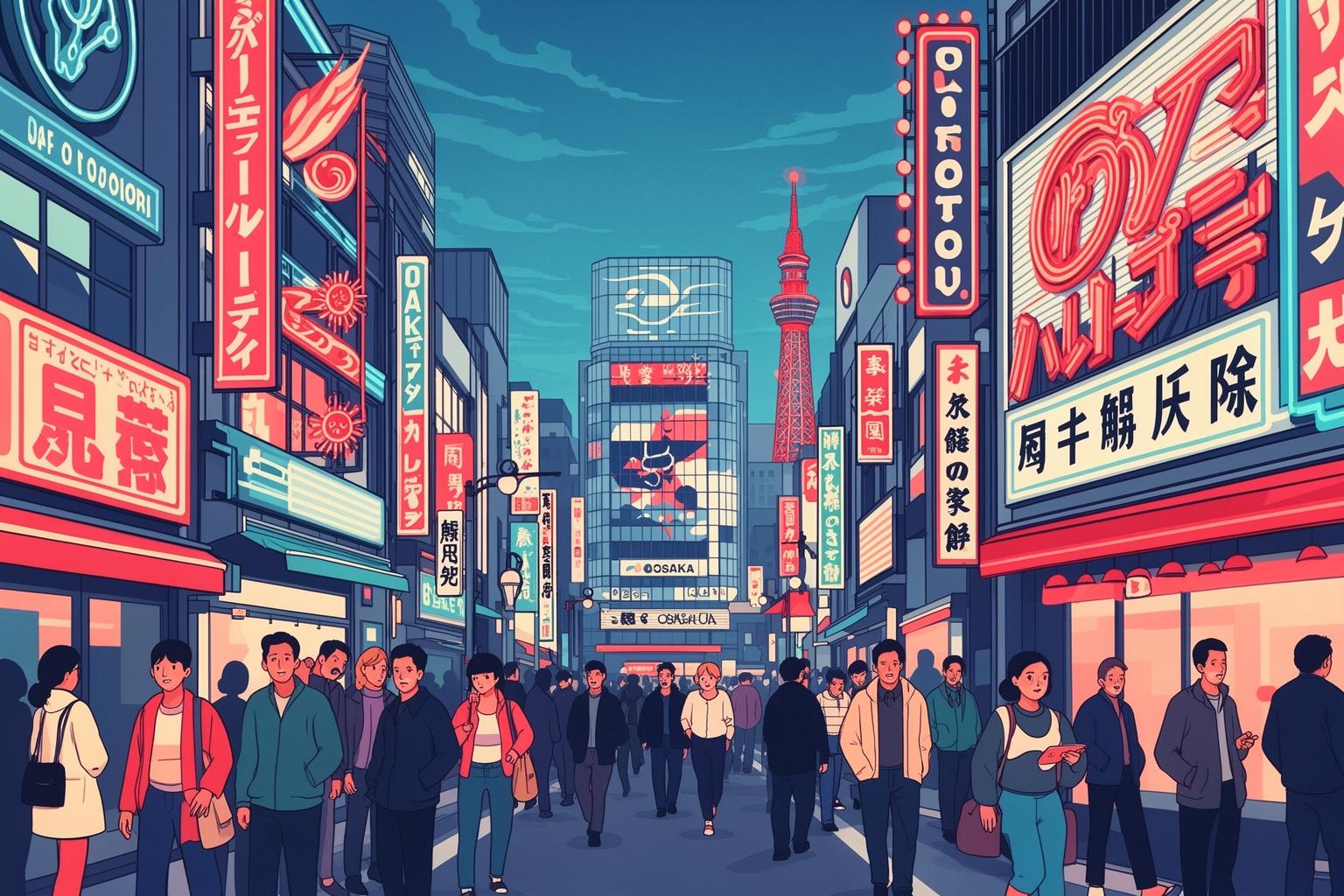
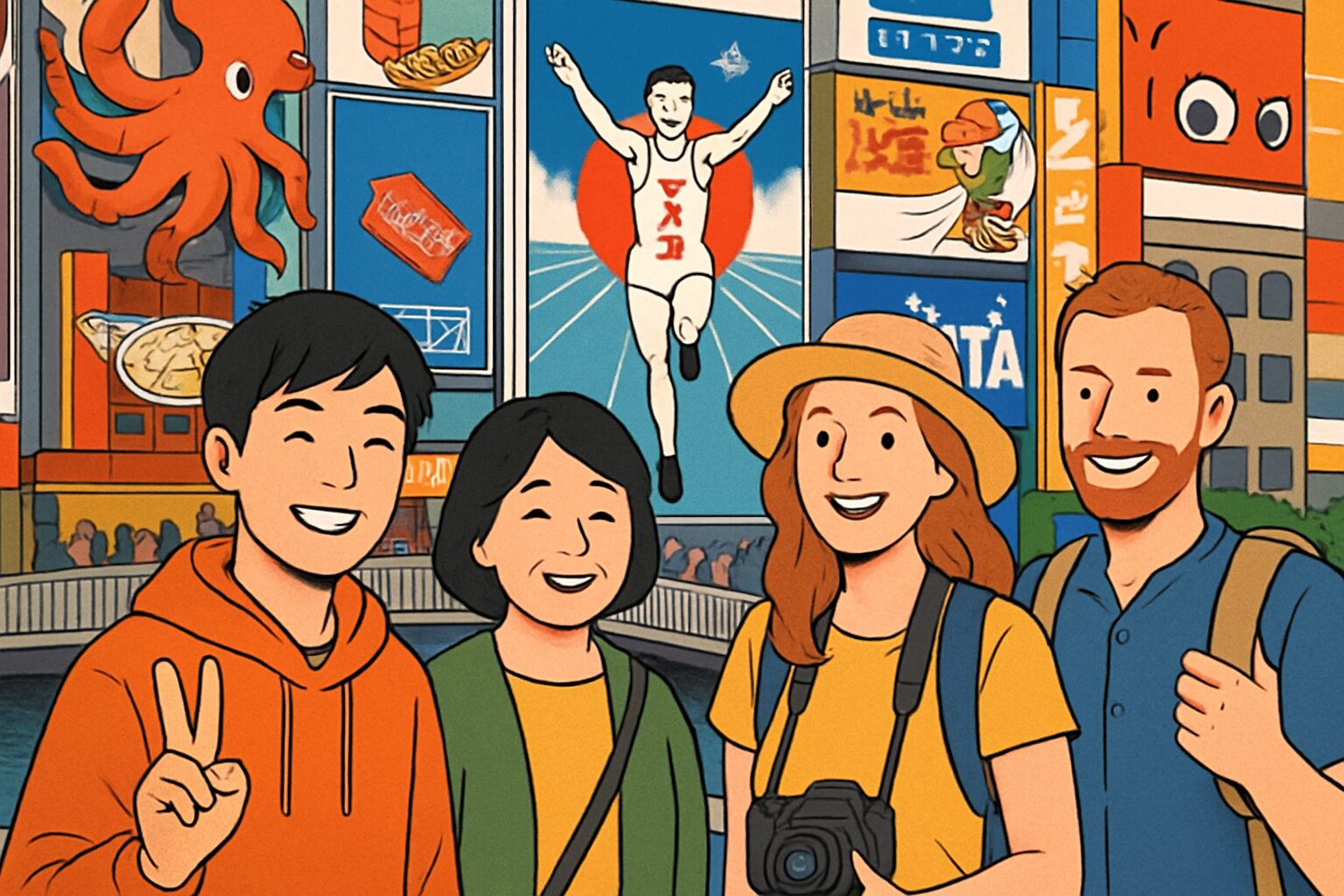
To grasp Dotonbori’s social pull, you first need to dive into its atmosphere. It’s a sensory encounter that reshapes your brain. The visual cacophony is the initial impact. It’s not merely bright; it’s a living mosaic of light. The iconic Glico Man runs endlessly on his blue track, symbolizing corporate longevity and serving as a cherished city landmark and informal meeting place. Across the canal, massive video advertisements flicker and shift, their light dancing on the tranquil, dark water below. These reflections form a second, submerged Dotonbori—a dreamlike mirror of the chaos above. The air itself feels unique here, thick with an enticing blend of aromas: the savory, doughy smell of takoyaki skillfully flipped in cast-iron pans; the sweet, smoky char of yakitori skewers sizzling over white-hot charcoal; the salty scent of fresh crab legs roasting over an open flame. It’s a continual, delectable assault on the senses, keeping your stomach rumbling and your curiosity alive. Then there’s the sound. Dotonbori is never silent. It’s a layered soundscape of J-pop blasting from shops, rhythmic calls of vendors selling their goods, the gentle hum of tourist boats gliding through the canal, and beneath it all, the steady, buzzing backdrop of thousands of conversations happening simultaneously. It’s a blend of Japanese, English, Korean, Mandarin, and many other languages, underscoring its role as a global meeting ground. The atmosphere is one of collective effervescence—a free-spirited joy fills the air, a sense of limitless possibility. During the day, the energy resembles a bustling market, with shoppers weaving through crowds and families deciding which food stall to try next. But as twilight arrives, a shift happens. The setting sun passes the baton to neon signs, and Dotonbori truly comes alive. The energy surges. The crowds swell, sounds grow louder, lights shine brighter. It transforms into a playground for adults, a place to shrug off the day’s restraints and savor the moment. This is the magic hour, when the area’s social energy peaks. You’re no longer just a spectator; the moment you step onto the crowded streets, you become part of the show, a performer in Osaka’s greatest nightly spectacle.
The Social Arenas: Beyond the Sidewalks
While the main thoroughfare offers its own unique experience, the genuine social core of Dotonbori thrives in the smaller, more intimate spots hidden away from the crowded flow of people. These are the places where conversations ignite, friendships form over shared dishes, and the distinction between local and visitor fades. It is within these spaces that you can truly tap into the city’s social rhythm.
The Inviting Counter of the Tachinomi
Nestled in side alleys or discreet basement locations, you’ll discover one of Osaka’s most authentic social settings: the tachinomi, or standing bar. These simple establishments prioritize speed, efficiency, and most importantly, conviviality. Forget tables and chairs; the experience unfolds entirely at a tall counter, often polished smooth by the elbows of numerous patrons. The charm of the tachinomi lies in its democratic nature. A CEO might stand next to a construction worker, both enjoying a cold draft beer and a plate of pickled vegetables. The tight quarters are not a flaw; they are the attraction. This close proximity naturally dissolves social barriers. It almost feels impolite not to acknowledge the person beside you. A nod, a raised glass, or a remark about the appetizing dish they ordered can open the door to conversation. The bar master or owner acts as the conductor of this social symphony, expertly pouring drinks, managing orders to a tiny kitchen, and often introducing regulars to newcomers. The menu is typically simple, displayed on paper strips affixed to the wall: grilled fish, simmered daikon radish, potato salad, fried chicken—classic Japanese comfort food designed to pair perfectly with a cold beer or sake. Ordering is part of the enjoyment. If your Japanese skills are limited, a simple point and smile will do. In fact, your clumsy attempts at the language often serve as a great icebreaker. Osakans appreciate the effort and are usually eager to help, often sparking conversations about where you’re from and what brought you to the city. A tachinomi is the perfect way to begin your evening, a social appetizer that warms you up for the night ahead. You can drop in for a single drink and snack, soak up the local vibe for twenty minutes, then move on—all for just a few hundred yen. It’s a low-commitment, high-reward spot to meet people and experience the true pulse of local life.
Nostalgia and Conversation in Izakaya Alleys
For a richer, more relaxed social experience, explore the enchanting realm of Osaka’s yokocho, or side alleys. The most famous near Dotonbori is Hozenji Yokocho, a narrow, stone-paved lane that transports you to a bygone era. Lit by the soft, warm glow of traditional paper lanterns, this alley feels worlds apart from the neon glare of the main strip just steps away. The atmosphere here is quieter, filled with the scent of incense from the nearby Hozenji Temple and the gentle murmur of intimate conversations spilling from behind wooden sliding doors of tiny restaurants and pubs. These izakaya are Japan’s answer to gastropubs—places meant for savoring food, drink, and, above all, spending time with others. Many izakaya here are tiny, some with just a single counter seating fewer than ten people. This closeness is essential to their social role. You’ll sit shoulder-to-shoulder with other diners, witnessing the chef prepare dishes right before you. The master or mama-san running the establishment is more than a cook; they are the host of a nightly dinner party. They remember favorite drinks, recommend seasonal specialties, and possess a welcoming grace that makes every guest feel at home. The shared space encourages interaction—you might ask your neighbor what they’re drinking, and they might share a taste. Praising a dish you enjoy could lead to the chef explaining its ingredients, with other patrons adding their opinions. Before long, you find yourself part of a flowing, multi-layered conversation. Don’t miss the alley’s spiritual center, the Mizukake Fudo-san—a Buddhist statue entirely cloaked in lush green moss, a result of the ritual of splashing water on it while making a wish, performed by visitors over many years. Taking part in this small ritual offers a shared experience, a quiet moment connecting you to the history of the place and its people. An evening in Hozenji Yokocho is a slow-burning social journey, a chance to connect deeply and create lasting memories.
Spontaneous Connections by the Canal
Returning to the main canal, a different social scene unfolds along the Tonbori River Walk. This promenade, stretching along both banks, provides a more open, fluid, and spontaneous setting for interaction. It serves as Dotonbori’s public living room. Here, the vibe focuses less on intimate conversation and more on shared spectacle. Groups of friends, couples, and solo wanderers buy cans of Chu-Hi or beer from the nearby Don Quijote megastore and settle on the broad steps leading to the water. They sit, drink, watch the brightly lit tourist boats glide by, and engage in people-watching. This is where Dotonbori’s international spirit shines brightest. You’ll hear a dozen languages, spot fashion from around the globe, and sense a global community. The area in front of the Glico Man sign is a natural hub. It’s a pilgrimage spot for visitors, and the universal act of photo-taking sparks countless micro-interactions. Offering to snap a picture for a group wrestling with a selfie stick is always appreciated and can easily lead to friendly banter. This space also draws various street performers—talented magicians, breakdancing crews gathering large crowds, or solo guitarists playing soulful tunes. These spontaneous shows create temporary communities, strangers united for moments by shared amazement or entertainment. In the applause and collective gasps, connections bloom. The River Walk suits those who prefer a looser social setting. There’s no pressure to engage, yet chances to connect abound. It’s a place to flow with the city’s energy and remain open to the random, wonderful encounters that make travel unforgettable.
The Communal Delight of Street Food Stalls
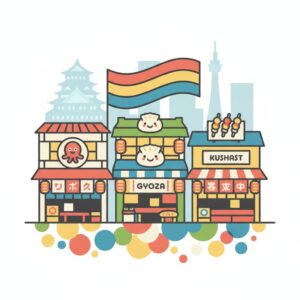
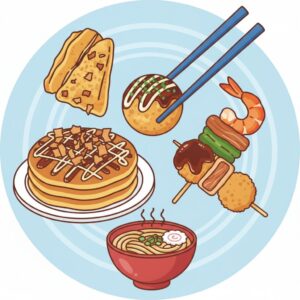
The spirit of kuidaore is the social glue of Dotonbori, most vividly expressed at the myriad street food stalls, or yatai. Eating here is rarely a solitary, sit-down affair; instead, it’s an active, shared experience. Often, it begins in line at a famed stall, like a takoyaki vendor with a queue stretching down the block. This line becomes a temporary neighborhood—a place where people exchange glances, comment on delicious aromas, and marvel at chefs’ lightning-fast skills. This shared anticipation creates camaraderie. Once you hold your prize—a boat of piping-hot takoyaki glazed with sauce and mayo, a savory okonomiyaki pancake on a stick, or grilled scallop skewers—you join the crowd eating on the move. You’ll find a ledge to lean on, a railing to rest against, or a designated spot, surrounded by others doing the same. This is where the magic unfolds. The universal language of tasty food bridges all divides. A simple smile or nod to the person next to you as you both savor bites becomes a form of communication. You might ask about their order or whether it tastes as good as it looks. Eating in such a public, lively setting strips away formality. Everyone centers on the joyful task of avoiding burns while devouring delights. It is a deeply humanizing, unifying moment. Joining this street food ritual is perhaps the easiest, most delicious way to connect with Osaka’s spirit and its people—a reminder that sometimes the strongest bonds form in the simplest moments, over a shared love for a well-crafted snack.
Navigating the Neon Jungle: Practical Tips for Social Success
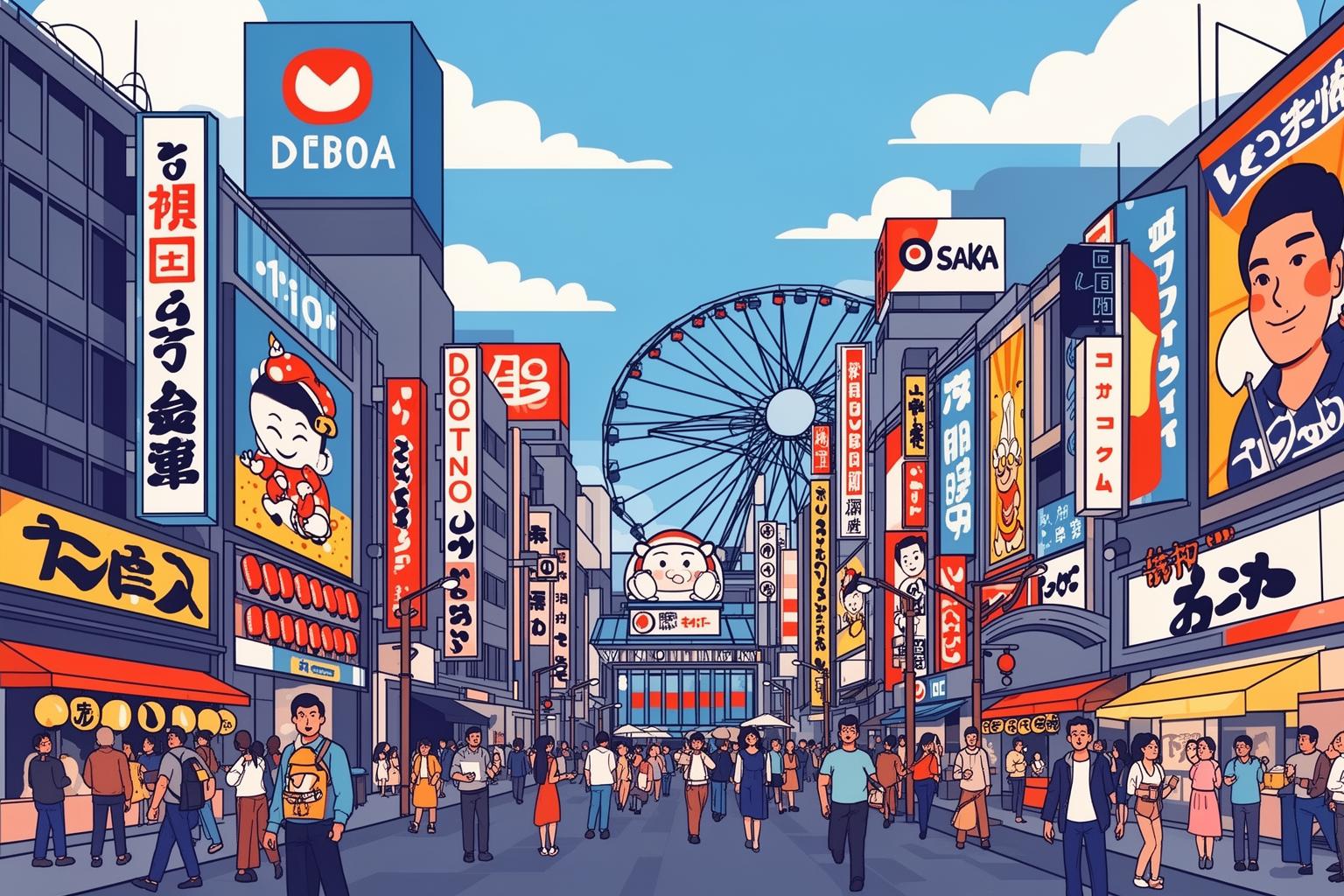
Exploring Dotonbori’s social scene can be thrilling, but having some local insight makes a big difference. Knowing the area’s vibe and a few etiquette tips can elevate an ordinary night into an unforgettable one. The first thing to keep in mind is timing. Dotonbori shows different sides throughout the day. Arriving in the late afternoon, around 4 or 5 PM, offers a more relaxed, family-friendly vibe. The crowds are manageable, and it’s an ideal time to enjoy street food without long waits. As evening falls, from 7 PM onward, the neon lights ignite the streets and the energy intensifies. This marks prime time for dinner and the start of nighttime festivities. For the fullest, most vibrant Dotonbori experience, peak hours run from 8 PM to 11 PM. The streets fill up, bars buzz, and the atmosphere becomes electric. Night owls will be pleased to know the party continues well past midnight, with many izakayas and bars open late to welcome service industry workers and dedicated night revelers. Getting there is simple, as Dotonbori anchors the Minami district, Osaka’s southern transport hub. The nearest and most convenient station is Namba, served by three subway lines (Midosuji, Yotsubashi, and Sennichimae). Osaka-Namba Station connects via Kintetsu and Hanshin railways to Kobe and Nara, while JR Namba Station is slightly west but still within easy walking distance. Upon exiting the station’s maze-like underground, use the Dotonbori Canal as your main guide. The famous Glico Man sign is on the south side of the Ebisubashi Bridge. The main pedestrian street runs parallel to the canal, also on the south side, while the Shinsaibashi-suji shopping arcade lies to the north — a different but equally lively area. Knowing a few cultural nuances will smooth your interactions. In many small izakayas and tachinomi, you may be served a small appetizer called o-toshi as soon as you sit down. This is not a complimentary dish but a mandatory table charge, usually a few hundred yen—part of the cultural experience. When paying, it’s customary to take your bill to the cashier near the entrance rather than paying at your seat. In tachinomi, you might pay for each item as you order it. Don’t let the language barrier intimidate you. Osakans are known for being more direct and open than people in other parts of Japan, and many are eager to practice English. Learning a few key phrases will be greatly appreciated. A simple Sumimasen (“Excuse me”) gets attention, Kanpai is the universal “Cheers!”, and Oishii (“Delicious!”) will always earn a smile. Above all, the best advice is to be open and approachable. A friendly attitude and a willingness to engage are your greatest assets in Dotonbori’s social scene.
Beyond the Main Strip: Finding Your Niche
While Dotonbori shines as the vibrant epicenter, the nearby neighborhoods offer distinct social atmospheres, allowing you to discover the scene that best fits your style. A brief walk northwest across the canal leads you to America-mura, or “Amemura,” the undeniable heart of Osaka’s youth culture. This area is less focused on traditional Japanese nightlife and more on a raw, creative, and alternative spirit. The focal point is Sankaku Koen, or Triangle Park, a concrete plaza where skaters, musicians, and fashion-conscious youths gather. The streets here feature vintage clothing shops, record stores, quirky cafes, and small, intimate live music venues called “live houses.” Amemura’s social vibe is relaxed and less commercial, centered on seeing and being seen, sharing creative passions, and simply hanging out. You might strike up a conversation with someone over a favorite band T-shirt or bond with fellow shoppers while rummaging through racks of secondhand denim. It’s a place to connect with Osaka’s younger, artier crowd. For a more refined and genuinely local experience, Ura-Namba (“Back Namba”) is a must-visit. Situated on the east side of Nankai Namba Station, this maze of narrow alleys boasts a remarkable concentration of outstanding, highly specialized restaurants and bars. Here, you might discover a yakitori spot specializing only in chicken neck and tail, a sake bar with over two hundred rare varieties, or a tiny Italian eatery run by a Japanese chef trained in Naples. These venues tend to be small, owner-operated, and frequented almost exclusively by locals. Exploring Ura-Namba can feel like an adventure. You may find yourself the sole non-Japanese person in a bar, which, rather than feeling intimidating, often sparks immediate interest and conversation. The patrons and owners are generally curious and welcoming, eager to share their craft with interested guests. This area offers deep dives into food and drink culture and conversations that feel truly special and off the beaten path—a rewarding experience for the adventurous social explorer.
A Note on Solo Adventure
Osaka, especially Dotonbori, is a haven for solo travelers or residents. The city’s culture perfectly suits individual exploration. The concept of the counter seat is your best friend. Almost every izakaya, ramen shop, and bar features a prominent counter, which is never seen as a less desirable spot but often as the best seat in the house. Sitting at the counter places you at the heart of the action, facing the chef and alongside other solo diners and small groups. Being alone makes you naturally more approachable—an open book whom locals are often curious to learn about. Don’t be surprised if the person next to you starts a conversation. An ideal solo evening could begin with grabbing some street food to enjoy by the canal, watching the city light up. From there, you might drop into a bustling tachinomi for a quick beer amid the after-work crowd’s energy. Finally, settle into a cozy counter seat at a Hozenji Yokocho izakaya for a longer meal, letting the conversation flow as freely as the sake poured into your cup. Solo travel in Dotonbori isn’t about being alone; it’s about the freedom to connect with the city on your own terms.
The Rhythm of the Seasons in Dotonbori
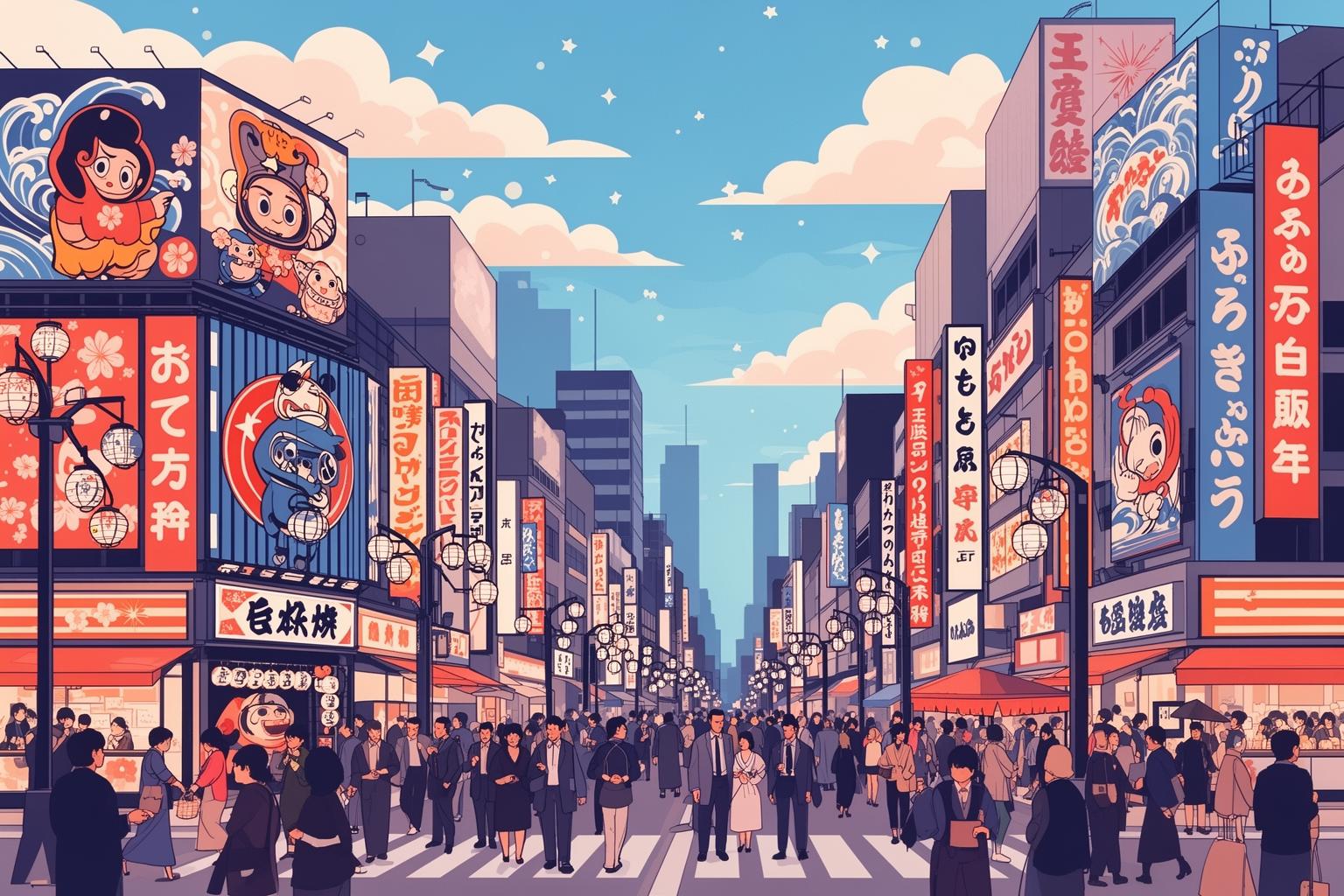
Dotonbori’s social energy shifts with the seasons, providing a unique experience each time you visit. In spring, the city bursts with a festive spirit during cherry blossom season. Although Dotonbori itself lacks greenery, the celebratory atmosphere is unmistakable. People arrive here after their hanami gatherings, carrying with them a joyful, sake-fueled energy. Summer brings thick, humid heat that enlivens the nights. The cool breeze from the canal offers a refreshing escape, and the Tonbori River Walk becomes the city’s preferred outdoor retreat. The dazzling boat processions of the Tenjin Matsuri, one of Japan’s grandest festivals, often drift through the canal, transforming the whole area into a massive, jubilant celebration. Autumn provides a welcome break from the heat, with crisp, pleasant air perfect for an evening of bar-hopping. Izakaya menus shift to highlight the season’s harvest, featuring treats like grilled sanma (Pacific saury) and fragrant matsutake mushrooms. These seasonal flavors naturally spark conversations with chefs and fellow diners alike. Winter drives people indoors, making the cozy, steamy interiors of izakayas and bars all the more inviting. The cold fosters a shared sense of warmth and intimacy. Streets are adorned with festive lights, and savoring a cup of hot, sweet amazake while watching your breath mist in the chilly air becomes a simple, collective delight. Each season casts Dotonbori in a new light, offering fresh reasons to gather and connect.
Ultimately, Dotonbori is much more than a list of sights to be ticked off. It’s a lively, ever-evolving social ecosystem. It stands as a testament to Osaka’s enduring belief that food, drink, and a touch of good-natured chaos are the essential ingredients for a memorable life. The true spirit of this place isn’t captured in a photo of a giant crab, but in the shared laughter that erupts at a crowded tachinomi counter, the quiet nod of appreciation for a chef’s skill in a lantern-lit alley, or the easy smile exchanged with a stranger while watching neon lights shimmer on the water. So, I encourage you to plunge in. Step away from the main crowds. Slide open the door to that tiny, unassuming bar. Take a seat at the counter, raise your glass to the person beside you, and offer a heartfelt “Kanpai!” The greatest souvenir from Dotonbori isn’t something you can buy; it’s the feeling of connection, the memory of a conversation, and the discovery of your own rhythm within the vibrant, beautiful pulse of Osaka’s heart.