
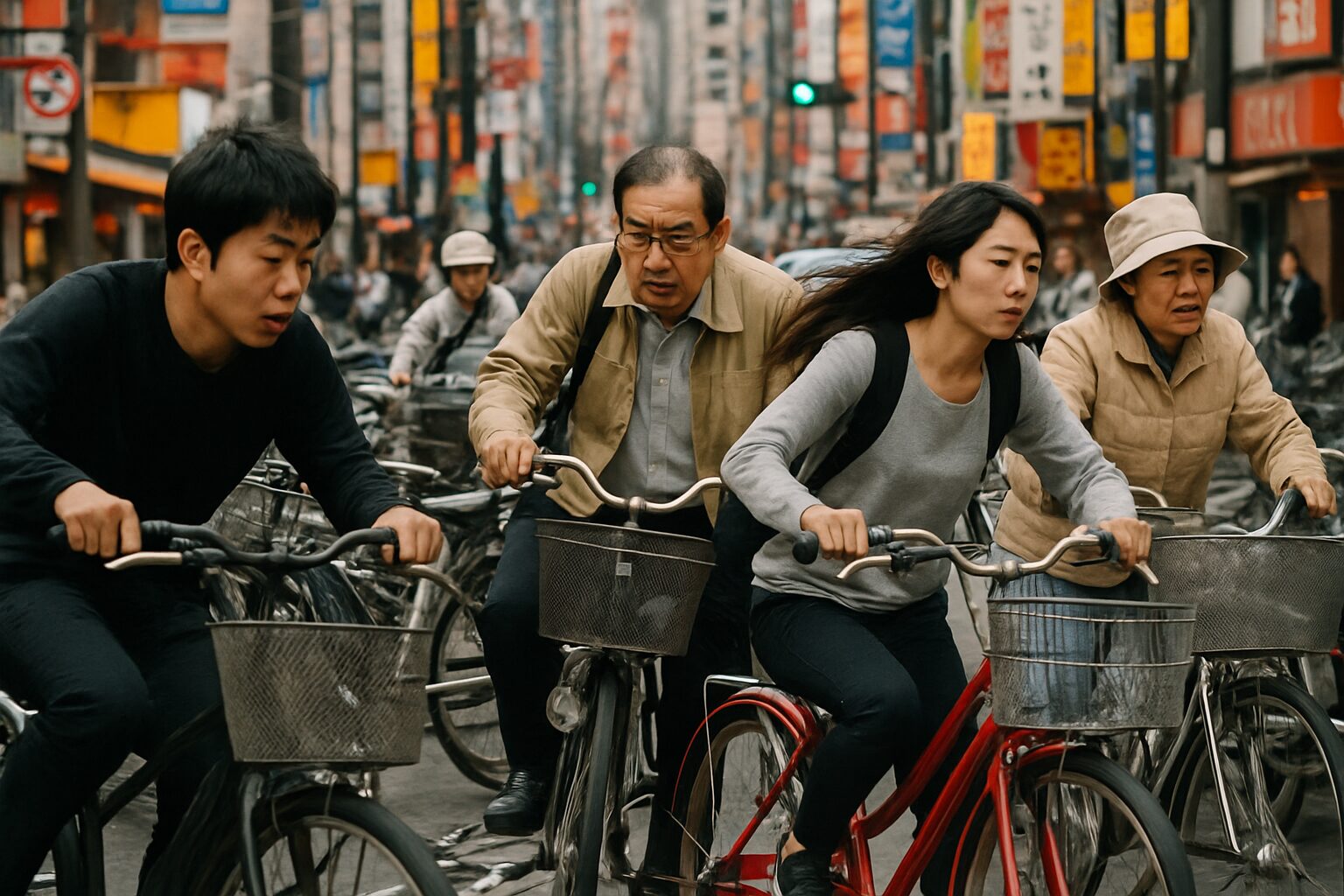
Welcome to Osaka, the city that moves to its own beat. It’s a place of incredible food, boisterous laughter, and a current of energy that flows down every street and alleyway. And the lifeblood of this current, the very thing that keeps the city’s heart pumping with such relentless vitality, is the humble bicycle. Here, the jitensha isn’t just a mode of transport; it’s a declaration of independence, a ticket to the city’s soul, and your front-row seat to the most bewildering, frustrating, and ultimately beautiful urban ballet you’ll ever witness. Forget the sleek, orderly bike lanes of other world cities. Cycling in Osaka is a full-contact sport, a masterclass in organized chaos, and an essential rite of passage for anyone wanting to truly live and breathe this metropolis. It’s where the unspoken rules of the road are written in the wind, and your survival depends not on a rulebook, but on rhythm, instinct, and a healthy dose of courage. This guide isn’t about the official laws you’ll find on a government website; it’s about the reality on the ground, the pulse of the pavement, and how you, a newcomer to this glorious mess, can not only survive but thrive on two wheels. Get ready to pedal into the heart of the real Osaka, a city that reveals its truest self to those who dare to join its chaotic, freewheeling parade.
To truly understand the city’s evolving character, consider how the declining local shotengai reflect broader changes in Osaka’s neighborhoods.
The Unspoken Rules of the Road: Osaka’s Cycling Culture
Before you even consider placing your foot on a pedal, you need to grasp the philosophy that governs Osaka’s streets. Officially, bicycles are supposed to stay on the left side of the road, ridden single file, and stop at red lights. In reality, however, the streets form a fluid, ever-changing ecosystem where cyclists, pedestrians, and cars engage in a delicate, high-stakes dance. The sidewalk serves as the main stage for this performance. Though technically designated for pedestrians, in Osaka it becomes a shared space—a bustling thoroughfare where bikes reign supreme. You’ll notice cyclists weaving gracefully through crowds like seasoned dancers, their bells offering a gentle chirin-chirin less as a warning and more as a polite, “Excuse me, just passing through.” Mastering this sidewalk dominance is a learned art. It involves reading subtle cues—the slight turn of a head, the shift of a shopping bag’s weight—to anticipate the next move. This intuitive, wordless communication prevents the whole system from descending into chaos.
At the pinnacle of this cycling hierarchy stands the legendary ‘Osaka Oba-chan’ with her trusty mamachari. She is the queen of these streets, a formidable force who fears no traffic signal, pedestrian, or narrow alleyway. Often sporting her signature sun visor and arm covers, she navigates the city with purposeful confidence and an air of invincibility. She might be carrying a week’s worth of groceries in her basket, a grandchild on the back seat, and an umbrella in one hand—yet her control remains absolute. Watching an oba-chan flawlessly execute a no-look weave through a crowded shopping arcade is witnessing a master at work. They are the guardians of the unwritten rules, and learning from their confident yet considerate style is your first step to becoming a true Osaka cyclist. The culture here isn’t aggressive; it’s assertive. It’s a shared understanding that everyone is trying to get somewhere, and the most efficient way is to bend formal rules in favor of practical, flowing harmony. You don’t demand space; you find it. You don’t follow lights blindly; you assess the entire intersection, make eye contact, and proceed with cautious confidence when the flow allows. This can be startling for newcomers, but once you sync with this rhythm, you’ll experience a freedom that’s absolutely intoxicating.
Gearing Up: Choosing Your Steed in the Concrete Jungle
Your journey starts with selecting a bicycle, and in Osaka, your choice of bike reveals much about your lifestyle. The undisputed favorite, the people’s vehicle, is the mamachari (ママチャリ), or “mom’s bike.” Don’t let the name mislead you—everyone rides them. These are the tanks of the cycling world: sturdy, single-speed or 3-speed bikes with an upright riding position, a spacious front basket, a built-in wheel lock, an automatic dynamo light, and a comfortable cushioned seat. Built for practicality rather than speed, a mamachari is ideal for grocery trips, short rides to the station, and relaxed neighborhood explorations. They’re affordable, extremely durable, and so common that they’re less likely to be stolen. This bike is your key to truly blending into the city’s daily rhythm.
If you want something lighter and faster, perhaps for longer commutes or recreational rides, a cross bike (クロスバイク) could be your best fit. A hybrid between a road bike and a mountain bike, it offers more gears and a sportier riding posture. They ease climbing bridges or gentle slopes and are perfect for exploring extensive river path networks. However, their sleek appearance makes them a bigger target for theft, so a reliable secondary lock is a must.
For those living in small apartments, a folding bike (折りたたみ自転車) provides great convenience. The ability to fold it for storage inside your apartment or on a balcony is a huge plus, and it enables a multimodal commute—cycling to a train station, folding it up, riding the train, then unfolding it to finish your trip. While the smaller wheels may make the ride slightly less stable, the portability advantage is substantial.
Finally, we have the king of convenience: the electric-assist bike (電動アシスト自転車). These are revolutionary, especially for parents transporting children in front and rear seats or for anyone living on even slight inclines. The electric motor gently boosts your pedaling, making hills feel flat and headwinds vanish. Though they are a major investment, often several times the price of a standard mamachari, the ease they provide makes them well worth it for many. Whatever you choose, buying a bike requires a crucial step: bouhan touroku (防犯登録), or anti-theft registration. This mandatory one-time registration links the bike’s serial number to your name and address. Every reputable bike shop will take care of this when you purchase. It serves as proof of ownership, essential if your bike is stolen or if police stop you for a routine check.
The Lay of the Land: Where to Ride (and Where to Avoid)
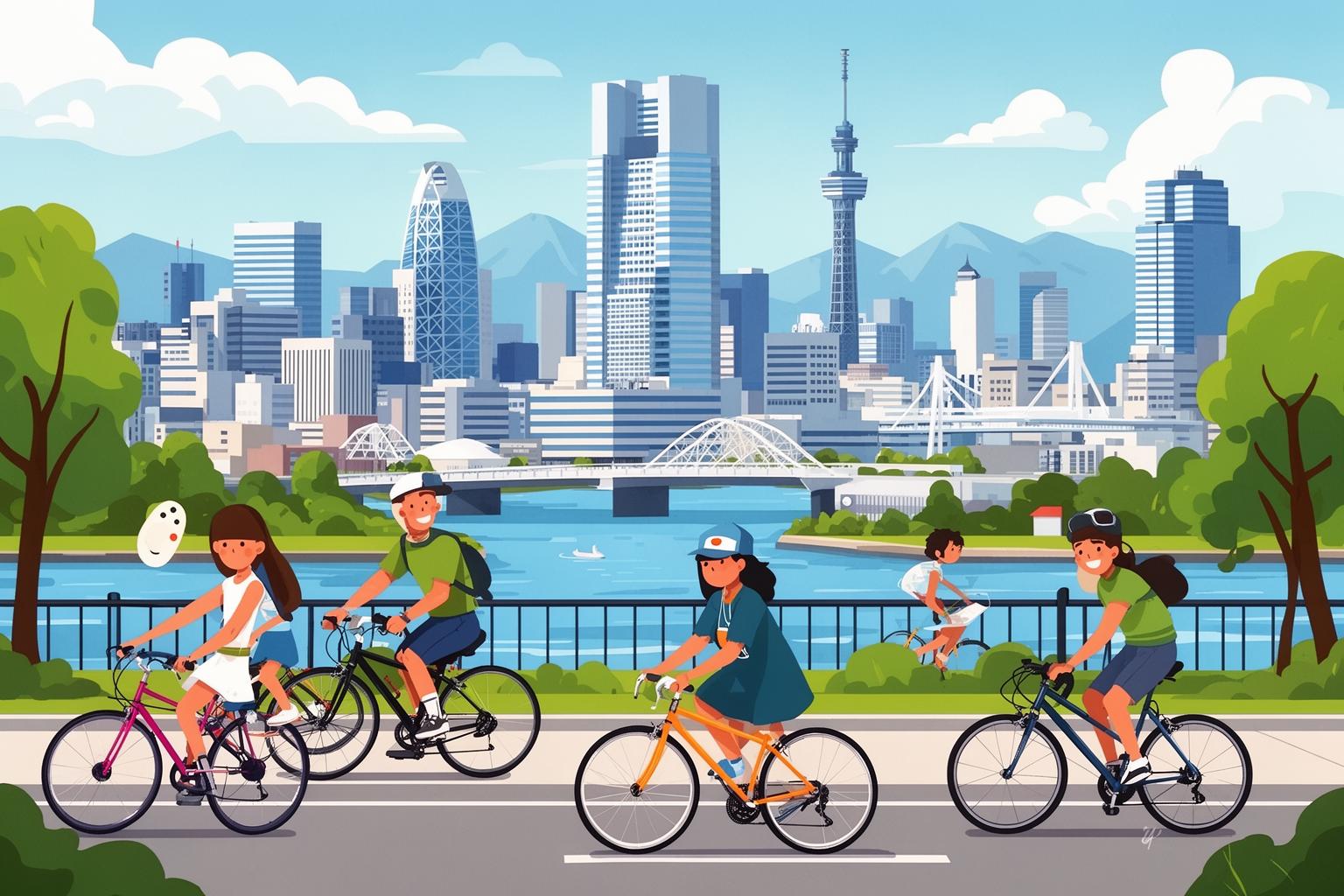
Osaka’s urban landscape is a mosaic of varied cycling environments, each presenting its own challenges and appeal. The most debated and perplexing area is the sidewalk. Although the law states bicycles belong on the street, in reality, busy roads often force cyclists onto sidewalks, which serve as informal bike lanes. This is primarily for safety reasons. Navigating narrow streets filled with buses, trucks, and taxis can be frightening. On wider sidewalks, there’s more room to maneuver, keeping you safely away from heavy traffic. The vital rule is clear: pedestrians always have the right of way. You must be ready to slow down, stop, or dismount immediately. Your speed should be only a bit faster than a brisk walk, with your attention fully engaged at all times.
Major roads like Midosuji-dori, lined with heavy traffic and upscale shops, pose a different set of challenges. Some wide streets have marked bike lanes on the pavement, which theoretically are ideal for cyclists. In practice, these lanes are often blocked by parked delivery vans, taxis waiting for passengers, or ignored by other drivers. While these lanes can provide a safer route, you need to ride defensively, always anticipating a car door might suddenly open or a truck might merge without warning.
For a uniquely Osaka experience, explore a shotengai, or covered shopping arcade. These lively commercial corridors, such as the well-known Tenjinbashi-suji, capture the city’s vibrant energy. Smaller arcades may be pedestrian-only zones, with signs instructing you to dismount and push your bike. Larger arcades, however, tend to be more chaotic with no strict rules. Cycling through a shotengai demands skillful slow weaving as you navigate around shoppers, inhale tempting aromas from food stalls, and absorb the noisy calls of vendors. It’s slow, intense, and an experience like nowhere else.
When city chaos becomes overwhelming, refuge can be found along Osaka’s rivers. The paths beside the Yodo and Okawa Rivers are broad, flat, and well-maintained, offering miles of uninterrupted, car-free cycling. Here you can pick up speed, breathe in fresh air, and enjoy a different perspective of the city. On weekends, these trails fill with families, joggers, and serious cyclists clad in lycra. A ride along the Okawa River during cherry blossom season is magical, as the paths transform into tunnels of delicate pink petals. Likewise, large green areas such as Osaka Castle Park and Nagai Park provide a peaceful escape, with their own networks of serene paths perfect for a leisurely ride away from the urban frenzy.
The Rules of Engagement: Parking, Security, and the Law
Owning a bike in Osaka introduces a new set of logistical challenges, the most notable being parking. You can’t just leave your bike anywhere. Illegally parked bicycles, especially near train stations, commercial hubs like Umeda and Namba, and busy shotengai, are seen as a threat to municipal order. The city hires contractors who patrol the streets, tagging illegally parked bikes with bright warning notices. If you find one on your bike, consider it a final warning. Ignore it, and the next time you return, your bike will be gone, replaced by a chalk outline and a notice explaining its impoundment.
Retrieving an impounded bike is both frustrating and expensive. You’ll need to locate the correct impound lot (often far from the city center), visit during limited hours, present your ID and bike lock key, and pay a fine to get your bike back. It’s an experience you’ll want to avoid repeating. To prevent this, mastering the art of finding legal bicycle parking, or churinjo (駐輪場), is essential. These vary in type. The most common are multi-level garages or open lots near train stations, where you slot your bike into a rack and a metal clamp secures the front wheel. Payment is made at a central machine upon leaving. Some facilities are more advanced, with automated underground systems that store and retrieve your bike with a swipe of a card. Others are simple, unattended racks relying on an honor system. Knowing the locations and capacity of churinjo in your daily routes is a crucial urban survival skill.
Bike theft remains a harsh reality. Although Japan is known for its safety, bicycles are frequent targets for thieves. The built-in lock on a mamachari rear wheel deters casual joyriders but won’t stop a determined thief. Investing in a sturdy secondary lock—a heavy-duty chain, cable lock, or U-lock—is essential. Always try to lock your bike’s frame to a fixed object like designated railings or bike racks. Thieves often lift bikes and carry them away if only the wheel is locked. Beyond locking, your best protection is your bouhan touroku registration. Police regularly stop cyclists (foreigners may be targeted more often) to scan registration stickers and verify ownership in their database. Though it may seem cumbersome, this system helps recover many stolen bikes. If you buy a second-hand bike, ensure you get the transfer of ownership paperwork to re-register it in your name. Without this, you risk being suspected of riding a stolen bike.
The Legal Labyrinth: Official Rules You Should Know (Even if Others Don’t Follow Them)
While daily life on Osaka’s streets appears to follow an informal, unwritten code, there is an official legal framework governing cycling, and disregarding it can have serious consequences. It’s essential to be aware of these rules, even if you frequently witness them being broken around you. First and foremost, riding under the influence of alcohol is a major taboo. Cycling drunk is treated as seriously as drunk driving a car. Penalties are harsh, including hefty fines, possible jail time, and for foreign residents, the real risk of visa cancellation and deportation. This is one rule that admits no exceptions.
Other important regulations are enforced during occasional crackdowns. It’s legally prohibited to use a mobile phone while cycling or to ride while holding an umbrella. The latter is perhaps the most widely ignored rule in Japan. When it rains, Osaka’s streets fill with cyclists awkwardly balancing umbrellas. Although illegal, it is so common that the police often overlook it. However, to stay safe, many locals use special umbrella holders mounted on the handlebars—a clever, though somewhat unstable, workaround. The law also forbids riding side-by-side; you must ride in single file. At night, a front light is mandatory. Most mamachari bikes have dynamo lights that turn on automatically, but if yours does not, you must attach and illuminate a battery-powered light.
A more recent change is the helmet law. Since April 2023, wearing a helmet is considered a doryoku gimu, or an “effort obligation,” for cyclists of all ages. This uniquely Japanese legal concept means you are strongly encouraged and expected to wear a helmet, but there is currently no fine or penalty for not doing so. As a result, children and serious cyclists tend to wear helmets, but most adults on mamachari bikes still do not. It remains a personal choice, but given Osaka’s chaotic environment, it is a safety measure worth thoughtful consideration.
Finally, and most importantly for residents, is bicycle liability insurance. Osaka Prefecture requires all bicycle owners to have liability insurance. This protects you if you cause an accident resulting in injury to another person or property damage. Accidents involving cyclists and pedestrians can lead to court-ordered compensation payments reaching enormous sums. Standard home or accident insurance often does not cover this. Fortunately, dedicated bicycle insurance is affordable—often only a few thousand yen per year—and available at convenience stores or online. This is not merely a recommendation; it is a legal requirement and a vital form of financial protection that every Osaka cyclist must have.
A Cyclist’s Survival Guide: Practical Tips & Tricks
Mastering the art of cycling in Osaka involves more than just knowing the rules and selecting the right bike. It’s about honing practical skills and developing an intuitive feel for the city’s rhythm. Your bell is a crucial tool, but think of it as a scalpel rather than a sledgehammer. A quick, polite chirin-chirin when approaching a pedestrian from behind signals your presence without startling or intimidating them. It’s a request for awareness, not a demand to move aside. You’ll learn to distinguish the subtle differences in tone and timing that set a friendly alert apart from an impatient command.
Embrace the “slow weave,” the essential technique for maneuvering through crowded sidewalks and shotengai. It’s not about speed but about maintaining momentum. Keep a slow, steady pace and gaze well ahead, anticipating the crowd’s movements. Like a river flowing around stones, you’ll find the path of least resistance by making small course adjustments to slip through gaps as they appear. This demands sharp focus and a calm attitude, as panic and sudden moves are your worst enemies.
Stay hyper-aware of your surroundings. Always watch for car doors suddenly opening into your path. At intersections, don’t simply rely on the traffic light; study the drivers. Try to establish eye contact with a driver waiting to turn left to ensure you’re seen. Be mindful of other cyclists merging from side streets and pedestrians who might step off curbs without looking. Keep your head on a constant swivel.
Rainy days bring a distinctive challenge and are a quintessential part of Osaka’s cycling scene. Invest in a good cycling poncho, or kappa. These are no ordinary raincoats; they’re spacious garments designed to cover you, your handlebars, and your front basket, creating a personal, mobile shelter. A transparent panel at the front lets your headlight shine through. Riding through a downpour under a kappa is a strangely cozy and surreal experience, enabling the city to keep moving, rain or shine.
Finally, basic maintenance will save you countless troubles. Keep your tires properly inflated, as riding on soft tires is tiring and prone to punctures. Many local bike shops—and even some large supermarkets—offer free air pumps outside. A squeaky chain is a sure sign your bike needs care. A small can of bicycle lubricant will keep your ride smooth and quiet. Mastering these simple tasks will greatly enhance your cycling experience.
Beyond the Commute: Embracing the Cycling Lifestyle
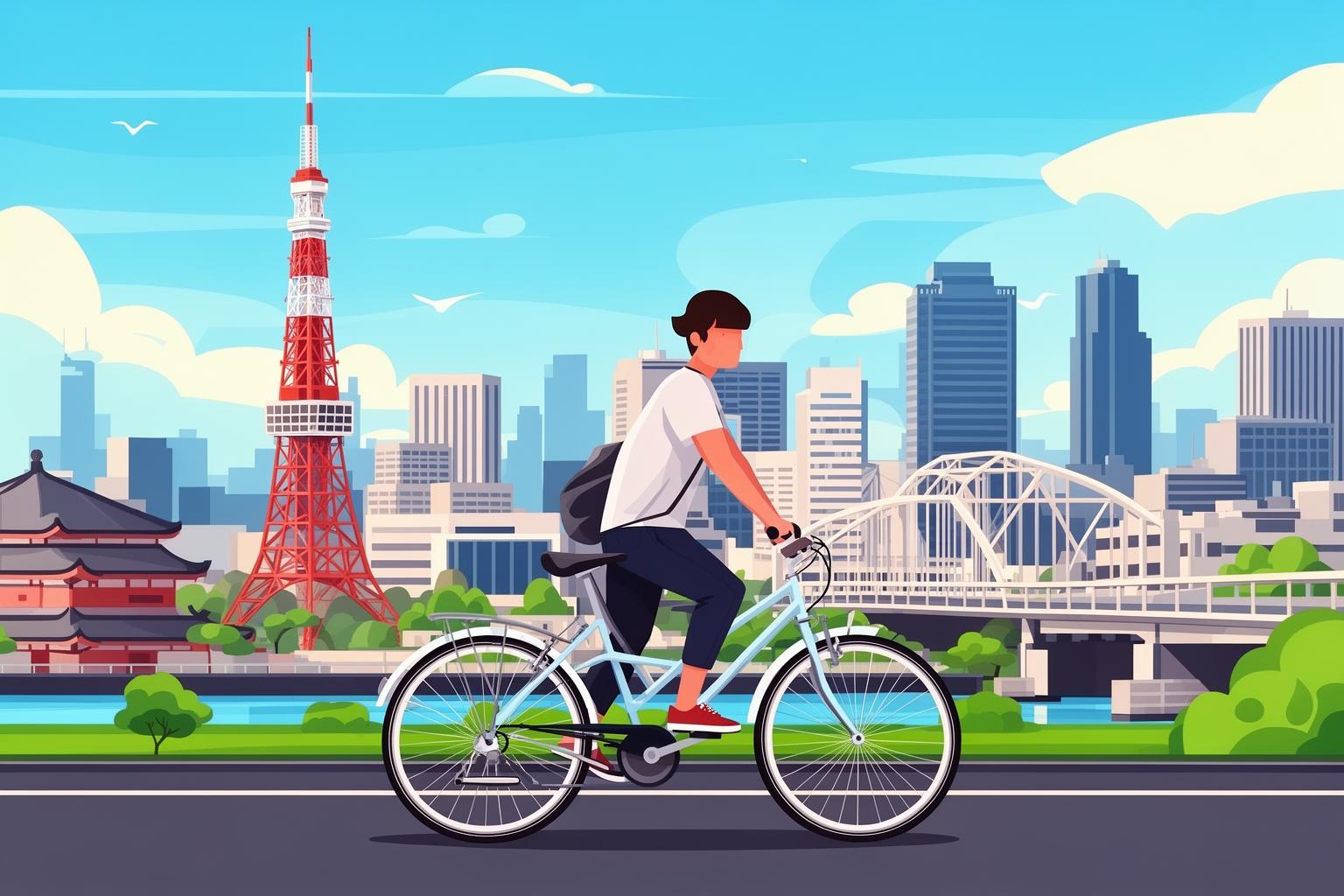
Once you overcome the initial learning curve and the chaos starts to feel less like a threat and more like a dance, you’ll uncover the true joy of cycling in Osaka: freedom. A bicycle frees you from the strict schedules and fixed routes of trains and subways. It allows you to explore the city on your own terms, to venture down that narrow alleyway that caught your attention, to find a hidden temple, a tiny coffee shop, or a quiet neighborhood park not listed in any guidebook.
Your bike becomes a key unlocking the city’s many layers. You can take a relaxed weekend ride to Osaka Castle and admire its grandeur from a viewpoint that the nearest subway station can’t offer. You can pedal through the retro-chic streets of Nakazakicho, park your bike, and browse its quirky vintage shops and galleries. You can design your own culinary journey, cycling from one takoyaki stand in Namba to a kushikatsu spot in Shinsekai, guided by your senses rather than a train route. The bicycle turns the city from a series of points on a map into a seamless, interconnected experience.
More than merely a tool for exploration, it’s a tool for integration. When you cycle to the local sento (public bath) and park your mamachari alongside dozens of others, you partake in a communal tradition. When you fill your basket at the neighborhood supermarket, you’re living the everyday life of an Osakan. Your bike isn’t just for traveling between points; it’s for living within the city’s fabric. It’s for late-night convenience store runs, for moving between friends’ homes, for finding the perfect riverbank spot to watch the sunset. It connects you to the seasons’ rhythms—from the crisp autumn air to the humid summer heat—in a way that the climate-controlled environment of a train never can.
So yes, cycling in Osaka can feel intimidating. It’s a world apart from the orderly bike paths you might be used to. But don’t let the chaos discourage you. See it as an invitation—an invitation to engage with the city on a deeper, more personal level. Learning to navigate these streets is learning the city’s own language—a language of subtle signals, shared understanding, and constant forward motion.
Embracing life as an Osaka cyclist is one of the most genuine experiences you can have here. It will test your patience, sharpen your reflexes, and reward you with a sense of unmatched freedom and belonging. So, grab a sturdy mamachari, take a deep breath, and set off into the controlled chaos. Weave through the crowds, ring your bell politely, and find your rhythm in the magnificent, maddening, and utterly magical urban ballet of Osaka. You’re not just riding a bike; you’re becoming part of the city’s beating heart.








