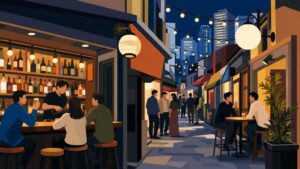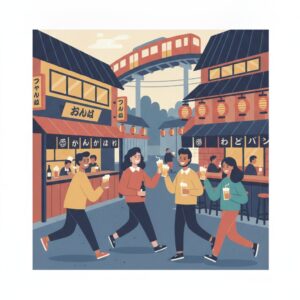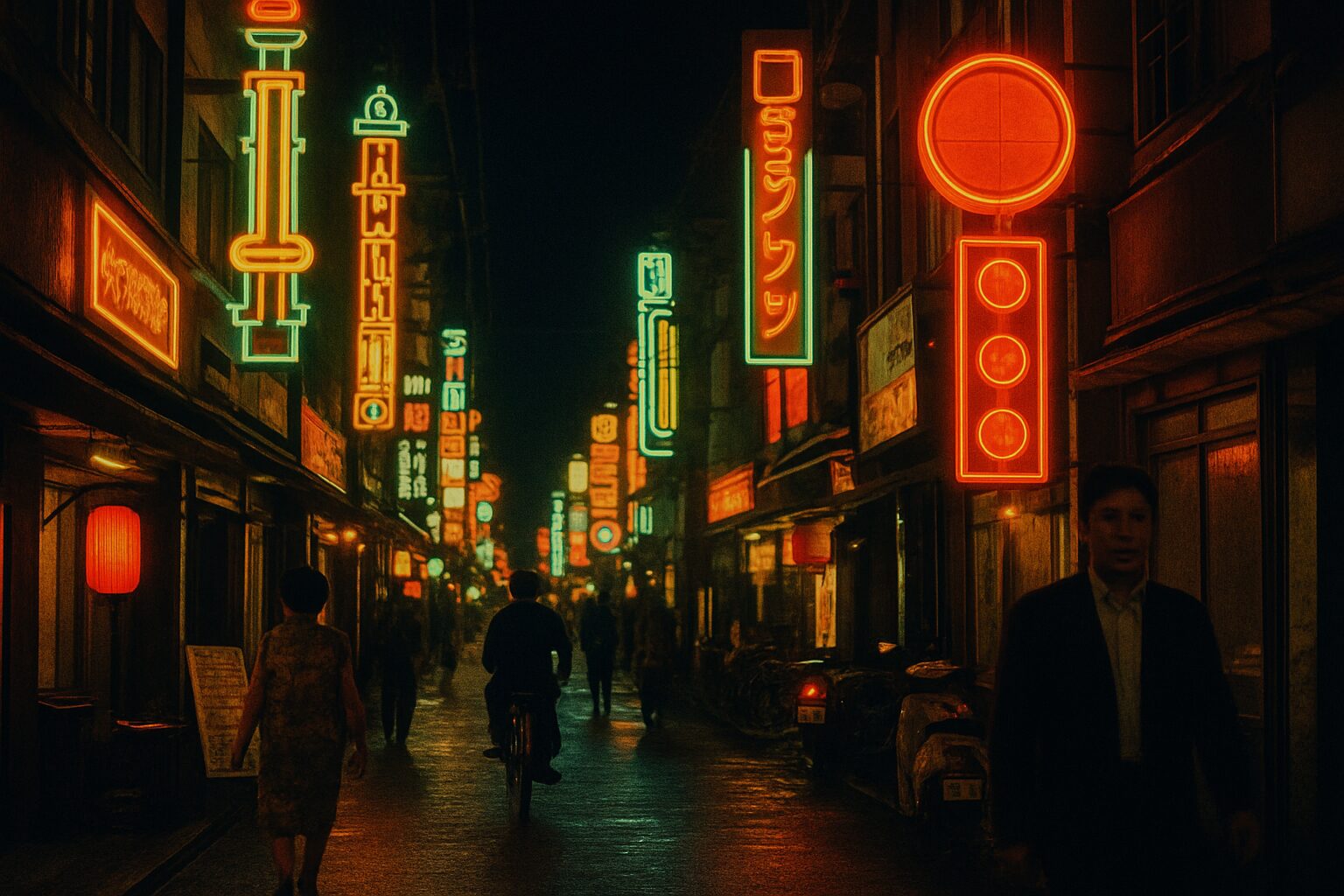
Step off the train just one stop from the gleaming commercial monolith of Umeda, and you’ll find yourself in a different world entirely. This isn’t the polished, picture-perfect Japan of travel brochures. This is Juso. A place where the neon signs are a little dimmer, the alleyways are a little narrower, and the air hangs thick with the savory smoke of yakitori and the unfiltered energy of local life. Juso is the thumping, gritty heartbeat of a bygone era, a living museum of Showa-period nostalgia that refuses to be gentrified. For the foreign resident in Osaka looking to peel back the tourist-friendly veneer and discover something raw, real, and profoundly authentic, Juso isn’t just a destination; it’s an initiation. It’s a neighborhood that doesn’t preen for visitors; it simply exists, inviting you to dive into its labyrinthine streets and discover the stories etched into its weathered facades. This is where Osaka unwinds, where the ties are loosened, and the city’s true character comes out to play after dark. It’s a challenge, a delight, and an unforgettable urban adventure waiting to be had.
If you’re drawn to Osaka’s authentic, gritty nightlife, you might also enjoy exploring the vibrant izakaya scene in the neighboring district of Tenma.
The Vibe: What Juso Feels Like After Dark
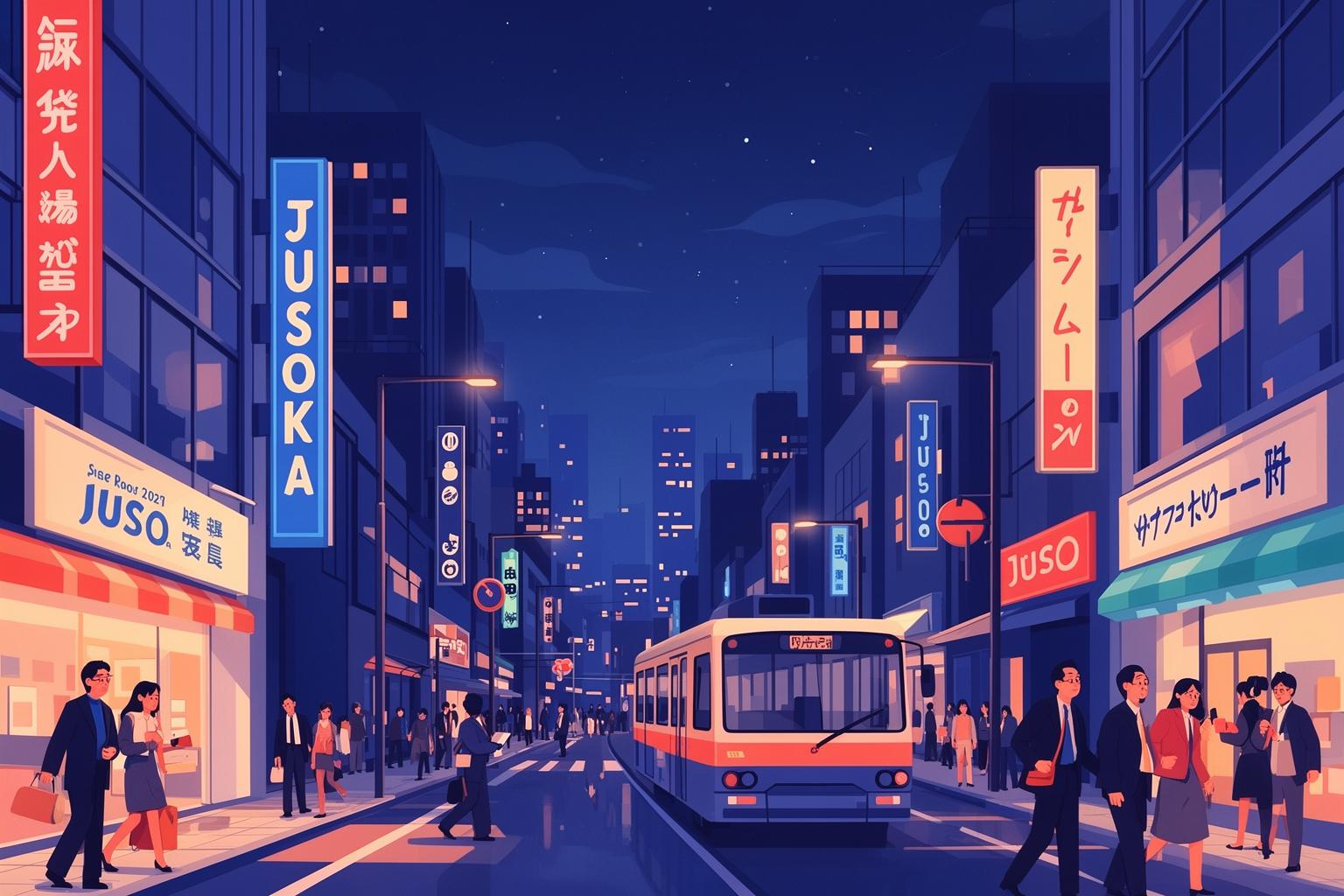
To truly grasp Juso, you first need to immerse yourself in its atmosphere. This sensory experience begins the moment you step out of the station’s west exit. The sleek, sterile Hankyu train platform gives way to a lively, chaotic symphony of the streets. The first thing that strikes you is the sound—a layered melody: the cheerful, repetitive jingle of a pachinko parlor, the clatter of train wheels overhead, the sizzle of oil from a kushikatsu stand, and the low, rumbling murmur of conversations spilling from behind the noren curtains of numerous izakayas. There’s an energy here that feels lived-in, a comfortable chaos woven over decades. Unlike the performative hustle of Dotonbori, Juso’s energy belongs to its residents. It’s the collective exhale of a working city.
The visual landscape reflects the Showa era’s lasting aesthetic. Buildings are low and compact, typically two or three stories, clustered along narrow streets that defy any logical grid. Faded plastic signs, some bearing lettering styles long out of fashion since the 1970s, hang precariously above storefronts. Red paper lanterns, or akachochin, cast a warm, inviting glow, drawing you into hidden interiors. The patina of age is everywhere—in stained concrete, slightly rusted metal shutters, and weathered wooden counters glimpsed through open doorways. This isn’t decay; it’s character—a physical record of countless nights filled with laughter, conversations, and community.
Then there’s the scent, a rich, intoxicating blend of grilled meat, sweet soy-based tare sauce, dashi broth, and stale beer. It smells of sustenance and socialization—the aromas that have beckoned generations of workers after long days. As you walk, you pass through invisible clouds of fragrance—one moment it’s the smoky char from yakitori, the next the sweet, doughy aroma of a takoyaki stand. It’s a primal, appetite-awakening sensation that connects you to the neighborhood’s culinary heart. The people complete the atmosphere. You’ll spot groups of salarymen, ties loosened, laughing heartily over beers; older couples sharing quiet meals at familiar counters; lone drinkers finding comfort in a glass of shochu and a chat with the bar master. Juso is a cross-section of local Osaka life, a place where people from all walks of life come together to share a common experience. It’s unpretentious, welcoming to those who approach it respectfully, and entirely free of the self-consciousness typical of more tourist-driven areas.
A Labyrinth of Libations: Navigating Juso’s Bar Scene
At its essence, Juso is a district devoted to the art of relaxation, with a bar scene that is both densely packed and remarkably varied. Drinking here isn’t about fancy cocktails or exclusive lounges; it’s about finding a cozy spot, often no larger than a living room, and settling into the neighborhood’s rhythm. This journey can lead you from lively, bustling standing bars to quiet, intimate counters where the owner has been pouring sake for fifty years. Exploring this world means embracing the thrill of discovery, peeking behind curtains, and seeing where the night takes you.
The Shotengai: Your Gateway to the Night
For most, the adventure begins in the shotengai, covered shopping arcades radiating from the station. By day, these bustling corridors are filled with locals buying groceries, picking up prescriptions, or grabbing pastries. But as night falls, a transformation takes place. Fruit stands and butcher shops close their shutters, and izakayas and bars come alive. The Juso Fureai-dori and Juso Nishi-dori arcades turn into glowing tunnels of light and sound, each entrance a gateway to a new experience.
These arcades offer the perfect introduction for any Juso newcomer. They provide a less overwhelming glimpse of the nightlife, featuring a mix of establishments from large, easy-to-enter chain izakayas to small family-run spots that have stood for generations. The air hums with energy, and the range is dazzling. You’ll find yakitori stalls where grill smoke spills into the arcade, tempura shops serving freshly fried treats, and all-around izakayas with extensive menus of Japanese comfort food. Walking the shotengai is like browsing a living menu, guided by sights and aromas toward your first stop of the evening.
Tachinomi Culture: Standing Side-by-Side with Locals
For a truly authentic Juso experience, embracing tachinomi culture—standing bars—is essential. These small, no-frills spaces usually have patrons standing at counters or around high tables. The lack of seats isn’t just about saving space; it encourages a unique social vibe. It’s fleeting, communal, and highly efficient. Guests aren’t meant to linger for hours but to pop in, enjoy a few drinks and small dishes, then move on—ideal for bar-hopping and sampling Juso’s offerings.
Entering a tachinomi can feel intimidating at first. Spaces tend to be tight, filled with regulars who seem to all know each other. Yet, the atmosphere is almost always welcoming. A simple nod and smile usually suffice for a warm reception. Ordering is straightforward: catch a staff member’s eye and point to your choice or say its name if you can. Many tachinomi operate on a cash-on-delivery basis, leaving money on a small counter tray, so tracking spending is easy. The food is simple, affordable, and tasty—think doteyaki (a rich stew of beef sinew and miso), various kushikatsu, and grilled fish. Drinks are equally straightforward: draft beer (nama biru), highballs, and inexpensive sake dominate. Standing shoulder-to-shoulder with locals in these cozy spots is one of the quickest ways to connect with the city’s spirit.
Beyond the Arcades: Discovering Hidden Gems
While the shotengai serve as Juso’s nightlife main arteries, the neighborhood’s true soul lies in the tiny, unnamed alleys branching from them. Venturing into this labyrinth reveals a deeper layer of local culture. Here, lights dim, sounds soften, and venues become more specialized and intimate. These alleys hide real treasures—tiny bars run by a sole proprietor, niche snack bars, and eateries with unreadable signs yet packed with regulars nightly.
This is also where the unique world of “snack bars,” or sunakku, unfolds. Typically managed by an older woman, the “mama-san,” snack bars focus less on food and drink and more on conversation and camaraderie. Patrons, often regulars, sit at a counter chatting with the mama-san and each other. Most have karaoke machines, making singing a key part of the experience. It’s important to note that most snack bars charge a cover fee (charaji or setto ryokin), which covers seating and sometimes light snacks. These places can be very welcoming, but it’s best to approach with respect and openness. Some of the most memorable evenings happen here, sharing songs and stories with new acquaintances.
Exploring these back alleys requires courage and sharp observation. Look for warm lantern glows, listen for laughter, and trust your instincts. A polite “ii desu ka?” (“Is it okay?”) before entering a small, crowded spot can open many doors. This is the heart of deep Juso, far from the main streets, where every doorway holds the promise of a new discovery.
More Than Just a Drink: The Culinary Heart of Juso
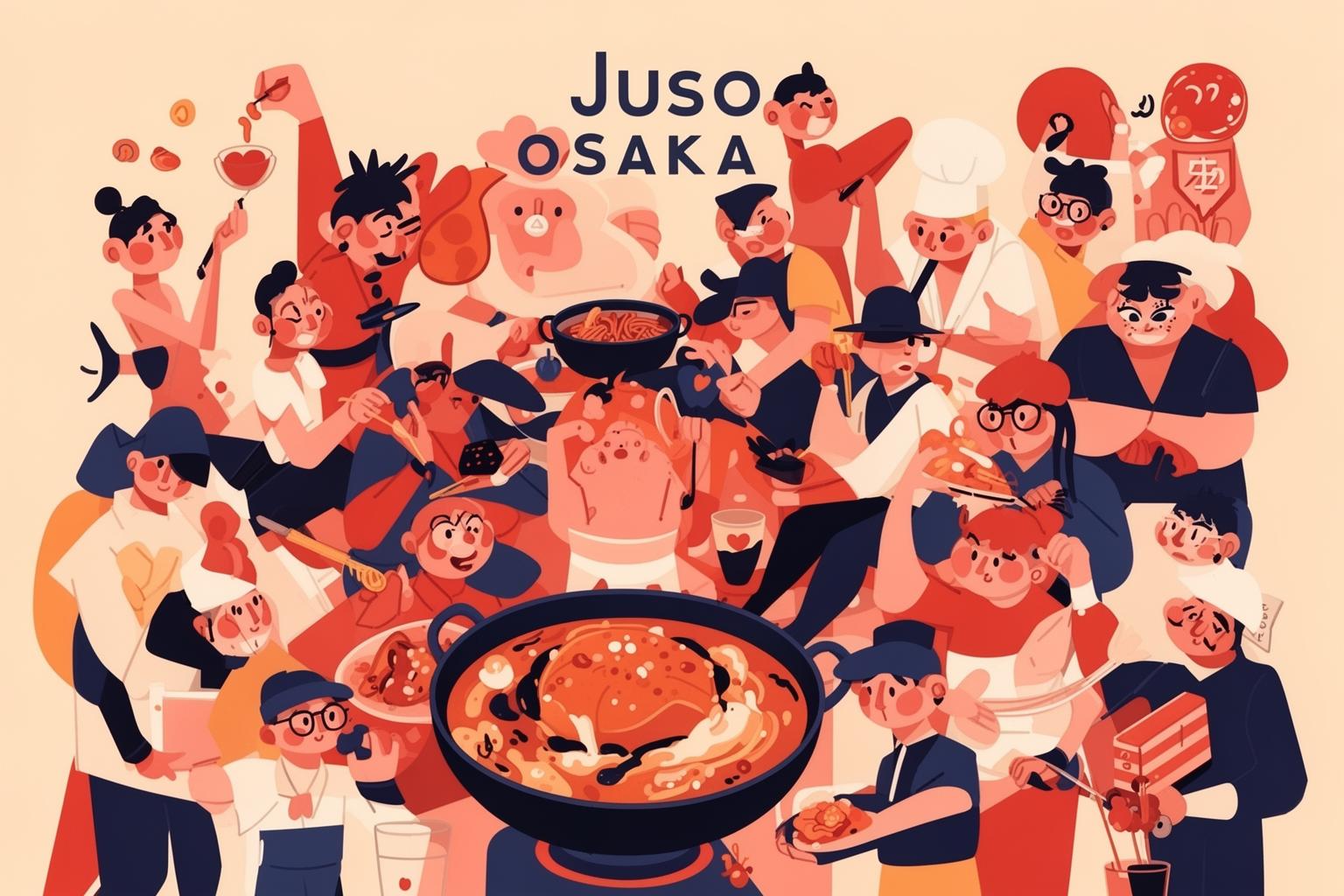
In Juso, drinking and eating are inseparable companions. The neighborhood’s character is deeply tied to its straightforward, hearty, and soul-nourishing cuisine. This is not a spot for delicate gastronomy; it’s a place for dishes meant to be enjoyed alongside a beer—flavorful and generous in spirit. From smoky grilled skewers to the famed savory pancake of the area, Juso presents a culinary journey through Osaka’s working-class soul.
Yakitori and Kushikatsu: The Aroma of the Streets
Two dishes dominate Juso’s culinary scene above all else: yakitori and kushikatsu. Yakitori, grilled chicken skewers, is elevated to an art form here. You’ll discover shops where masters have honed their charcoal grilling techniques for decades. The menu offers a thorough exploration of chicken, featuring standard cuts like momo (thigh) and negima (thigh and leek), alongside adventurous choices such as kawa (crispy skin), sunagimo (gizzard), and hatsu (heart). Each skewer is seasoned with either shio (salt) or tare (a sweet and savory soy-based glaze), and watching the cooking process is a captivating display of controlled flame and precise timing.
Kushikatsu, deep-fried skewers of meat, seafood, and vegetables, is another Osaka staple that Juso executes superbly. The concept is straightforward: select a quality ingredient, skewer it, dip it in light batter and panko breadcrumbs, then fry until golden. The charm lies in the communal pot of thin, savory dipping sauce at the counter. Here, one inviolable rule holds: no double-dipping. You dip your skewer once—only once—before taking the first bite. This custom is rooted in public hygiene and local tradition, and following it shows respect. From lotus root and shiitake mushrooms to pork belly and shrimp, a kushikatsu meal offers a delightful mix of textures and tastes.
Negiyaki: Juso’s Signature Dish
While Juso shines with many of Osaka’s classic foods, it boasts a standout specialty: negiyaki. Often described as a cousin of okonomiyaki, this savory pancake deserves more credit. Unlike the cabbage-based okonomiyaki, usually topped with thick sweet sauce and mayonnaise, negiyaki features a lighter batter highlighted by a generous mound of finely chopped green onions (negi). It’s typically seasoned with soy sauce, resulting in a cleaner, more aromatic flavor.
The undisputed home of negiyaki is Negiyaki Yamamoto, a legendary eatery just a short walk from Juso station. Established decades ago, this institution has mastered negiyaki. Sitting at the counter, diners can observe chefs skillfully working the large teppan grill—spreading batter, piling on green onions, adding preferred fillings like beef tendon (suji, a local favorite), and pressing it all into a perfectly cooked pancake. The result is an exquisite blend of tender, savory batter, the subtle sweetness of cooked onions, and the rich flavor of the fillings. No visit to Juso is complete without tasting negiyaki at Yamamoto.
Late-Night Ramen and Udon: The Art of the ‘Shime’
No night of drinking in Japan concludes properly without the ‘shime,’ the final dish to end the evening. In Juso, this usually means a hot bowl of ramen or udon. As the night deepens and izakayas start closing, noodle shops come alive. These often small, counter-only establishments serve rich, comforting broths perfect for post-drinking cravings. You’ll find classic tonkotsu (pork bone) ramen with its creamy, opaque soup, as well as simpler shoyu (soy sauce) broths. These humble noodle bowls are more than meals—they are rituals, providing a satisfying and comforting conclusion to a night exploring the heart of Osaka.
The Historical Fabric: Understanding Juso’s Grit and Glory
Juso’s distinct character is no coincidence; it is shaped by its geography, history, and its role as a key crossroads for people in the Kansai region. To fully appreciate the neighborhood’s gritty charm, one must understand the forces that molded it. Juso has always been defined by the intersection of the Hankyu railway lines. It serves as the crucial junction where the lines to Kobe, Takarazuka, and Kyoto converge, just before crossing the Yodogawa River into Umeda’s central hub. This strategic location made it a natural center for commerce and entertainment from the early 20th century onward, where people from across the region would stop, gather, and relax.
The Juso we know today was shaped in the aftermath of the war. Like many neighborhoods around major train stations, it blossomed into a bustling hub during Japan’s rapid postwar economic recovery. Black markets flourished, and a lively, often chaotic entertainment district emerged to meet the needs of a working population eager for leisure. The narrow alleys, the cluster of small buildings, and the slightly illicit ambiance all stem directly from this era. The Showa period is more than just a stylistic influence in Juso; it is ingrained in its very essence. The neighborhood’s resistance to extensive redevelopment has preserved this historical layer remarkably well, providing a rare and authentic window into a crucial period of modern Japanese history.
It is also necessary to acknowledge Juso’s more infamous reputation. For decades, it has been recognized as one of Osaka’s notable red-light districts. This aspect of its identity is undeniable and is concentrated in a defined area to the east of the station. However, to reduce Juso solely to this would be a significant oversimplification. This adult entertainment zone coexists with, though remains largely separate from, a vast network of inviting izakayas, restaurants, and bars that compose most of the neighborhood. It is part of Juso’s complex, multifaceted character but by no means tells the entire story. Visitors seeking genuine food and drink experiences can easily avoid this area, which does not detract from the incredible offerings found in the main shotengai and surrounding alleys.
Practical Navigation for the Juso Explorer
Juso’s chaotic layout might seem overwhelming at first, but with a few simple tips, it’s an easy and rewarding place to explore. Its incredible accessibility and compact size make it a perfect destination for an evening adventure.
Getting There and Getting Around
Reaching Juso couldn’t be easier. Juso Station is part of the Hankyu Railway network. From the main Hankyu Osaka-Umeda Station, it is the very first stop on all three main lines: the Kobe Line, the Takarazuka Line, and the Kyoto Line. The trip takes just three minutes. This close proximity to the city center contributes to Juso’s unique and distinct identity.
Upon arrival, the station itself serves as your main point of reference. It effectively divides the neighborhood into an east side and a west side. The West Exit (Nishi-guchi) hosts the main nightlife area, including the Juso Fureai-dori shotengai and most of the well-known bars and restaurants. The East Exit (Higashi-guchi) is quieter but also offers its own selection of eateries and is nearer to the adult entertainment district mentioned earlier. For first-time visitors, starting from the West Exit is highly recommended. The best time to experience Juso is from late afternoon onwards. Arriving around 6 PM lets you witness the neighborhood’s shift from its daytime character to its nighttime atmosphere, as shops close and lanterns are lit. The real energy kicks in after 7 PM and lasts well into the night.
Tips for a Smooth First Visit
Some preparation can help make your visit to Juso more enjoyable. First and foremost, bring cash. While some larger establishments accept credit cards, most of the small, traditional, and more interesting places are cash-only. Carrying enough yen is essential. Learning a few basic Japanese phrases will also be extremely helpful and appreciated. Simple expressions like “Sumimasen” (Excuse me/Sorry), “Kore kudasai” (This one, please), and “Oishii!” (Delicious!) can help bridge language gaps and show respect for local culture. When it’s time to pay, use “Okanjo onegaishimasu” (The bill, please).
For your first visit, stick to the main shotengai to get a feel for the area. The atmosphere is lively, and there are plenty of options. As you become more comfortable, explore the smaller side streets. Don’t hesitate to enter a place that looks interesting, even if you can’t read the menu. Pointing to dishes other customers are enjoying is an acceptable way to order. One important thing to keep in mind is the cover charge. In many izakayas, you’ll be served a small appetizer called an “otoshi” shortly after sitting down. This isn’t free; its cost is included as a seating fee. Smaller bars and snack bars may have a direct cover charge called a “charaji.” This is a common part of Japanese bar culture, so don’t be surprised when it appears on your bill. Lastly, trust the locals—if a small bar is packed with happy patrons, it’s almost certainly a great spot.
Beyond the Bars: Juso by Day and by the River
Although Juso’s reputation is centered on its nightlife, the neighborhood offers more than just its glowing lanterns. During the day, the shotengai reveal their true role as the commercial hub of a residential area. The arcades are alive with the sights and sounds of daily life: neighbors chatting in a local coffee shop, fresh produce neatly arranged at the greengrocer’s, and the aroma of freshly baked bread wafting from a family-run bakery. Exploring Juso by day provides a glimpse into the quiet, everyday life that supports its lively nights.
One of the neighborhood’s greatest daytime attractions is its closeness to the Yodogawa River. A short walk from the station, the riverbank opens onto a vast green space. The wide, paved paths along the river are ideal for walking, jogging, or cycling, offering stunning views of the Umeda skyline across the water. On sunny weekends, the grassy banks fill with families enjoying picnics, local sports teams practicing, and people relaxing outdoors. This natural retreat offers a refreshing contrast to the dense urban core of Juso.
The riverbank also hosts one of Osaka’s most spectacular events: the Yodogawa Fireworks Festival. Held annually on the first Saturday of August, this grand pyrotechnic display draws hundreds of thousands of spectators. The skies above the river light up with color for an hour, transforming the area around Juso into a massive, joyful street celebration. If you’re in Osaka at this time, it’s an unforgettable experience—though be prepared for large crowds.
An Invitation to the Real Osaka

Juso is not a neighborhood that can be easily summarized or neatly categorized. It is a place of striking contradictions: lively yet cozy, rough yet welcoming, chaotic yet steeped in tradition. It serves as a gateway to the Showa era, a period of unyielding energy and optimism that still resonates through its narrow alleys. A night in Juso is more than just bar hopping; it is a cultural experience. It’s about savoring perfectly grilled chicken skin, feeling the camaraderie in a crowded standing bar, hearing a forgotten enka tune drifting from a snack bar, and seeing a thousand red lanterns reflected on wet pavement.
This is not a place for the passive bystander. Juso invites—and in some ways challenges—you to engage. To be bold, curious, and step beyond your comfort zone. While it may lack the iconic landmarks found in other Osaka districts, it offers something far more precious: a genuine connection to the city’s living, breathing spirit. For those willing to look beyond the polished surface and embrace authenticity, Juso awaits. It is an unforgettable lesson in the beauty of imperfection and a powerful reminder that the richest travel experiences often lie just one stop away from the well-trodden path.