
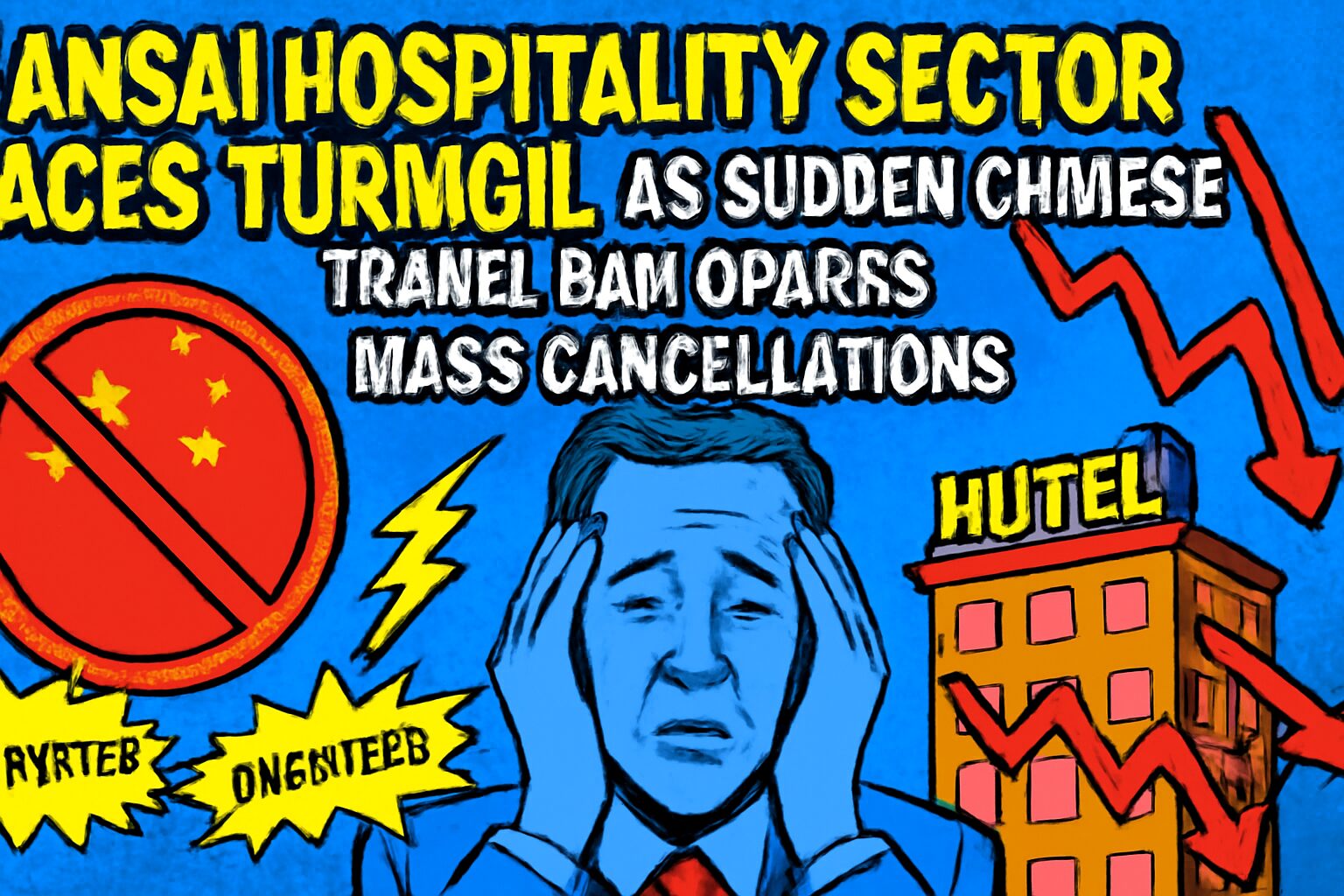
A Sudden Shockwave Hits Japan’s Tourism Heartland
The tourism and hospitality industry in Japan’s Kansai region is in crisis following an abrupt restriction on group tours from China. Hotels, tour operators, and online travel agencies (OTAs) in major cities like Osaka, Kyoto, and Kobe are experiencing a massive wave of cancellations, casting a shadow over the economic outlook and exposing the region’s heavy reliance on a single international market. The move, which came with little warning, has sent shockwaves through a sector that was just beginning to regain its footing in the post-pandemic era.
Background: An Over-Reliance on a Key Market
For over a decade, the Kansai region’s tourism strategy has been inextricably linked to the burgeoning Chinese market. Before the global pandemic, Chinese tourists were the single largest group of international visitors to Japan, and their economic contribution was immense.
According to data from the Japan National Tourism Organization (JNTO), in 2019, Chinese nationals accounted for 9.59 million of the 31.88 million foreign visitors to Japan, representing over 30% of the total. Their spending power was even more significant, contributing approximately 1.77 trillion yen (about $12 billion USD), which was nearly 37% of the total tourism expenditure by international visitors.
Osaka, with its vibrant food scene, extensive shopping districts like Shinsaibashi and Namba, and proximity to Kyoto and Nara, became a primary destination. The city’s infrastructure, from hotel capacity to multilingual retail staff and bus tour operators, was heavily tailored to accommodate large Chinese tour groups. This deep-seated reliance, once a lucrative engine for growth, has now become the region’s Achilles’ heel.
The Immediate Fallout: Cancellations and Economic Uncertainty
The immediate impact of the travel ban has been devastating. Industry sources report that hotels that specialized in hosting large tour groups have seen occupancy rates for the coming months plummet overnight. Tour bus companies have had their schedules wiped clean, and guides who specialized in Mandarin tours are facing an uncertain future.
Key Areas of Impact:
- Accommodation: Hotels in popular districts are reporting cancellation rates nearing 80-90% for bookings previously held by Chinese tour groups. This has created a sudden and unexpected surplus of rooms, forcing prices down and threatening profitability.
- Retail: Department stores and drugstores in Osaka, famous for “bakugai” (explosive shopping sprees), are bracing for a sharp decline in sales. Many of these retailers had invested heavily in Mandarin-speaking staff and tax-free counters specifically for this demographic.
- Transportation and Tours: Charter bus companies, a critical component of group travel, are among the hardest hit. Without the large groups to fill their vehicles, many face immediate financial distress.
Future Outlook: A Forced Pivot Towards Diversification
This crisis serves as a stark reminder of the risks associated with depending on a single market. While the short-term outlook is bleak, it forces the Kansai tourism industry to accelerate a strategic shift that many experts have long advocated for.
The Path Forward:
- Market Diversification: The most urgent task is to intensify marketing and promotional efforts in other key markets. This includes Southeast Asian countries like Thailand, Singapore, and Malaysia, as well as reviving interest from traditional markets in Europe, North America, and Australia. The focus will need to be on what makes Kansai unique to these different audiences.
- Shifting from Group to Individual Travel: The future of tourism in Kansai may lie in catering more to Free Independent Travelers (FITs). This segment often seeks more authentic, experience-based travel rather than whirlwind shopping tours. Developing unique local tours, cultural workshops, and promoting off-the-beaten-path destinations will be crucial.
- Focus on High-Value Tourism: Rather than focusing purely on volume, the industry may pivot towards attracting high-spending tourists. This involves promoting luxury accommodations, fine dining, and exclusive cultural experiences that appeal to a more discerning global traveler.
While the sudden absence of Chinese tour groups is a painful blow, it also presents an opportunity for the Kansai region to build a more resilient, sustainable, and diversified tourism model. The coming months will be a critical test of the industry’s ability to adapt and reinvent itself in the face of unprecedented change.








