Yo, let me paint you a picture. The day’s done. The relentless Osaka sun has finally dipped below the skyline, but the concrete still hums with its memory. Your shoulders are tight from the packed train, your mind a whirlwind of emails and obligations. You could go home, crash on the sofa, and scroll into oblivion. Or, you could do something different. You could turn down a quiet side street, guided by a tall, unassuming chimney, and push aside a heavy cloth curtain—a `noren`—into a world of steam, cedar, and the soft echo of splashing water. Welcome to the neighborhood `sentō`, Osaka’s living room, its communal heart, and your future favorite daily ritual. This isn’t about the fancy, resort-like `onsen` you see in travel brochures. This is real. This is local. This is the art of washing away the day, not as a tourist, but as a resident, one soul-warming soak at a time. It’s a place where conversations flow as freely as the hot water, where the city’s frantic energy dissolves into a gentle, restorative calm. This is your invitation to find your spot, claim your little wooden stool, and truly immerse yourself in the warm embrace of your new hometown. Learning to love the local sentō is learning to love the authentic, unvarnished soul of Osaka itself.
To truly understand the authentic, unvarnished soul of Osaka that the sentō represents, it’s also worth exploring the realities of living in a distinctive area like Osaka’s Nishinari Ward.
The Soul of the Neighborhood: What is a Sentō, Really?
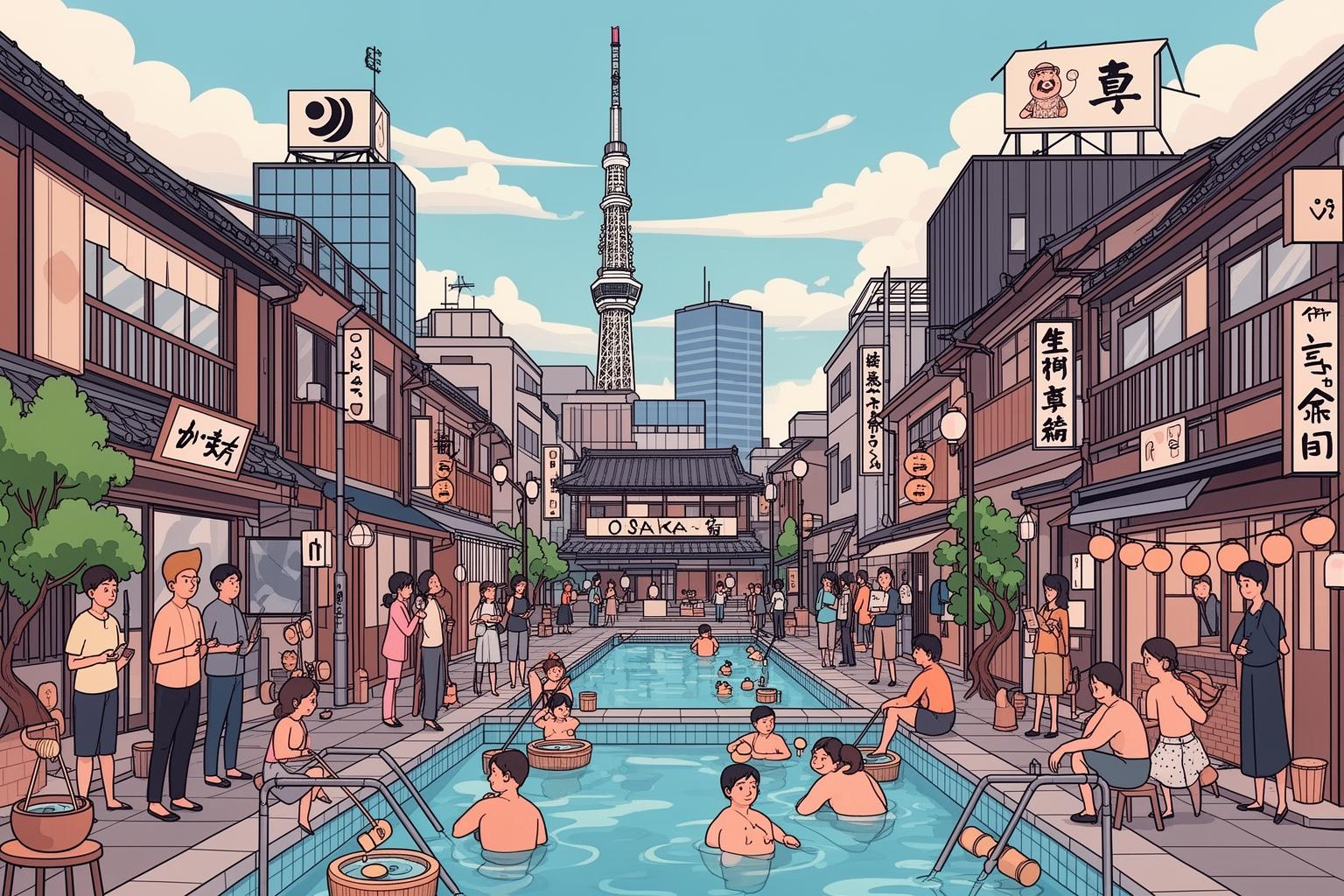
Before you dive in, let’s set the tone. A `sentō` is fundamentally a public bathhouse. For centuries, before most Japanese homes had private bathrooms, these were indispensable. They served as great equalizers, where shopkeepers, salarymen, and students alike shed their clothes—both literally and figuratively—to share the same steamy, communal experience. Although their numbers have declined since their post-war peak, the remaining sentō continue to embody the spirit of community. They stand as monuments to a slower, more connected lifestyle, resilient against the rush of modern life. They differ fundamentally from their more renowned relatives, the `onsen` (hot springs). An `onsen` is characterized by its mineral-rich volcanic water and is often a destination or resort experience. In contrast, a `sentō` generally uses heated tap water and is integrated into the everyday rhythm of residential neighborhoods. It’s not an escape; it’s part of daily life, a punctuation mark that ends a long day.
The atmosphere inside is a sensory symphony. From the street, you first hear the faint, cheerful sounds of water and distant conversation. Passing through the `noren`, you encounter the clatter of wooden shoe lockers, the `getabako`. Nearby, the `bandai`, a raised platform, is where the owner—often an elderly man or woman who has witnessed generations of families—collects the fee. The air carries the scent of clean soap, damp wood, and a unique mineral warmth. The space is divided, almost always by a tall wall that stops short of the ceiling, allowing sounds and steam to mingle between the men’s (男) and women’s (女) sections. This is no place of sterile silence; it’s filled with the gentle murmur of neighbors catching up, parents softly scolding splashy children, and the rhythmic sound of water scooped from the bath and poured over tired backs. It’s a soundscape of pure, unfiltered relaxation—unlike the forced calm of a spa. This is organic peace, born from routine and shared experience. It’s simply a place to be, a sanctuary where status and stress stay locked away with your clothes.
Your First Visit: A Step-by-Step Guide to Soaking with Confidence
Alright, let me guide you through it. The first visit might seem a bit intimidating, but trust me, the rhythm is straightforward and the locals are more focused on their own relaxation than on any newcomer’s mistakes. Confidence comes from understanding the flow.
Preparing Your Gear
Locals often arrive carrying their personal `sentō set` in a small plastic basket. You can assemble your own. You’ll need two towels: a small one, roughly the size of a facecloth (commonly called a `tenugui`), for washing your body, and a larger bath towel for drying off afterward. Don’t forget your soap, shampoo, and conditioner. However, if you decide to come on impulse, don’t worry—almost every `sentō` sells these items in single-use packets for a small fee, a service known as `tebura`, meaning ‘empty-handed.’ You can literally arrive with just a few coins and be fine. Bringing a plastic bag to carry your wet towel home is also a handy tip.
Arrival and Entry
Look for the `noren` curtains indicating the entrance. The doors will be clearly marked for men and women—男 for men and 女 for women. These are often color-coded: blue for men, red for women. Slide the door open and step inside. The first thing to do is remove your shoes. Place them in one of the small shoe lockers, called `getabako`. Some lockers use a wooden token as a key, while others are open cubbyholes. Removing your shoes symbolizes leaving the outside world behind.
Paying the Piper
Next, pay the entrance fee. In Osaka, the price is regulated and very reasonable, usually about 500 yen for an adult. You can either pay the attendant at the `bandai` or, more commonly nowadays, purchase a ticket from a small vending machine. If you need to buy soap or rent a towel, these tickets often come from the same machine. Hand your tickets to the attendant, receive their nod, then proceed to your designated changing room, the `datsuijo`.
The Changing Room Ritual
Find an unoccupied locker. The lockers use keys attached to elastic wristbands, which you wear throughout your visit so you don’t misplace them. Now, the part that may make some newcomers uneasy: completely undress. For everyone else, it’s no big deal. There’s no judgment or staring. It’s a completely non-sexual space, similar to a gym locker room. The Japanese idea of `hadaka no tsukiai`, or ‘naked communion,’ reflects this—the notion that without clothes as status symbols, people connect more genuinely. Place your clothes and large drying towel in the locker, lock it, and slip the key onto your wrist. You’ll bring only your small washing towel and toiletries into the bathing area.
The Cardinal Rule: Wash First, Soak Later
Inside the bath area, you’ll find rows of washing stations along the walls, each with a low stool, a plastic basin, and a faucet with a shower hose. Never go straight into the main baths. The bathwater is for soaking and shared by everyone, so it must be kept clean. First, locate an empty washing station. Before sitting, it’s polite to perform a quick `kakeyu`—grab a basin, fill it with warm water from a nearby tap or the edge of the main tub, and splash it over your body to rinse off and adjust to the temperature. Then, sit on the stool and wash thoroughly. Lather, scrub, shampoo, and rinse off all the soap. The etiquette is simple: keep the shower spray aimed low to avoid splashing others. When finished, rinse your stool and basin for the next person. Now you’re officially ready for the main baths.
The Bliss of the Baths
Clean and refreshed, you can enter the tubs. Walk slowly and carefully, as the floors are wet and slippery. Your small towel should never be placed in the bathwater. You can put it on the side of the tub or, as many regulars do, fold it and rest it on your head—this is a classic `sentō` style. Ease gently into the water; don’t jump or dive. Most `sentō` have several tubs with different temperatures and features: typically a hot tub (`atsuyu`), a slightly cooler one (`nuruyu`), and often a jacuzzi-style jet bath, great for sore muscles. You might also find a `denki-buro` (electric bath), but more on that later. The last piece is the cold plunge pool, the `mizuburo`. Alternating between soaking in hot water and dipping into cold is excellent for circulation and leaves you feeling incredibly refreshed. This space invites quiet contemplation—relax, let your body go limp, and let the day’s tension dissolve into the steam.
The Exit Strategy
Once you’ve had your fill and feel relaxed, return to the changing room. One important etiquette tip: use your small damp towel to wipe off your body as much as possible before entering the `datsuijo`. This helps keep the floor dry and safe. Inside, retrieve your large dry towel from the locker and dry off completely. Then dress and emerge feeling like a renewed person.
Finding Your Sentō Sanctuary in Osaka
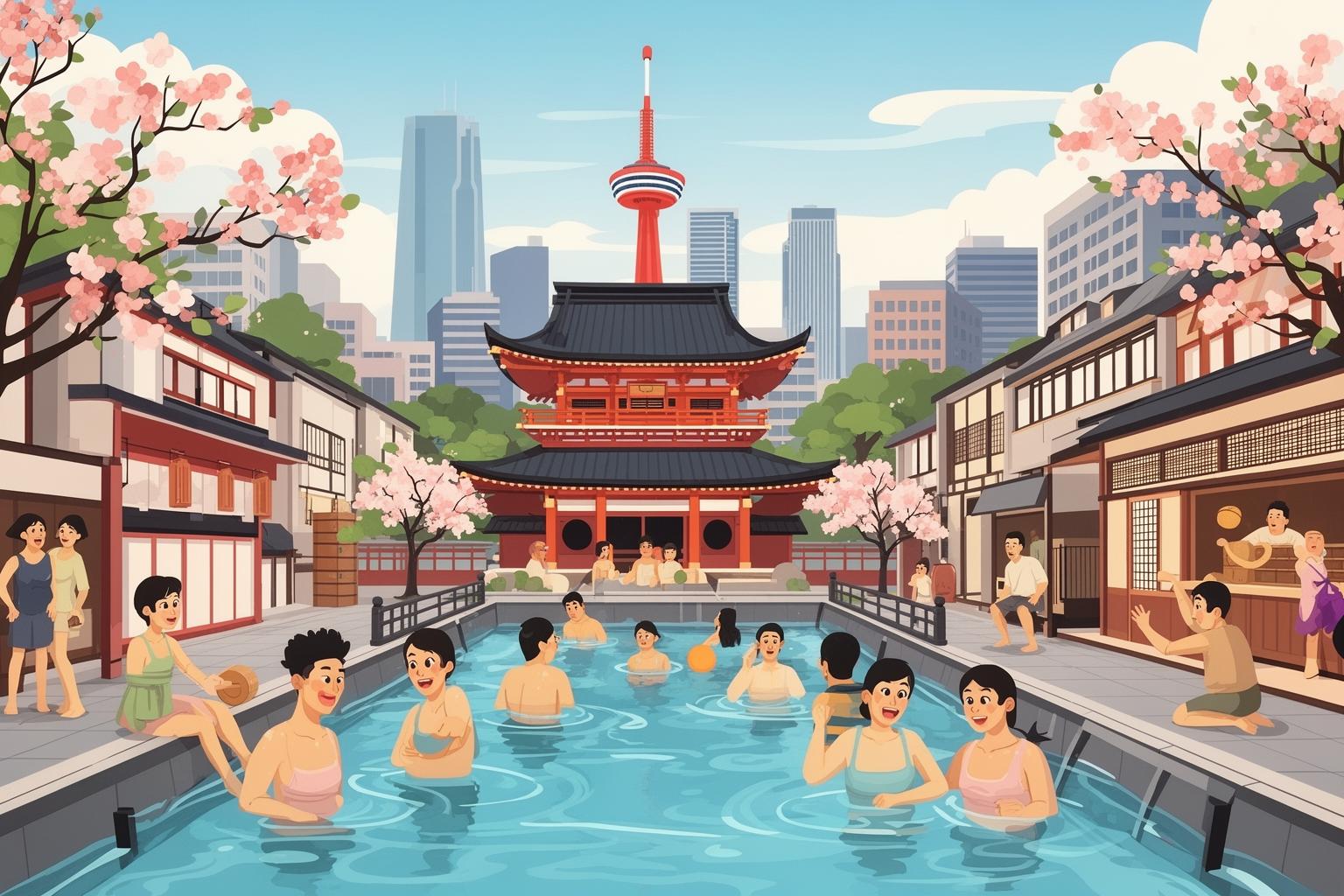
Osaka is a treasure chest of hidden sentō, each possessing its own distinct character. They aren’t advertised with flashy signs; they are meant to be discovered. The most iconic feature to watch for as you wander through residential neighborhoods is the tall, slender chimney (entotsu), a beacon indicating that warmth and relaxation await nearby. Certain areas are especially abundant with these gems. The retro, Showa-era streets of Nishinari, the quiet alleys behind the bustling Tenjinbashisuji Shotengai, and the residential districts of Fukushima and Taisho wards all offer fertile ground for your sentō quest. Part of the pleasure lies in the search itself—the feeling of stumbling upon a local institution that feels like a personal discovery.
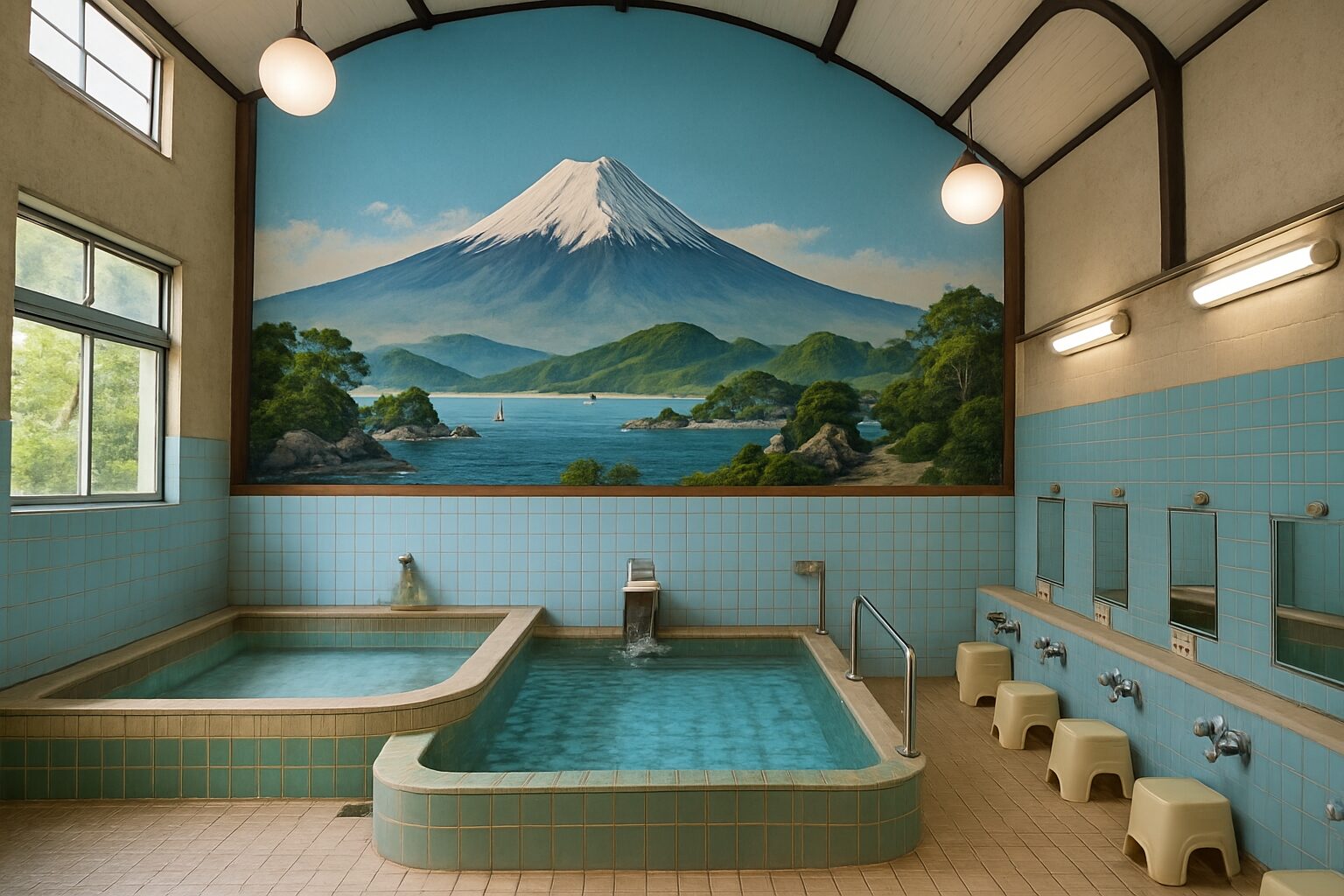
The architectural styles vary beautifully. Some are grand, temple-like buildings with curved gables and intricate carvings, a style called miyazukuri. Entering one of these feels like stepping into a sacred space. Others are more modest, mid-century modern structures, their tiled facades radiating nostalgic charm. Inside, the artwork holds equal importance. The classic sentō decoration is a large mural painted on the wall above the baths. While the iconic image is Mount Fuji—a tradition that began in Tokyo—Osaka sentō often showcase other stunning Japanese landscapes, colorful koi fish, or scenes drawn from local folklore. Reclining in the hot water and gazing up at one of these grand, slightly faded murals is a meditative experience, connecting you to the many bathers who have done the same for decades.
The Art of the Routine: Weaving the Sentō into Your Osaka Life
Visiting a `sentō` once is a wonderful experience, but making it a regular habit is where the true magic unfolds. It’s about incorporating this practice into your daily life in Osaka, turning it from a novelty into an essential routine.
The Perfect Timing
There’s no wrong time to visit a `sentō`, only different kinds of experiences. An early morning `asa-yu` session, offered by some bathhouses, is an incredibly refreshing way to begin your day, leaving you with clear skin and a clear mind as you head off to work. The most popular time, however, is early evening—between the end of the workday and dinner—when the `sentō` truly becomes a lively community hub, buzzing with energy and conversation. For a quieter experience, try a late-night soak. As the crowds thin, the bathhouse takes on a calm, contemplative mood, perfect for unwinding and ensuring a deep, restful sleep.
The Sacred Post-Bath Ritual
What you do after the bath is just as important as the soak itself; the experience doesn’t end when you get dressed. First and foremost is the tradition of the post-bath drink. In the changing room or lobby, you’ll almost always find vintage-style coolers stocked with small glass bottles of milk—plain, coffee-flavored, or various fruit flavors. The unwritten rule is to place one hand on your hip and chug the cold, sweet drink in one go. It’s incredibly refreshing and replenishes the fluids lost in the heat. Why milk? There are many theories, ranging from post-war nutritional campaigns to it simply being the perfect, wholesome complement to the intense heat of the bath. Whatever the reason, it’s an essential part of the ritual.
After your drink, don’t hurry away. Many `sentō` feature a small lobby area with old sofas, a television (often showing baseball games or variety shows), and sometimes a bookshelf filled with manga. This is the `sentō`’s living room. Take ten minutes to sit down, cool off, and just be. Watch the game, exchange a few words with the owner, or simply enjoy the sensation of total relaxation. This decompression time is crucial—it transforms the `sentō` from a place you visit into a place where you feel you belong. The sensation of walking home in the cool night air after being warmed to your core is sublime. Your skin tingles, your muscles loosen, and the city feels quieter, softer. It’s a profound sense of well-being that no spa treatment can match.
Beyond the Bath: Pairing Your Sentō Visit with Neighborhood Discoveries
To truly integrate the `sentō` into your life, use it as a starting point for exploring your local surroundings. The opportunities are endless and deeply satisfying. The classic pairing is the `sentō` and a beer. There’s a saying that the first beer after a hot bath is one of the best drinks you’ll ever have, and it’s completely true. Find a cozy, lantern-lit `izakaya` or a nearby `okonomiyaki` spot close to your chosen `sentō`. The blend of a clean body, a relaxed mind, and a cold draft beer accompanied by tasty local food makes for an ideal Osaka evening.
Alternatively, embark on a `sentō` and `shotengai` outing. Before your bath, enjoy a leisurely walk through a covered shopping arcade. These arcades are the heart of Osaka’s neighborhoods, boasting everything from tofu shops and fishmongers to quirky clothing stores and vintage cafes. Do some light grocery shopping, grab a snack, and soak up the bustling vibe. The `sentō` then serves as the perfect reward after your adventure, a place to rest your tired feet and reflect on the sights and sounds of the arcade.
Or simply embrace the `sentō` and stroll. The neighborhoods around local bathhouses often weave through charming, narrow streets that you might otherwise never explore. Let yourself get a bit lost. You’ll uncover tiny parks, hidden shrines, beautiful private gardens, and the quiet rhythms of everyday life away from the main roads. With the `sentō` chimney as your landmark, you can wander freely, always knowing how to find your way back to your warm, watery haven. This is how you turn a city from a mere collection of places on a map into a web of personal experiences and treasured spots.
Navigating Sentō Nuances: Tips for the Foreign Resident
As a foreigner, you may have some specific questions or concerns. Let’s clarify things so you can relax and enjoy with complete peace of mind.
The Tattoo Question
This is a major point. Japan has a complicated history with tattoos, given their association with organized crime. Consequently, many large establishments such as onsen resorts, super sentō, and gyms strictly prohibit entry to anyone with tattoos. However, the traditional neighborhood sentō are quite different. They tend to be much more lenient about tattoos. Many have no restrictions at all, while others may ask you to cover large or intimidating tattoos with a patch. The general attitude is that as long as you show respect and follow bathing etiquette, you are welcome. The safest approach is to simply ask. A polite “Tattoo wa daijoubu desu ka?” (Are tattoos okay?) will usually get you a quick answer. More often than not, especially in a down-to-earth city like Osaka, no one will even bat an eye.
The Curious Case of the Denki Buro
During your bathing adventures, you will likely come across the denki buro, or electric bath. This is a tub with metal plates on opposite sides that send a low-voltage electric current through the water. It is meant to soothe muscles and joints, offering a uniquely Japanese bathing experience. Be warned: the sensation is unusual. It creates a strong, vibrating tingle that can be quite startling if you’re unprepared. Some people love it; others find it unpleasant. Approach it cautiously. Ease in slowly and avoid getting too close to the plates at first. It’s a rite of passage for any sentō enthusiast, and even if you dislike it, it makes a great story.
Embracing the Seasons
Your sentō experience will change with the seasons. The true delight of a sentō is felt on a bitterly cold winter day, when sinking into steaming water feels like pure luxury. Bathhouses also celebrate the seasons in special ways. On the winter solstice, many sentō float bright, fragrant yuzu citrus fruits in the tubs. This yuzuyu bath is believed to ward off colds and smells wonderful. In early May, for Children’s Day, you’ll find shobuyu, where long green iris leaves are added to the water, their fresh, clean scent thought to bring good health. These small seasonal rituals beautifully connect you with Japan’s deeper cultural rhythms.
Your Invitation to the Warm Waters of Osaka
Entering a neighborhood `sentō` is much more than simply getting clean. It is an act of engagement. It’s a deliberate choice to slow down, disconnect from the digital world, and reconnect with your body and community. It’s a place where the simple, profound comfort of hot water can dissolve social barriers and daily stresses. Discovering your local `sentō`, recognizing the regular faces, and making it part of your weekly—or even daily—ritual is one of the most genuine and fulfilling ways to truly experience life in Osaka. It’s an investment in your well-being and a gateway to the heart of the city. So pack your small towel, grab a few coins, and seek out that chimney. Push aside the `noren`, leave your shoes and worries at the door, and uncover the quiet magic awaiting you in the steam. The water is hot, and the welcome is warm.