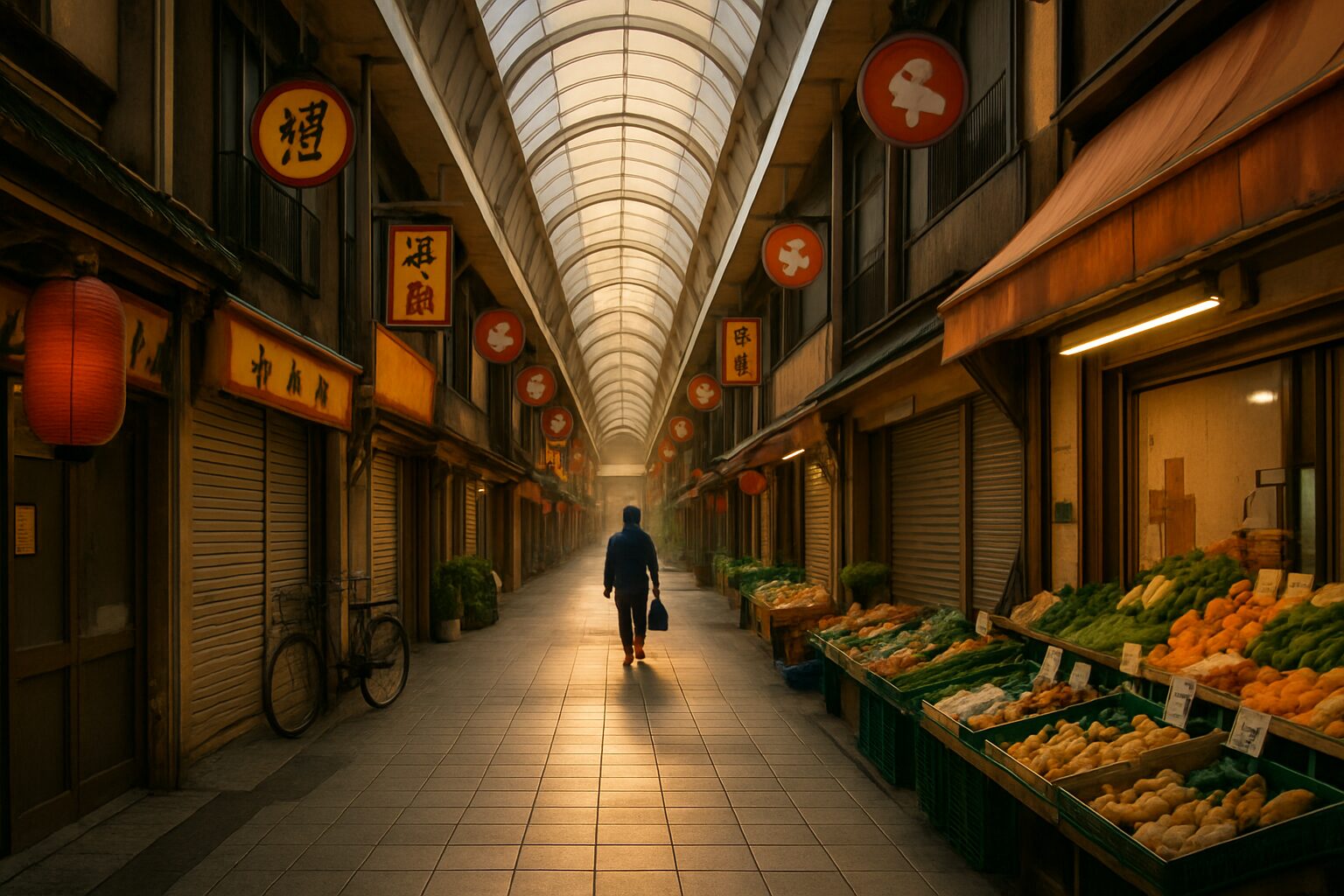
Step off the clean, quiet efficiency of an Osaka subway train and into a world pulsating with a different kind of energy. It’s a rhythm that’s not measured by timetables or digital clocks, but by the slow, deliberate roll of steel shutters in the morning, the sizzle of oil in a deep fryer at noon, and the cheerful, almost desperate calls of “Time Sale!” as evening descends. This is the world of the shotengai, the covered shopping arcade that serves as the beating heart and bustling kitchen of its neighborhood. More than just a collection of shops, the shotengai is a living, breathing artery of local life, a place where commerce and community intertwine in a daily dance as old as the post-war Showa era. To spend a day within its covered embrace is to witness the soul of Osaka in its most candid, unpretentious, and delicious form. It’s a sensory overload in the best possible way—a symphony of sounds, a tapestry of smells, and a parade of faces that tell the story of a city that works hard, plays hard, and above all, eats with unparalleled passion. Forget the gleaming department stores and the curated tourist spots for a moment; the real narrative of this city is written here, under the arched plastic roofs, on the worn linoleum floors, between the calls of the fishmonger and the gentle bow of the tea merchant. This is our guide to that daily rhythm, a journey from the first light of dawn to the last shutter closing at night.
After experiencing the vibrant daily rhythm of the shotengai, you might find that unwinding in a local sentō perfectly complements the city’s communal spirit.
The Morning Awakening: The Prelude to the Hustle
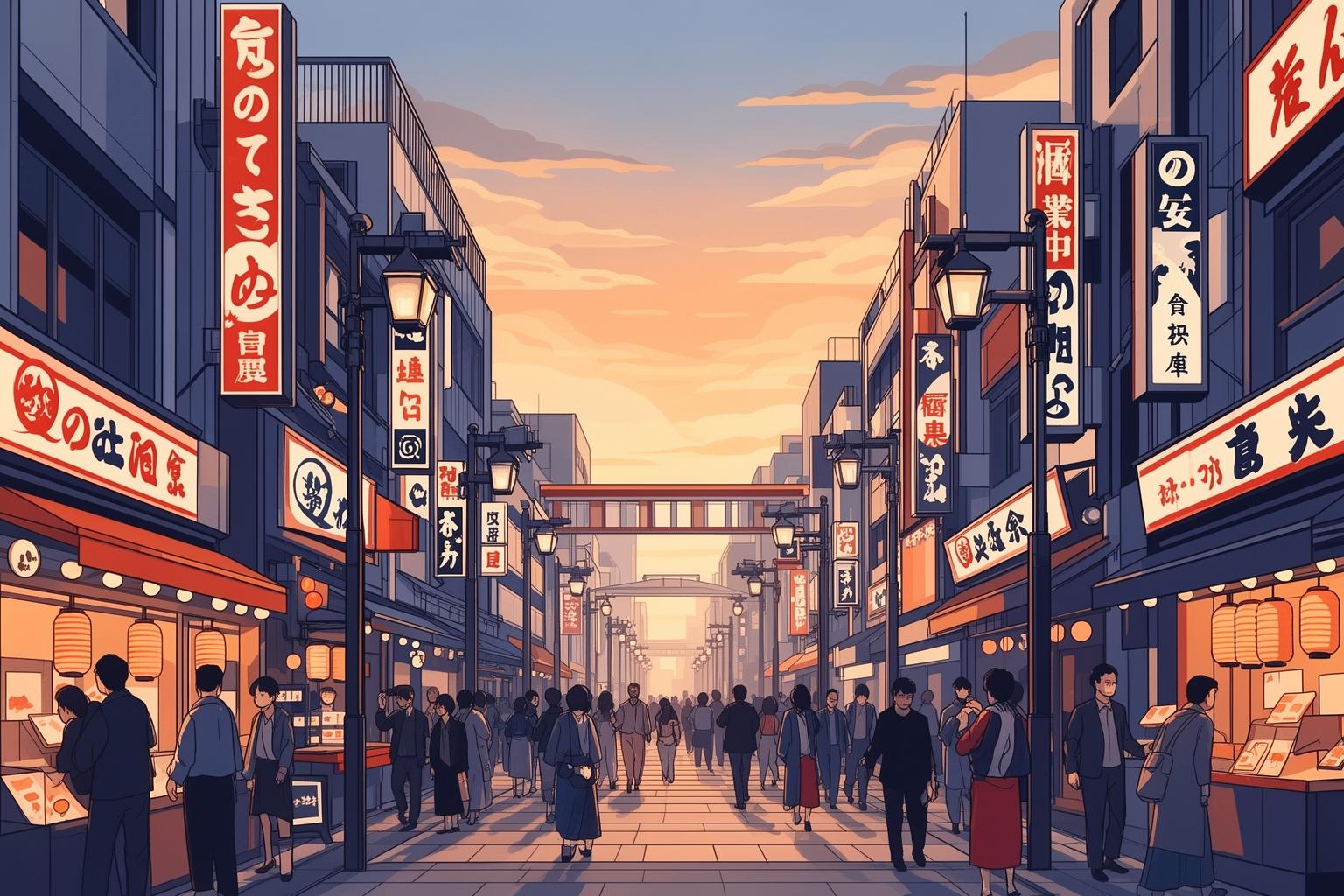
8:00 AM: The Sound of a New Day
The shotengai doesn’t awaken all at once. It stirs slowly and groggily, like a giant, slumbering beast. The first sound you’ll notice is a metallic rumble, a deep, resonant groan echoing down the long, empty corridor. It’s the sound of the `amado`, the steel shutters, being carefully rolled up by shopkeepers. Each clang forms a note in the morning’s first song. A stooped grandmother in an apron, her movements practiced and economical, slowly lifts her shutter. A few doors down, a young man—perhaps the third generation in his family’s business—gives his a final, firm shove. The air, still cool from the night, carries the fresh, damp scent of pavement being hosed down, a ritual of purification before the day’s commerce begins. No crowds have gathered yet, only a scattered cast of characters setting their stages. The silence between the rumbles is filled with the soft sweep of brooms and the quiet murmur of greetings exchanged among neighbors. “`Ohayo gozaimasu`,” a voice calls out, warm breath fogging in the early air. “`Saa, kyo mo ganbaro ka`.” Let’s do our best again today. It’s a scene of quiet industry, a collective deep breath before diving into the day’s chaos.
9:00 AM: The Kissaten and the Morning Set Ritual
As more shops open, a new aroma begins to wind its way through the arcade, cutting through the damp morning air: the rich, dark scent of roasting coffee. This signals the time to find a `kissaten`, one of the old-world coffee shops that serve as the neighborhood’s living room. Forget sterile, minimalist cafes; a genuine shotengai `kissaten` is a time capsule. Step inside and you’re greeted by plush velvet seats, dark wood paneling, Tiffany-style lamps casting a warm, golden glow, and the gentle ticking of a grandfather clock in the corner. The air is thick with the scent of coffee and toasted bread, and the only sounds are the rustle of newspapers and the low hum of conversation from regulars—elderly men and women who have occupied the same seats at the same times for decades. The order here is the “Morning Set,” or simply “`Moningu`.” For the price of a single coffee, you receive a miniature feast: a thick slice of perfectly toasted `shokupan` (Japanese milk bread), a small boiled egg, a pat of butter, and a tiny pot of jam. It’s a ritual of quiet reflection, a moment to watch the shotengai slowly awaken through the shop’s front window as you sip your dark, syrupy coffee. This isn’t just breakfast; it’s an initiation into the local rhythm of life, a lesson in starting the day with intention and without hurry. It’s fuel for the day, not only for the body but for the spirit.
10:00 AM: The Unveiling of Wares
By now, the arcade is fully awake. The stages are set, and the actors display their props. The fishmonger, a man with forearms like steel cables and a perpetual smile, arranges glistening whole fish on beds of crushed ice with artful precision. His hands move with the grace of a surgeon, his voice beginning its rhythmic chant, announcing the day’s specials. The `yaoya-san`, the vegetable seller, creates a vibrant mosaic of color. Perfectly even rows of deep purple eggplants, bright green cucumbers still bearing prickly flowers, and fiery red tomatoes are stacked with an artist’s eye. Here, the concept of `shun`, or seasonality, is not abstract but vivid and tangible. The produce conveys the time of year more accurately than any calendar. Next door, the tofu maker, or `tofu-ya`, works amidst a cloud of steam. Blocks of silken tofu, still warm and trembling, float in a large basin of cool water. He sells not just tofu, but its many relatives: thick slabs of `atsuage` (deep-fried tofu), delicate sheets of `yuba` (tofu skin), and creamy `soymilk`. The first wave of shoppers arrives—serious customers, mostly older women with shopping trolleys, sharp-eyed and knowledgeable from years of experience. They don’t just buy; they converse, inquire, and build relationships. They ask the fishmonger what’s best for grilling tonight, discuss pickling methods with the vegetable seller. This is not anonymous consumption; it is a community sustaining itself, one respectful transaction at a time.
The Midday Crescendo: The Height of the Hustle
11:30 AM: The Symphony of Sizzles and Shouts
As the clock nears noon, the noise of the shotengai swells, building to an exhilarating peak. The quiet morning prelude has ended; the main show is underway. The air thickens with a rich, enticing mix of aromas from countless foods cooking simultaneously. From one stall, the sweet, smoky scent of `unagi` (eel) glazed and grilled over charcoal wafts out, a fragrance so potent it can halt you mid-step. Another emits the sharp, savory aroma of dashi broth simmering in a large pot for udon noodles. Then comes the rhythmic crackle of deep-frying—the constant hiss of oil as `korokke` (potato croquettes), `menchi katsu` (minced meat cutlets), and golden `karaage` (fried chicken) are submerged and transformed. Human voices grow louder too. Shopkeepers’ tones, once hushed in the morning, erupt into full-throated calls. “`Irasshaimase!`” (Welcome!) rings out from all corners, a continuous overlapping chorus. “`Yasuide, yasuide!`” (It’s cheap, it’s cheap!) shouts another vendor, waving a tempura shrimp. “`Oishii yo!`” (It’s delicious!). This is Osaka’s `kuidaore` culture—to eat until you drop—in its rawest, most inclusive form. The shotengai streams with people, a slow-moving current of office workers on lunch break, housewives, students, and curious tourists, all drawn by food’s irresistible lure.
12:30 PM: The Art of Tabe-aruki (Eating While Walking)
For many, lunchtime in the shotengai isn’t a sit-down meal but a lively, on-the-go feast called `tabe-aruki`. The arcade turns into a vast, open-air buffet where your only job is to follow your senses. This is the time to indulge. Begin with a `korokke` from the butcher’s shop, handed to you wrapped in a small piece of wax paper, nearly too hot to hold. The outside is a perfectly crunchy panko crust that shatters on first bite, revealing a creamy, steaming interior of mashed potato mixed with sweet onions and savory minced meat. Simple, humble, and utterly delicious. Then you might be drawn by the hypnotic rhythm of the takoyaki maker. With two small picks, they flick and turn the batter balls in their special cast-iron molds with mesmerizing speed. Served in a paper boat, slathered with tangy brown sauce, mayonnaise, and a flurry of `katsuobushi` (bonito flakes) that dance in the heat, each molten-hot ball bursts with flavor, hiding a tender piece of octopus inside. Don’t miss the `karaage`. Each shop boasts its own secret marinade—some soy-based, some ginger-forward, some garlicky. The outcome is always chicken with impossibly crispy skin and juicy, flavorful meat. Wash it all down with a cup of freshly squeezed mandarin orange juice from the fruit stand, a sweet and tangy complement to the savory fried treats. A small tip for newcomers: while `tabe-aruki` literally means “eat-walk,” it’s considered polite to step aside from the main passage, preferably near the shop you bought from, to enjoy your snack. This keeps traffic flowing smoothly and prevents accidental spills.
2:00 PM: The Hidden Sanctuaries of a Quick Lunch
For those seeking a brief pause from the walking feast, the shotengai offers tiny, hidden refuges for a quick and satisfying meal. Look for a shop with a simple `noren` curtain hanging over the entrance and steam billowing out. It might be a standing-only `udon` shop, a `tachigui` spot where you can savor a comforting bowl of noodles for just a few hundred yen. Here, you stand shoulder-to-shoulder with local workers, slurping thick, chewy noodles in a light, flavorful broth, topped with fried tofu (`kitsune udon`) or crispy tempura bits (`tanuki udon`). The entire experience, from ordering to finishing the last drop of soup, can take less than ten minutes—a marvel of delightful efficiency. Or perhaps you’ll discover a tiny `kushikatsu` joint, where various meats, seafood, and vegetables are skewered, breaded, and fried to perfection. You’ll sit at the counter, dipping your freshly fried skewers into a shared pot of thin, tangy sauce—remember the golden rule: no double-dipping! These spots focus on substance rather than ambiance. They serve honest, hearty food at reasonable prices, and eating there feels like sharing a local secret. It’s a direct link to the working-class culinary traditions that shape Osaka.
The Afternoon Lull: A Quieter Rhythm
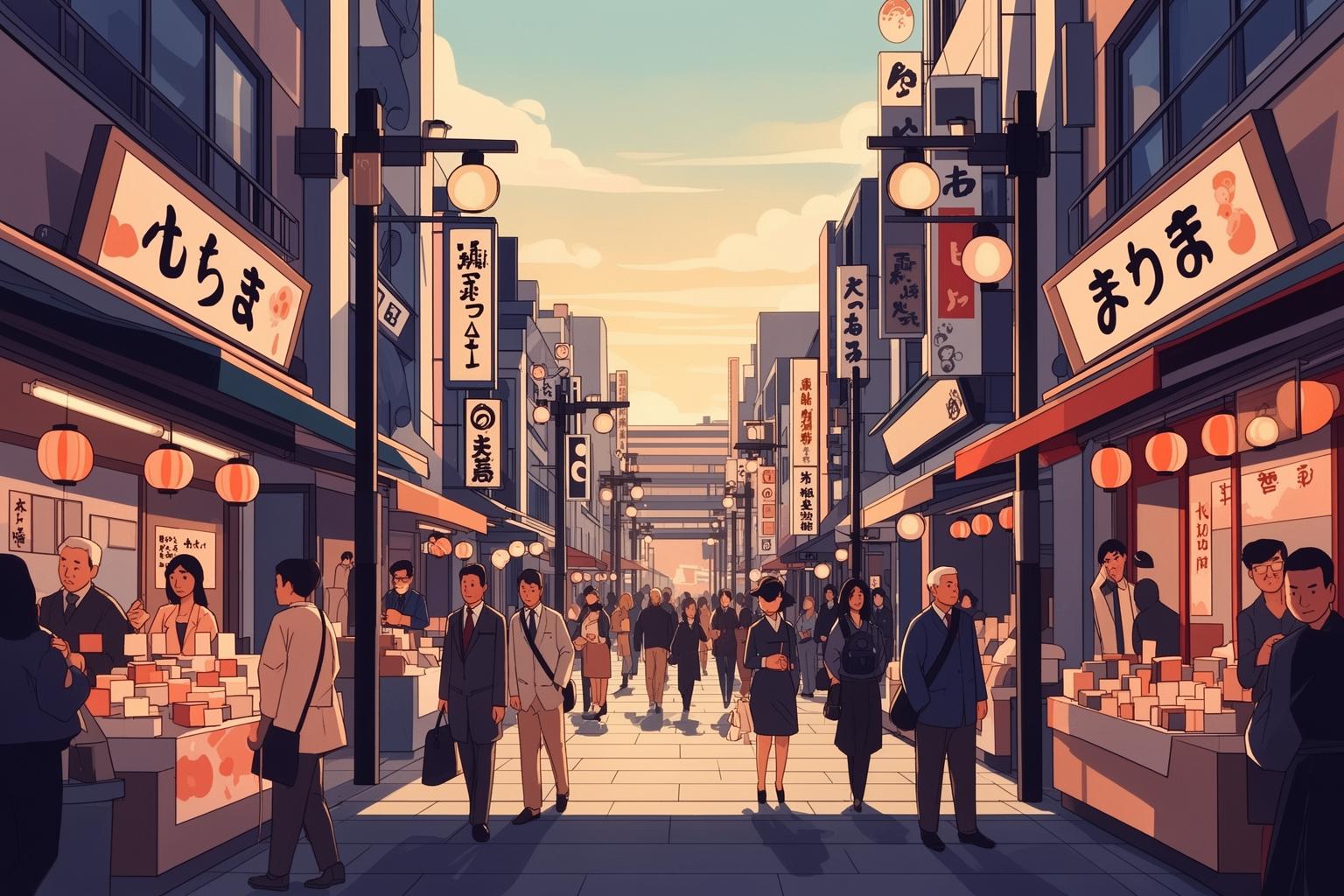
3:00 PM: A Moment of Calm and Sweet Respite
Following the lunchtime rush, a noticeable calm settles over the shotengai. The bustling crowd thins to a gentle flow. Vendors, having satisfied the hungry throngs, take time to restock, converse, or enjoy a late lunch themselves. The air, still fragrant, sheds its frantic, greasy edge and softens into a more delicate blend of scents. This is an ideal moment for a different kind of exploration: to appreciate the quieter corners of the arcade. It’s the perfect time to visit a `wagashi` shop, purveyors of traditional Japanese sweets. Inside, exquisitely crafted confections are displayed like jewels in glass cases. There are soft, chewy `mochi` filled with sweet red bean paste (`anko`), delicate `nerikiri` shaped like seasonal flowers, and colorful, gelatinous `yokan`. Selecting one adds to the pleasure. Paired with a cup of bitter `matcha`, it becomes a refined, contemplative sweetness that refreshes the palate and soothes the soul. The shop owner, often an elderly woman with elegant, graceful hands, carefully wraps your purchase, the rustling paper a gentle, calming sound in the quiet afternoon.
4:00 PM: Exploring Beyond the Kitchen
The afternoon lull is also the perfect time to discover that the shotengai is more than just a dining destination. It’s a microcosm of a complete neighborhood. Wander down the side alleys branching off the main street. Here you might find a tiny, cluttered bookstore, redolent of old paper and ink, with a cat sleeping soundly atop a stack of manga. You might come across a shop selling nothing but `senbei` (rice crackers), offering dozens of varieties from soy-glazed to seaweed-wrapped. There’s the local hardware store, a treasure trove of uniquely Japanese tools and gadgets. Then, there’s the `geta` (wooden clogs) shop, where a craftsman may be carving a fresh pair by hand. Also, you’ll find textile shops with bolts of vibrant kimono fabric and simple, practical cotton for everyday wear. This is also the time for people-watching. Here, you see the true community spirit of the shotengai. Two shopkeepers lean on their counters, sharing a laugh. A young mother with her child pauses to chat with the fruit seller, who offers the child a slice of apple. These small, unscripted moments of human connection reveal the arcade’s true purpose. It’s not just a market; it’s a social safety net, a network of familiar faces, a place where people know your name.
The Evening Transition: The Final Flourish
5:00 PM: The Second Wind and the Dinner Rush
Just as the afternoon appears to be coming to an end, a fresh burst of energy flows through the shotengai. Schoolchildren, freed from their classes, dash through the arcade, their joyful shouts reverberating off the high ceilings. They pause at the `dagashiya`, the traditional candy store, to spend their pocket money on inexpensive, colorful sweets. Soon after, evening shoppers begin to arrive—people heading home from work, picking up ingredients for dinner. The atmosphere changes once again. It’s no longer the relaxed browsing of the morning or the hectic lunchtime rush. Now, it’s a focused, purposeful hustle. Shoppers know exactly what they want. They go straight to their trusted butcher for sliced pork, their favorite fishmonger for a salmon fillet, and the `osozai-ya` for a few prepared side dishes to complete the meal. Conversations are quick and efficient: “Two mackerel, please, for grilling.” “Give me 200 grams of the thinly sliced beef.” It’s a captivating glimpse into the city’s domestic life, offering a peek inside the kitchens of hundreds of homes.
6:30 PM: The Magic of the “Time Sale”
As the sky darkens outside, the arcade’s lights seem warmer and more inviting. Then begins the day’s most thrilling event: the “Time Sale.” This nightly ritual ensures nothing goes to waste. The vendors’ voices rise again, now with urgency. “`Taimu seru desu!`” they call out. “`Hangaku!`” (Half price!). Suddenly, trays of glistening sashimi, boxes of beautiful sushi, packs of fried `tempura`, and containers of various salads and side dishes are discounted—sometimes by 30%, 50%, or even more. A friendly, competitive rush ensues. Shoppers who have been waiting patiently swoop in, their eyes scanning for the best bargains. It’s a brilliant system—beneficial for everyone. Shoppers get delicious, high-quality dinners at bargain prices, while shopkeepers clear out their remaining stock. For visitors, it’s a golden chance to put together an incredible feast for much less than a restaurant meal. A pack of fresh `nigiri` sushi, a side of simmered pumpkin, some seaweed salad, and a piece of grilled fish—all bought at deep discounts, all fresh and flavorful.
7:30 PM: The Warm Glow of the Izakaya
While most food shops sell their last items and prepare to close, a different kind of place begins to come alive. The warm, red lanterns of `izakaya` (Japanese pubs) and `tachinomi` (standing bars) come to life, casting a welcoming glow over the darkening arcade. The aroma of grilled `yakitori` skewers and the sound of clinking glasses and hearty laughter spill out from behind their `noren` curtains. These local watering holes are where salarymen unwind after a long day, where friends gather to share drinks and small plates, and where shopkeepers finally get to sit and relax. Stepping inside feels like entering another world. Often small, cramped, and filled with smoke and noise, the atmosphere is nonetheless friendly and inviting. Even if you don’t speak the language, ordering a draft beer (`nama biru`) and a plate of `edamame` will make you feel part of the scene. It’s the shotengai’s final social act of the day—the shift from commerce to camaraderie.
The Nightly Repose: The Curtain Falls
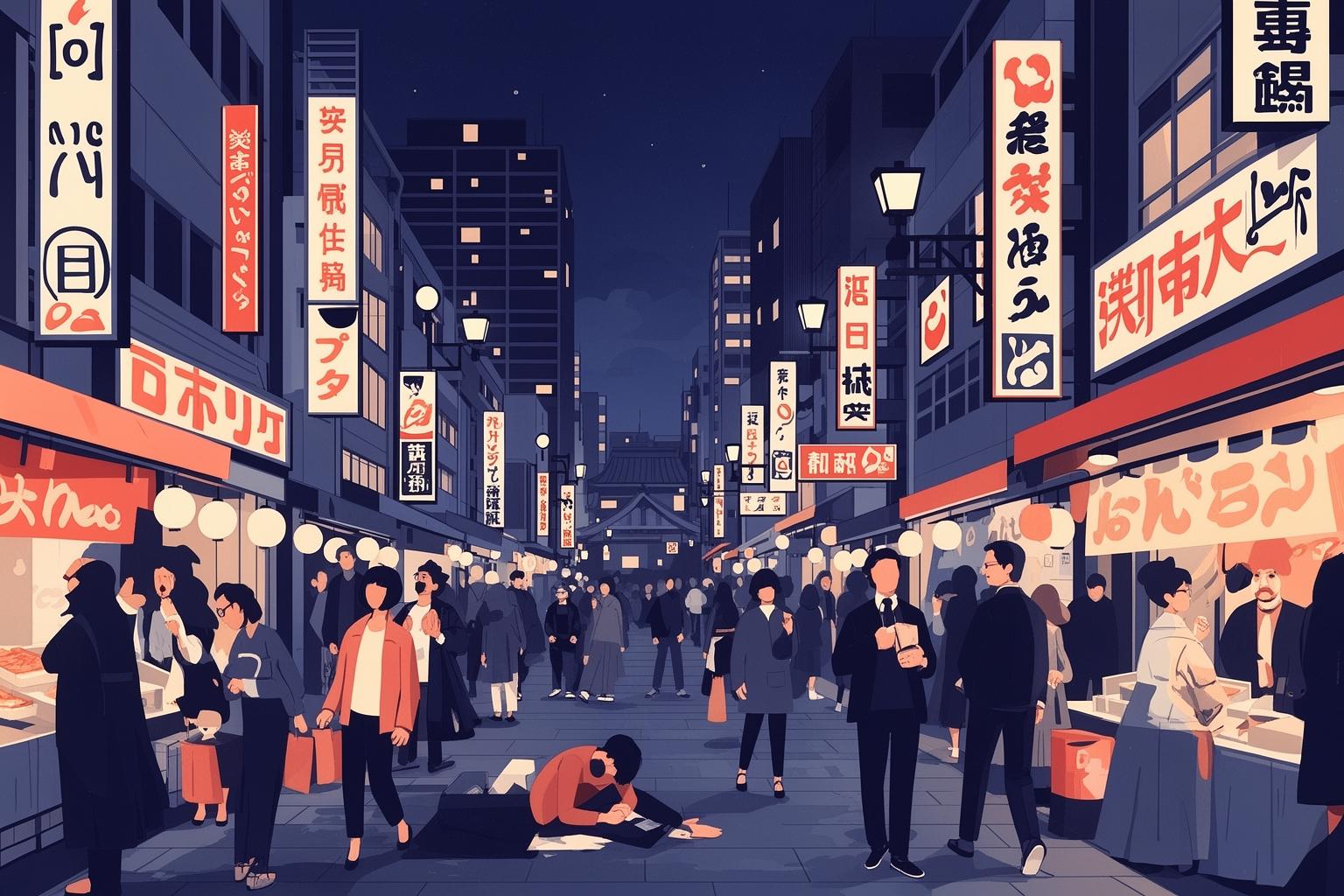
8:30 PM: The Final Rattle of the Shutters
Gradually, inevitable, the shotengai begins to close. The lively, chaotic artery of the day softens to a faint heartbeat. The closing scene echoes the opening one. That familiar metallic rumble from the morning returns, but now it signals an end instead of a beginning. One shutter after another is pulled down, each clang marking the final punctuation of the day’s commerce. The bright shop lights go out, replaced by the dim, practical fluorescent lighting of the arcade itself. Cleaning crews emerge, hosing down the floors once more, washing away the traces of the day’s bustle, preparing the space for tomorrow’s fresh start. The arcade, once a flowing river of people, transforms into a long, cavernous, almost eerie passage. Your footsteps reverberate sharply on the pavement. The only signs of life are the hum of the vending machines and the occasional stray cat—the true nocturnal ruler of this domain—slipping out from the shadows. A few late-night ramen shops or bars may remain open on the edges, their lights a solitary beacon in the quiet.
A Final Thought: The Enduring Rhythm
To walk through the shotengai as it rests is to recognize its dual essence. By day, it is a whirlwind of life, a stage for human interaction and sensory delight. By night, it stands as a silent tribute to that life, a space filled with the lingering spirits of the day’s energy. Yet, this emptiness is only temporary. It is a necessary pause, a deep breath before the cycle begins again. The shotengai will awaken tomorrow, with the same rumbles, the same scents, and the same faces, ready to serve as the vital heart of its community. Spending a day here is more than a tourist experience; it’s a lesson in Osaka’s culture, a study of community, seasonality, and the simple joy of sharing a good meal among neighbors. It’s a reminder that in a world increasingly driven by rush and anonymity, places like this—with their steady, human rhythm—are more precious than ever. So, when you visit Osaka, step off the main streets, find a local shotengai, and allow yourself to be swept up in its daily, magnificent, and utterly unforgettable flow.