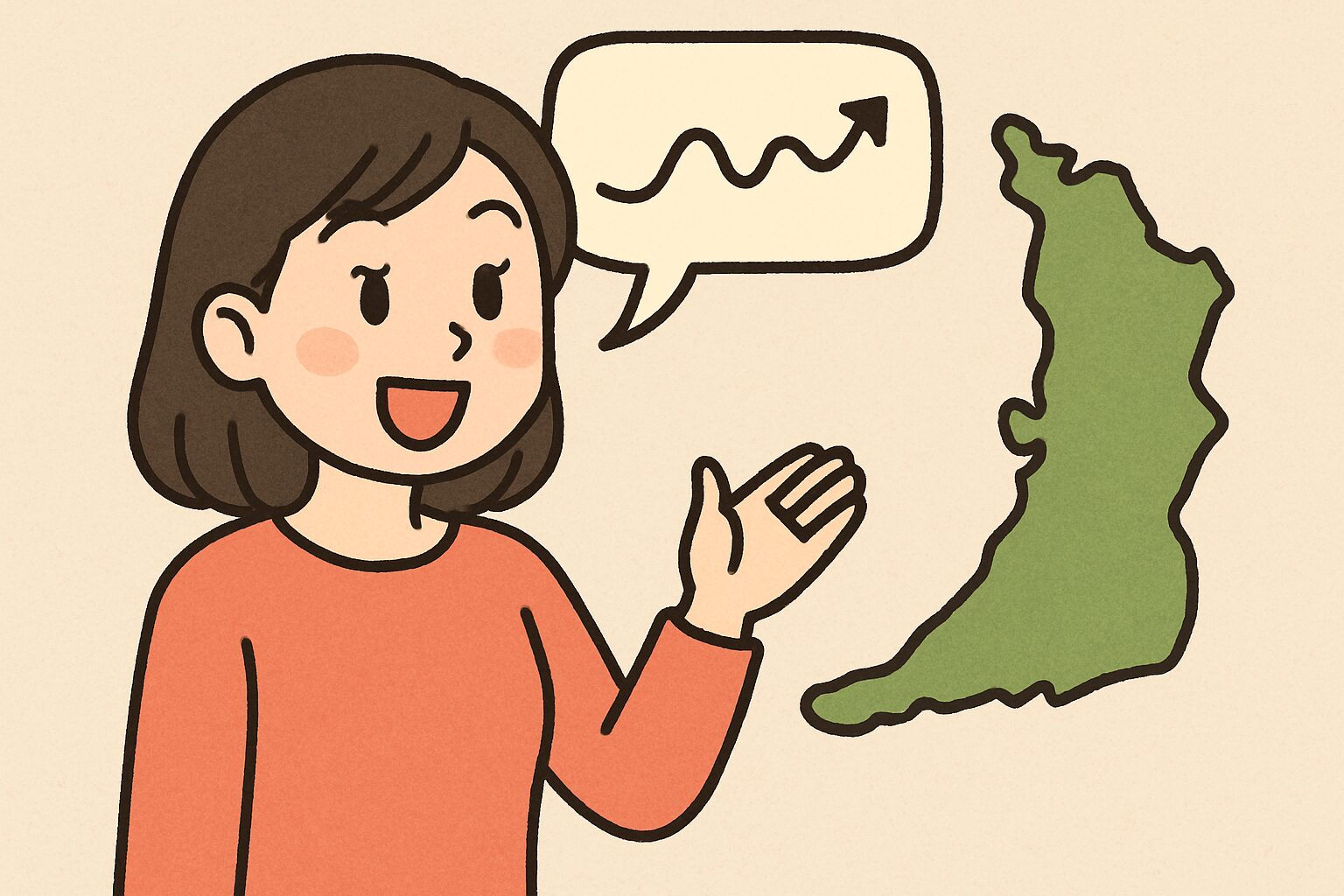
Step off the Shinkansen at Shin-Osaka Station, and the first thing you notice isn’t a landmark. It’s not the sight of the Umeda Sky Building or the smell of takoyaki grilling on a street corner, though those will come. The first thing that truly immerses you, that tells you you’ve arrived somewhere fundamentally different from Tokyo, is the sound. It’s a wave of language that washes over you—a speech pattern that feels more musical, more dynamic, more… alive. It rolls and crests with a different rhythm, a different energy. This is Osaka, and you’re hearing its soul speak. You’re hearing Kansai-ben. For anyone choosing to build a life here, understanding this dialect isn’t just about learning a few new words; it’s about plugging directly into the city’s vibrant, beating heart. It’s the key to unlocking a deeper layer of communication, of humor, and of the unvarnished, good-natured honesty that defines the people of this incredible metropolis. Kansai-ben is more than an accent; it’s a worldview, a cultural identifier, and your personal invitation to become part of the local fabric. It’s the sound of commerce, comedy, and community, all wrapped into one expressive, unforgettable package. Get ready to tune your ear to the true frequency of Osaka.
To truly live like an Osakan, you’ll want to master the local dialect and learn the art of grocery shopping in Osaka’s supermarkets.
The Sound of Osaka: More Than Just an Accent

To the untrained ear, the difference between Standard Japanese, or Hyojungo, and Kansai-ben might appear to be merely a matter of regional slang. However, the distinction runs much deeper, reaching into the very melodic essence of the language. It reflects a fundamental difference in musicality—the specific notes emphasized and the way sentences rise and fall. Living here, you’ll quickly understand that conversations are not just exchanges of information; they are performances, infused with a unique cadence that lends Osakan speech an incredibly expressive and emotionally transparent quality. This dialect openly reveals its feelings, broadcasting honesty through its distinctive sound.
The Rhythmic Heartbeat: Understanding Pitch and Intonation
The defining feature of Kansai-ben is its pitch accent. Standard Japanese, mainly based on the Tokyo dialect, employs a pitch-accent system where the pitch of a word typically drops after a particular mora (a unit of sound similar to a syllable). The position of this drop is essential for differentiating words that are otherwise spelled identically. For example, in Hyojungo, `hashi` can mean ‘bridge’ (HA-shi, high-low), ‘chopsticks’ (ha-SHI, low-high), or ‘edge’ (ha-SHI, low-high, but contextually different). The melody determines the meaning.
Kansai-ben disrupts this pattern by using what is known as the Keihan-shiki (Kyoto-Osaka style) pitch accent. Here, the initial pitch of a word is as significant as where the pitch falls. A word might begin high and drop, or start low and rise, creating an entirely different set of melodic patterns. Using the same word, `hashi`, in many parts of Kansai, ‘bridge’ may be pronounced with a low-to-high pattern (ha-SHI), while ‘chopsticks’ is high-to-low (HA-shi)—almost the reverse of the Tokyo standard. This subtle but meaningful shift allows native Japanese speakers to identify a Kansai native from a single word.
This variation in intonation gives Kansai-ben its distinctive ‘sing-song’ or ‘bouncy’ feel. Sentences don’t merely proceed; they dance. Listen to a conversation in a Namba izakaya, and you will hear questions that rise sharply at the end, emphatic statements that leap up and down in pitch, and an overall flow that feels less metronomic and more like jazz. The intonation serves not just grammatical purposes but acts as a channel for emotional expression. A simple sentence can be shaded with surprise, skepticism, warmth, or sarcasm solely through the speaker’s vocal melody. This is where the true richness of the dialect emerges—not just in the words spoken but in the vibrant, dynamic way they are delivered.
A Different Cadence: Vowel Elongation and Sentence Flow
Another distinctive feature is the treatment of vowels. Kansai-ben speakers often lengthen vowels at the end of phrases or to add emphasis, lending their speech a dramatic, drawn-out quality. A straightforward `sou desu ne` (‘that’s right, isn’t it?’) in Standard Japanese might become a prolonged, thoughtful `sou ya naaa` in Osaka. That final `naaa` is more than just a sound; it conveys emotion. It can express agreement, reflection, or a sense of shared understanding. Similarly, the Tokyo expression of surprise `eeh` (‘what?!’) might be stretched into an incredulous `eeeeeeh?!`, lingering in the air with much greater dramatic effect.
This elongation shapes a different overall sentence rhythm. Standard Japanese can sometimes sound clipped and precise, with clear breaks between phrases. Kansai-ben, on the other hand, often feels more fluid and connected, with words flowing into one another, particularly in casual, rapid-fire speech. The result is a more legato style compared to the staccato rhythm of other dialects. This can make the speech seem faster and more energetic, even if the actual syllable rate per minute is similar. It conveys a sense of continuous forward motion, a linguistic energy that perfectly reflects Osaka’s bustling, relentless spirit. The language pushes ahead, drawing the listener along in a current of sound and feeling.
The Kansai-ben Lexicon: A Language Within a Language
Beyond the melody and rhythm, Kansai-ben’s most striking characteristic is its rich and vibrant vocabulary. It serves as a treasure chest of distinctive words, expressions, and grammatical patterns that can sometimes make it feel like an entirely different language. Learning a handful of key terms is your first step not only toward understanding conversations but also actively engaging in the city’s daily life. These words aren’t mere slang; they form the foundation of Osakan identity, each carrying unique nuance and context often missing from standard terms.
Everyday Words, Osaka Style
Diving into Kansai-ben vocabulary is like stepping into a world that’s more direct, expressive, and often humorously candid. Many common words are swapped for local equivalents widely used throughout the region.
One of the first words you’ll come across is `meccha` or its stronger counterpart, `honma`. While Tokyo speakers say `totemo` to mean ‘very,’ Osakans almost always use `meccha`. For example, ‘This is very delicious’ (`kore wa totemo oishii desu`) becomes `kore meccha oishii wa`. `Honma` works similarly, conveying ‘really’ or ‘truly.’ If someone shares a surprising story, instead of saying `hontou desu ka?` (‘is that true?’), you would say `honma ni?` (‘for real?’). It’s shorter, sharper, and expresses genuine astonishment.
Then there’s the well-known `aho`. In the Kanto region, `aho` is a strong insult meaning ‘idiot’ or ‘moron.’ But in Kansai, its meaning is very flexible and often affectionate. It can be a term of endearment between friends, a playful way to highlight a silly mistake, or part of a comedic performance. In classic Manzai comedy, one comedian (the `boke`, or funny man) says something absurd, and the other (the `tsukkomi`, or straight man) smacks him on the head yelling `aho ka!` (‘are you an idiot!’). Here, it’s a punchline rather than a serious insult. Grasping the tone and context of `aho` is a key lesson in Osakan communication.
Regarding money, a critical aspect of Osaka’s merchant culture, the phrase for ‘how much?’ isn’t `ikura desu ka?` but `nanbo?`. You’ll often hear this brisk, direct question across market stalls at Kuromon Ichiba. Similarly, the usual word for ‘different,’ `chigau`, is often replaced by `chau`. This can function as a verb or as a brief question-and-answer exchange: `chau?` `un, chau chau.` (‘Is it different?’ ‘Yes, totally different.’)
Other essential substitutions include `ee` for `ii` (‘good’), `hayaku` becoming `hayou` (‘quickly’), and `hontou` turning into `honma`. When discarding something, you don’t `suteru` it; you `hokasu` it. If something is broken, it’s not `kowareteiru`, but `naotteru` (confusingly, `naoru` means ‘to be fixed’ in standard Japanese). These aren’t just quirky alternatives—they’re the default language of home, street, and workplace.
The Power of Particles: Coloring Your Sentences with `~nen`, `~de`, and `~wa`
Sentence-ending particles are the heartbeat of Japanese grammar, tiny elements that add nuance, feeling, and intention. Kansai-ben boasts its own set of powerful particles that profoundly alter a sentence’s tone.
The most iconic is `~nen`. Often replacing the standard `~no da` or `~n desu`, it adds emphasis or explanation. For instance, `I’m going` (`iku n desu`) becomes `iku nen`. A simple `sou desu` (‘that’s right’) turns into the more definitive and conversational `sou ya nen` (‘that’s exactly how it is!’). `~nen` conveys conviction and personal engagement—it’s a particle that says, “Listen up, this is the real deal.”
Another key particle is `~de`, which often substitutes for the standard copula `da` or `desu`. So, `kore wa hon da` (‘this is a book’) becomes `kore hon ya de`. The `ya de` ending is a classic Kansai-ben construction, expressing a friendly but firm statement of fact. It’s like saying, “just so you know.” It’s informative with a punch.
Then there’s `~wa`, used differently than in standard Japanese. In Hyojungo, the sentence-ending `wa` is usually feminine and softens a statement. In Kansai-ben, however, it’s used by everyone regardless of gender to add gentle emphasis or a personal touch. `ee wa` (‘that’s good’) feels warmer and more intimate than just `ee`. It can also emphasize a point, as in `meccha suki ya wa!` (‘I really love it!’). This particle adds personality and warmth, turning statements from dry declarations into shared feelings.
The Negative Frontier: From `~nai` to `~hen` and `~hin`
Negation is another area where Kansai-ben notably differs. Standard Japanese uses the negative verb ending `~nai`, such as in `tabenai` (‘I don’t eat’) or `ikanai` (‘I don’t go’). In Kansai, you’ll almost exclusively hear `~hen` or `~hin`.
`Tabenai` becomes `tabehen`. `Ikanai` is `ikahen`. `Wakaranai` (‘I don’t understand’) turns into `wakarahen`. This is a consistent and fundamental grammatical shift—one of the easiest rules for beginners to grasp that immediately gives your speech a Kansai flavor. Some speakers use `~hin` instead (e.g., `kihin` rather than `kohen` for ‘not come’), but `~hen` is the most common form in Osaka.
There’s also the unique case of the verb `iru` (‘to be’ for animate objects). Its negative form in standard Japanese is `inai`. In Kansai-ben, this becomes `oran`. For example, `neko ga inai` (‘the cat is not here’) becomes `neko ga oran`. Similarly, the past negative `inakatta` (‘was not here’) becomes `orankatta`. This feature relates to the use of `oru` instead of `iru` in parts of Western Japan and stands as a clear linguistic hallmark of the region.
The Soul of the Dialect: Culture, Comedy, and Communication

Kansai-ben is more than just a collection of linguistic quirks; it directly reflects the history and culture of Osaka. The city’s centuries-long role as Japan’s commercial hub, its deep-rooted passion for comedy, and its friendly rivalry with Tokyo have all contributed to shaping the dialect into the expressive, pragmatic, and wonderfully straightforward tool it is today. To truly understand the words, you must understand the spirit of the people who speak them.
Born in the Marketplace: How a Merchant City Shaped its Speech
For much of Japanese history, Osaka was known as the nation’s kitchen (`tenka no daidokoro`) and its main center of commerce. While Edo (Tokyo) was the city of samurai and bureaucrats, Osaka was the city of merchants (`akindo`). This distinction has had a profound and lasting influence on the local character and, by extension, the language.
Merchant culture emphasizes speed, efficiency, and clarity. There’s no room for the overly polite, indirect, and sometimes ambiguous phrasing common in more formal Japanese. This is why Kansai-ben often sounds more direct and to the point. A business negotiation must be clear. A price must be agreed upon. A deal must be struck. This pragmatism is embedded in the dialect. Phrases tend to be shorter, contractions are widespread (`sore wa` becomes `sorya`), and the tone is more assertive. The question `nanbo?` exemplifies this perfectly—it is quicker and more efficient than `ikura desu ka?`.
This merchant mindset also shapes social interactions. In a marketplace, you have to build rapport quickly by being friendly, open, and engaging. This is reflected in the warmth and approachability often associated with Kansai-ben speakers. They are renowned for their ability to strike up conversations with anyone, anywhere. The language is rich with elements that support easy interaction—the friendly `~de`, the emphatic `~nen`, the inclusive tone of `~wa`. It’s a language designed to foster connection, break down barriers, and get things done with a human touch.
“Nandeyanen!”: The Language of Laughter and Manzai Comedy
It’s impossible to talk about Osaka without mentioning comedy. The city is the unrivaled home of `manzai`, a traditional style of stand-up comedy performed by a duo: the `boke` (the silly, air-headed one) and the `tsukkomi` (the sharp, straight man). This art form celebrates Kansai-ben’s rhythm, wit, and expressive power.
The iconic `tsukkomi` phrase, `nandeyanen!`, is perhaps the most famous line in the entire dialect. It roughly translates to ‘Why the heck?!’ or ‘What are you talking about?!’ but carries much deeper meaning. It conveys exasperation, impeccable comedic timing, and perfectly tuned outrage. The way it’s delivered—the sharp pitch rise on `yanen`—is pure Osakan melody. Hearing it shouted on TV or during a friendly street argument is like hearing the city’s comedic soul in action.
Manzai has elevated everyday Kansai-ben expressions into an art form. The playful use of `aho`, the quick back-and-forth of `chau chau`, and exaggerated intonation are all hallmarks of the genre. Since comedy is central to Osaka’s identity, the language of comedy has become the language of daily life. People tease each other with `tsukkomi`-style retorts, and conversations are filled with witty remarks and playful banter. This laughter-driven culture makes the language feel lighter and more fun, encouraging verbal sparring rarely seen elsewhere in Japan. Learning Kansai-ben is, in a sense, learning how to join the joke.
Tokyo vs. Osaka: A Tale of Two Dialects
The cultural identity of Kansai is often defined in contrast to Kanto, the region around Tokyo. This friendly rivalry shows up in everything from food preferences to baseball teams, and is especially strong in language. Kansai-ben serves as a badge of honor, a proud assertion of local identity against the nation’s standardized, Tokyo-centric media and government.
Standard Japanese (Hyojungo) is based on the Tokyo dialect. It’s regarded as the language of formality, news broadcasts, and polite public discourse. Kansai-ben, on the other hand, is seen as more casual, emotional, and ‘authentic.’ While Kansai speakers can speak flawless Hyojungo, many proudly switch back to their native dialect once formal situations end. This signals they are ‘off the clock’ and speaking from the heart.
These differences have given rise to stereotypes. Tokyoites may view Kansai-ben as loud, aggressive, or even coarse, while Osakans might see Hyojungo as cold, distant, or lacking personality. Of course, these are broad generalizations, but they highlight the powerful role dialect plays in regional identity. For residents of Osaka, speaking Kansai-ben connects them to their roots and affirms a culture as rich and valid as that of the national capital. It’s a statement that while Tokyo may be the political center, Osaka is the cultural heart.
Speaking Osakan: A Practical Guide for Residents
Understanding the theory and culture behind Kansai-ben is one thing; actually incorporating it into your daily life is another. As a foreigner living in Osaka, making an effort to understand and even use a bit of the local dialect can be incredibly rewarding. It demonstrates respect, curiosity, and a genuine desire to connect more deeply with your new home. It can transform a simple transaction into a friendly exchange and a stranger into a potential friend.
Tuning Your Ear: The Art of Active Listening in Dotonbori and Beyond
Before you attempt to speak, start by listening. Your first and most important task is to immerse yourself in the sounds of the city. Make a deliberate effort to attune your ear to the rhythms and melodies of Kansai-ben. Sit in a café in Shinsaibashi and simply listen to the conversations around you. Don’t worry about catching every word; focus on the flow, intonation, the laughter, and how people emphasize their points.
Watch local television. While national networks broadcast in standard Japanese, local Osaka channels are a treasure trove of authentic Kansai-ben. Watch comedy shows, variety programs, and local news. This is where you’ll hear the dialect naturally used across many contexts. Observe how `manzai` comedians play with the language, how talk show hosts interact with guests, and how ordinary people speak in man-on-the-street interviews.
Shopping at Tenjinbashisuji Shopping Street offers another excellent opportunity for linguistic immersion. Listen to shopkeepers calling out to customers (`irasshai!` often sounds more melodic), haggling over prices, and chatting with regulars. This is the living language thriving in its natural environment. The more you listen, the more familiar the distinctive patterns become, making it easier to recognize words and phrases when you hear them.
Your First Words: Essential Phrases to Connect with Locals
You don’t need to be fluent to make a great impression. Starting with a few key phrases can make a big difference. When entering a shop or restaurant, instead of the standard `konnichiwa`, try a friendly `maido!`. This classic Osakan merchant greeting means something like ‘thanks for your continued patronage,’ but is used as a general ‘hello.’ It’s warm, local, and often brings a smile.
When you find something delicious, instead of saying `oishii`, try `meccha umai!`. `Umai` is a casual word for ‘delicious,’ and pairing it with `meccha` is pure Osaka style. When paying, you can ask `nanbo?` to find out the price. And when leaving, instead of just `arigatou gozaimasu`, say `ookini!`. `Ookini` is a beautiful, versatile Kansai word meaning ‘thank you,’ but it can also mean ‘please’ or ‘hello’ depending on the context. It’s a warm, all-purpose expression of gratitude.
Here are a few more to get you started:
- `Honma?` (‘Really?’) – to express surprise.
- `Sou ya nen.` (‘That’s exactly right.’) – to show strong agreement.
- `Akan.` (‘No good’ or ‘You can’t do that.’) – a common and useful expression for prohibition or failure.
- `Eenen.` (‘It’s fine’ or ‘Don’t worry about it.’) – a reassuring phrase.
Start sprinkling these into your conversations. The key is to be confident and enjoy yourself. Locals usually appreciate the effort, even if your pronunciation isn’t perfect. They’ll be happy to see you embracing their culture.
Navigating Social Cues: When and How to Use Kansai-ben
While using Kansai-ben is generally welcomed, some social nuances should be noted. In formal business settings or when speaking with people you don’t know professionally (especially if they are not from Kansai), it’s usually best to stick to standard Japanese (Teineigo, the polite form). This is simply a matter of professional courtesy.
However, in most social situations—at local bars, shops, or when making friends—using Kansai-ben is perfectly acceptable and often encouraged. The most important thing is to read the atmosphere. If those around you are speaking Kansai-ben, feel free to give it a try. If they use very formal standard Japanese, it’s better to match their level of politeness.
Don’t worry about sounding like a ‘fake’ Osakan. As a foreigner, you aren’t expected to speak perfectly. Your use of the dialect will be seen as a friendly gesture and a sign of your enthusiasm for the local culture. The worst outcome might be a playful correction of your pronunciation, which is just another chance for a friendly exchange. The people of Osaka are known for their openness and humor; they’re much more likely to be delighted by your attempt than critical. So be brave, give it a go, and don’t fear making mistakes. That’s how learning happens.
Kansai-ben on Screen: From Anime Sidekicks to Gangster Bosses

For many people, their first encounter with regional Japanese dialects comes through pop culture, especially anime and manga. Kansai-ben features prominently in these media, often serving as a narrative shortcut to quickly convey a character’s personality. As a writer who frequently analyzes these stories, I’ve always found it fascinating how the dialect is used to craft some of the most memorable characters in contemporary fiction. Understanding these depictions can deepen your appreciation for the stereotypes and cultural meanings linked to the language.
Breaking Down the Tropes: Typical Character Archetypes
In anime and manga, a character’s dialect is rarely accidental; it’s a deliberate choice by the creator to evoke specific traits. Kansai-ben is one of the most commonly employed tools in this character-building process.
One familiar archetype is the Energetic, Friendly Sidekick. This character tends to be loud, food-loving, and fiercely loyal. They offer comic relief and a grounded contrast to a more serious, often Tokyo-born, main character. Their Kansai-ben signals them as warm-hearted, down-to-earth, and approachable. Think of characters who are always ready with a joke or a snack, whose emotional expressions are large and unapologetic. Their speech flows quickly, is expressive, and filled with warmth, making them immediately likable.
Another well-known trope is the Shrewd Merchant or Thrifty Friend. Reflecting Osaka’s history as a commercial hub, these characters are frequently portrayed as money-minded, always hunting for a bargain, and possessing sharp business savvy. Their Kansai-ben emphasizes their practicality and quick wit. They may be somewhat frugal, but they are also clever and dependable. This archetype draws on the stereotype of the Osakan `akindo` (merchant) who is both savvy and personable.
On a rougher end of the spectrum, Kansai-ben is often the dialect of choice for Yakuza members, gangsters, and tough-guy delinquents. Here, the dialect’s directness and punchiness are exaggerated to sound menacing and aggressive. The rolling ‘r’s might be emphasized, and the speech sprinkled with harsher slang. This creates a feeling of raw, untamed strength, sharply contrasting with the polished, controlled speech of mainstream society. The dialect becomes a symbol of rebellion and a life lived outside social norms.
Lastly, there is the Passionate, Hot-blooded Rival. This character is often an athlete or competitor challenging the protagonist. Their Kansai-ben reflects their fiery spirit, emotional intensity, and unwillingness to back down. They are driven, passionate, and wear their hearts on their sleeves, making them compelling and formidable challengers.
Popular Culture Case Studies
Once you start paying attention, you’ll notice Kansai-ben-speaking characters everywhere. In the beloved series Cardcaptor Sakura, Tomoyo Daidouji’s bodyguard speaks with a gentle Kansai accent, identifying him as a steadfast and dependable figure from a world different than Sakura’s. In the sports anime Haikyuu!!, the powerhouse Inarizaki High School team, including the fan-favorite Miya twins, all speak rich Kansai-ben, perfectly matching their flashy, unpredictable, and fiercely competitive style.
In the hit series My Hero Academia, Fat Gum embodies the friendly, food-loving Osakan archetype. He’s a powerful pro-hero, yet his warm Kansai dialect immediately marks him as approachable and kind-hearted. His speech includes classic regional features, making him stand out in a large cast. Conversely, shows exploring the criminal underworld often feature villains who speak a harsh, guttural form of the dialect to underline their threat.
Watching these shows while living in Osaka is an excellent way to learn. You can hear the vocabulary and grammar you’re studying in a lively, narrative setting. It helps you connect the sounds of the language with specific personalities and emotions. While these portrayals often rely on stereotypes, they also attest to the strong cultural image of Kansai-ben—as a dialect full of character that instantly reveals important things about a person’s identity and origins. It’s a reminder that in Japan, language is never just about words but about identity.
Embracing the Rhythm of the City
Learning a language is a journey, and exploring a dialect is a unique adventure within that journey. Kansai-ben is far more than just a list of words to memorize; it is the vibrant soundscape of Osaka. It’s the loud laughter resonating from an izakaya, the quick, friendly chatter of a shopkeeper in the shōtengai, the dramatic exclamation of “nandeyanen!” that transforms an ordinary moment into a scene of lively comedy. It is the city’s character brought to life through sound.
As you continue living here, let the voices of Osaka surround you. Don’t be discouraged by its rapid pace or unfamiliar rhythms. Instead, embrace it with curiosity and an open mind. Think of it as your personal soundtrack, the constant melody of your new home. Celebrate the small milestones: the first time you understand a joke, the first time you say “ookini” and receive a warm nod in response, the first time you find yourself thinking in the patterns of “~nen” and “~de.”
This dialect is a gift—an invitation to move beyond surface interactions and connect with the people of Osaka on their own terms. It’s a means for laughter, friendship, and a deeper appreciation of a culture that treasures warmth, humor, and straightforward, sincere communication above all else. So listen attentively, speak boldly, and let the lively, rhythmic, and uniquely vibrant voice of Kansai become part of your own story in this incredible city.