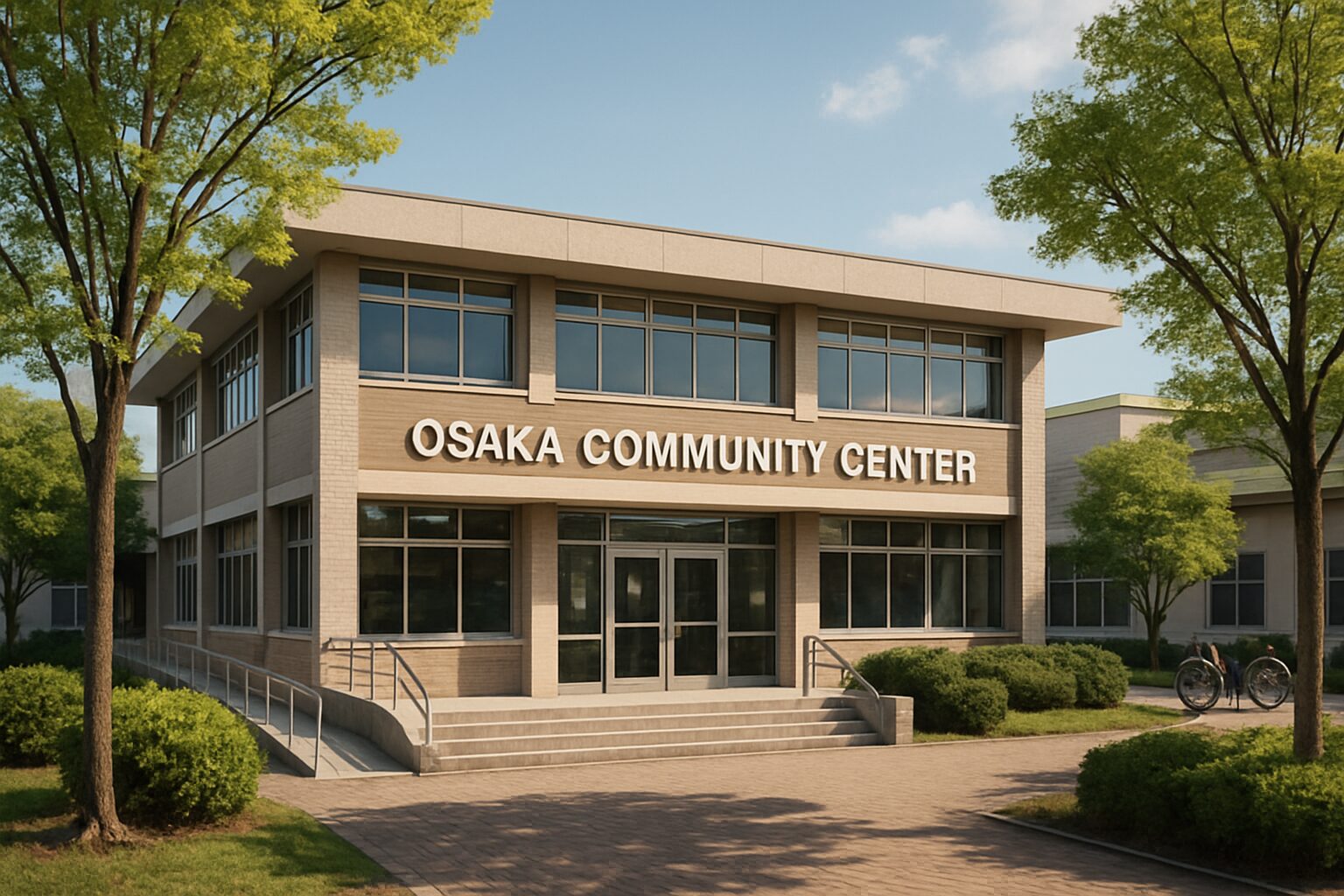
So, you’re here. You’ve made the leap. You live in Osaka. You’ve navigated the train maps that look like a bowl of multi-colored ramen, you’ve found your favorite takoyaki stand, and you can order a beer with a confident “Nama biiru, kudasai!” But there’s a quiet hum beneath the neon buzz of Dotonbori and the rush of Umeda Station, a desire to connect on a deeper level, to find your place not just as a visitor, but as a part of the city’s living, breathing fabric. You want to meet people, share stories, and maybe, just maybe, learn something uniquely Japanese along the way. Where do you find this authentic pulse? The answer isn’t in a sleek high-rise or a trendy cafe. It’s in the humble, welcoming halls of Osaka’s community centers, known in Japanese as Kominkan (公民館) or, more locally, Kumin Sentaa (区民センター – Ward Centers). These unassuming buildings are the true social heartbeats of their neighborhoods, the places where grandmothers perfect their calligraphy, where children learn traditional dances, and where the quiet, beautiful rhythm of everyday life unfolds. This is your guide to stepping through their sliding doors, a key to unlocking a side of Osaka you won’t find in any travel book. It’s where your journey from resident to local truly begins.
To truly settle into the city’s daily rhythm, mastering the local transit system with the right public transportation pass is an essential first step.
What Exactly is an Osaka Community Center? The Heartbeat of the Neighborhood

Before you dive in, it’s important to first understand what these places really are, because the term “community center” might give you an impression that isn’t quite accurate. In many Western countries, a community center often serves as a venue for sports, after-school programs, or official meetings. An Osaka community center, or kominkan, encompasses all of that and much more. It stands as a foundation of a post-war Japanese philosophy centered on lifelong learning (shougai gakushuu – 生涯学習) and social education. The key concept is that learning and community involvement don’t end once you graduate from school. Instead, it is a continuous, lifelong process that enriches both individuals and the society around them. These centers physically embody that philosophy.
Step inside one, and the atmosphere is immediately tangible. It’s a sensory mosaic of local life. You might catch the steady, rhythmic thump-thump of taiko drumming practice coming from a basement room. Down the hall, the clean, earthy aroma of sumi ink and wet paper lingers, coming from a calligraphy class where seniors concentrate deeply on their work. Further along, laughter spills out from a room where a group is mastering the intricate art of kimono dressing. The air hums with Osakan-ben, the local dialect, a rapid and melodic sound that truly serves as the city’s soundtrack. You might spot toddlers taking their first dance steps in one room while, in another, a group of retirees engage in a lively game of Go. This is a place for intergenerational connection, where the wisdom of the elderly meets the energy of youth. It feels less like an institution and more like a vast, shared living room for the whole neighborhood. The facilities are generally simple but well-kept: tatami rooms for traditional arts, multi-purpose halls with polished wooden floors, small kitchens for cooking classes, and quiet meeting rooms. It’s a space designed for practicality and connection rather than display. And that very simplicity makes it incredibly welcoming.
There’s a subtle but significant difference between the larger, city-run centers and the smaller ward-level ones. The Osaka Municipal Lifelong Learning Center in Umeda, for example, is a major hub. It’s larger, better funded, and offers a wide range of courses, sometimes even taught by distinguished masters. It’s an excellent place to begin, especially if your Japanese is still developing, since they’re more accustomed to foreign visitors. But the real charm, the deep neighborhood bond, typically arises at the smaller Kumin Centers. Each of Osaka’s 24 wards has one, and these truly capture the distinct character of their specific areas. The center in Sumiyoshi might offer activities linked to the famous Sumiyoshi Taisha Shrine, while the one in Tennoji could focus on historical arts related to its temple-rich environment. These smaller centers are where you’ll meet your real neighbors—the people you bump into at the local supermarket or park. It’s a more intimate setting, and while stepping inside might require a bit more courage, the rewards of acceptance and friendship are beyond measure.
Cracking the Code: How to Find Classes and Events
Alright, you’re convinced by the idea. You’re ready to learn the tea ceremony or try pottery. But how do you move from just standing outside the building to actually enrolling in a class? This is often the biggest challenge for foreigners. The information isn’t always neatly organized and presented in English on a polished website. Instead, it becomes a treasure hunt, and mastering this search is your first lesson in local life.
Your first and most important stop is the keijiban (掲示板), the community bulletin board. This is the analog heart of the center, usually found right in the lobby. It’s a vibrant, chaotic mosaic of paper. You’ll see carefully handwritten posters by a calligraphy teacher, simple black-and-white flyers typed by a cooking club leader, and colorful, professionally printed announcements for larger city events. Don’t be daunted by the wall of Japanese text. Start by looking for visual clues and keywords. Search for images related to what you want to do: a paintbrush for art, a flower for ikebana, a musical note for choir. Then, train your eye to spot key kanji. The most important word is 募集 (boshuu), meaning “recruiting” or “now accepting applications.” If you see it, you know they’re open to new members. Other helpful words include 講座 (kouza – course/class), 教室 (kyoushitsu – classroom/lesson), and イベント (ibento – event). Look for dates, times, and a contact name or phone number. Take photos of any flyers that catch your interest. You can use a translation app later to decode the details. This board is always changing, so check it often.
Your next resource is human: the information desk, or uketsuke (受付). The staff here act as gatekeepers and guides. They are usually friendly local residents, and while their English skills may vary, their willingness to assist is generally great. A warm smile and some polite Japanese will go a long way. Don’t hesitate. This is the perfect low-pressure chance to practice your language skills. You can approach the desk with simple phrases. A good opener is, “Sumimasen, nani ka omoshiroi kouza wa arimasu ka?” (Excuse me, are there any interesting classes?). If you have a particular interest, ask, for example, “Shodou no kurasu wa arimasu ka?” (Is there a calligraphy class?). An important question is, “Shoshinsha demo sanka dekimasu ka?” (Can beginners join?). This shows humility and eagerness to learn. The staff can then direct you to the right flyer on the bulletin board or provide a schedule pamphlet. If you’ve found a flyer you like, show it to them and say, “Kore ni sanka shitai desu.” (I want to participate in this). They’ll guide you through signing up, which may involve filling out a simple form with your name, address, and phone number.
Beyond the center itself, watch out for the kouhoushi (広報誌), the official ward newsletter. This monthly publication arrives in mailboxes throughout the ward and is a treasure trove of information about local happenings, including a section dedicated to community center classes and events. It’s usually a simple, newspaper-style document entirely in Japanese, but it’s worth scanning through with a translation app. Many wards also have websites that serve as digital versions of the newsletter. Navigating them can be tricky, but using your browser’s auto-translate feature helps you uncover plenty of useful information. A good search strategy is to use specific Japanese keywords. Enter phrases like 「大阪市 [your ward name in Japanese] 区民センター 講座」 (Osaka City [Ward Name] Kumin Center Kouza) or 「大阪市 生涯学習センター イベント」 (Osaka City Lifelong Learning Center Event) into your preferred search engine. This often leads directly to the relevant pages on the city or ward’s official websites, providing the latest schedules and application details.
A Universe of Activities: What Can You Actually Do?

Once you’ve discovered how to locate a class, you’ll face the wonderfully overwhelming choice of what to pursue. The variety of activities available at Osaka’s community centers reflects the city’s rich cultural and social life. This is your opportunity to dive headfirst into hobbies you’ve only ever read about. Let’s explore some of the worlds awaiting you.
Traditional Arts & Culture
This is often the biggest attraction for foreigners—and for good reason. These aren’t tourist demonstrations; they are genuine classes taught by passionate local experts.
- Shodo (書道 – Calligraphy): Picture a quiet tatami room, where the only sounds are the gentle rustle of kimono sleeves and the soft swish of brush on paper. The air carries the distinctive, calming scent of sumi ink. A sensei, a teacher devoted to this art, demonstrates a character, each stroke a delicate balance of pressure and release. Then you take your brush, dip it in the ink, and experience the unique connection between your mind, hand, and paper. It’s a meditative practice that cultivates patience, balance, and appreciation for imperfection. Your first efforts might be unsteady, but the satisfaction of creating a single beautifully balanced character is profound.
- Ikebana (生け花 – Flower Arranging): This is far more than arranging flowers in a vase. Ikebana is a disciplined art exploring the relationship between space, nature, and the artist. In a typical class, you’ll work with carefully chosen branches, flowers, and a kenzan (a spiky frog that holds stems in place). The instructor explains the principles of a particular school, such as the classical, formal style of Ikenobo or the more modern, expressive approach of Sogetsu. You’ll learn about asymmetry, empty space (ma), and how to create a sense of movement and life. It’s a way of seeing nature anew, and you get to bring your beautiful, ephemeral creation home.
- Sado (茶道 – Tea Ceremony): Taking part in a tea ceremony class means stepping into a different dimension of time. It’s a practice centered on ichigo ichie (一期一会), the philosophy that each meeting is a unique, once-in-a-lifetime event. You’ll learn the precise, graceful movements (temae) for cleansing tea utensils, whisking powdered green tea (matcha) into a frothy emerald liquid, and serving it to guests. You’ll also learn how to be a proper guest—how to receive the bowl respectfully, rotate it in your hands, and admire its craftsmanship. It’s a holistic experience engaging all your senses, from the kettle’s boiling water to the seasonal sweet (wagashi) accompanying the tea. It embodies hospitality and mindfulness distilled into a single, beautiful ritual.
- Kitsuke (着付け – Kimono Wearing): Have you ever admired the elegance of someone in a kimono and wondered how it all fits together? A kitsuke class unravels the mystery. You’ll learn about the different layers of undergarments, the exact way to wrap the main robe, and the seemingly impossible art of tying the wide sash, the obi, into an ornate knot. It’s a practical skill that opens doors to cultural participation. Once you know how to wear one, you can confidently attend summer festivals, New Year’s shrine visits, or tea ceremonies in full traditional dress, feeling a deeper connection to the occasion.
Music & Performance
If you seek something livelier and collaborative, the performing arts provide an excellent way to connect with others.
- Taiko Drumming (和太鼓 – Wadaiko): Say goodbye to quiet meditation; this is pure, primal energy. A taiko class is a full-body workout. You’ll stand before a massive drum, grasp thick wooden sticks (bachi), and learn rhythms that have powered festivals and battlefields for centuries. The sound vibrates through the floor and into your chest. It’s about more than striking a drum; it’s about stance, power, and teamwork as you learn to play in sync with the group, shouting rhythmic cues (kakegoe). It’s exhilarating, empowering, and a fantastic stress reliever.
- Folk Dance (民謡 – Min’yo): Each region of Japan has its own traditional folk songs and dances, and community centers keep these traditions alive. You might learn the graceful, flowing movements of a dance from Kyoto or the lively, celebratory steps of Osaka’s own Kawachi Ondo. These classes often lead into the summer Bon Odori festivals, where whole neighborhoods dance in circles around a central platform. Joining a dance class is the best way to prepare and ensures you’ll be a welcomed participant—not just a spectator—when festival season arrives.
Practical Skills & Hobbies
Community centers are also great places to acquire practical skills that enrich your everyday life in Japan.
- Japanese Cooking (料理教室 – Ryouri Kyoushitsu): Move beyond restaurant guides and learn how to prepare authentic, home-style Japanese dishes. These sessions are often led by experienced local homemakers, the obaa-chans who preserve generations of culinary wisdom. You might master making fluffy, savory okonomiyaki, shape perfect onigiri rice balls for your bento, or refine the delicate art of clear dashi broth. The atmosphere is warm, cooperative, and delicious. You’ll not only learn recipes but also the cultural context behind the food, and share the meal with your classmates at the end.
- Language Exchange Circles (言語交流会 – Gengo Kouryuukai): Many centers host volunteer-led language exchange groups. These tend to be less formal than structured classes, offering a relaxed setting to practice your Japanese conversation skills with native speakers who, in turn, want to practice their English. It’s a mutually beneficial arrangement that often leads to genuine friendships. You’ll discuss daily life, cultural differences, and your Osaka experiences, all while improving your language skills in the most natural way possible.
Navigating the Social Landscape: Tips for a Smooth Experience
Entering a new social environment, especially within a different culture, can feel intimidating. However, with some awareness and preparation, you can navigate the social dynamics of a community center class with ease and confidence. Remember, just showing up already demonstrates a genuine interest and respect, which is a significant first step.
Language barriers are naturally an important consideration. While fluency isn’t required, learning a few essential polite phrases will make a meaningful difference. Your effort, no matter how imperfect, will be sincerely appreciated. Keep a reliable translation app handy on your phone for quick reference, but don’t rely entirely on it. Use gestures, smile, and maintain eye contact—you’ll be amazed at how much you can communicate without words. Often, your fellow students will prove to be your best allies; even if they don’t speak English, they can guide your hand in calligraphy or show you dance steps physically. Patience and a positive mindset are your most important assets.
In Japan, the idea of group harmony, or Wa (和), is culturally important. Within a community class, this translates into a few simple yet crucial behaviors. Punctuality is essential, with arriving a few minutes early considered standard. Be ready to contribute to collective efforts, which typically include setting up before the class and tidying up afterward. This practice, called katatsuke (片付け), involves wiping tables, sweeping floors, or putting away equipment as a shared activity, not a chore, providing a chance for informal bonding. Showing consideration as a group member—listening attentively when the sensei speaks, waiting your turn, and offering help to others—is the best way to show respect and integrate smoothly.
A great icebreaker for your first day is to bring a small, simple gift, or omiyage (お土産). It doesn’t have to be costly or elaborate; a modest box of cookies or crackers from your home country or a nice snack from a local store is ideal. Present it to the sensei at the start of class for everyone to enjoy during a break. This small gesture conveys much, serving as a sign of goodwill and a traditional Japanese way to introduce yourself to a new group.
Lastly, understand the relationship with the teacher, or sensei (先生). This title conveys respect for their knowledge and skill. Always address your teacher by their last name followed by “-sensei” (e.g., Tanaka-sensei). The classroom atmosphere may be more formal than you’re accustomed to, with the sensei holding clear authority. Watch how other students interact and follow their example. This respect forms the foundation of the learning process in many traditional Japanese arts.
A Walkthrough: Your First Day at a Community Center
To clarify what your first day might entail, here is a step-by-step guide.
Step 1: Arrival. You find the building, which appears welcoming and practical. Upon entering, the first thing you’ll notice is the genkan, an entrance area with shoe lockers or shelves. Here, you remove your outdoor shoes and switch to the supplied indoor slippers. This shoe change symbolizes and practically separates the outside from the inside space.
Step 2: Locating Your Room. You check the schedule board in the lobby, listing the day’s classes and room numbers. You walk through the clean, quiet hallways until you find the correct door. Sliding it open, you see your classmates chatting and preparing.
Step 3: Introduction. Most likely, the sensei or a senior student will ask you to introduce yourself to the group—the jiko-shoukai (自己紹介). Don’t worry! A simple, friendly introduction suffices. Smile and say, “Hajimemashite, [Your Name] desu. [Your Country] kara kimashita. Yoroshiku onegaishimasu.” (Nice to meet you, I’m [Your Name]. I come from [Your Country]. I look forward to working with you all.) This phrase is a key that will open many welcoming smiles.
Step 4: During Class. Your main task is to observe and try your best. Don’t be afraid to appear clumsy or make mistakes—everyone was a beginner once. If you find yourself struggling, try catching the eye of the person beside you; they’ll likely be eager to help. Enthusiasm outweighs talent on the first day.
Step 5: After Class. When the lesson ends, the work continues. Everyone pitches in for the katatsuke. Join willingly, as this is when the structured class atmosphere relaxes and people chat more freely. It’s a great chance for conversation. Someone might even invite you with, “Kondo, ocha demo dou desu ka?” (How about tea next time?). This marks the start of a friendship—accept with a cheerful “Hai, zehi!” (Yes, certainly!).
Spotlight on Key Osaka Community Centers
While the ideal center for you is likely your local ward facility, it’s helpful to know about some larger hubs.
- Osaka Municipal Lifelong Learning Center (Umeda): Located on the 5th and 6th floors of the Osaka Ekimae Dai-2 Building, this flagship center is near the main Osaka/Umeda station complex, making it highly accessible. It offers a wide range of courses, from business skills and language classes to advanced traditional arts. Its central location attracts people from across Osaka prefecture and is very accustomed to international participants—a welcoming, low-intimidation starting point.
- Chuo Ward Community Center (中央区民センター): Situated in downtown Chuo-ku, this center serves a diverse, international population. It often hosts events and classes tailored to foreign residents, including Japanese language support and cross-cultural exchanges. Its proximity to Shinsaibashi and Namba means it reflects the vibrant, modern energy of central Osaka.
- Tennoji Ward Community Center (天王寺区民センター): Located in a historically rich ward near Shitennoji Temple and Tennoji Zoo, this center often emphasizes traditional and cultural activities. Classes here may connect deeply with the area’s history, offering a chance to immerse yourself in Osaka’s classical culture.
Beyond the Classroom: Community Centers as Gateways to Local Life
Enrolling in a class is only the first step. These community centers are deeply embedded in neighborhood life, extending far beyond their scheduled programs. They serve as organizational hubs for local matsuri (祭り), or festivals. The people you meet in your pottery class might also be on the festival planning committee. Your participation in the center could lead to an invitation to help carry the heavy mikoshi (portable shrine) through the streets or run a food stall selling yakisoba to your neighbors. This is how you shift from being a cultural observer to an active participant.
These centers also act as clearinghouses for local volunteer groups. If you want to contribute to the community, the bulletin board is where you’ll find opportunities, whether it’s joining a neighborhood cleanup day, assisting with children’s events, or participating in programs visiting elderly residents. For families, the centers are invaluable resources, hosting puppet shows, seasonal craft workshops, and celebrations for events like Setsubun (the bean-throwing festival) and Hinamatsuri (the doll festival). They provide a safe, welcoming space for children to play and socialize with peers.
On a more practical note, your local community center is an essential piece of civic infrastructure. In the event of an earthquake, typhoon, or other emergency, these sturdy buildings often serve as designated evacuation shelters (hinanjo – 避難所). Knowing the location of your local center and having connections there is crucial to being a prepared and integrated member of the community.
Your exploration of Osaka’s community centers is, in essence, a journey into the heart of the city itself. It requires a bit of courage, some humility, and a genuine curiosity about the people and culture around you. It won’t always be simple. There will be moments of linguistic confusion and cultural misunderstandings. But every small victory—each new kanji learned, every successfully tied obi knot, every shared laugh over tea—will draw you closer into the vibrant tapestry of this remarkable city. The tatami mats are waiting, the ink is ground and ready, and a whole community is eager to share their world with you. All you need to do is slide open the door and step inside.