Step off the neon-drenched thoroughfares of Osaka, away from the thunder of the JR loop line and the culinary chaos of Dotonbori. Wander into the quiet, labyrinthine backstreets of neighborhoods like Tennoji, Fukushima, or deep into the residential heart of Higashiosaka. Here, life beats to a different, more intimate rhythm. As dusk settles, painting the sky in shades of indigo and orange, a soft glow begins to emanate from certain unassuming buildings. You’ll see a tall, slender chimney reaching for the sky, a silent sentinel of a bygone era. You’ll notice the distinctive, gracefully curved karahafu gables over an entrance, a feature more commonly associated with temples or castles. A soft, warm light spills from latticed windows, steam occasionally ghosting across the glass. This is the local sento, the neighborhood public bathhouse, and it is far more than just a place to get clean. It is the living, breathing, steaming heart of the community, a sanctuary of shared vulnerability and quiet connection. In a city that hurtles relentlessly towards the future, the sento is a precious anchor to the past, a cultural institution where the soul of old Osaka is laid bare. For anyone seeking to truly integrate into the fabric of this vibrant city, to understand its people beyond the surface-level interactions of commerce and tourism, the journey begins by stepping through the noren curtain of your local sento. It’s a rite of passage, a lesson in humility, and an invitation to experience Japan in its most unadorned and authentic state. This is your guide to that first, transformative dip.
To further immerse yourself in the city’s unique character, consider exploring the vibrant world of Osaka’s comedy culture, which shares the same deep community roots as the sento.
Echoes in the Steam: The Sento as a Living Museum
Before you even step into the water, it’s crucial to grasp the cultural currents you’re entering. The sento is neither a modern spa nor a luxury resort; it’s a time capsule. Its origins date back centuries, with its golden age emerging in the post-war era. As Japan rapidly rebuilt, most homes were constructed without private bathrooms. The neighborhood sento became an indispensable daily utility, as essential as the local grocer or post office. Yet, it was always more than that. It served as the community’s living room, a place where news was exchanged, gossip shared, and friendships formed amid the steam. It was a place of profound equality. Inside, the factory worker and the shop owner, the student and the retiree, all shed their clothes—and with them, the markers of social status. This idea, known as hadaka no tsukiai, or “naked communion,” is the philosophical foundation of the sento experience. It suggests that by removing external signs of identity, a more honest and direct form of communication can emerge. Although most homes in Osaka now have their own baths, the surviving sento endure because they offer something a private bathroom cannot: a deep, unwavering sense of community.
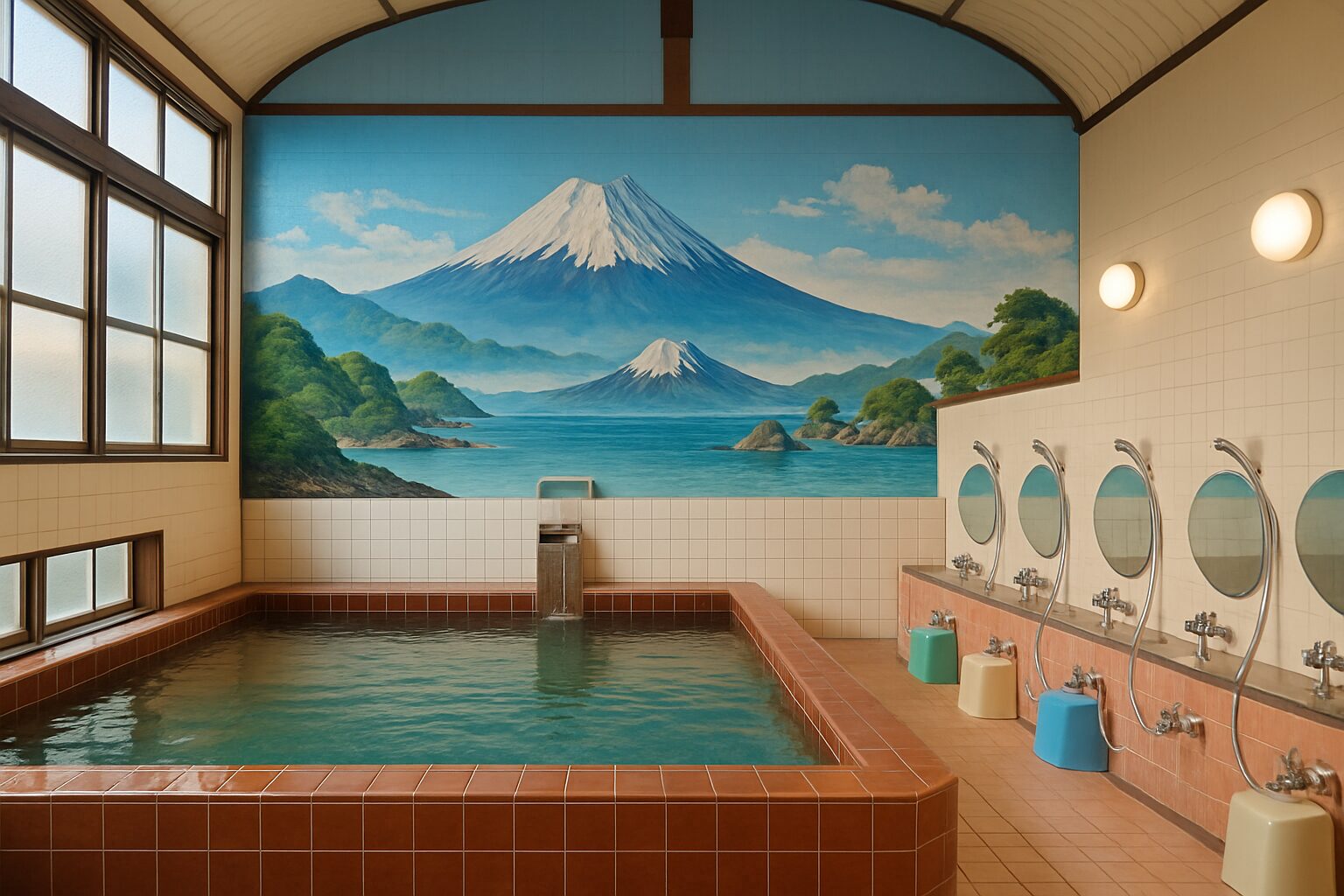
Entering a traditional sento is an architectural experience in itself. Look up at the soaring ceiling, often designed high to let steam escape, creating a sense of spaciousness and preventing the air from becoming too heavy. The changing room, or datsuijo, often features dark, polished wood, sturdy lockers with old-fashioned keys, and perhaps a large, antique clock on the wall. You might notice wicker baskets (kago) for clothes, a more traditional choice than lockers. A sense of history fills the air. The centerpiece of many older sento is the magnificent mural above the bathtubs. While Mount Fuji is the most iconic motif—a tradition said to have been started by a Tokyo painter to delight patrons—Osaka sento may showcase other grand landscapes, legendary carp, or scenes from Japanese folklore. These are not mere decorations; they are artworks, often created by specialized painters, intended to give bathers a sense of grandeur and escape while they soak. The tiles themselves can be stunning, sometimes intricate Kutani-yaki or other artisanal porcelain tiles portraying flowers, birds, or geometric patterns. Every detail, from the wooden shoe lockers (getabako) at the entrance to the slightly worn wooden stools in the washing area, tells a story of the thousands of lives passing through this space in search of warmth, cleanliness, and connection.
The First Step: Navigating Your Inaugural Visit
The concept of a public bath can be intimidating for first-timers. The etiquette, the nudity, the unfamiliar customs—it can all seem overwhelming. However, the process is elegantly simple and logical, designed with comfort and hygiene in mind. Let’s go through it step by step, so you can enter with the confidence of a seasoned visitor.
Passing Through the Noren
Your experience begins at the entrance, marked by a distinctive split curtain called a noren. These curtains are almost always color-coded and adorned with kanji. Typically, blue or purple indicates the men’s side (男), while red or pink marks the women’s side (女). Once inside, you’ll arrive in a small entryway called the genkan. Here, removing your shoes is mandatory—a rule observed in virtually all Japanese indoor spaces and especially important in a place focused on cleanliness. Shoe lockers, known as getabako, are provided to store your footwear. Be sure to take the wooden key tag with you.
Next, proceed to the reception area. In older-style sento, you might find a traditional raised platform called a bandai, where an attendant oversees both the men’s and women’s changing rooms. More often nowadays, a modern front desk divides the two sides. This is where you pay the bathing fee, which is very reasonable, usually around 500 yen—a price often regulated by local authorities. Here you can also rent a small towel (kosutaru) and a large bath towel (basutaru) if you didn’t bring your own. Single-use sachets of shampoo, conditioner, and soap are also available for purchase. Many locals come equipped with their own bathing kits carried in small waterproof baskets or bags, which are a common sight in the changing rooms. For your first visit, renting or buying what you need is easiest. The small towel is essential; the large one is optional, as many regulars get by with just the small towel.
The Datsuijo: Changing Room
After paying and collecting your rental items, head to the appropriate changing room. The datsuijo is a transitional space. The atmosphere is generally calm and relaxed. You’ll see other bathers in various stages of undressing, quietly chatting or preparing to enter the baths. Locate an empty locker or a wicker basket. Locker keys are usually attached to a wristband so you can wear it while bathing. Now, it’s time to undress. This is often the biggest psychological barrier for newcomers, but it’s important to remember that nudity here is entirely non-sexual and commonplace. Everyone is in the same condition. Looking away is polite, but there’s no reason to feel self-conscious. It’s the great equalizer.
Your small towel plays a dual role. When walking from the changing room to the bathing area, you can use it to cover yourself modestly. Though not strictly required, this practice is common and may help you feel more at ease. Once in the bathing area, the towel is used for washing your body, not for bringing into the bath. Place your large bath towel in your locker; it’s reserved for drying off after your bath is completely finished.
The Sacred Waters: Bathing Area Etiquette and Rituals
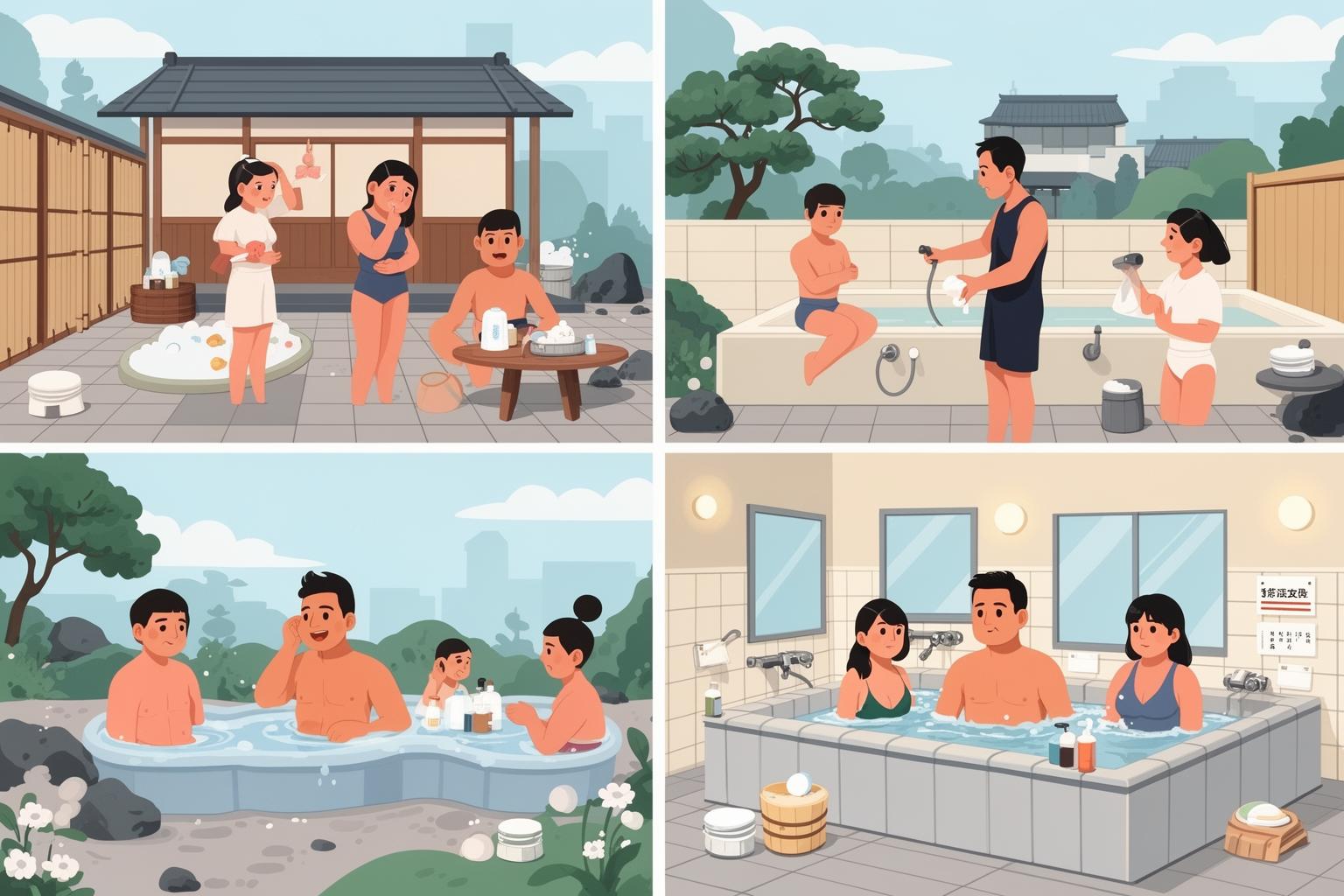
Sliding open the door to the bathing area, you are immediately greeted by a cloud of warm steam, the sound of flowing water, and the soft murmurs of other bathers. The air is heavy with humidity and the clean fragrance of soap. This space is divided into two primary zones: the washing area (arai-ba) and the bathtubs (yubune). The most important rule of the sento, which forms the foundation of the entire experience, is this: you must wash your body thoroughly before entering the bathtubs. The tubs are intended for soaking and relaxation, not for cleaning. Since the water is shared, entering it while unwashed is a serious breach of etiquette.
Mastering the Arai-ba
The washing area consists of rows of individual washing stations. Each station typically includes a mirror, a faucet (often with hot and cold taps, or a modern shower head), a small plastic stool, and a bucket. Do not stand to shower, as this will splash your neighbors. The correct method is to sit on the stool. This position might feel unfamiliar at first, but it is practical, preventing water from splashing everywhere and showing consideration for those around you. Take a stool and a bucket, then find an empty station. If all the fixed shower heads are occupied, you can use your bucket to scoop water from the main taps or even from the bathtubs to rinse yourself. This initial rinse, called kakeyu, is a vital first step. Use the bucket to splash hot water over your feet, legs, and torso, helping your body acclimate to the heat and rinsing off surface dirt before you begin scrubbing.
Next, use your small towel and soap to wash yourself completely. Lather up and scrub thoroughly. Take your time — this is part of the ritual. The sounds of the arai-ba create a unique symphony: the rhythmic press of spring-loaded faucets, the sloshing of water, and the soft scrubbing. Once you are fully clean and have rinsed off all the soap, you are ready for the main event. Wring out your small wash towel and set it aside. You can place it on your head (a classic sento style that helps keep you cool) or on the edge of the bath, but never, ever put it in the bathwater.
A Universe of Tubs: Exploring the Yubune
The variety of baths is one of the great pleasures of the sento. A typical neighborhood bathhouse will offer several different options. You will almost always find the main tub, usually quite hot, around 42-44 degrees Celsius (107-111 Fahrenheit). This is the atsuyu, or hot bath. Enter it slowly and allow your body to adjust. The initial heat can be intense but soon gives way to a deep sense of relaxation as your muscles unwind. There’s no need to stay in for long; a few minutes is sufficient, especially on your first visit. Many sento also have a cooler tub, the nuruyu, kept at a milder temperature, ideal for longer, more leisurely soaks.
Beyond these standard tubs, you may encounter an enjoyable variety of specialty baths. Jet baths, known as jetto basu or by brand names like Dream Bath, feature powerful underwater jets that provide a hydro-massage, perfect for soothing sore backs and shoulders. Some sento offer a denki-buro, or electric bath, which is a unique and somewhat intimidating experience. Two low-voltage electric plates are fixed to the walls of a small tub, sending a gentle current through the water. Sitting between them, you’ll feel a tingling, buzzing sensation that causes your muscles to contract and relax. It’s said to be beneficial for muscle pain and stiffness, but it’s certainly an acquired taste. Approach it with caution and don’t stay in too long!
To complete the thermal experience, many sento feature a mizuburo, a small tub of cold water. Alternating between the hot baths and the cold plunge is excellent for circulation and leaves you feeling remarkably refreshed and invigorated. The initial shock of the cold water is intense, but the subsequent feeling of vitality is unparalleled. Some larger or more modern sento might even offer a small sauna or an outdoor bath (rotenburo), where you can soak under the open sky—a real luxury in a crowded city like Osaka.
The Post-Bath Glow: Completing the Sento Ritual
Leaving the bath is just as much a part of the ritual as entering it. After soaking, step out of the tubs and, if you wish, give your body a quick rinse at a washing station. Before returning to the datsuijo, it’s considered polite to wipe off as much excess water as possible with your small, damp wash towel to avoid dripping on the changing room floor. Once back in the datsuijo, retrieve your large bath towel from your locker and dry off thoroughly.
But don’t rush away just yet. The post-bath experience is when the community aspect truly shines. The changing room often doubles as a lounge, where regulars chat as they cool down, sitting on benches in front of large fans during the summer. This is the moment for one of the most beloved sento traditions: the post-bath drink. Look for the classic glass-fronted refrigerators, usually stocked with small glass bottles of milk. Fruit milk (furuutsu gyunyu), coffee milk (kohii gyunyu), and plain milk form the holy trinity of sento beverages. There’s something irresistibly perfect about a cool, sweet drink after a hot soak. Many places also offer beer, Calpis, or other soft drinks.
Find a spot on a bench or in the small lobby, if available. You might discover retro massage chairs that jolt you for 100 yen, a weighing scale straight from the 1950s, or a small television showing a baseball game. This is a time simply to be—to relax, cool down, and absorb the atmosphere. You don’t have to speak to anyone, but if you become a regular, this is where nods turn to greetings, and greetings to conversation. This is how you become part of the neighborhood fabric. You’ll learn about the local festival, hear about a new restaurant down the street, or share a quiet moment of contentment with fellow bathers. This slow, unhurried conclusion to the bathing ritual is what transforms the sento from a simple utility into a profound cultural experience.
Seasons of the Sento: A Year in the Bath
The sento experience is ever-changing, shifting with the seasons and offering distinct delights throughout the year. In the heart of an Osaka winter, nothing is more comforting than escaping the biting cold wind and immersing oneself in a steaming hot bath. The contrast between the chilly outdoor air and the deep, penetrating warmth of the water is an exquisite physical pleasure. On the winter solstice (toji), many sento host a special yuzu-yu, where dozens of aromatic yuzu citrus fruits float in the tubs. The fruit releases fragrant oils into the water, believed to ward off colds and bring good fortune.
With the arrival of spring, the sensation evolves. The bath becomes restorative, helping to wash away the fatigue brought on by seasonal changes. On Children’s Day in May, the shobu-yu features long, green iris leaves placed in the bath, which are thought to possess medicinal qualities that promote health and vitality. Although a visit to the sento might seem unusual during Osaka’s hot, humid summer, it is a traditional way to beat the heat. A quick wash followed by a soak in lukewarm or cold water feels incredibly refreshing. Afterwards, sitting in front of the large industrial fan in the changing room with a cold beer or Ramune soda is a quintessential summer joy. As autumn air cools, the sento once again becomes a cozy refuge, offering warmth as the evenings grow longer. Following the seasonal rhythm through the local sento connects you to the deeply rooted cultural pulse of Japanese life.
Finding Your Home Bath
While some of the grand, historic sento have become tourist attractions in their own right, the genuine experience comes from discovering and regularly visiting a local, neighborhood bath. How do you find one? Keep your eyes peeled as you wander through the residential areas of Osaka. Look for the tall chimneys and the distinctive noren curtains, along with the symbol ゆ (yu, meaning hot water), which universally signifies a public bath in Japan. Don’t hesitate to try places that appear old and modest; these often offer the most authentic and welcoming atmosphere. Each sento has its own unique character, community of regulars, and special charm. Exploring various ones is part of the enjoyment, but eventually, you may discover one that feels like home. This becomes your iki-tsuke no sento, your regular spot. Becoming a familiar face here is one of the best ways to truly feel settled in the city. The owner will recognize you, the regulars will give a nod of acknowledgment, and you will have created a small, warm corner for yourself within the vast metropolis of Osaka. It’s a reminder that even in one of the world’s largest cities, community is built through the smallest shared rituals—one hot bath at a time.