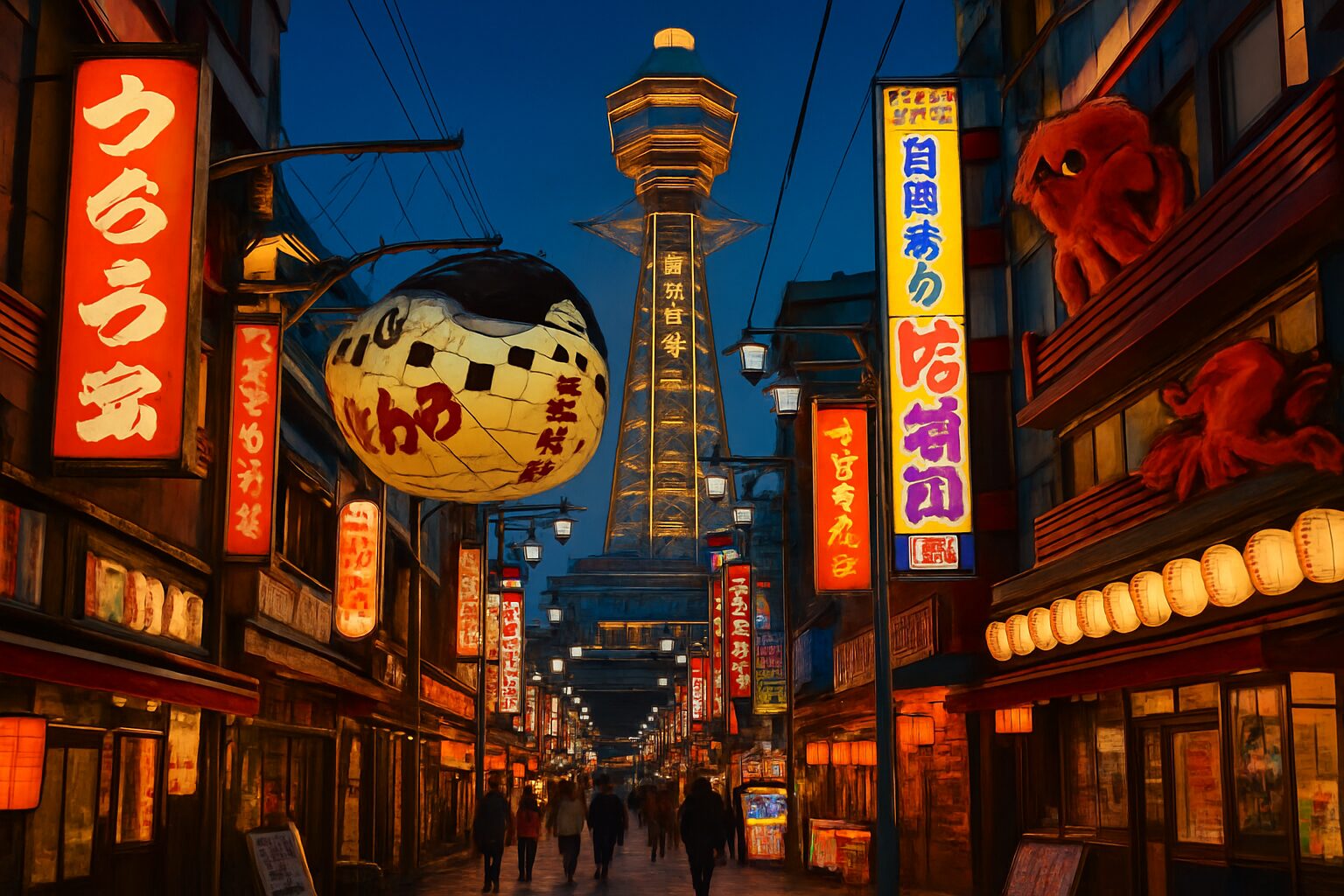
Yo, it’s Megumi, your friendly neighborhood event planner from Tokyo, and today I’m swapping the sleek subways of the capital for a place that beats to a completely different drum. We’re diving headfirst into Osaka’s Shinsekai district, a neighborhood that’s less of a place and more of a feeling, a time-traveling trip back to the Showa Era’s electric buzz. Picture this: a glorious, slightly chaotic kaleidoscope of flashing neon signs, the tantalizing aroma of deep-fried everything hanging thick in the air, and the iconic Tsutenkaku Tower standing tall like a retro-futuristic sentinel watching over its kingdom. But the real magic of Shinsekai, the pulse that makes this place unforgettable, isn’t just in its sights or tastes. It’s in its sound. It’s in the voices of the people who call this place home—the shopkeepers. Their communication style is a legendary piece of Osaka culture, a whirlwind of friendly-yet-blunt chatter that can feel like a warm hug and a playful slap on the back all at once. For any foreigner living in or visiting Osaka, understanding this unique brand of straight talk is your key to unlocking the true, unfiltered soul of the city. It’s where you stop being a tourist and start feeling the rhythm of Naniwa. So, let’s get ready to tune in, because we’re about to decode the wonderful, wild world of Shinsekai communication.
To truly understand the raw, unfiltered soul of Osaka beyond Shinsekai, it’s also worth exploring the unique communication styles in other historic districts, such as the raw and rhythmic dialogue of Nishinari.
The Vibe of Shinsekai: A Symphony of Sights, Sounds, and Straight Talk
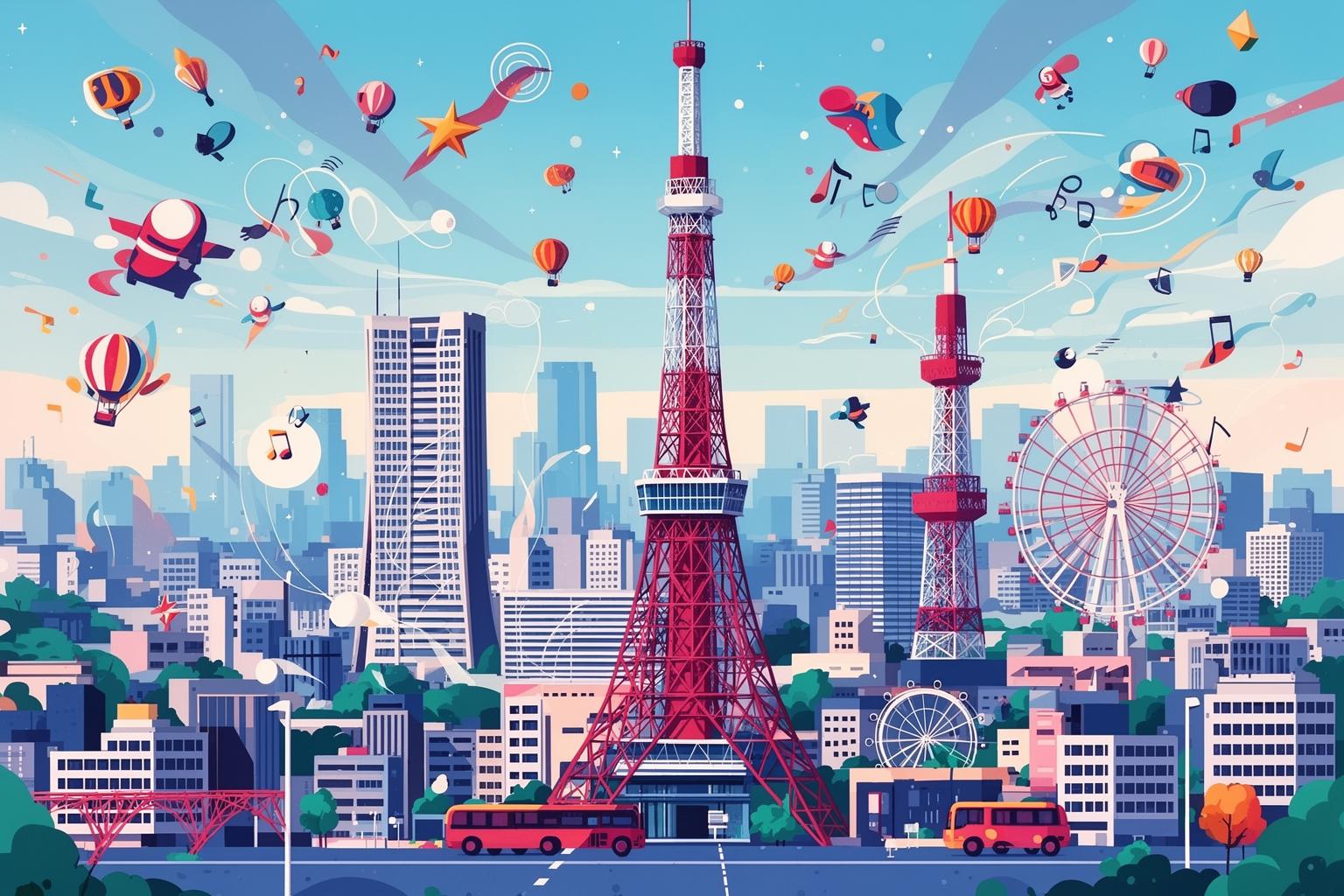
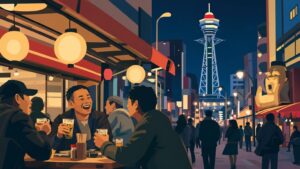
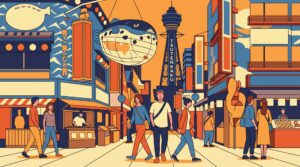
Stepping into Shinsekai feels like entering a movie set where the director has turned every sensory dial up to the max. Your ears are immediately immersed in a rich, layered soundscape. There’s the constant, hypnotic clatter and cheerful jingles pouring out from the open doors of pachinko parlors—sounds as essential to the area as the summer cicadas. You catch the sizzle and pop of panko-coated skewers dipping into vats of hot oil, a promise of pure, comforting food. Above it all flows a current of human energy—the loud laughter spilling from crowded izakayas, the shuffling footsteps of locals and tourists weaving through narrow lanes, and most prominently, the voices of the shopkeepers. They are the conductors of this urban symphony. You might spot a seasoned ojisan, his face a map of decades spent behind the same kushikatsu counter, his movements practiced and precise. He often has a towel wrapped around his head, a cigarette hanging from his lips as he calls out orders in a gravelly, no-nonsense tone. A few doors down, a lively obachan at a souvenir stand enthusiastically rearranges her Billiken statues, calling to passersby with a voice that slices through the noise, blending a sales pitch with genuine neighborhood gossip. This is the stage, and their language is pure performance art, deeply rooted in the local dialect known as Osaka-ben. It’s a dialect famously faster, more direct, and arguably more expressive than the standard Japanese taught in textbooks. The intonation rises and falls with a unique musicality, turning simple phrases into declarations brimming with personality. While a Tokyo shopkeeper might politely murmur, “Irasshaimase, douzo goran kudasai” (Welcome, please have a look), in Shinsekai, you’re more likely to hear a booming, “Anchan, nani shiterun ya! Kocchi kite, oishii mon yousan aru de!” (Hey, kid, what are you doing just standing there! Come here, we’ve got loads of delicious stuff!). At first, this directness can feel startling and even a bit intimidating—the cadence sharp, the volume loud, and the personal space minimal. But if you pause and look closer, you’ll notice the twinkle in their eyes, the slight grin playing on their lips. It’s not aggression; it’s an invitation. It’s a passionate, impatient warmth, a way of saying, “Don’t be a stranger, you’re part of the chaos now, so come on in and join the fun.” This is the raw, unfiltered welcome of Shinsekai, and learning to ride its energetic wave is the first step toward truly experiencing this remarkable corner of Osaka.
Unpacking the “Friendly but Direct” Formula
So what exactly lies behind this distinctive communication style? It’s not merely random loudness; rather, it’s a carefully crafted cultural formula—a blend of historical merchant spirit, a profound love for humor, and a practical approach to human interaction. At its core, the directness you find in Shinsekai is a legacy of Osaka’s past as Japan’s commercial hub, the tenka no daidokoro or “the nation’s kitchen.” For centuries, it was a city of merchants, traders, and craftsmen where time equated to money, and beating around the bush was bad for business. Honesty, efficiency, and clarity were valued above the delicate, layered politeness common in other parts of Japan. A deal was a deal, a price was a price, and your word was your bond. This shonin bunka (merchant culture) is ingrained in Osaka’s DNA, and in a working-class entertainment district like Shinsekai, it has been refined to its purest form. When a shopkeeper tells you bluntly what they think of a product or offers a straightforward recommendation, they aren’t being rude; they’re showing a form of respect. They treat you like a savvy local, not a delicate tourist who needs to be cushioned with flowery language. They trust you can handle the truth, and they give it freely. This creates an atmosphere of transparency that can be truly refreshing.
However, this directness would feel harsh if it weren’t for its essential counterpart: humor. Osaka proudly stands as Japan’s comedy capital. It’s the birthplace of manzai (a style of stand-up comedy) and home to the Yoshimoto Kogyo entertainment empire. Laughter is the city’s unofficial currency, and the people of Shinsekai are experts at using it. Playful teasing, witty banter, and self-deprecating humor are woven into everyday exchanges. This is how rapport is established, how ice is broken, and how a simple transaction becomes a memorable human experience. A vendor at a takoyaki stand might notice your hesitation and playfully scold you, “Nani mayotten no! Jinsei wa mijikai de, kono takoyaki wa sugu naku naru de!” (What are you hesitating for! Life is short, and this takoyaki will be gone soon!). The remark is an exaggeration, a little performance meant to spark a smile and encourage you to decide. It’s a game, and they’re inviting you to join in. Responding with a laugh or a playful comeback is the best way to show you get it. This captures the essence of the famed Osaka style sometimes called Ame to Muchi, or “Candy and Whip.” The direct, sometimes sharp comment is the ‘whip’—it grabs your attention and cuts through the noise. But it’s almost immediately softened by the ‘candy’—a warm smile, a hearty laugh, an extra piece of takoyaki added to your order, or a genuine, booming “Maido, ooki ni!” (Thanks for your business, much appreciated!). This dynamic rhythm keeps you engaged, making you feel less like a passive customer and more like an active participant in a lively, ongoing conversation. It’s a style that values genuine connection over formal politeness, and once you get used to it, you realize it’s one of the most welcoming ways of communicating you’ll ever experience.
A Historical Beat: Why Shinsekai Sounds the Way It Does
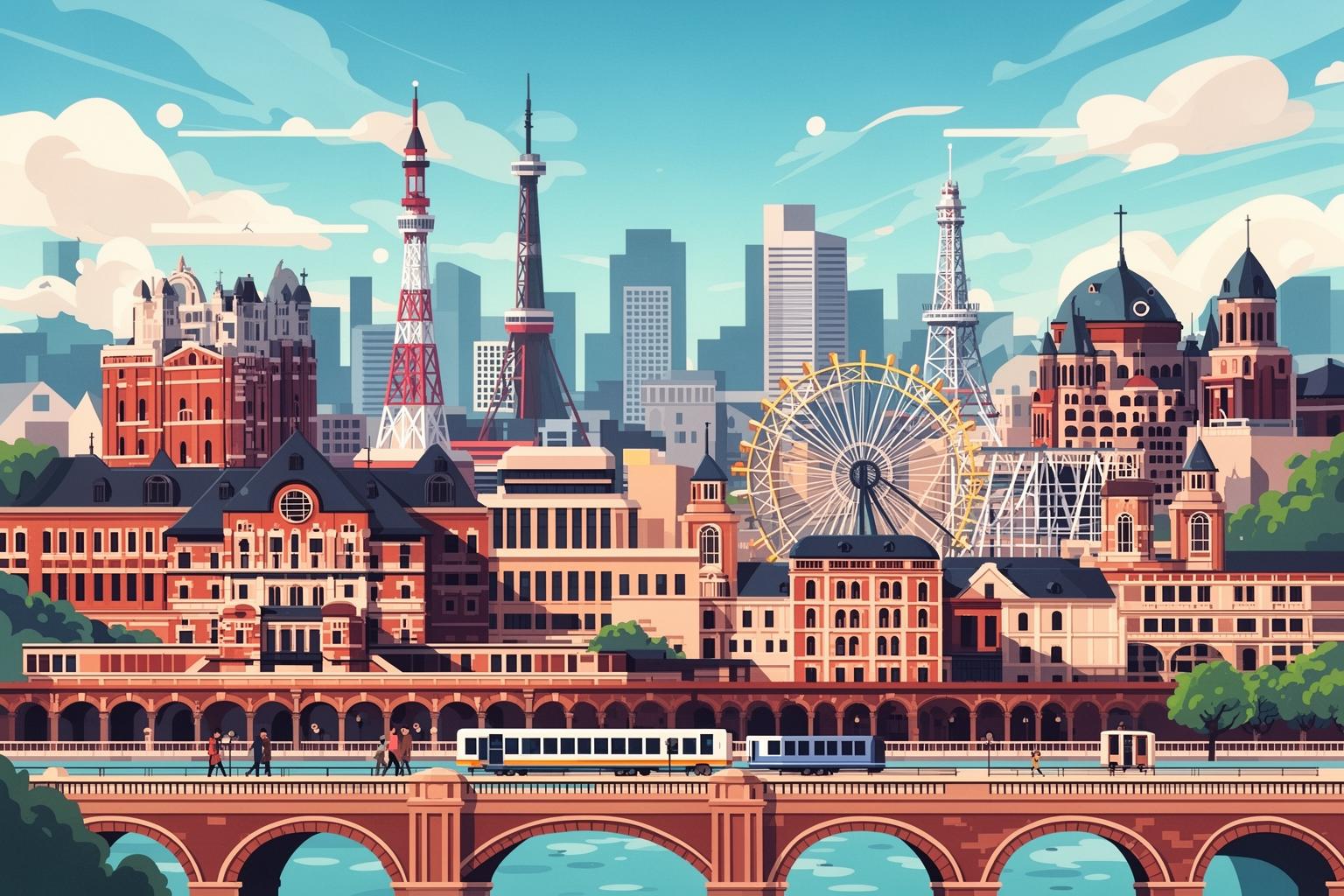
The story of Shinsekai’s distinctive voice is closely linked to the history of the district itself. The name literally means “New World,” reflecting its intended identity at the dawn of the 20th century. Before World War II, Shinsekai was Japan’s hub of modern entertainment, emerging from the 1903 National Industrial Exposition. It was a place of bold ambition. The northern part was modeled after Paris, featuring the original Tsutenkaku Tower designed to resemble the Eiffel Tower. The southern half drew inspiration from New York’s Coney Island, boasting an amusement park called Luna Park. It was a futuristic fantasyland, a public playground that attracted vast crowds from all walks of life. Importantly, it served as a center for the working class—factory workers, dock laborers, and everyday families seeking affordable leisure. This wasn’t a haven for the refined elite or subtle aristocratic manners; it was a space for lively, straightforward fun. The culture that emerged was practical, grounded, and resilient. People worked hard, played hard, and their manner of communication reflected this attitude. There was little room for pretense. You spoke plainly and valued those who did the same.
After the war, much of the district was damaged, and as Japan’s economic boom shifted business and entertainment hubs to other parts of Osaka, like Umeda and Namba, Shinsekai was largely left behind. It avoided the sweeping, glossy redevelopment seen in other city centers. Instead, it became a time capsule, preserving its architecture, businesses, and, most importantly, the spirit of the mid-20th century Showa Era. Many of the shops today are run by third or fourth-generation family owners. The shopkeepers learned their craft—and their way of speaking—from their parents and grandparents, who in turn absorbed it during the bustling, straightforward peak years of the area. This continuity is what makes Shinsekai truly special. The communication style is not a nostalgic affectation; it is a living, breathing legacy. It is the genuine echo of a past era, when community formed through face-to-face exchanges in crowded alleys and busy markets. When you hear that quick, sharp banter, you’re listening to the linguistic spirit of the laborers who came to unwind, the performers who worked local theaters, and the resilient merchants who have endured economic highs and lows for over a century. It is the unvarnished voice of working-class Osaka, preserved like amber in this unique, unchanged neighborhood.
Your Field Guide to Shinsekai Conversations
Exploring the vibrant verbal landscape of Shinsekai can be one of the most rewarding parts of your visit. It offers a chance to step outside your comfort zone and engage in a truly local way. The first and most important rule is simple: don’t be shy—jump right in! The shopkeepers of Shinsekai thrive on interaction. They are performers who love an engaged audience. A quiet, hesitant customer is much harder to connect with than someone willing to match their energy. So, make eye contact. Smile. Ask a question about the food. Even a simple, enthusiastic “Kore, meccha oishisou!” (This looks super delicious!) can open the door to a fun exchange. They’ll likely reply with a confident, “Atarimae ya! Uchi no ga ichiban umai nen!” (Of course it is! Ours is the best!). Don’t interpret this as arrogance; take it as pride and the beginning of a brief but beautiful friendship.
To enhance your experience even further, it helps to have a few key Osaka-ben phrases tucked away. These are more than just words; they are conversational keys that show you’re in on the local vibe. A classic greeting you might overhear among locals is “Mokarimakka?” which literally means “Are you making a profit?” It’s a very Osaka way of asking, “How’s it going?” The traditional, witty response is “Bochi bochi denna,” meaning “So-so, can’t complain.” If you want to ask the price of something, skip the standard “Ikura desu ka?” and use the punchier “Nambo?“. When leaving a shop, instead of a simple “Arigato,” you’ll earn a big smile with a hearty “Maido!” or “Ooki ni!,” warm, businesslike ways of saying thanks. And perhaps the most important phrase to remember, especially at a kushikatsu restaurant, is “Akan!” It means “No way!” or “Don’t do that!” and you’ll hear it with theatrical severity if you even think about double-dipping your skewer in the communal sauce. Using these phrases shows you’ve made an effort, and that effort will be returned tenfold in warmth and friendliness.
Another important skill is learning to read the room—or more specifically, the smile. The tone in Osaka-ben can be sharp and the words might sound like a scolding, but 99% of the time, it’s the expression that reveals the true meaning. A harsh-sounding comment delivered with a wide grin and a twinkle in the eye is actually a term of endearment. It’s a joke and a sign that they feel comfortable enough with you to engage in some playful teasing. Lastly, embrace the comedy. Osaka humor often revolves around the dynamic of the boke (the silly, air-headed one) and the tsukkomi (the sharp, witty straight man who calls them out). As a visitor, you’re perfectly positioned to be the boke. If you make a small, silly mistake—fumbling with your chopsticks or looking unsure about what to order—a Shinsekai shopkeeper will often gleefully step into the tsukkomi role. They’ll point out your error with a loud, funny retort, not to embarrass you, but to share a laugh. The best thing you can do is laugh along. By joining in this cultural comedy duo, you’re not just buying food; you’re creating a shared moment of connection, the best souvenir Shinsekai has to offer.
Beyond the Banter: Where to Experience Shinsekai’s Spirit
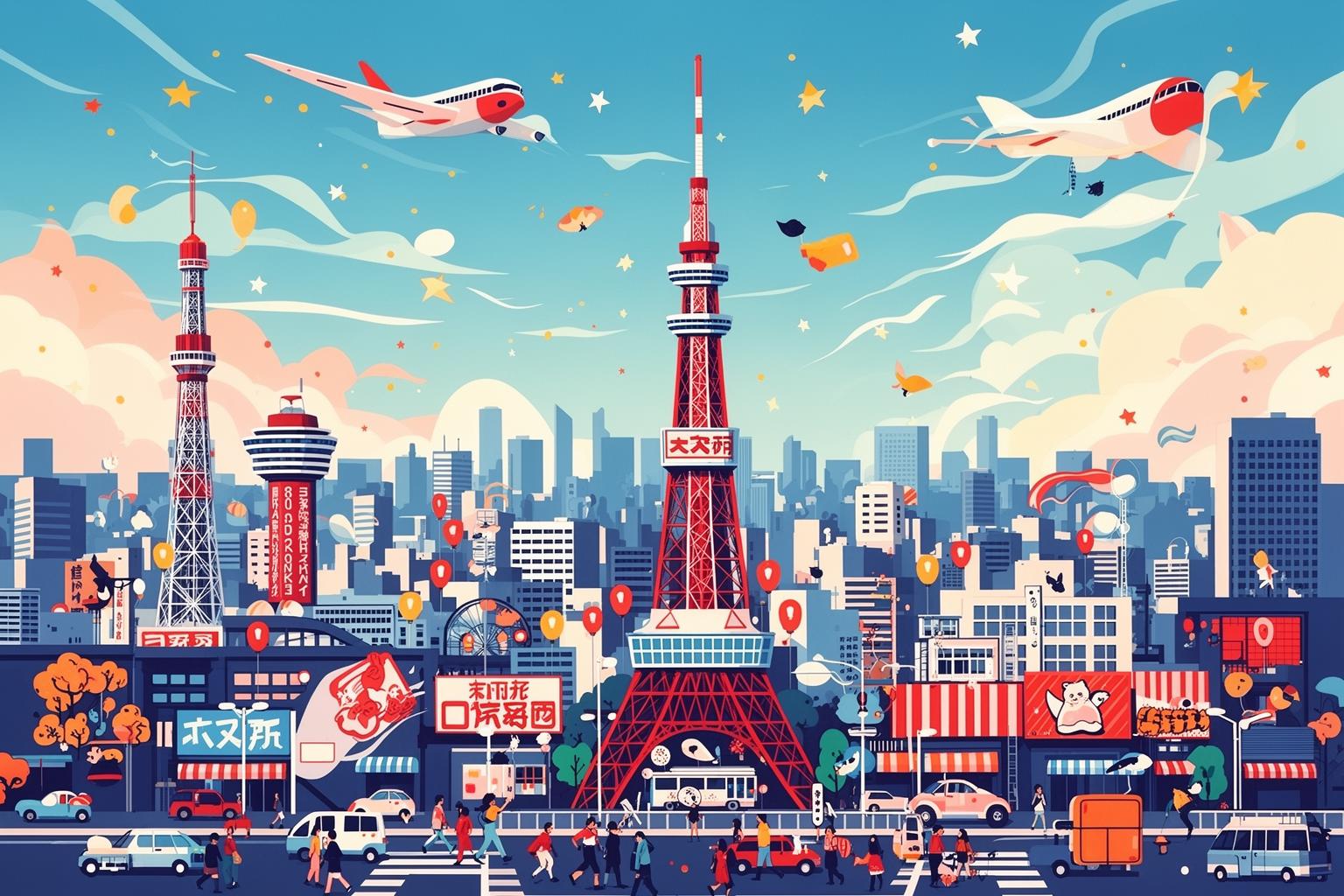
While this remarkable communication style infuses the entire district, there are specific spots where you can experience it in its most concentrated and vibrant forms. At the absolute heart of the Shinsekai experience are its kushikatsu restaurants, which specialize in deep-fried skewers of meat, seafood, and vegetables. Famous establishments like Kushikatsu Daruma are iconic, but part of the charm is exploring the smaller, lesser-known places that line the streets. Here, you’ll sit at a counter, shoulder-to-shoulder with locals, and simply point at what you want. The master behind the counter fries it to a golden crisp and serves it with a gruff yet efficient flair. This is also where you’ll encounter the sacred, non-negotiable rule: absolutely no double-dipping your skewer into the communal pot of thin, savory dipping sauce. Signs are everywhere, and staff enforce this rule with the seriousness of a national security issue, often accompanied by a loud, theatrical shout of “Nido-zuke kinshi ya de!” (Double-dipping is forbidden!). All of this adds to the fun, creating a piece of interactive theater alongside your meal.
For a different yet equally authentic atmosphere, step into one of the many tachinomi, or standing bars. These no-frills venues offer cheap beer and small dishes while you stand at a high counter. They serve as social hubs for the neighborhood’s old-timers, where the conversations you overhear are a masterclass in raw, unfiltered Osaka-ben dialect. Don’t be surprised if the person next to you strikes up a conversation, sharing their life story or their candid opinion on the Hanshin Tigers baseball team. A must-visit is Jan-Jan Yokocho, a narrow, covered shopping alley that feels as if it’s been frozen in time since 1955. It’s a lively, chaotic corridor packed with tiny, inexpensive restaurants, go and shogi (Japanese chess) clubs where elderly men gaze intently at their boards, and retro arcades. The name “Jan-Jan” is said to originate from the shamisen music once played to attract customers. Today, the sounds are the sizzle of grills and the lively chatter of patrons. It’s a microcosm of Shinsekai, a place where time slows down and simple pleasures like food, games, and community take center stage. Naturally, no visit is complete without acknowledging Tsutenkaku Tower. Take the elevator to the top for a stunning view of the city, and be sure to rub the feet of the Billiken statue for good luck. Although the service inside the tower may feel more standardized, the spirit of Shinsekai is visible in every direction from its observation deck.
Practical Grooves for Your Shinsekai Trip
Reaching Shinsekai is effortless, thanks to its excellent links to Osaka’s expansive public transit system. Your top choices are Dobutsuen-mae Station on the Midosuji and Sakaisuji subway lines, which places you right at the doorstep of Jan-Jan Yokocho. Alternatively, Shin-Imamiya Station, served by the JR Osaka Loop Line and the Nankai Line, is just a brief walk away. Ebisucho Station on the Sakaisuji Line is another convenient option, located at the foot of Tsutenkaku Tower. The timing of your visit can greatly influence your experience. Shinsekai is a late riser. Mornings are quiet and calm, with many shops still closed. The true energy begins to build in the late afternoon as locals finish work and eateries start firing up their grills and fryers. The neighborhood truly comes alive after sunset, when vintage neon signs wash the streets in a warm, electric glow. This is the perfect time to explore—the golden hour melting into the vivid night. Weekends buzz with activity but tend to be crowded, whereas weekday evenings offer a perfect blend of lively ambiance and manageable crowds.
A few simple tips for first-time visitors will make your trip smoother. First, carry cash. While the world has largely gone digital, many old-school, family-run spots in Shinsekai remain proudly cash-only, which adds to the charm. Second, be adventurous with your food but mindful of local customs. The no double-dipping rule is taken seriously here, rooted in hygiene concerns, and honoring it shows respect for the local culture. Cabbage, served as a complimentary side, acts as your utensil to scoop up extra sauce if needed. Lastly, and most importantly, come with an open heart and a ready smile. Don’t misinterpret directness for rudeness or loudness for hostility. It’s a unique cultural expression, a kind of performance, and a sincere, if unconventional, way to welcome you. If you appear lost, someone will almost certainly help you—though their directions might include a bit of friendly teasing. Embrace the humor, laugh it off, and you’ll find yourself not just observing Shinsekai’s culture but becoming part of it.
Shinsekai is far more than a tourist spot scattered with photo ops. It’s a full immersion into the living history of Osaka. It challenges your assumptions and rewards you with an experience that feels raw, authentic, and deeply human. The communication style—the lively blend of frank talk and warm humor—is not a barrier but the main attraction. It’s an open invitation to drop the polite mask, connect on a deeper level, and share a laugh with a stranger over a tasty skewer. It reminds us that connection doesn’t always need to be whispered; sometimes, it’s joyfully shouted across a crowded room. So go ahead, step into the dazzling chaos of the New World, tune your ears to its vibrant, rhythmic pulse, and let the straightforward, big-hearted spirit of old Osaka win you over—one fried skewer and one hearty laugh at a time.