
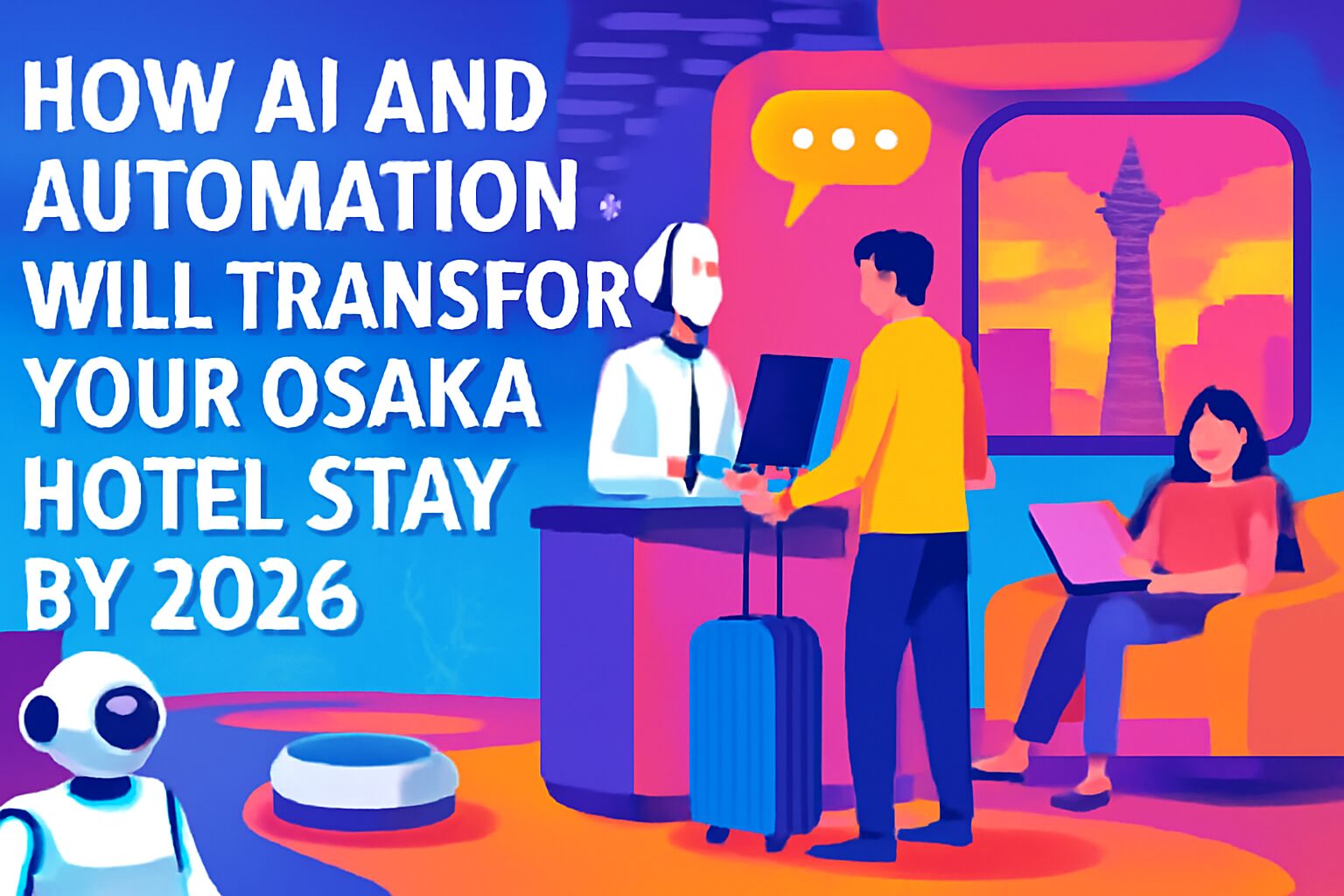
The way we travel is about to change, and hotels are at the heart of this transformation. A major shift is underway in the global hospitality industry, with hotel chains worldwide making significant investments in technology. By 2026, Artificial Intelligence (AI) and automation are set to redefine the guest experience, and this wave of innovation is coming to Osaka. For travelers planning a trip to the Kansai region, this means a smarter, smoother, and more personalized stay awaits.
The Driving Force: Why Hotels Are Embracing Tech Now
Two key factors are accelerating this technological revolution in hospitality: a persistent labor shortage and evolving guest expectations.
In Japan, the challenge is particularly acute. Following the post-pandemic tourism boom, the hospitality sector has struggled to fill positions. According to a 2023 survey by Teikoku Databank, a staggering 75.5% of Japanese hotels and ryokans reported a shortage of full-time employees. Automation is no longer a luxury but a necessity to maintain high service standards without overburdening staff.
Simultaneously, today’s travelers, accustomed to seamless digital experiences in other parts of their lives, now expect the same from their accommodation. They want control, personalization, and efficiency at their fingertips, from booking to check-out.
What a Tech-Powered Stay in Osaka Will Look Like
Imagine arriving at your hotel in Namba after a long flight. Instead of waiting in line, you check in instantly via a kiosk or your own smartphone, which then acts as your room key. This is just the beginning of the tech-infused experience that will soon become standard.
Hyper-Personalization with AI
AI will be the invisible concierge curating your perfect trip. Based on your preferences, an AI-powered hotel app could:
- Suggest a reservation at a hidden gem takoyaki restaurant that matches your culinary tastes.
- Automatically adjust your room’s lighting and temperature to your liking upon your arrival.
- Proactively offer information about local events happening during your stay, tailored to your interests.
This allows for a level of personalized service that was previously only available at the most exclusive luxury hotels, making every guest feel like a VIP.
Efficiency Through Smart Automation
Automation will handle the routine tasks, freeing up human staff to focus on what they do best: providing genuine, heartfelt omotenashi (Japanese hospitality). You can expect to see:
- Automated luggage carts that follow you to your room.
- In-room voice assistants to order room service or request extra towels.
- Robotic vacuums and cleaning systems that ensure rooms are prepared faster and more consistently.
This operational efficiency means less waiting and more time for you to explore the vibrant streets of Osaka.
The Future by the Numbers
This isn’t just a fleeting trend; it’s a massive global movement backed by significant investment. The global smart hospitality market is projected to skyrocket from $22.9 billion in 2023 to $84.4 billion by 2028, according to a report by MarketsandMarkets. This explosive growth reflects the industry’s confidence that technology is the key to future profitability and guest satisfaction.
Osaka: A Hub for Hospitality Innovation
With the 2025 World Expo on the horizon, Osaka is poised to become a showcase for the future of hospitality. The city is already known for its forward-thinking culture, and hotels in the Kansai region are expected to be early adopters of these new technologies to manage the massive influx of international visitors.
For travelers, this means that a visit to Osaka will not only be a journey into Japan’s rich culture and culinary scene but also a glimpse into the future of travel itself. The integration of AI and automation will not replace the warmth of Japanese hospitality but will enhance it, creating an experience that is both effortlessly efficient and deeply personal. Get ready for a smarter, more connected, and unforgettable stay in Osaka.








