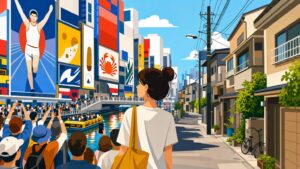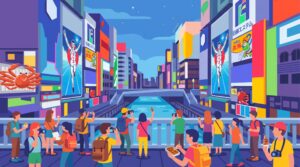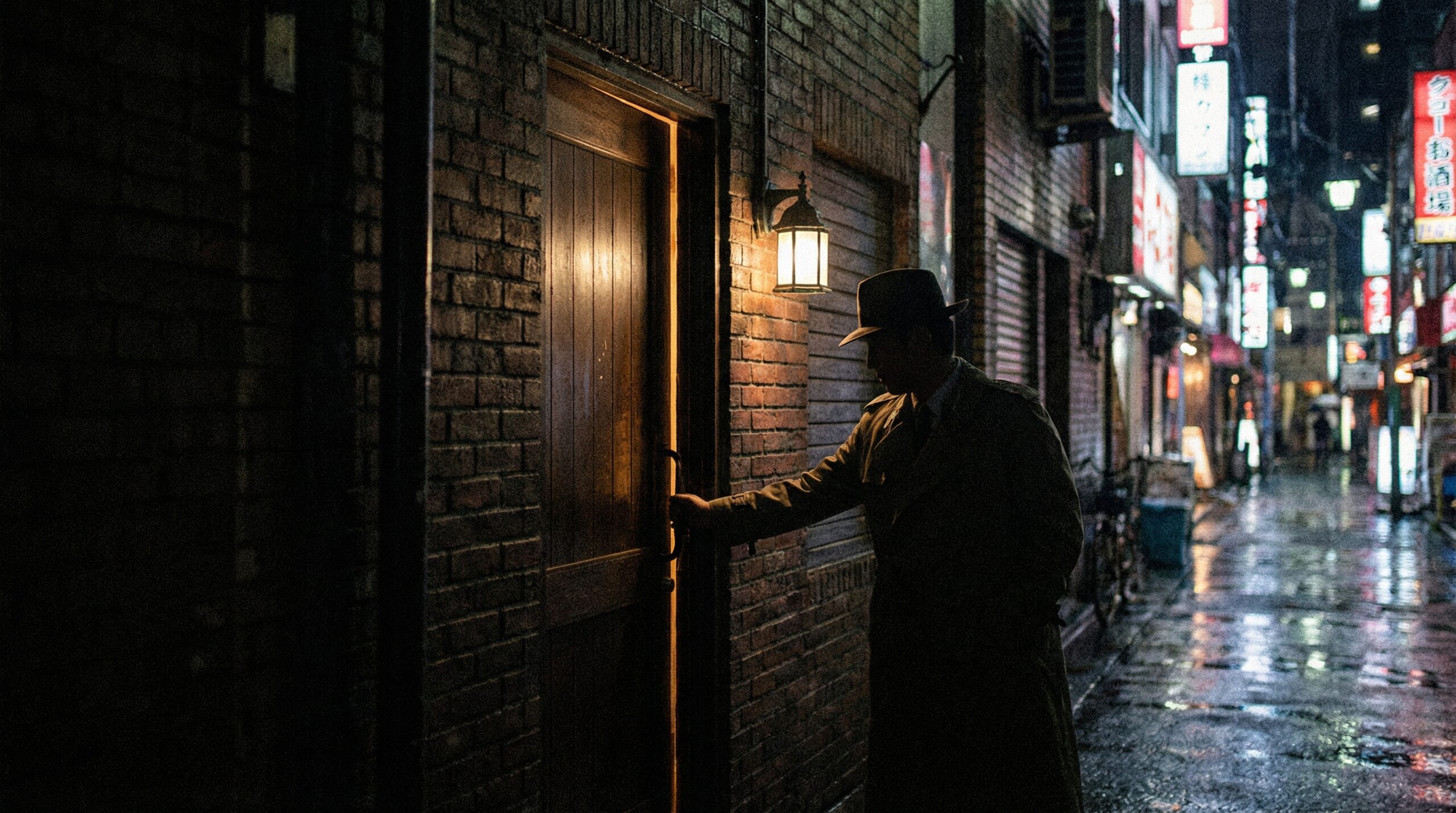
Namba, oh, Namba. It hits you like a tidal wave of light and sound, a beautiful, chaotic symphony for the senses. You step out of the station, and the world just explodes. The Glico Running Man throws his arms up in perpetual victory over the Dotonbori Canal, giant mechanical crabs wave their claws with a clack-clack-clack, and the air is thick with the sweet, savory scent of takoyaki and grilled everything. It’s a river of people, a neon-drenched canyon of pure, uncut energy. This is the Osaka everyone sees, the one plastered on postcards and splashed across travel blogs. It’s loud, it’s proud, and it’s undeniably alive. But what if I told you that this dazzling surface is just the beginning? What if I told you that hidden in the shadows of these glowing giants, tucked away in forgotten basements and up rickety stairs behind unmarked doors, lies another Namba? A Namba that whispers instead of shouts. A world of secret gardens for the soul, where the art of the drink is a sacred ritual and the atmosphere is the main ingredient. This is the world of Namba’s hidden speakeasies and themed bars, a subterranean network of cool that pulses with a different kind of rhythm. It’s an invitation to peel back the layers of the city, to become part of a secret, and to discover that the greatest adventures in Osaka often begin when you leave the main road and dare to get a little lost. This isn’t just about finding a drink; it’s about finding a story, a moment of quiet magic in the heart of the storm. It’s your Namba, after dark.
To continue exploring the vibrant heart of the city, discover the best work-friendly cafes in Shinsaibashi for a perfect daytime retreat.
The Art of the Hideaway: Decoding Japan’s Speakeasy Culture
Before you even begin your search, you need to grasp the vibe. The term “speakeasy” might evoke images of Prohibition-era America—flappers, jazz, and illicit gin. But in Japan, the concept takes on a different meaning. It’s less about evading the law and more about crafting an experience. It connects deeply with the Japanese cultural ideas of kodawari and kakurega. Kodawari is the unwavering pursuit of perfection, an almost obsessive commitment to one’s craft. You see it in the sushi master who spends sixty years perfecting rice, and you definitely see it in the bartenders of Namba’s hidden gems, who treat mixology as a fine art. Every movement is deliberate, every ingredient thoughtfully chosen, every glass an artistic canvas. Then there’s kakurega, which literally means “hideaway.” It’s a profound cultural appreciation for small, intimate spaces that provide shelter from the hectic world outside. A kakurega isn’t merely a place; it’s an emotion. It’s the comfort of being in a space so personal and concealed that it feels like it belongs solely to you and the few others fortunate enough to discover it. So, when searching for a speakeasy in Namba, you’re not simply seeking a bar. You’re seeking a sanctuary of flavor, a temple of skill, a secret shared from one discerning soul to another. The unmarked door isn’t a gimmick; it’s a filter. It makes sure everyone who enters is there for the right reasons: to cherish the craft, to absorb the atmosphere, and to honor the quiet magic unfolding behind the bar.
The Alchemist’s Cellar: Where Mixology Becomes Science
Let’s descend. Picture yourself wandering through the gritty, delicious chaos of Ura Namba, the “back Namba” area renowned for its standing bars and remarkable food stalls. You pass glowing red lanterns and the sizzle of grills, but you’re searching for something different. You notice a plain concrete staircase descending into darkness, marked only by a small, cryptic symbol etched into the wall—perhaps a stylized beaker. You hesitate, but curiosity takes over. You go down. The air cools, the street noise fades, and you push open a heavy steel door. Welcome to the laboratory. This isn’t a bar; it’s an alchemist’s workshop. The room is dim, lit by the soft glow of what resemble Bunsen burners and light filtering through jars of strange, colorful infusions lining the walls. Instead of a typical bar back, there’s a wall filled with glass beakers, distillation tubes, and shelves stacked with leather-bound books that resemble ancient chemistry tomes. The air smells of exotic herbs, smoke, and something electric. The bartender, dressed in a leather apron that looks more like a blacksmith’s than a mixologist’s, doesn’t greet you with a boisterous “Irasshaimase!” Instead, they nod, eyes fixed on the swirling liquid in the flask they’re holding. This is the temple of molecular mixology, where cocktails are deconstructed and reinvented.
A Symphony of Senses
The menu, if it can be called that, might appear as a periodic table of elements, where you select a base spirit, a flavor profile, and a desired sensation. Or perhaps there’s no menu at all. The alchemist simply asks, “What flavors are you dreaming of tonight? Sweet or bitter? Earthy or ethereal?” Your answer becomes their blueprint. To order a drink here is to commission a performance. You might watch as they use liquid nitrogen to flash-freeze a gin and tonic into a sorbet, served with a popping candy rim that fizzes on your tongue. Or they might ignite a sprig of rosemary with a small torch, trapping the smoke inside your glass before pouring in a deep, amber whiskey, crafting a cocktail you smell long before you taste. They create foams from fruit, gels from liqueurs, and transparent spheres that burst in your mouth with a rush of flavor. A popular concoction might be the “Floating Garden,” a blend of Roku Gin, elderflower liqueur, and yuzu, served in a wide coupe with a single, perfectly clear ice sphere containing an edible orchid. On top floats a delicate, shimmering bubble of lavender-scented smoke, which you’re instructed to pop with a pin, releasing a fragrant cloud that transforms the drink’s aroma. It’s an interactive, multi-sensory experience that redefines the cocktail. The ice isn’t just frozen water; it’s hand-carved from a massive, clear block, each facet crafted to melt precisely. The glassware isn’t merely functional; it’s selected to amplify the specific aromatics of your drink. This is kodawari at its most theatrical.
Navigating the Lab
A place like this has its own set of rules, both spoken and unspoken. First, reservations aren’t just advised; they’re essential, often needing to be made weeks ahead through a cryptic website or private social media account. Be ready for a significant cover charge, or seki-ryo, reflecting the intimacy and artistry of the space. This isn’t a place for a quick, inexpensive drink. It’s a destination for a special occasion, an evening to savor and remember. Cocktail prices will be high, but you’re paying for the ingredients, innovation, and spectacle. The atmosphere is hushed and respectful. People speak quietly, focused on the master at work. Photography is often discouraged, especially with flash, as it disrupts the ambiance. This is a place to be fully present. For first-timers, the best approach is openness and trust. Let the alchemist guide you. Tell them what you enjoy—the spirits, flavors, aromas—and allow them to craft something unique. It’s a leap of faith that invariably pays off.
The Kitsune’s Den: A Sip of Folklore
Now, let’s delve into a different kind of magic. We leave behind the modern science of mixology and step into the ancient realm of myth. Your journey leads you to the stone-paved, lantern-lit alleys of Hozenji Yokocho. Moss blankets the statues, and the air is thick with history and prayer. You pass the famous Mizukake Fudo-son statue, cloaked in a lush green moss from countless wishes poured over it. Just beyond, in a shadowy corner of the alley, a row of glowing vending machines appears. One stands out—it doesn’t advertise Coke or Pocari Sweat. Its buttons are blank, and its screen loops an animation of a fox mask. You press a button, half-expecting a can of green tea to fall. Instead, a section of the wall beside the machine clicks open, revealing a low doorway. You duck inside, and the alley vanishes. You have entered the Kitsune’s Den. The air is warm, scented with sandalwood incense and aged cedar. Dim light filters through dozens of red and white paper lanterns, each painted with a stylized fox. The walls, dark wood, boast an exquisite collection of antique kitsune masks, each bearing a unique, mischievous expression. A low, hypnotic blend of traditional shamisen melodies and modern downtempo electronic beats fills the space, creating an atmosphere both ancient and futuristic.
Cocktails from the Spirit World
The bartender moves with silent, graceful efficiency, their face partly hidden in the shadows cast by the lanterns. The menu is a delicate scroll of washi paper, with calligraphy that is a work of art. The drinks draw inspiration from Japanese folklore and the seasons. You might try the “Fox’s Fire,” a cocktail made with smoky Japanese whisky from the Yoichi distillery, ginger liqueur, a dash of lapsang souchong tea, and a house-made syrup infused with togarashi chili pepper. It’s served with a single, large, perfectly square ice cube and garnished with candied ginger resembling a flickering flame. Warm, spicy, and deeply complex, it tells a story of mischief and magic. Or perhaps the “Yuki-onna’s Kiss,” honoring the legendary snow woman. This crystal-clear concoction combines Haku vodka, premium Niigata sake, and a touch of lychee, served ice-cold in a delicate frosted glass rimmed with fine salt like snow. Crisp, clean, and dangerously smooth. The bartender’s craft focuses less on modern theatrics and more on an intuitive mastery of Japanese flavors. They use ingredients like sansho pepper for its numbing, citrusy kick, shiso for its herbaceous minty notes, and fermented plums (umeboshi) for a salty sour punch. Infusions, bitters, and syrups are homemade, often from seasonal ingredients sourced at local markets. The presentation is minimalist yet stunning: a single perfect shiso leaf, a delicate curl of yuzu peel—every detail purposeful.
The Vibe and the Unspoken Code
The Kitsune’s Den is a sanctuary for quiet conversation and reflection. Patrons are often creatives—designers, writers, musicians—seeking respite from the city’s relentless pace. Loud groups and boisterous tourists are absent here. It’s an ideal spot for a memorable date or to come alone with a book and lose yourself in the mystical ambiance. Gaining entry requires insider knowledge. There’s no sign, no public phone number. Admission is often granted by referral from a regular patron or by solving a riddle on an obscure private Instagram account. This exclusivity protects the bar’s soul. Like many such places, a cover charge applies, presented alongside a small, exquisite appetizer—perhaps smoked nuts, seasonal fruit, or delicate tofu. This is otoshi, a traditional table fee in Japanese bars. Embrace it—it marks you as a guest in a genuine, traditional establishment. As a visitor, your best approach is to be respectful and observant: keep your voice low, avoid photographing masks or fellow patrons. Instead, engage with the bartender—ask about the story behind a cocktail, show sincere interest in their craft. In return, you’ll experience omotenashi, a hospitality that is subtle, anticipatory, and deeply welcoming.
Showa Dreams: A Toast to Nostalgia
Sometimes, the past is the most exotic destination of all. Let’s head to the vibrant, youthful energy of Amerikamura, or “Amemura.” Famous for its street fashion and American-influenced culture, it feels like the most modern area of Namba. Yet even here, time travel is possible. You discover an old, slightly worn building nestled between two shiny modern storefronts. An external staircase takes you up past a tattoo parlor and a vintage clothing shop. On the fourth floor, you find a simple wooden door with a small, tarnished brass plate that reads, “Projection Room.” You turn the knob and step inside. The transformation is immediate. You’ve left the 21st century behind and entered the Showa Era, the vibrant post-war period from the 1950s to the 1980s that shaped modern Japan. The bar is small and cozy, bathed in warm, sepia-toned light. The walls are adorned with vintage movie posters for classic films by Kurosawa, Ozu, and Mizoguchi. An old reel-to-reel projector sits in one corner, casting a silent, flickering black-and-white film onto the opposite wall. Behind the bar, shelves are packed not only with bottles of Suntory and Nikka whisky but also with vintage manga, tin toys, and old transistor radios. The soundtrack is perfect: a mix of sultry enka ballads and the smooth, infectious grooves of 70s and 80s city pop.
Drinks Straight from a Bygone Era
The owner, a man in his late 50s with a warm smile and encyclopedic knowledge of Showa-era culture, hands you a menu that resembles a vintage movie ticket. The cocktails are classics, crafted with loving precision. This isn’t a place for foams and smoke; it’s a place for a perfect Highball, a stiff Old Fashioned, or a sharp Gimlet. Their specialty is the Japanese Highball, a deceptively simple drink that is difficult to perfect. Here, it becomes a ritual. The glass is chilled until frosty. A large, clear spear of ice is placed inside. The whisky—often a classic like Suntory Kakubin—is poured in and stirred exactly 13 and a half times clockwise to chill it to the ideal temperature. Then, highly carbonated soda water is gently poured down the side of the glass to preserve the bubbles. A twist of lemon peel is expressed over the top, releasing its oils. The result is crisp, refreshing, and utterly sublime. The cocktails often bear names inspired by cultural icons of the era. You might order a “Tokyo Drifter,” a sharp, gin-based drink, or a “Godzilla’s Breath,” a smoky, peated whisky cocktail. The bar also boasts an impressive collection of Japanese whiskies, including rare and discontinued bottles from the Showa period itself. The owner is happy to guide you through a tasting flight, sharing stories about the distilleries and the history behind each bottle.
A Community of Memory
This bar feels less like a business and more like a clubhouse for those who love a lost time. The clientele is a mix of older Japanese locals genuinely reliving their youth and younger people, both Japanese and foreign, drawn to the retro aesthetic. It’s an incredibly friendly and welcoming space. The owner enjoys chatting, recommending his favorite old films, or playing a requested city pop record. It’s the kind of place where strangers strike up conversations over a shared admiration for a particular actor or musician. For first-timers, this is one of the most accessible and heartwarming hidden gems you can find. There is usually no cover charge, though it’s polite to order more than one drink if you plan to stay a while. It can get crowded, especially on weekends, as the space is small with only a few seats at the bar and a couple of small tables. Visiting on a weeknight is your best bet for a more intimate experience. While the owner speaks some English, a simple “Oishii!” (Delicious!) or “Arigatou gozaimasu” (Thank you very much) will be met with a big smile. This isn’t just a bar; it’s a living museum, a cozy corner of Namba where the good old days still shine bright.
Beyond the Secret Door: Themed Bars for Every Fantasy
While the speakeasy scene in Namba requires a certain level of dedication, there exists an entirely different world of themed bars that focus purely on unfiltered fun. These spots aren’t necessarily hidden, but their unique experiences make you feel as though you’ve unlocked a secret level in the game of life. They stand as a tribute to Japan’s otaku (geek or enthusiast) culture, where passions transcend hobbies to become lifestyles.
8-Bit Escapism: The Retro Game Bar
Walk into one of Namba’s video game bars, and you’re immediately embraced by a wave of pixelated nostalgia. The soundtrack is a blend of Mario’s coin chimes, Sonic’s ring collection, and the “Hadoken!” shout from Street Fighter. Shelves lined with classic game cartridges—Famicom, Super Famicom, Nintendo 64, Sega Mega Drive—bulge along the walls. Each table comes equipped with a console and TV, turning the entire space into a communal living room where you can challenge strangers to a Mario Kart 64 race or team up to take down Dr. Wily in Mega Man. The drinks are straightforward and playful, often boasting names like “Princess Peach,” a sweet pink cocktail, or “Gamer Fuel,” a potent highball with an extra caffeine shot. The atmosphere is incredibly social and relaxed; it’s impossible to be shy while locked in an intense Super Smash Bros. match. This is a perfect icebreaker, ideal for meeting new people or simply reliving your childhood with a drink in hand. Many of these bars operate on a time-based fee system, granting unlimited gaming for an hour or two along with one included drink.
The Magician’s Table: Up-Close Wonder
For a different kind of enchantment, visit one of Osaka’s renowned magic bars. These intimate venues typically accommodate no more than fifteen or twenty guests. You sit at the bar or a small table as a professional magician performs mind-boggling close-up magic just inches from your eyes. Cards vanish and reappear, coins pass through solid tables, and your own signed bill might miraculously end up inside a lemon. This experience is worlds apart from watching a stage show—the proximity amplifies the illusions, making them feel all the more impossible and awe-inspiring. The bartenders are often magicians themselves, delighting patrons with small tricks as they mix drinks. These bars offer pure entertainment, a distinctly Japanese way to enjoy an evening. There is usually a show charge in addition to your drinks, but the experience is more than worth the cost. It’s a night of genuine wonder that will leave you questioning reality.
Vinyl Sanctuaries: Music-Focused Bars
Namba also boasts a vibrant scene of intimate, highly specialized music bars. These establishments are run by passionate collectors who have transformed their personal record collections into a public treasure. You might find a bar dedicated solely to ’80s city pop, with walls adorned by records from Tatsuro Yamashita and Mariya Takeuchi, and a DJ (often the owner) eager to take requests. There are punk rock bars, heavy metal bars, soul and funk bars, and even bars specializing in old TV show soundtracks. These spots are like libraries of sound, focusing on deep listening and appreciation. The sound systems are typically top-notch, and patrons come for the music. It’s a fantastic way to discover new artists or simply vibe to your favorite genre surrounded by like-minded people. Whatever your niche, Namba has a sanctuary waiting for you.
The Namba Nightlife Playbook: Essential Tips & Etiquette
Exploring Namba’s hidden bar scene is an incredible adventure, but it’s helpful to understand the local etiquette. Following a few simple rules will not only make your evening more enjoyable but also earn the respect of the bartenders and locals you encounter.
The Cover Charge Explanation
First, let’s discuss the charge. Many small, independent bars, especially the traditional or upscale ones, impose a cover charge, table fee, or seating charge. This might be referred to as otoshi, seki-ryo, or simply a “charge.” It can catch many visitors by surprise. It’s not a scam—think of it as a fee for the intimate experience, the bartender’s skill, and the carefully crafted atmosphere. This almost always includes a small, tasty appetizer (otoshi), which might be anything from house-made pickles to a small serving of potato salad or smoked fish. The cost typically ranges from 500 yen to several thousand yen, depending on the venue. It’s best to expect a charge and consider it part of the price of entry to these exclusive places.
Cash Is Still King
Although Japan is gradually adopting credit cards, many of Namba’s smallest, most unique bars remain cash-only. These are often run by solo proprietors who prefer the simplicity of cash payments. Before you set out for a night of bar-hopping, ensure you have enough yen on hand. This will save you from the awkward situation of having to leave a friend behind as collateral while you dash to the nearest 7-Eleven ATM.
The Art of Drinking Solo
In many Western cultures, drinking alone at a bar can sometimes carry a stigma. In Japan, however, it’s completely normal and respected. It’s viewed as a way to relax, quietly enjoy a good drink, or have a one-on-one conversation with the bartender. Don’t hesitate to explore these hidden gems on your own. In fact, it’s often the best way to experience them. Sitting at the bar alone makes you more approachable and invites interesting conversations and recommendations from the master behind the counter.
Respect the Sanctuary
Keep in mind, these kakurega bars are sanctuaries. The most important rule is to respect the atmosphere. These are not places for loud phone calls, rowdy behavior, or boisterous group photos. Speak softly. If you want to photograph your beautiful cocktail, that’s generally fine—just be discreet and always turn off your flash. Never take photos or videos of the bartender or other patrons without their explicit permission. They are there to enjoy their private retreat, just like you. The highest form of respect is showing sincere appreciation for the drink and experience. A simple, heartfelt compliment to the bartender about their creation goes a long way.
Weaving Your Perfect Namba Night
So, how do you bring it all together? The charm of Namba lies in its density. You can explore several worlds in a single evening. A great plan might be to begin your night in Ura Namba. Immerse yourself in a lively, standing-room-only izakaya for some affordable, tasty skewers and a cold beer. Absorb the vibrant, joyful energy of local life. Once you’re warmed up and have a solid food base, it’s time to move on. Perhaps you head to a retro game bar for an hour of lighthearted fun and nostalgic competition. It’s a perfect way to bridge the gap between dinner and the main event. Finally, as the night deepens, it’s time to seek out the quiet magic. You make your way to your chosen speakeasy—whether it’s the alchemist’s lab, the kitsune’s den, or another hidden gem you’ve discovered. Here, you enjoy your final, perfect nightcap. A drink to savor in a place that feels worlds away from the neon chaos outside. When you finally emerge back onto the now-quieter streets, there’s only one way to end a perfect Osaka night: with a steaming bowl of late-night ramen. This last act, known as shime, is the ultimate comfort food, the perfect savory conclusion to your adventure.
Namba by day is a spectacle, a riot of commerce and entertainment. But Namba by night, if you know where to look, is a tapestry of stories. It’s a city of passionate craftsmen who dedicate their lives to creating perfect, fleeting moments in a glass. Discovering these spots is to discover the soul of the city—the quiet, creative heartbeat that pulses just beneath the loud, glittering surface. It takes courage to step off the brightly lit path, to trust a mysterious doorway or an enigmatic sign. But the reward is an experience truly your own, a secret shared between you and the city of Osaka. So go ahead. Get lost. The best stories await in the dark.