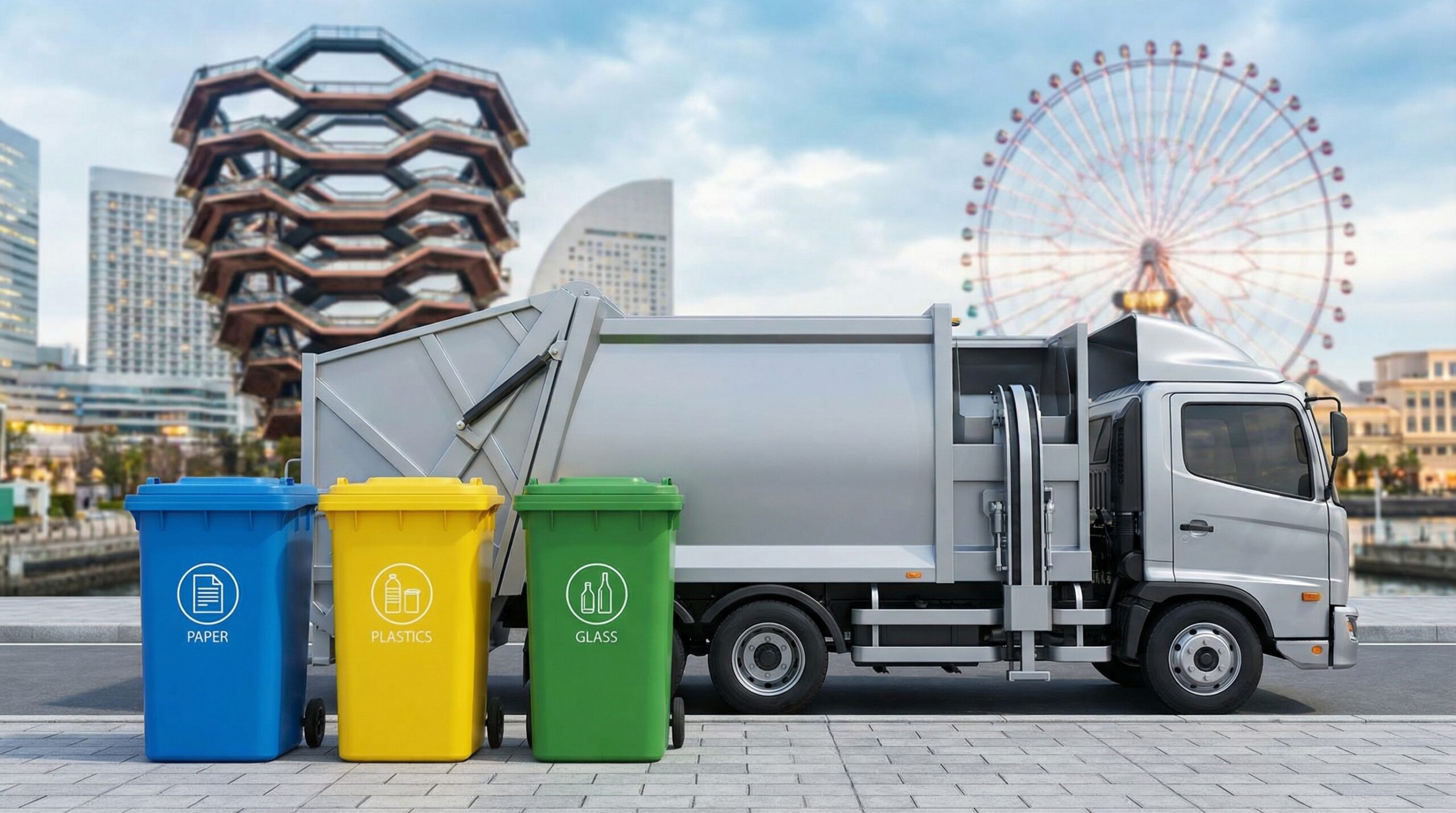
Welcome to Osaka, a city that pulses with an electric energy, a symphony of sizzling takoyaki, vibrant neon signs, and the warm, welcoming cadence of the Kansai dialect. You’ve navigated the labyrinthine train stations, found the perfect apartment, and maybe even mastered the art of ordering from a ticket-machine ramen shop. You’re feeling the rhythm of the city, settling into its unique beat. And then, you encounter it: the garbage. It’s not just a bin in the corner of your kitchen anymore. It’s a system, a science, a social contract written on a color-coded calendar that looks more complex than a subway map. You stand before your first pile of household waste, holding an empty plastic bottle in one hand and a banana peel in the other, and a single thought echoes in your mind: “Where does this even go?”
Fear not, intrepid urban explorer. This seemingly insurmountable challenge is, in fact, your initiation into the very heart of life in Osaka. Mastering the art of garbage sorting isn’t just about keeping your apartment tidy or avoiding a stern note from your landlord; it’s about tuning into the city’s deeper rhythm of responsibility, respect, and communal living. It’s a daily ritual that connects you to your neighbors and your environment in a way that is profoundly Japanese. The rules are strict, yes, but they come from a place of deep-seated cultural values and a practical necessity that has shaped the nation’s approach to public space. This guide is your backstage pass, your detailed map to navigating the intricate, yet ultimately rewarding, world of Osakan waste disposal. We’ll break down the categories, demystify the calendar, and turn what feels like a daunting chore into a simple, mindful practice. Before you know it, you’ll be sorting, rinsing, and bundling like a seasoned local, fully in sync with the clean, orderly flow of your new home city. It’s a small but significant step that transforms you from a visitor into a true resident, a participant in the collective effort that keeps this magnificent metropolis running beautifully. Let’s begin the journey at the city’s administrative heart, a good starting point for understanding the civic pride that fuels this system.
While mastering the local waste disposal system is a key part of settling in, you can also look forward to how AI and automation will transform your Osaka hotel stay by 2026.
The Soul of Sorting: Why Japan Cares So Much

Before delving into the specifics of sorting waste, it’s crucial to grasp the cultural essence behind Japan’s meticulous waste management. This is not merely bureaucratic formality; it’s a philosophy deeply embedded in the fabric of society. The primary and most practical reason is space. Japan is a mountainous archipelago with a densely packed population in extensive urban centers. Landfill space is not only costly but also limited and invaluable. Simply dumping vast amounts of unsorted trash is an unaffordable luxury. Each piece of plastic, paper, and metal diverted from landfills and recycled represents a small victory in the national effort to preserve land.
However, the reasoning goes beyond pragmatism. It is rooted in ancient cultural values, especially the concept of mottainai (もったいない). This powerful term, without a direct English counterpart, expresses a profound regret over waste. It’s the feeling evoked when something valuable—whether food, time, or resources—is used carelessly or underutilized. Throwing away a perfectly recyclable bottle is mottainai. Discarding a newspaper that could be reused as paper is mottainai. This perspective fosters a circular approach to resources, where items are not merely “used and thrown away” but “used and repurposed.”
This mindset is further strengthened by a strong focus on community harmony, known as wa (和). In a densely populated nation, keeping public spaces clean, pleasant, and orderly is a shared responsibility. Once your garbage leaves your home, it becomes part of the common environment. A messy garbage spot, with bags ripped open by crows and unpleasant smells spreading through the street, disrupts this harmony. It is seen as disrespectful to neighbors and sanitation workers who perform vital collection duties. Thus, following the rules—rinsing containers, neatly bundling paper, and placing the right items out on designated days—is an act of social respect. It silently communicates, “I honor our shared space and am doing my part.” This collective understanding is what enables the system to function so effectively on a large scale. By carefully sorting your trash, you engage in a quiet, city-wide ritual that supports the cleanliness and order admired by many visitors to Japan.
The Cast of Characters: Deconstructing Your Trash Can
Now, let’s dive into the main event: getting to know the various categories of garbage. In Osaka City, waste is mainly separated into four primary streams, with a separate process for large items. The key to success is to view your trash not as a single mass, but as a collection of distinct materials, each destined for a specific path. You will need to buy transparent or semi-transparent plastic bags (45-liter bags are standard) from any supermarket or convenience store. Opaque bags are a definite no-no because collectors must be able to see the contents to confirm correct sorting. Think of these bags as the stage, and the sorted trash as the performers.
Futsu Gomi (普通ごみ): The Combustible Crew
This is your biggest and most frequent category, usually collected twice weekly. The name means “ordinary garbage,” but it’s better understood as “combustible” or “burnable” waste. This category is the final destination for items that cannot be recycled or are too contaminated to process. The contents are sent to advanced incineration facilities, which not only burn waste but also capture the heat energy to produce electricity—a process called thermal recycling.
Who joins the crew?
- Kitchen Scraps: A major component. All food waste, including vegetable peels, fruit cores, eggshells, fish bones, and leftovers, belongs here. A crucial tip for Osaka’s humid climate: squeeze out excess moisture from kitchen waste before bagging it and wrap it in a little old newspaper if possible. This greatly reduces odor and prevents dripping—a major etiquette breach.
- Non-Recyclable Paper: This often confuses people. While newspapers and cardboard are recycled, dirty, coated, or composite papers are not. This includes used tissues, paper towels, greasy pizza boxes (oil contaminates recycling), photographs, thermal paper like receipts, and carbon paper. The rule is simple: clean, pure paper is recyclable; soiled or coated paper is combustible.
- Small Plastic Items (Non-Packaging): This can be tricky. While plastic packaging has its own category, plastic products themselves usually go to combustibles. Examples include plastic pens, old toothbrushes, toys, CD cases, and disposable razors. The rule: if it’s not a container or wrapper, it’s likely combustible.
- Textiles and Leather: Old or stained clothing that can’t be donated, worn-out shoes, leather bags, belts, and rubber items such as boots or hoses all belong here.
- Wood and Garden Waste: Small wooden objects like chopsticks, bamboo skewers, small branches, and grass clippings fall into this category. Make sure branches are cut to a manageable length (under 50 cm).
When putting out this bag, ensure it is tightly tied at the top. The collection happens early in the morning, so placing it in the designated spot before the deadline (usually around 8 or 9 AM) is essential.
Yoki Hoso Purasuchikku (容器包装プラスチック): The Plastic Packaging Posse
Collected once weekly, this category is exclusively for plastic containers and packaging materials. It’s one of the most important recycling groups and requires some preparation. Look for the “Pura” mark (プラ)—a symbol with two curved arrows inside a triangle, typically accompanied by 容器包装—to identify these items.
Who’s in the posse?
- Plastic Bottles (Non-PET): Bottles for shampoo, conditioner, body soap, laundry detergent, and cooking oil.
- Food Trays and Tubs: Styrofoam or thin plastic trays used for meat, fish, and vegetables; tubs for yogurt, margarine, or tofu; and plastic bento containers from convenience stores.
- Caps and Lids: Plastic caps from PET bottles and jars.
- Wrappers and Bags: Outer plastic wrapping from snack packages, candy wrappers, plastic film over bento boxes, and plastic shopping bags (though reusable bags are always preferable!).
- Nets and Foams: Foam nets used to protect fruits like apples and pears, and other styrofoam packing materials.
The Golden Rule: Rinse and Dry
The top rule for this category is that all items must be clean. This doesn’t mean scrubbing with soap until shining, but they must be rinsed free of food residue and reasonably dry. A quick rinse of a yogurt tub or bento box usually suffices. Why? Hygiene is the first reason—these bags may sit for days before processing, and leftover food can rot, causing foul odors and attracting pests. Second, contamination can spoil an entire batch of plastics, making them unusable. Taking ten seconds to rinse is your contribution to the system’s success. It is an act of respect for sanitation workers and recycling machinery. Bags full of dirty plastic containers will likely be rejected and left at the collection point with a polite but firm warning sticker.
Koshi・Irui (古紙・衣類): The Paper & Textiles Platoon
Collected once per week, this category is for clean, recyclable paper, cardboard, and clothing. These items are not placed in standard city garbage bags but are bundled and stacked neatly at the collection point. This is where you really show your sorting skills.
The Breakdown:
- Newspapers (新聞紙 – Shinbunshi): Stack flat and tie securely in a cross pattern with plastic string. Keep separate from other paper types.
- Magazines, Flyers, and Miscellaneous Paper (雑誌・その他の紙 – Zasshi/Sonota no Kami): Includes glossy magazines, books, flyers, and clean paper waste like envelopes (remove plastic windows first). Bundle like newspapers, separately.
- Cardboard (ダンボール – Danboru): Flatten all boxes. Stack and tie firmly with string. Remove tape, labels, and plastic bits as much as possible.
- Milk Cartons (牛乳パック – Gyunyu Pakku): Rinse, cut open to flatten, and dry. These are often collected separately at collection points or supermarkets.
- Old Clothes (古着 – Furugi): Only clean, dry, wearable clothing. Place in clear or semi-clear bags so contents are visible. Do not include underwear, socks, or heavily stained items—those go into combustibles.
Leaving neatly tied bundles of cardboard or newspapers on the curb on the correct day marks you as a resident familiar with the local rhythm—a small badge of honor.
Akikan, Akibin, Pettobotoru, Komono Kinzoku: The Cans, Bottles, & Small Metals Brigade
Usually collected on the same day, often once or twice a month depending on your ward. At the collection site, you’ll find designated bins, nets, or crates for each type. You bring your sorted items and deposit them into the proper containers.
The Line-up:
- Cans (空き缶 – Akikan): Aluminum and steel cans for drinks and food. Rinse completely. Crushing is appreciated but not always required.
- Glass Bottles (空きびん – Akibin): Drink bottles and food jars. Rinse thoroughly. Paper labels don’t need removal, but plastic or metal caps must be removed and sorted separately (plastic caps with Plastic Packaging, metal caps with Small Metals).
- PET Bottles (ペットボトル – Pettobotoru): Clear plastic drink bottles marked with recycling symbol number 1. Prepare by: 1) Removing the cap (goes with Plastic Packaging); 2) Peeling off the plastic label (also with Plastic Packaging); 3) Rinsing the inside. Flattening is optional; the key is cap off, label off, and clean.
- Small Metal Items (小物金属 – Komono Kinzoku): Small household metal goods less than 30 cm in longest dimension, such as small pots, pans, kettles, metal hangers, and scraps. These go in a designated crate.
- Spray Cans and Lighters (スプレー缶・ライター): Handled with special care due to safety concerns. Must be completely empty. Some wards require puncturing spray cans to ensure no propellant remains—check your local rules as this can be hazardous. Usually placed in a separate, clearly marked container or bag at the collection point.
Sodai Gomi (粗大ごみ): The Oversized Outliers

What about that wobbly bookshelf, the microwave that stopped working, or the bicycle you’re getting rid of? Any item larger than 30cm on its longest side (or sometimes a rod up to 1 meter long) is classified as Sodai Gomi, or oversized garbage. You cannot simply leave these items at the collection point, as doing so is illegal dumping and will lead to serious issues. There is a specific paid procedure you must follow.
The Four-Step Process:
- Schedule a Pickup: First, contact your local Sodai Gomi Reception Center by phone or online. You’ll need to describe the item(s) you want to dispose of, and they will provide three key details: the collection date, the total fee, and your reception number.
- Purchase the Sticker: With the fee amount in hand, visit a designated convenience store (such as 7-Eleven, FamilyMart, or Lawson) or a post office. Request a “Sodai Gomi Shori Tesuryo Ken” (粗大ごみ処理手数料券), which is a fee-processing sticker. Purchase stickers that add up to your fee (for example, if the fee is 700 yen, buy one 500-yen sticker and one 200-yen sticker).
- Prepare the Item: Clearly write your name or the reception number on the sticker(s). Peel off the backing and firmly attach the sticker(s) to a visible spot on the item you are discarding.
- Place it for Collection: On the scheduled collection morning (not earlier), bring the stickered item to the designated collection location. This might be your usual garbage spot or a specific street corner. Collectors will come by, verify the sticker and reception number, and take the item away.
Though this process may feel bureaucratic, it ensures that large, bulky items are disposed of properly and the disposal costs are covered by the person discarding them. Planning ahead is important, as collection dates can sometimes be scheduled a week or two in advance.
Mastering the Rhythm: Your Calendar and Collection Point
Now that you’re familiar with the key players, it’s time to understand the schedule and the location. The two most essential tools in your garbage disposal toolkit are your local collection calendar and knowing where your designated collection point is.
The Calendar is Your Guide
When you move in, your real estate agent or landlord should give you a garbage collection calendar specific to your neighborhood. If not, you can pick one up at your local ward office (区役所 – kuyakusho) or find it on the city’s website. This calendar is absolutely essential for living in Osaka. It’s typically a grid with each day color-coded for a particular type of garbage. For instance, Mondays and Thursdays might be marked in red for Combustibles, Wednesdays in blue for Plastic Packaging, and Fridays in green for Paper/Textiles. It will also list the monthly collection days for cans, bottles, and metals.
Keep this document close. Pin it to your fridge, snap a photo of it on your phone, and make it part of your weekly routine. Many residents get into the habit of cleaning out their fridge the night before combustible collection day or sorting packaging on plastics day. For a digital option, try a Japanese garbage sorting app like「さんあ〜る」 (San-R). By setting your location, it sends notifications the night before each collection day, reminding you what to take out. It’s truly a lifesaver.
The Gomi Station: Your Neighborhood’s Front Porch
Your designated collection point, or gomi station (ごみステーション), is the specific spot where everyone in your building or block deposits their trash. It could be a caged area, a marked spot on the sidewalk, or an area covered by a large blue or yellow net (to keep crows away). It’s very important to use only your assigned station. Using a neighbor’s spot is a serious breach of etiquette. On collection mornings, you’ll find a neat, orderly pile of the day’s designated garbage. The unspoken rule is to place your bag gently and neatly among the others, helping maintain order rather than disrupting it.
Perhaps the most important rule is timing. Garbage must be put out on the morning of collection, usually before 8 or 9 AM. Never put it out the night before. This is for several reasons: it looks unpleasant, attracts pests like rats and stray cats, and most notably, invites crows. Japan’s crows are large, smart, and adept at tearing open garbage bags to find food, leaving a terrible mess that someone—often a kind elderly neighbor—has to clean up. Putting your trash out the night before is one of the quickest ways to earn your community’s disapproval.
When Things Go Wrong: The Sticker of Shame
What happens if you make a mistake? If you place the wrong items in a bag or put it out on the wrong day, you won’t be fined or arrested, at least not for a first offense. Instead, you’ll receive a gentle but firm correction in the form of a warning sticker. Collection workers may attach a yellow or red sticker to your bag, explaining the violation (e.g., “Contains unsorted materials” or “Incorrect collection day”). Your bag will be left behind.
This is more than just an inconvenience; it’s a public statement. You must endure the “walk of shame” to retrieve your rejected bag, bring it back inside, re-sort it properly, and wait for the next correct collection day. While it can feel embarrassing, it serves as a powerful learning tool. It also reinforces the community aspect—your mistake is visible to your neighbors. Although they are unlikely to confront you directly, the social pressure to get it right next time is a strong motivator. If you’re ever unsure about an item, the best course of action is to ask. Consult your landlord, a Japanese colleague, or a friendly neighbor, as people are generally happy to help newcomers who are making an effort to learn.
The Final Sort: Becoming Part of the Flow
Navigating Osaka’s garbage rules can feel like mastering a complex dance. There are steps to learn, a rhythm to maintain, and a certain finesse needed in execution. At first, you might feel awkward, constantly referring to your calendar and double-checking the Pura mark on plastic wrappers. But with some practice, the steps become instinctive. The rhythm of the weekly collection schedule will blend seamlessly into the rhythm of your household chores.
Before long, you won’t even have to think about it. You’ll find yourself automatically rinsing a PET bottle as you finish your drink, flattening cardboard boxes without hesitation, and knowing that Tuesday night is the designated time to gather all the plastic packaging. This change marks a quiet yet profound step in embracing life in Osaka. You are no longer merely an observer of the city’s remarkable cleanliness and order; you become an active participant, contributing to the civic harmony that sustains it all. Conquering the garbage routine is a rite of passage, leading to a deeper appreciation of the meticulous, mindful, and community-focused culture of your new home. You’ve learned the steps, you feel the rhythm, and now, you’re truly part of the dance.