
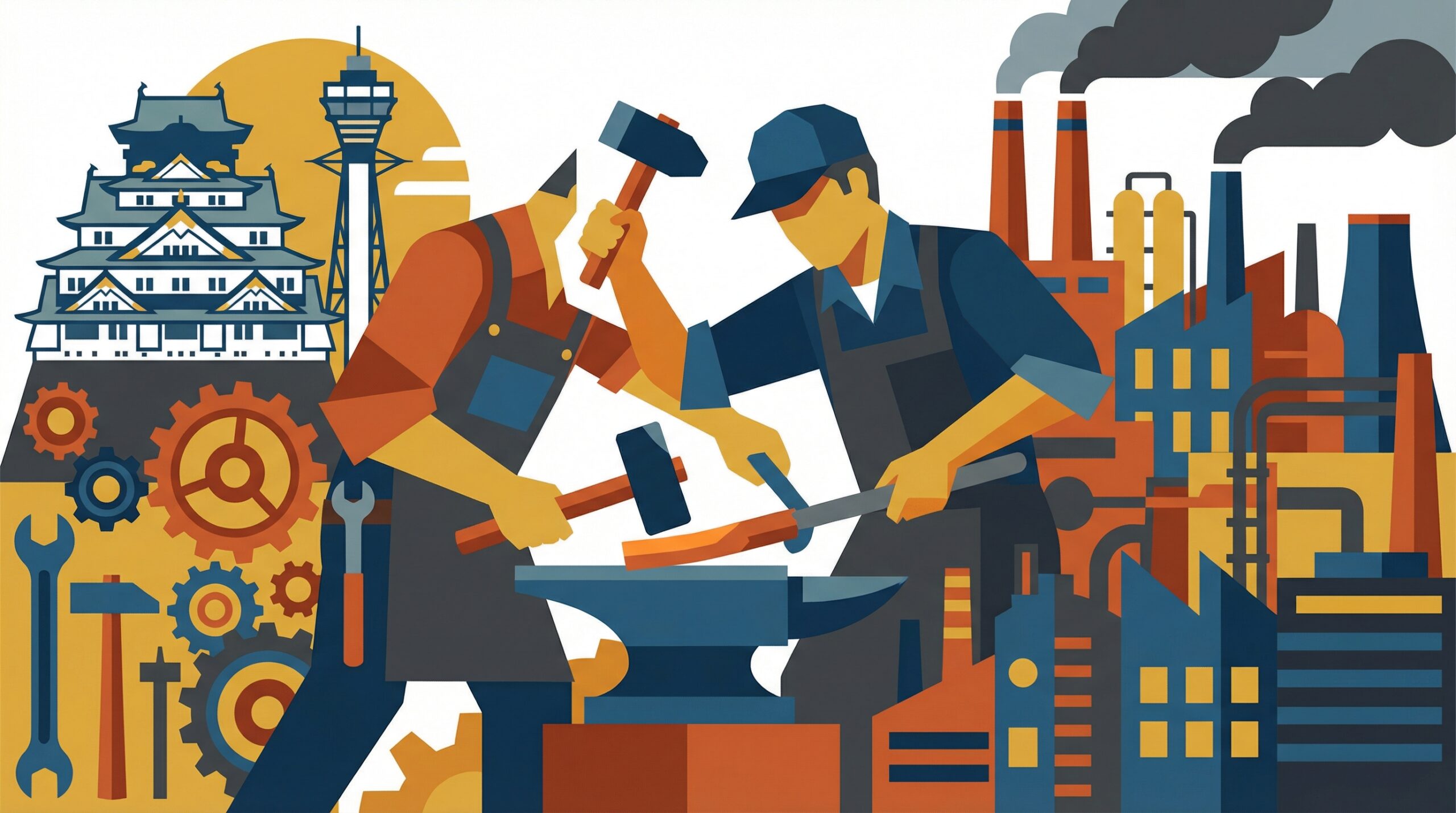
Hello, fellow explorers of this incredible country! It’s Megumi, coming to you with a story not from the polished avenues of Tokyo, but from the raw, beating industrial heart of Osaka. We all know the city for its dazzling neon, its incredible street food, and its boisterous, friendly locals. But peel back that vibrant layer, and you’ll find another world, a world of sparks, steel, and immense pride. This is the world of the ‘machi-koba’—the small, often family-run factories that are the unsung heroes of Japan’s manufacturing prowess. And there’s no better place to witness this living legacy than in Higashiosaka, a city that breathes ‘monozukuri,’ the spirit of making things. Forget the gleaming skyscrapers for a day; we’re going on a journey into a landscape of corrugated metal and relentless innovation, where the true soul of Japanese industry thrums with an unstoppable rhythm. This isn’t just about seeing how things are made; it’s about understanding the dedication, the precision, and the human spirit that forged modern Japan. It’s a symphony of machinery and a testament to generations of skill, hidden in plain sight. Welcome to Higashiosaka, the city of creators.
After exploring the industrial heart of Osaka, you might also be interested in discovering the city’s unique social culture by learning how to make friends at a traditional Osaka sentō.
The Living Soul of Monozukuri

To truly understand Higashiosaka, you first need to grasp the meaning of ‘monozukuri.’ Although often heard in Japan, the term goes beyond simply meaning ‘manufacturing.’ It represents a philosophy—a profound belief in the art, skill, and spirit of making things. It embodies a pursuit of perfection, a deep pride in one’s work, and a commitment to innovation that transcends a mere job description. In Higashiosaka, monozukuri is not just an abstract idea; it’s the very atmosphere. Situated just east of central Osaka, this city is home to one of Japan’s densest concentrations of small and medium-sized enterprises (SMEs). Thousands of machi-koba fill its vast urban sprawl. From the outside, these workshops appear modest. Often hidden behind homes, down narrow alleys, or housed in simple, low-rise buildings that have stood for decades, they bear no flashy signs or corporate logos—only the subtle, rhythmic hum of machinery hinting at the world-class craftsmanship within.
The industrial history of this area is deeply intertwined with post-war Japan’s story. As the nation rebuilt itself, Osaka, traditionally a merchant city, became a hub of industrial ambition. While giants like Panasonic (originating nearby in Kadoma) grabbed the headlines, it was the extensive network of small machi-koba that truly supported Japan’s economic miracle. These specialists mastered individual, critical processes: one factory forging metal, another cutting it with microscopic precision, a third producing screws to hold everything together, and a fourth applying the perfect finish. This ecosystem of hyper-specialization formed a resilient and agile industrial foundation. They were essential parts of the machinery that propelled Japan onto the global stage. Many of these factories remain family-run, now in their second or third generation. Walking inside feels like entering a living museum, where a grandfather’s well-used lathe sits side by side with a cutting-edge, computer-controlled milling machine. The knowledge here is not just gained from manuals; it is handed down through hands-on practice, stories shared over meals, and a lifetime spent observing and doing. This transmission of tacit knowledge—the kind of expertise felt through the fingers rather than read in books—is the secret to their lasting success.
In recent decades, as manufacturing has globally shifted, the machi-koba of Higashiosaka have faced significant challenges. Yet, they have not only survived but adapted. Driven by the spirit of monozukuri, they shifted focus from mass production to what they call ‘tan-pin’—the creation of single, highly specialized, high-value items. They have adopted technology not to replace their skills but to enhance them. Today, they produce components for life-saving medical devices, parts for satellites orbiting Earth, and pieces for the Shinkansen, all measured in microns. They have shown that size is no barrier to influence. The ethos here is one of steadfast pride and relentless problem-solving. When a major corporation presents a design that seems impossible to produce, it is brought to Higashiosaka’s craftsmen. They don’t see impossibility; they see a challenge to their skills—and nearly always find a solution. This spirit defines their identity, a quiet confidence forged through decades of conquering the impossible.
A Symphony of Steel and Sparks
Walking through the industrial neighborhoods of Higashiosaka is a sensory experience. It contrasts sharply with the peaceful temples of Kyoto or the frenetic energy of Shibuya. The ambiance is a constant, rhythmic symphony. From one open doorway, the high-pitched whine of a CNC machine echoes, its diamond-tipped cutter carving metal with surgical precision. From another, the thunderous, rhythmic ‘ka-chunk’ of a massive press stamps out hundreds of identical parts per minute, a sound felt in the chest as much as heard. Further down the street, a shower of brilliant white sparks erupts from a welder’s torch, accompanied by a sharp, electric hiss. The air carries a unique scent, a complex blend of machine oil, hot metal, and ozone. It’s the smell of labor, creation, and raw materials transforming into objects of function and purpose. This scent clings to the workers’ clothes as they bike home, a badge of honor from a day spent shaping the physical world.
Visually, the machi-koba present organized chaos. Space is limited, and every square inch is utilized. Shelves groan under the weight of metal rods, steel sheets, and boxes filled with gleaming screws, bolts, and mysterious components. The floors form a mosaic of scuff marks, oil stains, and metal shavings that glitter like dust in shafts of light filtering through high windows. Machinery, some painted in the faded greens and grays of a bygone industrial era, sits shoulder-to-shoulder with gleaming new equipment. Wires and pneumatic tubes snake along the ceilings like mechanical vines. Yet amid the apparent clutter, there is an underlying order only the craftsmen understand. Every tool has its place; every lever is within easy reach. The artisans navigate these tight spaces with unconscious grace, a physical memory born from performing the same tasks thousands of times. Their hands, often stained with grease and etched with tiny scars, move with a sureness and economy of motion that is mesmerizing to watch. They don’t merely operate the machines; they engage in a dialogue with them. They can detect by the slightest change in sound if a blade is dulling or by the feel of a vibration if a gear needs adjustment. This deep, intuitive connection between human and machine forms the core of their craft. It is a ballet of intense focus and physical skill, a performance repeated thousands of times daily behind anonymous doors.
The Anatomy of a Screw
To truly grasp the depth of specialization, consider something as simple as a screw. In Higashiosaka, there are factories dedicated solely to making screws. But these aren’t the kind found in hardware stores. These screws serve medical implants, aerospace applications, and sensitive electronics. The process is remarkable. A machine grabs a thick wire of specialized metal in a process called ‘cold heading’ and uses immense force to shape the head. Then it moves to another machine that cuts the precise threads—a spiral groove that must be perfect to the micron. Finally, it may be sent to another factory for a special coating or plating to prevent corrosion or impart particular properties. Every step is a specialized craft. The men and women running these machines are masters of their trade. They understand the properties of different metals, the tolerances required for various applications, and the subtle art of maintaining perfect machine calibration. They produce millions of these tiny, flawless objects, each a testament to their focused expertise. It underscores that in high-tech manufacturing, even the smallest component encompasses a universe of complexity and skill.
The Magic of the Mold
Another pillar of Higashiosaka’s industry is mold making, or ‘kanagata.’ Molds are the invisible architects of the modern world. Nearly every plastic object you use—from your smartphone case to your car’s dashboard—was created using a precision-carved metal mold. Creating these molds is an art form demanding incredible precision. The craftsmen of Higashiosaka are renowned for their ability to create molds of astonishing complexity. They start with a solid steel block and, using a combination of advanced milling machines and meticulous hand-finishing, carve out a negative space that forms the final product. The surfaces must be polished to a mirror shine to ensure the final plastic part is smooth. The tolerances are so exact that even a slight change in room temperature can affect the final dimensions. These artisans are part sculptor, part engineer, and part perfectionist. Their work is the unseen foundation of mass production, and their skill determines the quality of millions of products used worldwide.
From Higashiosaka to Outer Space: The Maido-1 Legacy
Perhaps no story better embodies the spirit and skill of Higashiosaka’s machi-koba than the saga of the Maido-1 satellite. In the early 2000s, a group of local factory owners, worried about the future of their industry, conceived a daring idea: what if they pooled their talents to build a satellite? It was a bold, almost unbelievable dream. These were not aerospace engineers working in spotless clean rooms; they were seasoned, hands-on craftsmen laboring in small, grease-stained workshops. The name ‘Maido-1’ itself derives from the classic Osaka greeting, a friendly “how ya doin’?” that perfectly reflects the project’s down-to-earth, can-do spirit.
The project evolved into a vast collaborative endeavor. One factory, specializing in precision cutting, crafted the satellite’s intricate frame. Another, a master of metal bending, shaped titanium panels for the exterior. A third, known for exceptional polishing techniques, finished the delicate mirror components for the satellite’s instruments. More than 100 local companies contributed their expertise, often working late into the night and on weekends, fueled by passion and local pride. They faced numerous technical hurdles and skepticism from the established aerospace industry. Yet they persisted, overcoming challenge after challenge with their trademark ingenuity and cooperative spirit. In January 2009, Maido-1 was successfully launched into orbit aboard a Japanese rocket. The small satellite, born from the grit and genius of Higashiosaka’s machi-koba, circled the Earth as a shining symbol of what is possible when community and craftsmanship unite. The story became a national inspiration, a powerful testament to the idea that innovation arises not only from giant corporations but from the collective strength of small, dedicated artisans. Maido-1 is more than a piece of technology; it is the heart of Higashiosaka, orbiting the planet.
How to Step Inside This World
Now, you might be wondering, ‘This sounds incredible, but how can I actually see it?’ It’s true that you can’t just casually walk into these factories. They are active and sometimes hazardous workplaces. Still, the local community’s pride is so strong that they have developed ways for outsiders to get a glimpse into their world. Planning ahead is key. A good place to start is the Higashiosaka Chamber of Commerce and Industry or specialized industrial tourism programs. They serve as a bridge between the public and the factories.
Booking a Factory Tour
Several companies in Higashiosaka participate in ‘open factory’ programs. These organized tours, often requiring advance reservations, allow you onto the factory floor. These tours offer an incredible opportunity. You’ll be guided by either the factory owner or a senior craftsman who will share their passion and explain the processes. While most tours are mainly in Japanese, the visual nature of the work often overcomes language barriers. Simply watching the machinery in motion and witnessing the workers’ skill is an experience in itself. Some operators might arrange for an English-speaking guide if you book well in advance and are willing to pay an additional fee. Booking these tours weeks or even months ahead is absolutely essential, especially if you have special requests. Spontaneous visits are not feasible; respecting their work schedules is vital. A quick search for ‘Higashiosaka factory tour’ or ‘東大阪市 工場見学’ will produce several options, and using a browser’s translation tool can assist with the booking process.
The Monodzukuri Experience
For a more hands-on experience, look for workshops or experience centers. Some venues offer visitors the chance to try simple manufacturing tasks themselves, like making a small metal spinning top or assembling a basic product. These experiences create a tangible connection to the craft and a deeper appreciation of the skill involved. They’re especially enjoyable if you’re visiting with family. These also require advance booking and provide a memorable way to create a unique souvenir that captures the spirit of the city.
Practical Information for Your Industrial Adventure
Getting There
Higashiosaka is easily reachable from central Osaka. The main route is the Kintetsu Nara Line, departing from Osaka-Namba Station. Stations such as Kawachi-Kosaka, Yaenosato, and Wakaeiwata will bring you right into the industrial areas. Alternatively, you can take the JR Gakkentoshi Line or the Osaka Higashi Line. The trip usually takes less than 30 minutes but feels like entering a different world. Upon arrival, you’ll notice the landscape shifting from typical urban residential areas to a dense blend of homes and low-rise industrial buildings. The best way to explore is on foot, allowing you to fully absorb the unique character of the streets.
Tips for First-Time Visitors
When joining a factory tour, it’s important to observe a few etiquette rules. First, safety is paramount. Always wear closed-toe shoes. You’ll likely be provided a helmet to wear inside. Pay close attention to your guide and do not touch anything unless explicitly permitted. These are not museums but active workplaces with heavy machinery. Second, show respect for the workers. They take pride in their craft but have tight schedules. Always ask for permission before taking photos, as some factories protect proprietary technologies or client confidentiality. Lastly, if you don’t speak Japanese, a simple ‘arigatou gozaimasu’ (thank you very much) and a polite bow will go a long way in demonstrating your appreciation. Having a translation app on your phone can help with simple questions. Your curiosity and respect will be warmly welcomed.
Beyond the Factory Gates

After a captivating morning or afternoon exploring the machi-koba, you’ll likely have worked up an appetite. To truly complete the experience, you should dine where the workers do. Scattered throughout the industrial areas are small, no-frills ‘shokudo’ (diners) and ramen shops. These spots serve hearty, delicious, and affordable meals meant to refuel hardworking bodies. Look for places with simple curtains (noren) at the entrance and menus featuring classics like katsudon (pork cutlet over rice), curry rice, or a steaming bowl of ramen. The atmosphere is modest and inviting. You may find yourself sitting beside factory workers in their uniforms, enjoying a well-earned break. This offers one of the most authentic local experiences available.
Higashiosaka is also widely recognized as Japan’s “Rugby Town.” It is home to Hanazono Rugby Stadium, one of the oldest and most iconic rugby venues in the nation. There is a strong connection between the city’s blue-collar, hardworking character and the tough, team-oriented spirit of rugby. If you visit during rugby season, attending a game is a fantastic way to witness another side of local pride in action. The fans’ enthusiasm is contagious and contrasts vividly with the quiet concentration on the factory floor.
For a moment of calm, you can visit Hiraoka Shrine, a beautiful and historic shrine nestled at the foot of the Ikoma mountains on the eastern edge of the city. It provides a peaceful retreat and a glimpse into the region’s deeper history, long before the factories were established. The contrast between the shrine’s tranquil setting and the industrial buzz of the city below offers a wonderful perspective on the layers of life in this unique part of Osaka.
The Heartbeat of Progress
A visit to the machi-koba of Higashiosaka offers more than just an interesting day trip. It provides a profound insight into the essence of Japan’s industrial culture. It serves as a reminder that progress isn’t solely defined by sleek headquarters and technological breakthroughs announced in press releases. It also lies in the steady, relentless efforts of countless skilled individuals working in small workshops, dedicating their lives to making things better, stronger, and more precise. You leave with a newfound appreciation for the everyday objects around you, gaining an understanding of the vast chain of human skill and dedication behind their creation. So, next time you’re in Osaka, I encourage you to look beyond the bright lights. Take a short train ride east and listen for the rhythmic heartbeat of the machi-koba. It’s the sound of a city’s pride, the echo of its past, and the steady pulse of its future. It’s the sound of monozukuri, a story truly worth discovering.








