
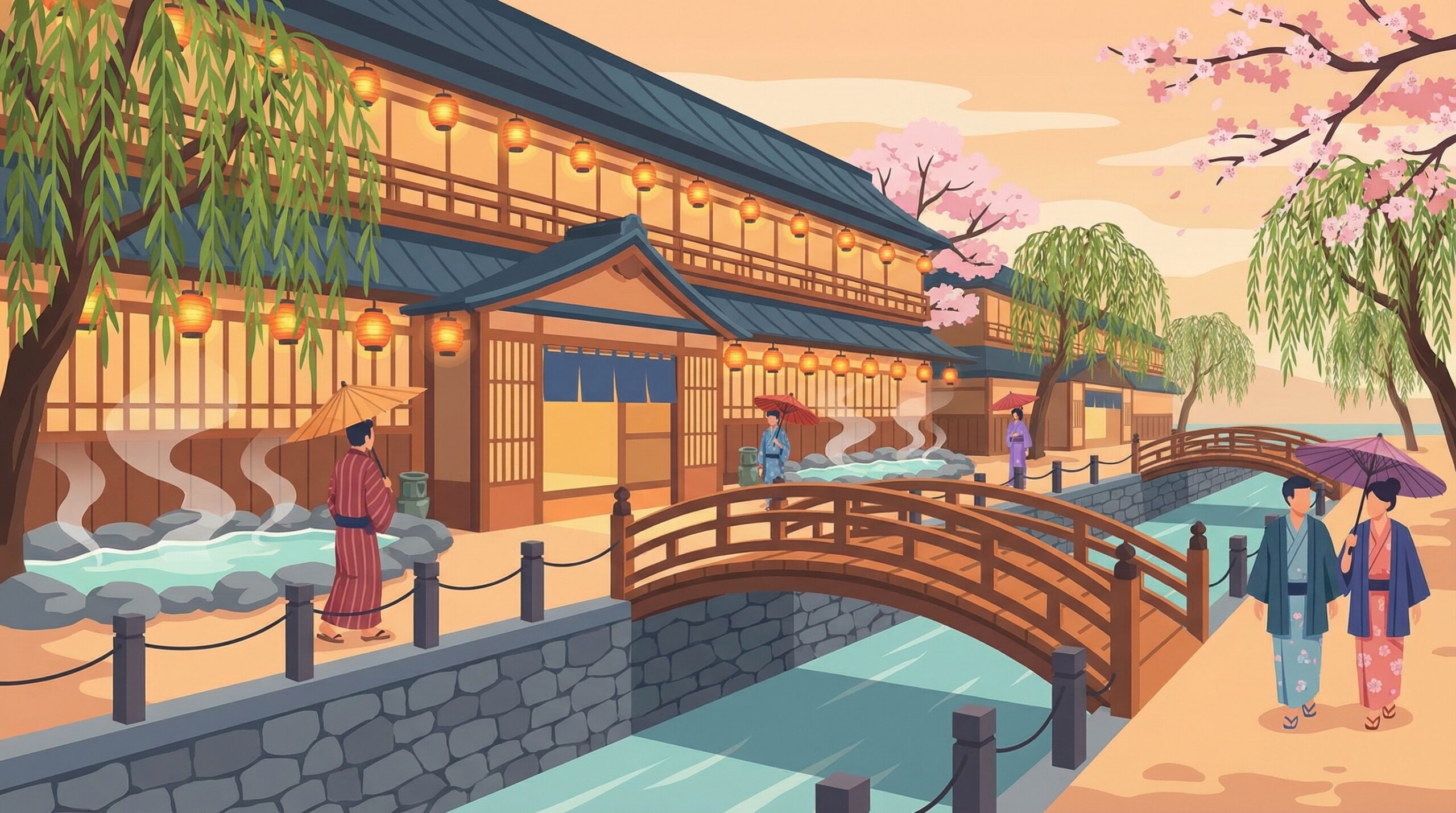
There’s a rhythm to Japan that you feel deep in your bones, a cadence that shifts as you move from the electric pulse of Osaka to the quiet, steady heartbeat of the countryside. Just a few hours away from the neon glow and urban sprawl, a world exists where time doesn’t just slow down; it seems to flow differently, carried on whispers of steam and the gentle clatter of wooden sandals on stone bridges. This is Kinosaki Onsen, a town not just built near hot springs, but a town that is, in its very essence, a living, breathing onsen. For those of us calling Osaka home, this isn’t merely a weekend trip; it’s a pilgrimage to the soul of traditional Japanese hospitality, a place where the simple act of bathing is elevated to an art form. Forget everything you think you know about a spa day. Kinosaki is an entire town dedicated to the philosophy of healing, relaxation, and connection, a storybook village threaded together by a willow-lined canal and seven mythical public bathhouses. Here, your uniform is a cotton yukata, your footwear is a pair of geta, and your only agenda is to wander, soak, and savor. It’s an immersive experience that recalibrates your spirit, a perfect antidote to the beautiful chaos of city life. This is your guide to stepping into that story, to navigating the warm waters and timeless traditions of a place that feels like it was lifted straight from a classic film or a beloved anime series, a true escape waiting just a train ride away.
For a different kind of deep dive into the region’s culture, consider exploring the intricate world of Osaka’s small factories and their craftsmanship.
The Soul of Kinosaki: A Town Built on Water and Tradition

To truly understand Kinosaki Onsen, you need to recognize that the entire town is regarded as one expansive ryokan, or traditional inn. The station serves as the grand entrance, the streets function as hallways, the local shops act as lounges, and the seven public bathhouses, known as soto-yu, are the inn’s magnificent communal baths. This philosophy infuses every part of life here. It explains why you see everyone—from young couples to elderly grandparents—walking the streets in yukata provided by their ryokan. It’s not a costume; it’s the local dress code and a symbol that you are part of this unique and shared experience. This idea cultivates a sense of unity and calm rarely found elsewhere. You are not merely a tourist observing a town; you are an active participant in its daily rituals, a temporary resident in this grand inn of relaxation.
The Whispers of a Thousand Years
Kinosaki’s history is as warm and profound as its springs, stretching back over 1,300 years. Legend has it that a Buddhist priest named Douchi Shonin prayed for one thousand days in the early 8th century to lift local suffering. On the final day, a hot spring miraculously emerged from the ground, and its healing waters became the town’s foundation. This original spring later became Mandara-yu, one of the seven public baths. Another founding legend involves the kounotori, the Oriental White Stork. An injured stork was observed bathing its wounds in a local pool, and after a short period, it flew away fully healed. This event led to the creation of Kouno-yu, the Bath of the Stork, cementing the onsen’s reputation as a place of deep healing and restoration. This legacy is more than just history; it’s the town’s living identity. The storks remain a potent symbol of Kinosaki, representing longevity, happiness, and the natural healing power beneath its streets. The town also holds a place in modern Japanese literature through the celebrated author Naoya Shiga. In his famous short story, “At Kinosaki,” he recounts his stay while recovering from a serious injury, capturing the contemplative and restorative spirit that still defines Kinosaki today. This literary connection adds another dimension to the experience, inviting visitors to follow the same paths and soak in the same waters that inspired one of Japan’s literary luminaries.
A Symphony of Sights and Sounds
The atmosphere in Kinosaki is a sensory masterpiece. The central Otani River, lined with weeping willows dipping their branches into the gently flowing water, forms the town’s main artery. A series of elegant stone bridges span the river, each offering a unique picturesque view. During the day, the setting is one of peaceful activity: shopkeepers sweep their storefronts, visitors browse local delicacies, and occasional fish swim in the clear canal waters. But at dusk, Kinosaki transforms. The warm, golden glow of traditional lanterns ignites, casting long, dancing shadows. The light reflects beautifully on the river’s surface, creating a breathtaking scene. The dominant sound is the rhythmic karankoron, karankoron—the cheerful, unmistakable clatter of hundreds of wooden geta sandals striking the pavement. This sound is the heartbeat of the town: the music of people moving from their ryokan to a bathhouse, from the bathhouse to a restaurant, then from an ice cream shop back to the river for a final evening stroll. Blended with the soft murmur of conversation and the gentle rustling of willow leaves, it creates a soundscape that is both soothing and deeply evocative of old Japan. Steam rises softly from drains and bathhouses alike, misting the cool night air and adding to the town’s mystical, dreamlike ambiance.
Your Gateway from Osaka: The Journey is Part of the Adventure
Leaving behind the exhilarating density of Osaka for the tranquil embrace of Kinosaki Onsen offers a journey full of delightful contrasts. It’s a shift from towering cityscapes to sprawling natural scenes, from the subway’s roar to the gentle pace of a countryside train. The process is surprisingly simple, making it an excellent weekend getaway for foreign residents who might be wary of complicated travel routes. The journey itself plays an essential role in unwinding, providing an opportunity to watch the scenery change and your mindset relax.
Riding the Rails to Relaxation
The most direct and scenic way to travel from Osaka to Kinosaki Onsen is aboard the Japan Railways (JR) Limited Express Konotori. Leaving from the bustling Osaka Station or Shin-Osaka Station, this train is your gateway to calm. Settling into your comfortable seat, the train pulls away as the familiar urban skyline of Umeda’s skyscrapers and busy platforms fade behind you. Within thirty minutes, the concrete jungle transforms into the green expanses of the Japanese countryside. You’ll pass sparkling rice paddies, traditional farmhouses topped with tiled roofs, and rolling hills covered in dense forests. The journey lasts roughly two and a half to three hours—just the right amount of time to read, listen to music, or simply stare out the window and let the serene landscape soothe you. For the last leg, the train runs alongside the Maruyama River, offering lovely views of the water winding through the land. Anticipation builds until the train finally arrives at Kinosaki Onsen Station. Stepping onto the platform, you’re greeted not by the frenetic energy of a city terminal but by a quaint, retro-style station and the fresh mountain air of a valley town. The adventure begins anew.
First Steps in a Yukata Wonderland
When you arrive at Kinosaki Onsen Station, the town’s distinctive charm welcomes you immediately. The station is small and inviting, with a helpful information center and a waiting area that resembles a cozy lodge. Just outside, a small footbath called Satono-yu Ashiyu offers a tempting preview of the relaxation ahead. Most of the town’s ryokans are a short walk or a quick ride on the local shuttle bus waiting for incoming trains. Checking into a traditional ryokan is an experience in itself—you’ll be met with deep bows and warm smiles, escorted into a peaceful lobby, and often offered welcome tea and a small Japanese sweet. This is your first encounter with omotenashi, the heartfelt Japanese spirit of hospitality. In your room, you’ll find your key to the town: the yukata. Unlike the lighter yukata worn at summer festivals, the ones provided by Kinosaki ryokans are frequently lined for added warmth and comfort, designed for strolling in any season. Staff may demonstrate how to wear it correctly—always wrapping the left side over the right. Along with the yukata, you’ll receive geta sandals and often a small woven basket or bag to carry your towel and essentials. Changing into this attire marks a transformative moment—you shed your city clothes and, along with them, the stresses of daily life. Stepping out into the streets, you are no longer a visitor but part of Kinosaki’s vibrant fabric. This is also when you’ll likely receive your Yumepa, a digital pass resembling a barcode. Included with your stay at any local ryokan, this pass grants unlimited access to all seven public bathhouses. With a simple scan at each onsen’s entrance, you’re free to enter. This smart system encourages Kinosaki’s signature activity: the soto-yu meguri, or pilgrimage to the outdoor baths.
The Seven Public Baths: An Odyssey of Onsen Hopping (Soto-yu Meguri)

This is the essence of the Kinosaki experience—the ritual that has attracted visitors for centuries. Each of the seven public onsen possesses its own unique character, legend, and design. Onsen hopping isn’t a race; it’s a journey to be enjoyed at a leisurely pace. The aim isn’t to visit all seven in a single day, but to thoughtfully savor each one you choose. The waters in all the baths come from the same springs and are rich in sodium and calcium chloride, known for alleviating neuralgia, fatigue, and digestive issues, while also enhancing skin beauty. Beyond the mineral benefits, each bath offers a distinct form of spiritual healing. As you travel from one to the next, you gather stamps on a tenugui towel or a special wooden stamp book, creating a tangible keepsake of your onsen journey.
Kouno-yu: The Bath of the Oriental White Stork
Hidden at the far edge of town, Kouno-yu is believed to be Kinosaki’s oldest hot spring. Its origin is tied to the famous legend of an injured stork healing itself in the marshy waters, lending the bath a special reverence for nature’s healing power. Appropriately, it provides the most tranquil and natural bathing experience among the seven. To reach it, you take a serene walk away from the town’s main hustle, a short trip that begins to calm the mind. The bathhouse itself is a simple, elegant structure that blends harmoniously with the leafy surroundings. The real charm of Kouno-yu lies in its outdoor bath, or rotenburo. Surrounded by a quiet rock garden and lush greenery, you can soak in the hot, silky water while gazing at the sky and listening to nature’s sounds. It is deeply restorative and private—a place for quiet reflection. Bathing here feels like a direct connection to the ancient legend, a tribute to the stork that first revealed Kinosaki’s greatest treasure.
Mandara-yu: The Bath of Serene Contemplation
Named after the Buddhist mandala, a spiritual and ritual symbol of the universe, Mandara-yu is said to have emerged from the prayers of the priest Douchi Shonin. Its blessings are thought to promote agricultural and commercial prosperity, reflecting its origins as a prayer for the people’s well-being. The building’s façade is striking, with a distinctive Chinese-style roof and intricate carvings that evoke a temple-like atmosphere. Inside, the mood is one of serene reverence. While the indoor bath is pleasant, the highlight is the unique outdoor area. Here, you find two large cypress-wood barrel baths, called oke-buro, set against a gently landscaped hillside. Sliding into one of these personal-sized tubs feels rustic and secluded. The fragrant scent of cypress wood mingles with the steam, offering an aromatic and deeply relaxing experience. Soaking in a barrel bath under the open sky at Mandara-yu is like meditation—a moment to feel centered and at peace, true to the bath’s spiritual name.
Goshono-yu: The Bath of Imperial Waters
Known as the “water of beauty,” Goshono-yu is perhaps the most visually impressive and luxurious of the seven bathhouses. Constructed in the grand architectural style of the Kyoto Imperial Palace, its imposing wooden structure with sweeping rooflines and elegant entrance commands attention. Legend holds that its waters bring luck in love and protection against fire. The name Goshono-yu, meaning “imperial palace bath,” refers to an 8th-century emperor’s sister who is said to have bathed here. The interior lives up to its grand exterior. The bathing hall boasts high ceilings with magnificent Japanese cypress beams and large glass panels overlooking a stunning outdoor rock garden. At the center of this garden is a dramatic, multi-tiered waterfall cascading into the rotenburo below. The sound of falling water is both powerful and soothing, providing a natural soundtrack for your soak. Bathing at Goshono-yu feels like a truly regal experience—an indulgent moment that leaves you feeling pampered and refreshed. The combination of hot, therapeutic water and awe-inspiring scenery makes it a favorite among visitors.
Ichino-yu: The Bath of Fortune and Success
Located centrally and architecturally distinctive, Ichino-yu is a landmark in Kinosaki. Its façade is designed to resemble a classic Kabuki theater—a dramatic and memorable sight along the town’s main street. The name means “number one bath,” a title given by a famous 19th-century doctor who praised its exceptional healing powers. It is believed to bring good fortune, academic success, and safe travels to those who bathe in its waters. The most talked-about feature is its semi-outdoor cave bath, carved directly into a wall of natural boulders. Soaking in warm water surrounded by cool, rugged rocks creates a sense of shelter and connection to the earth. The echoing acoustics of the cave and the interplay of light and shadow on the rock surface make for an atmospheric experience. Ichino-yu perfectly balances its public, theatrical exterior with this private, elemental bathing, making it an essential stop on any soto-yu meguri.
Yanagi-yu: The Bath of Fertility and Safe Childbirth
Yanagi-yu, or “willow bath,” is the smallest and perhaps the most charmingly traditional of the seven. Named after the willow trees lining the Otani River just outside, legend says its spring erupted beneath a willow tree brought from China. For this reason, its waters are believed to grant blessings of fertility and safe childbirth. The building is a classic, small wooden bathhouse that exudes a nostalgic, neighborhood vibe. Inside, the entire bath is crafted from fragrant cypress wood—the walls, ceiling, and deep square tub. Its compact size creates an intimate, cozy atmosphere. The water is known for being particularly hot, offering a quick, invigorating soak that warms you thoroughly. Due to its small size, it feels like a hidden local secret. There is no grand outdoor area or dramatic feature—just the simple, profound pleasure of soaking in a beautifully crafted wooden tub, surrounded by the scent of cypress and the steam of healing waters. It’s a reminder that the most wonderful experiences often come in the simplest forms.
Jizo-yu: The Bath of Family Safety and Salvation
Jizo-yu stands out with its modern design, featuring a façade shaped like a large Japanese lantern. Named after Jizo Bodhisattva—the guardian of children and travelers—its waters are believed to promote family safety and well-being. Legend has it the spring originally bubbled up at the feet of a stone Jizo statue. This bath is especially popular with locals and families, with a bright, spacious interior that is welcoming. It features a large, simple indoor bath ideal for a relaxing, no-fuss soak. Although it lacks an outdoor rotenburo, its high ceilings and open space keep it from feeling crowded. The atmosphere is less about quiet meditation and more about straightforward communal relaxation. For families traveling with children, Jizo-yu is an excellent choice, thanks to its easygoing design and friendly vibe. It offers a taste of everyday onsen culture in Kinosaki—a comfortable, unpretentious bath that delivers pure relaxation.
Sato-no-yu: The Bath with a View
Conveniently located next to Kinosaki Onsen Station, Sato-no-yu is often the first bath visitors experience upon arrival or the last before departure. It is the largest of the seven and offers the widest variety of facilities. The building blends traditional and modern design elements strikingly. Its main attraction is the spectacular open-air bath on the third floor. This rotenburo provides a panoramic view over the town and surrounding mountains, offering a stunning backdrop for your soak. The elevated perspective lets you appreciate the natural beauty of the Maruyama River and the lush landscape cradling Kinosaki. Along with this scenic bath, Sato-no-yu includes a sauna, a mist sauna, and jacuzzis, giving it a spa-like feel. It’s an ideal place to ease into the onsen experience or to enjoy one last memorable soak while reflecting on your journey before catching your train back to Osaka. The mix of convenient location, modern amenities, and breathtaking views make it an unmissable part of the Kinosaki pilgrimage.
The Ryokan Experience: More Than Just a Place to Sleep
A trip to Kinosaki Onsen is incomplete without staying in a traditional ryokan. This is more than just accommodation; it is an immersive journey into the essence of Japanese culture and hospitality. The ryokan serves as your sanctuary, where you are nourished, cared for, and enveloped in a centuries-old tradition of impeccable service. From the moment you slide open the door, you step into a realm of refined aesthetics, serene beauty, and meticulous attention to detail.
The Art of Omotenashi: A Welcome Like No Other
The spirit of omotenashi lies at the core of the ryokan experience. It is a hospitality that is selfless, intuitive, and anticipates your needs before you even realize them. It starts with the warm greeting at the entrance, where staff take your shoes and guide you to your room. Your personal attendant, or nakai-san, typically a woman in a beautiful kimono, acts as your guide and caretaker through your stay. She serves welcome tea and a seasonal sweet (wagashi) in your room while explaining the ryokan’s facilities and your meal schedule. This initial exchange sets a tone of genuine warmth and care. Moving with grace and efficiency, the nakai-san’s thoughtful and unobtrusive actions ensure your complete comfort—whether adjusting the room temperature, answering questions about the town, or simply creating a peaceful and inviting atmosphere. This level of personalized service transforms a ryokan visit from a standard hotel stay into a profound cultural experience.
A Culinary Masterpiece: The Kaiseki Dinner
Dinner at a ryokan is a highlight of any visit to Japan. A kaiseki-ryori meal is a multi-course artistic celebration of the season and region. It is not just food but a story told through flavor, texture, and color. Usually served privately in your room, the kaiseki dinner is a slow, deliberate progression of exquisite dishes. Each plate is a work of art, carefully arranged on selected ceramics and lacquerware. The meal begins with small appetizers (sakizuke) and a clear, delicate soup (suimono) designed to awaken your palate. This is followed by a platter of seasonal delicacies (hassun), a dish of fresh sashimi (otsukuri), and a perfectly grilled item (yakimono), often featuring local fish. In Kinosaki, the star ingredients shine. You might be served world-famous Tajima beef—the origin of Kobe beef—so tender and marbled it melts in your mouth, grilled at your table or enjoyed in a sukiyaki hot pot. During winter, from November to March, the region is renowned for its snow crab (matsuba gani). A winter kaiseki becomes a true feast, featuring crab prepared in multiple ways: boiled, grilled, served as sashimi, and cooked in a hearty hot pot. The meal continues with simmered dishes (nimono), steamed delicacies (mushimono), and perhaps a vinegared dish (sunomono) to cleanse the palate before the final course of rice, miso soup, and Japanese pickles (shokuji). It concludes with a light, seasonal dessert. Every course reflects the chef’s skill and deep respect for the ingredients, creating a culinary journey as memorable as the onsen themselves.
The Sanctuary of Your Room: Tatami, Futons, and Tranquility
A traditional Japanese ryokan room exemplifies minimalist beauty and functional design. The floor is covered with woven rush grass mats, or tatami, which emit a clean, earthy aroma and feel soft beneath your feet. The walls often consist of sliding paper screens (shoji and fusuma), which can be opened to rearrange the room or reveal a view of a private garden. The room’s centerpiece is the tokonoma, a small, raised alcove displaying a single flower arrangement (ikebana) or a hanging scroll (kakejiku). During the day, the space is open and uncluttered, furnished with a low table and legless chairs (zaisu) for relaxation and tea. While you are out enjoying your evening bath or kaiseki dinner, your nakai-san will quietly transform the room into a cozy bedroom, clearing the table aside and laying out thick, comfortable futons on the tatami floor. Sleeping on a futon is a grounding experience, offering firm yet comfortable support that often leads to unexpectedly deep and restful sleep. Waking with soft light filtering through the shoji screens and the gentle scent of tatami in the air embodies true tranquility. The room is designed to calm the mind and soothe the soul, providing the perfect private retreat to complement the communal delight of the public baths.
Beyond the Baths: Exploring the Charms of the Town
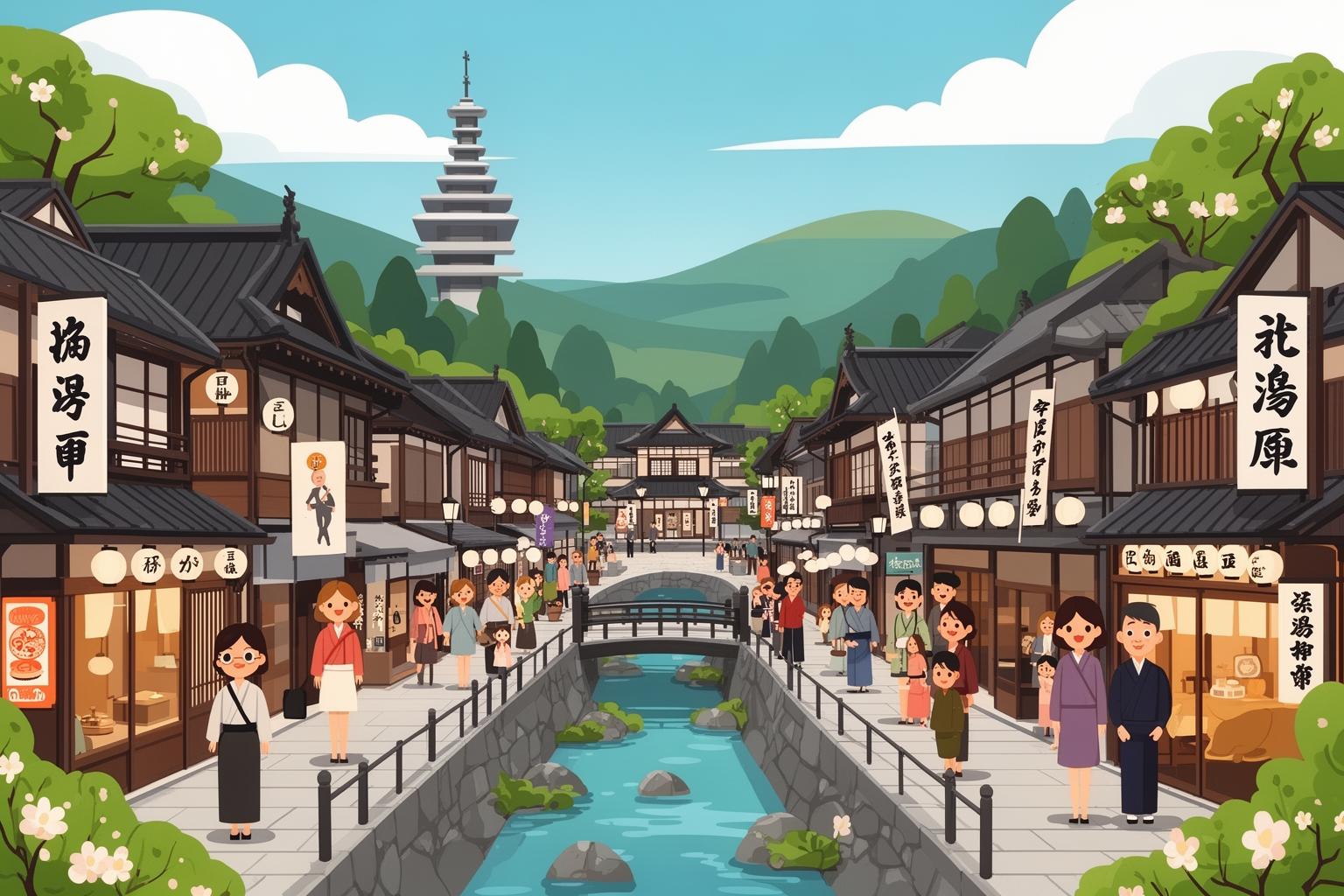
While the seven soto-yu are the main attraction, the real charm of Kinosaki lies in the moments between soaks. The town invites wandering and aimless exploration, leading to delightful surprises. Around every corner, there is a new sight, taste, or sound that enriches your experience.
A Stroll Through Time: The Otani River and Its Bridges
Walking along the Otani River is a quintessential Kinosaki experience. During the day, you can observe large koi fish gliding gracefully in the clear water and admire the weeping willows that have become a town symbol. Each stone bridge—such as the Taikobashi with its gentle arch or the Bentenbashi near Yanagi-yu—provides a perfect photo opportunity. As evening falls, the atmosphere becomes even more enchanting. Lanterns lining the river emit a warm, inviting glow, their light shimmering on the water’s surface. The sound of geta clacking on the stone pathways creates a timeless ambiance. It’s during these evening strolls, wrapped in your yukata, that you truly connect with the town’s spirit. Passing other couples and families doing the same, exchanging quiet smiles and nods, you become part of this shared, peaceful ritual. These walks are not about reaching a destination; they are about being fully present in a moment of simple, profound beauty.
Local Flavors and Crafts
Kinosaki’s streets feature small shops and stalls offering a taste of local culture. A must-try experience is making your own onsen tamago. You buy a few raw eggs in a small net bag from a local vendor, then lower them into a designated basin of hot spring water. After about ten to fifteen minutes of slow cooking, you get a perfectly creamy, soft-boiled egg, seasoned lightly with salt. It’s a simple, delicious snack cooked by the town’s natural energy. For those with a sweet tooth, local sweet shops offer various treats, including soft-serve ice cream in unique flavors like black bean or pear, and mochi filled with sweet red bean paste. The town also produces its own craft beer, Kinosaki Beer, available at several small restaurants and bars. The local brewpub offers varieties that often use regional ingredients. For a heartier snack, seek out stalls selling grilled skewers of mouthwatering Tajima beef. Beyond food, Kinosaki is renowned for a unique traditional craft called mugiwara zaiku, or straw craft. With a history spanning over 300 years, this intricate art involves creating detailed, colorful patterns on wooden boxes, combs, and other objects using vibrant straw strands. Visiting a workshop to watch artisans at work and perhaps purchasing a handmade souvenir is a wonderful way to connect with the town’s artistic heritage.
A Higher Perspective: The Kinosaki Ropeway and Onsenji Temple
For a different perspective on Kinosaki, take the Kinosaki Ropeway up to the summit of Mount Daishi. The seven-minute ride in a vintage-style cable car offers spectacular views of the town nestled in the valley, the winding Maruyama River, and, on a clear day, the distant Sea of Japan. At the midway point, the ropeway stops at Onsenji Temple. This ancient temple, historically significant, was traditionally a place where visitors prayed for a safe and effective onsen cure before beginning their bathing pilgrimage. The temple complex is serene and beautiful, steeped in history and atmosphere. After paying respects, you can continue to the summit. The observation deck there provides a breathtaking panoramic view. There is also a small café where you can enjoy coffee while taking in the scenery. For those feeling energetic, hiking down the mountain offers a pleasant walk through the forest. Visiting the ropeway and Onsenji gives a valuable perspective—both literal and figurative—on the town’s geography and its deep spiritual connection to the onsen.
Practical Wisdom for the Perfect Kinosaki Weekend
Embracing the Kinosaki lifestyle is simple and natural, but a few tips can help first-time visitors feel more at ease and fully enjoy their experience. Think of these not as strict rules, but as friendly suggestions to help you blend effortlessly into the town’s relaxed pace.
Mastering the Yukata and Geta
Wearing a yukata is an enjoyable part of the visit, though it might feel a bit unfamiliar at first. The most important custom is to wrap the left side over the right, since the opposite (right over left) is reserved for dressing the deceased. Securing it firmly with the provided obi belt is key, and your ryokan staff can demonstrate a simple knot. Don’t stress about perfection—comfort matters most. As for the geta, they may feel awkward initially. The technique is to slide your foot forward so your toes rest near the front edge, and to walk with a gentle, shuffling step rather than long strides. This produces the distinctive karankoron sound. Your feet will quickly adapt, and walking in them will soon feel natural. Remember, everyone wears them, so there’s no need for self-consciousness. Wearing this attire means embracing the spirit of Kinosaki.
The Unspoken Rules of Onsen Etiquette
Japanese onsens have a well-established etiquette to ensure a clean, peaceful, and relaxing environment for all. Before entering the main bath, you must wash your body thoroughly. In the changing room, undress and place your belongings in a basket or locker. Bring only a small wash towel into the bathing area. Locate an empty washing station—usually a small stool with a shower head and buckets—and cleanse yourself completely with soap. Once rinsed thoroughly, you may enter the onsen. This pre-bathing ritual, called kakeyu, is the most important guideline. While in the bath, the small towel should never enter the water; most people place it on their head or set it aside on a nearby rock. Onsen are for quiet relaxation, not swimming or splashing—keep your voice low and respect others’ space. Tattoos can still be sensitive in some Japanese onsens, but Kinosaki is notably tattoo-friendly, welcoming all visitors to its seven public baths. Finally, photography is strictly prohibited in all changing rooms and bathing areas to protect everyone’s privacy.
Timing Your Trip: The Rhythm of the Seasons
Kinosaki Onsen enchants visitors throughout the year, with each season offering its own unique charm. Spring (late March to April) showcases the fleeting beauty of cherry blossoms. The canal’s willow trees sprout fresh green leaves, and the whole town feels lively and vibrant. Summer (June to August) is lush and warm, with balmy evenings perfect for leisurely strolls. The town often hosts fireworks and other local festivals during this season. Autumn (October to November) is breathtaking, as the surrounding mountains ignite with fiery fall foliage. The crisp air makes soaking in the hot onsen even more inviting. Yet many consider winter (November to March) the ultimate Kinosaki season. This is when the prized Matsuba snow crab is in season, delighting seafood lovers. Snowfall often transforms the town into a stunning winter wonderland. Bathing in an outdoor rotenburo beneath falling snowflakes is an unforgettable, magical experience. Choosing when to visit depends on what you seek: spring’s renewal, summer’s energy, autumn’s colors, or winter’s cozy culinary pleasures.
A Farewell to Kinosaki: Carrying the Warmth Home

Leaving Kinosaki Onsen feels like awakening from a beautiful dream. As you change out of your yukata and return to your street clothes, there’s a palpable sense of transition. The clack of your geta is replaced by the soft step of your sneakers. Though you may leave the town behind, its essence remains with you. You carry the warmth of the mineral-rich water deep in your muscles, the memory of the exquisite kaiseki dinner on your palate, and the sound of the Otani River in your mind. The return journey to Osaka is a gentle re-entry into the modern world, yet you feel different. You feel calmer, more centered, and more attuned to the subtle beauty of Japanese tradition. Kinosaki is more than a place; it’s a feeling. The feeling of community, history, healing, and profound, simple peace. It reminds you that sometimes the greatest luxury is to slow down, be present, and simply soak. And as you step back into the vibrant energy of Osaka, you’ll find the quiet rhythm of Kinosaki’s heartbeat remains with you, a warm and welcome echo amidst the bustling symphony of your life.








