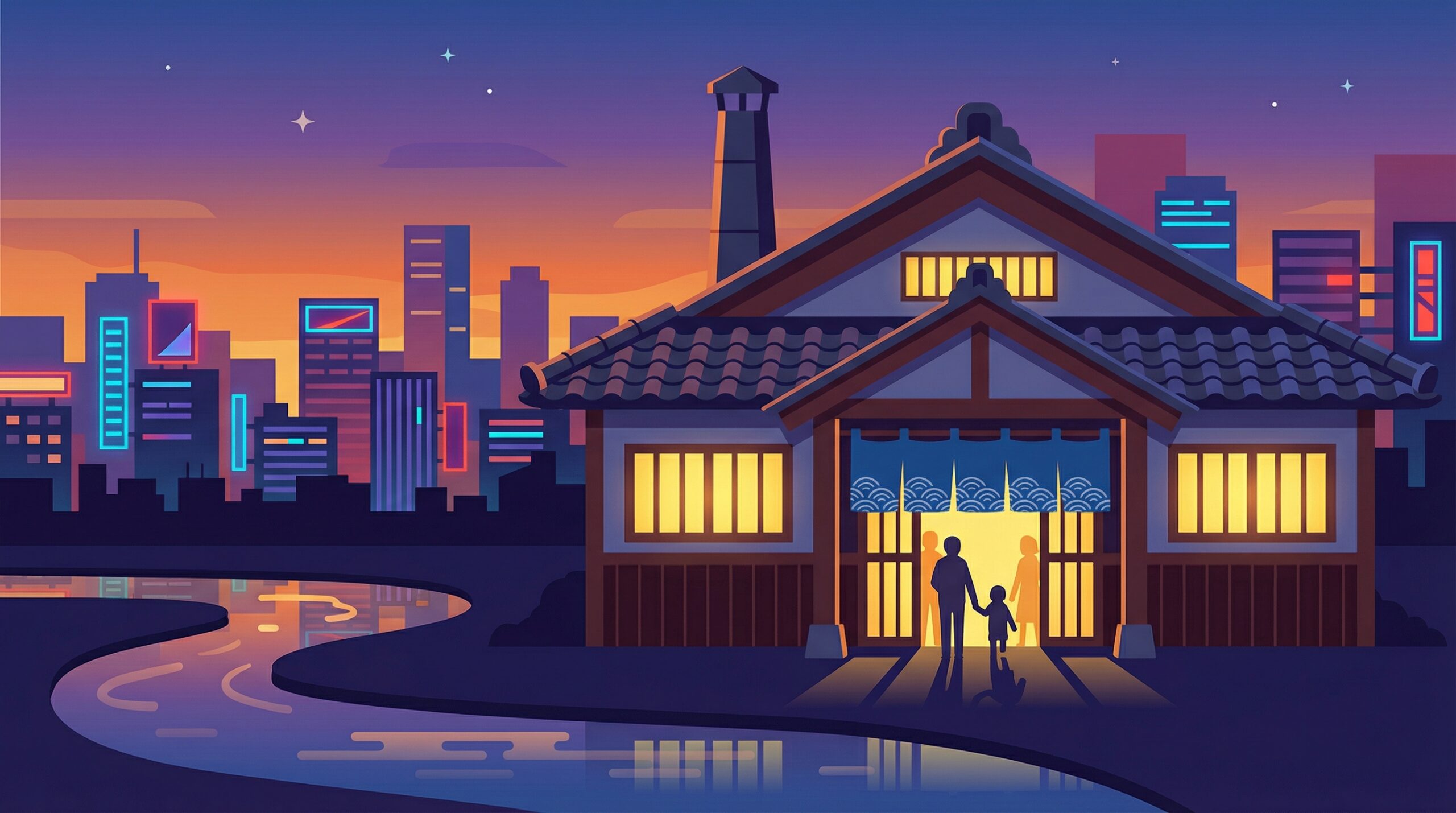
Osaka. The name itself crackles with energy, a city of neon symphonies, sizzling takoyaki, and a glorious, relentless forward motion. The train doors sigh open and shut, the chatter of Kansai-ben fills the air, and the city’s pulse thumps through the soles of your shoes. It’s a place that grabs you, spins you around, and fills your senses to the brim. But when the last meeting is done, when the final errand is run, and the city’s electric hum starts to feel less like a thrill and more like a buzz in your bones, where do you go? Where does Osaka go to breathe out? The answer isn’t found in a quiet cafe or a hushed temple, but behind a simple cloth curtain, under a high-arched roof, in the rising steam of the neighborhood sento.
This isn’t about a one-time tourist dip; this is about a ritual. It’s about weaving a thread of ancient tranquility into the fabric of your modern, fast-paced life in Japan. The local sento, or public bathhouse, is Osaka’s communal living room, its therapeutic heart, a place where the day’s grime and worries are washed away, leaving you clean, warm, and utterly serene. It’s a cornerstone of community life that offers something profound for the foreigner seeking to connect with their new home on a deeper, more authentic level. It’s where you stop being a visitor and start becoming a part of the neighborhood’s gentle, rhythmic exhale at the end of the day. So, let’s pull back that curtain and step into the warm embrace of a tradition that’s as vital to Osaka as the Dotonbori lights.
After this cleansing ritual, you might feel ready to explore another quintessential Osaka experience, like connecting with locals over drinks and food at a traditional izakaya.
The Heartbeat of the Neighborhood: What is a Sento?

To truly understand the sento, you need to see beyond the practical purpose of bathing. It is a living piece of history and a cultural cornerstone that has brought warmth to Japanese communities for centuries. In a bustling and densely packed city like Osaka, these establishments serve as anchors, offering a space for connection and continuity that is increasingly rare in today’s world. They form the quiet, steady heartbeat beneath the city’s vibrant rhythm.
More Than Just a Bath
Long before every apartment had its own spotless unit bath, the sento was an essential daily necessity. It was the only place to get thoroughly clean. Yet, from this necessity emerged something beautiful: a center for community life. It became a spot where neighbors exchanged gossip, children learned social manners, and friendships were formed amid the steam. This spirit endures today. The concept of hadaka no tsukiai, or “naked communication,” is central to the sento experience. When you shed your clothes, you also shed the pretenses of status, occupation, and background. In the bath, everyone is equal. A company director might be soaking beside a construction worker, a student next to a retiree. Barriers fade, allowing a more open, honest form of communication to flourish. The atmosphere inside creates a unique soundscape: the gentle splash of water, the rhythmic clatter of plastic stools and basins on tiled floors, and the soft echo of conversations bouncing off the high, steam-filled ceiling. The air is imbued with the scent of clean soap, warm minerals, and a subtle, sweet hint of cypress wood. It offers a sensory immersion, a full-body experience that soothes the nervous system and calms the mind.
The Sento vs. The Onsen: A Tale of Two Waters
For those new to Japan, the difference between a sento and an onsen can be a bit unclear. The distinction is simple yet meaningful, and it all hinges on the water. By law, an onsen must use geothermally heated water sourced from a natural volcanic spring, rich in specific minerals known for their health benefits. Onsens are usually found in picturesque, mountainous areas and are destinations in their own right, places for weekend retreats and resort-style relaxation. The sento, by contrast, is the modest, urban workhorse of the bathing world. It uses municipally supplied tap water, heated on-site by a boiler. Its charm doesn’t lie in volcanic minerals but in its accessibility, affordability, and deep embedding in daily city life. It’s not a special occasion; it’s part of the everyday routine. However, modern sento operators are skilled innovators. To attract and please their patrons, many have transformed simple heated tap water into something special. You might encounter baths infused with aromatic herbs like lavender or mugwort, tubs containing milky, mineral-rich additives that mimic onsen water, or even advanced jacuzzis and jet baths designed to soothe tired muscles. One of the most distinctive features in many sentos is the denki-buro, or electric bath, where a gentle current passes through the water, creating a tingling, muscle-stimulating sensation. It’s an unusual but oddly satisfying experience worth trying at least once.
Finding Your Local Oasis: The Sento Experience Step-by-Step
Entering a sento for the first time can feel somewhat intimidating. The rituals, etiquette, and nudity—it’s a lot to take in. However, the process is actually very simple and intuitive once you understand the basic flow. Think of it as a guided meditation, a series of small steps leading to deep relaxation. Let’s walk through it together.
The Grand Entrance: Noren Curtains and the Bandai
Your journey starts at the entrance, marked by the iconic noren curtains. These split fabric curtains, fluttering in the evening breeze, serve as the gateway. Traditionally, you’ll see a blue or dark-colored curtain with the kanji for man (男) and a red or pink one for woman (女). Step through the correct curtain into the entrance hall. Here, you’ll find the bandai or a modern front desk. The bandai is a classic raised platform where the owner, often an elderly man or woman, sits to collect the fee. This charmingly old-fashioned system offers a sense of the sento’s history. The bathing fee is standardized across Osaka Prefecture and quite affordable, usually under 500 yen. If you’re unprepared, don’t worry. This is where you can rent towels (a large drying towel and a small washing towel) and purchase single-use packets of shampoo, conditioner, and soap for a small fee. This is known as the tebura set, meaning you can come “empty-handed.” Once you’ve paid, you’ll be directed to the correct changing room.
The Changing Room (Datsuijo): Rules of Undress
The changing room, or datsuijo, is a busy, communal area. The first thing you’ll notice are rows of lockers and open cubbies with wicker baskets. Find an empty one to leave your street self behind. The rule is simple: you undress completely. Bathing suits are not allowed in a sento. This can be the biggest challenge for first-timers from different cultures, but rest assured that nobody is watching. Modesty and body consciousness are set aside. Everyone is there to relax and get clean. The small towel provided or brought with you can be used for modesty as you walk from the changing room to the bathing area, but its main use is for washing your body. Once undressed, place your clothes and large towel in the locker or basket, and take only your small wash towel and toiletries into the bathing area.
The Main Event: The Bathing Area (Yokujo)
Opening the door to the bathing area feels like stepping into another world. The warm steam fills the air, the constant sound of running water soothes, and the light reflects off a kaleidoscope of tiles. It’s a warm, inviting, almost womb-like space. But before you slip into the inviting pools of hot water, there’s one essential, non-negotiable rule to follow.
Step One: The Kakeyu and Washing
You must thoroughly wash your body before entering the communal baths. This is the cornerstone of sento etiquette. The baths are for soaking and relaxing, not for cleaning. Head to one of the washing stations along the walls, each equipped with a faucet (often with a shower hose), a small plastic stool, and a basin. Take a stool and basin, find a spot, and sit down. Washing while standing is considered rude because it may splash others. Use your small towel as a washcloth, lather up with soap, and scrub yourself clean from head to toe. After rinsing completely, you’re ready for the main event. Just before entering the tub, perform kakeyu: scoop water from the bath’s edge with your basin and pour it over your feet, legs, and torso. This rinses off any remaining soap and helps your body adjust to the hot water, preventing a sudden shock.
The Art of Soaking
Now comes the reward. Ease yourself gently into the main tub. The water will likely be quite hot, usually between 40 and 43 degrees Celsius (104–109°F). Don’t resist; allow your body to relax and surrender to the heat. You’ll often find various tubs to try. There may be an atsuyu (extra hot bath) for the brave and a nuruyu (lukewarm bath) for those seeking a gentler soak. You might encounter powerful jet baths that massage your lower back or a bubbling jacuzzi for a gentle massage. A key part of the experience is contrast. Many sento have a mizuburo, a small, deep cold-water tub. The true path to bathing bliss involves cycling between hot and cold. Soak in a hot tub until your skin flushes and warmth fills your core, then bravely plunge into the mizuburo for 30 seconds to a minute. While the initial shock is intense, it’s followed by an exhilarating rush as circulation improves. Rest on the side or on a stool for a few minutes before repeating the cycle. This routine is believed to boost immunity, enhance circulation, and leave you with unmatched well-being.
While soaking, remember a few etiquette points. Never put your small towel in the bath water; instead, place it on the tub’s edge or, as many regulars do, fold it and balance it on your head. The bath is for quiet soaking, not swimming or splashing. Keep your voice low and respect others’ peaceful experience. As you soak, glance upward. Often, you’ll see a magnificent mural above the baths, most famously of Mount Fuji. Even here in Osaka, far from the real mountain, the Fuji mural is a classic sento feature. It was first introduced in Tokyo to evoke grandeur and escape, and the tradition spread, becoming a beloved, iconic part of bathhouses throughout Japan.
Weaving the Sento into Your Osaka Life: A Practical Guide

Turning the sento from a mere novelty into a regular part of your routine is where the true magic lies. It becomes a dependable anchor in your week, offering a guaranteed moment of calm and renewal. It’s about establishing a personal ritual that helps you manage stress and genuinely feel at home in your new city.
When to Go: The Daily Rhythm
Most neighborhood sento follow a particular rhythm. They usually open in the mid-afternoon, around 2 or 3 PM, catering to retirees and those with flexible schedules. They stay open late, often until midnight or even 1 AM, making them an ideal final stop of the day. Incorporating a sento visit into your evening routine can transform your sleep quality. Picture coming home from a long day at work, having a light dinner, then heading out for a soak. The intense heat of the bath followed by the gradual cooling of your body as you walk home signals your brain that it’s time to rest. You’ll find yourself falling asleep more quickly and enjoying deeper sleep. The sento serves as a powerful boundary between the day’s stress and the night’s tranquility. Weekends bring a different kind of opportunity. A slow, leisurely soak on a relaxed Saturday afternoon can be a wonderfully indulgent way to recharge for the week ahead, without the evening rush.
What to Bring (and What to Leave)
Although the tebura (empty-handed) option is always available, you’ll soon want to assemble your own personal “sento set” to feel like a true regular. It doesn’t have to be complicated. A small, waterproof bag or a traditional woven basket is sufficient. Inside, keep your essentials: a small, thin cotton towel called a tenugui for washing (which dries incredibly fast), a larger, fluffy bath towel for drying off, and travel-sized bottles of your favorite shampoo, conditioner, and body soap. Some people add a razor, face wash, or even a toothbrush. Having your own kit makes the experience feel more personal and comfortable. Equally important is what you leave behind. Secure your phone in your locker. The bathing area is a rare, screen-free zone. Also leave your worries, to-do lists, and self-consciousness in the locker. The sento is a sanctuary, a place to be present with yourself and your senses.
Beyond the Bath: The Post-Sento Glow
The ritual doesn’t end when you step out of the water. The post-sento experience is just as essential. After drying off in the changing room, you’ll find old-school analog weight scales, powerful hairdryers (often requiring a 20-yen coin), and large mirrors. Take your time—there’s no rush. Once dressed, head to the lobby or rest area, the sento’s social hub. You’ll often see a television showing a baseball game or a variety show, a few comfortable chairs, and perhaps a small manga library. The highlight, however, is the vending machine. Enjoying a post-bath drink is an essential part of the ritual. The classic choice is a cold glass bottle of milk—plain, coffee-flavored, or fruit-flavored. There’s something deeply satisfying about sipping a cold, sweet drink after being heated to your core. Popping the marble on a bottle of Ramune soda is another nostalgic favorite. For adults, a cold can of beer is the ultimate reward. This is the time to sit back, rehydrate, and let the feeling of pokapoka—that warm, bone-soothing glow—sink in. You’ll feel cleaner than after a quick shower at home, and your muscles will feel loose and relaxed. To prolong this blissful state, consider what follows. A post-sento meal is one of life’s great pleasures. The simple, delicious offerings of a nearby ramen shop or casual izakaya taste even better in this state of complete relaxation. It’s the perfect, gentle close to a perfect evening.
Osaka’s Sento Scene: A City of Steam and Stories
One of the pleasures of living in Osaka is the incredible variety of its sento culture. This is far from a cookie-cutter experience. Each neighborhood bathhouse has its own unique character, history, and devoted patrons. Exploring them feels like urban archaeology, uncovering hidden treasures of Showa-era design alongside modern bathing innovations.
The Classic and the Quirky
As you explore, you’ll notice different types. There are grand, old-fashioned sento with stunning karahafu gables, intricate tilework, and beautifully tended courtyard gardens. Entering one is like stepping back in time. Then there are the more contemporary, minimalist sento that might feature sleek designs, artistic lighting, and uniquely themed baths. Some sento are known for specific highlights—one may boast an exceptional sauna, another a top-quality rotenburo (outdoor bath), and yet another a particularly invigorating denki-buro. Beyond the traditional neighborhood sento, Osaka is also home to many “Super Sento.” These larger, modern facilities blur the line between sento and onsen resort. For a slightly higher price, they offer a wide range of baths, various types of saunas, relaxation lounges, restaurants, and even massage services. While they don’t have the cozy, local atmosphere of a classic sento, they provide an excellent option for a full day of luxurious relaxation.
Finding Your Spot
So how do you discover these steam sanctuaries? Start by simply strolling around your neighborhood with an attentive eye. Look for the telltale tall chimney (entotsu), historically essential for wood- or coal-fired boilers. Keep an eye out for distinctive temple-like architecture or the ゆ (yu, meaning hot water) symbol on signs or curtains. Naturally, technology is helpful, too. A quick search for “銭湯” (sento) on your map app will reveal the closest options. Part of the charm is in the exploration. Don’t limit yourself to just one. Try the one near your office, another in a trendy neighborhood you like to visit, or one at the end of a train line you’ve never explored. Each visit offers a slightly different experience, and eventually, you’ll find the one that feels like your personal sanctuary.
Sento Etiquette and Tattoos: A Note for International Visitors
For anyone living in Japan as a foreigner, navigating cultural nuances is part of everyday life. The sento is a place filled with unspoken rules, all rooted in basic principles of hygiene and mutual respect. And, naturally, there is the ongoing question of tattoos.
Navigating the Unspoken Rules
Let’s briefly go over the essential etiquette in a friendly manner. The main principle is to keep the communal bath water clean. This means washing thoroughly before entering. It means keeping your soap, shampoo, and towel out of the tubs. After finishing at your washing station, give your stool and basin a quick rinse for the next user. In the bathing area, move gently and deliberately. Avoid splashing, and don’t treat the bath like a swimming pool. When unsure, simply take a moment to observe how the older regulars behave. They are masters of this ritual, with movements that are efficient, respectful, and graceful. Follow their example, and you can’t go wrong.
The Tattoo Question
The issue of tattoos in Japanese bathing facilities is complex, stemming from their historical association with the yakuza, or Japanese organized crime. Because of this, many onsen resorts, swimming pools, and private gyms enforce strict “no tattoo” policies. However, neighborhood sento often tell a different story. Since sento primarily serve the local community, they tend to be much more relaxed and inclusive. Many—if not most—local sento in down-to-earth cities like Osaka have no explicit rules against tattoos and won’t turn you away. The general attitude is that if you are part of the neighborhood, you are welcome. That said, if you have very extensive, full-body tattoos, it’s wise to check for any signs at the entrance (look for the word 入れ墨 – irezumi) or check their website in advance, just to be courteous. But for the vast majority of visitors with small to medium-sized tattoos, you’ll find that no one bats an eye. The sento is a place of hadaka no tsukiai, and true to that spirit, people care far less about the art on your skin than about sharing a moment of peaceful, communal relaxation.
A Ritual of Release and Renewal
In the grand, chaotic, and wonderful tale of Osaka, the neighborhood sento stands as a quiet, vital chapter. It offers a contrast to the city’s relentless energy—a place to pause, to soak, and simply to be. It connects you to the past, supports the present community, and serves as a powerful means for your own well-being. By making this simple, ancient ritual part of your weekly routine, you do more than just cleanse your body. You wash away the stresses of expatriate life, discover a new rhythm in tune with the heartbeat of your neighborhood, and engage in a tradition that has brought comfort and peace for generations. So tonight, rather than scrolling through your phone or watching another episode online, grab a small towel, find that little bathhouse with steam rising from its chimney, and step through the noren. Embrace the heat, the steam, and the silent camaraderie. Experience the profound, soul-deep satisfaction of winding down in the evening, and find your own small haven of home in the warm, welcoming waters of an Osaka sento.