Osaka. The name itself crackles with an electric energy, a city that dances to its own beat, a culinary and cultural powerhouse that proudly declares itself Japan’s kitchen. For the digital nomad, the modern-day wanderer whose office is wherever the Wi-Fi is strong, Osaka presents a thrilling landscape of opportunity. And at the very heart of this urban sprawl, pulsing like a bio-luminescent nerve center, is Umeda. To the uninitiated, Umeda is a whirlwind, a chaotic confluence of train lines, subterranean labyrinths, and towering skyscrapers that scrape the Kansai sky. It can feel overwhelming, a place you transit through, not a place you settle into. But that, my friend, is where you’d be mistaken. Umeda is not just a hub; it’s a habitat. Beneath the surface-level chaos lies a highly evolved ecosystem perfectly suited for the remote worker, a matrix of hyper-connectivity, caffeinated sanctuaries, and professional havens waiting to be discovered. It’s a district that works as hard as it plays, where the salaryman’s rush hour ballet coexists with the quiet intensity of a coder lost in their flow state. Forget the fleeting thought of just passing through. This guide is your key to unlocking Umeda, to transforming its dizzying energy from a challenge into your greatest asset. We’ll peel back the layers of this concrete jungle, revealing the quiet corners, the high-speed hideaways, and the collaborative communities that make Umeda one of the most dynamic and surprisingly accommodating bases for any digital nomad in Japan. Prepare to plug in, power up, and conquer the current. Welcome to your new Osaka office.
Once you’ve established your productive base in Umeda, consider exploring the authentic local life just a short train ride away on the historic Tenjinbashisuji Shopping Street.
Understanding the Umeda Matrix: Why This District is a Nomad’s Dream
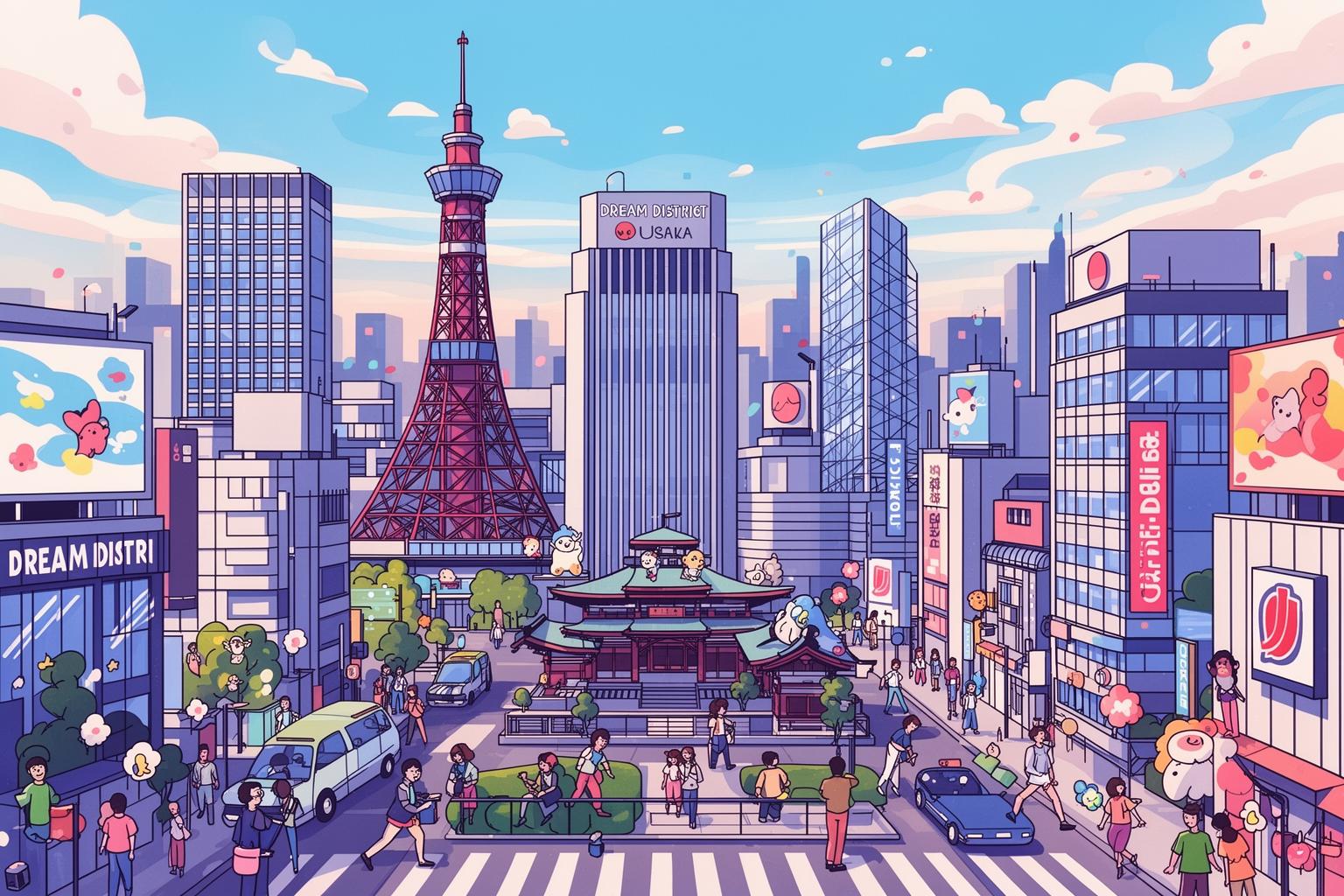
Before exploring specific locations, it’s essential to grasp the essence of Umeda and why it stands out not only as a viable choice but arguably as one of the most strategic hubs for a productive and connected lifestyle in Kansai. Umeda’s brilliance lies in its density and its intentional, though intricate, design as a city within a city. It’s crafted for constant movement, commerce, and the seamless fusion of life and work—a philosophy that aligns perfectly with the digital nomad mindset.
The Hub of Connectivity
Umeda’s core identity is that of a transportation powerhouse. Rather than a single station, it encompasses a cluster of linked stations: JR Osaka Station, Hankyu Umeda Station, Hanshin Umeda Station, and the Umeda, Nishi-Umeda, and Higashi-Umeda subway stations. This is more than convenience; it’s a significant advantage. From here, the entire Keihanshin metropolitan area (Osaka, Kobe, Kyoto) is within easy reach. You can spend your morning working in a chic Umeda café, take a 30-minute Special Rapid train to a client meeting in Kyoto in the afternoon, and return in time for dinner and drinks without the fatigue of a long commute. This exceptional access means you’re not just working in Osaka; you’re operating from the command center of western Japan. This geographic edge enables a dynamic work-life balance, where weekend escapes to Nara, Kobe’s port, or Himeji Castle become effortless ways to recharge and find inspiration without interrupting your workweek.
A Tapestry of Contrasts
Umeda’s atmosphere isn’t uniform. It’s a diverse district offering a unique vibe on every block, hour, and for every work style. In Nishi-Umeda, you find the sleek, corporate sophistication where the Hilton and Ritz-Carlton preside and business deals are made over fine lunches—an environment of sharp suits and quiet professionalism. Then comes the lively, youthful energy bursting from vast commercial complexes like Grand Front Osaka and LUCUA, where fashion, technology, and gastronomy merge in a vibrant showcase of modern consumer culture. Venture underground into Whity Umeda or Diamor Osaka, and you encounter a retro-futuristic marketplace, like a time capsule from another era. Eastward lies the grittier, more local charm around Ohatsu Tenjin shrine, surrounded by a maze of intimate, atmospheric izakayas. This variety is Umeda’s secret strength. Seeking a quiet, focused setting for deep work? The lounges in Nishi-Umeda are ideal. Needing a creative spark fueled by human energy? The open-atrium cafés in Grand Front provide the perfect backdrop. This ability to ‘mood-match’ your surroundings is invaluable for sustaining productivity and mental well-being.
Sustenance for the Hustle
A nomad can’t thrive on Wi-Fi alone, and Umeda clearly gets this. The overwhelming concentration of dining and shopping options forms a robust support network for a productive lifestyle. The depachika—basement food halls—of Hankyu, Hanshin, and Daimaru department stores are culinary treasure troves. Here, you can pick up a gourmet bento for a quick, healthy lunch, a beautifully crafted pastry with your afternoon coffee, or an upscale salad that rivals standard fast food. This setup eliminates lengthy lunch breaks, letting you refuel swiftly without compromising quality. Need a new notebook, a charger replacement, or a specific adapter? The Yodobashi Camera complex, a multi-story electronics haven, is right next to the station. Grand Front Osaka hosts a large Muji and a Kinokuniya bookstore with a solid English section. Everything you could need to support your work and lifestyle lies within a ten-minute walk, reducing hassle and maximizing your time and energy for what truly matters: your work and your adventure in this remarkable city.
The Essential Nomad Toolkit: Navigating Umeda’s Digital Landscape
Successfully setting up your mobile office in Umeda requires some local insight. It’s a landscape full of great opportunities but comes with its own unique rules and quirks. Understanding the subtleties of connectivity, power availability, and etiquette will turn what could be a frustrating experience into a smooth and productive workflow. Consider this your digital survival guide to the Umeda hustle.
Mastering the Wi-Fi Game
Although Japan is a technologically advanced country, free, open, high-speed public Wi-Fi is not as widespread as one might assume. Nevertheless, Umeda, being a major commercial and transportation hub, is better equipped than most places. The key is knowing where to find it and how to connect properly.
Public Wi-Fi Networks
The most common service is “Osaka Free Wi-Fi,” whose logo you’ll find in stations, underground shopping malls, and major tourist spots. Connecting typically requires a simple browser-based registration using an email address or social media login. While convenient for quick tasks like checking maps or sending messages, this service has limits. Connections often time out after 30 or 60 minutes, requiring you to log back in, and speeds can fluctuate, especially during peak usage. It’s a reliable backup but not suitable for a four-hour video call. Likewise, major department stores like Hankyu, Daimaru, and the Grand Front Osaka complex offer their own free Wi-Fi for customers. These tend to be more stable but are still best suited for shorter work periods.
The Personal Hotspot Advantage
For serious digital nomads, having a dedicated internet connection is essential. This is where a pocket Wi-Fi device or a local SIM card becomes your most valuable gear. Renting a pocket Wi-Fi is simple, with pick-up options available at Kansai International Airport (KIX) upon arrival. These devices offer unlimited data and fast, dependable connections that can be shared across multiple devices. Alternatively, a data-only SIM card is another excellent option, especially for longer stays, enabling your smartphone to function as a personal hotspot. This independent connection frees you from searching for Wi-Fi and lets you set up your workspace in any café, park bench, or quiet corner, confident in staying online and productive.
The Power Outlet Quest
The underlying anxiety for every digital nomad is the dwindling battery indicator. In Japan, the search for `konsento` (コンセント), or power outlets, is a very real and ongoing challenge. Unlike many Western cafés where outlets are abundant, they can be scarce here. Many older, smaller `kissaten` (traditional coffee shops) have no outlets at all. However, Umeda’s modern cafés and workspaces are gradually adapting to the needs of remote workers.
How to Find Power
Before settling in a café, take a quick look around. The best spots are usually counter seats along a wall or window, often designed for solo patrons and equipped with outlets spaced nearby. Larger chains like Starbucks and Tully’s Coffee tend to be more dependable in this regard than independent cafés. Some newer venues, such as the Starbucks Reserve Store in Grand Front Osaka, prioritize power access in their design. Look for small covered panels on the floor near seating areas or discreet plugs integrated into the bases of long communal tables. The best approach is to start your day with fully charged devices and carry a high-capacity portable battery pack (or two). This power bank serves as your safety net, ensuring you can finish an important task even if you can’t find a powered seat.
Café Etiquette for the Productive Professional
Working from cafés in Japan comes with a set of unspoken rules. Following them demonstrates respect for the culture and guarantees a pleasant experience for yourself and those around you. The key principles revolve around consideration for others and for the business.
Be Mindful of Time and Space
A significant cultural difference is the concept of `nagasuru` (長居する), meaning staying too long. Although working in cafés is becoming more common, it’s considered rude to occupy a table for four hours while only purchasing a single ¥400 coffee, especially during the lunch rush (around 12:00 to 14:00) or crowded weekends. A useful rule is to order something new every 90 minutes to two hours. If the café becomes crowded and customers are waiting for seats, it’s courteous to start packing up. Many Japanese patrons do study or read in cafés for long stretches but do so quietly and mindfully.
The Art of Securing a Seat
In many busy cafés, particularly chains, the custom is to secure your seat before ordering. You can do this by placing a personal item you wouldn’t mind leaving behind—such as a notebook, scarf, or book—on the table or chair. Avoid using valuables like wallets, passports, or phones. This signals that the seat is taken. Then you can head to the counter to place your order without worrying about losing your spot. This system works efficiently based on mutual trust.
Keep It Quiet
Japanese public spaces tend to be much quieter than their Western counterparts. Phone calls should be brief and spoken softly. If you need to take a longer or important call, the polite thing to do is step outside. Loud or boisterous video meetings are a definite no-go. The background hum in a café is one of focus and collaboration; respect this shared acoustic environment.
The Sanctuaries of Focus: Umeda’s Premier Coworking Spaces
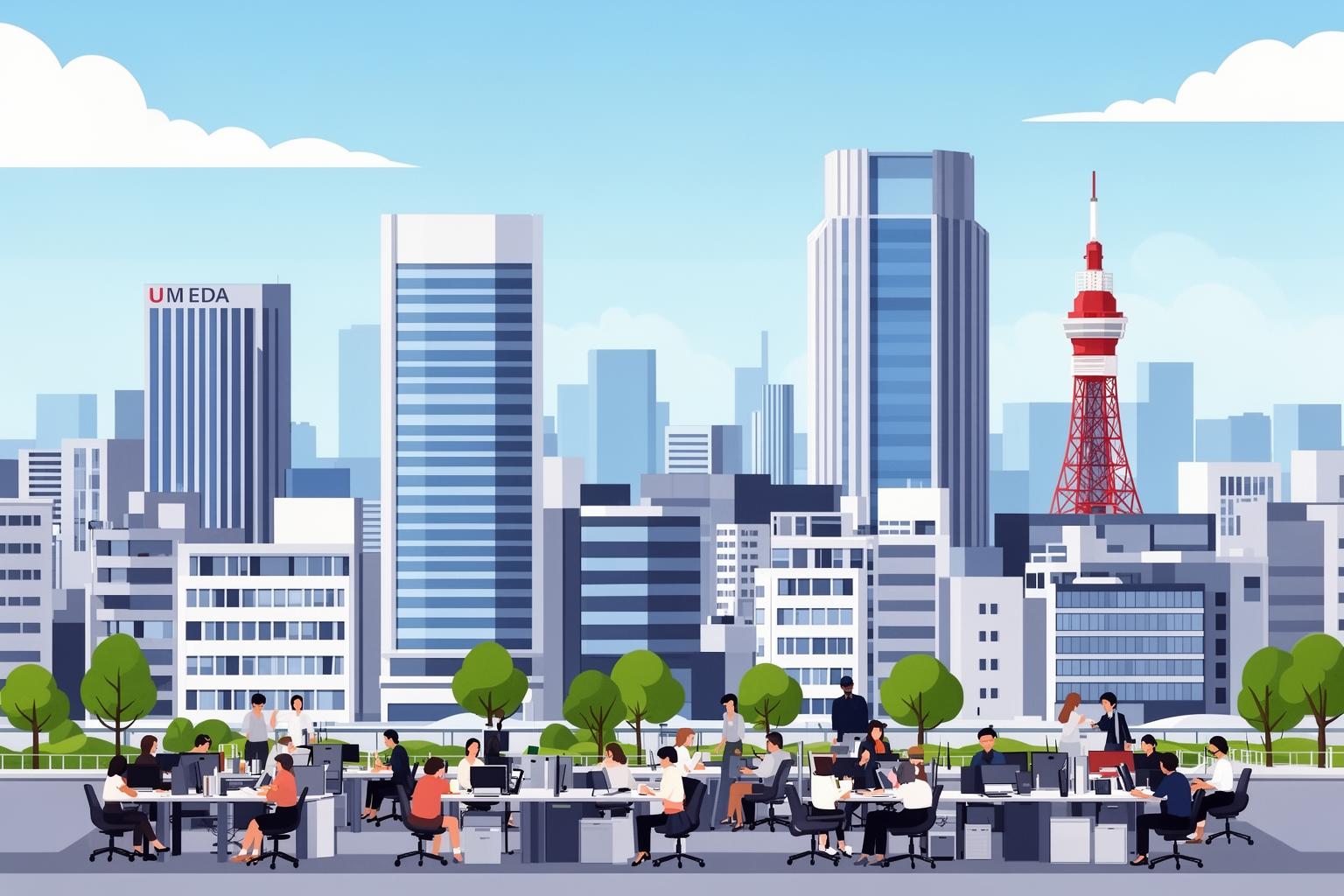
When you require more than what a typical café can provide—such as guaranteed high-speed internet, dedicated workspaces, meeting rooms, and a professional community—Umeda’s coworking spaces are the perfect solution. These aren’t merely shared offices; they are thoughtfully curated environments meant to enhance productivity, collaboration, and innovation. They offer the infrastructure and atmosphere essential for focused, uninterrupted work.
WeWork Midosuji Frontier: The Global Standard with an Osaka Flair
For those acquainted with the international coworking scene, WeWork is synonymous with consistency and quality, and its Midosuji Frontier branch is no exception. Located on Midosuji—Osaka’s grand, ginkgo-lined avenue akin to the Champs-Élysées—this space emanates polished, global professionalism from the moment you enter the lobby.
Atmosphere and Design
The interior showcases classic WeWork style: a mix of sleek, modern design paired with comfortable, eclectic furnishings. Picture mid-century modern chairs, warm wood accents, and expansive glass walls offering breathtaking panoramic views of the Umeda skyline and the city below. The space is bright, open, and meticulously maintained, creating an atmosphere that instantly promotes productivity. It’s less a quirky startup garage and more a sophisticated, next-generation corporate headquarters. Common areas buzz gently with activity, while dedicated desks and private offices provide a quiet refuge for concentrated work.
Facilities and Amenities
WeWork fulfills its promise of an all-inclusive working experience. The Wi-Fi is enterprise-grade—fast, secure, and reliably stable. You’ll never have to worry about losing connection during an important upload. Private phone booths are available for confidential calls, and fully equipped meeting rooms can be reserved as needed. Kitchen areas are a definite highlight, offering complimentary micro-roasted coffee, a variety of teas, fruit-infused water, and famously, beer on tap for after-hours networking. The professional on-site community team manages mail services and offers general support.
Community and Pricing
The WeWork Midosuji Frontier community is a diverse mix of local Japanese startups, freelance creatives, and satellite teams from large international corporations. This blend creates a unique networking environment where you might share coffee with a local app developer one moment and a marketing director from a global brand the next. WeWork offers multiple membership levels, from hot desk access (`WeWork All Access`) to dedicated desks and private offices. Occasionally, day passes are available via third-party platforms, providing flexibility for short-term visitors. While it is a premium option, the cost reflects the top-tier facilities and prime location.
The DECK: A Hub for Creativity and Collaboration
If WeWork represents the polished corporate side of coworking, The DECK embodies grassroots innovation and community collaboration. Located a short subway ride or pleasant walk from central Umeda in the neighbouring Yodoyabashi business district, it pulses with energy—a hub for makers, tech enthusiasts, and entrepreneurs.
Atmosphere and Design
The DECK resembles a creative workshop more than a traditional office. Its open-plan, industrial-chic design features exposed ceilings, flexible furniture setups, and large windows that flood the space with natural light. There is a palpable sense of creation, partly thanks to its standout feature: a fabrication lab equipped with 3D printers, laser cutters, and other digital fabrication tools. This attracts a crowd that’s about building and prototyping, not just typing. The maker-centric atmosphere encourages curiosity and hands-on problem-solving.
Facilities and Amenities
In addition to fast Wi-Fi and comfortable seating, The DECK offers a distinctive set of tools for its members. The fabrication lab serves as the centerpiece, but the space also includes a fully equipped kitchen, a cozy café area for informal meetings, and a dedicated event space regularly hosting workshops, seminars, and meetups on subjects ranging from UX design to IoT development. This emphasis on learning and events makes it more than just a workspace; it’s a place to develop skills and expand your network.
Community and Pricing
The DECK’s strongest asset is its community: a close-knit group of Osaka’s tech and creative professionals. The staff, deeply embedded in the local startup scene, are excellent connectors eager to facilitate introductions. This is the ideal place to engage with the local innovation ecosystem. Pricing is highly flexible, with hourly drop-in rates, day passes, and various monthly membership plans available. This accessibility makes The DECK a great choice for nomads on any budget—whether you need a space for an intense afternoon or a longer-term base for a month-long project.
The Cafe Circuit: Where Caffeine Meets Connectivity
For many nomads, the steady clatter of a coffee shop provides the perfect backdrop for productivity. Umeda’s cafe scene is extensive and diverse, featuring everything from global chains to small, hidden gems. Here, we explore the top spots for settling in with your laptop, focusing not only on coffee quality but also on the essential trio for remote work: dependable Wi-Fi, accessible power outlets, and a conducive atmosphere.
Starbucks Reserve Store – Grand Front Osaka: A Premium Work Experience
This isn’t your typical neighborhood Starbucks. Situated in the south building of the vast, ultra-modern Grand Front Osaka complex, the Starbucks Reserve Store offers an elevated coffee experience and is unofficially one of Umeda’s best-equipped remote work hubs. It’s designed for lingering, not just quick visits.
Atmosphere and Vibe
From the moment you step inside, the difference is clear. The space is expansive, featuring high ceilings and a sophisticated, darker palette of woods and metals. The large Reserve Bar is the centerpiece, where skilled baristas prepare exotic single-origin coffees using various brewing methods, from siphon to pour-over. It resembles a high-end cocktail bar more than a coffee shop. The ambient sound is a low, focused hum—the soft tapping of keyboards, quiet conversations, and the espresso machine’s hiss. People come here to work, and that shared intent fosters a concentrated, respectful environment.
Wi-Fi, Power, and Seating
Connectivity is prioritized here. The free Starbucks Wi-Fi is fast and stable, easily supporting video calls and large file transfers. More importantly, this location is a haven for power outlets. The long, counter-style seats by the windows and the substantial communal tables in the center are generously equipped with plugs. You can settle in for extended work sessions without fearing a drained battery. Seating options range from plush armchairs to practical work tables, allowing you to find a spot that fits your preferences. The only drawback is its popularity—arriving early on a weekday morning or during the mid-afternoon lull is best to snag a prime seat with power access.
Brooklyn Roasting Company – Kitahama: The Riverside Escape
Sometimes, the towering landscape of Umeda can feel overwhelming. When you need a change of pace and fresh air, a quick trip to the neighboring Kitahama district is well worth it. Just one stop on the Sakaisuji subway line from Higashi-Umeda—or a 15-minute walk—Kitahama offers a distinctly different vibe, with the Brooklyn Roasting Company as its standout.
Atmosphere and Vibe
Housed in a beautifully restored historic building on the banks of the Tosabori River, this café transports you out of Japan and into a trendy New York warehouse loft. The spacious interior features soaring ceilings, exposed brick walls, and large windows that provide peaceful views of the river and the historic Nakanoshima island. The relaxed and creative atmosphere attracts designers, writers, and students alike. The gentle river sounds and open, uncrowded layout create a calming and inspiring work environment—a perfect antidote to Umeda’s hectic energy.
Wi-Fi, Power, and Seating
The Wi-Fi is reliable, and the in-house roasted coffee ranks among the best in Osaka. Power outlets are available but not at every seat, so choosing your table wisely is advised. The optimal spots are along the walls or at the large communal tables. Seating consists of wooden tables and benches, comfortable enough for several hours of work. The real highlight is the outdoor terrace. On sunny days, few work locations in Osaka compare to sitting on this riverside patio with your laptop and a cooling breeze off the water.
Tully’s Coffee – Umeda Hankyu Building: The Dependable Classic
Within Japan’s coffee chains, Tully’s is often favored for its slightly more comfortable seating and work-friendly policies. The branch on the 15th floor of the Umeda Hankyu Building Office Tower is a prime find for remote workers. Elevated above the street-level hustle, it offers a quieter, more professional setting.
Atmosphere and Vibe
Located in an office tower, this Tully’s draws a mature, professional crowd, unlike the busier mall locations. The décor is clean, functional, and comfortable, with plenty of natural light and impressive city views. It’s a reliable, no-nonsense workspace where you can focus without distractions. Smoking and non-smoking areas are clearly separated; be sure to choose the `kin’en-seki` (禁煙席) for a smoke-free environment.
Wi-Fi, Power, and Seating
Tully’s provides its own free Wi-Fi service, which is generally dependable for everyday work tasks. The standout feature here is the layout: extensive counter seating along the windows is almost always equipped with power outlets, making it one of Umeda’s most reliable spots for both a seat and a charge. It’s an ideal place for an hour or two of work between meetings or while waiting for transit.
The Hidden Gems and Alternative Spots
Umeda offers numerous other options worth exploring. Don’t hesitate to venture out. A classic Doutor Coffee near the Ohatsu Tenjin shrine offers a glimpse into traditional Showa-era `kissaten` culture—quick, efficient, and straightforward. For a truly upscale experience, the lounge at The Grand Cafe & Restaurant in Hilton Plaza West provides impeccable service, serene quiet, and a luxurious atmosphere perfect for a high-stakes ‘power hour’ of productivity. For genuine locals’ secrets, check out customer lounges on the upper floors of department stores like Hankyu Umeda. While some require loyalty cards, others are open to the public and provide quiet, comfortable seating away from typical tourist and remote worker hotspots.
Beyond the Desk: Decompressing in Umeda
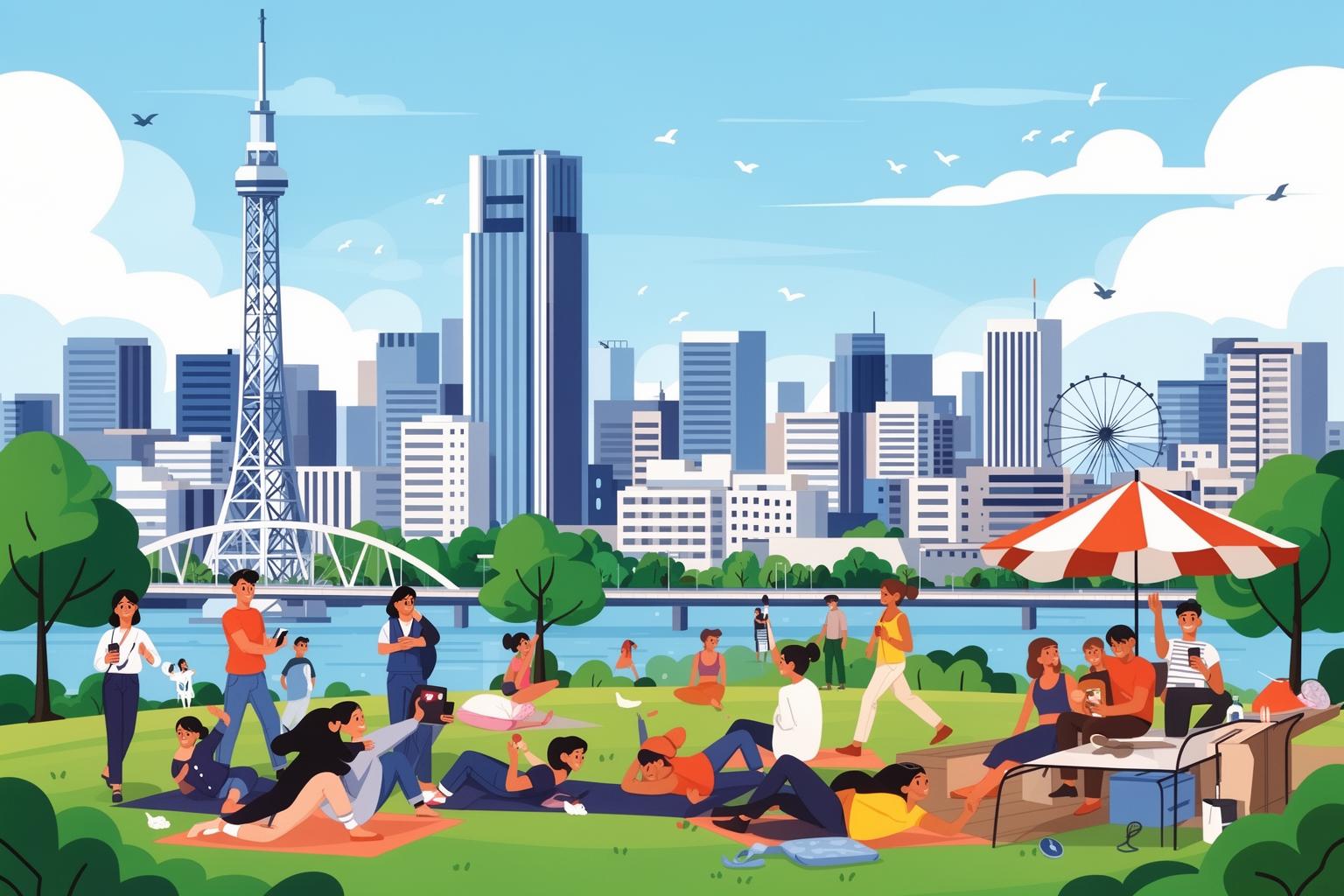
A sustainable digital nomad lifestyle goes beyond simply finding the best work spots; it’s about achieving balance and becoming part of the city’s everyday life. Umeda, with its remarkable density, provides countless chances to step away from your screen, clear your mind, and fully engage with the local culture—all within minutes of your workspace.
A Breath of Fresh Air: Umeda Sky Building
After hours of screen time, sometimes you need a literal shift in perspective. Visiting the Umeda Sky Building’s Floating Garden Observatory is an ideal escape. This architectural wonder, featuring two towers linked by a donut-shaped observatory, delivers stunning 360-degree views of the entire Osaka plain. It offers a striking sense of the city’s vastness. On the open-air deck, you can feel the breeze and hear the distant sounds of the city below—a sensory experience that breaks through mental fatigue and fosters a deep sense of place and clarity. It’s a reminder of the world beyond your laptop and a wonderful source of inspiration.
Retail Therapy and Culinary Exploration
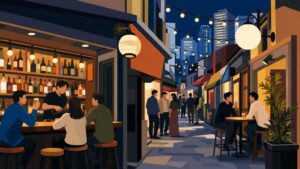
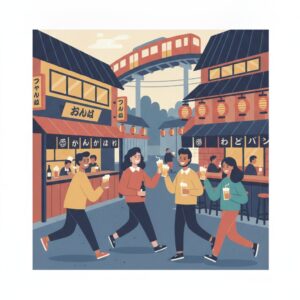
Umeda is a haven for shoppers and food lovers alike, making indulgence a perfect way to unwind. Simply exploring the vast, interconnected spaces of Grand Front Osaka, LUCUA, and Hankyu Department Store offers rich visual stimulation. However, the true gems lie in the `depachika`. These basement food halls are a sensory delight—offering artisanal pickles, impeccably arranged premium fruits, chefs preparing fresh `yakitori`, and countless vendors from which to build a spectacular meal. For a more traditional experience after work, venture into the narrow, lantern-lit alleys of Ohatsu Tenjin-dori Shotengai. Here, intimate and authentic `izakaya` and eateries serve cold beer and hearty, unpretentious local dishes, allowing you a genuine connection to the city’s culinary heart.
Finding Your Zen: Tsunashikiten Shrine
Amid the towering steel and glass, it’s easy to overlook the pockets of calm within Umeda. The Tsunashikiten Shrine, dedicated to the god of learning, is one such peaceful retreat. Hidden just a short walk from the main station, this small yet charming shrine offers a serene space for contemplation. Passing through its gates feels like stepping into another realm. The city’s noise fades, replaced by the scent of incense and the sight of locals quietly paying homage. Spending just fifteen minutes seated on a bench here, watching sunlight filter through the trees and observing the quiet rituals, can serve as a powerful meditation—a way to center yourself before returning to the digital world.
Your Umeda Work-Life Blueprint
Umeda ultimately reveals itself not as a chaotic transit hub, but as a finely tuned, high-performance engine designed for the modern remote professional. It presents a rhythm, a blueprint for a perfectly balanced day. Picture this: a morning spent in deep, focused work within the calm, professional setting of a coworking space, energized by gourmet coffee. A quick, tasty, and healthy lunch sourced from the vibrant display of a depachika. An afternoon shift to a riverside café, where the change of environment sparks fresh creative ideas. And as the sun sets, you close your laptop and immerse yourself in the lively nightlife, exploring hidden izakayas or simply watching the city’s neon lights color the sky.
This is Umeda’s promise. It’s a district that offers not only the infrastructure for work—the fast Wi-Fi, the power outlets, the desks—but also the foundation for a rich, engaging lifestyle. It stands as a reflection of Osaka’s character: pragmatic and efficient, yet vibrant, soulful, and endlessly captivating. So come, discover your favorite spot, open your laptop, and connect directly to the powerful, energetic pulse of this extraordinary urban heart. Your Umeda adventure is just beginning.