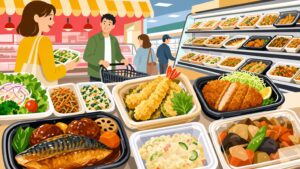
Osaka, a city that pulses with a relentless culinary rhythm, a place where the mantra of kuidaore—to eat until you drop—is not just a saying, but a way of life. When you walk these streets, from the steam-filled alleys of Dotonbori to the quiet residential lanes of Tennoji, the air itself seems seasoned with the promise of something delicious. Most visitors, and even many residents, equate this gastronomic paradise with its legendary restaurants: the clatter of chopsticks in a bustling ramen-ya, the sizzle of batter on a takoyaki grill, the hushed reverence of a Michelin-starred kappo counter. But there’s another universe of flavor, a parallel culinary dimension that fuels the city’s daily life, hidden in plain sight under the bright, fluorescent lights of its countless supermarkets. This is the world of sozai.
Sozai, the beautiful and endlessly varied universe of prepared dishes, is the unsung hero of Japanese home cooking. It’s more than just takeout; it’s a meticulously crafted tapestry of flavors designed to complement a bowl of fresh, white rice, forming the heart of a complete meal. It’s the answer to a working mother’s frantic weeknight, a single professional’s craving for a nutritious dinner, and a student’s need for an affordable, delicious lunch. For a traveler or an expat, it’s a key that unlocks the authentic, everyday tastes of Osaka, a direct line into the kitchens and dining tables of the people who call this vibrant city home. It’s an invitation to step away from the tourist trail and participate in the daily ritual of local life, one delicious, ready-to-eat dish at a time. This is where the real soul of Osaka’s food culture beats its strongest—not always in the grand establishments, but in the humble, accessible, and utterly brilliant offerings of the neighborhood supermarket.
To truly immerse yourself in the daily life of Osaka beyond its supermarkets, consider stepping into the city’s vibrant social scene by learning how to make friends at a local tachinomi bar.
The Heartbeat of Daily Life: The Sozai Aisle
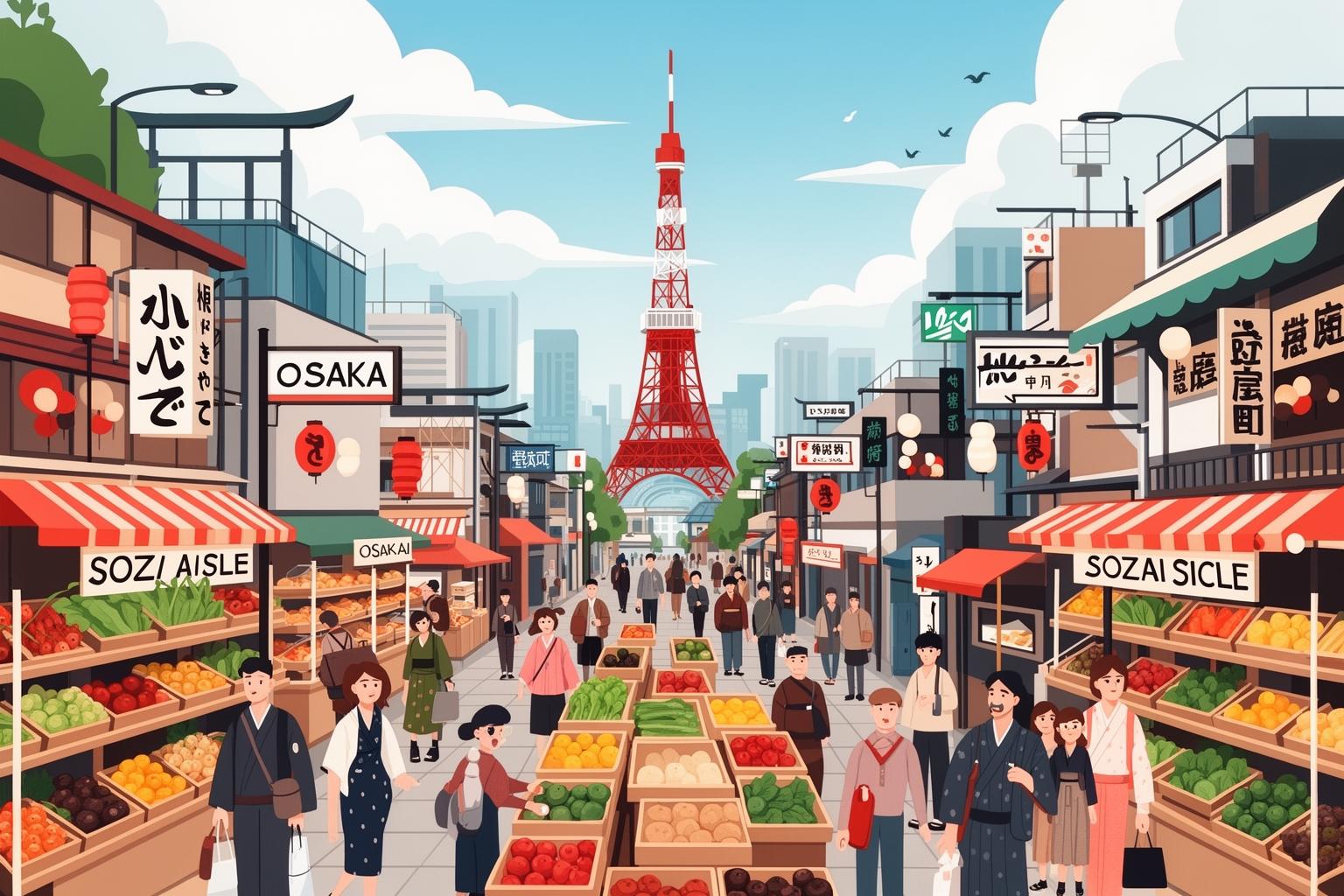
Step into any Japanese supermarket, and you’ll inevitably find yourself drawn to it. It’s a magnetic attraction, a symphony of colors, textures, and aromas that sharply contrasts with the neatly arranged rows of packaged goods elsewhere in the store. This is the sozai section, typically located near the entrance, a vibrant culinary stage where the day’s performance is in full swing. The atmosphere here blends calm precision with bustling energy. Early in the day, staff in crisp, clean uniforms move with quiet efficiency, arranging freshly made dishes in immaculate rows. The air is fresh, filled with the subtle, comforting scents of dashi, sweet soy sauce, and steaming rice. Shoppers stroll leisurely, considering the day’s meals, carefully choosing a piece of grilled fish here, a portion of simmered vegetables there.
As evening approaches, however, the pace shifts. The aisles fill with people returning from work, their faces a mix of fatigue and anticipation. The energy changes from contemplative browsing to a focused, almost strategic mission: to assemble a delicious, satisfying dinner with minimal effort. This is when the sozai section truly comes alive. The clatter of tongs against plastic trays becomes a rhythmic beat, a soundtrack to the daily ritual of urban life. The sheer variety is astounding, reflecting Japan’s deep respect for food. It’s a landscape of culinary delight, catering to every craving and dietary need. Here, you’re not just buying food; you’re curating an experience, crafting a meal that will comfort and nourish you after a long day in the energetic pulse of Osaka.
Deconstructing the Sozai Universe
For the uninitiated, the sheer volume of choices can be overwhelming. But understanding the basic categories helps navigate this delicious maze. The offerings serve as a microcosm of Japanese home cooking, or washoku.
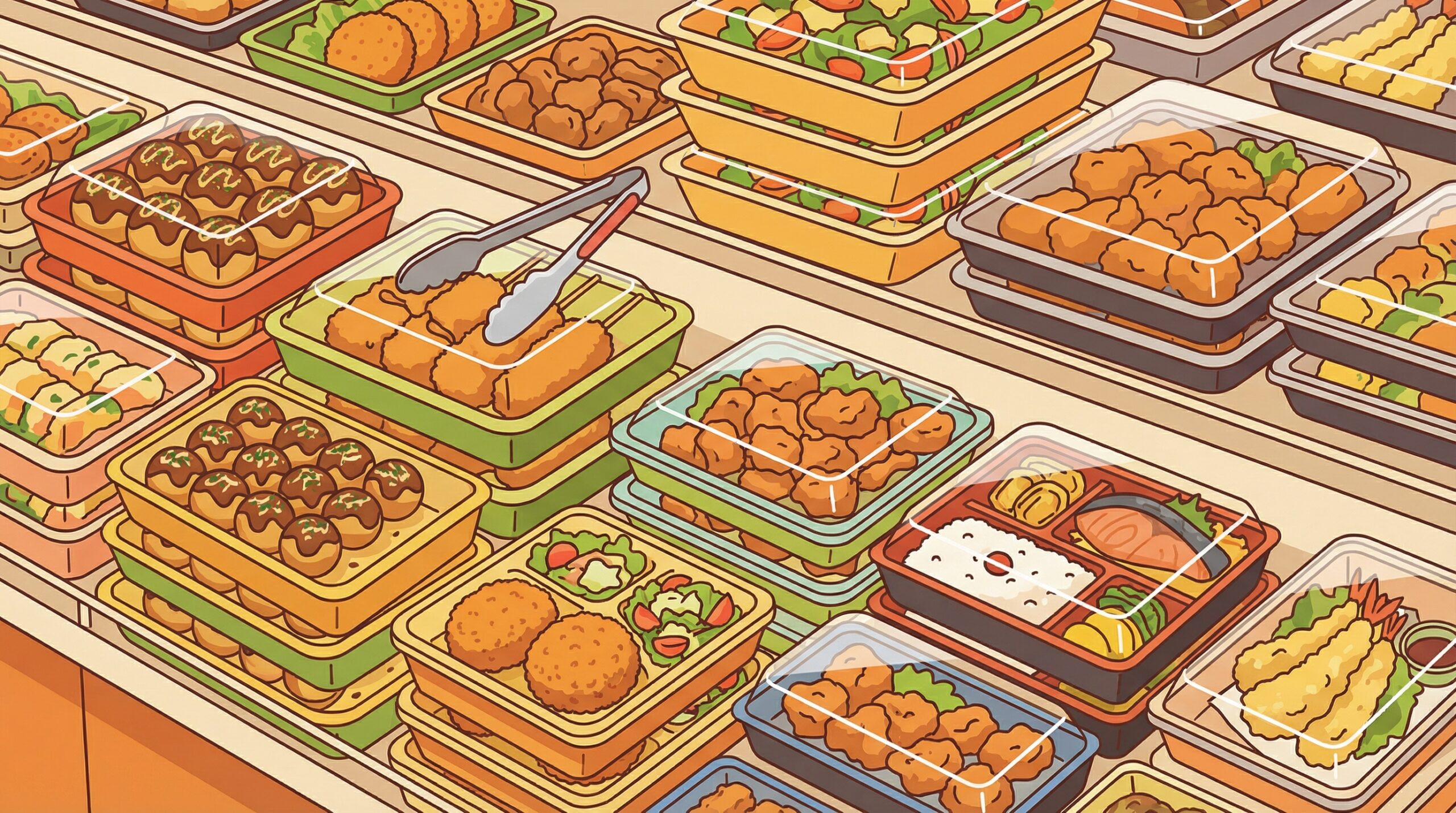
First, there are the agemono, the fried dishes, often the stars of the show. Here you’ll find golden, crispy karaage (Japanese-style fried chicken), each piece a perfect bite of juicy, marinated thigh meat encased in a light, seasoned crust. Beside it, you’ll see impressive slabs of tonkatsu (breaded pork cutlet), their panko coating a testament to crunchy perfection, ready to be drizzled with thick, sweet-and-savory sauce. There are also tempura assortments featuring shrimp, sweet potato, eggplant, and shishito peppers, all coated in a delicate, lacy batter. And not to be overlooked are the humble but beloved korokke (croquettes), creamy potato fillings mixed with minced meat or vegetables—a comforting taste of childhood for many Japanese.
Next up are the yakimono, or grilled items. Perfectly portioned fillets of fish like mackerel (saba) or salmon (sake) are grilled with just a pinch of salt (shioyaki) until the skin is blistered and crisp, releasing their natural oils. You’ll also find skewers of yakitori, glazed with a sweet soy sauce (tare), and slabs of teriyaki chicken, its caramelized sauce a deep, inviting mahogany.
Then come the nimono, the simmered dishes that embody Japan’s soul food. These are cooked low and slow in a broth usually made from dashi, soy sauce, mirin, and sake. Look for chikuzenni, a hearty mix of chicken and root vegetables like carrots, lotus root, and bamboo shoots. Another classic is nikujaga, a comforting stew of thinly sliced beef, potatoes, and onions, its broth soaking into every ingredient, creating a dish that tastes profoundly of home. These dishes highlight the Japanese talent for drawing out the subtle, intrinsic flavors of ingredients.
Of course, no sozai section is complete without a wide array of salads and vegetable side dishes, known as aemono. These aren’t your typical Western salads. You’ll find creamy potato salad made with Japanese mayonnaise, which is slightly sweeter and richer than its Western counterpart. There’s goma-ae, blanched spinach dressed in a sweet, nutty sesame sauce, and kinpira gobo, a stir-fry of burdock root and carrot in a sweet soy glaze, offering a delightful textural crunch. These sides provide balance, freshness, and essential nutrients to the meal.
Finally, there are the complete meals: bento boxes and rice bowls (donburi). These perfectly composed meals-in-a-box demonstrate the Japanese aesthetic of balance and harmony. A typical bento might include a bed of rice, a main protein like grilled salmon or ginger pork, and several small compartments with pickles, a small salad, and a piece of tamagoyaki (sweet rolled omelet). A katsudon bowl, featuring a crispy pork cutlet and simmered egg over rice, is a hearty and beloved classic. These are the ultimate convenience—complete, balanced, and delicious meals ready to enjoy on the go.
Navigating the Tiers: From Everyday Haunts to Gourmet Palaces
Osaka’s supermarket landscape is remarkably diverse, with each type of store providing a unique sozai experience. Grasping these differences is essential to fully appreciating this culinary world. Choosing the right supermarket can elevate your dinner from a simple, comforting meal to a gourmet delight.
The Reliable Everyday: Life and Aeon
These supermarkets are the stalwarts of Japan’s grocery scene, where most people do their daily shopping. Chains like Life, Aeon, and Kansai Super are found in nearly every neighborhood. Their sozai sections are extensive, dependable, and offer excellent value. The environment is bright, clean, and family-oriented. Here, the emphasis is on classic, popular dishes that form the foundation of everyday Japanese meals.
The quality is consistently dependable. The karaage is always juicy, the tonkatsu perfectly crispy. They offer a wide selection of bento boxes catering to office workers on their lunch breaks and families seeking a quick dinner solution. A good tip for newcomers is to try the store’s own brand, often marked with the store’s name. These products are typically made in-house throughout the day, ensuring freshness. The salads stand out, featuring a variety of potato salads, macaroni salads, and fresh green salads dressed with Japanese-style dressings like sesame or yuzu. This is an ideal place to begin your sozai journey—accessible, affordable, and providing a solid example of high-quality prepared food in Japan.
The Elevated Everyday: Ikari and Seijo Ishii
Stepping into an Ikari Supermarket, typically located in wealthier areas of the Kansai region, you immediately notice a difference. The lighting is softer, the aisles wider, and the products carefully curated. Seijo Ishii, often found in major train stations, offers a comparable upscale experience. These are gourmet supermarkets, and their sozai sections reflect that philosophy.
Here, the focus is firmly on ingredients. The chicken used for the karaage might be a specific regional brand known for its exceptional flavor. The salads often include organic vegetables, imported cheeses, and artisanal dressings. The selection extends beyond traditional Japanese fare to encompass an elegant array of international dishes. You might find rich beef lasagna, fragrant Thai green curry, or classic French quiche alongside the nikujaga. They also offer an impressive range of hors d’oeuvres, perfect for pairing with a bottle of wine from their extensive cellars—think pâtés, olives, and cured meats. Shopping at Ikari or Seijo Ishii feels less like a chore and more like a visit to a specialty food hall. It’s the place to go when you want to indulge in something special and transform a simple weeknight meal into a minor celebration.
The Budget Adventure: Super Tamade and Gyomu Super
Welcome to the wild side of Osaka’s supermarket scene. Super Tamade is an experience unlike any other. With its garish neon lights, blaring j-pop music, and almost chaotic energy, it feels more like a pachinko parlor than a grocery store. Tamade is famous for its rock-bottom prices and legendary “1 yen sales.” Their sozai section embodies this spirit: huge portions, incredibly low prices, and a straightforward approach.
Bento boxes here can sometimes cost as little as 250 yen, a price that seems almost unbelievable. While the quality may not rival the refined offerings at Ikari, the value is undeniable. It’s a favorite among students and anyone on a tight budget. The fun of Tamade lies in the treasure hunt, the excitement of seeing how much you can get for your money. It’s a vibrant, loud, and uniquely Osakan experience.
Gyomu Super, meaning “Business Supermarket,” offers another type of budget-friendly experience. As the name suggests, it caters to restaurants and businesses, with many products sold in bulk. Its sozai selections are heavily focused on frozen items. Here you can find large bags of frozen karaage, gyoza, and korokke that you can easily heat at home. It’s an excellent place to stock your freezer with convenient meal components. Exploring these discount supermarkets provides a fascinating glimpse into the more budget-conscious side of Osaka life, proving that eating well doesn’t have to be costly.
The Pinnacle of Excellence: The Depachika
If everyday supermarkets are the heart of Osaka’s sozai culture, then the depachika—sprawling, dazzling food halls located in the basements of Japan’s grand department stores—are its soul. Visiting the depachika at Hankyu in Umeda, or Takashimaya and Daimaru in Namba and Shinsaibashi, is more than shopping; it’s a culinary pilgrimage. The atmosphere is one of refined elegance and barely contained excitement. The lighting is expertly designed to make every dish look like a jewel. The air hums with the polite murmur of shoppers and the crisp calls of vendors.
Here, sozai is elevated to an art form. Generic supermarket trays are nowhere to be found. Instead, you’ll discover a constellation of famous brand-name stalls and specialty shops, each presenting their food with breathtaking artistry. The bento boxes are miniature masterpieces, with ingredients arranged in patterns almost too beautiful to eat. These are not everyday lunchboxes; they are o-bento made for special occasions, picnics under cherry blossoms, or impressive gifts. Stalls devoted entirely to tonkatsu offer different cuts of premium pork. Shops selling dozens of creative salad varieties abound. Famous names like Maisen for tonkatsu or Nadaman for exquisite traditional Japanese cuisine presented as bento are present. The quality is unmatched, as are the prices, but the experience is worth every yen. Walking through a depachika is a sensory feast, a dazzling reminder of the reverence and artistry Japan brings to all aspects of its food culture.
The Art of the Hunt: Mastering the Waribiki Sticker

Every evening in supermarkets across Japan, a secret ritual unfolds—a moment of shared anticipation that brings together shoppers from all walks of life. This is the quest for the waribiki (discount) sticker. As the day progresses and closing time draws near, staff begin their rounds in the sozai section, equipped with a sticker gun. They start marking down items that must be sold that day, beginning with 10% or 20% off and increasing to 30%, 50%, or even hangaku (half price) as the final hour approaches.
For the savvy shopper, this signals game time. Timing your visit is a subtle art. Arrive too early, and the discounts are small. Arrive too late, and the best deals will have been taken. The ideal moment is typically one to two hours before closing. Shoppers—affectionately called “bento wolves”—can be seen casually circling the aisles, pretending to browse while keeping a sharp eye on the staff with the sticker gun. When the stickers come out, a polite but determined rush on the discounted items ensues. It’s a captivating social ritual and a clever way to enjoy excellent food on a budget. Scoring a premium depachika bento at half price feels like a real triumph. Practically speaking, the system is excellent at reducing food waste, reflecting the Japanese value of mottainai—a deep sense of regret over waste. Joining the waribiki hunt is about more than just saving money; it’s about taking part in a communal everyday tradition of Japanese culture.
Composing Your Perfect Meal: A Practical Guide
Now that you have gathered your treasures, how do you bring them all together? The charm of sozai comes from its modular design. You become the chef, crafting your own ideal, balanced meal. The core principle of a Japanese meal is ichiju-sansai: one soup and three side dishes, served alongside a bowl of rice.
Begin with a main protein. This might be a discounted piece of grilled mackerel, a few pieces of crispy karaage, or a slice of succulent ginger pork (shoga-yaki). Then, add one or two vegetable dishes for balance and nutrition. A serving of sesame spinach (goma-ae) and some simmered root vegetables (chikuzenni) create a perfect blend of flavors and textures. To complete the meal, include something with a contrasting flavor, such as a small portion of vinegared seaweed and cucumber (sunomono) to refresh the palate, or a few Japanese pickles (tsukemono) for a salty, crunchy accent. Most supermarkets offer single-serving packs of fresh rice that can be microwaved quickly, and instant miso soup packets are a pantry essential. In under five minutes of assembling, you have a complete, nutritious, and incredibly tasty meal that feels as if it took hours of careful preparation. It’s the ultimate life hack for living in a fast-paced city like Osaka, letting you enjoy the comforts of a homemade meal without ever turning on the stove.
For a more social touch, think of sozai as Japanese-style tapas. Invite friends over, have everyone bring a few different dishes from their favorite supermarket, and lay them out on the table for a shared feast. It’s a fun, affordable, and delicious way to entertain while sampling a wide range of flavors. Or, on a lovely day, pack a bento box with your favorite selections and head to Osaka Castle Park or the banks of the Yodo River for a picnic. A sozai-powered picnic is a classic Japanese experience, especially during cherry blossom season.
Final Tips for the Savvy Sozai Shopper

As a woman navigating the often-busy aisles, a bit of awareness can make a big difference. During the evening rush, the sozai section tends to get quite crowded. Move with the flow of traffic and be considerate of your personal space and your shopping basket. It’s a dance of polite negotiation.
When you’re ready to check out, keep in mind that most supermarkets now offer self-checkout counters, which can be a great help if you’re still learning Japanese. They usually include an English language option. Although Japan remains largely a cash-based society, most major supermarkets accept credit cards and various electronic payment methods.
Lastly, consider the environment. While plastic packaging is convenient, it can often feel excessive. Many supermarkets have collection bins for clean food trays near the exit. Since Japan introduced a fee for plastic bags, it’s always wise to bring your own reusable eco-bag (eko baggu). It’s a small act that shows respect for both your local community and the environment.
The Taste of Everyday Osaka
Exploring Osaka’s sozai scene offers much more than just a quick meal. It provides an intimate glimpse into the core of Japanese daily life, a flavorful lesson in the basics of washoku, and a tribute to the artistry and care found throughout the country’s food culture. It’s the taste of a Tuesday night dinner, the comfort after a long commute, the energy for a student’s late-night study session. So, the next time you’re hungry in Osaka, look beyond the bright restaurant signs. Step inside the inviting aisles of a local supermarket, and let the vibrant world of sozai reveal the true story of how this city eats. It’s a story of convenience, quality, and community—a story shared one perfectly crafted dish at a time.