There’s a version of Japan that lives in the global imagination. It’s a place of serene temples, gleaming bullet trains, and impossibly polite interactions, a future-forward society wrapped in ancient grace. You can find that Japan in many places. You will not find it in Shinsekai. The name itself, written 新世界, means “New World.” It’s a grand, optimistic title, a relic of an era over a century ago when this district was a dizzying vision of the future, a promise of modernity and entertainment. Today, that promise feels like a flickering black-and-white film projected onto a crumbling wall. The modernity is gone, replaced by a stubborn, beautiful, and utterly unapologetic state of decay. Shinsekai is not the new world anymore; it’s the old world, a world that time, trends, and Tokyo’s relentless march of progress decided to leave behind. And for anyone trying to understand the tough, pragmatic, and fiercely independent soul of Osaka, this is ground zero. This isn’t a tour guide stop for the faint of heart or the lover of luxury. It’s a lesson in urban anthropology, a dive into the deep end of a city that prides itself on being nothing like its eastern capital. Forget what you think you know about Japan. Shinsekai is here to show you the parts that don’t make it into the brochures, the raw, beating heart of a city that has always played by its own rules.
To truly understand its gritty, pragmatic soul, you must delve into the district’s iconic kushikatsu culture.
The “New World” That Time Forgot

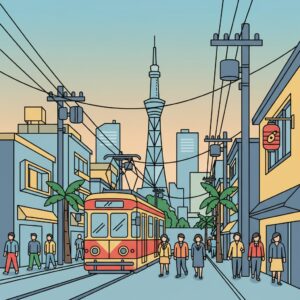
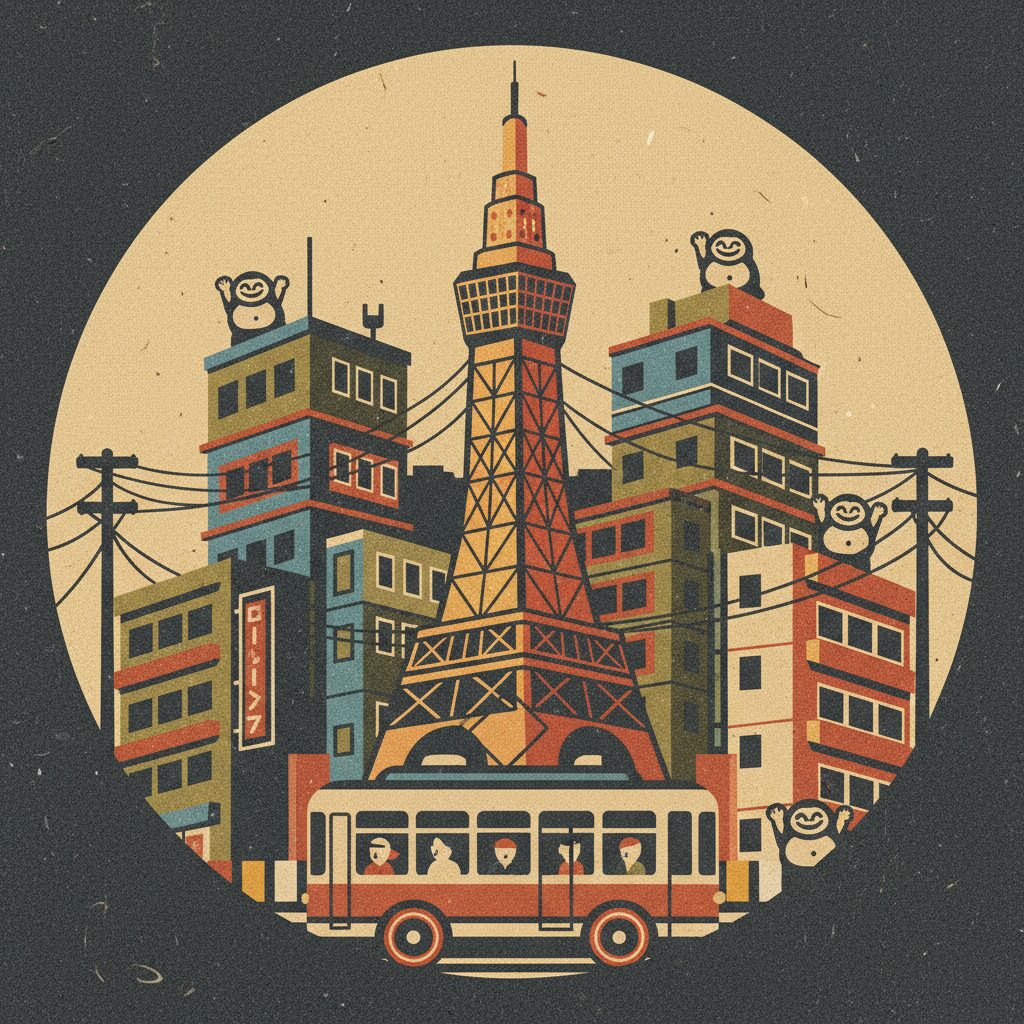
To truly understand Shinsekai, you must first grasp its origin. It wasn’t a district that evolved naturally over centuries; it was intentionally designed, emerging from the 1903 National Industrial Exposition. This event was Japan’s opportunity to announce its arrival on the world stage. The northern part of the area was inspired by Paris, highlighted by the Tsutenkaku Tower, a steel structure intended to serve as Osaka’s Eiffel Tower. The southern section drew inspiration from New York’s Coney Island, featuring a lively array of mechanical rides and exciting attractions known as Luna Park. For a brief, brilliant moment, Shinsekai represented the peak of Japanese entertainment—a visionary glimpse of progress where people could experience the future. However, the future, as it often does, took a different direction. Luna Park closed within a few decades, the original Tsutenkaku Tower was dismantled for wartime needs, and post-war development bypassed the area. The economic boom that rebuilt Japan and propelled Tokyo skyward seemed to flow around Shinsekai, leaving it in a state of suspended animation.
Here lies the first crucial insight into the Osaka mindset. In Tokyo, a neighborhood that had fallen into such decline would be ripe for redevelopment. Bulldozers would arrive, old structures would be demolished, and gleaming new skyscrapers of glass and steel would take their place. Tokyo is a city fixated on constant reinvention—always pursuing what is newest, latest, and most efficient. There is a perpetual, almost restless energy to tear down and rebuild. Osaka, and Shinsekai specifically, represent the opposite approach. The local attitude is not one of neglect but of practicality. Does the business still operate? Do customers still come? Is the food still good? If the answer is yes, then why spend a fortune just to make it look fresh and new? This isn’t about sentimental nostalgia; it’s a profound resistance to wasting money on appearances. The faded signs, peeling paint, and worn linoleum floors aren’t viewed as neglect but as evidence of endurance. They function well, so they remain. This mindset—“if it ain’t broke, don’t fix it”—is ingrained in Osaka’s DNA. It’s a city built by merchants, and a savvy merchant knows the difference between necessary spending and needless extravagance. Shinsekai stands as a monument to this way of thinking. It’s a living testament to prioritizing function over form, substance over style.
Kushikatsu, Billiken, and the Unspoken Rules of the Counter
The lifeblood of Shinsekai courses through sizzling oil and communal sauce pots. This is the realm of kushikatsu, the iconic soul food of Osaka. Skewers of meat, seafood, and vegetables are coated in panko breadcrumbs and deep-fried to a golden crisp. It’s quick, affordable, incredibly tasty, and the staple of the working class. Kushikatsu restaurants line the streets in abundance, ranging from vast halls seating a hundred to tiny counters with just six seats. The experience embodies Shinsekai’s social fabric: straightforward, communal, and governed by one strict, vital rule.
More Than Just Fried Skewers
When you settle into a kushikatsu spot, you’ll notice a shared metal tray of dark, sweet dipping sauce on the counter. Everyone uses this sauce. Because it’s communal, the cardinal rule is prominently displayed: 二度漬け禁止 (nidozuke kinshi)—no double-dipping. You dip your fresh, hot skewer into the sauce only once. If you want more after a bite, use the raw cabbage wedges provided to scoop some sauce onto your plate. This rule is more than a hygienic precaution; it’s a profound social contract. It symbolizes the unspoken trust that holds a bustling city like Osaka together. There are no sauce monitors and no one will likely scold you—but breaking the rule is a serious breach of shared space. In a city where personal space is scarce, respecting these communal norms is essential. It’s a trust system that functions without the layered politeness found in Kyoto or the formal deference typical of Tokyo. The rule is simple, practical, and universally understood: “We’re all in this together, so don’t be foolish.” This blunt practicality is quintessential Osaka. No elaborate explanations or deep apologies are necessary—just follow this simple, sensible rule so everyone can enjoy their meal peacefully. It’s a small-scale example of how social order operates in a city that values directness over formal politeness.
The God of Things as They Ought to Be
Perched in shops, restaurants, and atop Tsutenkaku Tower is Shinsekai’s quirky, grinning mascot: the Billiken. He’s not a traditional Japanese deity—he doesn’t appear in ancient scrolls or Shinto shrines. Billiken was created by an American art teacher in 1908 and brought to Japan as part of the old Luna Park amusement park. While the rest of the world mostly forgot him, Osaka embraced him as its own. Known as “The God of Things as They Ought to Be,” the custom is to rub his feet for good luck. But why did this strange, foreign figure become the patron saint of Osaka’s most traditional district? The answer reveals something essential about the Osakan spirit. Billiken’s appeal isn’t rooted in complex theology or deep spiritual stories. It’s purely transactional. He’s cheerful, approachable, and offers a simple promise: rub my feet, and good fortune may come your way. This suits the merchant mindset of Osaka, a culture that values genkin (cash) and riyaku (practical benefit) over abstract philosophy. Billiken is the perfect deity for this outlook. He makes no demands, requires no solemn prayers or rituals, just sits there smiling and offering a straightforward chance at luck. It’s an optimistic, somewhat cheeky, and fundamentally pragmatic approach to fortune—just like the city itself.
The People You Meet: From Day Laborers to Go Players
Shinsekai is, above all else, a place defined by its people. It’s not a district characterized by its worn buildings but by the individuals who walk its streets. This isn’t the realm of hurried salarymen in sharp suits or stylish youth clad in designer wear. Rather, it’s a neighborhood of lifelong residents, characters whose stories are etched into their faces and reflected in their demeanor. Strolling through Shinsekai feels like stepping onto a film set where every extra is a seasoned character actor, playing their role for decades.
An Unfiltered Slice of Urban Life
Spend an hour in a Shinsekai coffee shop or at a kushikatsu counter, and you’ll witness the full range of life lived apart from Japan’s mainstream economic success. You’ll see elderly men in faded tracksuits, nursing a single beer at ten in the morning, their conversations low and gravelly. Groups of men huddle over folding tables on the sidewalk, completely absorbed in intense games of shogi or Go, the world around them melting away with each click of their pieces. You’ll meet shopkeepers who inherited their tiny stalls from their parents and have stood behind the same counter for fifty years, their movements deliberate and practiced. Here, pretense is noticeably absent. No one is putting on a show or trying to impress. This is the complete opposite of Tokyo’s culture of tatemae—the polished facade presented to the world. In Tokyo, immense pressure exists to conform, to display an image of success and propriety. In Shinsekai, what you see is what you get. The honne, or true feelings, lie plainly on the surface. Conversations are loud, arguments passionate, and laughter uninhibited. It may seem harsh to outsiders, but beneath the roughness lies a profound sense of acceptance. You’re not judged by your job, background, or the brands you wear. Instead, you’re measured by your actions and your honesty. It’s a raw, straightforward social interaction that many foreigners find both startling and wonderfully refreshing.
The Sound of the Neighborhood
Shinsekai’s auditory landscape is as rich and layered as its history—a genuine urban symphony, completely unfiltered. Close your eyes and listen. There’s the constant, rhythmic sizzle and pop of food dropping into hot oil, a sound that lingers like a permanent seasoning. From the second floor of an unremarkable building, the sharp, satisfying clatter of mahjong tiles being shuffled and slammed onto a felt table echoes out. The chaotic, electronic din of a pachinko parlor spills onto the street, a cacophony of jingles, roaring sound effects, and the deafening cascade of thousands of tiny steel balls. Yet beneath all this noise are human sounds—the throaty laughter of old friends sharing a joke, the sharp slap of a shogi piece on a board, the gruff but friendly calls of street vendors vying for customers. This is the sound of a vibrant community, unafraid to make noise. Osaka as a whole speaks louder than much of Japan—their dialect is more forceful, their emotions more openly expressed. Shinsekai stands at the heart of this phenomenon, a place where life unfolds loudly on the streets for all to see and hear. It can overwhelm those used to the hushed tones of a Tokyo subway, but it’s unmistakably the sound of a city confident in itself, unconcerned with outside judgment.
Is Shinsekai Dangerous? A Practical Look at Reality vs. Reputation
Let’s confront the elephant in the room. If you ask many Japanese people, especially those from outside Osaka, about Shinsekai, you might notice a concerned expression. The district has a reputation—it’s seen as gritty, somewhat seedy, and for some, outright dangerous. This reputation is closely tied to its proximity to Nishinari, particularly the area formerly known as Kamagasaki, which has long been the heart of Japan’s day labor market and home to a large population of homeless and elderly men. So, is this reputation justified? The answer, as with much in Osaka, is more nuanced than a simple yes or no.
Understanding the Grittiness
There’s no denying that Shinsekai is gritty. It hasn’t been cleaned up for tourists. You’ll witness poverty and men who have clearly endured tough lives. You’ll encounter elements that challenge the typical view of Japan as a uniformly clean, safe, and prosperous country. The “danger” in Shinsekai is not primarily about random violence or theft, which remains very low by global standards. Rather, it’s a social and emotional discomfort for those unfamiliar with it—being faced with the raw, unfiltered reality of urban hardship. Many foreigners, and even some Japanese, mistakenly interpret this grittiness through a Western lens, equating visible poverty with a high-crime ghetto. This is an inaccurate comparison. The community here, including Nishinari’s residents, follows its own intricate social codes and internal logic. The problems are mostly contained within. As an outsider, you’re an observer passing through, not a participant in local struggles. The key is understanding that you’re a guest in a neighborhood that has endured decades of economic struggle and social stigma. It deserves respect, not fear.
A Guide to Navigating the Vibe
Getting around Shinsekai is less about physical safety and more about cultural sensitivity. The golden rule is simple: be respectful and mind your own business. This isn’t a place to flaunt expensive cameras or designer bags. Blend in. Observe quietly. The Osakan attitude of kamahen—a flexible phrase meaning “it doesn’t matter,” “no problem,” or “I don’t mind”—is very much alive here. It’s a live-and-let-live philosophy. If you don’t bother anyone, no one will bother you. It’s an unspoken, straightforward agreement. Don’t stare at people. Don’t photograph individuals without their clear permission. Recognize that you are walking through someone’s home, not just a tourist spot that looks like a movie set. A simple nod or a quiet “konnichiwa” to shopkeepers goes a long way. This direct, no-nonsense approach to social interaction is typical of Osaka. There’s no need for elaborate apologies or excessive bowing. Just be a decent person and show basic respect, and you’ll be treated the same in return. The neighborhood has a sharp sense for arrogance and condescension, but it’s surprisingly open and welcoming to those who approach with genuine curiosity and humility.
Why Shinsekai is the Soul of Osaka, Not Its Façade
Many visitors come to Osaka and visit Dotonbori. They admire the giant, flashing Glico Running Man sign, the massive mechanical crab, and the endless crowds of tourists. They enjoy takoyaki and okonomiyaki, thinking they have experienced Osaka. However, Dotonbori is the city’s dazzling façade, a carefully crafted entertainment district. It’s a lively and vibrant spot, but only one part of the story. To really understand Osaka, you need to head south to Shinsekai. This is the city’s subconscious, its raw memory, its persistent, beating heart. It holds the spirit of the city’s merchant pragmatism, working-class resilience, and proud uniqueness.
This highlights the ultimate contrast between Osaka and Tokyo. Tokyo is a city shaped by its surface—image, ambition, and the relentless quest for perfection. It constantly erases its past to create a more efficient future. In contrast, Osaka, as embodied by Shinsekai, is a city of substance. It clings to its past not out of sentimentality, but because it remains useful. It values a good meal and hearty laughter with friends over prestigious addresses or fancy titles. Osaka built its identity on being underestimated and overlooked by the capital, fostering a culture of self-reliance and candid authenticity along the way. If you’re thinking of living in Osaka, visiting Shinsekai is not just recommended—it’s essential. Don’t merely walk past and snap photos of the tower. Find a small, cramped kushikatsu restaurant. Sit at the counter. Order a beer. Absorb the rhythm of conversations around you, even if you don’t understand the words. Feel the energy of a place that refuses to change or apologize for itself. Shinsekai isn’t pretty. It’s not polished. It’s not luxurious. But it is, without question, honma—the real thing. And in Osaka, being real is what truly matters.