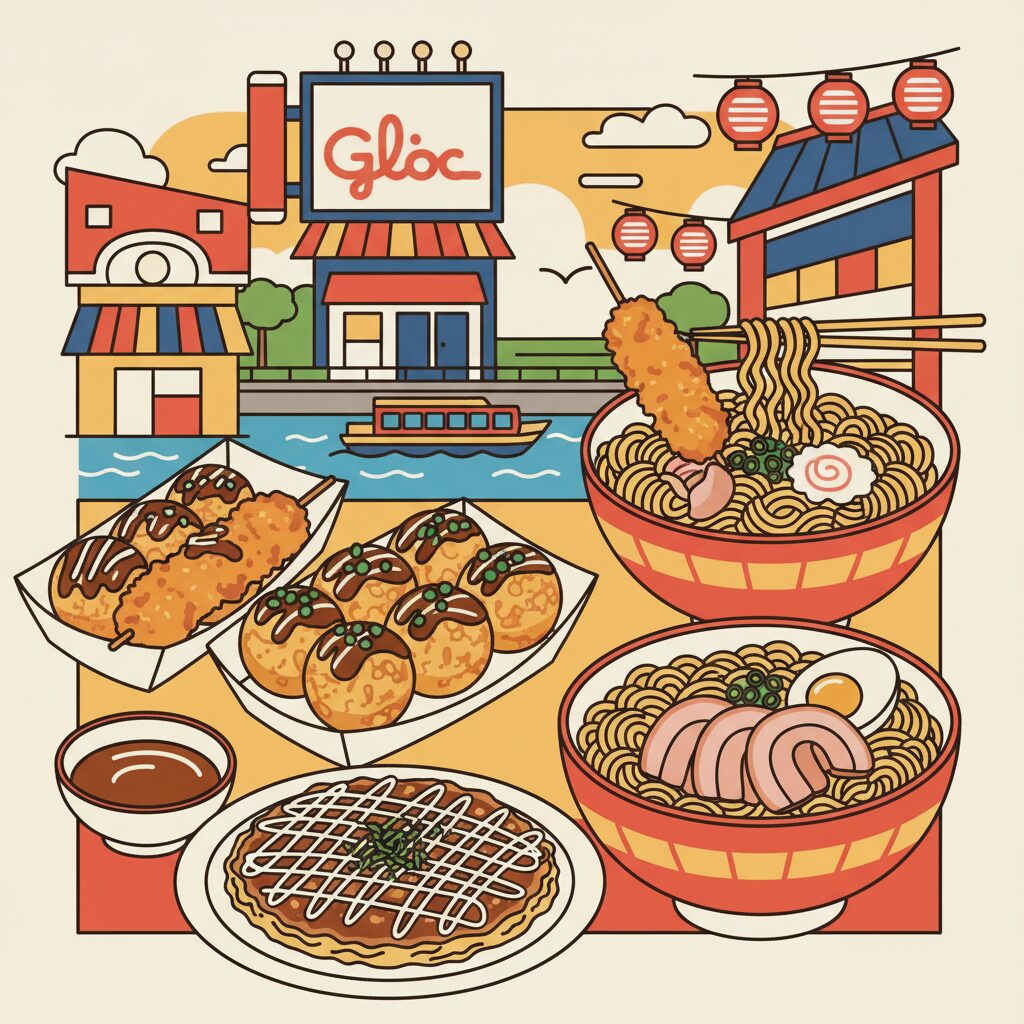
So you’ve seen the pictures. The giant crab, the pufferfish lantern, that runner with his arms in the air, frozen in time. You’ve heard the phrase, kuidaore—eat until you drop. Welcome to Dotonbori. For the tourist, it’s a flashing, sizzling, chaotic bucket list item. A culinary theme park where you collect food experiences like stamps in a passport. But you’re not a tourist. You live here, or you’re thinking about it, and you’re trying to understand the soul of this city. You’re trying to figure out why the guy in the grocery store aisle talks to you like he’s known you for years, why everything feels a little louder, a little faster, a little less… polished than Tokyo. To do that, you need to look past the neon glow and understand that in Osaka, food isn’t just fuel. It’s a language. It’s a philosophy. And Dotonbori is where that language is spoken the loudest.
This isn’t a guide on what to eat. This is a guide on how to see. We’re going to peel back the batter on the city’s most famous street foods and find the cultural DNA hidden inside. Because a takoyaki ball isn’t just octopus and dough; it’s a lesson in Osaka’s obsession with speed and quality. An okonomiyaki pancake isn’t just cabbage and flour; it’s a rebellion against the rigid formality you might find elsewhere in Japan. The rules of a kushikatsu shop are a masterclass in the unspoken social contracts that hold this sprawling, messy city together. Forget the tourist trail for a moment. Let’s walk down these streets and learn to read the menu of the Osaka mindset. It’s here, sizzling on the griddles and simmering in the broth, that you’ll find the real reasons why living in Osaka feels the way it does. It’s a city that wears its heart on its sleeve and serves its soul on a paper plate.
To truly understand the city’s rhythm, you’ll also need to find moments of calm, which you can discover in our guide to quiet cafes in Namba.
The Gospel of ‘Konamon’: Why Flour and Water Are Osaka’s True Religion
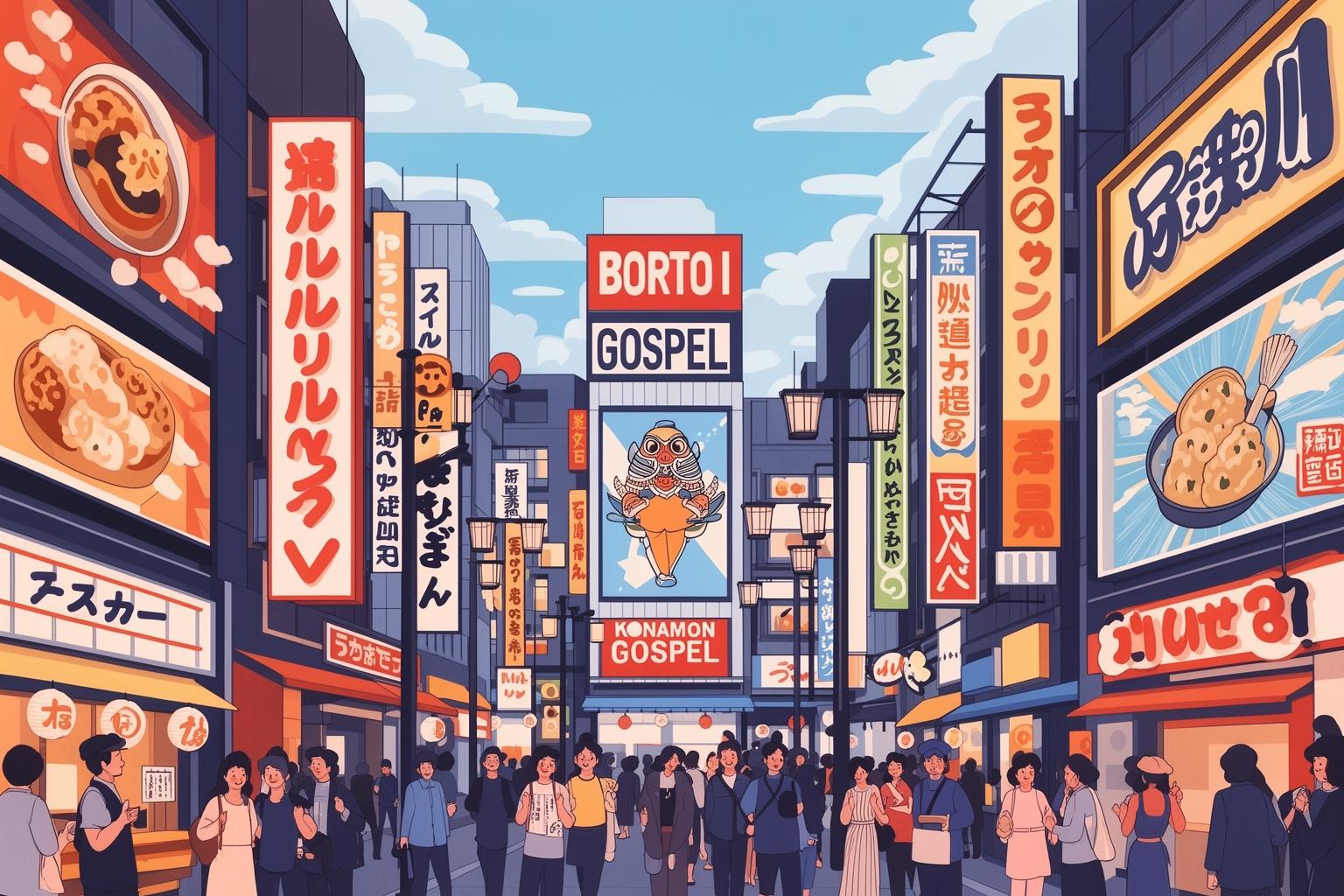
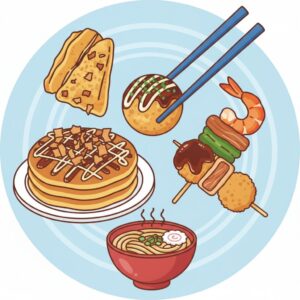
Before you can truly grasp anything about Osaka, you first need to understand konamon. Literally translated as “flour things,” it’s an amusingly modest term for the batter-based dishes that are the cornerstone of the local diet: takoyaki, okonomiyaki, ikayaki. To outsiders, it seems like a carb obsession. To an Osakan, it’s a sacred trinity. In Tokyo, prestige might be found in a perfectly sliced piece of toro sushi or an impeccably crafted bowl of ramen. In Osaka, excellence is embodied in a piping hot, flawlessly gooey ball of flour encasing a single piece of octopus. This goes beyond taste; it’s a philosophy. Konamon culture springs from the spirit of the merchant city—it’s affordable, quick, hearty, and in the hands of an expert, it becomes an art form. It’s democratic fare. Food made openly for the people, without secrets. It stands in stark contrast to the quiet, sophisticated, and often exclusive realm of upscale Tokyo cuisine. This is where the cultural divide between Japan’s two largest cities begins—not in corporate offices, but on the griddles.
Takoyaki: Osaka’s Eight-Legged Emblem of Efficiency
You’ll see them everywhere. Small stands, run by a single person, flipping dozens of tiny batter balls with a metal pick in a frantic, rhythmic, almost aggressive manner. This is the theater of takoyaki. Watch attentively, because what you’re witnessing is not mere cooking; it’s a showcase of core Osaka values: speed, skill, and a touch of flair.
A Masterclass in Speed and Skill
In Tokyo, you wait in line calmly, quietly. The process is orderly. In Osaka, the queue for a popular takoyaki stand is alive, pulsating. There’s an energy, a sense of impatience. The vendor matches that energy. Their movements appear chaotic but are the result of thousands of hours of practice. Pouring the batter, dropping in octopus, adding ginger and tenkasu, then the flip. The flip is everything. Beginners use two picks. Masters use one. They don’t just turn the balls; they flick their wrist so fast it’s a blur, coaxing the batter into a perfect sphere. This isn’t about cooking faster to increase profits. It’s a matter of pride—a public display of mastery and skill. An Osakan doesn’t just want tasty takoyaki; they want it steaming hot from the griddle, and they want it immediately. They respect the skill that makes this happen. This embodies the merchant mindset at its purest: deliver a top-quality product with maximum efficiency. No wasted motion, no needless waiting.
The Perfect Bite: Crispy, Creamy, and Dangerously Hot
The first mistake tourists make with takoyaki is treating it like an easy snack. They pop one whole in their mouth and moments later face a volcanic eruption of molten batter. Osakans know this ritual well. They watch tourists do it and smile. The ideal takoyaki has a thin, slightly crispy outer shell that yields to a core almost liquid, lava-hot, and creamy. It’s a textural triumph. The challenge—and the ritual—lies in eating it. You poke it with a toothpick to release steam. You take a small bite, testing the heat. You learn to tame it. This dance mirrors the Osaka personality: bold, a bit risky, and requiring skill. People from other parts of Japan, especially Tokyo, sometimes find Osaka’s food aggressively intense in flavor and temperature. It doesn’t wait for you to be ready; it demands your full attention. That fiery ball of batter is the city’s call: “Wake up! Pay attention! This is what it means to be alive.”
Beyond the Sauce: A Bold Statement of Independence
Approaching a takoyaki stand, you face a choice. The default topping is thick, sweet takoyaki sauce with a drizzle of Japanese mayo, topped with bonito flakes (katsuobushi) and powdered seaweed (aonori). But look closer. Many top shops offer alternatives: just soy sauce, ponzu with green onions, or simply a sprinkle of premium salt. This isn’t mere variety; it’s a declaration. In a country that often prizes conformity, Osaka takes pride in a stubborn individualism. The notion that there’s a single “right” way to eat something is quietly defied. The best shops trust their product. They believe the batter and fresh octopus are so good they don’t need to be hidden under heavy sauce. Ordering takoyaki with salt signals quietly that you’re no tourist; you’re here to savor the true flavor, the food’s pure essence. It’s a small act of rebellion, reflecting a culture that values substance over flashy presentation.
Okonomiyaki: The Delicious, Messy Manifesto of Osaka Pragmatism
If takoyaki is a quick, fiery affair, okonomiyaki is a slow, comforting dialogue. The name says it all: okonomi means “as you like it,” and yaki means “grilled.” It’s a savory pancake, typically filled with cabbage, a protein of choice (pork belly is classic), and bound by flour and egg batter. But calling it a pancake misses the point. Okonomiyaki is a philosophy served on a plate.
The DIY Ethic: You’re Part of the Creation
In many Osaka okonomiyaki restaurants, especially older, traditional ones, your table has a built-in teppan (iron griddle). The server brings you a bowl of raw ingredients—and then leaves it to you. You mix, pour, shape, and flip it yourself. For foreigners, this can be intimidating. For Tokyoites, it might seem like poor service. But for Osakans, it’s brilliant. Why have someone else cook your food when you can prepare it exactly how you want it and eat it at its hottest, most perfect moment? This embodies Osaka’s spirit of pragmatism and participation. It’s informal, communal, and decidedly anti-hierarchical. There’s no chef lurking in the kitchen ordering your food’s preparation. You’re the chef. The restaurant supplies quality ingredients; you supply the work. It’s a fair bargain. This hands-on style is quintessentially Osaka. The city was built by merchants and craftsmen, people skilled with their hands, and this ethos carries through to the dining experience.
A Tale of Two Pancakes: Okonomiyaki vs. Monjayaki
To fully appreciate okonomiyaki’s cultural weight, you must understand its eternal rival: Tokyo’s monjayaki. Both are savory pancakes cooked on a griddle. But that’s where the resemblance ends. Osaka’s okonomiyaki is a substantial, well-structured dish. You can cut it into neat slices with a small metal spatula. Monjayaki is a soupy, runny mess eaten by scraping small bits off the griddle with a tiny spatula. Osakans view monjayaki with a mix of confusion and disdain. They jokingly call it “sick person’s food.” The joke reveals much. To Osaka’s sensibility, food should be hearty and satisfying. Monjayaki seems insubstantial and indecisive. This culinary rivalry mirrors the larger cultural clash between the cities: Osaka views itself as grounded, direct, and concerned with substance, while seeing Tokyo as obsessed with fleeting trends and appearances. Okonomiyaki is a meal; monjayaki, for Osakans, is more like a pastime. This isn’t just about food preferences—it’s a deep cultural divide.
The Ultimate Taboo? Okonomiyaki with Rice
Here’s a concept that baffles most people outside Kansai: the okonomiyaki teishoku. It’s a set meal featuring a full okonomiyaki served with a bowl of white rice, miso soup, and pickles. Carbs layered on carbs. For Tokyoites, this is culinary madness—an abomination—like ordering pasta with a side of breadsticks and a baked potato. But in Osaka, it makes perfect sense. The reasoning is simple: does it taste good? Yes. Is it filling? Yes. Then what’s the problem? Okonomiyaki, with its rich sauce and flavors, is considered an okazu—a dish to accompany rice. Rice provides a neutral canvas; okonomiyaki delivers the flavor. This attitude exemplifies Osaka’s pragmatic mindset. It’s a total rejection of culinary snobbery. There are no arbitrary “shoulds.” There is only what is delicious and worthwhile. If you want to comprehend the straightforward, unpretentious, and sometimes bafflingly logical outlook of an Osakan, order an okonomiyaki set meal at lunchtime and enjoy it without a hint of irony. You’ll be eating like a local.
More Than a Meal: The Unspoken Rules of the Street
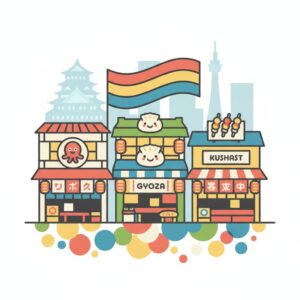
The most renowned dishes are just the starting point. Dotonbori’s side streets and alleys serve as a living classroom for understanding Osaka’s social dynamics. Here, the food tends to be simpler, the rules more stringent, and the lessons more meaningful. Eating kushikatsu or horumon means taking part in a ritual that uncovers the city’s working-class spirit and its deeply rooted sense of community.
Kushikatsu: The Golden Rule of the Shared Sauce Pot
Venture off the main Dotonbori strip towards the slightly rougher, more nostalgic Shinsekai neighborhood, the spiritual home of kushikatsu. These are deep-fried skewers of meat, seafood, and vegetables. The idea is straightforward, but the experience hinges on one sacred, unbreakable rule: Nidozuke kinshi—no double-dipping.
A Lesson in Social Trust
At a kushikatsu shop, you sit at a counter with a large stainless-steel container of thin, dark, savory dipping sauce in front of you. This sauce pot is communal and shared by everyone at the counter. You take your freshly fried, piping hot skewer, dip it once into the sauce, and eat it. If you need more sauce, you use the provided raw cabbage slices to scoop some onto your plate. But under no circumstances do you dip a skewer that has touched your mouth back into the communal sauce. This rule is posted everywhere, often accompanied by cute but firm cartoons wagging a finger. Yet the signs are nearly unnecessary because this rule is deeply ingrained in the culture. It’s a pure social contract—not just about hygiene but about trust and shared responsibility. You trust that the stranger beside you will honor the rule as you do. In a densely populated city like Osaka, this simple act reflects how society functions: a set of straightforward, practical, unspoken rules everyone observes for the common good. There’s no complex etiquette or formal bows—just one clear, logical rule. Break it, and you’ll face immediate disapproval from staff and fellow diners. It’s a quick lesson in community norms.
Food of the People, For the People
Kushikatsu originated in Osaka’s working-class neighborhoods after the war. It was fast, cheap, and filling fuel for laborers. That spirit remains today. The shops are unpretentious, with seating often limited to stools at a counter. You keep track of your bill by placing used skewers in a bamboo cup on the counter for the staff to count later. The entire system relies on efficiency and honor. There’s no pretense—you might be sitting next to a construction worker or a company president, both eating the same 100-yen lotus root skewer, both adhering to the same sauce rule. This shared practice is a great equalizer. In Osaka, social status matters far less than your willingness to correctly share the sauce pot. This egalitarian, down-to-earth atmosphere defines everyday life in the city. People are judged more by their actions and common sense than by their titles or backgrounds.
Horumon: Appreciating the Overlooked
If you explore further into the back alleys, following the fragrant smoke, you’ll discover horumonyaki. This is grilled offal—various cuts of beef and pork innards. The name itself is rich in Osaka lore. It is said to derive from the Kansai dialect phrase horu mono, meaning “discarded things.” This speaks volumes about the city’s history and character.
The Merchant’s Alchemy: Turning Waste into Treasure
Osaka has always been practical and resourceful. As Japan’s commercial hub, it was a place where nothing went to waste. The philosophy of mottainai—a sense of regret over waste—pervades Japan, but in Osaka, it was also a business principle. Horumon exemplifies this belief. While high-end restaurants elsewhere focus on prime cuts, Osaka merchants and chefs mastered the art of transforming discarded parts into something delicious through skill and seasoning. Eating horumon celebrates this spirit. It embraces ingenuity and rejects squeamishness and waste. It reflects a deep conviction that value can be found anywhere if you know how to find it. This mindset built Osaka. It’s not about what you start with; it’s about what you make of it.
A Gateway to Authenticity
Locals often see a foreigner’s willingness to eat horumon as a sign of true integration. It shows openness and a desire to experience the city’s authentic, unfiltered culture—not the sanitized version presented to tourists. Sitting in a smoky horumon spot, grilling intestines over charcoal and drinking cheap shochu, you join in a cherished local ritual. The conversations grow louder, the laughter earthier. It’s a world apart from the polite restraint of a formal Tokyo restaurant. Here you’ll hear raw, unfiltered Osaka-ben and see salarymen with loosened ties truly being themselves. Sharing a plate of horumon grants you acceptance into a more intimate circle of Osaka life.
The Performance of Eating: It’s a Conversation, Not a Transaction
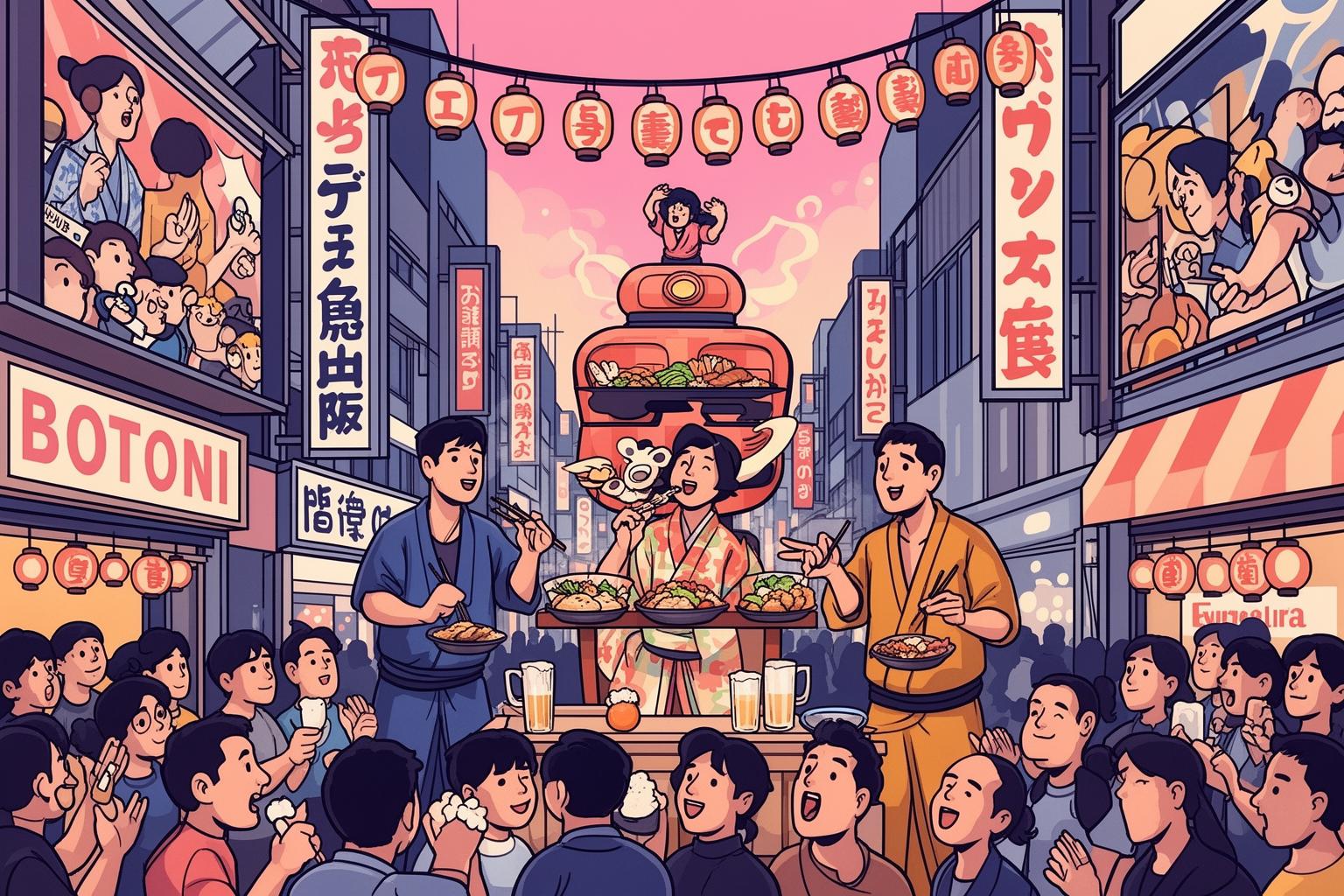
In much of Japan, service is a subtle art of anticipation and respect. The aim is to be unobtrusive, delivering a seamless experience. In Osaka, however, it’s quite different—especially in Dotonbori. Here, service becomes a performance. The exchange between customer and vendor is not just a quiet transaction of money for goods; it’s an interaction, a conversation, and sometimes even a comedy show.
The ‘Ochoyan’ and the Art of Banter
The people working at the food stalls are more than cooks; they are entertainers. They have their own rhythm and patter. They call out their offerings with booming voices, not just to lure customers, but to create a lively, energetic atmosphere. “Hai, irasshai! Takoyaki, meccha oishii de!” (Hey, welcome! The takoyaki is super delicious!). They joke with customers, ask where they’re from, and may tease them good-naturedly. This isn’t rudeness; it’s a way of engaging. In a city that values human connection, even a simple commercial exchange becomes an opportunity for interaction. This can be surprising if you’re accustomed to Tokyo’s reserved politeness. In Tokyo, service staff usually keep a professional distance. In Osaka, they actively draw you into their world. They take pride in what they make and want to share that pride with you directly. This straightforwardness is a defining trait of the Osaka character—honest, transparent, and sometimes a bit loud, just like the city itself.
The Compulsion to Help: A City of Unofficial Guides
Stand on a corner in Dotonbori looking lost, and something remarkable will happen. Within minutes, an older woman, a group of students, or a man on his way home from work will likely approach you. “Doko ikitai n?” (Where are you trying to go?). They won’t just point you in the right direction; often, they’ll walk with you. They’ll offer unsolicited but excellent advice on places to eat. “Don’t go to that spot, it’s for tourists. The real good stuff is down this alley.” This goes beyond mere “friendliness,” a cliché often applied to Osaka. It’s something deeper—a sense of collective ownership and civic pride. An Osakan sees a tourist eating mediocre takoyaki as a personal failure. They feel a compulsive need to ensure you experience the best their city offers. This stems from the merchant city’s obsession with reputation. A good reputation means more business—not just for one shop, but for the entire city. In Tokyo, people tend to be very polite but may hesitate to intrude on your personal space. In Osaka, helping you takes precedence over minding their own business. It’s a practical, results-driven kindness that shapes everyday interactions.
Living ‘Kuidaore’: A Philosophy for Life, Not Just a Vacation
Finally, we need to discuss that famous word: kuidaore. The official translation is something like “to eat oneself into bankruptcy.” For tourists, it serves as a catchy slogan, a challenge to eat as much as possible. But for Osakans—the people who actually live here—it represents a deeply ingrained philosophy that shapes their life priorities.
It’s About Value, Not Quantity
Embracing the kuidaore lifestyle isn’t about being a glutton. It’s about valuing the pleasure of good food and good company over more superficial matters. An Osakan might choose to live in a smaller apartment in order to afford dining out more frequently. They might wear a simple Uniqlo t-shirt but invest unexpectedly on a premium piece of fish or a perfectly grilled skewer. This contrasts sharply with Tokyo’s image-focused culture, where brand names and appearance often dominate. In Osaka, the question isn’t “How does it look?” but “How does it taste?” and “Is it worth the cost?” This reflects a merchant’s mindset applied to life itself. You invest your resources—time and money—where you gain the most concrete, satisfying return. For many in Osaka, that return comes through a delicious meal shared with loved ones.
The Heart of the Community: Your Local Shop
Though Dotonbori is the dazzling, neon-lit centerpiece of this culture, the true kuidaore spirit thrives in quiet residential neighborhoods. Every area has its cherished local takoyaki stand, a tiny okonomiyaki shop run by an elderly couple, or a welcoming yakitori place. These aren’t merely restaurants; they serve as community hubs. They are the “third places” between home and work where relationships are forged and the fabric of local life is woven. Living in Osaka means finding your favorite spots. It means being a regular. It means that the owner knows your order before you even say it. Dotonbori is where the philosophy is showcased on a grand scale, but the neighborhoods are where you live it daily. It’s through these small rituals—grabbing takoyaki on the way home from the station, sharing a beer and some kushikatsu with a neighbor—that you come to truly understand how in Osaka, food is the medium through which life is lived. It’s the reason for conversation, the cause for gathering, and the most genuine expression of the city’s warm, pragmatic, and vibrantly unapologetic spirit.