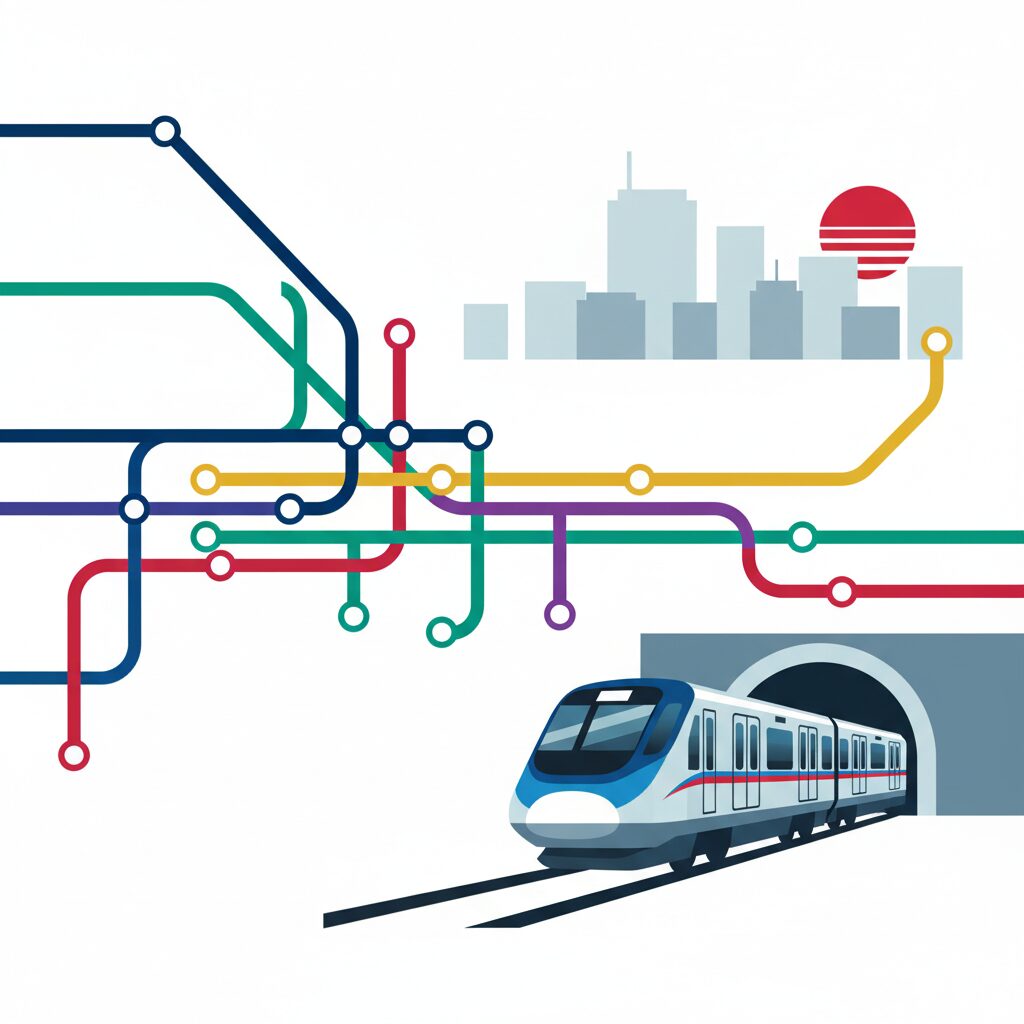
The doors of the Midosuji Line train slide open at Umeda Station, and it isn’t so much a sound as a pressure change. A collective exhale from the packed car, a collective inhale from the platform. This is the first lesson the Osaka Metro teaches you: it’s a living organism, the circulatory system of a city that never stops moving, and you are just a blood cell along for the ride. To a newcomer, especially one familiar with Tokyo’s sprawling, intricate web of rails, the Osaka Metro map looks deceptively simple. A few colored lines, a clear north-south axis, a grid-like structure. It seems manageable. This initial impression is both true and profoundly false. Understanding the Metro isn’t about memorizing station names or transfer points; it’s about understanding Osaka itself. It’s about grasping the city’s relentless pragmatism, its unspoken social hierarchies, and the powerful currents of human movement that define daily life. This isn’t a tourist guide on how to use a ticket machine. This is a deep dive into the steel heart of the city, a system that is at once a marvel of efficiency and a source of daily frustration, a perfect reflection of the Osakan character—direct, efficient, a little rough around the edges, and always, always in a hurry. It shapes where you live, how you socialize, and how you perceive the geography of your own life. To ride the Metro is to learn the rhythm of Osaka, one screeching halt and crowded commute at a time.
To truly understand the city’s rhythm, one must also discover its quieter moments, such as finding a peaceful spot for remote work in Nakanoshima’s riverside parks and cafes.
The Red King: Understanding the Midosuji Line’s Absolute Dominance
The Spine of the City
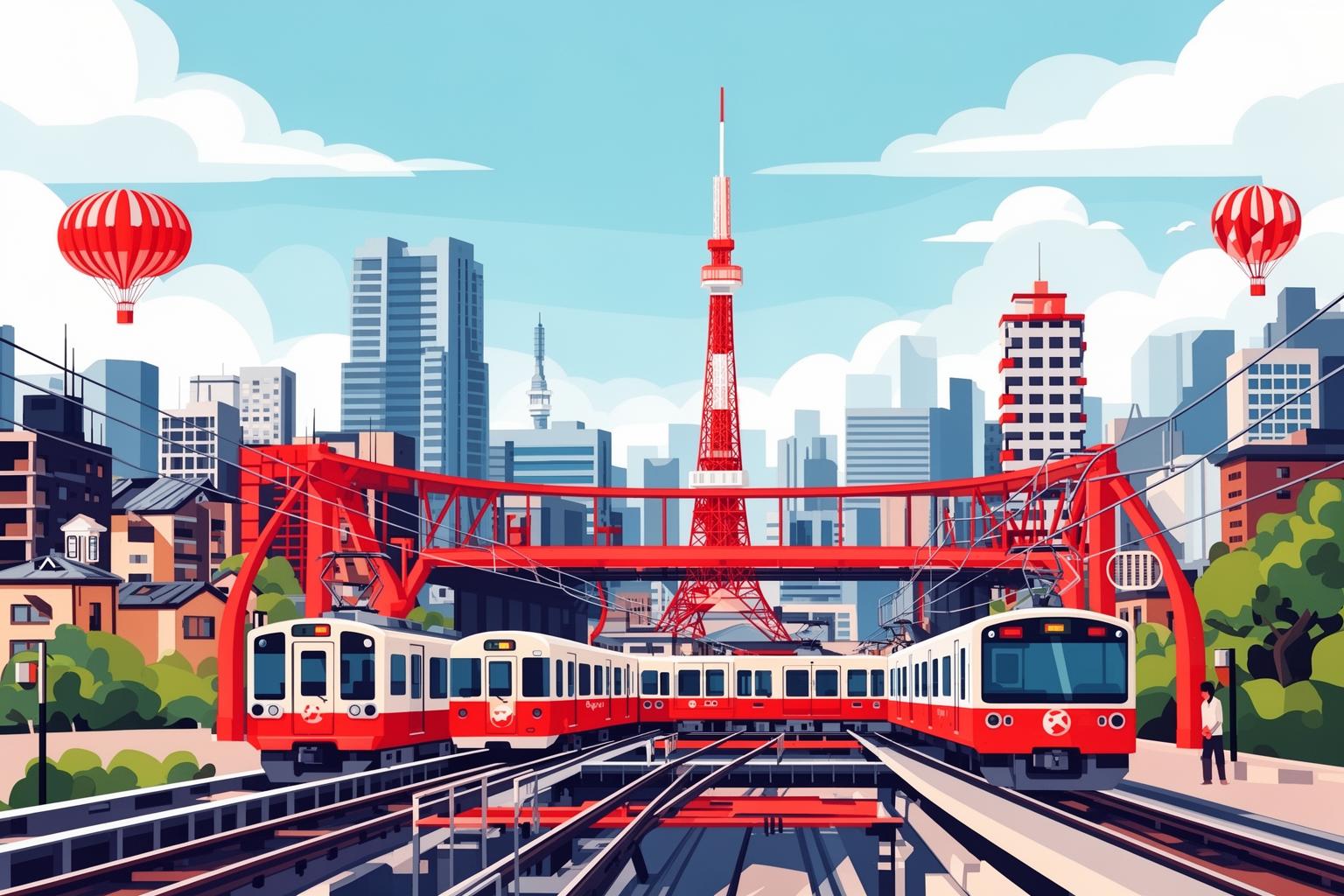
In the grand stage of Osaka’s public transportation, some lines take center stage while others play supporting roles. The Midosuji Line stands as the undisputed, non-negotiable star. It is far more than a mere subway line; it serves as the city’s central nervous system, its main artery, and the organizing principle around which Osaka is structured. Marked in a bold, imperial red on the subway map, its path narrates the entire story of modern Osaka’s power dynamics. Starting in the north at Esaka, it connects to the Kita-Osaka Kyuko Railway, serving the affluent northern suburbs. From there, it heads south to Shin-Osaka, the city’s gateway to the rest of Japan via the Shinkansen. Then it makes its royal procession through every major hub: first Umeda, the northern business and shopping metropolis and a complex nexus of train lines; then Yodoyabashi and Hommachi, the stoic, gray-suited corporate and financial heart of Osaka; next, it bursts into the neon-lit chaos of Shinsaibashi and Namba, the southern poles of entertainment, youth culture, and endless consumption; finally, it powers through Dobutsuen-mae, the entrance to the gritty Shinsekai district, and Tennoji, a major hub connecting southeastern prefecture areas. Its journey concludes by feeding into the southern suburbs, a vast residential expanse.
This route is not merely convenient; it embodies the city’s hierarchy. Understanding the Midosuji Line is key to understanding Osaka’s linear power structure, unlike Tokyo’s loop-defined transit system. Power, wealth, and culture flow linearly from north to south along this single red line. Tokyo’s comparable JR Yamanote Line forms a loop, connecting hubs like Shinjuku, Shibuya, and Tokyo Station equally and diffusing power. In contrast, the Midosuji Line concentrates power—it is a spear piercing the city’s heart, with everything else playing a secondary role. This straight-line structure influences the Osaka mindset, where life is about moving from point A to point B in the most direct way possible. The Midosuji Line epitomizes this philosophy: a tool of pure, unadorned utility. Its station platforms are wide and impossibly long, built to handle ten-car trains arriving every two to three minutes during peak hours—proof of the immense human volume it moves daily.
The Midosuji Crush: A Rite of Passage
To truly experience Osaka, ride the Midosuji Line south from Umeda between 8:00 and 9:00 a.m. This is no ordinary rush hour crowd; it is a physical phenomenon, a study in the compression of matter and the collapse of personal space. The term “rush hour” feels insufficient. It is a human hydraulic press. As the crimson train pulls in, a silent, disciplined army of commuters stands two or three rows deep, ready. When the doors open, the delicate dance of disembarking and boarding transforms into a full-contact sport, governed by an unspoken, desperate physics. You don’t step onto the train; you are absorbed by it, propelled by the crowd’s momentum. Station staff—the ubiquitous ekiin, dressed in crisp uniforms and white gloves—do more than ensure safety; they function as human pistons, politely but firmly pushing the last passengers inside to close the doors.
Inside, the atmosphere contrasts sharply with the quiet, performative silence of a Tokyo train. Though still quiet by Western standards, the oppressive, almost sacred stillness gives way to a low-level hum of shared existence. You hear the rustle of newspapers, the gentle taps on smartphones, and occasional, resigned sighs. There is a palpable sense of communal endurance. In Tokyo, the crush often feels like a solitary burden, each passenger retreating into their own stoic bubble. In Osaka, it becomes a shared, pragmatic struggle, with a subtle acknowledgment floating in the air—a collective “shoganai na” (it can’t be helped), a mutual resolve to just get through it. You become attuned to intimate details of your fellow passengers: the scent of their shampoo, the coffee on their breath, the texture of their coat pressed against your cheek. This forced intimacy is impersonal. You learn to brace your feet, find a handhold on a strap, a pole, or even the ceiling, and breathe in time with the train’s sway. This is the daily reality for hundreds of thousands—a ritual stripping away pretense and reducing urban life to its rawest component: moving masses of people from one place to another as efficiently as possible.
Why Your Apartment’s Value is Tied to this Red Line
The Midosuji Line’s absolute dominance penetrates deeply into everyday life, especially in the ruthless calculus of real estate. When searching for an apartment in Osaka, you quickly realize that not all neighborhoods hold equal value. The primary factor determining a location’s desirability—and thus its price—is proximity to a Midosuji Line station. The phrase “Midosuji-sen no eki kara toho go-fun” (a five-minute walk from a Midosuji Line station) is the ultimate stamp of approval on any property listing—essentially a golden ticket to convenience.
Living on a different line, even a clean, efficient, and serviceable one, places you in a lower commuter tier. This means accepting daily transfers, which are more than minor annoyances—they are mental and time taxes. Transfers involve navigating sprawling underground labyrinths in Umeda or Namba, battling opposing crowds, and adding a precious ten to fifteen minutes to your commute each way. Over weeks, months, and years, this time accumulates significantly. The efficiency-driven Osakan mindset instinctively weighs this cost: why pay for an apartment that wastes your time and energy every day? Consequently, a property located ten minutes from a minor station on a different line can be much cheaper than a smaller, older apartment just three minutes from a Midosuji stop. This practical logic shapes the city’s geography of desire. Neighborhoods adjacent to the Midosuji—like Nishinakajima, Nakatsu, or Showacho—become prime residential areas, not necessarily for their charm but for their sheer utility. The red line is not just a transport option; it is an invisible force field shaping the property market and setting the rhythm of life before you even sign a lease.
The Supporting Cast: A Hierarchy of Lines and Their Personalities
The Tanimachi Line: The Long Purple Workhorse
If the Midosuji Line is the glamorous, high-powered CEO of the Osaka Metro, the Tanimachi Line is the reliable, slightly tired middle manager who has been with the company for forty years. It is the longest subway line in the system, a deep purple thread running from Dainichi in the northeast to Yao-minami in the southeast. Riding the Tanimachi Line feels like traversing the city’s less-publicized, more authentic side. It doesn’t reach the flashy commercial hubs with the same sharp precision as the Midosuji. Instead, it serves a different aspect of Osaka: a city of residential neighborhoods, historic sites, and government offices.
Its route connects places like Tenjimbashisuji Rokuchome, home to Japan’s longest shopping arcade, a lively and chaotic monument to local trade. It stops at Minami-morimachi, near Osaka Tenmangu Shrine, and Higashi-Umeda, the Tanimachi Line’s somewhat inconvenient gateway to the Umeda district. Importantly, it serves Tanimachi Yonchome, where the Osaka Prefectural Government offices and Osaka Castle are located. As a result, the passengers here differ from the Midosuji crowd. You’ll see fewer high-fashion shoppers and corporate types, and more government workers in practical suits, elderly residents running errands, and families heading to parks. The pace is a slight step slower, the vibe less driven by commercial ambition. The stations themselves often feel older and are frequently situated deeper underground than those on the Midosuji Line. Transferring from the Tanimachi Line often means navigating long, winding corridors and multiple staircases, a physical reminder of its role as a secondary, though vital, artery. It is the city’s workhorse: unglamorous yet indispensable, quietly weaving together the fabric of everyday life away from the spotlight.
The Sakaisuji Line: The Brown Line to the World (and Kyoto)
The Sakaisuji Line, marked by a practical brown color, represents one of the most clever and potentially confusing features of the Osaka Metro system for newcomers: the concept of sōgo-noriire, or through service. On the surface, it covers a useful but not extraordinary route, running parallel to the Midosuji slightly to the east and linking the business district of Kitahama, the electronics hub of Nippombashi, and the aforementioned Tenjimbashisuji shopping street. Its true strength, however, is its seamless merger with the private Hankyu Railway at its northern terminus, Tenjimbashisuji Rokuchome.
Board a Sakaisuji Line train at Dobutsuen-mae in the south, and you might see its destination board show not another subway station, but “Kawaramachi” or “Kitasenri.” This means your ordinary subway car will, after passing through Osaka, transform into a Hankyu express train, continuing its journey beyond the city limits, through northern suburbs, and all the way to Kyoto’s core. This is a game-changer for commuters and travelers alike: a brilliantly integrated transport system that is incredibly convenient but often confounds the uninitiated. Passengers must watch the final destination carefully, or risk ending up halfway to another city. This through service gives the Sakaisuji Line a unique, transitional character. Traveling north, the passenger mix visibly shifts. In the south, it operates as a local city line; around Nippombashi, it picks up tourists and anime enthusiasts; in the business districts, it fills with office workers; and near the Hankyu connection, it attracts more students and travelers bound for Kyoto. The Sakaisuji Line is a chameleon, a vital link blurring the boundary between Osaka’s internal Metro and the broader Kansai rail network, reflecting the city’s role as a central hub in a vast interconnected region.
The Chuo Line: The Green Arrow to the Bay
The Chuo Line, a vibrant green stripe running east-west on the map, carries a dual identity. It is both a historical connector and a symbol of Osaka’s forward-looking ambitions. Its eastern segment serves residential and industrial areas, linking neighborhoods such as Morinomiya, near Osaka Castle Park, and Tanimachi Yonchome, a key transfer point. Yet its western half is where its modern character truly emerges. The line stretches toward the bay area, ending at Cosmosquare, a station built on reclaimed land that acts as a gateway to conference centers, port facilities, and exhibition spaces.
Like the Sakaisuji Line, the Chuo Line features through service, connecting at its eastern end to the private Kintetsu Keihanna Line, which extends into the eastern suburbs and toward Nara. This east-west corridor serves as an essential crosstown route, helping passengers avoid the congested north-south hubs of Umeda and Namba on certain trips. Riding the Chuo Line often feels like experiencing two cities in one. Trains running through the older central areas resemble a typical subway, but heading west toward the bay, the view from elevated tracks opens up, revealing expansive skies, futuristic bridges, and the vastness of Osaka Bay. The passenger mix shifts, too, with more businesspeople attending trade shows and families en route to the Osaka Aquarium Kaiyukan. The Chuo Line is Osaka’s horizontal axis, a green arrow pointing from its historical core toward its maritime future—a functional line quietly embodying the city’s continual evolution.
The Nagahori Tsurumi-ryokuchi Line: The Voice and the Knees
Perhaps the most distinctive line in the system is the Nagahori Tsurumi-ryokuchi Line, a lime-green route with a name as long as its trains are short. It was a pioneer in Japan, being the first full-sized subway line to use linear motor technology. This innovation allowed for smaller trains and narrower tunnels, enabling construction in areas where a traditional subway would have been too disruptive or costly. Riding this line offers a unique sensory experience. The trains are noticeably smaller and quieter, with a distinct style of acceleration. The most noticeable difference, however, is the seating—benches positioned lower to the ground, a design feature that earned the line the nickname “the train you sit on with your knees.”
The line also set the standard for automatic platform gates, and its arrival is accompanied by a series of distinctive melodies and a clear, automated female voice announcing the train’s approach—a sound now commonplace but innovative at the time. The route winds from Taisho in the west, a district with a strong Okinawan community, through the Shinsaibashi shopping area, and out to Tsurumi Ryokuchi Park, the site of the 1990 International Garden and Greenery Exposition. It doesn’t serve the main commercial centers but instead links a string of culturally rich and diverse neighborhoods. The line feels more modern, intimate, and less overwhelming than the major subway arteries. Riding the Nagahori Tsurumi-ryokuchi Line feels like exploring the city’s capillaries rather than its main veins—a journey through a subtler, neighborhood-focused version of Osaka, powered by a quiet, advanced technology humming just beneath the surface.
The Labyrinth: Navigating the Monster Stations
Umeda: The Ultimate Challenge of Transfers
Saying you are heading to “Umeda Station” is a phrase of striking, dangerous simplicity. It conceals the subterranean Lovecraftian nightmare that is the Umeda-Osaka station complex. There is no singular Umeda Station. Instead, it is an expansive, multi-layered megalopolis composed of six distinct yet interconnected stations, each run by a different company. There is JR Osaka Station, a grand, modern edifice serving the primary train lines. Buried beneath it and the neighboring blocks lie three separate Osaka Metro stations: Umeda for the Midosuji Line, Higashi-Umeda for the Tanimachi Line, and Nishi-Umeda for the Yotsubashi Line. Slightly to the east is the terminus for the private Hankyu Railway, and to the west, the terminus for the Hanshin Railway.
Linking these six stations is an enormous, bewildering maze of underground shopping malls, endless corridors, and indistinct staircases. Whity Umeda, Diamor Osaka, Hanshin Department Store’s basement food hall—these are more than just shopping venues; they are the precarious pathways you must traverse to transfer between lines. The signage presents a constant challenge. Arrows often point in seemingly conflicting directions. The color-coded line indicators serve as your only allies, though they can abandon you at critical junctions. The real test of Umeda is the human element. You are not navigating an empty labyrinth; you are swimming against a relentless tide of people. Thousands of commuters move with a speed and purpose that you, as a newcomer, lack. They flow around you like water around a stone. Stopping to get your bearings is a risky move. This is where Osaka’s pragmatic, sometimes brusque character comes through. When asking for directions, expect no patient explanation—just a quick, clipped sentence, a pointed finger, and the assumption that you can keep up. “Ah, Midosuji? Massugu itte, migi!” (Midosuji? Straight, then right!) they’ll say, already moving on. Umeda is the ultimate trial for an Osakan resident. It mirrors the city’s historical growth—layers built upon layers over decades, without a single grand blueprint. It may seem chaotic and illogical to outsiders, yet for those who have mastered its secrets, it holds a strange, functional harmony. To conquer Umeda is to truly begin to understand the city.
Namba: The Southern Labyrinth
If Umeda is the corporate, slightly refined northern maze, Namba is its rougher, more chaotic southern counterpart. Like Umeda, Namba is not just one station but a constellation of them. There’s the Metro Namba station, which serves the Midosuji, Yotsubashi, and Sennichimae lines. There’s the grand, classical-style terminus of the Nankai Railway, the main line to Kansai International Airport and the southern prefecture. Tucked away on the western edge is JR Namba. And there is the combined Kintetsu and Hanshin station, known as Osaka-Namba, providing direct links to both Nara and Kobe.
Connecting these stations is the Namba Walk, a long, straight underground shopping street acting as the core concourse. Branching off from it are numerous other passages and tunnels linking the basements of Takashimaya and Marui department stores, plus exits spilling into the lively Dotonbori entertainment district or the expansive Den Den Town electronics area. Namba’s underground atmosphere contrasts with Umeda’s. It feels older, with dimmer lighting and lower ceilings. It carries more of a Showa-era vibe, less of the gleaming modernity seen in the redeveloped JR Osaka Station area. The crowd is different too. Umeda is dominated by office workers and upscale shoppers. Namba, by contrast, is a riot of tourists, young people in flamboyant street fashion, and locals heading out for a night of eating and drinking. The energy here is less a purposeful march and more a chaotic, joyful meander. Navigating Namba means orienting yourself within a sprawling, horizontal realm of sensory overload, rather than decoding complex, layered maps. It is the vibrant heart of Minami, the southern city, and its station complex perfectly reflects its lively, slightly worn, and endlessly entertaining spirit.
The Unspoken Rules and Daily Realities
Fares, ICOCA, and the Private Railway Problem
One of the greatest strengths of the Osaka Metro is its efficiency and cleanliness. However, a major drawback—and a key difference from Tokyo—is the financial burden caused by its fragmented ownership. While the Metro is run by the city, it operates within a complex network of private railway companies—Hankyu, Hanshin, Kintetsu, Nankai, and Keihan—alongside the national JR network. Although you can use a single rechargeable IC card like ICOCA (the Kansai equivalent of Tokyo’s Suica or Pasmo) on almost any train, the fare systems remain separate.
This results in what locals refer to as the “fare wall.” Whenever your trip involves switching from the Metro to a private line, or between private lines, the fare calculation resets. You pay the base fare for the first system and then another base fare for the second. A short journey with one transfer can easily cost twice as much as a longer trip on a single line. This financial reality greatly influences how people live and move around Osaka, fostering a particular kind of pragmatism—bordering on what some call frugality (kechi)—a characteristic often linked with Osaka merchants. For instance, an Osakan won’t hesitate to walk an extra ten minutes above ground from Higashi-Umeda to the Hankyu station just to save the 200 yen it would cost to take the Midosuji Line one stop. They might opt for a more complicated route that takes five minutes longer but stays entirely within the Metro system to avoid paying a transfer fee. Such financial calculations are an ongoing, subconscious part of navigating the city. Foreigners, used to more integrated systems in other major cities or even Tokyo’s relatively straightforward JR-centered network, are often puzzled by how quickly transportation costs add up on seemingly simple crosstown trips. It’s a daily reminder that in Osaka, efficiency is prized, but finding a good deal is revered.
The Last Train (Shuden) and its Consequences
Osaka’s nightlife rhythm is governed by a single, strict deadline: the shuden, or last train. While the city is renowned for its 24-hour energy, its public transportation does not follow suit. Most Metro lines close shortly after midnight, with the last trains departing central stations between 12:10 and 12:30 AM. This relatively early cutoff significantly shapes the city’s social life.
An evening out with friends or colleagues is often carefully planned around the last train schedule. Asking “What’s your last train?” is a common refrain as the night progresses. Around 11:45 PM, a subtle shift occurs at bars and restaurants citywide. People begin settling bills, wrapping up conversations, and gradually heading toward the nearest station. The minutes just before the last train departs are marked by controlled urgency. You’ll see salarymen, loosened ties and all, dashing down station stairs, and young couples exchanging hurried goodbyes. The train is often packed, resembling a lively and slightly tipsy version of the morning rush hour. The mood is one of collective relief: everyone on board has beaten the clock. Missing the shuden means facing tough choices—most commonly, an expensive taxi ride home that can turn a pleasant night out into a regrettable financial burden. Other options include spending the night in an all-night karaoke box, manga cafe, or inexpensive bar to wait out the roughly five-hour gap until the first trains resume around 5:00 AM. This nightly drama, this citywide race against time, is a defining part of the Osaka experience, imposing structure on the city’s famed spontaneity and a clear reminder that while Osaka may never sleep, its transit system certainly does.
Onboard Etiquette: The Osaka Variant
There’s a persistent stereotype that people in Osaka are louder and more boisterous than those in Tokyo. When it comes to train etiquette, this cliché is both inaccurate and subtly true. You won’t hear shouting or loud music on the Osaka Metro. The fundamental rules of Japanese public transit etiquette—no loud phone conversations, offering seats to the elderly, general respect for fellow passengers—are strictly observed. Yet, the atmosphere differs noticeably from the near-monastic silence often found in Tokyo trains.
The difference lies in a greater tolerance for low-level social interaction. In Osaka, it’s common to see two friends or colleagues chatting in low, hushed tones. It’s a quiet conversation rather than a disruptive one, but its mere presence marks a departure from Tokyo, where any talking can feel like a breach of etiquette. You might witness a mother gently scolding her child or a couple whispering to one another. Enforcement of the “no phone calls” rule also feels a bit more relaxed. Although taking a call remains a major faux pas, it’s not unusual to see someone answer briefly with a whispered, “I’m on the train, I’ll call you back,” before hanging up immediately—an act that would draw cold stares in Tokyo. Even the process of queuing on the platform can feel more… tactical. People line up politely, but there’s a subtle jockeying for position, an unspoken contest to be perfectly aligned where the doors will open. It’s not aggressive, but it’s far from passive. This reflects the Osaka mindset: adhere to the main rules, but seek small advantages to improve your own efficiency. It’s a social contract with slightly more flexible terms.
The Metro as a Reflection of Osaka’s Identity
Engineering Pragmatism
At its core, the Osaka Metro embodies the city’s defining characteristic: pragmatism. The system functions—and functions exceptionally well. Trains are almost never late; a delay of even a single minute is a rare disruption that feels significant. The carriages are impeccably clean. The wayfinding system, with its straightforward color-coding and station numbering (such as M16 for Umeda on the Midosuji Line), exemplifies logical design, making the complex network easy to navigate once you understand its system. This is the renowned Japanese efficiency, and Osaka is no exception.
However, this efficiency often comes without decorative embellishments. Many older stations are starkly utilitarian—dominated by concrete, plain tiles, and fluorescent lighting. They were constructed to transport people efficiently, not to inspire. Architectural ambition or artistic flair, common in some of Tokyo’s newer stations or European metros, is largely absent here. The beauty of the Osaka Metro lies not in its appearance but in its flawless operation. Designed by engineers rather than artists, it serves a population that values effectiveness over aesthetics. This practical attitude is quintessentially Osakan. Known as the workshop of Japan, Osaka is a city of merchants and craftsmen who prioritize functionality, value, and getting the job done. The Metro epitomizes this ethos: reliable, powerful, and unconcerned with making a grand statement. Its grandeur exists in its quiet, relentless efficiency.
A City Divided by Rails
The colored lines on the Metro map represent more than just transit paths; they form invisible walls and bridges shaping Osaka’s mental landscape. The system divides the sprawling metropolis into distinct areas, reinforcing the city’s fundamental social and economic splits. The most prominent is the north-south divide, embodied by the Midosuji Line. Kita (North), centered on Umeda, is the domain of big business, luxury shopping, and corporate influence. Minami (South), around Namba, is the historical core of entertainment, small-scale trade, and a more raucous, populist spirit. Identifying as a “Kita person” or a “Minami person” reveals a great deal about one’s lifestyle and sense of belonging. The Metro is the physical structure that brings this abstract divide into daily experience.
This division also extends to other lines. Living along the affluent Hankyu Line, which connects to the Sakaisuji Line, contrasts sharply with residing in the working-class neighborhoods served by the southern section of the Yotsubashi Line. Selecting an apartment means more than choosing a home; it means choosing your line, your community, and your everyday route through the city. The subway network is the framework upon which Osaka’s social and economic life is built. It shapes the movement of people, capital, and ideas. It influences business viability, property values, and social circles. This vast, intricate, and deeply human system—a steel-and-concrete reflection—mirrors the ambition, pragmatism, frustrations, and unstoppable vitality of the city it serves.