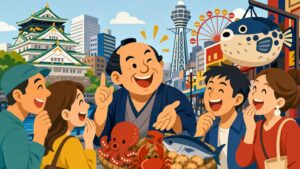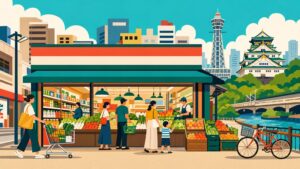
So, you’re thinking about laying down roots in Osaka. You’ve probably heard the names whispered, spoken like a binary choice that defines your entire existence in this city: Kita and Minami. North and South. It sounds simple, a geographical marker on a map. But let me tell you, this isn’t about direction. It’s about disposition. Choosing between Kita and Minami is like choosing a personality for your daily life. It’s the difference between a tailored suit and vintage denim, between a planned-out business lunch and a spontaneous bowl of street-side ramen. One is the face Osaka presents to the world; the other is its loud, beating, unapologetic heart. Outsiders, and even many Japanese from other regions, get this wrong. They see Umeda’s glimmering towers in Kita and think, “Ah, this is the modern, successful Osaka.” Then they see Dotonbori’s neon-drenched chaos in Minami and think, “This must be the tourist Osaka.” They’re not wrong, but they’re not right either. They’re seeing the stage, not the life lived behind the curtain. Kita is Osaka’s ambition, its crisp, clean handshake, its connection to the global economy. It’s where deals are made and futures are planned in high-rise boardrooms overlooking the Yodo River. Minami is Osaka’s soul, its raucous laugh, its obsession with good food, good fun, and good value, right here, right now. The Midosuji subway line, the city’s main artery, pumps people between these two poles relentlessly, a river of humanity flowing from the corporate to the chaotic and back again. But living at one end versus the other fundamentally rewires your experience of the city. This isn’t a guide to tell you which is better. There is no ‘better.’ This is a guide to help you figure out which Osaka is your Osaka. It’s about understanding the subtle codes, the unspoken attitudes, and the daily rhythms that make each area a world unto itself. We’re going to peel back the layers, moving beyond the postcard images to what it actually feels like to wake up, grab a coffee, and live a life in the polished north versus the vibrant south.
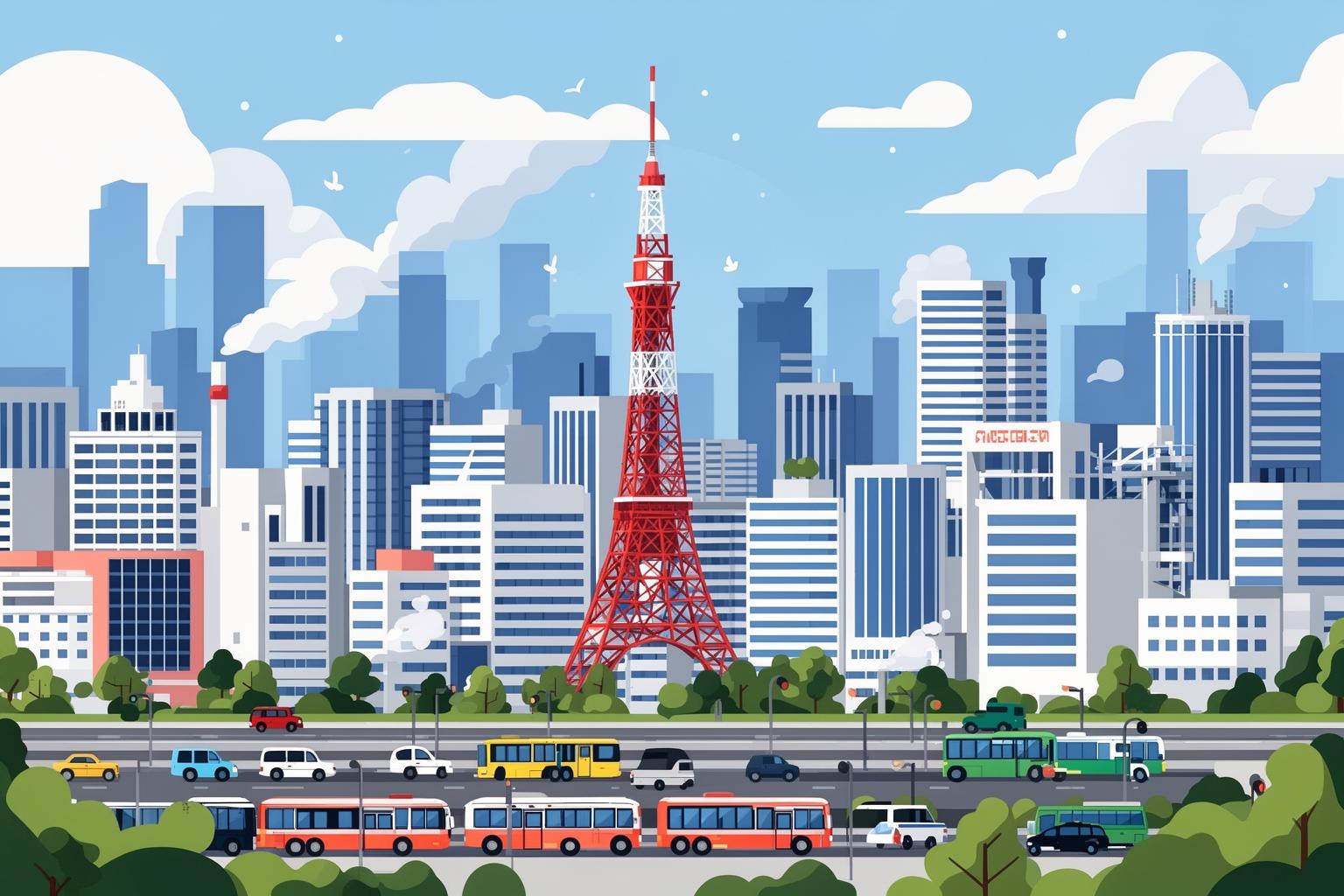
Whether you choose the polished ambition of Kita or the vibrant soul of Minami, your daily commute will be shaped by navigating Osaka’s crowded trains.
The Vibe Check: First Impressions and Lingering Realities
Your first steps out of the train station, whether in Kita or Minami, reveal almost everything you need to understand. It’s a sensory overload expressed in two distinctly different languages. One conveys order, scale, and ambition; the other bursts with color, sound, and a chaotic, infectious energy. These initial impressions run deeper than skin-deep—they reflect a cultural and economic divide that influences how people interact, spend their money, and define their communities.
Kita’s Polished Facade: The Aura of Umeda
Emerging from the underground maze of Osaka-Umeda Station, you encounter clean, spacious areas. Sunlight reflects off the glass and steel of skyscrapers like the Umeda Sky Building and Grand Front Osaka. The air feels different here—less saturated with the aroma of grilled octopus and more infused with the subtle scent of department store cosmetics and freshly brewed coffee from stylish cafes. People move with brisk, purposeful steps. These are Osaka’s salarymen and office ladies, dressed in dark suits and refined attire, their expressions marked by the focused determination of those with back-to-back meetings. This is Osaka’s response to Tokyo’s Marunouchi or Shinjuku. The city in its most professional, international form. Here, Osaka shows it can compete on a global stage, serving as a center of commerce, finance, and high-end retail.
Living here means your daily routine aligns with this pace. Your grocery shopping might take place in the basement of the Hankyu Department Store, a ‘depachika’ where flawless fruits are showcased like gems and artisanal bread displayed with museum-like care. It’s a beautiful, curated experience, but also expensive and somewhat impersonal. Social interactions are generally more formal. The default language is standard, polite Japanese, with less of the thick, colloquial Osaka-ben spoken just a few kilometers south. People are polite but reserved—not unfriendly, just busy and focused on their schedules. A foreigner might mistake this for coldness, especially if expecting the boisterous, friendly Osakan stereotype. But it’s not a lack of warmth—it’s a different social code shaped by the demands of a fast-paced professional world. Life in Kita revolves around efficiency, refinement, and aspiring to a global standard of urban living.
Minami’s Raw Energy: The Pulse of Namba and Shinsaibashi
Take the Midosuji line just three stops south to Namba, and the city strikes you like a force of nature. The skyline is fragmented by a chaotic tangle of signs, wires, and buildings vying for attention. The air is thick with the savory smoke of takoyaki stands, the sweet scent of crêpes, and the noise of countless sounds all at once: pachinko parlors clattering, shopkeepers shouting greetings, J-pop blasting from storefronts, and the constant hum of a crowd that never sleeps. This is the Osaka of popular imagination, a city fueled by ‘kuidaore’—eating to the point of collapse. The streets are narrower, buildings older, and the energy relentlessly human and unfiltered.
Minami’s people are a spectacle themselves. You’ll find teenagers in flamboyant streetwear gathering in Amerikamura, groups of tourists captivated by the giant moving crab of Kani Doraku, and local grandmothers—the renowned ‘Osaka obachan’—navigating the packed Shinsaibashi-suji shopping arcade with fearless skill. Here, raw, unfiltered Osaka-ben is the common tongue. Conversations are loud, direct, and often punctuated with laughter. People don’t just walk—they weave, stroll, and stop mid-sidewalk to chat with a friend they just met. Daily life is a community performance. Grocery shopping might happen at Kuromon Ichiba Market, where fishmongers shout recommendations over heaps of glistening tuna and you haggle with pickle vendors. It’s messy, loud, and deeply personal. This is where the “friendly Osaka” cliché originates. Strangers are more likely to strike up a conversation, offer you candy, or comment on your quirky t-shirt. It’s a city that wears its heart openly, beating with a wild, chaotic, and utterly magnetic rhythm.
The Social Fabric: Making Friends and Fitting In
Finding your tribe, your community, is essential to feeling at home anywhere. In Osaka, the way you do this is deeply shaped by whether you base yourself in the north or the south. The social dynamics differ, the unspoken rules are rigidly observed, and the very meaning of ‘friend’ can seem to change depending on your subway stop.
Networking in Kita: The Corporate Climb and Expat Circles
In Kita, your social life often begins where your professional one ends. Connections are commonly formed in the workplace crucible. After-work gatherings, or ‘nomikai,’ are a frequent practice, usually held in the sleek, somewhat generic izakayas of the Umeda business district or the upscale hostess bars of Kitashinchi. The talk centers around work, industry trends, and shared career goals. It’s networking disguised as socializing. Outside work, making friends demands more intentional effort. You might join a language exchange meeting at a chic café in Grand Front, or a weekend hiking group made up of other young professionals. It’s structured. It’s planned. You schedule it in your Google Calendar.
For foreigners, Kita is also home to the professional expat. Major international firms have their Osaka headquarters here, creating a ready-made community of fellow non-Japanese residents. This can offer great comfort, a soft landing in a new country. You find people who understand your cultural references and share your frustrations. But it’s a double-edged sword. It’s all too easy to get trapped in the ‘expat bubble,’ where your social circle is mostly other foreigners, your weekends revolve around the same international bars, and your Japanese skills stall. Escaping this requires deliberate effort. The Japanese social circles in Kita can be harder to penetrate. Interactions are shaped by a strong sense of ‘tatemae,’ the public face people show the world. Everyone is impeccably polite, but gaining entry to their inner circle, their world of ‘honne’ or true feelings, can take a long time. This isn’t rejection; it’s a cultural norm of maintaining professional and personal distance until deep trust is built.
Belonging in Minami: The Local Bar and Street-Corner Chats
Minami follows an entirely different social logic. Here, community is grown from the ground up—in the streets, markets, and over the counters of tiny, family-run shops. Your social life isn’t something you plan; it unfolds naturally as you live your life. You become a regular at a ‘tachinomi’ (standing bar) in Namba’s backstreets, and soon the owner knows your name, favorite drink, and introduces you to other regulars. You buy vegetables from the same stall in the shotengai every week, and the elderly woman running it starts sharing cooking tips and asking about your family. Social capital in Minami isn’t earned through business cards; it’s rooted in your personality, your sense of humor, and your willingness to engage. Can you take a joke? Can you dish one back? This is the art of ‘tsukkomi’ and ‘boke,’ the straight-man/funny-man routine foundational to Osaka comedy and, by extension, its social life. Being able to join in this playful banter is more valuable than perfect, textbook Japanese—it shows you ‘get’ the local culture.
This is where the heart of Osaka’s famed friendliness lives. It’s an assertive, almost aggressive form of community-building. People talk to you not to gain something, but simply because you’re there, sharing the space. The line between stranger and acquaintance is very thin. This can feel intrusive to those used to the anonymity of big cities. You might find it overwhelming at first. But when you embrace it, you find a strong sense of belonging. Your neighborhood starts to feel like a village. People look out for you. The ramen shop owner saves you a seat. The dry cleaner’s woman asks if you’re eating well. It’s a messy, noisy, sometimes intrusive, yet ultimately deeply human way of living together. It’s a social fabric woven not from shared ambitions, but from shared everyday experiences.
The Cost of Living: Where Your Yen Really Goes
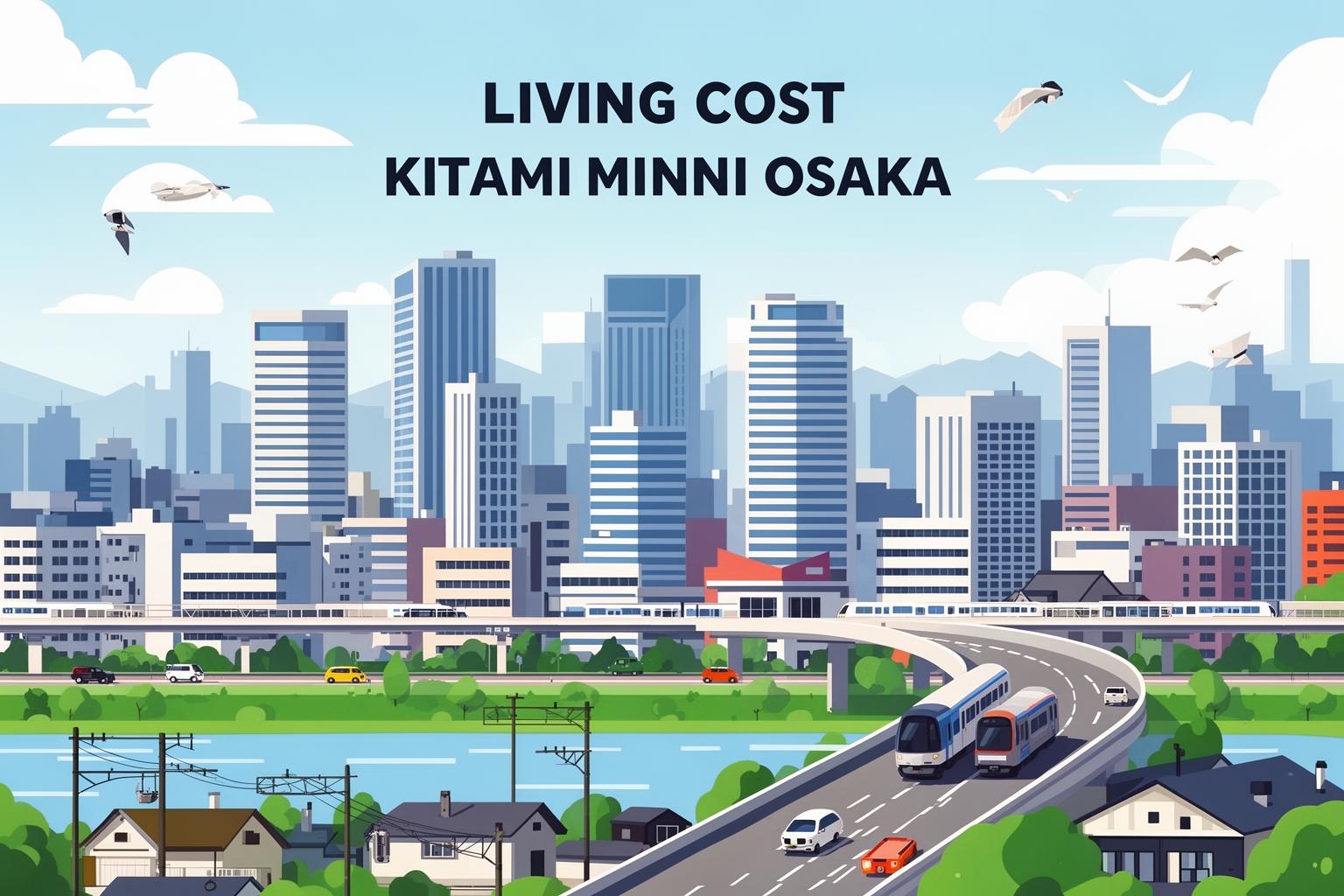
Choosing between Kita and Minami is not merely a lifestyle preference; it represents a crucial economic decision that will influence your budget and financial situation in Osaka. The same sum of money can afford you two very different ways of life. From rent prices to the cost of an average weeknight meal, the economic landscapes of the north and south could not be more different. It’s a classic contrast between refined luxury and rugged affordability.
The Kita Premium: Rent, Dining, and Lifestyle Costs
Living in or near Kita means paying for prestige and convenience. You’re paying extra to be at the heart of Kansai’s transport hubs and corporate centers, which is most apparent in the housing market.
Housing in the North
Near Umeda, the prevalent housing type is the modern high-rise apartment, often called a ‘tower mansion.’ These buildings are sleek and secure, offering amenities such as auto-locking doors, delivery lockers, and occasionally concierge services. The apartments themselves are clean and well-designed but often compact and expensive. You pay a premium for the address and the short walk to the station. If you prefer something with more character, adjacent neighborhoods like Nakazakicho, known for its bohemian vibe and cafes in old houses, or Fukushima, a hotspot for food lovers, may appeal. However, the ‘Umeda proximity tax’ still applies—rents in these areas remain consistently higher than in the south for comparable space. Essentially, you’re buying a lifestyle where convenience is the ultimate luxury, and every minute saved on your commute comes at a cost.
Daily Expenses in Kita
This premium extends to nearly every facet of daily life. Lunch sets around Umeda cater to office workers and are typically priced a few hundred yen above elsewhere. Dinner leans towards upscale, carefully curated experiences—stylish Italian eateries, elegant washoku restaurants, and hotel bars offering panoramic city views. Although cheaper options exist, they’re harder to find. Grocery shopping follows suit with high-end supermarkets like Ikari and Seijo Ishii offering imported and organic items at a premium. Entertainment also comes at a higher cost; a night out might involve tickets to a musical at Umeda Arts Theater, a visit to a contemporary art museum, or cocktails at a trendy rooftop bar. These outings are often planned, ticketed, and pricier affairs. This is lifestyle inflation at work—your environment encourages higher spending, and before long, your living costs rise to match the polished surroundings.
The Minami Bargain: Affordability, Space, and Energy
Go south, and the financial equation changes. Minami is founded on the principle of offering great value for the masses. It’s a place where your yen stretches further, supporting a lifestyle that’s more affordable and spontaneous.
Housing in the South
Though Namba itself is a bustling commercial center, nearby residential neighborhoods like Daikokucho, Sakuragawa, and Ashiharabashi offer affordable housing options. These areas feature older Showa era buildings often called ‘mansions’ but resembling classic apartment blocks. While lacking modern amenities, they compensate with larger spaces and charm. For the same price as a compact Kita apartment, you can get a significantly bigger place here. The trade-offs might include no elevator, older fixtures, or more neighborhood noise, but many consider the extra space and savings worthwhile. You’re choosing character and community over sleek modernity. You also tap into a different transport network, with better access to the Nankai and Kintetsu lines, each offering distinct advantages.
Daily Expenses in Minami
Minami is the reigning champion of affordable living. It’s the epicenter of ‘B-kyu gurume’ (B-grade gourmet), celebrating cheap, unpretentious, and delicious food. Fantastic, affordable meals are never far away. Street vendors sell takoyaki and okonomiyaki for a few hundred yen, while standing bars serve a beer and a plate of food for less than a coffee costs in Kita. Many family-run eateries tucked away in back alleys have been serving hearty, tasty dishes for generations. Grocery shopping is an adventure here at places like Super Tamade, known for its surprisingly low prices and neon-lit, pachinko-parlor vibe. Fresh, quality ingredients are also available at affordable prices at the sprawling Kuromon Market. Entertainment in Minami is equally accessible—an enjoyable night might include bar-hopping through tiny joints in the Misono Building, catching a manzai comedy show at the Namba Grand Kagetsu, or soaking in the vibrant atmosphere of Dotonbori. The barrier to fun is remarkably low; your social life can be a natural, budget-friendly part of your everyday routine.
The Commute and Connectivity: More Than Just the Midosuji Line
In a sprawling city like Osaka, where you live is largely determined by the train lines you have access to. Your daily commute influences your routine, your budget, and your overall mental map of the Kansai region. Kita and Minami are more than just points on a map; they represent two fundamentally distinct nexus points, each with unique advantages and drawbacks when it comes to transportation.
Kita: The Undisputed Hub
Kita’s overwhelming connectivity is undeniable. The Osaka-Umeda station complex is a massive, multi-layered transit metropolis. It serves as the central hub for JR lines, providing rapid, frequent connections to Kyoto, Kobe, and Nara. It marks the terminus for the private Hankyu and Hanshin railways, which often offer more comfortable alternative routes to the same cities. Additionally, it’s a major stop for three key subway lines, including the powerful Midosuji line. If your life involves regular travel across Kansai or your workplace lies along these main lines, living in Kita means investing in efficiency. In theory, you can reach almost anywhere you need with minimal transfers.
However, the daily reality of this hub is one of controlled, high-speed chaos. During rush hour, the station becomes a flowing river of commuters moving in sync, a tacit agreement to keep traffic moving. It’s a testament to Japanese urban engineering, yet it can also feel impersonal and draining. Newcomers often underestimate the in-station travel time: an apartment described as “five minutes from Umeda Station” usually means five minutes to the station entrance. After that, navigating underground tunnels, escalators, and dense crowds to your platform can easily add another ten to fifteen minutes. It’s a world-class system, but it requires daily stamina and focus.
Minami: The Alternative Crossroads
Minami’s connectivity centers less on one massive hub and more on a cluster of specialized, powerful stations. There’s JR Namba, linking to the Osaka Loop Line, along with subway stops for the Midosuji, Sennichimae, and Yotsubashi lines. The true highlights of the south are Osaka-Namba Station, serving the Kintetsu and Hanshin lines, and Nankai Namba Station. These stations open gateways to a different side of Japan. The Nankai Railway reigns supreme for southern access, offering the fastest, most direct route to Kansai International Airport (KIX) via the Rapi:t express train—ideal for frequent flyers. It’s also the main line to the sacred mountain temples of Koyasan in Wakayama. Meanwhile, the Kintetsu Railway provides a direct route to Nara and the Ise Grand Shrine in Mie Prefecture. For many destinations, traveling from Minami can be quicker and more direct than from the north.
Commuting from Minami feels more integrated with the city itself. The journey often involves walking through lively, covered shopping arcades, stopping for a coffee or pastry along the way. The stations seem less like sterile transit centers and more like vibrant parts of the neighborhood. Although crowds can be just as dense, the atmosphere is more relaxed and less hurried. The trade-off is that some destinations, especially Kyoto via the JR line, may require an extra transfer. But if your life is oriented towards the airport, southern Osaka, or the Kii Peninsula, Minami isn’t just an alternative; it’s often the smarter, more strategic choice.
Who Thrives Where? A Final, Honest Breakdown
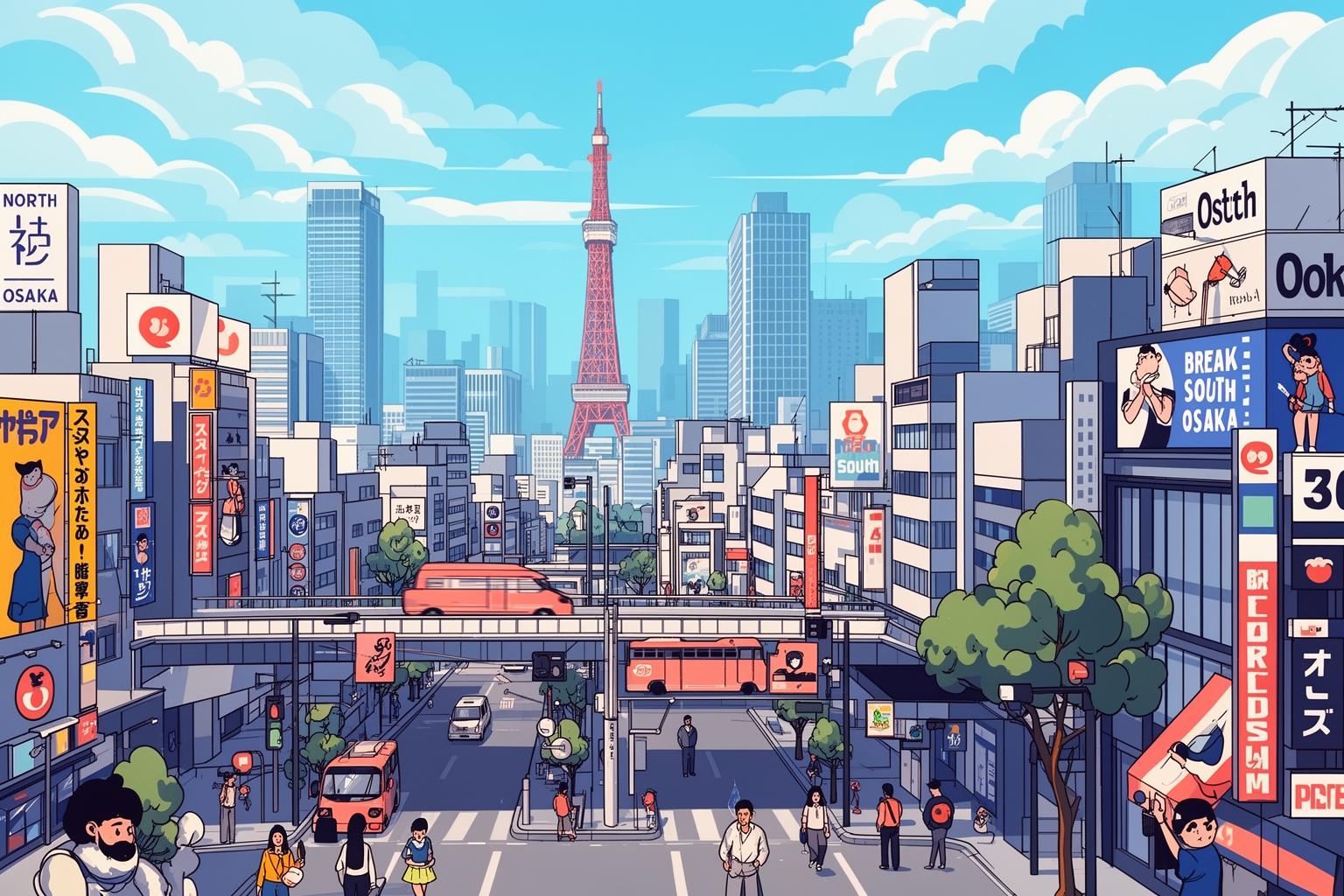
Ultimately, deciding between Kita and Minami is a reflection of who you are and what you seek from your life in Osaka. It’s about which compromises you’re willing to accept and which advantages will make you feel most vibrant. Ignore the tourist brochures—this is a realistic breakdown of who belongs where.
You’re a “Kita” Person If…
You value efficiency and a well-organized life. Your personal motto is “time is money,” and you don’t mind paying extra for a shorter commute and easy access to the entire Kansai region. You work in a corporate setting, and the thought of living in the bustling business district, surrounded by professional energy, appeals to you. You prefer clean, modern architecture and orderly public spaces. The chaotic hustle of cramped, crowded streets drains your energy rather than excites you. Your social life focuses on quality over quantity; you enjoy planned dinners at upscale restaurants, gallery openings, and quiet drinks at stylish bars rather than spontaneous street corner meetups. You appreciate finer things—gourmet meals, luxury shopping, and top-tier cultural events. You see Osaka as your base for exploring Japan, and the unmatched connectivity of Umeda Station to Kyoto, Kobe, and the Shinkansen is a key factor. You seek an urban lifestyle that feels polished, international, and predictable—a life running on a smooth, efficient schedule.
You’re a “Minami” Person If…
You thrive on spontaneity and sensory richness. You believe the best experiences are unplanned. You’re drawn to the grit, noise, and vibrant, messy humanity of a city that never sleeps. Budget-conscious, you’re motivated by getting more space, more character, and greater value. Your social life is organic; you want to become a regular at local spots, know the shopkeepers by name, and build community through shared everyday moments. You’re a genuine foodie, but your passion isn’t Michelin stars—it’s discovering the most delicious, authentic, and affordable bowl of ramen tucked away in forgotten alleyways. You find the raw, unfiltered spirit of Osaka—the loud conversations, the blunt humor, the love of a good bargain—both charming and thrilling. You seek a life that feels deeply and uniquely Osaka, a world apart from Tokyo’s polished formality. You want to live in the city’s beating heart, even if it means embracing a bit more chaos and less refinement.