You see it out of the corner of your eye. A flash of red, a splash of yellow. A supermarket employee, armed with a pricing gun that looks more like a weapon, descends upon the prepared foods section. A silent, electric tension fills the aisle. Carts, previously meandering, now drift with purpose. Shoppers, once engrossed in comparing brands of tofu, now stare into the middle distance, their senses on high alert. This, my friend, is the prelude to one of Osaka’s great daily rituals, a moment of high drama played out under the fluorescent lights of your neighborhood Life, Mandai, or the gloriously chaotic Super Tamade. This is the hunt for hangaku—the coveted half-price sticker that transforms a humble bento box or a plate of glistening sashimi into a trophy. For the uninitiated foreigner, it’s a baffling, slightly intimidating dance. For the Osakan, it’s just Tuesday. It’s a game of timing, patience, and unspoken rules that reveals more about the city’s soul than any castle or glistening skyscraper ever could. This isn’t just about saving a few hundred yen. It’s about a philosophy etched into the very DNA of this merchant city: the art of the smart win. It’s a practical, unapologetic, and deeply satisfying part of daily life that separates Osaka from the more reserved, image-conscious currents of Tokyo. Understanding the hangaku hunt is understanding the rhythm of Osaka itself.
To truly grasp this rhythm, consider how the city’s distinct districts, like the contrasting personalities of Osaka’s Kita and Minami areas, each offer their own unique version of this daily pursuit.
It’s Not Just About Being Cheap: The Philosophy of Value
Before we delve into tactics and schedules, we need to clear up a fundamental misconception many outsiders have about Osaka. The city’s passion for a good deal isn’t rooted in stinginess; it stems from a deep respect for value. Osaka was built by merchants, traders, and artisans who understood the true worth of every grain of rice and every bolt of silk. The hangaku hunt today is a modern-day reflection of this commercial heritage—an everyday affirmation that you’re smart, savvy, and not someone who pays full price when it’s unnecessary.
The Merchant’s DNA: Kuidaore and Shobai
For centuries, Osaka has been known as Tenka no Daidokoro, or “The Nation’s Kitchen.” As Japan’s commercial hub, it was where goods from across the country were gathered, priced, and sold. This history has fostered a deeply ingrained business mentality, or shobai, among its people. In Tokyo, appearances carry great weight. There’s immense pressure to maintain a polished facade of effortless wealth, and filling your basket with red discount stickers might seem somewhat improper—often drawing a sideways glance or subtle judgment. In Osaka, however, it’s quite the opposite. Getting a delicious, high-quality meal for half price isn’t something to hide; it’s a triumph you proudly share. It’s proof of your skill as a shopper and your savvy understanding of the system. You’re not cheap—you’re a winner.
This mindset ties directly into Osaka’s famous creed of kuidaore, often translated as “eat until you drop” or “eat yourself into ruin.” But this misses the true meaning. Kuidaore isn’t about mindless consumption of expensive food; it’s about seeking the absolute best food at the best price. It’s an appreciation for a cost-performance ratio that borders on sublime. A 1,500 yen bento box, filled with expertly prepared tempura, grilled fish, and seasoned rice, offers a good meal. That same bento box, marked 50% off at 750 yen, becomes a transcendent experience. It tastes better because of the deal. This is the essence of kuidaore—the thrill of a great value, the joy of a savvy trade—and the hangaku bento perfectly embodies it.
The Logic of Waste Not, Want Not (Mottainai)
At the core of this whole system lies the powerful Japanese concept of mottainai. This word carries the weight of Buddhist philosophy and agrarian pragmatism—a profound sense of regret about waste. Throwing away perfectly good food is considered almost sinful in this cultural context. The hangaku system is an elegant market solution to the problem of perishable goods. Supermarkets often have a surplus of prepared foods that won’t last until the next day. Customers want delicious, affordable meals. The price sticker is the bridge linking these two needs, creating a symbiotic relationship that benefits everyone.
Yet the Osaka approach is unique. While mottainai is a nationwide ideal, in Osaka it feels less like a solemn responsibility and more like a joyful opportunity. The reasoning is crystal clear: the food is fine now but will be wasted in a few hours. Why let that happen when a simple price adjustment can make all parties happy? There’s efficiency here, a beautiful pragmatism that perfectly reflects the local character. You’re not just saving money—you’re actively participating in a logical, waste-reducing system. You’re both a responsible citizen and a clever consumer simultaneously. The satisfaction comes not only from the savings but from the elegant rationality of the entire process.
The Battlefield: Know Your Supermarket Tiers
Not all hangaku hunts are the same. The timing, intensity, and quality of the prize vary completely based on the arena you select. A seasoned hunter knows the terrain, understands the unique culture of each supermarket chain, and adjusts their strategy accordingly. From the dazzling chaos of discount chains to the hushed reverence of department store food halls, each offers a distinct kind of excitement.
The Apex Predators: Super Tamade and the Low-Cost Chains
Entering a Super Tamade is like stepping into the heart of Osaka itself. It’s a sensory overload of flashing neon signs, pachinko-parlor lighting, and an addictive store jingle that lingers in your mind for days. These stores thrive on a model of aggressive, almost theatrical cheapness. They’re not just grocery stores; they are shrines to bargains. Here, the hangaku hunt is no polite dance but a full-contact sport. Discounts roll out early and in waves, keeping everyone on high alert. The staff applying the discount stickers move with frantic energy, often shouting out deals as they work. They feel less like clerks and more like hype men at a concert.
The competition is raw and ruthless. You’ll spot grandmothers with ninja-like reflexes, focused students, and salaried workers who have perfected the art of quick raids on their commute home. The items are often simple but abundant—giant packs of fried chicken, heaps of yakisoba, and hearty bento boxes. Success at Tamade or similar stores like Gyomu Super requires embracing the chaos. There’s no time to hesitate: see the sticker, grab the item. It’s a primal experience, and leaving with a bag full of food under 1,000 yen feels like a true victory.
The Mid-Tier Arenas: Life, Mandai, and Hankyu Oasis
This is the core of the hangaku hunt, where most Osaka locals play the game. Supermarkets such as Life, Mandai, and the slightly upscale Hankyu Oasis or Kohyo provide the typical, everyday experience. These stores are cleaner, better organized, and much less chaotic than low-cost chains. Their discounting is more systematic and predictable, making this the place where strategy and observation really pay off. The food quality is notably higher, with beautifully arranged sushi sets, elaborate seasonal bentos, and a diverse range of freshly made sozai like potato salad, simmered vegetables, and premium croquettes.
The atmosphere here is one of controlled anticipation. Hunters are discreet, practicing the delicate art of lingering, pretending to check expiration dates on milk while keeping an eye on the bento aisle. The competition remains fierce but is veiled in Japanese politeness. Instead of a scramble, it’s a ballet of shopping carts—quick, precise moves made with practiced grace. Knowing the rhythm of your local Life or Mandai is a skill developed over time. Do the sticker staff begin in the sushi section or with fried foods? Are 30% off stickers applied at 5 PM and the coveted 50% off ones at 7:30 PM? This insight is the key to success in mid-tier arenas.
The Boutique Battlegrounds: Department Store Basements (Depachika)
This is the major league, the grand stage of hangaku hunting. The basement food halls of Osaka’s premier department stores—Hankyu, Daimaru, Takashimaya, Isetan—known as depachika, showcase gourmet foods from renowned restaurants, high-end bakeries, and artisanal producers. By day, they are playgrounds for the wealthy, but as closing time nears, they transform into the most elegant battlefield imaginable. The stakes are high. An exquisite bento from a famous Kyoto eatery costing 3,000 yen at noon can be yours for 1,500 yen. Previously untouchable jewel-like sushi boxes suddenly become affordable luxuries.
The depachika ritual is far more formal. There’s no chaotic stickering; instead, discounts are applied swiftly and simultaneously at a scheduled time—often announced politely by staff—across multiple stalls. The crowd is different too, a mix of sharply dressed office workers treating themselves after a long day and discerning shoppers who appreciate luxury and love a bargain. Etiquette is essential. There is no pushing or grabbing. It’s a silent, lightning-fast operation: identify your target in advance, position yourself discreetly, and when the moment strikes, move with quiet confidence. Succeeding in the depachika means achieving the ultimate hangaku triumph—a Michelin-adjacent meal at fast-food prices.
The Unspoken Rules of Engagement: A Hunter’s Guide

Mastering the hangaku hunt demands more than just arriving at the right moment. It is a nuanced art governed by a complex set of unwritten rules and social signals. Breaking this etiquette won’t get you into trouble, but it will reveal you as an inexperienced outsider who doesn’t truly grasp the game. To hunt like a local, you need to internalize the code.
Timing is Everything: Decoding the Discount Clock
The whole system centers around timing. The supermarket’s aim is to sell everything before closing, so discounts increase as the minutes pass. Recognizing these phases is essential.
The First Wave (The Appetizer – 20-30% off): This initial discount typically appears in the late afternoon, often between 3 PM and 5 PM. The stickers are usually blue or a less urgent color. This is the low-risk option: you get a modest discount with nearly perfect selection. This wave suits planners—those who want a specific item and are willing to pay a bit more to secure it. It’s safe but lacks the excitement of the main event.
The Second Wave (The Golden Hour – 50% off): This is the moment. The hangaku moment. The prized red or bright yellow sticker signaling a 50% price cut. This is prime hunting time. The exact timing varies by store but usually falls between 7 PM and 8:30 PM, depending on closing time and remaining stock. This hour balances risk and reward—you risk missing your bento if you wait too long, but arriving too early means lingering about. The atmosphere is thick with anticipation—it’s the heart of the hunt.
The Final Countdown (The Gamble – 70% off or More): In the last 15 to 30 minutes before closing, some stores enter a desperate phase. Remaining items might receive even steeper discounts—70%, 90%, or a flat price like “Everything on this table, 100 yen!” This is high-stakes gambling. The selection will be picked over—a ragtag mix of lonely croquettes and unpopular salads. But among the leftovers, you might find a hidden gem. This phase is for true opportunists—those who thrive on chaos and the chance of an incredible find.
The Art of the Loiter: How to Wait Without Looking Like You’re Waiting
This skill is perhaps the hardest for foreigners to master. You can’t just stand by the bento section, tapping your foot and staring at the staff—that’s seen as aggressive, impatient, and rude. It disrupts the social harmony of the space. Instead, you must master the subtle art of strategic loitering, aiming to be present without being obvious.
Key techniques include feigning interest in a nearby non-perishable aisle, such as soy sauce and cooking oils. Pick up a bottle, squint at the label, and pretend to ponder your culinary needs. Another method is a slow, wide circular patrol—pushing your cart around the target area without stopping too long. The key is to keep moving, looking like you’re still shopping. The most critical part of this act is the silent understanding among fellow loiterers: a quick, knowing glance or slight nod. You are competitors but also comrades sharing the same mission, all bound by the code of patient anticipation.
The Sticker Staff: Friend or Foe?
The central figure in this drama is the staff member wielding the sticker gun. They are the arbiter of fate, the bearer of fortune. Your relationship with them demands profound, silent respect. Rushing, hassling, or questioning them is taboo. Asking, “Are you going to discount that one?” is the ultimate faux pas—like asking a magician to reveal their secret. It breaks the illusion and the etiquette.
You must wait and observe their patterns: do they work left to right? Start with sushi? They hold all the power, and you must fully concede it to them. When they finally approach your desired item, a tangible energy ripples through the aisle. The instant they place the sticker and lift their hand is the green light—the item is now in play. Still, one final etiquette rule applies: don’t grab the item right from under their hand. Give them a moment to step away—a small but crucial gesture separating seasoned veterans from clumsy novices.
The Etiquette of the Grab
Once the sticker is on, the item is fair game—but it’s not a free-for-all. Civility must prevail even at the decisive moment.
The golden rule is no hoarding. Don’t be the person who clears out all ten discounted tonkatsu bentos. Take one, maybe two if for family. Leave some for others who have waited just as patiently. This is an unspoken community principle—we’re all in this together.
Respect personal space. Even with multiple people converging on the same section, there’s no need for pushing or elbowing. It’s a swift, efficient, surprisingly polite process: reach, grab, place in your basket, and move on. Movements are quick but never aggressive. It’s Osaka’s version of an orderly queue—just at high speed. Following these rules keeps the system fair and ensures the hunt remains a fun, civilized part of daily life.
The Hangaku Haul: What Your Choice Says About You
Your choice from the discounted bounty is more than just a meal. It reveals your personality, your priorities, and your strategy for the evening. In the world of the hangaku hunt, every decision tells a tale.
The Sashimi Seeker
This person is the high-roller, the risk-taker. Choosing discounted raw fish is the ultimate gamble. The potential payoff is vast: a lavish platter of premium tuna, sea bream, or salmon at a fraction of the usual price. It’s a feast fit for royalty on a pauper’s budget. The risk, naturally, is freshness. You are placing your faith in the supermarket’s refrigeration and your own discernment. The Sashimi Seeker is an optimist, a connoisseur confident in their ability to judge quality and willing to take a chance for a superior reward. They thrive on the thrill and the exquisite taste of a high-stakes victory.
The Bento Baron
This is the pragmatist, the efficiency expert. The bento box offers a complete, balanced meal all in one container. No further cooking is necessary; you just need to heat it up (or enjoy it cold). The Bento Baron is often a busy office worker, a student studying for exams, or anyone who values their time as much as their money. Their choice embodies logic. Why spend an hour cooking when a satisfying, multi-course meal is available for 400 yen? They prioritize convenience and a sure, fulfilling meal over the risk of other options. Their win is one of pure, unadulterated common sense.
The Sozai Strategist
This hunter is the smartest of all. They aren’t after a complete meal, but ingredients to enhance one they are already planning. The Sozai Strategist views a discounted piece of grilled mackerel, several yakitori sticks, or a bag of tempura not as dinner itself, but as the final piece of the puzzle. They already have rice cooking at home, maybe even miso soup prepared. By adding these discounted side dishes, or sozai, they transform a simple home-cooked meal into a diverse and exciting feast. This is the master of home economics, a person who effortlessly weaves the hangaku hunt into everyday life. Their triumph is one of planning, creativity, and resourcefulness.
The Sweet Scavenger
While others compete over fish and fried chicken, this person focuses on a different prize: dessert. They patiently wait for stickers to be placed on slices of cheesecake, tubs of tiramisu, packs of mochi, or premium fruit parfaits. Their goal isn’t nourishment, but a small, affordable moment of indulgence. The Sweet Scavenger seeks a reward at the end of a long day, a little treat to enjoy without the guilt of paying full price. Their victory is a sweet one, a reminder that even the most practical, value-conscious hunt can conclude with a touch of luxury and delight.
Beyond the Supermarket: The Hangaku Mentality in Osaka Life
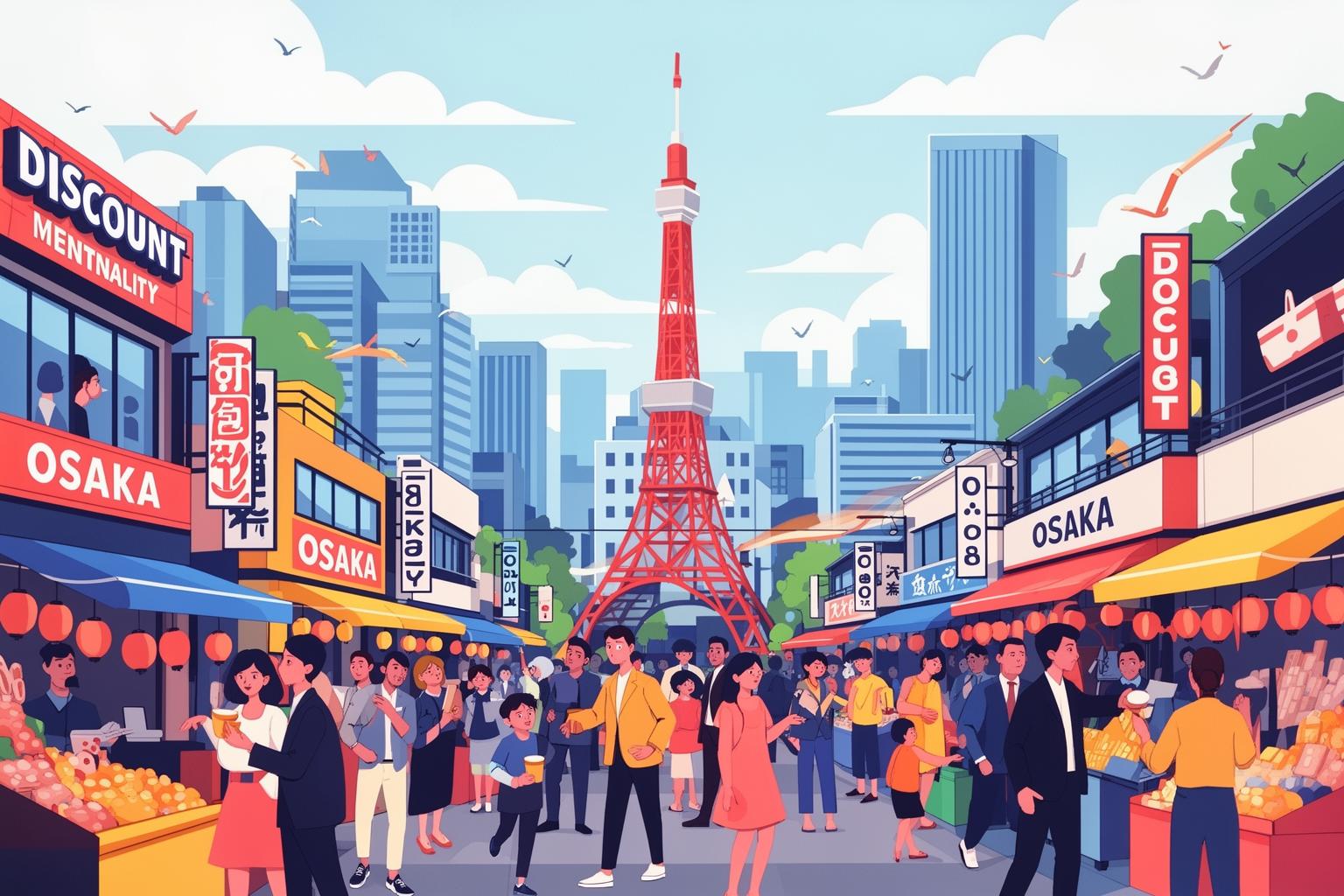
The spirit of the hangaku hunt extends beyond the supermarket aisles; it’s a mindset that infuses the entire city. It can be seen in the lively shotengai (covered shopping arcades) like Tenjinbashisuji, where shopkeepers call out last-minute deals on everything from croquettes to clothing. It’s ingrained in the local dialect and the well-known merchant greeting, “Mokarimakka?” (Making a profit?), with the typical modest reply, “Bochi bochi denna” (So-so, getting by). Business, value, and the art of bargaining are seamlessly woven into everyday conversation.
This attitude explains much of what sets Osaka apart from Tokyo. There is a straightforwardness here, a readiness to discuss money and price that can seem almost startling to those used to Tokyo’s subtler, face-saving culture. The hangaku hunt perfectly represents this mindset. It’s open, rational, and carries no embarrassment. In fact, it is a source of pride.
So next time you find yourself in an Osaka supermarket as evening approaches, pause for a moment. Watch the quiet dance unfold. See the patient hunters take their places. Feel the anticipation rise. And when the staff member with the sticker gun arrives, don’t hesitate. Join in the game. Because you’re not merely trying to save a few yen on a meal. You’re taking part in a ritual essential to this city. You’re tuning into the rhythm of Osaka, one half-price bento at a time. You’re experiencing the deep, satisfying joy of a savvy win — a feeling that, for many here, truly defines what it means to be from Osaka.