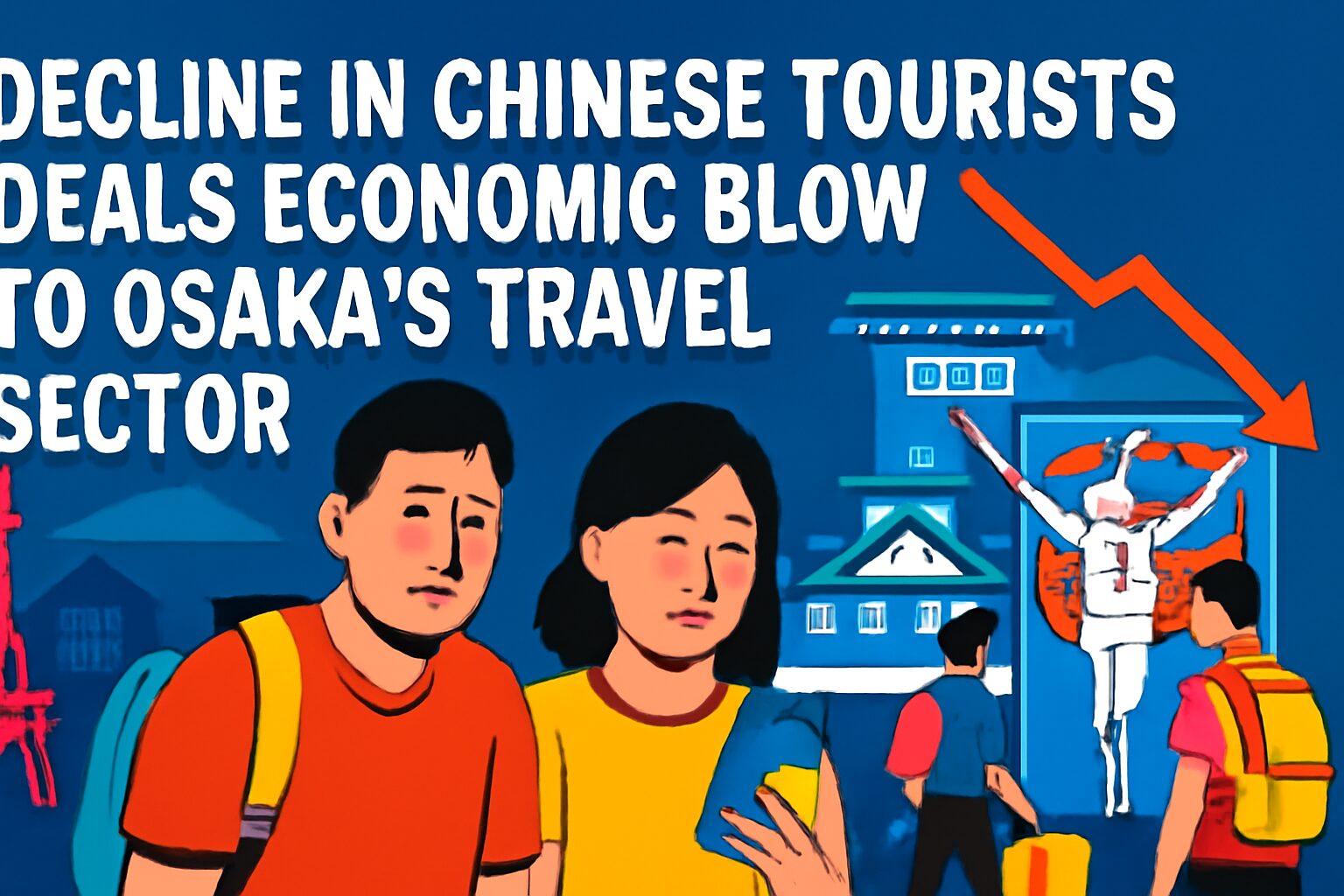
Osaka’s vibrant tourism industry, a cornerstone of the Kansai region’s economy, is facing a significant challenge. A report released on February 3, 2026, has highlighted a sharp economic downturn, primarily driven by a steep decline in the number of visitors from China, historically one of the city’s most crucial tourism markets. The effects are already being felt across the sector, from luxury retailers to local hospitality businesses.
The Background: A Heavy Reliance on a Key Market
For years, Osaka has thrived as a top destination for Chinese travelers. Before the global travel shifts of recent years, visitors from China constituted the largest group of international tourists to Japan.
In the peak year of 2019, Japan welcomed approximately 9.59 million tourists from China, who accounted for a staggering 36.8% of total tourism spending, amounting to roughly 1.77 trillion JPY. Osaka, with its world-class shopping in areas like Shinsaibashi and Namba, culinary delights, and direct access via Kansai International Airport (KIX), was a primary beneficiary of this trend. The local economy, particularly duty-free shops, department stores, and hotels, became heavily structured around catering to the strong demand and significant purchasing power of this demographic.
The Current Impact: A Sharp Drop in Sales
The recent report paints a stark picture of the new reality. Duty-free sales at major department stores across Osaka have plunged, directly correlating with the reduced foot traffic from Chinese tourists. This isn’t just a minor dip; it represents a fundamental shift that is forcing businesses to reassess their strategies.
The ripple effect extends beyond high-end retail. Hotels that once enjoyed high occupancy rates are seeing more vacancies, and restaurants and tour operators who tailored their services to Chinese groups are now struggling. The situation underscores the vulnerability of an economic model that depends so heavily on a single market.
Future Outlook: A Necessary Pivot Towards Diversification
The decline is forcing Osaka’s tourism industry into a period of reflection and adaptation. While the challenge is significant, it also presents an opportunity for the city to build a more resilient and diversified tourism model.
Shifting Target Markets
Local tourism boards and businesses are expected to intensify their efforts to attract visitors from other regions. This includes a stronger focus on markets in Southeast Asia, such as Thailand, Singapore, and Malaysia, as well as a renewed push to attract tourists from Europe, North America, and the Middle East. These efforts will likely involve marketing campaigns that highlight different aspects of Osaka’s appeal beyond shopping.
From “Shopping Sprees” to “Authentic Experiences”
The industry is likely to pivot from an emphasis on “bakugai” (explosive shopping) to promoting “koto-shohi” (consumption of experiences). This means showcasing Osaka’s rich cultural heritage, its world-renowned culinary scene (known as “Japan’s Kitchen”), unique local tours, and its convenient location as a hub for exploring the wider Kansai region, including Kyoto, Nara, and Kobe. The focus will shift from what visitors can buy to what they can do, feel, and learn.
For travelers, this transition could mean a new and perhaps even more rewarding Osaka experience. As the city adapts, visitors may discover a destination that offers deeper cultural engagement and a wider variety of attractions, ensuring Osaka remains a dynamic and appealing city for global tourists for years to come.