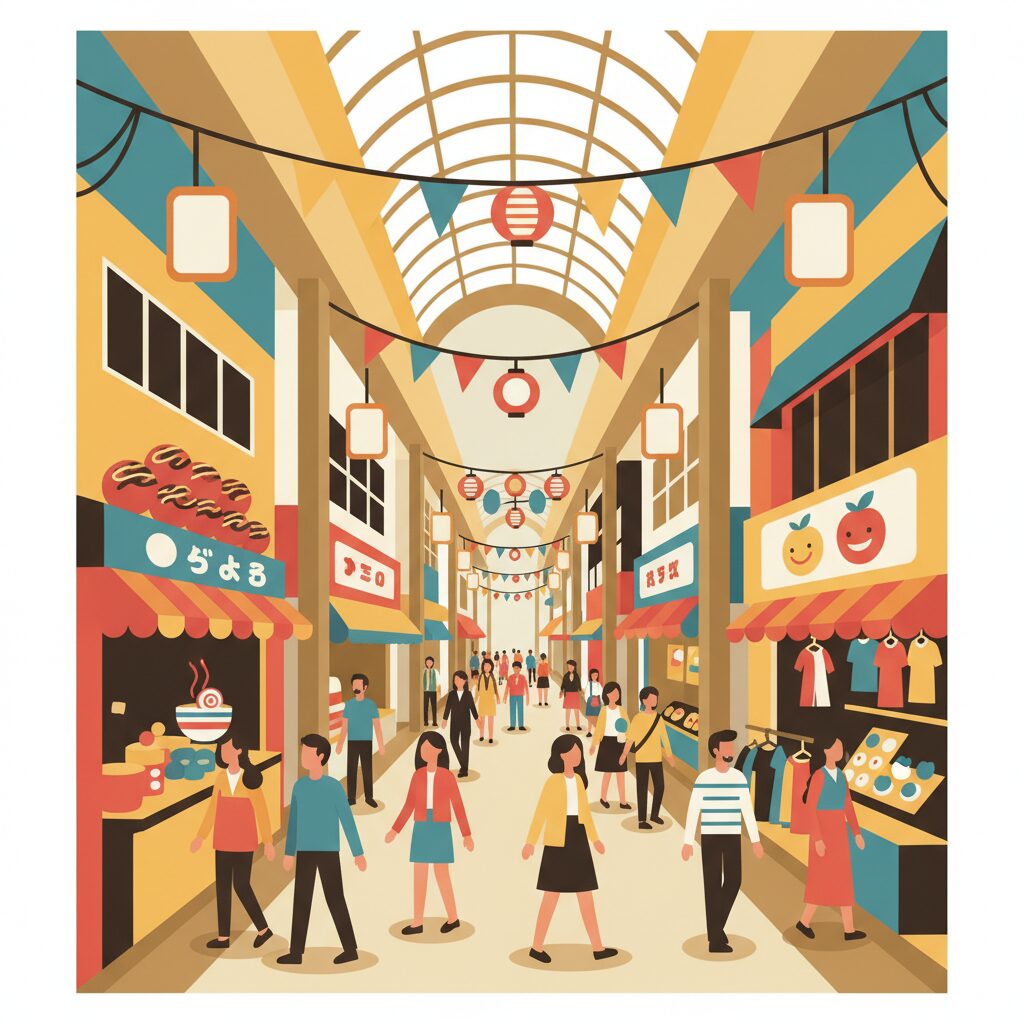
You see the pictures before you even arrive. Flashing neon signs, a giant mechanical crab, a sprinting Glico Man over a canal packed with boats. That’s Osaka, right? Shinsaibashi-suji, Dotonbori. A chaotic, dazzling, commercial powerhouse of a shopping experience. And it is. It’s loud, it’s fun, it’s an essential part of the city’s identity. But it’s not where Osaka lives. It’s the city’s flashy public face, the one it shows to the world. To understand the city’s actual pulse, its daily rhythm, you have to turn off the main road and step under the arched roof of a neighborhood shōtengai, a covered shopping arcade. This is not a tourist attraction. This is the city’s circulatory system, the network of arteries and capillaries that brings life to every corner of this sprawling metropolis. While Tokyo has its own versions, they often feel like quaint relics or specialized strips. In Osaka, the shōtengai is not a nostalgic throwback; it is the absolute, non-negotiable center of daily life. It’s the neighborhood’s kitchen, its living room, and its gossip column, all rolled into one long, wonderfully chaotic corridor. Forget the slick department stores and sterile, air-conditioned malls for a moment. If you want to know how Osaka people think, what they value, and how they connect with each other, your education starts here, under the gentle buzz of fluorescent lights, rain or shine.
To truly understand the city’s daily rhythm, you can also explore the quieter side of its famous districts by discovering the soulful cafes of Shinsaibashi.
The Shōtengai is Not a Mall: Deconstructing the ‘Shopping’ Arcade
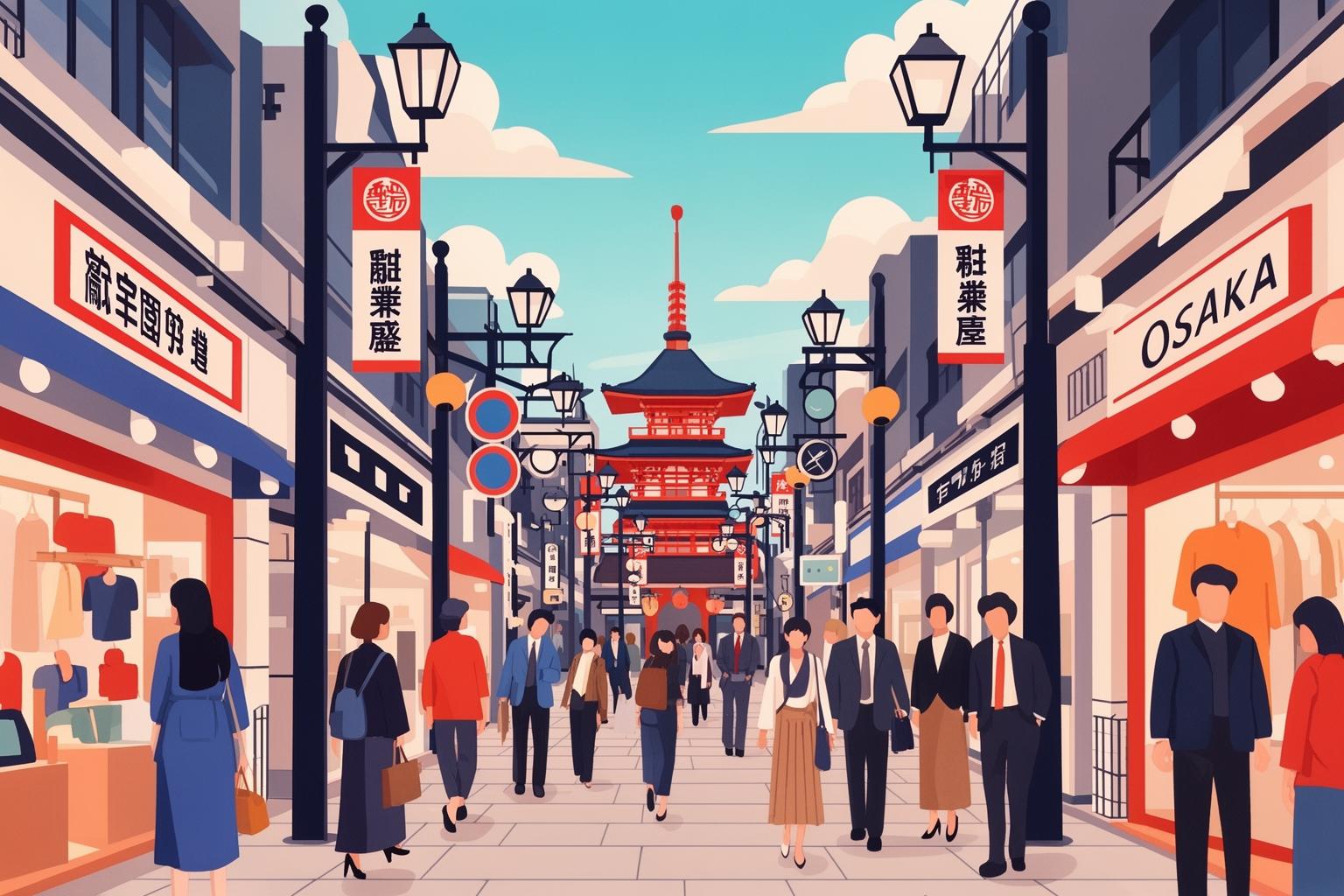
The first thing to grasp is that a shōtengai is fundamentally and philosophically the exact opposite of a shopping mall. A mall is a planned, curated, and controlled environment. It’s a top-down creation, typically owned by a single developer, designed to maximize profit through a carefully selected mix of international brands, chain restaurants, and anchor tenants. It’s clean, predictable, and largely impersonal. In contrast, an Osaka shōtengai is an ecosystem. It’s a chaotic, bottom-up organism that has evolved organically over decades. It’s a federation of dozens, sometimes hundreds, of fiercely independent, small businesses, most of them family-owned and operated across multiple generations. The arcade’s association manages the roof, the lights, and promotional banners, but the soul of the place lies in the individual storefronts. This isn’t a space for curated experiences; it’s a place for unfiltered life. It’s not about “shopping” as leisure. It’s about kaimono—the daily, essential task of gathering what you need to live.
The Anatomy of a Neighborhood Arcade
Stroll through any lively neighborhood arcade such as Senbayashi, Juso Miyuki-dori, or Komagawa, and you’ll encounter the same familiar figures— the essential building blocks of Japanese home life. There’s the butcher, the niku-ya, with trays of thinly sliced pork for shabu-shabu and freshly ground beef for hamburg steaks. Next door might be the fishmonger, the sakana-ya, where glistening whole fish rest on beds of ice, their eyes bright and clear, ready to be scaled, gutted, and filleted to your preference. Then comes the tofu maker, the tofu-ya, a humid, small shop where blocks of silken and firm tofu float in cool water, accompanied by sheets of abura-age (fried tofu pouches) and thick slabs of atsu-age. And naturally, the greengrocer, the yao-ya, is the most vibrant, with pyramids of seasonal fruits and vegetables spilling onto the walkway—daikon radishes the size of your forearm, bundles of bright green spinach, and perfectly imperfect tomatoes smelling of sunshine. This forms the heart of the shōtengai food chain. While supermarkets bundle all these under one roof in sanitized plastic wrap, the arcade celebrates specialization. You visit the tofu expert for tofu, and the fish expert for fish. This devotion to singular craft results in a quality and depth of knowledge that a general supermarket rarely matches.
Beyond these core food vendors, the arcade supplies everything a household requires. There’s the pharmacy, the kusuri-ya, a narrow shop cluttered with everything from headache remedies to skin lotions, staffed by a pharmacist who knows local families and their common ailments. You’ll find a dry cleaner, a tiny stationery shop selling notebooks for schoolchildren, a flower shop adding bursts of color, and a traditional Japanese sweet shop, or wagashi-ya, offering exquisite seasonal confections. Almost always, a small clinic—a dentist or internist—is tucked away on the second floor. And scattered throughout are places to rest and refuel: a Showa-era kissaten (coffee shop) with velvet chairs and siphon coffee, where elderly residents gather for their morning ritual, and a stand-up udon noodle shop serving fast, affordable, and satisfying lunches. The shōtengai is a self-contained universe, a one-stop destination for the essentials of daily life, all housed beneath a roof that shields from Osaka’s scorching summer sun and sudden rains.
The Sensory Overload: Sounds and Smells of Daily Life
A modern mall is an exercise in sensory control. Music is picked by a marketing team, temperatures are finely tuned, and scents are mostly limited to Cinnabon or Perfume Palace. A shōtengai is a glorious, full-on assault on the senses. It’s the antithesis of a controlled space. The soundtrack is a cacophony of life itself. At the yao-ya, the owner shouts in a gravelly Osaka dialect, a melodic chant of prices and quality: “Hona, kyabetsu iko hyaku-en, dou ya! Amain de!” (“Right, one cabbage for 100 yen, how about it! It’s sweet!”). From the butcher’s comes the rhythmic thud of a cleaver striking a wooden block. A few doors down, the sizzle and pop of a tempura shop, the tenpura-ya, fill the air as shrimp and vegetables plunge into hot oil. Mixed with this is the chatter of shoppers greeting one another, the laughter of children released from school, and the faint, slightly tinny, endlessly looping official theme song of the shōtengai itself, broadcast from ceiling-mounted speakers. The soundscape may feel overwhelming at first, but soon it reveals itself as the noise of commerce, community, and connection—all happening simultaneously.
The smells are equally rich and layered. The savory, soy-sauce-infused aroma of grilling eel from a tiny specialty shop drifts down the arcade, mingling with the sweet scent of freshly baked bread from the local bakery. You catch the clean, earthy fragrance of chrysanthemums from the flower stand, the sharp, briny smell of the ocean from the fishmonger, and the comforting aroma of dashi stock simmering at a small deli selling prepared side dishes, o-sozai. As you pass, invisible clouds of scent tell you precisely what’s on offer. This sensory richness isn’t a flaw; it’s a feature. It’s proof the food is fresh, the work is happening right here, and the place is alive. It stands in stark contrast to the sterile, pre-packaged supermarket world and is a crucial part of what makes the shōtengai feel so tangibly real.
The Economic Engine of the Neighborhood
Beyond serving as a source of daily necessities, the shōtengai stands as the economic core of its neighborhood. It embodies small-scale capitalism that echoes Osaka’s long legacy as a city of merchants. This is the setting where the renowned Osaka business mindset—pragmatic, unsentimental, and deeply relational—naturally thrives. The economy within the arcade isn’t propelled by stock prices or marketing data; it’s fueled by daily sales, customer loyalty, and the ongoing, friendly hustle of people striving to make a living.
“Mōkarimakka? Bochi bochi denna”: The Language of Osaka Commerce
A classic Osaka greeting perfectly captures this spirit: “Mōkarimakka?” which literally means “Are you making a profit?” To outsiders, this might seem startlingly direct or even rude, as asking about someone’s financial status can feel very personal. But in Osaka, it is as common as saying “How are you?” among merchants—a way to acknowledge their shared effort and ambition. The usual response is “Bochi bochi denna,” a delightfully vague phrase meaning roughly “So-so” or “Getting by.” It’s a modest, non-committal reply that maintains a friendly tone. This exchange isn’t an intrusive inquiry into finances; it serves as social bonding. It acknowledges that everyone in the shōtengai is working together, striving to serve the community and hopefully turn a profit. It reflects a culture where business is not cold or abstract but a very human, everyday activity woven into social interaction.
This relational style of commerce also appears in the subtle practice of the omake, or receiving a small bonus. While aggressive bargaining is uncommon, cultivating a relationship with a vendor often leads to little extras. Regular customers at the fruit stand, for example, might find an extra orange tossed into their bag. Buy a large amount of ground pork, and the butcher might add a small extra portion, saying, “Kore, omake shとku wa” (“Here, this is a little extra for you”). This isn’t a discount aimed at boosting sales; it’s a gesture of gratitude and a way to strengthen the personal bond, encouraging repeat visits. It transforms a simple purchase into a moment of human connection. This is the foundation of the shōtengai economy: loyalty built not on points cards but on personal trust and mutual recognition.
The Counter-Culture to Tokyo’s Corporate Gleam
If Tokyo represents the polished, brand-conscious face of modern Japan, Osaka reflects its pragmatic, value-oriented soul. The shōtengai epitomizes this contrast. In Tokyo, especially in upscale districts like Ginza or Omotesando, presentation is paramount. Packaging is exquisite, service deferential, and brand names carry substantial weight. In an Osaka shōtengai, the emphasis is almost entirely on the product itself. Osaka residents are famously focused on ne-uchi, or value for money. They want assurance that what they buy is high quality and fairly priced. Frills are secondary. The freshness of fish matters more than the fancy wrapping. Vegetables are displayed in simple plastic crates, with quality evident in their color and firmness. This is not to say Osaka people don’t appreciate quality—they are discerning customers—but their idea of quality prioritizes substance over style.
The physical setting of the shōtengai reflects this ethos. It often shows signs of wear: cracked floor tiles, faded signs. It lacks the sleek, minimalist design of a Tokyo department store. But this absence of polish testifies to its authenticity. It is a workspace, not a showroom. The priority is functionality: offering a covered, convenient spot for the community’s essential shopping needs. This straightforward, unpretentious attitude is a core part of Osaka’s identity, and the shōtengai is its cathedral.
The Rise of Supermarkets and the Shōtengai’s Resilience
Of course, the shōtengai is not just a nostalgic ideal. It faces tremendous competition from contemporary rivals. Large supermarkets, with their one-stop convenience, ample parking, and late hours, have proliferated. Online retailers deliver goods directly to your door. Many smaller, less vibrant arcades throughout Japan have become ghost towns, their shutters forever closed. Yet many of Osaka’s shōtengai remain lively, bustling from morning till night. Why? Because they offer something corporations cannot: specialized expertise and genuine human connection. In a supermarket, the employee stocking the fish may be a general worker without in-depth knowledge or cooking tips. At the sakana-ya in the shōtengai, the owner may be a third-generation fishmonger who not only recommends the best fresh catch but also shares his grandmother’s recipe for simmering it in soy sauce and ginger. You might ask the tofu maker which type is best for mabo dofu versus a cold hiyayakko salad. This personalized service and deep product knowledge foster trust. For many Osakans, especially older residents, this relationship is more valuable than supermarket convenience. It represents a partnership in household management and stands as a powerful force of resilience.
The Social Glue: More Than Just a Place to Buy Things
If the shōtengai were solely about commerce, it would have long since been replaced by more efficient models. Its true, lasting strength comes from its role as the social heart of the neighborhood. It serves as the community’s public square, main street, and shared living room, all conveniently protected from the weather. This is where the invisible ties of community are formed and strengthened through countless small, everyday interactions. Here, you are not merely a consumer but a neighbor.
The “Kao-najimi” Network: Where Everybody Knows Your Name
The key concept to understanding the social role of the shōtengai is kao-najimi, meaning “familiar faces.” It refers to a network of people who recognize each other through regular, casual encounters. You might not know their names or their occupations, but you acknowledge each other. You are part of the same local fabric. The shōtengai is the central loom where this fabric is woven. Shopkeepers act as the anchors of the kao-najimi network. The butcher knows you’re the mother of two boys who love croquettes. The greengrocer remembers your preference for firm tomatoes. The elderly woman at the o-sozai deli inquires about your husband’s health. This network of casual recognition fosters a strong, unspoken sense of belonging and security. It functions as a passive form of community watch. If an elderly regular misses her daily visit for pickled vegetables, the shopkeeper might get concerned and ask a neighbor to check on her. Children walking home through the arcade are watched over by dozens of familiar eyes. This is in stark contrast to the anonymity found in many large cities, including parts of Tokyo, where one can go years without speaking to neighbors. In an Osaka neighborhood anchored by a vibrant shōtengai, remaining anonymous simply isn’t an option. Your daily errands naturally connect you to the community’s life, whether you intend it or not.
The Stage for Life’s Daily Dramas
Because it is such an integral part of life, the shōtengai becomes the setting for countless small, human moments. Stand in one spot for ten minutes and you’ll witness a cross-section of society. Elderly women pushing shopping carts might stop to chat for twenty minutes, blocking part of the walkway without a second thought, exchanging lively gossip, weather complaints, and grandchildren updates. You’ll spot a young mother trying to maneuver a stroller while her toddler heads straight for the toy display at a small stationery store. Teenagers in school uniforms grab a cheap, delicious takoyaki snack on their way home. It’s a place of constant movement and interaction. You overhear fragments of conversations that reveal the neighborhood’s joys and concerns. Life unfolds here openly—in all its messy, chaotic, and beautiful reality. The shōtengai is a living stage, with the entire neighborhood as its cast.
Seasonal Rhythms and Community Festivals
The arcade also acts as the community’s calendar, marking time with seasonal decorations and events. In the heat of summer, colorful banners announce the local natsu matsuri (summer festival), with beer gardens and children’s games often hosted there. In July, long, delicate paper streamers for the Tanabata festival hang from the ceiling, adorned with children’s wishes. As autumn nears, posters appear for moon-viewing gatherings. In winter, the arcade is decorated for Christmas (in a commercial sense) before swiftly switching to red-and-white New Year decorations, with shops bustling over osechi-ryori, the traditional New Year’s cuisine. These shared celebrations, organized by the shōtengai association, transform a commercial space into a hub of community identity. They emphasize that this is more than just a collection of shops—it’s a place with its own distinctive culture and traditions, belonging to the people who live and work there.
A Foreigner’s Guide to Navigating the Shōtengai
For a newcomer, the loud, crowded, and seemingly insular atmosphere of the shōtengai can feel intimidating. It might seem like you’re crashing a private party where everyone already knows each other. However, with a bit of understanding and the right approach, the arcade can become one of the most rewarding parts of living in Osaka, serving as your gateway to feeling like a true local.
Breaking the Ice: Your Ticket is a Smile and a Simple “Konnichiwa”
The key to gaining access to the shōtengai is to become one of the kao-najimi. The easiest way to do this is by becoming a regular. Pick one or two shops to visit frequently—perhaps the fruit stand or the bakery—and go there consistently. Fluency in Japanese isn’t necessary. A simple greeting—“Konnichiwa” during the day, or “Maido!” (a classic Osaka merchant greeting meaning “Thanks for your patronage”) if you’re feeling confident—is enough to start with. Smile and make eye contact. At first, you might just be another anonymous customer, but after a few visits, the shopkeeper will begin to recognize you. They may ask where you’re from. This is your moment to engage. Osakans are famously curious and less reserved than people in other parts of Japan. Interact with them. Ask a simple question about their products, such as “Kore, oishii desu ka?” (“Is this delicious?”) or “O-susume wa nan desu ka?” (“What do you recommend?”). Show genuine interest, and you’ll discover that people are incredibly willing to help. Their gruff exterior often conceals a warm and welcoming heart. They appreciate the effort, and once they see you as a regular, a member of the neighborhood, you’ll be greeted with a special kind of warmth.
The Unspoken Rules of the Arcade
Though it may appear chaotic, there is an underlying order to the shōtengai. Knowing the unspoken rules will make your visit smoother. First, be aware of your surroundings. The arcade is a major thoroughfare for pedestrians and cyclists. People are often in a hurry, heading home from the station or running errands. Don’t stop abruptly in the middle of the path to look at something; step aside instead. If you’re in a group, avoid walking three or four abreast and blocking the entire lane. Second, observe local cycling etiquette. In most arcades, cycling is allowed but you’re expected to ride slowly and carefully. During the busiest times, many locals will dismount and walk their bikes—follow their example. Third, while credit cards and electronic payments are increasingly common, many smaller, older shops still operate on a cash-only basis. It’s always wise to carry some yen. Lastly, when you make a purchase—especially fresh food—the shopkeeper will typically ask if you’re taking it home to eat immediately. This helps them decide on the packaging and may even lead them to offer you the item that’s perfectly ripe for that evening. This is part of the personalized service.
Common Misunderstandings Among Foreigners
There are a few aspects of shōtengai culture that can be misinterpreted by outsiders. The first is the noise level. The loud calls of the vendors and the overall hustle and bustle can sound aggressive or angry. But it’s not—it’s energy, passion, and the vibrant sound of a lively marketplace. This is called genki—liveliness and spirit—and it’s seen as a positive trait. The second is the directness of Osaka people. A shopkeeper might comment on what you’re buying, or a fellow shopper may strike up a conversation with you unexpectedly. This isn’t nosiness; it’s a form of social connection. In a community where people know each other, showing interest in neighbors is normal, and they are simply extending that same spirit to you. Lastly, the apparent clutter and lack of polish may be perceived as neglect. This misunderstands the priorities. The focus is on the quality of the goods and the strength of relationships, not on maintaining a pristine, minimalist look. The shōtengai is a workshop for daily life, and workshops are meant to be used, not just admired.
The Future of the Shōtengai: Nostalgia vs. Necessity
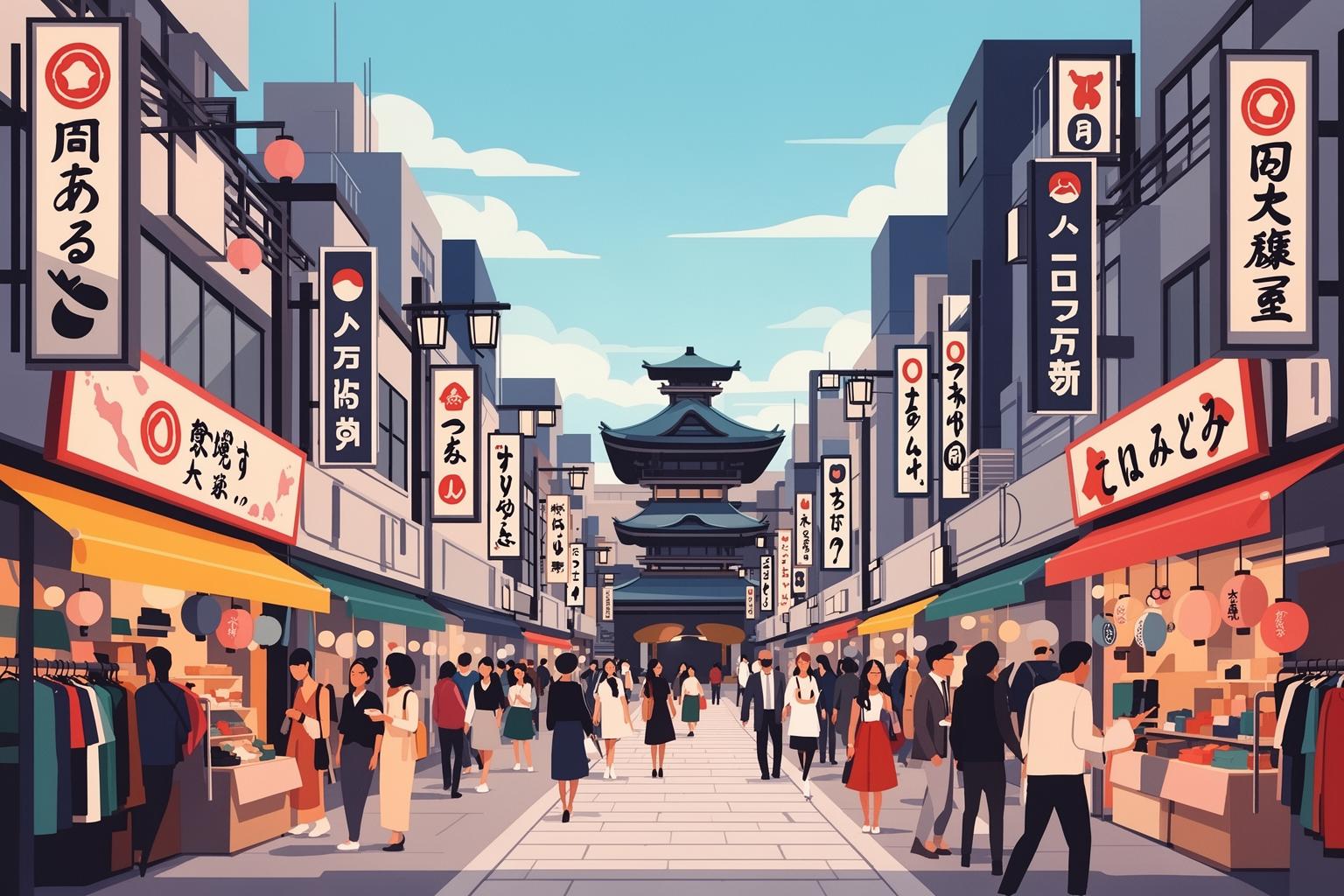
What does the future hold for these vibrant corridors in an era of ever-increasing convenience? This question looms over every arcade in Japan. The challenges are real and undeniable. Shopkeepers are aging, and their children often pursue different career paths rather than continuing the family business. Competition from massive retail corporations and the digital marketplace is relentless. Some arcades have undeniably become shadows of their former selves, quiet and struggling.
Yet in Osaka, the shōtengai feels less like a relic and more like a statement of purpose. It represents a deliberate choice to prioritize the local over the global, the personal over the anonymous, and the community over corporations. In a world that often feels more disconnected despite our digital hyper-connectivity, the arcade offers something vital and increasingly rare: a tangible, physical space for human interaction. It’s a model for a sustainable local economy, where money spent in the neighborhood remains in the neighborhood. It serves as a support system for the elderly, a safe space for children, and a social hub for everyone in between.
To truly understand Osaka, one must grasp its deep-rooted merchant culture, fierce local pride, and unsentimental, pragmatic approach to life. The shōtengai is where all these traits come together. It’s not a museum exhibit preserved for tourists. Rather, it is a living, breathing, evolving entity that remains vital to the daily lives of hundreds of thousands of people. So next time you’re in Osaka, by all means, see the giant crab. But then, take a local train, get off at a random neighborhood station, and step into the nearest covered arcade. Buy a warm, freshly fried croquette from a tiny butcher shop, listen to the symphony of shouts and laughter, and watch the endless parade of everyday life. That is where you will discover the city’s true, unyielding, and wonderfully human heart.