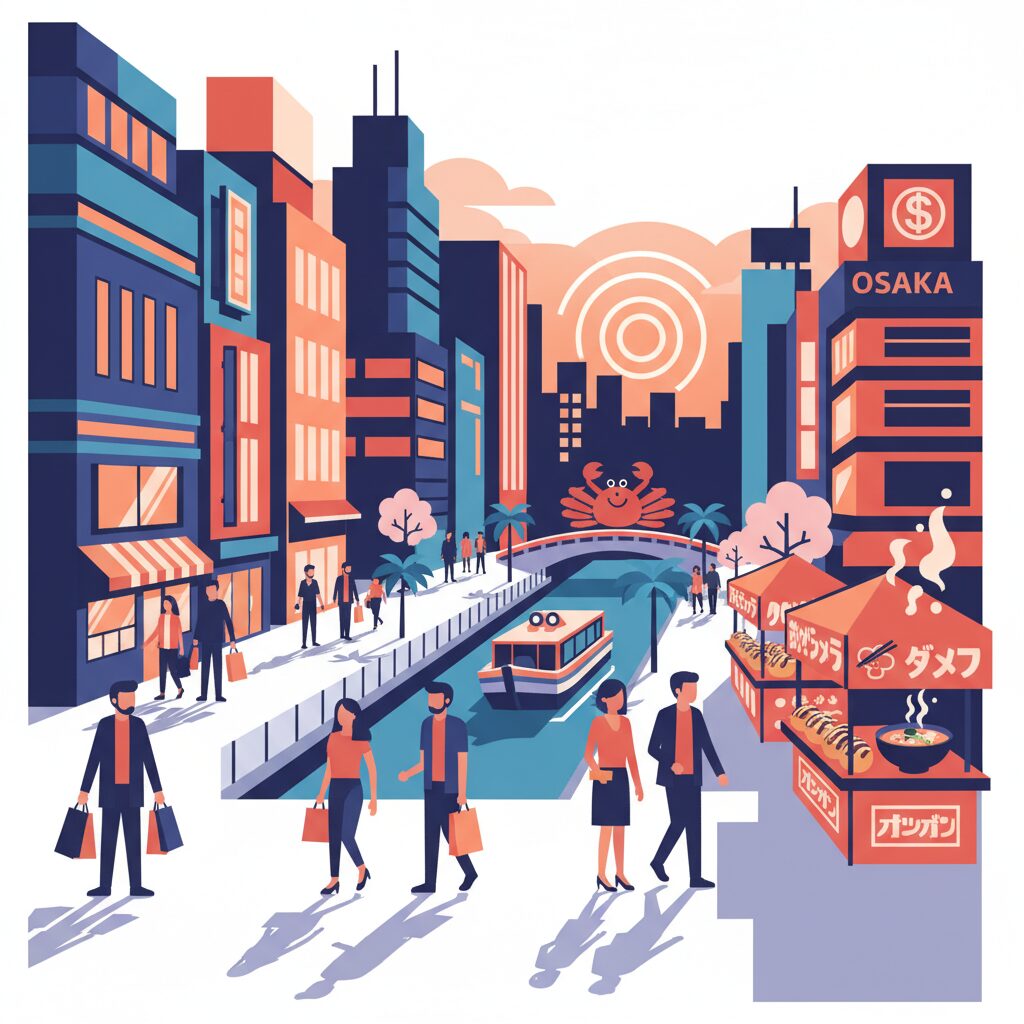
Step off the Shinkansen at Shin-Osaka Station, and you might notice it right away. It’s not the dialect, though that’s a big one. It’s not the way people stand on the right side of the escalator. It’s in the conversations. In cafes, on the train, in office break rooms, you’ll hear a constant, buzzing current of numbers. Prices. Deals. Bargains. A friend excitedly describes a new cafe not by its minimalist decor, but by its 500-yen “one-coin” lunch special that comes with a drink. A colleague shows off a new pair of leather shoes, and the first detail they offer isn’t the brand, but the unbelievable discount they found at an outlet store in Rinku Town. To an outsider, especially one coming from the brand-conscious metropolis of Tokyo, this can sound a bit… cheap. A city obsessed with pinching pennies.
But that’s the first, and most common, misunderstanding of Osaka. This isn’t about being stingy. It’s about a deeply ingrained philosophy, a cultural touchstone that defines daily life here: the relentless, joyful, and highly competitive pursuit of kosupa—cost performance. In Tokyo, status is often telegraphed through a designer handbag, a reservation at a famous restaurant with a month-long waiting list, or living in a prestigious neighborhood. The price tag is part of the prestige. In Osaka, status is earned. It’s earned by being a savvy consumer, a hunter of quality, a connoisseur of value. It’s the ability to find a Michelin-quality meal in a back alley for the price of a chain-store ramen. It’s knowing which butcher has the best cuts for yakiniku at a fraction of the department store price. This isn’t about saving money so much as it is about winning at the game of consumption. It’s a mindset that shapes everything from grocery shopping to fine dining, and understanding it is the key to unlocking the true character of this vibrant, pragmatic, and thoroughly human city.
This value-driven mindset is also influencing the city’s hospitality landscape, as seen in the recent luxury hotel boom in Osaka ahead of major international events.
The Art of “Kosupa”: More Than Just a Good Deal
In Osaka, the concept of kosupa, or cost performance, is elevated to an art form. It involves a nuanced calculation balancing price against quality, quantity, service, and even the story behind the purchase. This is the primary standard by which nearly every transaction is judged. Unlike the simple bartering often seen in tourist markets, it represents a sophisticated, city-wide passion for ensuring every yen spent yields the greatest possible value.
Decoding “Meccha Ee Yan!”: The Language of Value
Pay close attention to how people in Osaka express excitement. When someone discovers something they adore, you’ll often hear, “Kore, meccha ee yan!” which means “This is awesome!” But the conversation rarely ends there. The follow-up question is almost certain: “Namboやったん?” (“How much was it?”). While this might come off as intrusive or rude in Tokyo, it forms a fundamental part of Osaka’s social interactions. It’s not a critique of your spending; rather, it’s an invitation to share your success.
The ultimate triumph lies in announcing a surprisingly low price. “This wool coat? I got it for 5,000 yen in Amerikamura!” The response goes beyond a polite nod. It expresses genuine admiration, perhaps even a bit of envy. You’ve demonstrated savvy. You’ve beaten the system. Your coat becomes more than just clothing; it’s a trophy. The value is not just in the item but in the story of how you acquired it. The excitement of the hunt is as valuable as the prize itself.
This verbal exchange constantly reinforces shared values. Words like “Yasui!” (“Cheap!”) are exclaimed with joyful reverence, while “Takai!” (“Expensive!”) is uttered with a sharp, almost pained intake of breath. The term “Omoroi” (“Interesting” or “Funny”) is also essential. A store with ridiculously low prices or a restaurant serving hilariously large portions for 500 yen—these things are not just affordable; they’re omoroi. They add entertainment and narrative to the otherwise ordinary act of shopping, transforming it into a daily adventure.
The Tokyo Comparison: Status Symbol vs. Smart Shopper
The contrast with Tokyo couldn’t be more pronounced. In the capital, value is often linked to branding and exclusivity. Discussions around new purchases tend to focus on the designer’s latest collection, the specific boutique in Omotesando where it was bought, or the celebrity spotted wearing it. A high price is considered a feature, not a flaw—it signals quality, rarity, and social status. You’re buying into an image, a carefully crafted prestige.
In Osaka, the narrative flips. The ‘brand’ that counts is your own reputation as a savvy shopper. Flaunting a luxury logo without an impressive story (such as scoring it at a heavy discount) might even be viewed as naïve. “You paid full price for that?” is the unspoken, and sometimes spoken, criticism. It implies you were either too lazy to seek a better deal or, worse, unaware of better options. The ultimate status symbol in Osaka isn’t a Chanel bag; it’s a vintage, unnamed leather satchel found at a thrift shop in Nakazakicho that looks expensive but cost less than a plate of takoyaki.
This mindset originates from Osaka’s history as Japan’s merchant capital. For centuries, this city was home to wholesalers, traders, and artisans where business happened on the streets rather than in executive offices. Securing a good deal signified sharpness; a poor one meant inattention. This mercantile spirit is ingrained in the city’s DNA. Every resident is, in some way, a merchant at heart, always assessing, calculating, and seeking an advantage.
Where to See the Value Mindset in Action: The Osaka Retail Landscape
To genuinely grasp the kosupa philosophy, you need to experience it firsthand on the streets. Osaka’s retail landscape serves as a living museum of this concept, spanning from its extensive shopping arcades to its vibrantly gaudy supermarkets. It stands in stark contrast to the polished and tranquil shopping atmospheres of Ginza or Aoyama.
The Shotengai: The Pulsating Heart of Value Hunting
Osaka is known for its shotengai, or covered shopping arcades. These are not merely charming historical remnants; they are lively, noisy, and fiercely competitive hubs of local trade. Stroll through Tenjinbashisuji, Japan’s longest shotengai at 2.6 kilometers, and you’ll be immersed in a dizzying, thrilling sensory overload. Elderly vendors loudly promote pickled vegetables. Drugstores put up brightly colored, handwritten signs showcasing limited-time sales. Small shops offering everything from handmade tofu to affordable, cheerful clothing spill onto the sidewalks.
In this environment, the battle for the consumer’s yen is openly waged. A tiny stall selling freshly fried croquettes for 90 yen will attract a long queue, right beside a boutique offering blouses at ten times that price. An Osakan will happily wait ten minutes to save 100 yen on a snack—not because they lack money, but because it’s an iconic bargain. The croquette is delicious, the price unbeatable—the kosupa ideal realized. This experience fuels local pride. Within these arcades, there’s no place for pretense. Price, quality, and the vendor’s personality reign supreme.
Similarly, areas like Shinsaibashi and the Doguyasuji kitchenware street operate on the same principle. While high-end department stores exist, the true vibrancy lies in the independent shops, small outlets, and bargain basements where treasure hunting takes place. It’s a dynamic and democratic shopping experience where keen eyes and patience are your greatest assets.
Depachika vs. Super Tamade: The Grocery Store Divide
Osaka’s grocery culture is perfectly exemplified by two contrasting store types. On one side, there are the elegant depachika—the opulent food halls beneath department stores like Hankyu Umeda or Takashimaya in Namba. Here, you find exquisitely prepared bento boxes, perfectly marbled wagyu beef cuts, and delicate French pastries that resemble jewels. This is where you shop to impress guests, buy gifts, or indulge yourself. The quality is exceptional, but so are the prices. It’s an aspirational shopping realm, reminiscent of Tokyo’s upscale scene.
On the other side stands Super Tamade. To those unacquainted, a Super Tamade supermarket can feel baffling, almost psychedelic. Its exterior is a cacophony of gaudy neon lights and blinking pachinko-parlor-style signs. Inside, the chaos continues: booming J-pop music blends with frantic announcements of daily deals. Aisles are narrow and cluttered, lighting harsh, and the décor unabashedly un-chic. Yet the prices tell the real story. A carton of tofu for 30 yen. A pack of udon noodles for 19 yen. And the famed “1-Yen Sales,” where an item can be purchased for a single yen coin with a minimum spend.
What’s truly remarkable is the clientele. It’s not only students or bargain-conscious shoppers. Women with designer bags and businessmen in suits meticulously browse the discount bins. Why? Because the kosupa is irresistibly appealing. Why pay 150 yen for milk at a convenience store when you can get it for 98 yen at Tamade? The savings go toward what really matters—a great meal, a trip, or high-quality tech. Super Tamade is more than a grocery store; it’s a symbol of Osaka’s pragmatic resistance to overspending on daily essentials. It’s a weekly pilgrimage for the city’s savviest shoppers and a testament to the belief that true value can be discovered in the most unexpected—and brightly lit—places.
Dining Out: The “Uma-Yasu” Philosophy
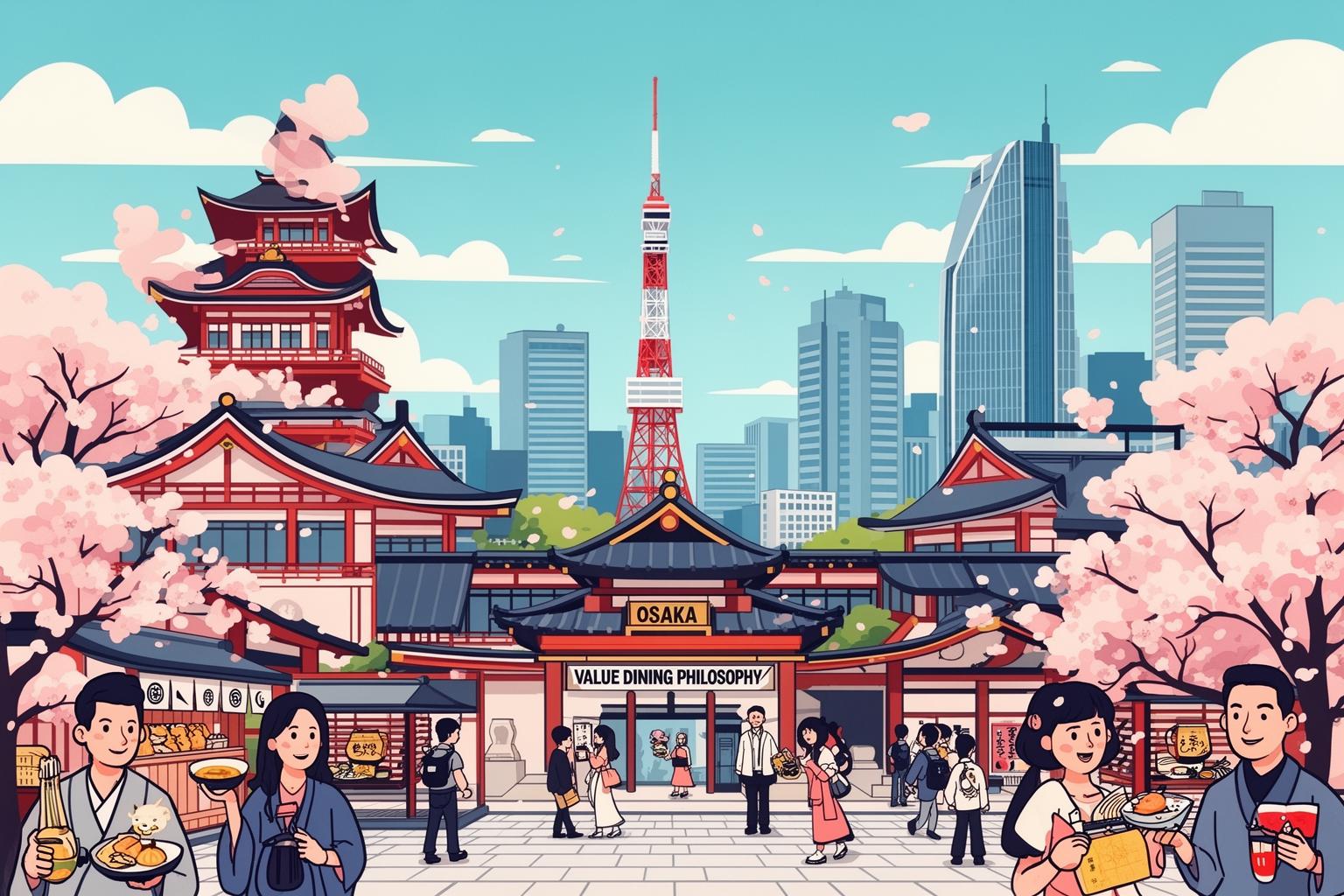
Nowhere is Osaka’s obsession with value more evident than in its food scene. The city is famously known as kuidaore, or “to eat oneself into ruin.” However, this isn’t about dining at ruinously expensive places. Rather, it’s about an abundance of outstanding food available at remarkably reasonable prices. The guiding principle for any Osaka diner is uma-yasu—a blend of umai (delicious) and yasui (cheap). This isn’t a happy accident; it’s a non-negotiable standard.
“Uma-Yasu”: Delicious and Cheap, a Non-Negotiable Standard
In Tokyo, a long queue outside a restaurant often signals exclusivity—a famous chef, a limited-time menu, or a feature in a major publication. In Osaka, a long line almost always indicates exceptional kosupa (cost performance). It’s the ramen shop serving a soul-stirring bowl for 600 yen. It’s the tachinomi (standing bar) where you can enjoy a draft beer and fresh sashimi for under 1,000 yen. It’s the okonomiyaki place that has used the same family recipe for fifty years and stubbornly refuses to raise its prices.
These establishments are local institutions, cherished and safeguarded by loyal patrons. The owners are often celebrated not as high-end culinary artists but as skilled artisans who have mastered delivering maximum satisfaction at a fair price. The atmosphere might be a bit rough around the edges—think cramped counters, worn furniture, and no-frills service—but that’s part of the charm. The focus is squarely on the food. You’re not paying for fancy decor or a prestigious name; you’re paying for an excellent meal. This purity of purpose is what Osakans respect.
The Lunchtime Battleground
Observe the business districts like Yodoyabashi or Hommachi around noon, and you’ll see the uma-yasu philosophy in full effect. The lunchtime rush is a fiercely competitive battleground. The holy grail is the “one-coin lunch,” a full meal for a single 500-yen coin. Restaurants go to great lengths to offer enticing one-coin specials, from heaping plates of karaage (fried chicken) with rice and miso soup to generous bowls of katsudon (pork cutlet on rice). Office workers, armed with extensive knowledge of the local lunch scene, navigate this terrain skillfully, discussing the day’s best deals with the seriousness of stockbrokers analyzing the market. Paying 1,200 yen for a mediocre pasta lunch is not just a waste of money to them; it’s a personal failure.
This sharply contrasts with many Tokyo business districts, where a 1,500-yen lunch set at a stylish cafe is common. The higher price is often justified by factors like organic ingredients, elegant presentation, or a relaxing atmosphere. While Osakans appreciate such qualities, their fundamental value calculation differs. For an everyday meal, taste and portion size must heavily outweigh price. Anything else is seen as a poor investment.
It’s Not About Being Stingy, It’s About Being Smart
It’s important to emphasize this: Osakans are not stingy. This is a common misconception visitors often have. The city boasts many high-end restaurants, and people will happily spend tens of thousands of yen on an unforgettable kappo dining experience or a perfectly grilled steak. But the expense must be justified. The value must be unmistakable.
An Osakan will judge a 10,000-yen dinner with the same scrutiny they apply to a 100-yen takoyaki. Are the ingredients truly exceptional? Does the chef’s skill shine through in every dish? Is the service attentive and warm? If the answer is yes, they will pay gladly and rave about the experience to everyone they know. But if a restaurant charges a premium for a fancy name or trendy location without delivering on fundamentals, it will swiftly be labeled kosupa warui (bad cost performance). Word travels quickly in this city, and a reputation for poor value is a death sentence. This merchant mindset—a rational, clear-eyed assessment of worth—is applied to every purchase, big or small. It’s not about how much you spend; it’s about what you get for what you spend.
The Social Aspect of Value: It’s a Conversation Starter
In Osaka, scoring a good deal isn’t a private triumph to enjoy quietly. It’s a public display, a form of social currency, and a way to foster community. The culture of kosupa is deeply woven into the way people interact and connect with one another.
“How Much Was It?”: A Question of Camaraderie, Not Intrusion
As previously noted, the question “How much was it?” is fundamental to communication in Osaka. It invites a story and a shared moment. When you tell a friend you got a great bargain on a new gadget, you’re not just passing along information—you’re sharing valuable insight. The implied follow-up is, “Where did you get it?” The person asking wants to learn your secret so they can join in the win.
This fosters a collaborative network of savvy shoppers. People openly swap tips about which supermarket offers the cheapest eggs on Tuesdays, which clothing store has a secret sale, or which butcher prepares the best mince cutlets. This exchange of information strengthens social ties. It’s a way of looking out for one another, a collective effort to live well and affordably in the city. Refusing to share the price or being evasive is seen as shutting down this friendly interaction, perceived as oddly secretive or even antisocial.
The “Omake” Culture: The Little Extra That Means a Lot
Another cornerstone of Osaka’s value culture is omake, meaning a small extra, a bonus, or a freebie. It’s the baker slipping in an extra bread roll because you’re a regular customer, the fruit stand owner adding a couple of extra mikan oranges to your bag, or the bartender at your local izakaya pouring a little more generously.
Omake is the human element in transactions. It’s a gesture that says, “I see you, I appreciate your business, and here’s a little something to show it.” This simple act creates a strong sense of personal connection and loyalty. It turns a straightforward purchase into a meaningful relationship. This contrasts sharply with the often impersonal, strictly by-the-book service found in upscale Tokyo department stores. In Osaka, the best value is frequently found in these intangible moments of generosity, reinforcing the idea that a good deal isn’t just about the lowest price but about the overall warmth and humanity of the experience.
What This Means for Living in Osaka
For a foreigner settling here, grasping this value-oriented mindset is crucial. It’s not merely a quirky trait; it’s the city’s foundational approach. Embracing this perspective can make life more affordable while also richer and more connected.
A More Grounded, Practical Approach to Life
Living in Osaka cultivates a unique consumer awareness. You naturally become more attentive to prices, begin questioning the true value of items, and seek quality beyond just brand names. This shift can be incredibly freeing. There’s far less social pressure to keep up with the latest trends or own the “right” brands. Your worth isn’t defined by the logo on your clothes. Instead, respect comes from being practical, resourceful, and well-informed.
This practicality permeates every aspect of life, encouraging a culture of repair instead of replacement, discovering joy in simple, well-made items, and prioritizing experiences over material goods—unless those goods are genuinely great bargains. It prompts you to explore your local neighborhood, get to know shop owners, and actively engage in the local economy rather than simply consume passively.
Navigating the City as a Foreign Resident
How should you adapt? First, dive in. Wander through the shotengai. Don’t be overwhelmed by the noise and crowds. Pop into the small shops. Try the street food. Check out what everyone’s queuing for—it’s likely something fantastic. Second, engage with people. Ask the butcher for recommendations. Ask the cashier where she likes to eat lunch. Osakans are usually eager to share their knowledge, especially with newcomers who show genuine curiosity.
If someone compliments your new jacket and inquires about the price, don’t take offense. View it as a friendly icebreaker. Smile, proudly share the price (especially if it was a bargain), and tell them where you bought it. You might even make a new friend. Lastly, adjust your own sense of value. Judge restaurants by the flavor of their food, not by the elegance of the décor. Assess products by quality, not by packaging. This is the Osaka way.
Embracing this mindset will save you money and help you connect with the city on a deeper level. You’ll transition from tourist to resident, from observer to active participant in the ongoing and endlessly engaging pursuit of value.
Osaka’s passion for kosupa goes beyond the stereotype of frugality. It embodies a life philosophy rooted in merchant pragmatism, refined over centuries of trade. It values substance over style, practicality over prestige, and community wisdom over corporate marketing. While Tokyo’s glamour can be dazzling, it often feels like a performance—a city constantly projecting perfection. Osaka, with its lively markets, straightforward eateries, and refreshingly candid people, feels genuine and unapologetically authentic. Here, the greatest luxury isn’t measured by a price tag but by the deep satisfaction of living wisely, spending sensibly, and truly scoring a great deal.