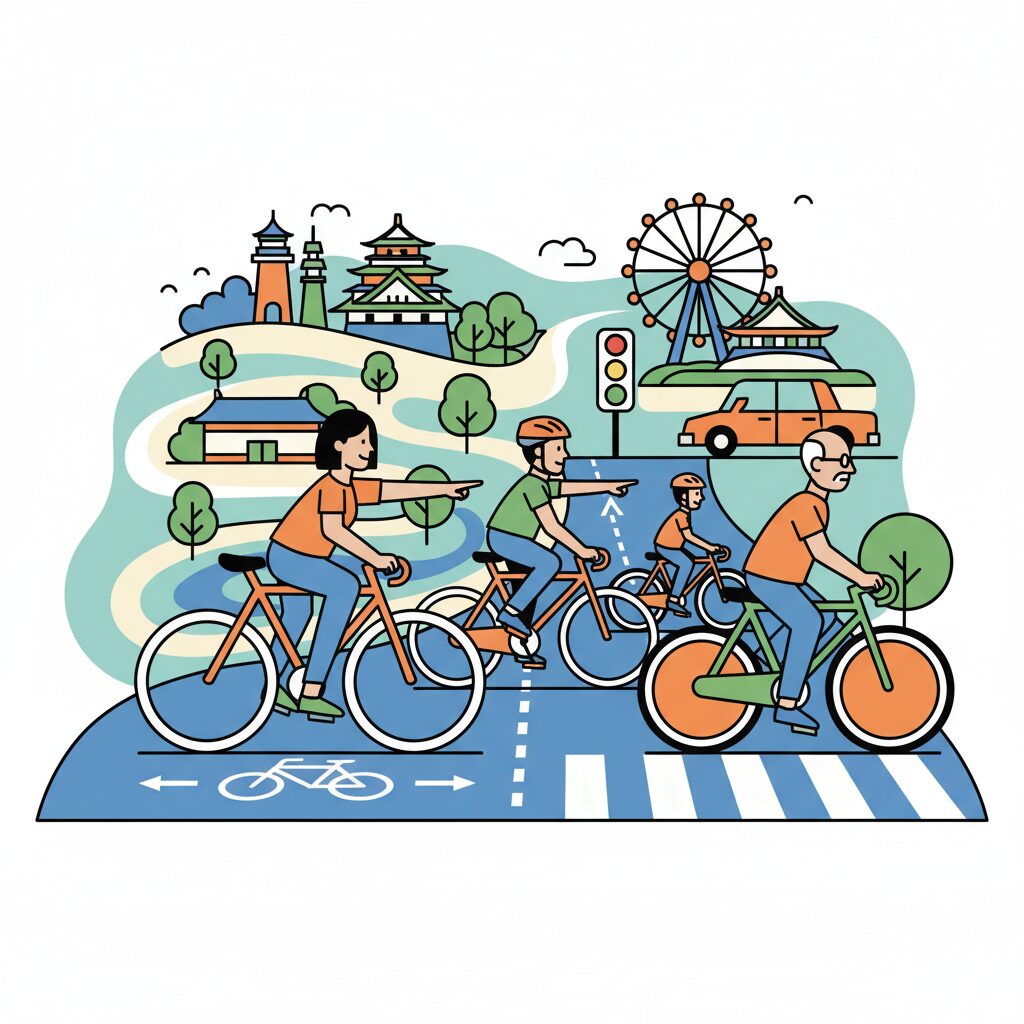
Welcome to Osaka, where the city’s true rhythm isn’t found in the clatter of its subway trains or the chatter of its marketplaces, but in the gentle, persistent whir of bicycle wheels on pavement. Step off the train in any residential neighborhood, from the hip streets of Horie to the quiet lanes of Abeno, and you’ll see it: a river of bicycles flowing in every direction. They lean against every available railing, cluster in front of convenience stores, and glide down crowded shopping arcades with a practiced, nonchalant grace. This isn’t a city that cycles for sport or for show. In Osaka, the bicycle is not a lifestyle accessory; it is life itself. It’s the city’s circulatory system, the unofficial public transport, the humble workhorse that carries groceries, children, and business plans from one end of town to the other.
If you’re coming from Tokyo, the difference is immediate and striking. Tokyo has its cyclists, of course, but they often feel like a subculture—sleek road bikes zipping along the Tamagawa, or meticulously clean cross-bikes parked in designated, orderly rows. It’s a system that feels, well, very Tokyo: efficient, regulated, and aesthetically conscious. Osaka, on the other hand, is a kingdom ruled by a single, unglamorous monarch: the mamachari. The “mom’s chariot.” These sturdy, basket-equipped, often child-seat-laden bikes are the absolute soul of the city on two wheels. Their presence speaks to a different set of priorities, one where practicality bulldozes elegance and getting things done is the highest virtue. To the uninitiated, the result can look like pure, unadulterated chaos. A chaotic ballet of weaving, near-misses, and sidewalk surfing that seems to defy all known laws of traffic and physics. But what looks like anarchy is actually a highly evolved, unspoken system of communication and etiquette. It’s a language of subtle nods, swift adjustments, and shared assumptions that every local understands instinctively. To truly live in Osaka, you must learn to speak this language. You must learn to ride.
Once you’ve mastered the local cycling etiquette, you can fully immerse yourself in other unique aspects of Osaka’s culture, such as its vibrant stand-up bar scene.
The Mamachari Kingdom: Osaka’s Unofficial Vehicle
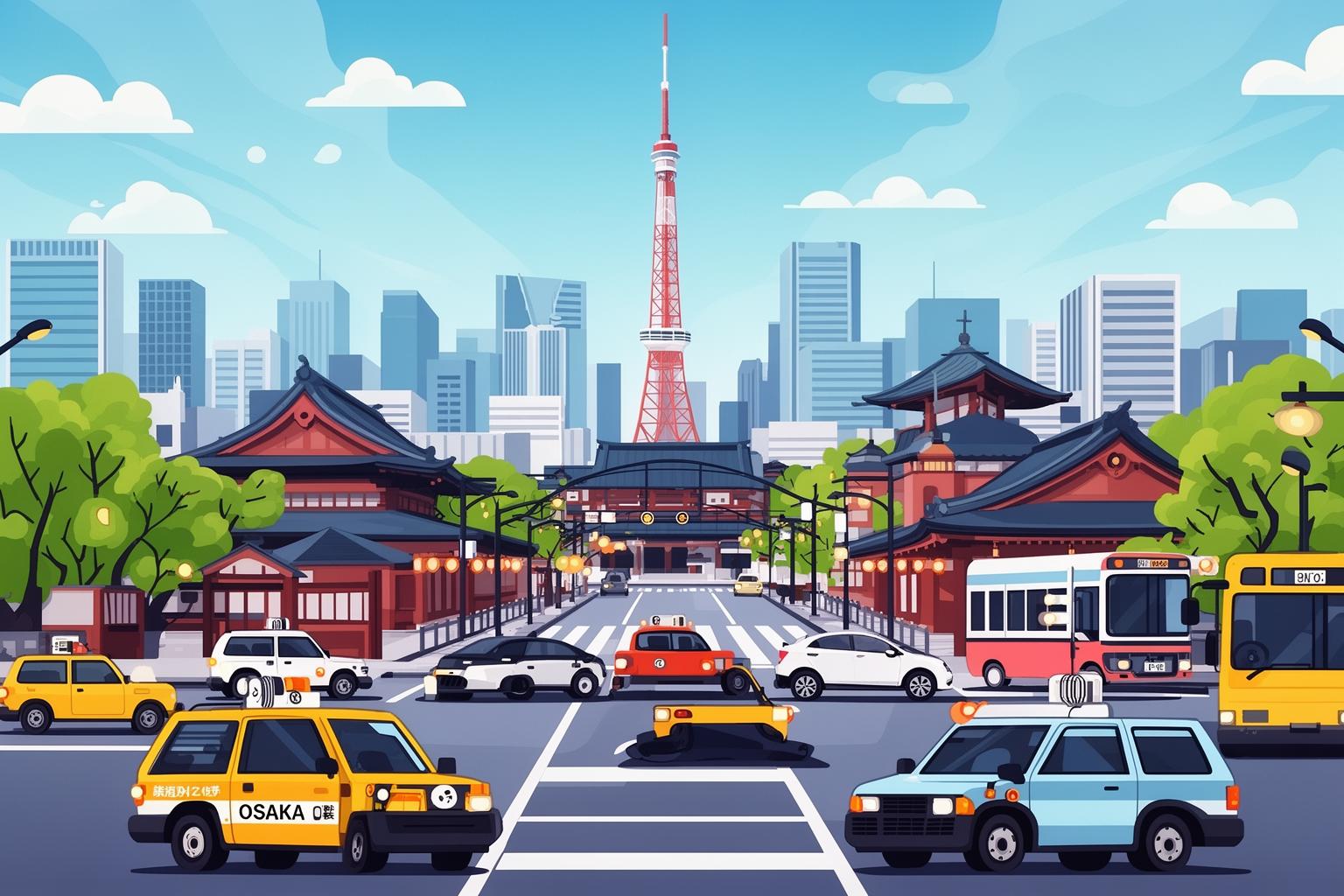
The story of cycling in Osaka begins and ends with the mamachari. To truly understand this bicycle is to grasp the city’s practical core. It stands in stark contrast to performance bikes. It’s heavy, made of steel, and usually comes with just three gears, if you’re lucky. Its design prioritizes function over aesthetics. The step-through frame allows for easy mounting and dismounting, even while wearing a skirt or business clothes. Upright handlebars promote a comfortable, leisurely posture, enhancing situational awareness. The front basket is not an optional add-on but an essential feature, meant to be filled with daikon radishes, bags of rice, and school bags. Many also have a sturdy rear rack, often used to securely attach one or two child seats. It serves as a minivan, a shopping cart, and a commuter vehicle all in one.
In Osaka, the mamachari marks different stages of life. You’ll see high school students racing to beat the morning bell. Young mothers, experts in balance, ferry one child on the back, another in a front-mounted seat, with groceries hanging precariously from the handlebars. Salarymen in crisp suits pedal the last kilometer from the station to their offices, their leather briefcases resting in the front basket. Elderly grandmothers move at a slow but steady pace, heading to the local shotengai (shopping arcade). The bike extends their legs, offering freedom and independence in the crowded cityscape. It embodies a deeply rooted mindset: Why wait ten minutes for the bus when you can just hop on your bike? Why pay for a train ride of two stops when you can pedal for free? This frugal, efficiency-minded attitude is quintessentially Osaka.
Look closely at the bikes, and you’ll see their owners’ personalities. Some are old and rusty, the creak of their chains a familiar neighborhood sound. Others are customized with wide, cushioned saddles, rain covers for child seats, cup holders for a morning coffee, and even smartphone mounts for navigation. The most Osaka of all accessories, however, is the sasube: a clever device that clamps onto the handlebars to hold an umbrella, freeing both hands for steering on rainy days. It perfectly symbolizes Osaka’s inventive, rule-bending practicality.
The Rules of the Road: Official Law vs. On-the-Ground Reality
This is where most newcomers become completely confused. If you consult the official traffic laws in Japan, the rules for cyclists are perfectly clear. Bicycles are classified as “light vehicles” and, with few exceptions, must ride on the left side of the road alongside car traffic. Riding on the sidewalk is forbidden unless specific signs allow it. Using your phone, listening to music with headphones, and yes, riding while holding an umbrella, are all illegal. At night, a front light is required. These are the regulations.
Now, spend five minutes observing any moderately busy street in Osaka, and you’ll see that the rulebook has been thrown into the Dotonbori Canal. This isn’t because Osakans are lawless rebels; rather, a different, more flexible set of rules is in effect. A social contract has developed between pedestrians, cyclists, and cars, shaped by the city’s narrow streets, dense population, and practical demands.
Sidewalk Surfing: The Default Mode
Why does nearly everyone ride on the sidewalk? The answer is simple: perceived safety. Osaka’s roads are often chaotic, filled with speeding taxis, large delivery trucks, and impatient drivers. For the average person on a heavy, slow mamachari, cycling in the street feels like a death wish. So, the sidewalk becomes the default bike lane. This creates a complex, shared space. It’s not a free-for-all, even if it appears that way. There is an unspoken hierarchy. Pedestrians, especially the elderly and children, have the ultimate right of way. Cyclists are expected to be more agile, responsible for maneuvering around those on foot. You must ride slowly, anticipate sudden stops, and be ready to yield at any moment.
The Osaka Weave: A Dance of Intuition
Since the sidewalk is a two-way path for both bikes and pedestrians, a continuous, fluid negotiation occurs. This is the “Osaka Weave.” There is no strict “keep left” or “keep right” rule. Instead, you must read the movements of everyone nearby. You watch a person’s shoulders, the direction of their gaze, their pace. Are they about to enter a shop? Are they looking at their phone, completely unaware? You make dozens of subtle adjustments every second, swerving slightly, slowing down, or sometimes stopping altogether. It’s a dance of anticipation and silent mutual consent. An oncoming cyclist won’t stick to their “side”; they’ll aim for the biggest gap, assuming you will do the same. Two people meet head-on, and at the last second, both swerve in opposite directions with millimeter precision, never breaking their stride. It’s a testament to the high-context nature of Japanese communication, expressed kinetically. It demands trust—the belief that the other person is paying just as much attention as you are.
The Bell: Use Only in Case of Existential Threat
Every mamachari comes with a bell. In many cultures, a gentle ring is a polite way to say, “Excuse me, coming through.” Do that in Osaka, and you’ll receive withering glares. Ringing your bell at a pedestrian is considered extremely aggressive and rude. It implies they are in your way and that you are more important. It’s like honking your car horn the moment the light turns green. In Osaka, the sound of a bicycle bell usually means one of two things: a child is playing with it, or a cyclist is about to crash and is panicking. The acceptable way to signal your presence from behind is to do nothing and simply find a way around. If the path is truly blocked, a soft, apologetic cough or a quiet “sumimasen” (excuse me) is preferred. The bell is a last-resort tool, an alarm for genuine emergencies, not a means to clear your path.
Rain, Umbrellas, and Pragmatic Defiance
Osaka is known for sudden downpours. When the rain starts, umbrellas come out. And yes, you will see hundreds of people riding one-handed while holding an umbrella in the other. This practice, called kasa-sashi unten, is both illegal and dangerous. Yet, it is incredibly common. The logic is simple and brutally pragmatic: “I am on my bike. It is raining. I don’t want to get wet. Therefore, I will use my umbrella.” It’s an instant risk-reward calculation. This is why the sasube umbrella holder was invented and is so popular here. It’s a clever engineering solution to a problem caused by a casual disregard for a specific rule. It perfectly embodies the Osaka spirit: if a rule is impractical, find a smart way to work around it rather than blindly follow it.
Parking Pandemonium: The Art of the Squeeze
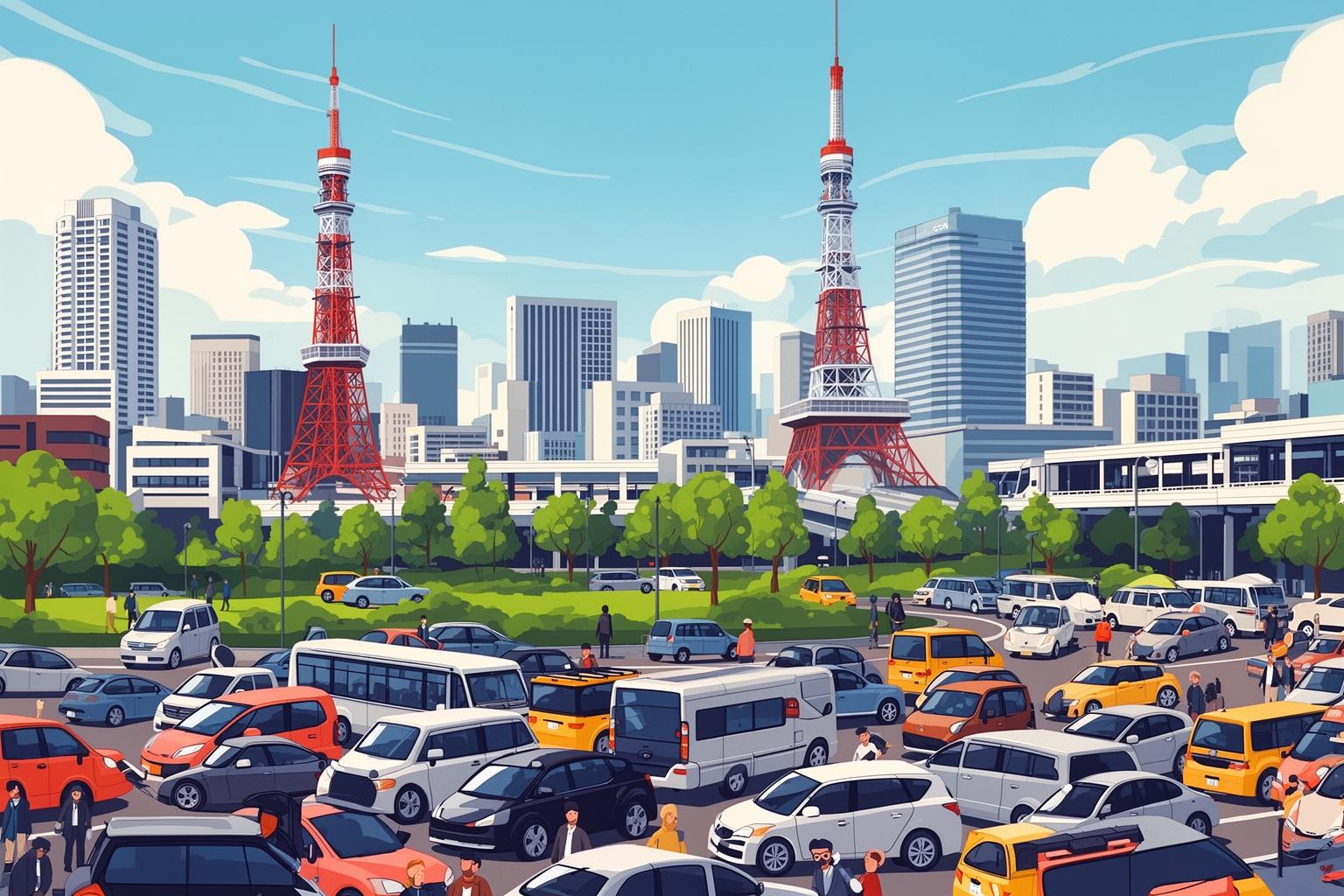
The vast number of bicycles in Osaka creates a logistical headache: where can they all be accommodated? The city faces an ongoing struggle between the demand for bike parking and the reality of limited space. This conflict unfolds at every street corner.
Official vs. Unofficial Parking
Most train stations are surrounded by official, multi-level bicycle parking facilities called churinjo. These are feats of spatial efficiency, featuring double-decker racks and automated systems. You can usually pay for daily use (typically 100-200 yen) or subscribe to a monthly plan if you commute regularly. These are the designated places to park your bike. However, they often fill up quickly and may not be convenient for a quick stop at the supermarket or bank.
This is where the unofficial spots come into play. Any available section of railing or wide pavement that doesn’t block an entrance becomes a potential parking space. Outside apartment buildings, convenience stores, and supermarkets, bikes are lined up with military precision, often packed so tightly it’s tricky to retrieve your own. There’s an unspoken etiquette here: you park neatly, align your bike with the others, leave a clear pedestrian path, and absolutely never block the yellow tactile paving strips on the sidewalk, essential for the visually impaired. Blocking these strips is one of the few inviolable rules of this unofficial code.
The Threat of the Silver Taggers
While the city tolerates some guerilla parking, there are clear limits. In busy areas, especially around major stations like Umeda and Namba, enforcement is much stricter. Signs explicitly forbid bicycle parking, and ignoring them comes at a risk. Teams of officials, often older men on scooters known as the “silver taggers,” patrol these zones. Their tool of enforcement is a brightly colored warning tag, zip-tied to your bike’s frame or handlebars.
This tag is your one and only warning. It shows the date and time and states that if the bike is not moved within a certain timeframe (ranging from a few hours in high-enforcement areas to up to a week elsewhere), it will be impounded. This threat should be taken seriously. Retrieving your bike from the impound lot (jitensha hokanjo) is a bureaucratic hassle. You must figure out which of the city’s several lots holds your bike, travel there—often to an inconvenient industrial district—present your ID and the key to your bike lock, complete paperwork, and pay a fine, usually around 2,500 to 3,000 yen. It’s a costly and time-consuming lesson in where not to park.
A Foreigner’s Guide to Blending In
So, how do you navigate this complex world as a non-local? It’s about striking the right balance between adopting local customs and maintaining a healthy sense of self-preservation. Here are some key habits to develop.
Go With the Flow, But Stay Vigilant
Your initial reaction might be to strictly follow the official rules and ride in the street. However, you’ll quickly notice you’re the only one doing so, which may make you feel more, not less, vulnerable. The secret is to adapt to the local flow. Ride on the sidewalk, but do so cautiously. Go slower than you think necessary. Assume every pedestrian might suddenly stop or change direction without warning. Your greatest asset as a newcomer is heightened awareness—you’re not on autopilot. Local riders can become complacent, which is often when accidents occur. Be the careful rider.
Master the Parking Game
When you first get your bike, spend some time walking around your neighborhood and observe where people park. Take note of the unofficial but widely accepted lines of bikes, as well as areas that are consistently kept clear. When unsure, opt for a paid chūrinjo. The 150 yen fee is a small price for peace of mind. If you do park on the street for a quick errand, be considerate. Ask yourself, “Am I blocking anyone? Is this causing a nuisance?” If the answer is even maybe, find another spot. And always, always avoid the yellow tactile paving.
Your Bike’s Paperwork: Bōhan Tōroku
When you purchase a bicycle in Japan, whether brand new from a store or used from a friend, you are legally required to register it with the police. This is known as bōhan tōroku, or crime prevention registration. The bike shop can handle it for a small fee (around 600 yen). You will receive a small, durable orange (or sometimes blue) sticker with a registration number, which must be affixed to the bike’s frame. Don’t overlook this step. Police do random checks, scanning the sticker and verifying it against their database to ensure the bike isn’t stolen. For foreigners, being stopped by the police can be intimidating, but if your registration is current, the process is quick and professional. It’s a routine check, not an accusation. Without registration, expect a lengthy discussion and possibly having your bike confiscated until ownership is confirmed.
Locks, Lights, and Common Sense
Bicycle theft is unfortunately common in Osaka. The simple lock integrated into the back wheel of most mamacharis only prevents the wheel from turning but doesn’t stop someone from lifting and carrying the bike away. Invest in a second, high-quality lock, such as a thick chain or U-lock, and secure your bike’s frame to a fixed object whenever possible. At night, lights are essential. While many locals ride without them in the dark, the police often set up checkpoints to fine cyclists lacking lights. A basic set of self-charging LED lights is an affordable investment in both safety and avoiding fines.
The Freewheeling Soul of the City
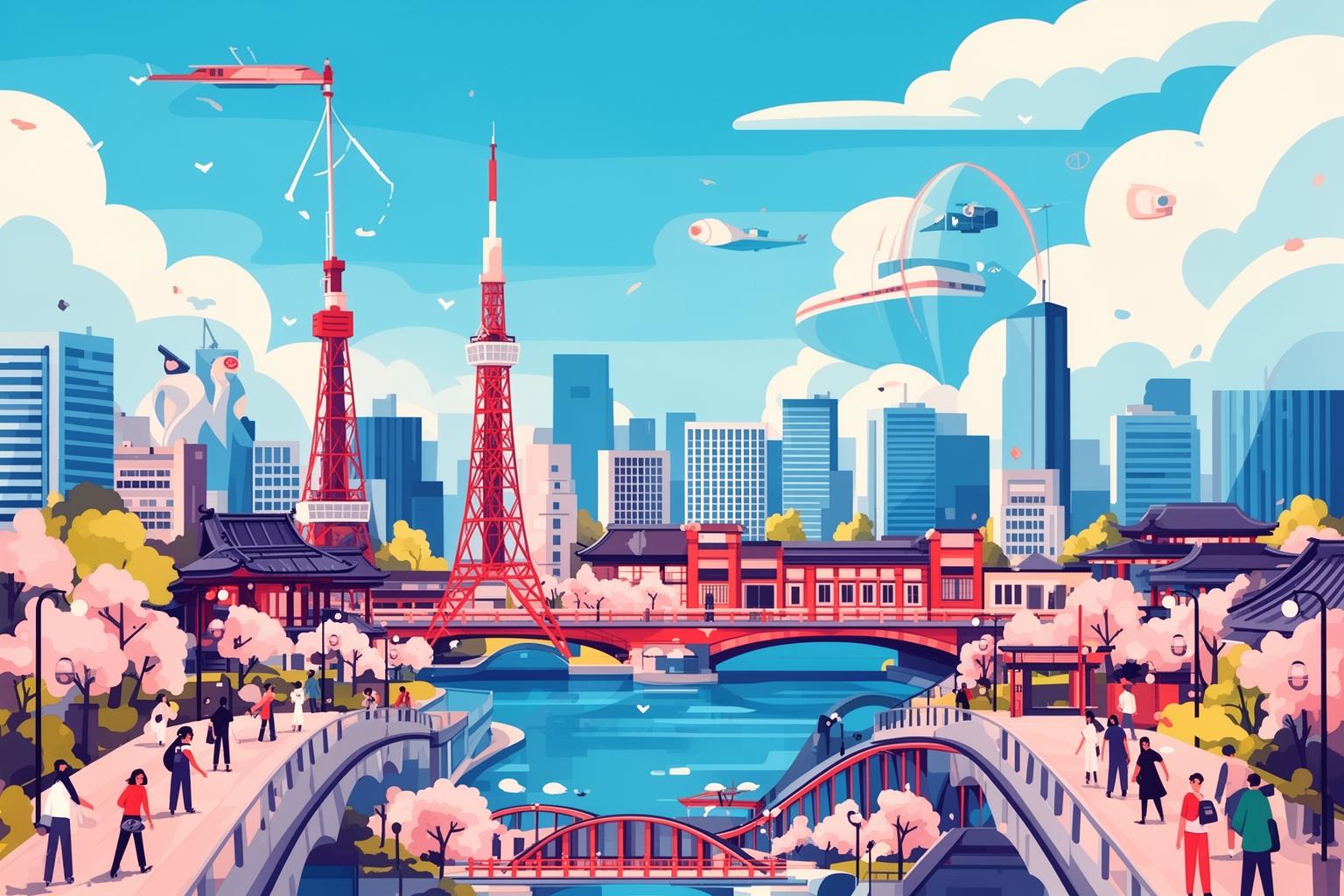
Ultimately, the way people ride their bikes in Osaka serves as a perfect metaphor for the city itself. From the outside, it seems chaotic and disorderly, yet it functions according to a deep, internal logic of mutual understanding, pragmatism, and a slight disregard for strict authority. It’s a system designed for people, not for regulations. The bicycle links the city’s diverse neighborhoods, connecting grand boulevards with the smallest back alleys. It operates at a human scale, encouraging chance encounters and a shared sense of space.
In Tokyo, you often feel like a small part of a vast, precisely tuned machine. Everything has its place, its time, and its designated path. In Osaka, you feel like a part of a living organism—messy, unpredictable, but remarkably efficient in its own way. Learning to ride here is more than just mastering a mode of transportation. It’s an immersion into the local mindset, teaching you to be adaptable, to interpret non-verbal signals, to carve your own path within the crowd, and to understand that sometimes, the most effective system is one that embraces a bit of human-led, freewheeling chaos.