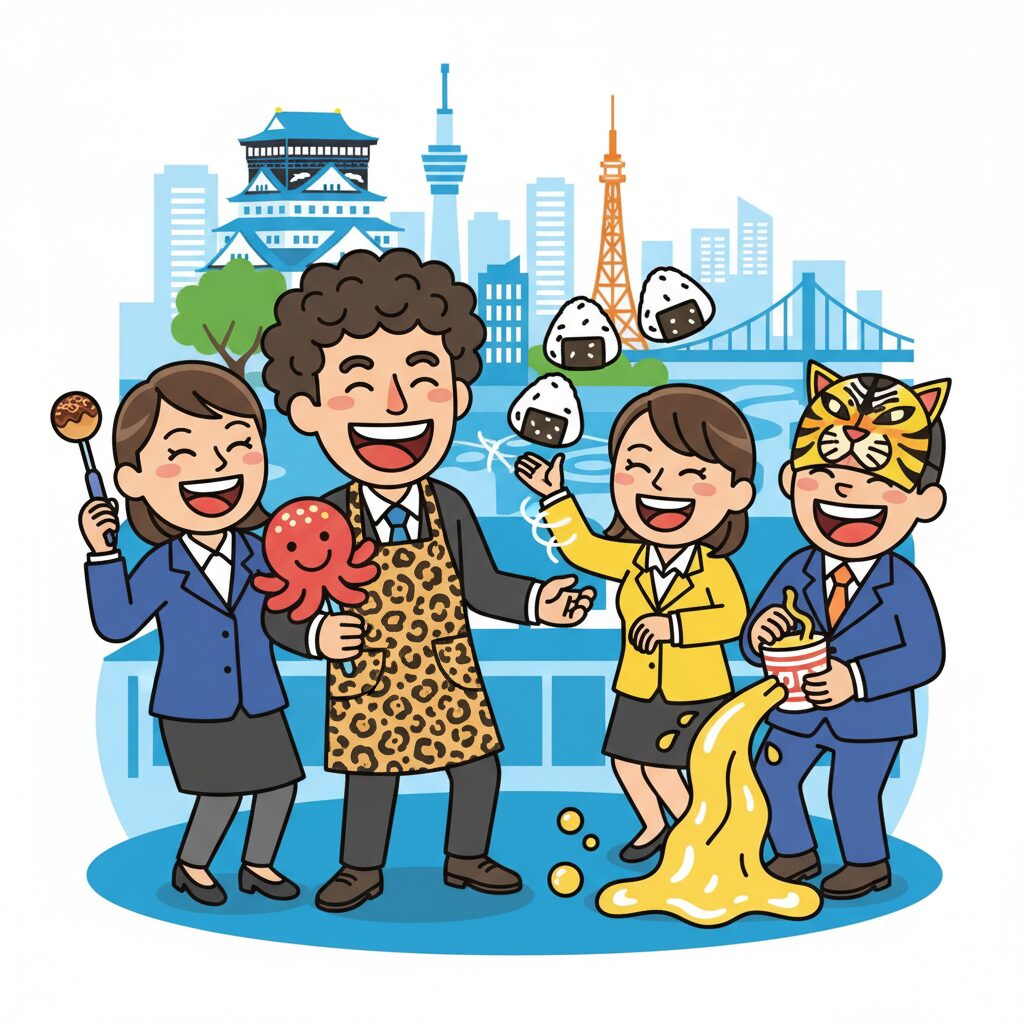
I remember my first week at an office in Honmachi, the commercial heart of Osaka. I was fresh out of university, armed with a degree, textbook-perfect business Japanese, and a mental image of the Japanese workplace forged from dramas and documentaries: silent, intensely focused, a sea of dark suits nodding in unison to a manager’s solemn pronouncements. I was prepared for reverence, for quiet diligence, for a world where every interaction was governed by a complex, unspoken code of hierarchical respect. What I was not prepared for was my manager, a stern-looking man in his fifties named Tanaka-bucho, staring at a young salesperson’s report and declaring, loud enough for the whole floor to hear, “Sato-kun, did you write this with your feet? My cat could make a better PowerPoint.”
My blood ran cold. In any other professional context I could imagine, this was a public execution. A career-ending humiliation. Young Sato-kun would surely turn beet red, offer a thousand apologies, and spend the rest of the week hiding in the bathroom. I braced for the fallout. But Sato-kun didn’t flinch. He bowed slightly, a smirk playing on his lips, and shot back, “Only if it’s a left-handed cat, bucho. Everyone knows they’re better at graphic design.” The entire office erupted in laughter. Tanaka-bucho chuckled, a deep, rumbling sound, and clapped Sato-kun on the shoulder. “Just fix the numbers on page three, you idiot. And do it before you turn into a pumpkin.” The crisis was over. In fact, it was never a crisis at all. It was a normal Tuesday.
That single exchange shattered my carefully constructed image of the Japanese office. This wasn’t the rigid, silent world I’d been taught to expect. This was something else entirely—a dynamic, verbal ecosystem that ran on a fuel I hadn’t anticipated: humor. It was my first lesson in a fundamental truth about this city. In Osaka, laughter isn’t just a pleasant diversion from work; it’s part of the work itself. It’s a communication tool, a social lubricant, a pressure valve, and most importantly, the primary currency through which trust is built and maintained. For a foreigner, especially one coming from a culture where professional and personal spheres are kept strictly separate, or from another East Asian culture that prizes saving face above all else, navigating this world of banter, teasing, and performative comedy can be utterly bewildering. It feels like being handed a script in a language you don’t speak, for a play that everyone else has been rehearsing their entire lives. But learning that language, understanding the rhythm and rules of Osaka’s unique brand of workplace humor, is the key to unlocking not just professional success, but a genuine connection with the heart and soul of this incredible city.
Mastering this unique communication style is just one aspect of adapting to life in Osaka, much like understanding the essential cycling habits and etiquette required to navigate the city like a local.
The Unspoken Language of Laughter: Why Osaka is a World Apart
To truly understand the role of humor in an Osaka office, you first need to recognize what it is replacing or, more precisely, enhancing. The typical Japanese business culture, heavily shaped by Tokyo’s corporate standards, is built on formality, implicit understanding, and a clear, almost tangible hierarchy. In Osaka, that foundation remains but is overlaid with a lively, vibrant, and often loud layer of casual interaction. The contrast is striking, a sensory jolt for anyone familiar with both environments.
A Tale of Two Cities: The Sonic Landscape of the Tokyo vs. Osaka Office
Picture entering a typical office in Marunouchi, Tokyo’s financial district. The first thing you notice is the sound—or the quiet. There’s a soft, ambient hum: the whisper of air conditioning, the gentle clatter of keyboards, the rustle of papers. Voices are low and measured. When the phone rings, it’s answered with a crisp, formal greeting. Communication is deliberate and efficient. You hear the vocabulary of horenso—hokoku (to report), renraku (to contact), sodan (to consult)—a steady, quiet flow of information exchange. The hierarchy shows in movements, slight bows to superiors, and the precise use of honorifics. It feels like a space designed for focused, individual work—a monastery of modern commerce.
Now, step into an office in Umeda, one of Osaka’s business centers. The soundscape is completely different. It’s not chaotic but vibrant. Laughter bubbles up from across the room. Colleagues call out to each other, often dropping formal titles in favor of nicknames. The distinct, musical rhythm of the Osaka dialect adds a more direct, emotional tone than standard Japanese. A manager might discuss serious sales figures one moment and then jokingly tease an employee about their new haircut the next. The atmosphere buzzes with energy, a sense of shared space and teamwork. It feels less like a monastery and more like a lively marketplace or a big family kitchen—a place where work happens amid continuous human interaction.
This contrast isn’t just acoustic; it reflects history. Tokyo’s identity was shaped as the center of the samurai government, the Edo Shogunate—a city founded on military values: order, discipline, and strict social order. Form and process were essential. Communication was designed to reinforce hierarchy and eliminate ambiguity. Osaka, by contrast, was Japan’s commercial powerhouse, known as tenka no daidokoro—“the nation’s kitchen.” It was a city of merchants (shonin), where success depended less on strict rules and more on building relationships, assessing character quickly, and flexible negotiation. In a world where deals were sealed with a handshake and reputation was everything, knowing your counterpart was vital. Humor became a crucial tool. Being quick-witted signaled intelligence. Handling teasing showed resilience and confidence. A shared laugh built instant rapport and broke down barriers, enabling more honest, direct negotiation. The bottom line mattered most, and if banter helped reach it faster, so much the better. This merchant spirit runs deep in Osaka’s modern workplace.
The Anatomy of Osaka Banter: Deconstructing the Comedy
What outsiders might see as a random mix of jokes or insults is actually a well-structured form of communication, rooted in Japanese comedy traditions, especially manzai. Learning its components is like mastering the grammar of Osaka’s social language.
The Heart of the Matter: Boke and Tsukkomi
The key dynamic is that between boke and tsukkomi, the classic straight man/funny man duo of manzai comedy. The boke (from the verb bokeru, meaning to be air-headed or senile) says or does something foolish or absurd. The tsukkomi (from tsukkomu, meaning to thrust or poke) delivers the sharp, corrective remark, exposing the boke’s absurdity. In comedy, this might involve a playful tap with a paper fan. In the office, it’s verbal but follows the same pattern.
Consider the scenario with Tanaka-bucho and Sato-kun. Sato-kun’s flawed report sets him up as the boke. Tanaka-bucho’s exaggerated comment, “Did you write this with your feet?” is the first tsukkomi—a classic comedic exaggeration. Sato-kun’s clever response avoids passivity; instead of apologizing profusely, he embraces the boke role and adds to the absurdity: “Only if it’s a left-handed cat.” This invites the final tsukkomi from his boss: “Just fix the numbers, you idiot.” Here, “idiot” (aho), a serious insult in Tokyo, is affectionate in Osaka, marking the end of the joke and a return to work.
This exchange isn’t confrontational; it’s collaborative. It shows that Tanaka-bucho is paying close attention to Sato-kun’s work, and Sato-kun is confident and quick-witted. Both can distinguish serious mistakes from moments for humor. The surrounding laughter isn’t mocking Sato-kun but appreciating a successful comedic interaction. It reflects the positive rapport between manager and subordinate. For foreigners, the lesson is that when receiving a tsukkomi, the right response often isn’t a serious apology but a clever continuation of the joke—it shows you’re playing along.
The Armor of Humility: Self-Deprecation (Jigyaku)
Another key aspect of Osaka humor is jigyaku, or self-deprecation. In a culture sensitive to direct criticism, making fun of oneself is the safest way to appear humble, approachable, and non-threatening. It’s a preemptive strike against one’s own ego. A manager might open a meeting by saying, “I know you’re busy, so I’ll try to be quick before my old brain forgets what I’m supposed to say.” An employee who made a mistake might present a correction with, “Here’s the revised budget, hopefully without any of my signature creative accounting this time.”
This plays a vital role in easing hierarchical tension. When a superior self-mockingly jokes, it signals, “Yes, I’m your boss, but I’m also human and flawed. You don’t need to fear me.” It creates psychological safety, encouraging juniors to speak up, ask questions, or admit mistakes without fear. For foreigners, mastering some self-deprecating humor is a fast way to fit in. Joking about your struggles with Japanese, confusion over customs, or inability to eat natto instantly makes you more relatable and shows you don’t take yourself too seriously—a highly valued trait in Osaka.
The Mark of Intimacy: Teasing (Ijiri)
The most challenging form of humor for outsiders is ijiri, or teasing, which can seem like bullying. A colleague might be endlessly teased for supporting the Hanshin Tigers baseball team, especially during a losing streak. Another might be teased about coming from a rival area like Kyoto (“Oh, you’re from Kyoto? Do you speak in riddles all day?”). Someone might be teased for a particular fashion choice or quirky habit.
The crucial difference is that this teasing rarely targets core identity or truly sensitive subjects. It’s based on shared knowledge. To tease someone about their favorite baseball team, you must already know their preference. To joke about their hometown, you’ve had a conversation about it. Ijiri is a low-level, ongoing affirmation of closeness. It says, “I know you. I pay attention. We’re close enough to poke harmless fun, and you understand it’s affectionate.” The teased person is expected to respond either with a witty comeback or an exaggerated lament. Taking offense rejects this intimacy, signaling you are not part of the in-group. Thus, newcomers should observe before trying to tease. Starting too soon is like using a nickname for someone you just met—an unearned familiarity that can backfire badly.
Humor as a Strategic Tool for Building Trust
In Osaka, this intricate system of banter serves more than mere amusement. It is a highly effective, though unconventional, way to build the trust essential for successful teamwork. It achieves in moments of laughter what might take months of formal interaction in a more rigid environment.
The Social Litmus Test: Breaking the Ice and Assessing Personality
Historically, Osaka’s merchant culture demanded quick deal-making that relied heavily on snap judgments of character. This mentality endures today. Humor acts as a social litmus test, swiftly revealing a new colleague’s personality and social awareness. Upon starting a new job, you will likely be the target of some friendly, lighthearted teasing. Your reaction is closely watched. Can you take a joke? Laugh at yourself? Grasp the playful, performative nature of the exchange? Or do you respond with defensiveness, withdrawal, or undue seriousness?
A positive reaction—a smile, a laugh, or a witty comeback—indicates social savvy, resilience, and a willingness to engage with the team on its terms. It sends a green light, signaling to your new coworkers that you are approachable and easygoing. Conversely, a negative response can raise a red flag, suggesting you may be difficult to work with, overly sensitive, or unable to “read the air” (kuuki wo yomu), a significant social misstep in Japan. While it won’t necessarily cost you your job, it may prompt colleagues to maintain a more cautious and formal distance, making it harder to bridge that gap later. They’ll default to safe, formal business Japanese, leaving you excluded from informal circles where real information and camaraderie flow.
The Emotional Pressure Valve: Easing Tension and Building Resilience
Every workplace encounters stressful moments—tight deadlines, demanding clients, or critical failures. In a typical Tokyo-style office, these situations often intensify the atmosphere: silence grows heavier, expressions turn grim, and pressure mounts, sometimes leading to stagnation. In contrast, Osaka’s approach often uses humor as a pressure valve to relieve tension and reset the team’s mood.
Imagine a scenario where a major client presentation has gone poorly and the team returns to the office feeling downcast. In a quieter office, this might lead to blame or silent despair. But in an Osaka office, the manager might break the somber mood with a remark like, “Well, the good news is we can’t possibly do worse next time! From here, it’s only up! Maybe.” This self-deprecating, slightly absurd comment acknowledges the setback without dwelling on it, dissipates the heavy atmosphere, and subtly shifts focus from past failure to future opportunity. It creates a shared moment of gallows humor that unites the team.
This method fosters remarkable resilience. By laughing in adversity’s face, teams learn that setbacks are not the end. It promotes creative, flexible problem-solving, as people feel safer making mistakes knowing failure will be met not with solemn judgment but with a supportive, humorous reset. It’s a powerful psychological tool to sustain morale and prevent burnout in high-pressure environments.
Softening Power Dynamics: Flattening Hierarchy Without Eliminating It
One of Osaka humor’s most nuanced roles is in managing hierarchy. Japan is a deeply hierarchical society, and the workplace reflects this clearly. Yet Osaka’s style of communication makes these boundaries more permeable and the power distance less daunting. Humor permits a level of upward feedback and casual interaction unimaginable in more formal settings.
In any Japanese company, a junior employee would never openly criticize a manager. But in Osaka, they might employ the tsukkomi style to achieve a similar effect. For instance, if a manager repeatedly suggests an idea the team knows won’t work, a junior staffer might say with a grin, “Tanaka-san, that’s the fifth time you’ve brought that up. Are you aiming for a new world record?” This is not insubordination but a gentle, humorous way of saying, “We’ve heard this idea; it’s time to move on.” The manager can receive this feedback without losing face, laughing and replying, “Alright, I get it, you don’t like my brilliant idea. Fine, what do you suggest?”
This doesn’t eliminate hierarchy. Everyone still knows who’s in charge, and the final decision rests with the leader. But the decision-making process becomes more collaborative and less autocratic. Humor acts as a lubricant, allowing the gears of hierarchy to move smoothly. It creates a feedback loop where junior members feel empowered to contribute, and senior staff can welcome input without feeling their authority threatened. This delicate balance is a hallmark of a well-functioning Osaka team, requiring high social intelligence from all involved.
Navigating the Banter Battlefield: A Survival Guide for Foreigners
For a non-Japanese professional, stepping into this environment can feel like navigating a comedic minefield. The urge to fit in may lead to premature attempts at humor that fall flat or, worse, cause offense. Success demands patience, careful observation, and a strategic approach.
Phase One: The Silent Observer (First Three Months)
Your primary task during the initial months is not to be funny but to listen. Your aim is to chart the comedic terrain of your office. Your mission is reconnaissance.
Start by identifying the key players and their roles. Who is the office’s main boke, the person who often says something slightly offbeat and seems to enjoy being the butt of the joke? Who is the sharpest tsukkomi, the one known for quick-witted comebacks? Is it the boss or a senior colleague? Observing their interactions offers essential lessons.
Next, note the safe topics. Is it sports? (The Hanshin Tigers are almost always a safe choice.) Is it regional rivalries? Food preferences? Harmless personal quirks? Equally important is to take note of topics that are never joked about—these are invisible boundaries. In most workplaces, direct jokes about someone’s family, physical appearance (beyond something temporary like a bad haircut), or romantic life are off-limits. Humor revolves around shared professional and cultural contexts, not deep personal vulnerabilities.
Lastly, pay close attention to delivery. The same words can be a friendly joke or a harsh insult depending on tone, smile, and accompanying gesture. The Osaka dialect’s playful, rising and falling intonation makes even sharp words feel lighter. You must learn to distinguish a playful “aho” (idiot) from a genuinely angry one. This understanding takes time and exposure.
Phase Two: Your Comedic Debut (The Art of Participation)
After observing for a while, you can begin to engage. Your entry should be cautious and deliberate. The safest, most effective way to start is not by telling a joke but by reacting appropriately to one.
The first step is to become a good recipient of jokes. When a colleague teases you, learn to smile or laugh. This is the simplest and most important signal that you understand the humor. Don’t try to deliver a witty comeback immediately. Just be a good audience, which shows you’re a good sport.
Next, master self-deprecation. This is your safest form of humor. Make a small, obvious mistake, like misusing Keigo (honorific language). Then laugh at yourself before anyone else can. “Ah, my Japanese is terrible today! Please forgive me.” This demonstrates humility, makes you relatable, and invites gentle, supportive humor from colleagues. They may respond with, “Don’t worry, even we mess up sometimes!” This creates a bonding moment.
Only after mastering these steps should you consider attempting a tsukkomi or tease. When you do, target something very safe and obvious. For example, if your boss, a known Tigers fan, complains about their losing streak, you might tentatively say, “Bucho, maybe they’d win more if you cheered louder?” It’s gentle, tied to a known safe topic, and playfully shifts responsibility. Their reaction will indicate if your timing is right.
What NOT to Do: Common Landmines for the Uninitiated
Understanding what to do is important, but knowing what to avoid can save your career.
First, never confuse Osaka banter with Western-style sarcasm. Dry, deadpan, sarcastic wit is a foreign concept here. Humor in Osaka is vibrant, expressive, and overt. A sarcastic remark like, “Oh, great, another meeting. I can’t wait,” said flatly, will likely be taken literally as a rude complaint. You’ll be seen as negative and uncooperative. Humor here must be conveyed through facial expression and vocal tone.
Second, never mistake the casual atmosphere for disrespect. The hierarchy remains very much in place. Jokes that “punch up” (a junior teasing a senior) happen only within a strict, mutually understood framework. Unsolicited harsh criticism disguised as a joke toward a superior is career suicide. Respect for seniority and experience remains foundational.
Third, be very cautious about where you direct your humor. Jokes are for the in-group (uchi). You can joke with your colleagues and your boss (once rapport is established). You should never joke about clients (soto) or make fun of other departments you aren’t part of. Humor builds internal solidarity; using it against outsiders violates professional etiquette and signals you’re not a trustworthy company representative.
Finally, don’t take it personally if the group laughs at your mistake. If you trip in the hallway or spill coffee on yourself, colleagues will likely laugh and make a few jokes. This isn’t vicious mockery—it’s a sign of familiarity. They’re laughing with the moment, not at your core. The best response is to laugh along, turning an embarrassing moment into a shared, funny memory for everyone.
Beyond the Office: How the Culture of Banter Permeates Osaka Life
The Osaka workplace is not an isolated bubble; rather, it represents a concentrated form of the communication style that permeates the entire city. The skills you develop by navigating office banter will benefit you in all areas of your daily life here. This city thrives on communication, with humor as its preferred medium.
The Proving Ground: Humor and the Nomikai
The nomikai, or after-work drinking party, is where the office’s humor dynamics become fully visible. Freed from formal office constraints by alcohol, the banter grows faster, louder, and more direct. Here, you truly glimpse the relationships behind job titles. Your stern manager might show a fondness for terrible puns. The quiet accountant may surprise you with a convincing impersonation of a famous actor. It is often during the nomikai that the deepest bonds of trust are built.
For foreigners, the nomikai is a crucial part of the acculturation process. It offers a relaxed setting to practice your emerging humor skills and observe the unwritten social rules in their purest form. Actively participating—laughing at jokes, sharing a simple self-deprecating story, or even attempting a karaoke song—demonstrates your commitment to being part of the team, not merely a clock-in, clock-out employee. It marks your transition from colleague to nakama—a comrade, a member of the tribe.
Echoes in the Shotengai: The City as a Stage
Once you tune into this style of communication, you begin to notice it everywhere. Walking through a local shotengai (shopping arcade), the woman selling you vegetables might tease you about whether you actually know how to cook them, a playful nod to your youth. The butcher, noticing your small meat purchase, might joke, “What’s wrong? On a diet or just lonely tonight?” These are not insults but invitations to engage, creating brief human moments amid transactions.
The taxi driver may dramatically complain about the traffic. The elderly woman next to you on the train might offer candy before teasing your fashion sense with a mischievous smile. This is the soundtrack of Osaka. It’s a city that rejects the cold anonymity common in other large cities. People here actively seek small connections, with humor serving as the quickest way to establish them. Understanding this perspective helps you see these interactions not as intrusions but as expressions of the city’s lively, communal spirit.
A Personal Reflection: Is It Better? Or Just Louder?
So, is this humor-filled, banter-rich work culture better than the stoic formality of Tokyo? The honest answer is: it entirely depends on your personality. It’s not objectively better or worse, just strikingly different.
For some foreigners, the Osaka style offers a tremendous relief. It feels more human, more emotionally expressive, and less alienating than the often impenetrable silence of a traditional Japanese office. It provides a clear, though challenging, path to integration. If you can master the language of laughter, you’ll be rewarded with genuine warmth and strong, loyal relationships. The constant feedback, even in the form of jokes, ensures you always know where you stand.
For others, it can be utterly exhausting. It may feel like a demand for nonstop social performance, blurring the line between professional and personal. For introverts, the pressure to be “on” all the time can be draining. The teasing, no matter how well-intentioned, can sometimes come across as grating or unprofessional to those used to a more direct, task-focused style of communication. It requires a thick skin and a willingness to engage in a collective emotional ecosystem that not everyone finds comfortable.
When I first started, I struggled. Coming from a culture where saving face—for oneself and others—is paramount, the directness of the teasing felt abrasive. My instinct was to retreat behind politeness. But I realized that my polite, formal shell was also a barrier. My colleagues were friendly but distant; they didn’t know how to relate to me. The turning point came during a nomikai. My boss, Tanaka-bucho, teased me about my careful, textbook-perfect Japanese. “Li-kun,” he slurred good-naturedly, “you speak Japanese more beautifully than the news anchors on NHK. It’s making us all nervous!” Instead of responding with a polite smile, I took a breath and channeled my inner Sato-kun. I bowed deeply and said with mock seriousness, “Thank you, bucho. I practice every morning so that one day, I can properly announce your resignation.”
There was a moment of stunned silence. Then, the entire table erupted in laughter. Tanaka-bucho laughed loudest of all, slapping the table. In that moment, something shifted. I had passed a test. I showed that I not only understood the joke but could play along. From that day forward, the way my colleagues interacted with me changed. The banter came my way more often, but it felt different—more like an invitation. It was the sound of a door opening.
Ultimately, succeeding and thriving in an Osaka workplace isn’t about becoming a world-class comedian. It’s about understanding that communication here is a full-contact sport played with a smile. It’s about recognizing that behind the punchline lies a purpose, and that purpose is connection. In a city of merchants, the most valuable transactions aren’t monetary—they are the small, daily exchanges of laughter and wit that build a portfolio of trust, one joke at a time. This is the real bottom line in Osaka. It’s a lesson that has served me not only at work but in every part of my life in this wonderfully vibrant, unapologetically human city.