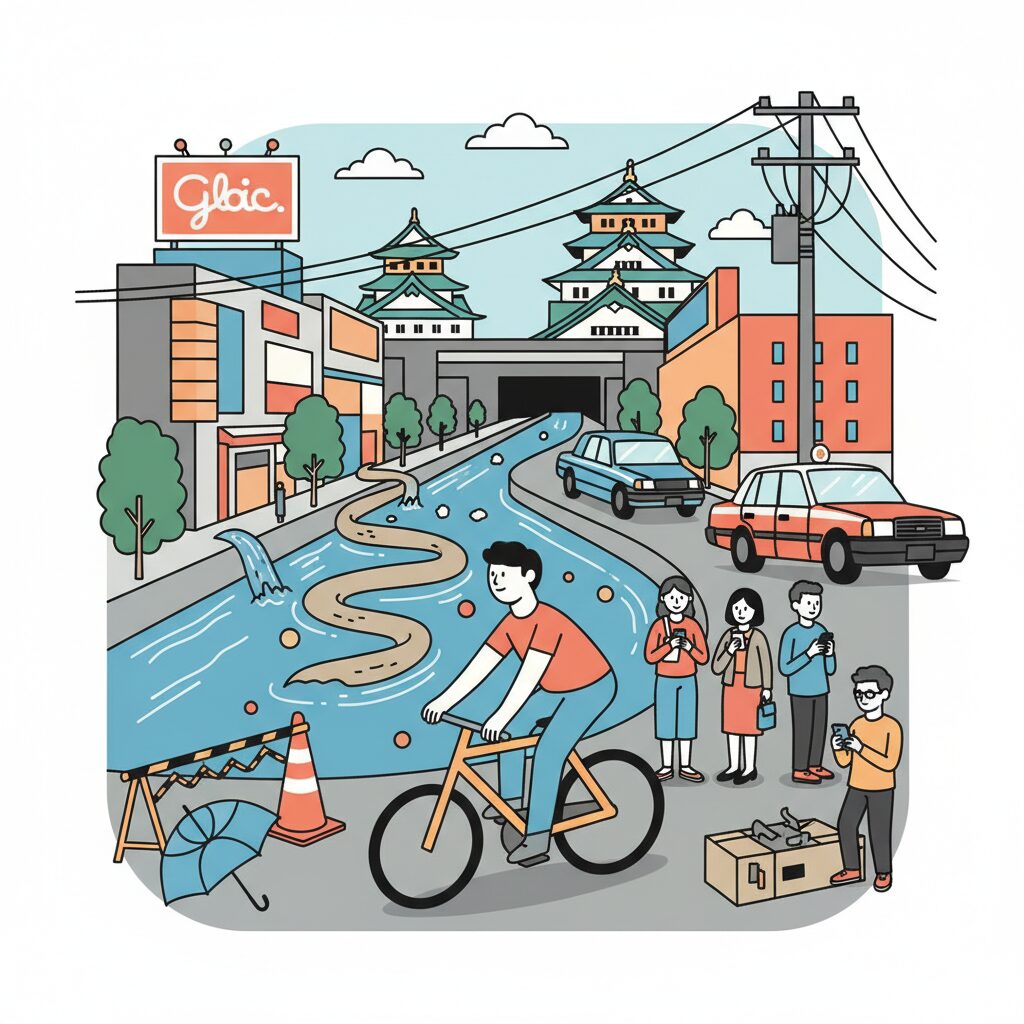
I still remember the moment my understanding of physics, and indeed of Japanese society, was fundamentally altered. I was on my own bicycle, a sturdy but unremarkable cross-bike, waiting at a traffic light in Tennoji. To my left, a woman who must have been well into her seventies pulled up on an electric-assist mamachari, a ‘mom’s chariot’. It was lavender, outfitted with a wicker basket, and loaded with a bag of daikon radishes so large it threatened to create its own gravitational field. The light turned green. I pushed off, thinking I was quick. I was wrong. With a faint electronic whir and the serene determination of a glacier, she accelerated past me, her sun visor fixed forward, her posture unwavering. She didn’t look back. She didn’t need to. In that moment, I wasn’t a Canadian photographer; I was a stationary object in the dynamic, fluid, and utterly baffling world of Osaka cycling. This city doesn’t run on trains or cars. It flows on two wheels. Forget the orderly, predictable bike lanes of Europe or the car-centric grid of North America. Cycling in Osaka is a language, a negotiation, a full-body exercise in reading the air, or kūki o yomu. It’s a chaotic ballet of bells, baskets, and unspoken agreements, and learning its steps is essential to understanding the very soul of this city. It’s less about following the written law and more about navigating the powerful, unwritten currents of the asphalt river.
To truly master this unique urban flow, understanding the local mindset is as crucial as knowing the rules of the road, which is why learning about the importance of humor and banter in Osaka’s social fabric can provide deeper cultural insight.
The Mamachari Monarchy: Why Bicycles Rule Osaka’s Streets
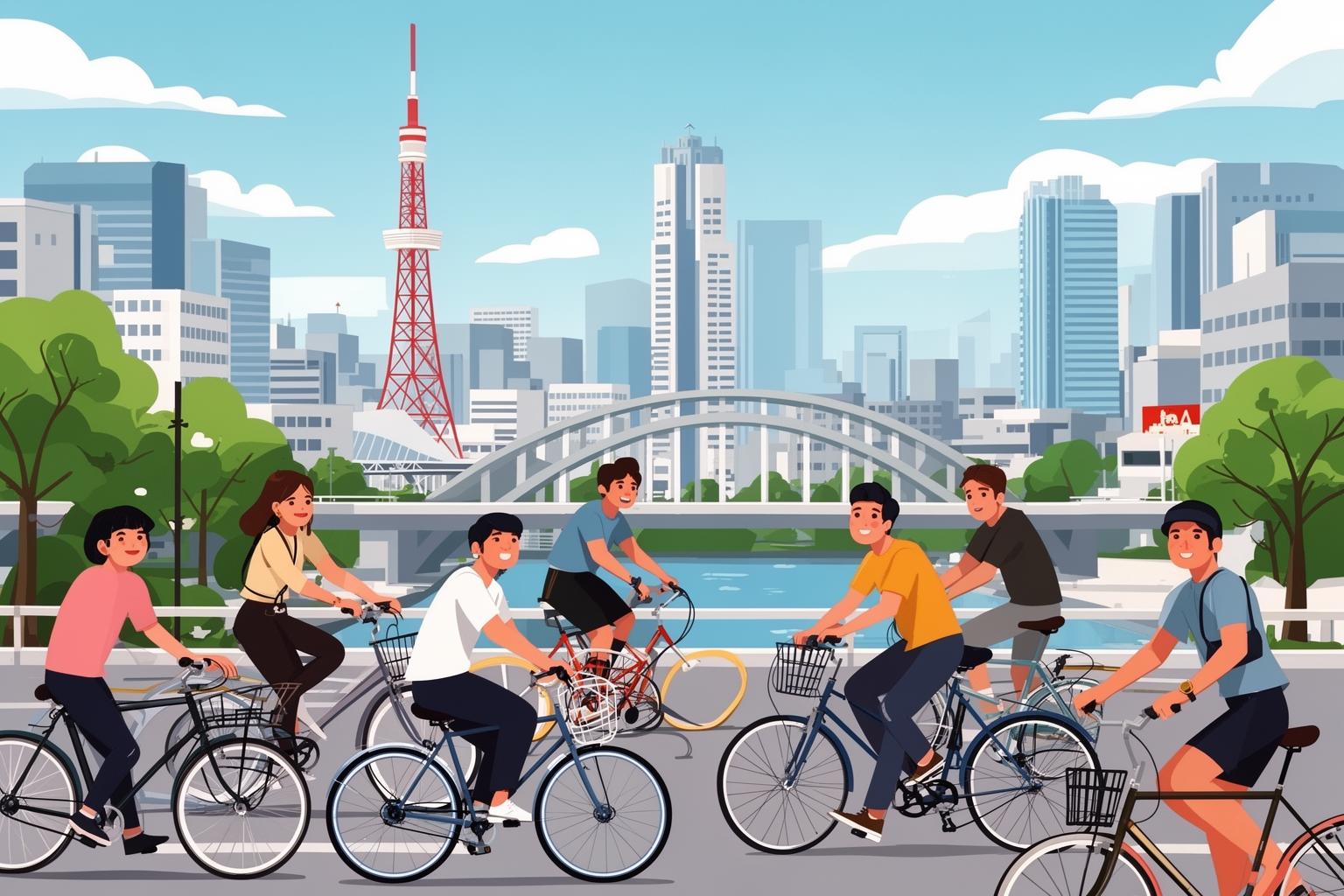
To understand Osaka, you first need to grasp the significance of the mamachari. This is more than just a bicycle; it’s the city’s unofficial all-purpose vehicle. Heavy and sturdy, designed like a small tank with a low frame for easy mounting, it typically features a front basket, a rear luggage rack, a built-in lock, and a kickstand so robust you could probably perform minor surgery on it. It’s the backbone of the metropolis. They’re everywhere—ridden by mothers with one child strapped behind and another in a front seat, groceries dangling from the handlebars. You’ll see them used by grandfathers in tweed caps, university students, and chefs heading to the market. This isn’t merely a lifestyle choice; it’s a fundamental element of urban logistics.
This attachment to the bicycle is woven into Osaka’s DNA. The city is predominantly flat, a broad plain shaped by rivers, making cycling an energy-efficient way to get around. Historically, Osaka was Japan’s merchant capital, where practicality and thrift were highly valued. This attitude, often captured by the word kechi (commonly mistaken for ‘stingy’ but better understood as ‘frugal’ or ‘value-conscious’), remains alive and well. Why spend 240 yen on a one-stop subway ride when you can bike there in ten minutes for free, grabbing milk along the way? The bicycle perfectly embodies Osaka’s pragmatism: it’s inexpensive, efficient, and effective.
This sharply contrasts with Tokyo. There, the train network is revered, a complex, ultra-efficient system to which daily homage is paid. Bicycles often feel like an afterthought—used mainly for the last leg of a trip from station to home. In Osaka, however, the bicycle often represents the whole journey. People willingly cycle thirty or forty minutes to work, to visit friends, or to shop in Namba. This fosters a fundamentally different connection with the city. Osakans move through their environment with an intimate, street-level familiarity, armed with mental maps of shortcuts through shotengai arcades and quiet neighborhoods that no train line can provide. The city doesn’t consist of destinations linked by tunnels; it’s a continuous, interconnected space meant to be explored and experienced.
Sidewalk or Street? The Great Osaka Negotiation
Here lies the first and greatest challenge for any foreign cyclist: exactly where are you supposed to ride? The law, as written, is clear. Bicycles are vehicles and belong on the street, on the left side, moving with traffic. Yet, if you followed this rule strictly in Osaka, you would likely be terrified or run over within a week. The reality on the ground is a masterful example of Japanese ambiguity.
Most daily cycling in Osaka takes place on the sidewalks. This isn’t an act of rebellion; it’s an unspoken, city-wide agreement. The streets, especially the main thoroughfares, are viewed as the territory of cars, trucks, and buses—fast, heavy, and dangerous. Although sidewalks are technically for pedestrians, they function as shared multi-use paths. However, this is not a free-for-all. It operates under a complex, entirely unwritten set of rules.
The primary rule is that pedestrians are fragile, unpredictable beings to be navigated around with care. Cyclists are expected to weave, slow down, and anticipate. The key tool in this interaction is the bell. In many Western cultures, ringing a bicycle bell is confrontational, a loud demand to “Get out of my way!” In Osaka, the gentle, almost apologetic chirin-chirin is a polite notification, not a command. It means, “Sorry to bother you, but I’m approaching from behind and will pass on your right. Please continue as you are, and I will adjust accordingly.” A sharp, angry bell ring signals an amateur, a foreigner, or someone from Tokyo. The correct method is a soft, melodic tap, just enough to register subconsciously with pedestrians.
This sidewalk dance reveals much about the Osaka mindset. It favors situational awareness over rigid rules. Why impose strict regulations when mutual understanding and flexibility resolve issues more efficiently? People trust each other not to be careless. They expect attention, eye contact, and a slight nod. It’s a high-context interaction taking place at about ten kilometers per hour. The system works because everyone implicitly agrees on the terms of this negotiation. It’s about maintaining flow and harmony on the street without resorting to blunt, impersonal laws. This can frustrate outsiders seeking clear boundaries, but once you learn the rhythm, there is a certain beauty in this self-regulating chaos.
The Hierarchy of the Road: Understanding Your Place in the Urban Food Chain
While the sidewalk serves as a space of negotiation, the entire urban environment functions as a complex ecosystem with a distinct, though sometimes surprising, hierarchy. It’s not as straightforward as ‘big vehicles first.’ Instead, the hierarchy is shaped by a combination of mass, momentum, and unyielding confidence.
The Fearless Oba-chan
At the very top of this hierarchy, outranking even buses and delivery trucks in perceived right-of-way, is the oba-chan—the middle-aged or elderly woman on her bicycle. She is the most formidable figure on Osaka’s roads. Often riding an electric-assist mamachari that grants her startling bursts of speed, and shielded from the sun by a visor so large it resembles welding gear, she moves with the unstoppable force of a natural phenomenon. She refuses to alter her chosen path. She will appear from a blind alley without looking, confident that the world will yield to her. She will run a red light if she judges the intersection clear enough. This is not out of malice but from a lifetime of navigating a busy city. With groceries to buy, grandchildren to pick up, and appointments to keep, her mission takes precedence, and traffic laws are mere guidelines. As a cyclist, your role isn’t to challenge her but to anticipate her moves. Spot that floral-print shirt and oversized visor a block away? Give her plenty of space. She is the queen of this realm, and you are merely a visitor. Yielding to the oba-chan is the foremost and most crucial rule for survival.
The Salaryman Sprint
The commuting office worker, or salaryman, represents a contrasting type of road user. Typically riding a faster, lighter cross or road bike, he cycles with intense focus and aggression. His objective is pure speed and efficiency. He hugs the edge of traffic, drafts behind buses, and weaves between cars in a way that is both impressive and daunting. Unlike the oba-chan’s bubble of self-confidence, the salaryman is highly aware of his environment; he must be. He is engaged in a high-speed game of chicken with multi-ton vehicles. He embodies the individualistic, competitive spirit of the corporate world, translated onto the streets. Rarely found on the sidewalk, he prefers the smoother, faster asphalt of the road. Give him space but expect no courtesies—he’s on the clock.
The Student Swarm
Perhaps the most chaotic group is the student swarm. At 8:30 in the morning and 4:00 in the afternoon, the areas surrounding high schools transform into swirling rivers of bicycles. Students, freed from the strict structure of the classroom, ride two, three, or even four abreast, chatting, laughing, and paying little attention to their surroundings. They move as a single, amoeba-like mass that can overwhelm an entire street. They aren’t fast, but they take up a lot of space. Trying to navigate through the student swarm is like swimming upstream against a school of fish. The best tactic is to simply pull over and wait for the main flow to pass. It’s a reminder that, for many, the bicycle is more than just transportation; it’s a social space, an extension of both classroom and playground.
The Hidden Dangers They Don’t Mention in the Guidebooks
Beyond grasping the social dynamics, surviving cycling in Osaka demands a heightened sense of defensive alertness. The city abounds with unique hazards that can easily catch the unprepared off guard. The risks stem not from overt hostility but from a collective expectation that everyone remains vigilant.
The Sudden Stop and the Phantom Turn
Hand signals are, for all practical purposes, absent in Osaka. No one points to indicate left or right turns. No one raises a hand to signal a stop. Instead, you must interpret a rider’s intentions through a subtle language of body posture and head movements. A slight tilt of the head, a brief glance over the shoulder, a subtle shift in the bike’s angle—these are the only hints that the person ahead is about to make a sudden, ninety-degree turn into a shop. Similarly, riders stop without any warning. A friend spotted across the street, a sale sign catching their eye, an incoming text—all can cause an instant halt. Always maintain a generous following distance and keep your hands ready on the brakes. Assuming the cyclist in front will follow a predictable path is a dangerous error.
Umbrellas, Phones, and Other Four-Dimensional Hazards
When it rains, the streets of Osaka fill with a particularly hazardous sight: the bicycle-mounted umbrella. Known as kasa-sashi unten, this practice is technically illegal yet so widespread it has become routine. Riders steer with one hand while holding a large umbrella aloft in the other, creating a broad, unstable, and vision-blocking hazard. They effectively become slow-moving jousters with a ten-foot wingspan. Even a slight gust of wind can send them veering unexpectedly into your way. It is an impressive ambidextrous feat but unnerving to cycle near.
Then there is the modern threat of the smartphone. Seeing someone ride while texting, scrolling, or watching videos is alarmingly common. These riders drift unpredictably, absorbed in the digital realm while navigating the physical one. Along with those burdened by enormous grocery loads or carrying a passenger on the back rack, they must be treated like unguided missiles.
The Blind Corners and the Unseen Alleyways
Osaka’s urban layout is a maze of narrow side streets and covered shotengai shopping arcades. These areas are great to explore but hazardous to cycle through. People, other cyclists, and small delivery vehicles can emerge from these hidden alleys without any warning. Your only safeguard is to closely watch the convex mirrors, or doro-kagami, mounted on telephone poles at nearly every blind corner. These are not ornamental; they are essential safety tools. A quick glance can reveal an approaching oba-chan or a speeding scooter before they enter your direct line of sight. Learning to scan these mirrors becomes an automatic, life-saving habit.
Parking, Theft, and the Bureaucracy of Bicycle Ownership

The challenges of cycling in Osaka don’t end when you stop pedaling. Handling the logistics of your bike involves a whole different learning curve within the city’s culture—a blend of official rules and informal social agreements.
The Art of Bicycle Parking
Around any train station, you’ll encounter an impressive scene: a vast sea of bicycles, a “bicycle graveyard” where thousands of bikes are tightly packed together in dense metal rows. Some of this parking is in official, paid lots, where you slide your bike into a metal rack that locks it securely. For about a hundred to one hundred fifty yen a day, you gain security and peace of mind. Yet, a large portion of parking exists in a legal gray area. People leave their bikes along sidewalks, against railings, and in every available corner, creating spontaneous lots that are tolerated—up to a limit.
Watch out for the men in silver vests. These are the city’s bicycle impound officers who patrol busy spots, tagging illegally parked bikes with warning notices. If the bike isn’t moved within a few hours, it’s loaded onto a truck and taken to a remote impound lot. Retrieving it means making a trip to an inconvenient location, paying a fine of several thousand yen, and receiving a lecture on proper parking etiquette. It’s a classic example of Japanese bureaucracy in action: rules may appear flexible, but when enforced, enforcement is swift, absolute, and uncompromising. You quickly learn which gray zones are safe and which act as traps for the unwary.
Registration and Theft: Your Bike Isn’t Truly Yours
When purchasing a bicycle in Japan, whether new or used, you must complete a bouhan toroku (crime-prevention registration). For a small fee of around 600 yen, a small orange sticker with a registration number is affixed to your bike’s frame, and your details are entered into a police database. This links the bike to you, which is essential if it’s ever stolen.
And theft can happen. While Japan is known for its low crime rates and the ability to leave your laptop unattended in a café, bicycle theft is relatively common and almost casual. Often, the culprits aren’t professional thieves but “bicycle borrowers.” Someone who misses the last train spots an unlocked bike, rides it to their destination, and abandons it a few kilometers away. This is why a sturdy lock is essential. The flimsy built-in locks on most mamachari bikes aren’t enough. You need a strong chain or a U-lock and to use it every time you leave your bike, even if it’s just for thirty seconds to pop into a convenience store. This undermines the myth of a perfectly safe Japan; it’s a reminder that even in a high-trust society, practicality and opportunity can sometimes override social norms.
What Cycling Teaches You About Osaka
Riding a bicycle in Osaka feels like attending a rolling seminar on the city’s character. It reveals that Osakans are not rule-breakers but rule-benders who navigate a system of shared understanding and context that goes beyond written laws. This pragmatic culture values what works over what is officially prescribed. Such is the spirit of the merchant city: seek the most efficient route, negotiate with neighbors, avoid causing trouble, and keep moving.
It introduces you to the idea of aimai, or ambiguity. Unlike the clearly marked bike lanes and strict traffic enforcement common in Tokyo, Osaka’s streets are fluid and ambiguous. You learn to exist in this grey zone, relying on your instincts and subtle cues from others rather than following rigid rules. Mastering this skill—sensing moods, anticipating flow, and adapting quickly—is essential for navigating all parts of life here, not just traffic.
Cycling in Osaka is an ongoing act of trust. You trust that drivers won’t swerve into you, pedestrians won’t abruptly step into your path, and the oba-chan ahead will keep her steady course. It’s a controlled chaos reflecting the city’s personality: energetic, slightly rough around the edges, occasionally frustrating, yet fundamentally functional and deeply human.
To embrace Osaka’s cycling rhythm is to embrace the city itself. At first, you might be frustrated by the lack of clear rules and startled by scooters emerging suddenly from side streets. But gradually, you find your flow. You learn to anticipate, yield, and slip through narrow gaps. You ring your bell softly and receive a slight nod in return. In that instant, you stop being an outsider witnessing chaos and become part of the asphalt river—a participant in the frantic, beautiful, and continuous dance of daily life in Osaka. So get a helmet, invest in a sturdy lock, and hone your weaving skills. You’re not just going for a ride; you’re learning to speak the city’s native language.