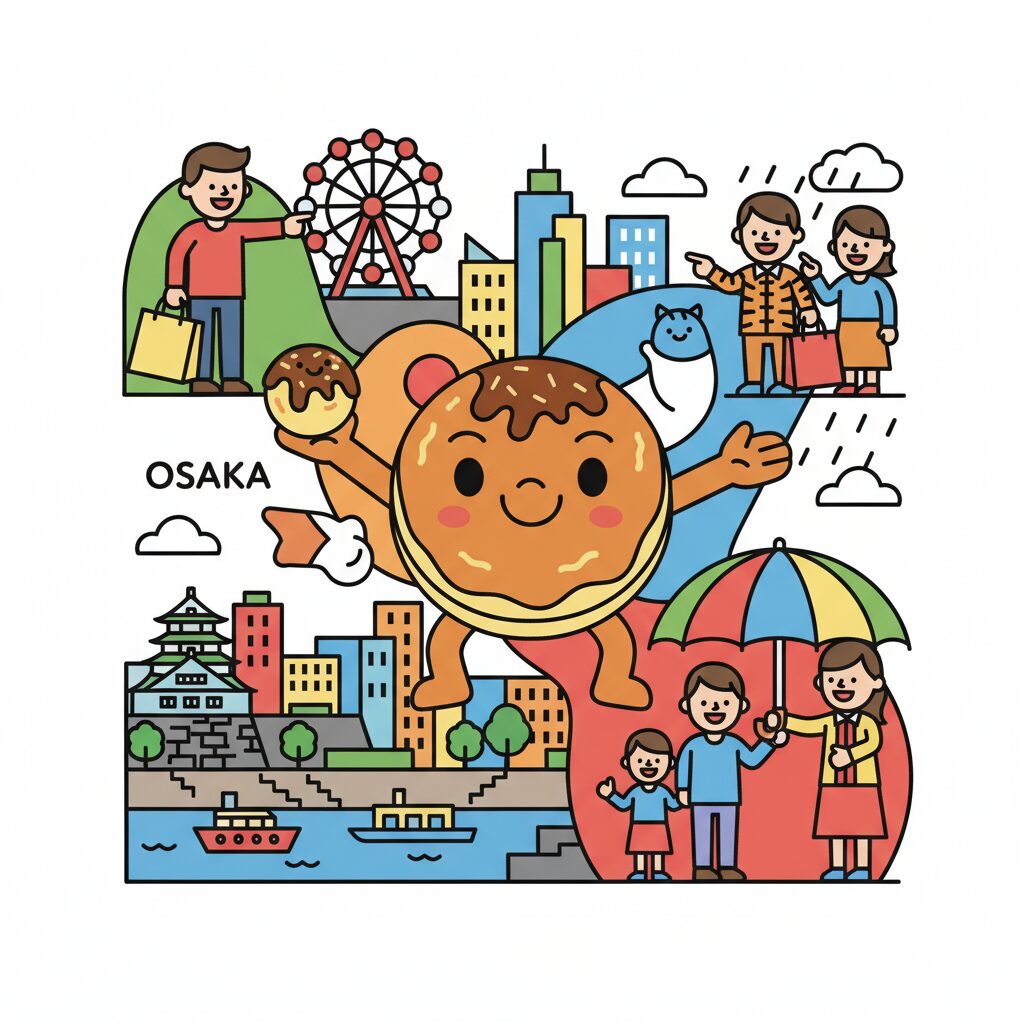
It happens when you least expect it. You’re standing in a supermarket aisle, deep in thought, comparing two brands of soy sauce. Suddenly, a hand darts past your ear, snatching one of the bottles from your grasp. You turn, startled, to face a woman in her late sixties, her hair permed into a perfect silver helmet. She shakes the bottle at you, then points decisively at the other one on the shelf. “Akan!” she declares, a phrase that translates roughly to “No, not that one!” She proceeds to deliver a rapid-fire lecture in the thick, musical dialect of the Kansai region, explaining that the bottle you were about to choose is too salty for the simmered dish you’re obviously planning to make. She knows you’re making nikujaga, she’s decided, based on the potatoes and thinly sliced beef already in your basket. She then places the “correct” soy sauce in your basket, gives your arm a reassuring pat, and shuffles off toward the daikon radishes, leaving you bewildered and, strangely, a little grateful. You’ve just had your first real taste of Osaka’s osekkai culture. It’s a term often translated as “nosy,” “meddlesome,” or “interfering,” but those words are cold, sharp, and miss the point entirely. They fail to capture the warmth, the community spirit, and the deeply ingrained sense of shared responsibility that animates this city. In a country often stereotyped for its reserve and indirectness, Osaka’s osekkai is a loud, chaotic, and beautiful exception. It is the city’s heartbeat, a social lubricant that can feel abrasive at first but, once understood, reveals itself as an unexpected and open-hearted invitation to belong.
This sense of belonging is also nurtured in the city’s cozy kissaten, which serve as informal community living rooms.
What is ‘Osekkai’? Beyond the Dictionary Definition
To truly understand life in Osaka, one must first break down the idea of osekkai. It is not mere nosiness stemming from boredom or ill will. Rather, it’s a proactive, unsolicited intervention motivated by a sincere, albeit sometimes mistaken, belief that one knows a better, more efficient, or safer way to do something—and that it is a social responsibility to share that knowledge. It rests on the premise that we are all connected, and that a stranger’s problem is, in some sense, the community’s problem. The boundary between meddling and caring is razor-thin here, and Osakans navigate it with the effortless poise of experienced acrobats.
The Thin Line Between Meddling and Caring
Picture yourself at a train station, struggling with a complicated ticket machine. In Tokyo, people might politely ignore you, avoiding embarrassment and waiting for you to ask for help. In Osaka, before your confused expression fully forms, someone will likely appear by your side. It could be a student or a salaryman on his way home. They’ll tap the screen, ask “Doko iku no?” (“Where are you going?”), and start navigating the menus for you, possibly offering commentary on the best transfer station or cheapest route. There’s no judgment—only a swift, practical solution to a problem they’ve noticed. This is osekkai at its purest. It’s the shopkeeper who spots you admiring a shirt and calls from across the store that it won’t suit your complexion. It’s the ramen chef who adjusts your grip on the chopsticks to maximize noodle slurping. It’s the old man on the bus urgently pointing out your untied shoelace as if spotting a fire. To outsiders, these acts may seem intrusive, violating the personal bubble we cherish. But locally, they express communal care. It’s an unspoken social contract saying, “I see you, and I care—even if only briefly—about your well-being.”
The Language of ‘Osekkai’: Direct, Unfiltered, and Full of Heart
Osekkai is often delivered in Osaka-ben, the local dialect. It’s a language that flows faster, with more melodic rises and falls, and far fewer polite, formal layers than standard Japanese. It’s designed for speed and efficiency—ideal for closing a deal or offering unsolicited advice. A Tokyo shopkeeper might use multiple honorifics to recommend a product, while an Osaka shopkeeper will say, “Anata, kore no ho ga niau de!” (“Hey you, this one looks better on you!”). The bluntness can be surprising. Words that might sound harsh elsewhere are spoken here with parental warmth. Stand on the wrong side of the escalator (in Osaka, stand on the right) and instead of a glare, you’ll hear a loud “Neesan, kochira ya de!” (“Miss, it’s this side!”). It’s not a rebuke, but a friendly correction. This raw communication style reflects a culture that values honne—true feelings—over tatemae, the polite social facade. While reading Tokyo’s subtle conversational cues can be complex, in Osaka, what you hear is often exactly what is meant. The goal, almost always, is to help, even if the delivery lacks subtlety. The heart of osekkai lies in this honest, straightforward way of expressing care.
The Historical and Economic Roots of a Merchant City’s Mindset
To understand why Osakans are the way they are, you can’t merely observe the present; you need to delve into the city’s soil and explore its origins. Unlike Kyoto or Tokyo (formerly Edo), Osaka was never the political or imperial capital. Instead, it was, and in many respects remains, Japan’s major merchant city. Its character was shaped not in the austere offices of samurai bureaucracy but in the lively, bustling markets along its canals. This commercial background forms the foundation of the culture of osekkai.
Tenka no Daidokoro: The Nation’s Kitchen
In the Edo period, Osaka earned the nickname Tenka no Daidokoro, meaning “The Nation’s Kitchen.” It served as the central hub for rice, Japan’s most vital commodity, and a distribution center for goods nationwide. Life revolved around the principles of shobai (business) and akinai (trade). For a merchant to prosper, it took more than just a quality product; trust, a strong reputation, and the ability to quickly build relationships were essential. Unlike the rigid, hierarchical samurai society of Edo, Osaka’s merchant class was pragmatic and more egalitarian. Quick wit, sharp numeracy, and the skill to connect with others mattered more than noble lineage. This environment nurtured a culture of straightforward communication, savvy negotiation, and—most importantly—mutual reliance. Your neighbor’s success was, in a sense, your own, as it contributed to the overall vitality and prosperity of the market. This collective attitude meant people were continually looking out for one another, sharing information, and providing support. A struggling shopkeeper might receive a loan from a competitor or get advice about a new supplier. This wasn’t out of pure kindness; it was sound business. A thriving marketplace benefits everyone. This historical DNA endures today. The osekkai of an obachan in the supermarket is a faint reflection of the merchant’s wife centuries ago, sharing her knowledge about the best fish to ensure her neighbor’s family, and thus the community, eats well.
The Spirit of ‘Shobai’: Business as a Community Sport
The spirit of shobai infuses every part of daily life. There’s a strong sense that everything is a negotiation, a performance, a human connection. It’s evident in the shotengai, the long, covered shopping arcades that are the heart of many neighborhoods. These are not sterile, impersonal malls. They are lively, disorderly ecosystems where commerce and community blur together. Stroll down Tenjinbashisuji, the longest shotengai in Japan, and you’ll be immersed in the sights and sounds of this culture. The fishmonger yells a greeting, the tofu vendor inquires about your family, and the tiny pickle stand owner insists you try a sample. They’re not just selling products; they’re nurturing relationships. They’ll remember your face and preferences and eagerly offer advice: “Oh, you’re buying that fish? You should grill it with salt; don’t try making sashimi with it—it’s not fresh enough today.” This is not a slight against their own goods; it’s honest guidance to help you have a good experience. They’re playing the long game. A happy customer who trusts you is a customer for life. This is osekkai as a business approach, where proactive helpfulness builds the social capital that sustains the whole community. It’s a far cry from the quiet, transactional feel of a Tokyo convenience store.
‘Osekkai’ in Action: Navigating Daily Life in Osaka
The true essence of osekkai is not found in abstract theories, but in the myriad small, daily interactions that shape life in this city. It’s a constant, subtle presence—a background hum of friendly interference that you come to expect and even cherish. From the grocery store to the standing bar, this culture reveals itself in delightfully specific and often humorous ways.
The Supermarket Encounter
Let’s return to the supermarket, the main stage for the osekkai drama. It’s a theater of practical wisdom, typically led by the city’s formidable obachan. These women are the custodians of domestic knowledge, generously sharing their insights. You might be innocently contemplating a bag of pre-cut vegetables when one of them sidles over, peers into your basket, and insists it’s cheaper and tastier to buy the vegetables whole. She’ll then escort you to the produce section and point out the freshest carrots. Or take the cashier, who in most places embodies detached efficiency. In Osaka, the cashier doubles as a commentator. While scanning your items, they might remark, “Ah, making curry tonight! Perfect for a cold day.” Or, “Ooh, fancy beer! Celebrating something special?” This isn’t an invasion of privacy; it’s an attempt to connect, to acknowledge your shared humanity for the brief moment you’re in their presence. They perceive the items not as barcodes to be scanned, but as ingredients of a life, and they just can’t help but engage.
The Lost Tourist (or Resident)
Getting lost in Osaka is a fundamentally different experience than in many other major cities. The moment you pause a bit too long consulting your phone’s map, the osekkai alert goes off. Someone will notice—and act. They won’t wait for you to look up with pleading eyes. A woman walking her dog, a group of high school students, a man on a bike—they will stop and ask if you need help. The conversation that follows is rarely just a quick direction. They’ll want to know where you’re from, what you’re looking for, and why. They might debate the best route among themselves. Often, if your destination is nearby, they will simply decide it’s easier to walk you there themselves, chatting animatedly along the way. This is not about efficiency; it’s about hospitality. It’s about making sure visitors to their city feel welcomed and cared for, a powerful expression of civic pride.
The Restaurant Experience
Dining in Osaka, particularly in small, owner-operated places, is rarely private. The counter is the hub of social interaction. Sitting down for udon or grilled skewers means stepping into a temporary community. The owner, or taisho, will likely ask questions as he works. He’ll want to know how you found his shop, if you’re enjoying the food, and your thoughts on the Hanshin Tigers’ season. Other customers listen in and may soon join the conversation. Before long, the salaryman next to you might explain the finer points of sake, while the couple on your other side recommends their favorite local takoyaki stand. This can be intimidating for those used to quiet, anonymous dining, but it’s at the heart of Osaka’s food culture. Food is not just nourishment; it’s a catalyst for connection. The chef’s osekkai—telling you the “right” way to enjoy his food—is his way of sharing passion and ensuring you experience it fully as intended.
A Tale from a Tachinomi (Standing Bar)
For a truly immersive experience of osekkai, visit a tachinomi, or standing bar, in a classic drinking district like Tenma or Kyobashi. These small, often cramped spaces, usually without seats, have patrons standing shoulder-to-shoulder at a high counter. Personal space is a luxury left behind. Here, interaction isn’t just possible; it’s inevitable. You order a beer and a plate of doteyaki (stewed beef sinew), and the man next to you leans over and says, “Good choice. Try it with a little shichimi pepper.” He might nudge the spice shaker toward you. Soon, you’re clinking glasses and swapping stories. By night’s end, you might have a dozen new friends, a list of restaurant recommendations, and a standing invitation to go fishing next weekend. The tachinomi perfectly encapsulates Osaka society: informal, a bit rough around the edges, and based on the idea that a stranger is just a friend you haven’t shared a drink with yet. The unsolicited advice and friendly intrusions are simply the cost of entry into this warm, inclusive world.
The ‘Osekkai’ vs. Tokyo Reserve: A Tale of Two Cities
The character of Osaka is often best grasped when contrasted with its formidable rival, Tokyo. Although both are vast, bustling Japanese cities, their social atmospheres differ markedly. This contrast stems from their unique histories, economies, and the psychological strategies their inhabitants have developed to cope with urban life. Grasping this difference is essential to understanding why osekkai thrives in one city and diminishes in the other.
The ‘Bubble’ of Personal Space
In Tokyo, a city with extremely high population density, maintaining a psychological “bubble” of personal space is a crucial, unspoken social norm. On a crowded commuter train, people enter a sort of Zen-like state of mutual obliviousness. They avoid eye contact, speak softly, and carefully prevent physical contact whenever possible. This is not coldness but a practical form of civic courtesy. It enables millions to coexist in compact spaces with minimal conflict. Invading someone’s bubble—by speaking loudly, initiating an unsolicited conversation, or even offering help without being asked—can disrupt this delicate urban balance. In Osaka, however, that bubble is much smaller and far more permeable. Harmony is pursued not through distance but through interaction. On the Midosuji subway line, strangers strike up conversations about a cute baby or a humorous advertisement. People make eye contact, comment, and connect. An Osakan’s sense of personal space extends to their immediate environment, and if you are within it, you become part of their world for that moment. They will intervene because, from their perspective, ignoring someone in need or a situation that could be improved is the ruder choice.
Communication Styles: Honne and Tatemae Revisited
The differing attitudes toward personal space are mirrored in communication styles. Tokyo is the undisputed center of tatemae, the art of maintaining a public facade. Conversations often carry layers of polite ambiguity and indirect expressions. For instance, “I’ll have to check my schedule” frequently serves as a gentle, non-confrontational way of saying “no.” For foreigners, learning to “read the air” (kuuki wo yomu) and decode this subtext is a significant challenge when living in the capital. In contrast, Osaka favors honne, the expression of true feelings. Communication tends to be more straightforward, transparent, and less concerned with social formality. If an Osakan does not want to do something, they will likely say so directly, often accompanied by a humorous or self-deprecating excuse. This directness powers osekkai. People speak openly because they believe honesty and clarity are more efficient and ultimately more helpful than cloaking opinions in layers of politeness. This candor can be refreshing for foreigners tired of the subtleties of tatemae, but it can also be startling if unprepared for a stranger to bluntly comment on your clothing, Japanese language skills, or lunch choice.
The Foreigner’s Dilemma: How to Embrace the Nosiness
For any non-Japanese individual establishing a life in Osaka, the culture of osekkai poses both a distinct challenge and a valuable opportunity. The initial response is often confusion, irritation, or even offense. It can feel condescending to be told how to do simple tasks, as if your own judgment is doubted. However, resisting it is futile, and rejecting it means cutting yourself off from one of the most genuine and rewarding facets of the city’s culture. The key is adopting a mindset shift, learning to view this behavior not through the perspective of your home culture but within the context of Osaka’s unique social logic.
From Annoyance to Appreciation: A Mindset Shift
The first step is intentionally reframing the interaction. When that obachan critiques your choice of vegetables, your initial defensive thought might be, “Who does she think she is? I know how to shop for myself!” The necessary shift is to reinterpret the interaction as: “This person sees me as part of her community and feels responsible for sharing her lifetime of cooking wisdom with me, freely. She is investing her time and energy to help me have a better meal.” This reframing is vital. It shifts the perceived intent from criticism to care, from intrusion to inclusion. You begin to realize that osekkai is not a critique of your inadequacy; it reflects their community-oriented worldview. It means you are no longer an invisible foreigner or a passing ghost in the city. You have been noticed. You have been deemed worthy of a stranger’s attention. In a world where urban anonymity can be deeply isolating, this is a remarkable gift.
Practical Tips for Responding
With this mindset adjustment, handling osekkai interactions becomes much easier and more pleasant. The objective isn’t passivity, but graceful participation. The most effective tool at your disposal is a warm, sincere smile accompanied by a hearty “Arigato gozaimasu!” (Thank you!). This acknowledges the good intentions behind the gesture, regardless of whether you intend to follow the advice. Defensiveness or irritation only breeds confusion and shuts down the interaction. The next step is to engage. If someone offers advice, ask a follow-up question: “Oh, really? Why is this soy sauce better?” This changes you from a passive listener into an active participant in a conversation. It shows respect for their knowledge and opens the door to genuine human connection. The person who was a nosy stranger moments ago now becomes a potential teacher, a guide, a friendly face in your neighborhood. Finally, learning a few key Osaka-ben phrases can work wonders. A simple “Honma ni?” (“For real?”) or “Erai benkyou ni narimashita” (“That was very educational”) often brings delighted surprise and an even warmer response. It signals that you are not merely a tourist but someone making an effort to understand and join the local culture.
When ‘Osekkai’ Crosses a Line
It’s important to be realistic. While most osekkai originates from goodwill, there may be rare moments when it feels genuinely uncomfortable or crosses a personal boundary. It’s okay to have those limits. In such instances, a polite yet firm refusal is perfectly acceptable. A clear “Daijoubu desu, arigatou gozaimasu” (“I’m fine, thank you”) said with a slight bow and without prolonged eye contact typically conveys that you appreciate the thought but wish to handle the matter yourself. The aim is to be assertive without aggression. Understanding the cultural intent behind osekkai helps you distinguish between well-meaning interference and truly unwelcome behavior, allowing you to respond appropriately and respectfully in either situation.
‘Osekkai’ as the Gateway to Genuine Connection
Ultimately, the ever-present and sometimes overwhelming culture of osekkai is exactly what makes living in Osaka such a unique and deeply human experience. It serves as the city’s secret password, its unwritten social contract. While Tokyo may provide sophistication, efficiency, and the comfortable anonymity of a global megacity, Osaka offers something far rarer: a palpable, immediate sense of community. It embodies a different model of urban living, one built not on polite distance but on messy, direct, and heartfelt engagement.
The unsolicited advice, the personal questions from shopkeepers, the unexpected help from strangers on the street—these are not flaws in the system. They are the system itself. These countless small interactions are the threads that weave residents, both native and foreign, into the city’s social fabric. Each act of osekkai is both a small test and an invitation. How will you respond? Will you withdraw into your foreign bubble, feeling offended or annoyed? Or will you smile, engage, and accept the outstretched hand of connection? Choosing the latter unlocks the true soul of Osaka. It’s the moment you realize that the woman rearranging your grocery basket isn’t just a nosy old lady; she’s your neighbor. It’s the moment you stop seeing the city as a collection of streets and buildings and start seeing it as a community of people who, in their own loud, direct, and caring way, are looking out for you. In Osaka, a stranger’s nosiness is rarely just nosiness. It marks the start of a conversation, the first step toward friendship, and the clearest sign that you are finally beginning to become a local.