It’s Friday evening in Osaka, and the city is electric. The thick, humid air of summer is finally giving way to a crisp autumn breeze, and the energy humming up from the subway grates in Umeda feels different. It’s a feeling of possibility. You catch the eye of a friend over a sizzling plate of okonomiyaki, and the unspoken question hangs in the air, fragrant with bonito flakes and sweet brown sauce: What are we doing this weekend? For anyone living in Osaka, this question isn’t about if you’ll escape the city, but where. And the answer almost always lands on one of three legendary names: Kyoto, Kobe, or Nara. Now, a tourist might pull out a checklist, weighing UNESCO sites against Michelin stars. But that’s not how an Osakan thinks. For us, these cities aren’t just destinations on a map; they are extensions of our own backyard, three completely different moods available on-demand. The choice isn’t logical, it’s emotional. It’s a gut feeling, a deep-seated response to the question, “What kind of person do I need to be this weekend?” Choosing between Kyoto, Kobe, and Nara is like choosing an outfit. Are you feeling elegant and contemplative? Sleek and cosmopolitan? Or do you just want to throw on your comfiest sneakers and forget the world exists? This casual, almost flippant access to cities that others fly halfway around the world to see is one of the profound, unspoken luxuries of Osaka life. It fundamentally shapes our rhythm, our perspective, and our weekends. We live at the epicenter of a cultural universe, and navigating it is second nature.
This deep-seated, intuitive approach to weekend planning is a perfect reflection of the city’s unique social fabric, where even a simple invitation is often wrapped in the layers of Osaka’s distinctive ‘osekkai’ culture.
The “Why” Before the “Where”: Decoding the Osakan Weekend Mindset
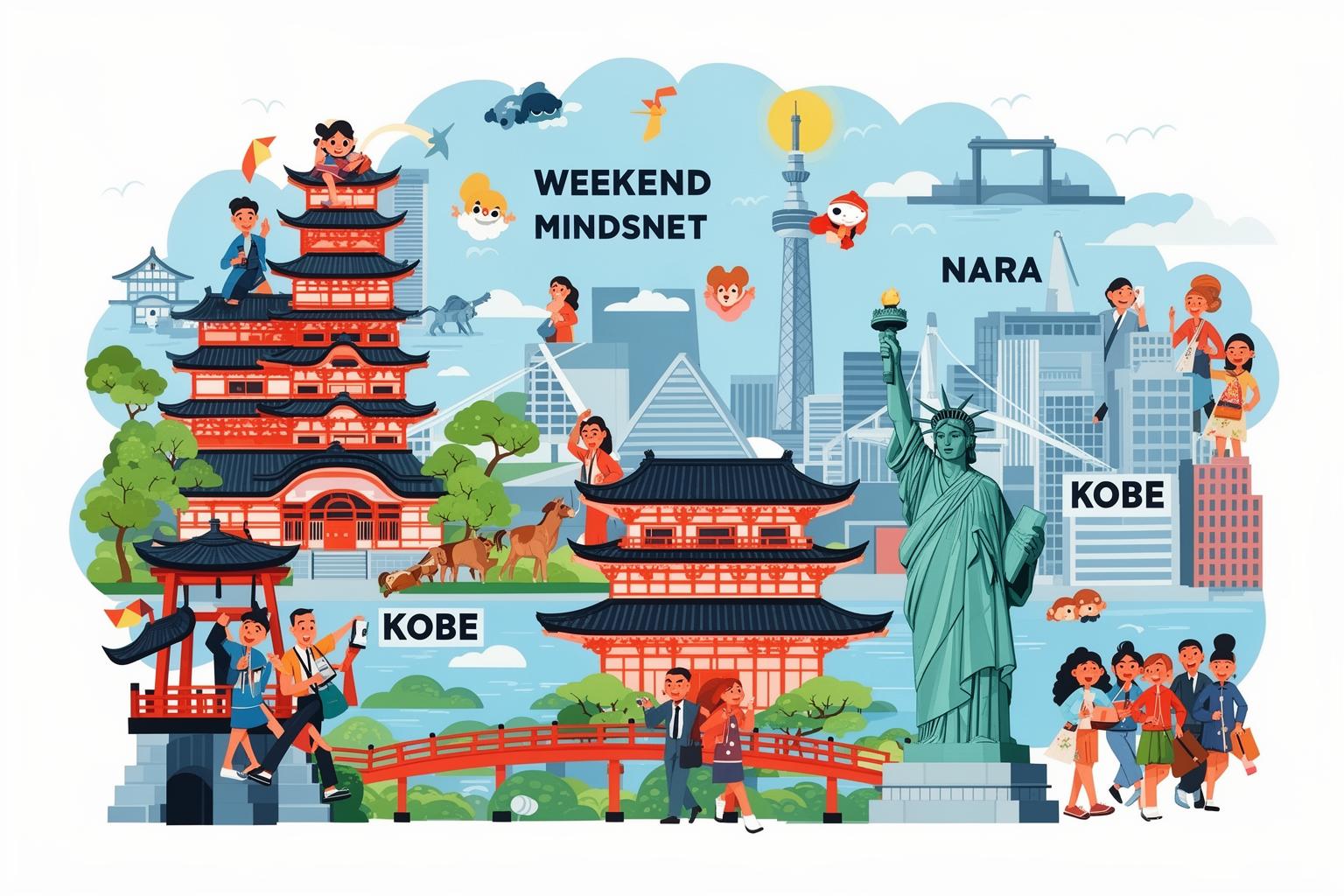
Before you can even start to understand which city is chosen, you need to grasp the fundamental philosophy behind the decision. It’s not about planning; it’s about feeling. It’s not about conquering a travel itinerary but about satisfying a sudden craving for a different atmosphere. This is where Osaka’s famous pragmatism and spontaneity blend into a unique approach to leisure. Surrounded by world-class options, why would we overthink it? Often, the best plan is no plan at all—just a train ticket and a whim.
It’s All About the Kibun (気分) – The Vibe Is Everything
In Japan, the word kibun comes up frequently. It roughly means ‘mood’ or ‘feeling,’ but it carries a deeper meaning. It’s the internal weather that shapes your actions, desires, and overall disposition. For an Osakan, kibun reigns supreme. The choice to jump on a train to Kyoto doesn’t come from a detailed travel guide; it comes from waking up on a Saturday morning, seeing soft light spill through the window, and thinking, “I feel like seeing something quietly beautiful today. My kibun calls for matcha and temples.” This is a completely intuitive process, quite different from the Tokyo mindset, which tends to be more goal-driven and scheduled. A Tokyo friend might book a Kyoto trip months in advance, securing the perfect hotel for autumn foliage with a meticulous spreadsheet of train times and reservations. An Osakan is more likely to check the weather on Friday night, see that it will be sunny, and say, “Alright, let’s do Kyoto tomorrow.” This isn’t disorganization; it’s an efficient way of pursuing happiness. The close proximity of these cities removes the pressure of a grand, once-in-a-lifetime journey. We know we can return next month—or even next week if we want. This creates a liberating, relaxed casualness. Life is happening now, the sun is shining now, the train leaves in ten minutes. Why wait?
The Commuter Pass Mentality: Proximity Breeds Casualness
The psychological barrier to travel is almost nonexistent here. A trip from Umeda in Osaka to central Kyoto or Kobe is often quicker than crossing Tokyo from east to west. Many who work in Osaka live in bedroom communities bordering these other prefectures, so the train lines—the Hankyu, Hanshin, JR, and Kintetsu—are simply part of our daily mental map. They aren’t ‘tourist’ lines; they are the veins carrying the region’s lifeblood. This fosters what I call the “commuter pass mentality.” Even without an actual commuter pass, the journey feels routine enough that it barely registers as ‘travel.’ Going to Kobe for a slice of cake feels no different psychologically from going to Shinsaibashi for takoyaki. It’s just a change of scenery. This can confuse foreigners who rightly see these as major historical and cultural centers. When I told a visiting friend from America we were “popping over to Nara for a bit,” she looked at me as if I’d suggested popping over to the moon. For her, it was a major event needing planning and a full day’s commitment. For my Osakan friends, it was just a pleasant way to spend a lazy Sunday afternoon. We aren’t oblivious to these places’ significance—we’re proud of them. But familiarity transforms them. The Great Buddha of Nara isn’t just a world wonder; it’s the big statue in the park we’ve been visiting since childhood. This casual intimacy is central to the Osaka experience. We don’t treat our neighboring cities like museums; we treat them like home.
Kyoto: When You’re Feeling Classy, Quiet, or Caffeinated
Kyoto is the grand, elegant lady of Kansai. She’s stunning, aware of it, and expects you to behave accordingly. You don’t simply show up in Kyoto in your sweats after a late night in Namba. You make an effort. Choosing to go to Kyoto is a deliberate decision to elevate your day, to immerse yourself in an atmosphere of refined beauty and centuries of history. It’s the aesthetic reset button, the place you visit when the neon glare of Osaka begins to feel overwhelming.
The “Dressing Up” Atmosphere
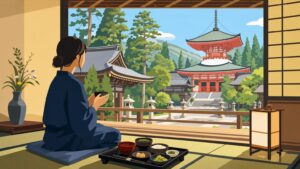
The moment you step off the train at Kawaramachi or Kyoto Station, the mood shifts. It’s quieter. The pace slows down. The chaotic, free-for-all energy of an Osaka street is replaced by a more intentional, graceful rhythm. As an Osakan, you sense this immediately and adjust. Your voice softens a few decibels. Your walking speed slows from a hurried clip-clop to a measured stroll. It’s an unspoken rule: you show Kyoto respect. This city is where you go when you want to feel sophisticated. It’s for dates you want to impress, for visiting parents you want to introduce to a ‘proper’ side of Japan, or for solo days when you need a sense of order and calm. It’s the ideal setting for thoughtful conversation or quiet reflection. You visit Arashiyama’s bamboo grove not just for a photo, but to experience the tranquility of being surrounded by towering, silent beauty. You stop by a temple’s rock garden not merely to see it, but to let its stark, meditative charm soothe the noise in your mind. This is Kyoto’s gift: it compels you to slow down and savor the details. For a culture like Osaka’s, which values speed, efficiency, and directness, this gentle deceleration is a cherished form of therapy.
The Cafe and Bakery Pilgrimage
But let’s be honest. For modern Osakans, especially the younger generation, a trip to Kyoto is often less about ancient temples and more about a contemporary form of devotion: the worship of perfect coffee and artisanal pastries. While Osaka’s kuidaore (eat until you drop) culture is famous for its hearty, savory street food, Kyoto has cornered the market on aesthetic-driven cuisine. The city overflows with impossibly chic cafes, minimalist coffee roasters, and bakeries that resemble art galleries. A typical Saturday in Kyoto might not be about seeing Fushimi Inari for the tenth time but about finally tasting the fruit sandwich from that viral Gion cafe, or getting a loaf of exquisitely crafted shokupan from a bakery hidden in a quiet residential street. We’re happy to wait 45 minutes for a perfectly brewed pour-over or a slice of matcha Basque cheesecake that looks like a jewel. This pursuit reveals the Osakan obsession with quality and trendiness. We may be pragmatic, but we have an insatiable appetite for the best, and we’re more than willing to cross prefectural borders to find it. The journey becomes part of the experience—a modern pilgrimage where the reward isn’t spiritual enlightenment, but a heavenly caffeine buzz and a fantastic Instagram story.
The Misunderstanding: It’s Not a Competition
Outsiders, especially people from Tokyo, love to comment on the fierce rivalry between Osaka and Kyoto. And sure, on the surface, there’s plenty of good-natured teasing. Osakans joke that Kyotoites are aloof and speak in riddles; Kyotoites might say Osakans are loud and lacking refinement. But in everyday life, this ‘rivalry’ dissolves into a profound, symbiotic appreciation. Osakans don’t visit Kyoto to turn it into Osaka. We go there precisely because it is everything Osaka is not. We crave its elegance, its history, and its infuriatingly impeccable sense of style. We admire it. We just couldn’t live there. The constant pressure to be graceful, to read subtle social cues, to live up to a thousand years of history—it would be exhausting. We need to be able to return to Osaka, where we can laugh loudly, speak frankly, and eat greasy street food without judgment. The trip to Kyoto is a delightful performance, a chance to play a more refined version of ourselves for a day. But in the end, we’re always relieved to board the Hankyu line and head home, back to the glorious, straightforward, comfortable chaos of Osaka.
Kobe: The International Port of Call for Style, Sweets, and Sea Breezes
If Kyoto is the refined grandparent, Kobe is the effortlessly stylish, well-traveled cousin who just returned from a year in Europe. It’s sophisticated in a completely different way—more contemporary, more international, and more laid-back. Choosing to visit Kobe is motivated by a craving for fresh air, both literally and figuratively. It’s where you head when urban congestion feels suffocating and you need a horizon, a sea breeze, and a touch of worldly charm.
The “I Need Some Fresh Air and a European Vibe” Choice
Kobe’s uniqueness within Kansai lies in its geography. The city is a slender strip of land dramatically squeezed between the Rokko mountain range and the Seto Inland Sea. This ever-present combination of mountain and sea creates a profound psychological impact. From nearly anywhere in the city, you can look up to see green hills or gaze down a street to spot the glistening waters of the port. For someone from Osaka’s vast, flat plain, this is a captivating escape. You go to Kobe when your kibun calls for openness and a sense of expansion. The main activity often involves simply walking. You stroll along the waterfront at Meriken Park, where the iconic red Port Tower and the Maritime Museum stand like giant pieces of urban sculpture. Or you hike the winding, steep streets of Kitano-cho, admiring beautifully preserved 19th-century foreign residences (ijinkan). It almost feels like you’re no longer in Japan. The architecture, street layout, and abundance of bakeries and chocolatiers evoke the atmosphere of a European seaside town. It’s a mini-vacation, just a 25-minute train ride away, transporting you thousands of miles elsewhere. It’s the perfect cure when you feel stuck or uninspired.
A Paradise for the Sweet Tooth and the Fashion-Conscious
While Kyoto shines with traditional Japanese sweets and trendy cafés, Kobe reigns supreme in Western-style confections. The city is renowned for its pâtisseries, with Osakans being devoted fans. Names like Juchheim and Morozoff are institutions, but numerous smaller shops craft cakes, cookies, and pastries with breathtaking artistry. A common weekend mission for Osakans is to visit Kobe solely to pick up a specific seasonal cake from a particular bakery. It’s a serious pursuit. This love for Kobe’s sweets is linked to its long history as a port exposed early on to foreign influences, especially from Germany and France. Beyond sweets, Kobe is also seen as more stylish, more oshare. The shopping atmosphere contrasts with Osaka’s. While Osaka’s Shinsaibashi and Amerikamura burst with loud trends and vibrant energy, Kobe’s Motomachi and Sannomiya areas host more curated boutiques, established brands, and a generally polished, sophisticated clientele. You shop in Kobe not just to buy clothes but to absorb a sense of style. It’s a city that encourages dressing up a bit, presenting a more put-together version of yourself—not due to Kyoto’s historical pressures, but from a modern appreciation of quality and design.
How It’s Different from Yokohama
For those familiar with the Kanto region, it’s tempting to compare Kobe to Yokohama, Tokyo’s famous port city. They share similarities—both have histories of international trade, waterfronts, and Chinatowns. But their atmospheres are entirely different, as is their relationship with their neighboring metropolis. Yokohama feels vast and sprawling, a major city in its own right adjacent to Tokyo. Traveling from Tokyo to Yokohama feels like a deliberate day trip. Kobe, in contrast, feels much more intimate. The city is compact, and the dramatic mountain backdrop gives it a unique, enclosed sense of place. The connection between Osaka and Kobe is more spontaneous and integrated. It’s common for people to dine in Kobe and return the same night. Kobe feels less like a separate destination and more like a very special, beautiful neighborhood within the greater Kansai urban area. The transition is seamless, the vibe changes instantly, and the reward is immediate.
Nara: The Ultimate Chill-Out Zone for Deers, History, and a Slower Pace
And then there’s Nara. If Kyoto is for when you want to be elegant, and Kobe is for when you want to be stylish, Nara is for when you simply want to be. It’s the easiest choice, the purest form of escape. It’s the deep, restorative breath you take when the stresses of modern life become overwhelming. Choosing Nara means acknowledging that you are mentally drained and need a complete reset. It’s the Kansai region’s soul-cleansing refuge.
When You Need to Seriously Unwind
There is no agenda in Nara. There is no pressure. The city, Japan’s first permanent capital even before Kyoto, carries its vast history with quiet, humble grace. The main attraction, of course, is Nara Park, a vast green space where over a thousand wild deer roam free, regarded as sacred messengers of the gods. The primary activity in Nara is simply to stroll. You buy a pack of shika senbei (deer crackers), get respectfully surrounded by the polite, bowing deer, and walk. You walk under the shade of ancient trees, sit on a bench, and watch the world move at a slow, unhurried pace. It’s a walking meditation. Even the city’s main landmark, the Great Buddha (Daibutsu) at Todai-ji Temple, adds to this sense of calm. Standing before the massive bronze statue, housed in one of the world’s largest wooden structures, puts your own worries into perspective, making them feel tiny and unimportant. It’s a dose of clarity. Nara is quieter than Kyoto, less commercial than Kobe. It’s where you go when you don’t want to shop, don’t want to be seen, and don’t want to think too much. You just want to exist in a place where nature, animals, and history live together in gentle, dreamlike harmony.
A Family-Friendly Go-To
The profound simplicity of Nara also makes it the go-to choice for a stress-free family outing. For Osaka parents, it’s a lifesaver. Kids are endlessly captivated by the deer, and the park’s vast open spaces allow them to run freely and burn off energy without any trouble. It’s a guaranteed win. You don’t need a complicated plan—just a train ticket, some deer crackers, and maybe a packed lunch. This reflects the practical, family-focused side of Osaka life. A successful weekend is one that’s affordable, low-stress, and keeps everyone happy. Nara checks all those boxes perfectly. It’s a shared memory for generations of Kansai residents: the thrill of a deer eating a cracker right from your hand, the awe of seeing the Daibutsu for the first time. It’s a wholesome, grounding experience connecting you to both nature and the region’s deep past.
The Osakan Logic: Maximum Calm, Minimum Effort
At the heart of choosing Nara is, once again, the classic Osakan principle of efficiency. The journey itself is the epitome of simple convenience. The Kintetsu Railway line runs directly from bustling Osaka Namba station to Kintetsu-Nara Station, which is right on the edge of the park. You step off the train, and you’re there. No confusing bus transfers, no long walks from the station. It’s a direct route to tranquility. This approach—achieving the maximum desired outcome (in this case, a Zen-like calm) with the least effort—is pure Osaka. Why struggle when there’s an easier way? Nara offers the clearest path to peace and quiet in the entire region. In a world that constantly demands more from us—more planning, more spending, more socializing—Nara asks for nothing. It simply offers a quiet place to walk, to breathe, and to remember that sometimes the most profound experiences are the simplest ones.
Putting It All Together: The Spontaneous Kansai Lifestyle
So, when the weekend approaches and the decision arises, the Osakan doesn’t turn to a spreadsheet. They turn inward. Am I yearning for the ordered, aesthetic charm of Kyoto? The fresh, cosmopolitan vibe of Kobe? Or the simple, grounding tranquility of Nara? This choice serves as a gauge of their inner world, reflecting a deeply rooted lifestyle that prizes spontaneity, mood, and the remarkable privilege of having such diverse places just a short train ride away.
This seamless, effortless transition between distinct urban personalities is, I believe, the secret strength of living in Osaka. It offers a richness and variety that’s rare elsewhere. Life here never feels dull because a complete change of scene, a total shift in atmosphere, is always under an hour away. In Tokyo, a trip to a place with a truly different character, like Hakone or Nikko, feels like a major undertaking—an actual journey requiring advance preparation and a bigger budget. Here, it’s simply… Saturday.
This is the true luxury of calling Osaka home. It’s not about glittering skyscrapers or Michelin-starred indulgence. It’s about freedom. The freedom to wake up and choose who you want to be today, then just hop on a train to the place that matches that feeling. Understanding this choice—this instinctual dance between Kyoto’s grace, Kobe’s style, and Nara’s calm—is to grasp the very essence of the Osakan spirit. We are pragmatic people who have mastered the art of living well. We are grounded, yet appreciate beauty. We are straightforward, yet have a taste for sophistication. We work hard, but know when to unplug and go feed the deer. Life in Osaka is a life full of incredible, spontaneous, and deeply fulfilling options.