You feel a tap on your shoulder. You’re standing in the produce section of a Life supermarket, maybe the one near Namba Parks, maybe a smaller Kohyo tucked into a quiet street in Tennoji. You’re holding two daikon radishes, comparing them, trying to remember the advice you read online. Firm, heavy, smooth skin. You think you’ve got it. The tap is gentle but firm. You turn to see a woman, maybe in her late sixties, her hair permed into a tight, neat helmet. She’s pointing at the radish in your left hand. “Ah, ah, anata,” she begins, her voice a gravelly mix of concern and authority, the sound of the city itself. “Not that one. That one’s no good. See here?” She takes the radish from your unresisting hand, points to a tiny blemish you hadn’t even registered. “No good. This one,” she says, grabbing a different one from the pile with the confidence of a surgeon, “this one is much better. Fresher. It’ll taste sweeter when you simmer it.” She places it in your basket, pats your arm, and says, “Ganbatte ne!”—good luck with your cooking—before moving on to inspect the cabbages, perhaps to save another soul from a suboptimal meal. You’re left standing there, half-baffled, half-charmed, holding a radish you didn’t choose, chosen for you by a complete stranger.
Welcome to Osaka. You’ve just had your first, or perhaps your hundredth, encounter with osekkai. The word itself is a masterpiece of Japanese nuance, a term that defies easy translation. “Kindness” is too simple, too pure. “Nosiness” is too negative, too sharp. “Meddling” comes close, but it misses the genuine, if sometimes misguided, warmth that fuels the act. Osekkai is meddling kindness. It’s unsolicited advice, unasked-for help, an intrusion into your personal bubble driven by a sincere belief that they know what’s best for you and a communal responsibility to act on that belief. It is the social glue of this city, and for some, it is the single most abrasive, frustrating, and suffocating aspect of daily life here. In Tokyo, you could stand in that same aisle for an hour, looking utterly lost, and no one would dare interrupt your private struggle. You are an island in the Tokyo metropolis, and your personal space is sacrosanct. In Osaka, you are part of an ecosystem, and your bad radish is a communal problem. This city lives and breathes on the rhythm of human interaction, a chaotic, loud, and deeply personal dance. The central question for anyone trying to build a life here is not whether you’ll encounter osekkai, but where you fall on the spectrum of its reception. Is this the warm, beating heart of a real community, a throwback to a time when people looked out for each other? Or is it an exhausting, relentless invasion of privacy in a world where we’ve learned to value our autonomy above all else? Your answer to that question will, in large part, determine whether Osaka feels like home, or like a place you’re just passing through.
To truly understand this communal ecosystem, you might want to explore the role of Osaka’s neighborhood sento as a cornerstone of local life.
The Anatomy of Osekkai: Deconstructing Osaka’s Signature Trait
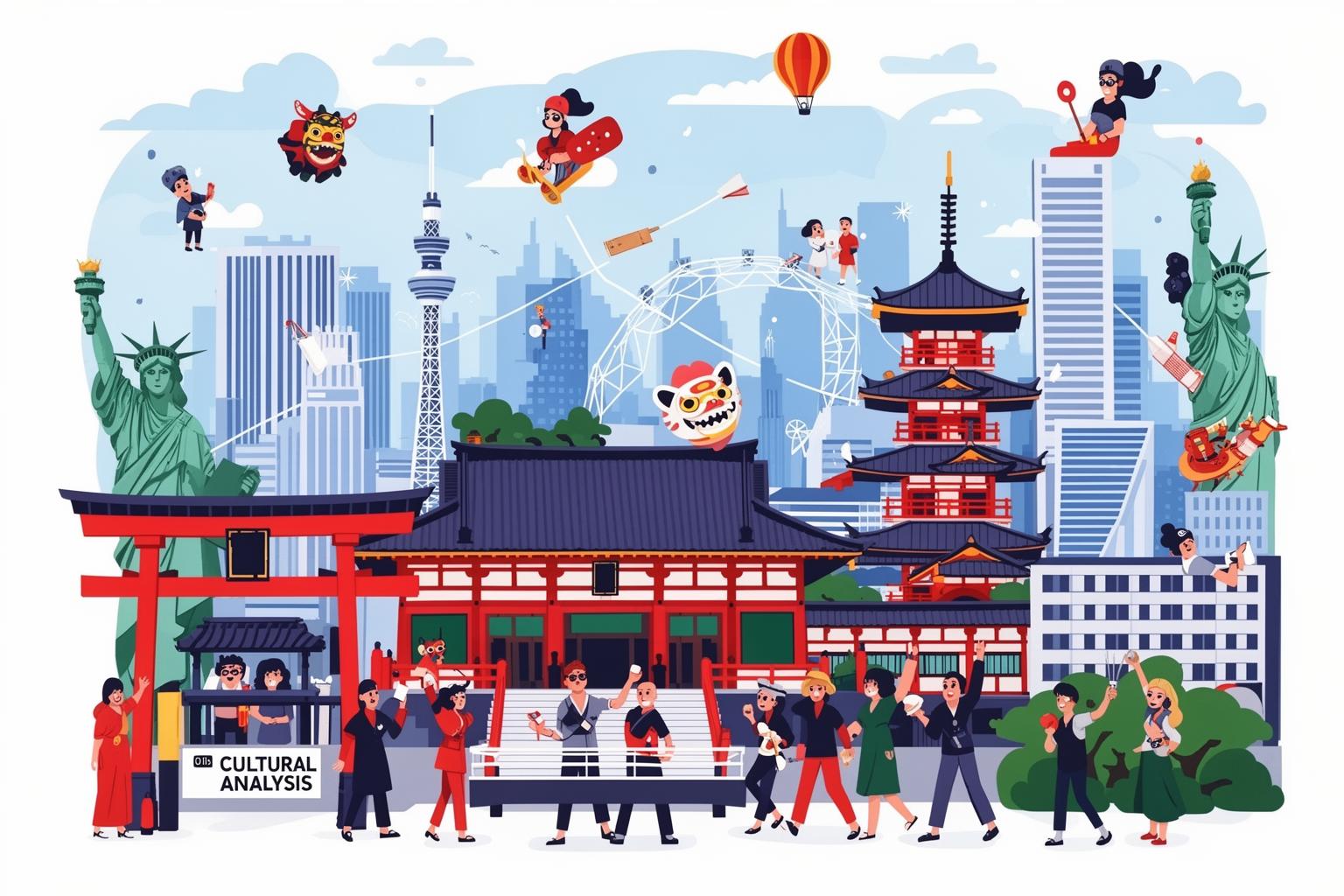
To grasp osekkai, you must peel back the layers of Osaka itself. This isn’t merely a quirky personality trait; it’s a behavior embedded deep in the city’s DNA, a cultural artifact shaped by commerce, language, and a unique social fabric. It’s the spirit of the merchant class, the echo of cramped tenements, the rhythm of the local dialect expressed through a stranger’s unsolicited advice. Osekkai is not just something people do in Osaka; it embodies what Osaka is.
The Historical Roots: Why Merchants Meddle
Tokyo was built by samurai. Kyoto was shaped by nobles. But Osaka? Osaka was built by merchants. This is the crucial fact to understand the city’s mindset. During the Edo period, Osaka was known as tenka no daidokoro, the Nation’s Kitchen. It was the commercial heartland for rice, sake, and countless other goods—a city where one’s word was a bond, and reputation the greatest asset. Among the shōnin, the merchant class, success was never an individual pursuit but a collective endeavor. Your neighbor’s business struggles could disrupt your own supply chain. A fire in one shop might consume the whole street. This interdependence forged an environment where privacy was a luxury neither economically nor physically viable.
Picture the old nagaya, the long wooden row houses typical of urban Japan, yet quintessential in bustling Osaka. These homes had paper-thin walls through which neighbors’ arguments, celebrations, and snores were plainly audible. Residents shared wells and bathrooms. Life was lived openly, intertwined with the neighborhood’s daily dramas. In such a context, minding your own business wasn’t just unfriendly—it was risky. Being aware of your neighbor’s difficulties meant you could intervene before those troubles escalated. Offering advice wasn’t prying; it was necessary communal care. Osekkai emerged not only from kindness but from a pragmatic and deeply rooted sense of shared risk and fate. The old merchant spirit endures today. When people notice a problem—your shabby radish, your unzipped backpack, your puzzled expression at a train map—they feel compelled to correct it, preserving the city’s harmony. In their own way, they keep the city’s ledgers balanced.
The Language of Osekkai: It’s in the Dialect
Language doesn’t just depict reality; it shapes it. Osaka’s dialect, Osaka-ben, is almost tailor-made for osekkai. Unlike Tokyo’s standard Japanese, which favors politeness, subtlety, and social distance (tatemae), Osaka-ben is direct, expressive, and familiar. It tears down the barriers that standard Japanese carefully maintains between strangers. Familiar pronouns, blunt sentence structures, and a lively, sometimes sharp intonation instantly close the social gap.
Take the simple example of pointing out a mistake. In Tokyo, a stranger might cautiously say, “Anō, sumimasen, chotto yoroshii desu ka? Mochimono ga…” (“Um, excuse me, is it okay? Your belongings seem to be…”), providing a polite preamble cloaked in apology. In Osaka, you’re more likely to hear, “Nē, anata! Kaban aiteru de!” (“Hey, you! Your bag’s open!”). No hesitation, no formal cushioning. The first is a gentle suggestion; the second, a direct statement delivered with urgency. This isn’t rudeness; it’s efficiency. The dialect assumes a basic intimacy and shared context absent in Tokyo, encouraging people to forgo formality and get straight to the point. This linguistic setup makes osekkai not only possible but natural—the default mode of interaction. When you speak as if everyone is a long-lost cousin, it’s easier to warn that cousin they’re about to pick the wrong vegetables.
The Psychology of the ‘Obachan’: Archetype of the Meddler
No discussion of osekkai is complete without acknowledging its most iconic figure: the Osaka obachan. She is legendary, a stereotype so strong she’s become a cultural emblem. Often seen in bright clothes, leopard-print accessories, and sporting a short, tightly-permed hairstyle, the obachan embodies osekkai. She guards the community’s unwritten rules, dispenses unsolicited wisdom, and carries ame-chan (candy) in her purse, ready to calm a crying child or reward a friendly exchange.
Viewing the obachan as merely a nosy old woman misses her true role. She is a social institution. In a society often rigid and hierarchical, she operates beyond usual politeness, her age and experience granting her the license to speak candidly, correct, scold, and care directly. She’ll tell you to wear a sweater if it looks cold, ask why you’re not married yet, or rearrange your groceries for easier checkout. She represents the city’s collective maternal instinct. This behavior isn’t about control but nurturing—a form that may seem overbearing to outsiders but is rooted in care. She tends her flock, and in Osaka, everyone belongs to it. The obachan and her osekkai remind you that in this city, anonymity is an illusion. Someone is always watching, probably has an opinion on your life, and definitely carries candy for you in her pocket.
Osekkai in the Wild: A Field Guide to Daily Encounters
Grasping the theory behind osekkai is one thing; recognizing and managing it amidst the daily life’s chaotic stage is an entirely different matter. Osekkai isn’t merely a theoretical idea—it’s a concrete, everyday reality. It surprises you in the most ordinary places, turning a simple grocery trip or a quiet train ride into an unplanned lesson in communal living. To navigate and flourish within this, you need a guidebook—a means to identify the various forms of osekkai in their natural environments.
The Supermarket Aisle: An Expert Lesson in Unsolicited Advice
The supermarket serves as the primary domain for the osekkai practitioner. It’s a structured setting, abundant with chances for intervention. Your choices are openly visible, silently revealing your domestic prowess—or the lack thereof. Picture this: You’re new to Japanese cooking, attempting to prepare nikujaga, a traditional beef and potato stew. You stand before a wall of soy sauces—dark? Light? Dashi-infused? Low salt? The confusion is real. Suddenly, a voice comes from your right. “Making nikujaga?” You turn to see an obachan, her cart nudging yours. You nod, somewhat taken aback. “For that, you want this one,” she says, picking up a bottle of Kikkoman’s hon-tsuyu. “It already contains dashi and mirin. Much simpler. And tastier. Don’t use that dark one; it’ll be too salty.” Without waiting for a thank you, she peers into your basket. “Oh, and you’re using that beef? It’s fine, but the thinly sliced pork from Kagoshima over there is on sale today. It adds more richness to the stew.”
This is Level Two osekkai—not merely a correction but an unsolicited full consultation. Her intention is genuine: she wants you to succeed, enjoy a delicious meal, get good value, and experience the joy of properly made cooking. To her, she’s not criticizing; she’s upgrading your choices, sharing her decades of hard-earned knowledge—a gift from her kitchen to yours. But for you, the recipient, it can feel like a public inspection of your life skills. The implied message might be, “You don’t seem to know what you’re doing.” And maybe that’s true. Yet having it announced in aisle three can be humbling, and for some, infuriating.
Public Transportation: Your Commute, Their Commentary
The trains and subways of Osaka are another hotspot for osekkai. Although less intimate than the supermarket, rush hour’s forced proximity creates a temporary, unspoken community with its own rules. In Tokyo, trains are silent capsules of solitude; people focus on their phones, sleep, or stare into space, expertly ignoring each other. In Osaka, especially on the Loop Line or the Midosuji subway, the social connection is thicker, more palpable.
Imagine you’re a tourist or new resident, studying your map. Before you can even feel properly lost, a middle-aged salaryman heading home might lean over and say, “Where are you going? Shinsaibashi? This train is correct, but you should be in the front car—the exit is closer there.” He’s just saved you thirty seconds. Or perhaps you’re a student, still wearing your large backpack during rush hour. In Tokyo, you’d likely receive cold, resentful stares. In Osaka, however, an obachan might tap you and say bluntly, “Anata, sono ryukku, jama ya de,” (“Hey, your backpack is in the way”). It’s direct but helpful—an active reinforcement of social etiquette, vocalizing what would be silent glares in Tokyo.
This public commentary goes beyond simple directions. If you drop a glove, several voices alert you. If your shoelace is loose, someone points it out. If you look unwell, a stranger might ask if you’re okay and offer a seat. It’s a mutual care system built on vigilance. The trade-off for this communal safety is that you are perpetually, to some degree, on display. Your small mistakes, health condition, and conformity to social norms are all publicly observed.
The Neighborhood Watch You Never Opted Into
Here, osekkai can shift from an endearing quirk to a lifestyle test. The further you move away from the anonymous city center into residential shotengai neighborhoods like Tenjinbashisuji or the quieter streets of Fukushima, the deeper the community involvement grows. Your neighbors become more than just nearby residents—they become characters in your everyday life.
Mrs. Tanaka at the tobacco shop will know when you leave for work. Mr. Sato from the fruit stand comments if you’re home late. “Working late again? Tough times!” he calls out as you pass. If you buy a new plant for your balcony, a lady across the street might shout watering tips your way. When you place out your trash, a neighbor might appear to remind you that today is plastics day, not burnables, and suggest rinsing your yogurt container better. Mostly well-meaning, these interactions are the fabric of a tight-knit community. People recognize and care for one another. If a burglar tries your door, someone would notice. If you don’t appear for days, someone would check in on you.
Yet, for someone raised in a culture valuing privacy and anonymity, this can feel like life inside a fishbowl. The boundary between care and surveillance is thin and blurry. A friendly morning greeting might feel like roll call; a late-night comment might seem judgmental. Adjusting mentally is essential—to see this constant, low-level scrutiny not as an intrusion but as the background hum of a community that is alive and functioning as intended.
The Great Divide: Who Loves It and Who Hates It?
The phenomenon of osekkai serves as a cultural sorting mechanism, dividing residents—both new and long-term—into two general groups: those who see it as a life-affirming expression of human connection, and those who perceive it as a soul-crushing intrusion on personal boundaries. Your temperament, cultural background, and reasons for living in Osaka will largely influence which group you belong to. There is no right or wrong perspective, only the reality of your own experience.
For Whom It Charms: The Community Seekers
For certain individuals, osekkai is not a flaw but a feature; it’s precisely what makes Osaka so appealing. These are the community seekers—people who move to a new country craving genuine connection rather than polite, transactional relationships. For them, the sterile anonymity of a city like Tokyo can feel deeply lonely. They want to be seen and to belong, even if that means sacrificing some privacy.
For example, a foreign student struggling with the language might find the constant corrections from shopkeepers and neighbors invaluable for immersive learning, turning each store visit into a practical Japanese lesson. A young professional living alone for the first time far from home might find the nosy questions from the woman at the local bento shop comforting, reminiscent of the maternal care they miss. It feels like someone is watching out for them, not just seeing them as another anonymous face in the crowd. For people from Latin, Mediterranean, or other collectivist cultures where family and community are tightly woven, Osaka’s social dynamics may feel more familiar and natural than the reserved individualism of other large cities. Viewed this way, osekkai acts as a safety net: the reassurance that if you stumble, literally or figuratively, many hands will reach out to help. It’s the awareness that you are part of a living, breathing social organism that, while flawed, looks after its own.
For Whom It’s an Invasion: The Privacy Guardians
On the opposite side are the privacy guardians—those who prioritize personal space, autonomy, and the right to make their own mistakes. Often from Northern European or Anglo-American cultures, they are used to social contracts emphasizing non-interference. To them, unsolicited advice is not a gift but a critique; uninvited help is not supportive but condescending. The constant, low-level social scrutiny in a tight-knit Osaka neighborhood feels suffocating rather than safe.
An introvert who expends energy with every social interaction may find a simple walk through Osaka utterly draining. They don’t want to justify their choice of daikon radish or explain why they’re out late; they simply want to be left alone. For someone who values their independence, having a stranger assume they need help navigating a train station can feel infantilizing. The accumulation of these small intrusions creates a sense of being perpetually judged, assessed, and found lacking. It can feel like relentless pressure to conform to unwritten local norms they don’t fully understand. For this group, Osaka’s friendliness soon loses its charm, replaced by a longing for the quiet, impersonal freedom of a city that respects their space. While they may appreciate the city’s energy and cuisine, they will always feel like outsiders, constantly deflecting the intimacy others cherish.
The Foreigner’s Dilemma: Navigating the Grey Areas
For non-Japanese residents, osekkai involves an added layer of complexity. It can be hard to tell the motivation behind the acts. Is the obachan helping because she helps everyone, or because she sees me as a foreigner presumed incompetent? This is the foreigner’s dilemma. The special attention can feel less like inclusion and more like singling out. An act of kindness may be tinged with condescension, reflecting the assumption that you, as a gaijin, are helpless without native guidance.
Responding requires a delicate balance. How do you assert independence without causing offense? A curt “I’ve got it, thanks” might seem shockingly rude in a culture that prizes harmony. Navigating these moments is a vital survival skill. The answer often lies in cultural code-switching: smiling, nodding, and saying “Thank you,” even when you want to scream, “I know how to pick a radish!” You cultivate a repertoire of gentle deflections—humorous remarks, polite but firm “Daijoubu desu” (“I’m okay”), or simply accepting the help graciously, even if unnecessary, recognizing that the interaction itself matters. It’s about acknowledging that the intent is almost always positive, even when the execution feels clumsy or invasive. You must learn to separate the act from its effect on your cultural sensitivities—a challenge easier said than done.
Osekkai vs. Omotenashi: A Tale of Two Japans
To truly understand the distinctive flavor of Osaka’s social culture, it’s important to compare osekkai with another, more widely recognized Japanese concept: omotenashi. Omotenashi is often used to define Japanese hospitality. It embodies the polished, refined, almost invisible art of anticipating a guest’s needs. It’s the experience you find in a high-end ryokan in Kyoto or a luxury department store in Ginza, Tokyo. Osekkai, on the other hand, is its chaotic, unrefined, and deeply personal counterpart from the south. Both represent forms of care but arise from completely different philosophies, illustrating the fundamental divide between the Kanto (Tokyo) and Kansai (Osaka) regions.
Tokyo’s ‘Omotenashi’: The Polished, Professional Service
Omotenashi is hospitality elevated to a professional art form. It is selfless, meticulous, and, importantly, maintains a respectful distance. Its aim is to make a guest feel completely comfortable and attended to, without ever being intrusive. It means anticipating a need before it’s voiced: the hot towel arriving at just the right moment, the taxi door held open, the beautifully wrapped purchase presented with a bow. It’s a performance of perfection. A Tokyo clerk will help you select a shirt, fold it with impeccable precision, and never offer a personal opinion on whether it suits you. That would cross a boundary. Omotenashi fully respects your autonomy. It creates a seamless, frictionless experience where the service provider acts as a graceful, almost invisible facilitator of your desires. It is external, formal, and directed toward the guest.
Osaka’s ‘Osekkai’: The Raw, Amateur Care
Osekkai discards that entire philosophy. It is the direct opposite of professional, detached service. It is amateurish, personal, and deeply intrusive. Osekkai breaks down the barrier between provider and recipient. The Osaka shopkeeper will definitely tell you if that shirt doesn’t suit you: “No, no, that color makes you look washed out! Try this one; it brings out your eyes!” She’s not serving a guest; she’s helping a person. The interaction isn’t about facilitating your desires; it aims at what she believes is the best outcome for you, whether you agree or not. Osekkai doesn’t strive to be seamless; it’s messy, loud, and full of opinions. It isn’t a performance—it’s a genuine, unfiltered human interaction. It is internal, informal, and aimed at the person.
A Misunderstanding of Intentions
This contrast often leads to cultural misunderstandings. Many foreigners arrive in Japan expecting the brochure version of Japanese culture—the serene temples of Kyoto, the polite efficiency of Tokyo, the universal grace of omotenashi. Then they reach Osaka and feel confused. They take osekkai’s directness as rudeness. They interpret unsolicited advice as criticism. They perceive personal questions as a shocking lack of boundaries. What they overlook is that both omotenashi and osekkai are expressions of care. They represent two different routes to the same goal: looking out for another person. Tokyo’s route is marked by refined, respectful silence. Osaka’s is a noisy, cobblestoned alley filled with shouts, laughter, and pointed advice. One follows the way of the samurai court, valuing form, order, and process. The other follows the way of the merchant’s market, valuing pragmatism, human connection, and results. Judging Osaka by Tokyo’s standards misses the point entirely. It’s like criticizing a lively street food stall for not having the quiet ambiance of a Michelin-starred restaurant. They are simply playing different games.
Learning to Live with (and Maybe Love) Osekkai
So, you’ve chosen Osaka. You’re here, and the osekkai is unmistakable. You can’t change the city, so your only option is to adapt. This doesn’t mean you must passively accept every intrusion; rather, it means developing a set of skills— a new cultural literacy—that lets you handle these interactions with grace and humor. It’s about learning the local dance moves so you can either join in or artfully dodge without stepping on your partner’s feet. Over time, you might even find yourself leading the dance.
The Art of ‘Tsukkomi’: Your Secret Weapon
Perhaps the most powerful tool at your disposal is understanding the comedic duo structure that underlies much of Osakan communication: the manzai tradition of boke and tsukkomi. The boke is the silly, scatterbrained character who says something absurd. The tsukkomi is the quick-witted, logical one who corrects them, often with a light slap or a sharp retort. Osekkai often resembles a conversational boke. The person offering unsolicited advice sets the stage, creating an opening. By responding with a playful tsukkomi, you turn the situation from a lecture into a performance.
When the obachan tells you your radish is no good, instead of feeling embarrassed, you can laugh and say, “Honma ni? Maji de?” (“Really? You serious?”). When the shopkeeper insists a different shirt suits you better, you might reply, “Ehh, you think I can pull that off?” with a skeptical smile. The ultimate tsukkomi, the phrase that shows you truly get the joke, is the classic “Nande ya nen!” (“Why the heck!” or “What the hell!”). Delivered with perfect timing and a playful tone, it can defuse the most aggressive osekkai, sparking laughter and mutual respect. It signals that you’re not a passive victim of meddling; you’re an active participant in the city’s unique conversational style. You get the joke. And in Osaka, getting the joke is everything.
Setting Boundaries Without Causing Offense
Though humor is a valuable tool, sometimes an intrusion feels genuinely unwelcome, and you need to set boundaries. This is where things become delicate. A direct, Western-style rejection like “Thank you, but I’d rather do it myself” or “Please mind your own business” would be perceived as very harsh and likely cause deep offense, shutting down any future goodwill. Softer, more indirect approaches are necessary.
The simplest is the non-committal smile-and-nod. You acknowledge the advice, express appreciation with your face, but don’t actually need to follow it. It’s a polite deflection that quickly ends the interaction. Another helpful phrase is, “Arigatou gozaimasu, kentou shimasu,” or more casually, “Arigatou, kangaeru wa.” (“Thank you, I’ll consider it.”). This acknowledges their input while reserving your right to decide. Gently changing the subject is another effective tactic. If a neighbor presses you about your personal life, you can thank them for their concern and immediately ask about their new flowers or the local festival. It redirects the focus without direct confrontation. The key is always to validate the person’s good intentions first, then gently steer the conversation or situation elsewhere.
Finding Your Osekkai Sweet Spot
Ultimately, living happily in Osaka means finding your personal balance with osekkai. The city is not uniform. The intensity of community interaction varies greatly between neighborhoods. If you thrive on connection, consider living near a lively shotengai such as those in Tenma or Kuromon Market. Open a business there, and the community will adopt you within weeks. If you cherish privacy, perhaps a modern high-rise apartment in Umeda, Honmachi, or Kita-horie suits you better. In these more anonymous buildings, you can enjoy a lifestyle closer to Tokyo’s, engaging with the city’s energy on your own terms and retreating to your private sanctuary when needed.
It’s about making a deliberate choice: do you want the neighborhood where Mrs. Tanaka knows your work schedule, or the one where a security camera is the only thing tracking your comings and goings? There’s a place for you in Osaka, whatever your preference. But you must accept that stepping out your door means stepping into the city’s social contract. Embracing at least a bit of osekkai is the price of admission. It’s what you pay for the city’s incredible food, its vibrant energy, and the fierce, protective loyalty it shows those it claims as its own.
The Future of Osekkai: Will Osaka Change?
Like any living cultural trait, osekkai is not fixed. It is influenced by the forces of time, technology, and generational shifts. The Osaka of today differs from the merchant city of the Edo period, and the Osaka of tomorrow will change even more. The question is whether this defining trait—this meddlesome kindness—will survive in a world increasingly moving toward individualism and digital isolation.
Generational Shifts
Stroll through the trendy districts of Amerikamura or Horie, and you’ll encounter a different Osaka. The young people here, dressed fashionably and often absorbed in their smartphones, often resemble their peers in Tokyo’s Harajuku. They tend to be quieter, more reserved in public, and less inclined to strike up conversations with strangers than previous generations. Globalization, internet culture, and a national education system emphasizing standardization have all contributed to diminishing regional differences. Many younger Osakans have embraced a more Tokyo-centric model of social behavior. They may still speak with a strong Kansai accent, but their readiness to cross social boundaries has noticeably decreased. Osekkai now seems like an aging custom, a powerful cultural echo that may fade away with time.
The Double-Edged Sword in a Modern World
Still, it would be premature to declare osekkai dead or dying. In today’s highly urbanized Japan, it has taken on a fresh and essential role. Faced with an aging population and a rise in single-person households, weakening community bonds have become a serious social concern. The tragedy of kodokushi, where elderly people die alone and undiscovered for weeks, is a harsh reality. In this setting, Osaka’s osekkai culture serves as a potent, if informal, social safety net. The nosy neighbor who notices your routine is also the one who realizes when your mail goes uncollected for days. The obachan who scolds you for incorrect trash sorting is the same person who checks on the elderly widower down the street. In a fragmented world, osekkai remains a strong, though intrusive, force for social unity.
It continues to be a double-edged sword. As awareness of privacy, harassment, and mental health issues rises, traditional forms of meddling are increasingly viewed as problematic. Comments about someone’s weight or marital status, once considered harmless small talk, are now rightly seen as inappropriate and harmful. Osaka faces the challenge of preserving the communal care spirit that defines osekkai while eliminating its more intrusive and judgmental tendencies. This delicate balance is an ongoing negotiation between tradition and modernity.
Osekkai is the soul of Osaka, laid bare. It is the city’s loud, opinionated, generous, and occasionally overwhelming heart, pulsing with messy, genuine human connection. Though evolving and softened by time, its fundamental drive—the belief that we are all in this together, and that your radish is my concern too—remains a stubborn and enduring part of what makes this city unique in Japan. To live here is to be part of that chaotic, frustrating, and ultimately beautiful human dance.