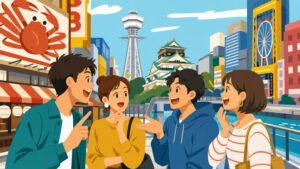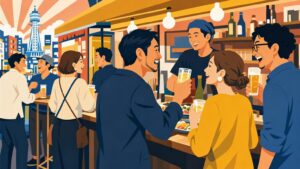
People have a picture of Osaka. They see the neon glow of Dotonbori, a dizzying, electric river of light and sound. They imagine the crush of people in Umeda Station, a human tide flowing with relentless, purposeful energy. They hear the boisterous laughter and the rapid-fire cadence of the Kansai dialect, a language that seems to tumble out, full of jokes and sharp observations. And they’re not wrong. Osaka is a city that runs on high-octane fuel, a place where the baseline hum is a few decibels louder, the pace a little quicker, the interactions a little more direct. It’s a concrete metropolis, a vertical maze of commerce and consumption, and it’s easy to think that the people here are forged from the same steel and glass, constantly in motion, perpetually wired.
But that raises a question I hear a lot from friends who move here from overseas, or even from other parts of Japan. Where does all that energy go to recharge? In a city that never seems to sleep, how do people find their off-switch? The answer, for many Osakans, isn’t found within the city limits. It’s not in a quiet temple garden in Tennoji or a zen-like experience in a minimalist cafe. More often than not, it’s a spontaneous decision made on a sunny Saturday morning, fueled by a simple phrase: “Let’s get in the car and go to Awaji.” Awaji Island isn’t just a destination; it’s Osaka’s collective backyard, its shared secret, its easily accessible pressure-release valve. A trip across the bridge to this island of flowers, onions, and swirling tides tells you more about the Osaka mindset—their relationship with nature, their definition of value, and their deep, pragmatic approach to life—than a thousand nights spent in the city’s entertainment districts. It’s where you see the other side of the Osaka coin, the quiet currents that run beneath the city’s vibrant, chaotic surface.
To truly understand the pragmatic approach to life that defines the city, one must also grasp the unique social fabric of Osaka’s meddling kindness, or ‘osekkai’.
The Great Escape: Why Awaji and Not Hakone?
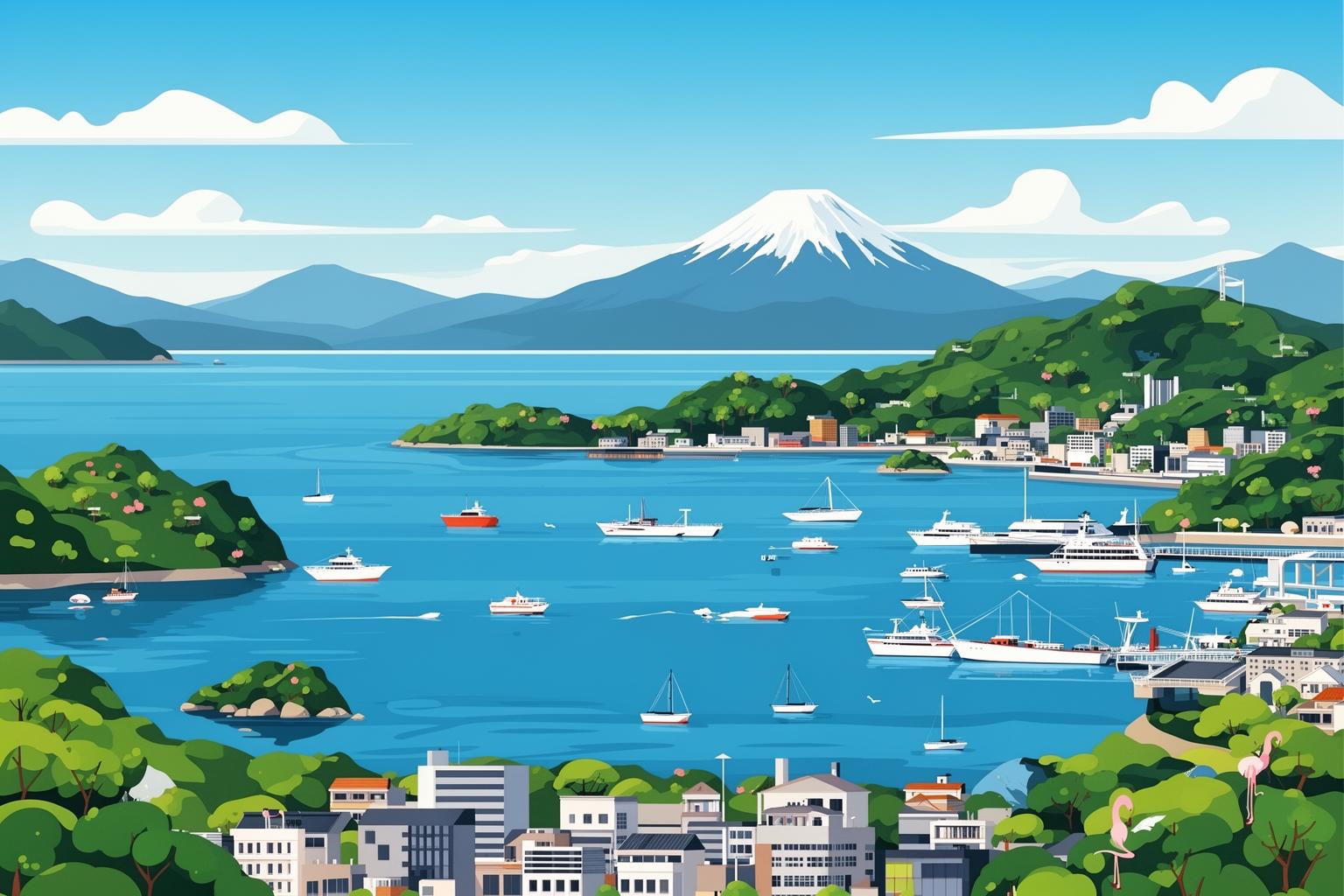
To grasp the significance of a trip to Awaji, you first need to understand what it isn’t. When people in Tokyo think of a weekend getaway, they often imagine places like Hakone or Karuizawa—classic, almost archetypal destinations. The trip involves a carefully reserved ticket on a Shinkansen or Romancecar train. The itinerary is typically arranged weeks ahead, centered around a stylish ryokan with a private onsen, a visit to a particular art museum, and a reservation at a well-known restaurant. It’s a beautifully curated experience. From an Osaka perspective, though, it also feels like a lot of effort.
The Spontaneity of the Drive
Osaka’s approach to a weekend escape is fundamentally different and revolves around the car. The decision to go to Awaji rarely stems from weeks of planning. Instead, it often comes from a casual glance out the window on a Saturday morning. The sky is clear, the air feels fresh. Someone says, “Awaji?” and within an hour, you’re on the Hanshin Expressway, heading towards Kobe. This spontaneity is not just a quirk; it’s a core aspect of Osaka’s lifestyle. Life in the city is already structured with work, school, and social obligations. Relaxation shouldn’t require a PowerPoint presentation or a shared Google Calendar. It should be simple, immediate, and liberating.
This marks a key difference between Osaka and Tokyo. In Tokyo, with its world-class public transit system, owning a car can often feel like a burden. In Osaka, while trains are excellent, car ownership is more woven into everyday life for many families. The city’s design includes a network of expressways that can whisk you out of the urban core in minutes. The car symbolizes freedom—the ability to act on impulse, to change plans on a whim. Being bound to a strict train schedule on a trip meant to relax seems counterintuitive to many Osaka residents. Why confine yourself when the open road is right there?
The Bridge as a Portal
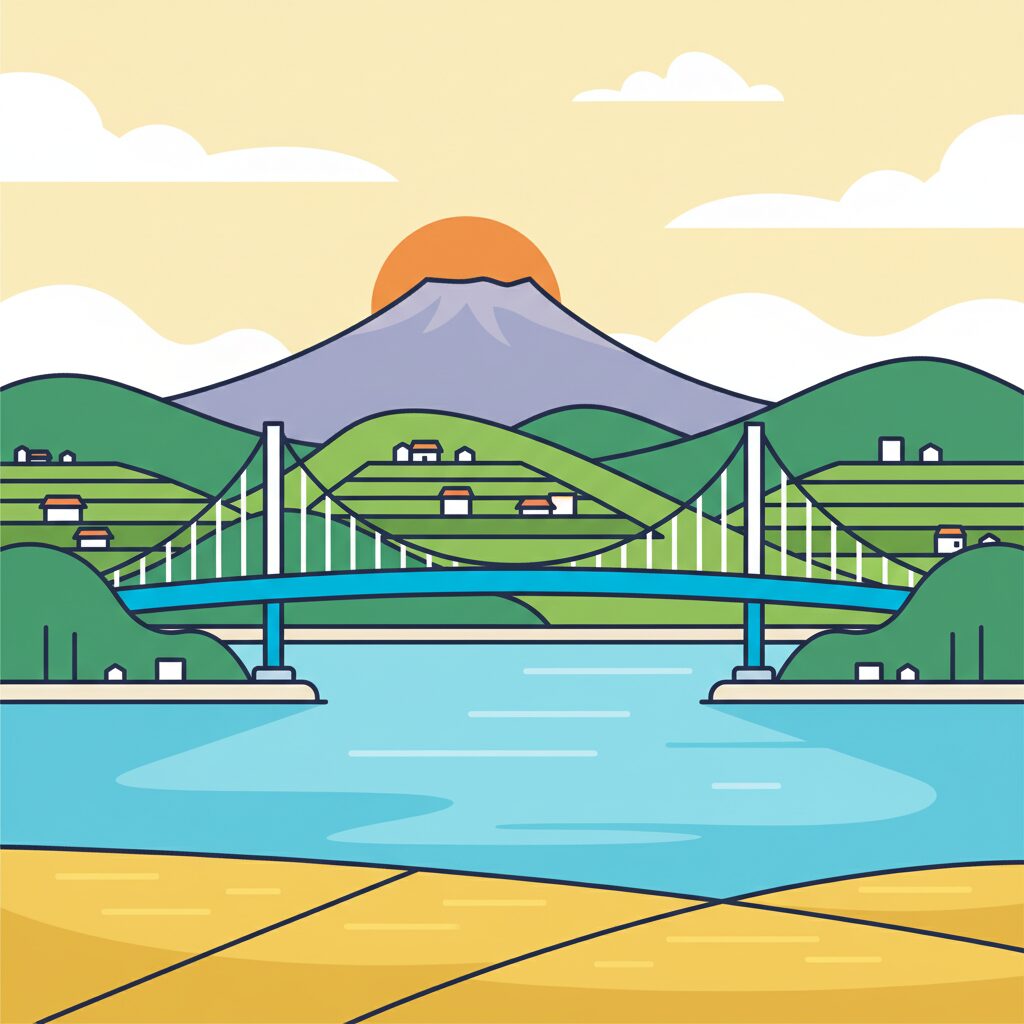
The trip to Awaji is defined by a single monumental moment: crossing the Akashi Kaikyō Bridge. This isn’t just infrastructure; it’s a psychological gateway. As you ascend the ramp from the Kobe side, the dense cityscape of buildings and elevated highways falls away behind you. Ahead, the bridge’s two massive towers soar into the sky, while the sparkling expanse of the Seto Inland Sea stretches out on either side. For those few minutes suspended between land and sky, you physically and mentally leave the city behind. The rumble of tires on the steel grating signals decompression. The wind buffeting the car sweeps away the stress of the week.
For Osakans, there is a deep pride in this bridge. It was once the longest suspension bridge in the world—a testament to Kansai’s engineering skill and a symbol of strength and connection, built in the aftermath of great tragedy. It’s big, bold, and highly practical—qualities that resonate with the local spirit. Although the toll is costly, the experience is priceless. It marks the official start of the holiday—a man-made marvel delivering you into the heart of nature. This tangible act of crossing a vast body of water creates a sense of separation that a train ride through endless suburbs simply cannot match. You’re not just traveling to another town; you’re heading to an island. You’re going somewhere distinctly different.
A Different Kind of Silence: Nature Through Osaka Eyes
Once you arrive on Awaji Island, the sensory environment changes dramatically. The constant, low-frequency hum of Osaka—the trains, traffic, announcements, and dense human activity—is replaced by the rhythmic hush of waves, calls of seabirds, and the rustling of wind through bamboo groves and onion fields. Even the air feels different: softer, carrying the scent of salt and soil rather than concrete and exhaust. Yet, the way Osaka residents interact with this new tranquility is revealing. It’s not about solemn, introspective communion with nature, but rather using nature as a playground—a backdrop for social connection and straightforward, tangible pleasures.
Active Relaxation
Spend a sunny afternoon on an Awaji beach, and you won’t find rows of people silently meditating or absorbed in philosophical books. Instead, you’ll see families setting up small tents, firing up portable grills, and laughing while chasing children along the shore. Groups of friends throw frisbees, blast music from portable speakers, and crack open beers and Chūhai together. The aim isn’t to escape each other but to enjoy one another’s company in a more relaxed, open atmosphere. Silence isn’t sought after; shared joy is.
This attitude can sometimes be misunderstood by outsiders, especially those from cultures where nature is met with quiet reverence. It may seem loud or chaotic, but it originates from the fundamentally social and communal spirit of Osaka culture. For many, being alone in nature holds less appeal than sharing its beauty with loved ones. The pleasure of the beach is heightened by the sizzle of yakiniku and lively conversation. Nature sets the stage, but the people are the main event.
Scenery as an Experience, Not an Object
Awaji is renowned for its expansive flower parks, like Awaji Hanasajiki, which presents breathtaking panoramic views of seasonal blooms against the sea and the Akashi Kaikyō Bridge. The scale is vast—a vivid explosion of color created for maximum visual impact. An Osaka family visiting the park will walk through the fields, exclaiming loudly, “Sugoi!” (Amazing!) and “Kirei!” (Beautiful!). They’ll snap dozens of photos, posing with peace signs and silly faces, then head straight to the soft-serve ice cream stand, comparing the local Biwa (loquat) flavor to classic vanilla.
What you rarely see is quiet contemplation. The appreciation is immediate, visceral, and expressed outwardly. The flowers’ beauty is wonderful, but it’s part of a larger experience that includes the drive there, shared snacks, and the feeling of fresh air. This is a pragmatic approach to beauty—it’s not something to analyze or intellectualize, but to enjoy, consume, and then move on from. The memory isn’t just of the flowers but of the fun day out. This contrasts with, for example, a Kyoto garden, where the atmosphere inspires quiet reflection on wabi-sabi and the careful placement of each rock and moss patch. Awaji’s nature is big, bold, and straightforward—just like the appreciation it receives from its Osaka visitors.
The Gospel of Cospa: Feasting on Awaji’s Bounty
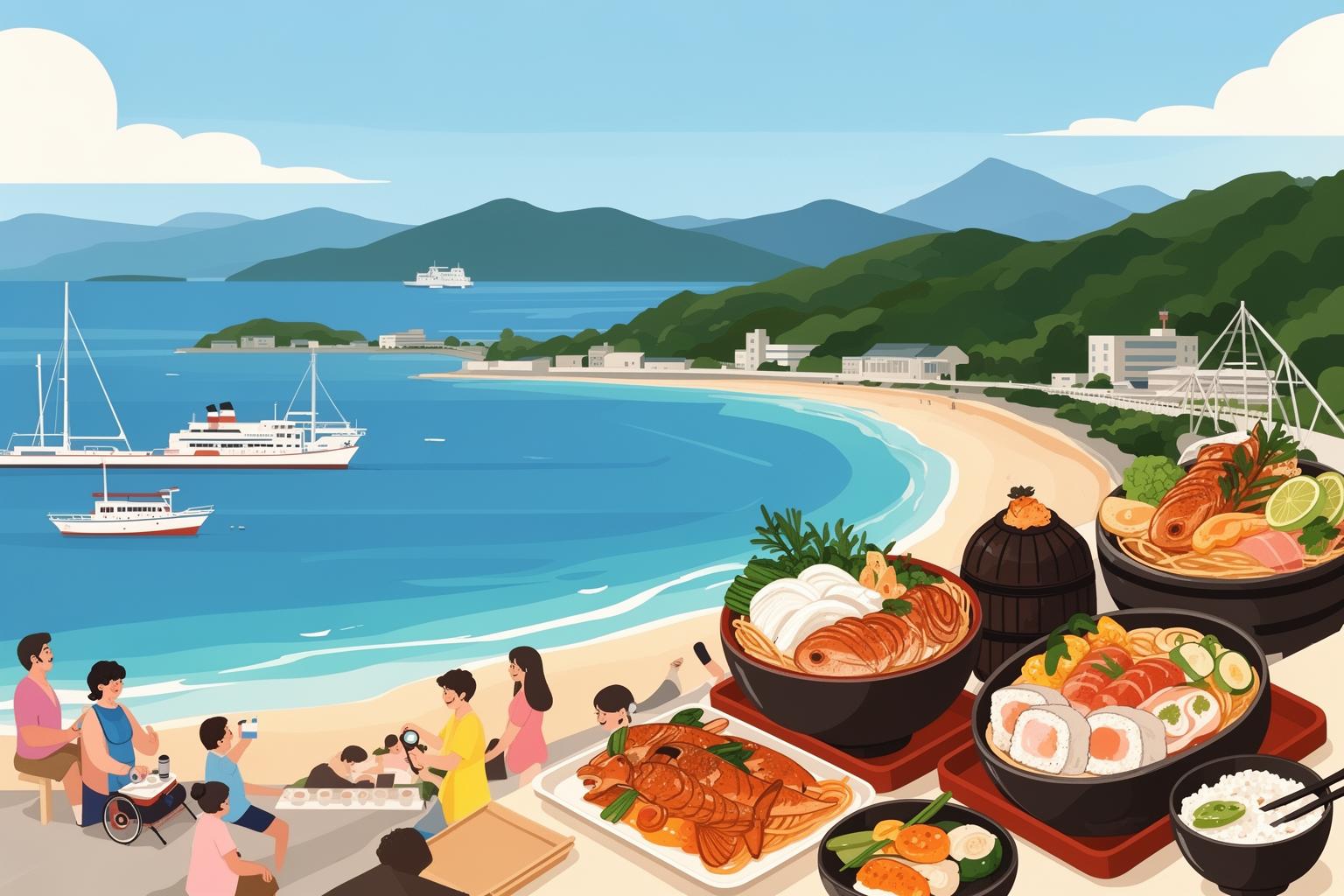
If you ask a native of Osaka for the top reason to visit Awaji Island, the likely answer won’t be the beaches, flowers, or art. Instead, with a knowing glance and a slight smile, they’ll offer a single word: food. In a culture famously—and almost obsessively—centered on cuisine, Awaji serves as a culinary pilgrimage destination. It’s a treasure chest of fresh ingredients, from incredibly sweet onions to an abundance of seafood harvested from the surrounding waters. The way Osakans approach dining on the island highlights their most treasured value: cospa, or cost performance.
More Than Just a Meal
Cospa is often misunderstood by outsiders as merely seeking cheapness, but that’s far from accurate. It’s not about chasing the lowest price; rather, it’s the thrill of securing outstanding quality and/or quantity at a price that feels like a bargain. It’s a quest, a game, and a triumph. Awaji Island is the ultimate reward. The seafood eateries scattered along the coastline are sanctuaries where this value is revered.
Don’t expect sleek, minimalist interiors or hushed, solemn atmospheres. Instead, these are lively, no-frills spots with plastic menus, communal soy sauce bottles, and waitstaff who are friendly yet constantly busy. What they lack in refinement, they more than compensate for on the plate. A kaisendon (sashimi rice bowl) that might cost a small fortune in a Tokyo department store arrives here brimming with glistening, freshly caught sea bream, octopus, squid, and yellowtail, for only a fraction of that price. The anago (conger eel) is so tender it melts on the tongue. The tempura is light and crispy, featuring not only shrimp and fish but also slices of the island’s famously sweet onion.
This embodies the Osaka mindset: the emphasis is entirely on substance. The quality of the fish, the freshness of the ingredients, the generosity of the portions—these are the critical measures. Ambiance comes second. An Osakan will happily recount details of a fantastic, high-cospa meal for weeks, describing every dish with enthusiasm usually reserved for major life events. The pleasure lies in having discovered a hidden gem, in scoring an incredible deal that others may not know about. It’s a form of practical wisdom, a savvy consumerism that brings deep pride.
The Cult of the Awaji Onion
No discussion of Awaji’s food is complete without honoring its most famous product: the onion. To outsiders, this might seem odd—an onion is just an onion, right? Not to those from Kansai. Awaji onions are famous across Japan for their exceptionally high sugar content and mild pungency. They’re so sweet you can eat them raw, thinly sliced and drizzled with ponzu. When cooked, they caramelize into a jammy, savory-sweet delight. On the island, the onion is treated like an art form. You’ll find it everywhere: deep-fried whole as a blooming onion, simmered in curries, blended into soups, and even infused into ice cream. Roadside stands sell nothing but large bags of these prized bulbs, and Osaka families often fill their car trunks with them before heading home.
This devotion to a humble vegetable reflects Osaka’s appreciation for fine ingredients and the stories they carry. They understand that Awaji’s unique soil and sea breeze produce this particular, superior product. They cherish that local specialty, something you can only get here. It reinforces the idea of the trip as a special occasion—a chance to obtain something authentic and high-quality directly from the source. Bringing home a bag of Awaji onions is like bringing home a trophy. It’s a concrete piece of the island, a key to recreating that flavor in their own kitchen, and a reminder of a day well spent.
Concrete and Culture: Tadao Ando in the Wild
Amid the onion fields and fishing villages, Awaji Island boasts an unexpected array of world-class contemporary art and architecture. Much of this is the creation of Tadao Ando, the self-taught, Pritzker Prize-winning architect who is also one of Osaka’s most celebrated natives. His hallmark style—large, geometric structures of smooth, exposed concrete that interact with light and nature—is prominently featured at sites like the Awaji Yumebutai complex and the tranquil Water Temple (Honpukuji). The way visitors from Osaka engage with these cultural landmarks provides insight into their practical and straightforward worldview.
Art as Part of the Experience
For many travelers from Osaka, the main draw remains the food and scenery. The Ando architecture is an impressive, high-value addition. It’s another remarkable attraction to enjoy and another checkmark on a great day out. The approach is less about solemn pilgrimage and more about genuine curiosity. Visitors stroll through the stark concrete corridors of Yumebutai, admire the Hyakudanen (one hundred terraced gardens), and snap photos of how the light falls on the walls. They descend into the Water Temple, captivated by the vivid vermilion lattice floating above a lotus pond.
The comments you overhear are straightforward and informal: “This is really cool.” “Look how huge this is!” “Ando-han is amazing, isn’t he?” There’s a noticeable absence of the quiet, academic critique typical in Tokyo art galleries. The appreciation is sincere but woven into the day’s activities. It’s not a distinct, sacred experience; it’s simply part of the enjoyment. This reflects a wider Osaka tendency to avoid pretense. Art and culture are meant to be enjoyed by everyone, not just specialists. They are integrated into life, not set apart from it. Having world-class architecture on their weekend getaway island is seen as completely normal and another example of the region’s overall excellence.
A Reflection of the Osaka Spirit
There’s a reason Tadao Ando’s work resonates so strongly in Kansai. His life story embodies the Osaka spirit. Before becoming an architect, he was a truck driver and a boxer, learning his craft not in an elite university but through observation, travel, and sheer determination. He is straightforward, unpretentious, and famously plain-spoken, often using the Kansai dialect like the people who visit his buildings. His work mirrors these traits. The exposed concrete is honest and raw. The forms are bold and powerful, yet designed to harmonize with nature and create deeply human spaces. It’s functional beauty—strength without arrogance.
When an Osakan views an Ando building, they see more than just concrete. They see a local who succeeded on the global stage through hard work and a unique vision. There’s a sense of pride and ownership. His buildings are welcoming, not intimidating, serving as a source of inspiration. They demonstrate that a fancy pedigree isn’t necessary to create something enduring. This philosophy—valuing substance over style, grit over polish—is the foundation of the Osaka identity. In the quiet, reflective spaces Ando has crafted on Awaji, one finds a surprisingly clear reflection of the loud, determined, and deeply soulful city just across the water.
The Unspoken Connection: Bridge, Quake, and Shared Memory
Viewing a trip to Awaji merely as a simple getaway for food and entertainment overlooks the deeper, more intricate currents of history and emotion linking the island to the mainland. For anyone who has lived in the Kansai region for a long time, this connection runs much deeper. It is a bond shaped by tragedy, resilience, and a shared identity that goes beyond a mere administrative boundary. This unspoken background is what elevates the island from just a destination to a place of true significance.
A Bridge Born from Tragedy
The story of the Akashi Kaikyō Bridge does not begin with tourism in mind but with disaster. In 1955, two ferries collided and sank in the thick fog of the Akashi Strait, a tragic accident that took 168 lives, many of them children. The public demand for a safe, permanent crossing was overwhelming. The bridge, which finally opened in 1998 after decades of planning and construction, stands not only as an engineering feat but also as a memorial. It is a fulfilled promise, a symbol ensuring that such a tragedy will never recur. This history is embedded in its steel and concrete, forming a solemn foundation beneath a structure now associated with joy and convenience. Older Kansai residents remember this, so crossing the bridge is a quiet tribute to the past.
The Scars of 1995
However, the strongest and most lasting bond was formed at 5:46 AM on January 17, 1995. The Great Hanshin-Awaji Earthquake ravaged the region, with its epicenter just off Awaji Island’s northern coast. Kobe, Ashiya, and Nishinomiya were devastated, and the island itself endured massive damage. More than 6,400 people lost their lives. This event stands as the most significant shared memory for modern Kansai. It is a generational landmark that profoundly reshaped both the landscape and the collective psyche of the area.
For those from Osaka and Kobe, visiting Awaji is, on some level, an act of remembrance and solidarity. They witnessed the images of collapsed homes and cracked roads on the island, just as they did in their own neighborhoods. Awaji’s recovery is intertwined with Kobe’s revival. The beautiful parks, busy restaurants, and thriving farms all bear witness to the incredible resilience of the local people. Driving along the coast and seeing the memorial in Hokudancho, where a fault line is preserved, serves as a humbling reminder of the immense forces lying just beneath the earth’s surface.
This shared experience of trauma and rebuilding forms a bond that outsiders often cannot fully understand. It means that when an Osakan visits Awaji, they are not merely tourists enjoying local offerings. They are neighbors checking in. There is a sense of shared destiny, having endured the worst together and emerged stronger. This adds a profound layer of meaning to the trip that far exceeds a simple weekend escape. It is about supporting a region that is deeply intertwined with their own story.
Coming Home: The View from the Bridge
The return trip to Osaka is a ritual in its own right. As the sun sets, a long line of cars winds its way back toward the Akashi Kaikyō Bridge. The trunk is filled with bags of onions and local souvenirs. Stomachs are satisfied from fresh seafood. The mind is clearer, calmer, refreshed by the sea air. Driving back across the bridge, especially at night, feels profoundly different from the outward journey.
Ascending the bridge from the Awaji side, the entire Osaka-Kobe megalopolis spreads out before you—a breathtaking expanse of glittering lights stretching endlessly. From this distance, the city’s chaos and noise fade into silence and beauty. It no longer seems like a harsh concrete jungle but a warm, lively, and welcoming home. You can spot landmarks—the glowing red Kobe Port Tower, the ferris wheel in Harborland, and farther off, the soft yet powerful glow of central Osaka.
This moment of transition is vital to understanding the Osaka way of life. The trip to Awaji isn’t about escaping the city out of dislike. It’s about leaving so you can remember why you love it. After a day or two of quiet roads, open spaces, and the slow rhythm of island life, the city’s energy becomes irresistible again. You begin to miss the convenience, the endless choices, the electric pulse of the place. The calm of Awaji deepens your appreciation for Osaka’s vitality, and Osaka’s vibrancy makes you value Awaji’s peace. They are two sides of the same coin—you can’t truly appreciate one without the other.
This is the life rhythm for many in Osaka: a cycle of plunging into the city’s exhilarating intensity, then retreating to the accessible calm of their island backyard to recharge. It’s a practical, sustainable way to live in one of the world’s most dynamic urban centers. The trip to Awaji isn’t a rejection of city life; it’s the key to thriving within it. As you merge back onto the Hanshin Expressway and the city’s familiar sounds filter back into the car, there’s no dread—only a feeling of refreshment, reset, and readiness to dive back into Osaka’s wonderful, noisy, delicious chaos. You’re home.